A media report says GST authorities believe in general, tax recovery based on earlier demand notices has been weak. It quotes GST officials saying that about only Rs 18,541 crore was recovered from notices aggregating Rs 1.51 trillion while the internal “target” was Rs 50,000 crore… It is hard to believe that these blue-chip companies, with the best tax and legal expertise and multiple layers of compliances mandated by the market regulator, would indulge in tax evasion of this magnitude. They are all aware of the reputation damage and financial dent that would follow, along with directors’ liability (given the draconian GST laws). One tax expert says, “The GST law is so loosely and hurriedly drafted that every officer can take a new view and put penalties beyond capacity of assessees.”
Substack
Monday, January 15, 2024
Addressing revenue-bias in tax agencies
Saturday, January 13, 2024
Weekend reading links
1. John Mauldin's prediction for this decade for the US
Maybe mild but steady growth will be the new normal, punctuated by occasional weak quarters. A short recession here and there is possible but I suspect we’ll Muddle Through the next few years. I don't think the amplitude of GDP will be anywhere near as volatile as it was over the past decades. That would be a new kind of business cycle requiring adjustments in our thinking. Much of our planning assumes 3% growth will resume. While that could happen occasionally, I think we will be lucky to average 2% for the rest of this decade, and in general I think real GDP will stay closer to 1%. Not exactly robust. Think Europe. Hopefully we can avoid turning Japanese.
Mauldin highlights the important role that the Fed will have in determining financial market stability. The Fed members dot plot predictions for the end of 2024 points to 4.75% or three quarter points cuts. However, the futures market has priced in six cuts during the year. This dissonance will play out towards the second half of the year. Such rate cuts will happen only if the economy worsens and a recession strikes.
All this ironically means that, as far as the financial markets are concerned, good news is bad news on the inflation front. But bad news on the real economy is bad news for everyone in terms of the prospects going forward.
2. The soon to be completed 212 km Delhi-Dehradun access controlled six-lane expressway will reduce travel time by half to two-and-half hours. This is a very impressive achievement. In fact, in the years ahead, the latest round of highways construction will come to be regarded as one of the most transformative public investments made.
The FT has a good graphic on the sharp rise in investments in roads and railways
3. In the context of discussions about China and Cold War western commentators fret about how the western economies will struggle without Chinese imports in a variety of sectors, including critical minerals. The dependence is for real, but not insurmountable for a large bloc of advanced economies.
These debates overlook the extent of dependence of China on the world economy, which appears to be increasing given the country's renewed manufacturing push.
China’s manufactured goods surplus relative to global GDP is now around 2%, a level probably unseen since the US after World War II, according to Bloomberg Intelligence. It estimates that about 45% of China’s manufacturing output is being exported as the nation’s 1.4 billion people can’t buy enough goods like EVs, ships and household appliances to meet the increased supply... China’s new focus on “industrial upgrading” means pushing into sectors now dominated by the wealthiest nations... Evidence of China’s renewed focus on manufacturing is everywhere, from surging bank loans to the industrial sector to booming investment in industrial parks and increased exports of everything from cars and excavators to washing machines... China's clearest manufacturing success has been the "new three" products. The export value of electric cars, batteries and solar panels grew 42% on-year in the first three quarters of 2023, according to official statistics.
This level of dependence on the world economy poses a major risk to China. If the west does to China what China keeps doing (restricting imports, foreign investments, organising boycotts, favouring domestic producers etc), then for sure there will be costs in terms of higher inflation etc. But these costs will be small and manageable, compared to its devastating impact on the Chinese economy.
This is an interesting statistic about the greater multiplier associated with manufacturing compared with services sector.
Economic growth tends to slow as countries become more services-dominated because productivity improvements are harder to come by. Manufacturing also has more spillovers to other sectors. A 2017 study published by Singapore’s Ministry of Trade and Industry found every 100 new manufacturing jobs are associated with 27 new non-manufacturing jobs; by contrast, every 100 new service jobs are associated with only 3 additional manufacturing jobs. It also has the highest innovation potential, accounts for the bulk of economy-wide R&D spending and employs the majority of scientists and engineers.
4. The financial markets react with over-optimism when there's some good news, only to calibrate downwards gradually as reality sinks in. Sample the latest
Traders in swaps markets have moved to bet on five or six rather than six or seven quarter point rate cuts by the Federal Reserve over the course of the year. They are now pricing in a 75 per cent chance of the first cut in March, having fully priced in such a move at the end of last year. The less sanguine view on rate cuts comes as stronger than expected US jobs data this week weakened the case for the Fed to start cutting rates soon. Minutes from the Fed’s last policy meeting published on Wednesday painted a more hawkish picture than chair Jay Powell’s comments in the accompanying press conference...
Investors in Europe have followed the US in pushing bond prices lower as they have scaled back pricing for European Central Bank and Bank of England rate cuts this year. This view was boosted by data showing eurozone inflation rose to 2.9 per cent in December, reversing six months of consecutive falls, while upward revisions to business activity readings this week suggested the economy was stronger than previously thought. That added to questions over how soon the ECB will start cutting rates... Markets are betting that the ECB will deliver 1.46 percentage points of rate cuts this year, down from 1.64 at the start of the week, with the probability of the first cut in March falling to around a half. Investors have also had a rethink about the path forward for the BoE, pricing that UK interest rates will fall to 4 per cent by the end of the year, down from a bet of 3.5 per cent at the end of last year.
5. Yuhan Zhang writes that at the start of this year, 14 Chinese provinces have launched a series of substantial projects, pointing to a continuation of the investment-driven growth strategy but with some differences.
But this year’s local investment programme, in contrast to previous initiatives, shows a notable shift in objectives. First, the 2024 projects have a distinctly scientific flavour, focusing on new-generation information technology, biopharmaceuticals, artificial intelligence and low-carbon energies. This suggests an ambition to ascend the value chain and develop new growth engines. Second, there is an emphasis on investing in public welfare. Third, there is a noticeable decrease in real estate investment projects. And last, there is an increased emphasis on private investment. In the realm of public welfare, local investments are primarily targeting affordable housing, education, hospitals and environmental projects...But high-tech projects generally have longer cycles, lower input-output ratios and non-guaranteed returns. Prolonged investment on a massive scale also creates significant overcapacity in sectors such as solar energy, which diminishes productivity improvements. Escalating private investment brings difficulties, too: where will the investment funds for private companies come from? Liquidity is a big problem for many such companies in China and Chinese banks are traditionally hesitant to lend to private enterprises. Worse yet, many major projects are going to be funded by local government bonds. The new special local bonds for 2024 are expected to reach about Rmb4tn ($560bn). But in the context of reduced tax revenues, declining land concession fees and already high local debt levels in China, increasing special bond issuance by the local governments to support major project investments is unsustainable.
6. Some facts about India's mutual fund industry
The mutual-fund industry crossed the symbolic mark of Rs 50 trillion assets under management (AUM) in December 2023, driven by a strong rally across the equity markets, alongside robust inflows via the systematic investment plan (SIP) route. AUM rose by a whopping 25 per cent with over Rs 1.62 trillion of net inflows into active equity schemes. SIP-linked inflows have hit over Rs 10 trillion over the years. The bulk of the equity MF investment comes from retail investors. The Association of Mutual Funds in India estimates some 42 million individual investors own around 90 per cent of equity mutual fund units... The Reserve Bank of India data for FY23 indicates household savings invested in financial assets (net of household debt) amount to only 5.1 per cent of gross domestic product. Mutual-fund assets (including debt funds) comprise just 13 per cent of those financial savings while direct equity investments amount to another 1.6 per cent.
7. Andy Mukherjee has a very good oped on the story of Byjus. This is important
All Raveendran needed was a little bit of philanthropic capital and a tight group of dedicated educators and technologists. The free education program it runs in some of India’s poorest districts in partnership with a government agency may help with the scars of school closures during the pandemic. To make a more durable difference, Byju’s could have come up with affordably priced courses that didn’t need a sales machine — or clever financial engineering — to push them nationwide. Would Byju’s have had a less glamorous but more stable run as a nonprofit like Khan Academy? Raveendran was in too much of a hurry to find out. The founder and his VC backers chose blistering growth over social relevance. The learning app became a trap.
8. The English Premier League leads in the match day revenue stakes among European football clubs.
Already, crying deepfake is a tactic deployed by legal teams in defence of their clients… In the political sphere, candidates now have the “ability to dismiss a damaging piece of audio or video,” says Bret Schafer, a propaganda expert at the Alliance for Securing Democracy, part of the German Marshall Fund think-tank. The concept, known as the “liar’s dividend”, was first outlined in a 2018 academic paper arguing that “deepfakes make it easier for liars to avoid accountability for things that are in fact true.” Research also shows that the very existence of deepfakes deepens mistrust in everything online, even if it is real. In politics, “there’s an autocratic advantage to attacking the idea that there’s such a thing as objective truth,” Schafer says. “You can get people to the point of, ‘Voting doesn’t matter. Everybody’s lying to us. This is all being staged. We can’t control any outcomes here.’ That leads to a significant decline and civic engagement.”
10. 2023 was the hottest year on record by some distance.
Acquiring GIP, which has about $106bn in assets under management, would make BlackRock the world’s second-largest manager of private infrastructure assets, and bolster the leadership of its alternatives business. GIP’s prime assets include Sydney and London Gatwick airports, the Port of Melbourne and the Suez water group, extensive green energy holdings and a stake in a big shale oil pipeline. BlackRock has agreed to pay $3bn in cash and 12mn of its own shares to GIP’s six founders, including chair Adebayo Ogunlesi. Of the shares, 7mn will be handed over at closing, with 5mn more due in five years. The GIP principals intend to distribute some of the proceeds to their 400 employees. The group would collectively become BlackRock’s second-largest shareholder. Larry Fink, BlackRock’s founder, has been openly hunting for a transformational deal along the lines of the 2009 purchase of BGI from Barclays that gave BlackRock a dominant position in passive investing and helped make it the world’s largest money manager.
The deal is likely to have implications
The deal’s impact will be felt across the private capital sector, forcing other prominent independently-owned firms to consider whether they too need a partner or the extra financial muscle of a public stock listing. Private equity groups including CVC Capital Partners and General Atlantic have prepared plans to go public in what dealmakers predict will be a second wave of listings following the crisis-era floats of Blackstone, Apollo, KKR and Carlyle. By bringing in public shareholders or combining with larger organisations, the private equity groups hope to expand in areas like debt, or infrastructure investment that are seen as beneficiaries of higher interest rates and beyond corporate buyouts, which have slowed as financing costs have surged.
GIP is the third largest infrastructure PE fund after Macquarie and Brookfield, and its acquisition will give BlackRock more than $150 bn in infrastructure assets.
Friday, January 12, 2024
What caused Industrial Revolution?
There are several arguments put forth to explain Industrial Revolution. Why did IR take-off in Europe and not elsewhere, and more specifically in UK and not elsewhere in Europe itself? The more common arguments concern Britain’s commercial successes, its more advanced institutional developments, and its greater urbanisation compared to European peers.
John Burn-Murdoch points to Joel Mokyr’s argument that it was broader cultural change that made Britain the pioneer of IR. The Enlightenment thinking’s rationalism and empiricism, science and experimentation, and a progress-oriented view of the world are held as drivers behind this cultural transformation.
Burn-Murdoch points to a recent IZA working paper by Ali Almelhem, Murat Iyigun, Austin Kennedy, and Jared Rubin.
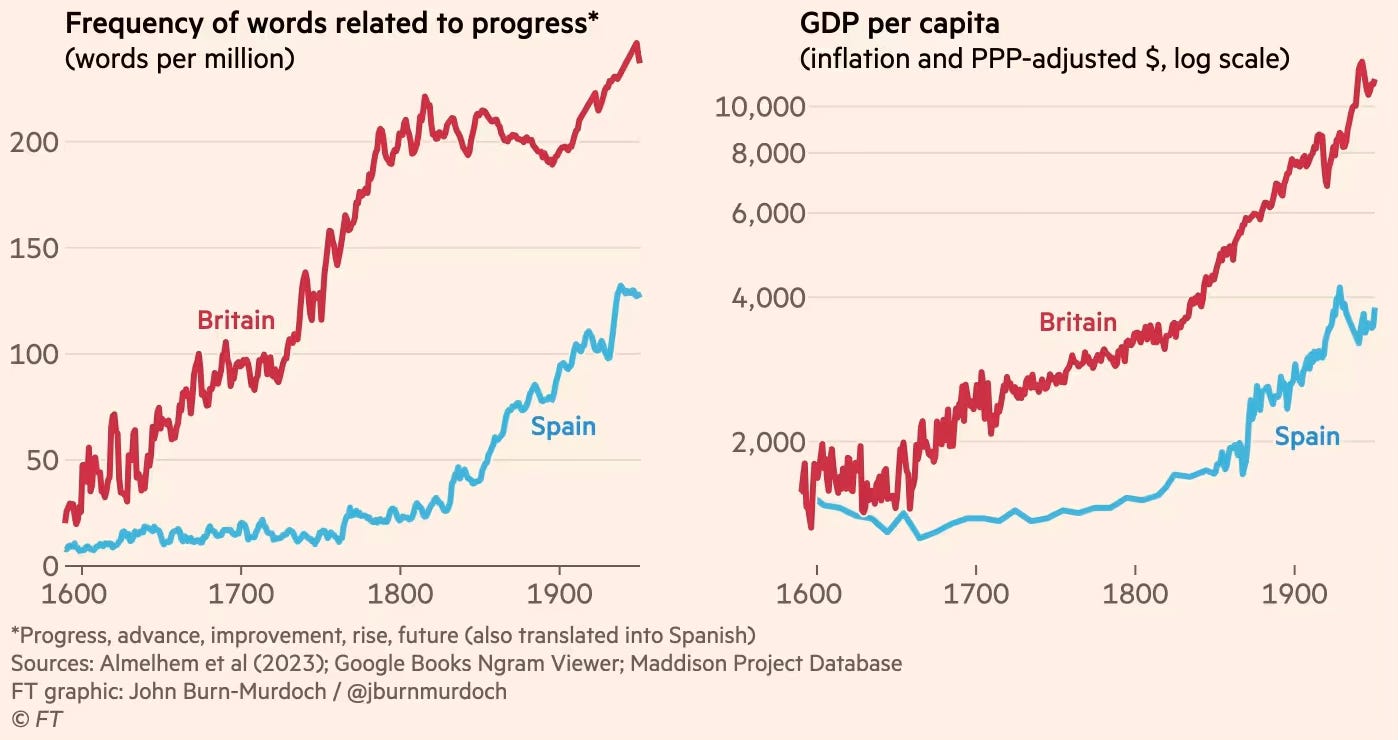
The researchers analysed the contents of 173,031 books printed in England between 1500 and 1900, tracking how the frequency of different terms changed over time, which they use as a proxy for the cultural themes of the day. They found a marked increase in the use of terms related to progress and innovation starting in the early 17th century. This supports the idea that “a cultural evolution in the attitudes towards the potential of science accounts in some part for the British industrial revolution and its economic take-off”.
To explore whether this holds for other countries, I have adapted and extended their analysis to include Spain, which was economically competitive with Britain well into the 17th century, but then fell behind. Using data from millions of books digitised as part of the Google Ngram project, I have found that the upsurge in discussions of progress in British books occurs about two centuries before the same uptick in Spain, mirroring trends in the countries’ economic development.
Burn-Murdoch goes further and finds that in contrast the language and culture of today appears to be regressive,
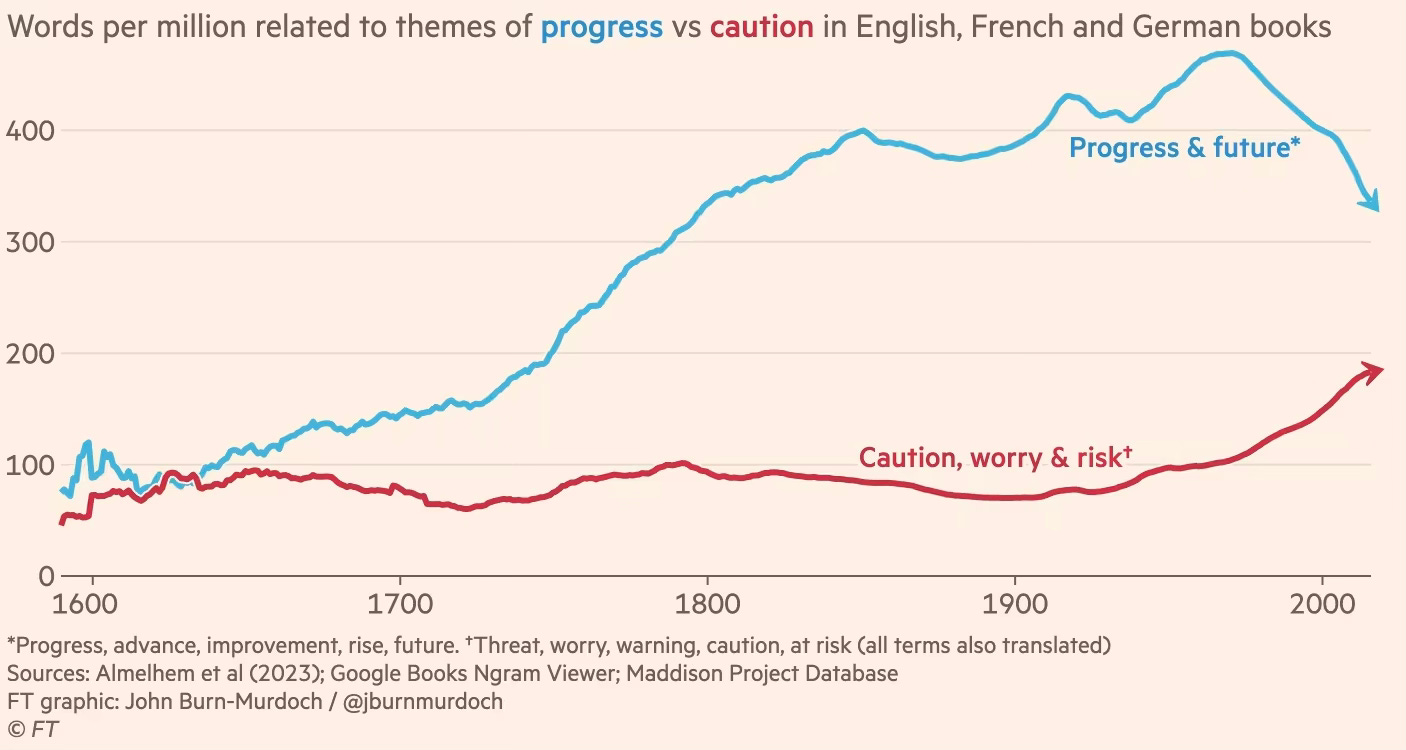
Extending the same analysis to the present, a striking picture emerges: over the past 60 years the west has begun to shift away from the culture of progress, and towards one of caution, worry and risk-aversion, with economic growth slowing over the same period. The frequency of terms related to progress, improvement and the future has dropped by about 25 per cent since the 1960s, while those related to threats, risks and worries have become several times more common.
That simultaneous rise in language associated with caution could well be not a coincidence but an equal and opposite force acting against growth and progress. Ruxandra Teslo, one of a growing community of progress-focused writers at the nexus of science, economics and policy, argues that the growing scepticism around technology and the rise in zero-sum thinking in modern society is one of the defining ideological challenges of our time.
The authors of the IZA paper have three findings,
First, there is little overlap in scientific and religious works in the period under study. This indicates that the “secularization” of science was entrenched from the beginning of the Enlightenment. Second, while scientific works did become more progress-oriented during the Enlightenment, this sentiment was mainly concentrated in the nexus of science and political economy. We interpret this to mean that it was the more pragmatic works of science—those that spoke to a broader political and economic audience, especially those literate artisans and craftsmen at the heart of Britain’s industrialization—that contained the cultural values cited as important for Britain’s economic rise. Third, while volumes at the science-political economy nexus were progress-oriented for the entire time period, this was especially true of volumes related to industrialization. Thus, we have unearthed some inaugural quantitative support for the idea that a cultural evolution in the attitudes towards the potential of science accounts in some part for the British Industrial Revolution and its economic takeoff.
Joel Mokyr has written about the sudden and miraculous explosion of science and technology in one part of the world and the creation of conditions for long-term economic growth, a development that cannot be explained by institutions alone. He points to the importance of culture - beliefs, values, and preferences that can change behaviour - in laying the foundations (in the 1500-1700 period) for the scientific advances and pioneering inventions that would instigate explosive technological and economic development.
I concentrate primarily on the one element in cultural beliefs that economists have so far neglected almost entirely, namely the attitude toward Nature and the willingness and ability to harness it to human material needs. Ultimately the relations with makom, or the physical world around us in the end determine the growth of useful knowledge and eventually that of technology-driven growth.
Technology is above all a consequence of human willingness to investigate, manipulate, and exploit natural phenomena and regularities, and given such willingness, the growth of the stock of knowledge that underpins and conditions the exploitation of knowledge. The willingness and ability to acquire, disseminate, and harness such knowledge are themselves part of culture and thus determine the intensity of the search for knowledge of nature, the agenda of the research, the institutions that govern the community doing the research, the methods of acquiring and vetting it, the conventions by which such knowledge is accepted as valid, and its dissemination to others who might make use of it.
It is in this general area that the roots of modern economic growth should be sought—specifically in events and phenomena that precede the eighteenth-century Enlightenment and Industrial Revolution in the centuries that are known, for better or for worse, as “early modern Europe,” roughly speaking between the first voyage to America by Columbus and the publication of the Principia Mathematica by Newton. It is the basic argument of this book that European culture and institutions were shaped in those centuries to become more conducive to the kind of activities that eventually led to the economic sea changes that created the modern economies.
He points to the different ways in which cultural beliefs create the conditions for adoption of technology.
The most direct link from culture and beliefs to technology runs through religion. If metaphysical beliefs are such that manipulating and controlling nature invoke a sense of fear or guilt, technological creativity will inevitably be limited in scope and extent. If the culture is heavily infused with respect and worship of ancient wisdom so that any intellectual innovation is considered deviant and blasphemous, technological creativity will be similarly constrained. Irreverence is a key to progress… so, as Lynn White has pointed out, is anthropocentrism. In his classic work, White stressed the importance of a belief in a creator who has designed a universe for the use of humans, who in exploiting nature would illustrate His wisdom and power… social attitudes toward production and work (and leisure) are another major factor in determining the likelihood of innovation.
Technologically progressive societies were often relatively egalitarian ones. In societies dominated by a small, wealthy, but unproductive and exploitative elite, the low social prestige of productive activity meant that creativity and innovation would be directed toward an agenda of interest to the elite. The educated and sophisticated elite focused on efforts supporting its power such as military prowess and administration, or on such topics of leisure as literature, games, the arts, and philosophy, and not so much on the mundane problems of the farmer in his field, the sailor on his ship, or the artisan in his workshop… The agenda of the leisurely elite was of great importance to the lovers of music in the eighteenth-century Habsburg lands, but was not of much interest to their farmers and manufacturers. The Austrian Empire created Haydn and Mozart, but no Industrial Revolution. As McCloskey has stressed, the bourgeois societies of the Netherlands and Britain of the seventeenth century, in contrast, were prime candidates for technological advances.
I’ll blog longer about Mokyr’s book that I just finished reading in another post. His analysis, coupled with that of Tirthankar Roy, have interesting implications if we examine India’s historical industrial development pathway.
Wednesday, January 10, 2024
India credit sources and their allocation trends
This blog will look at the data on the trends associated with credit allocation and their sources in India how it compares with other major economies. The data is sourced mainly from BIS.
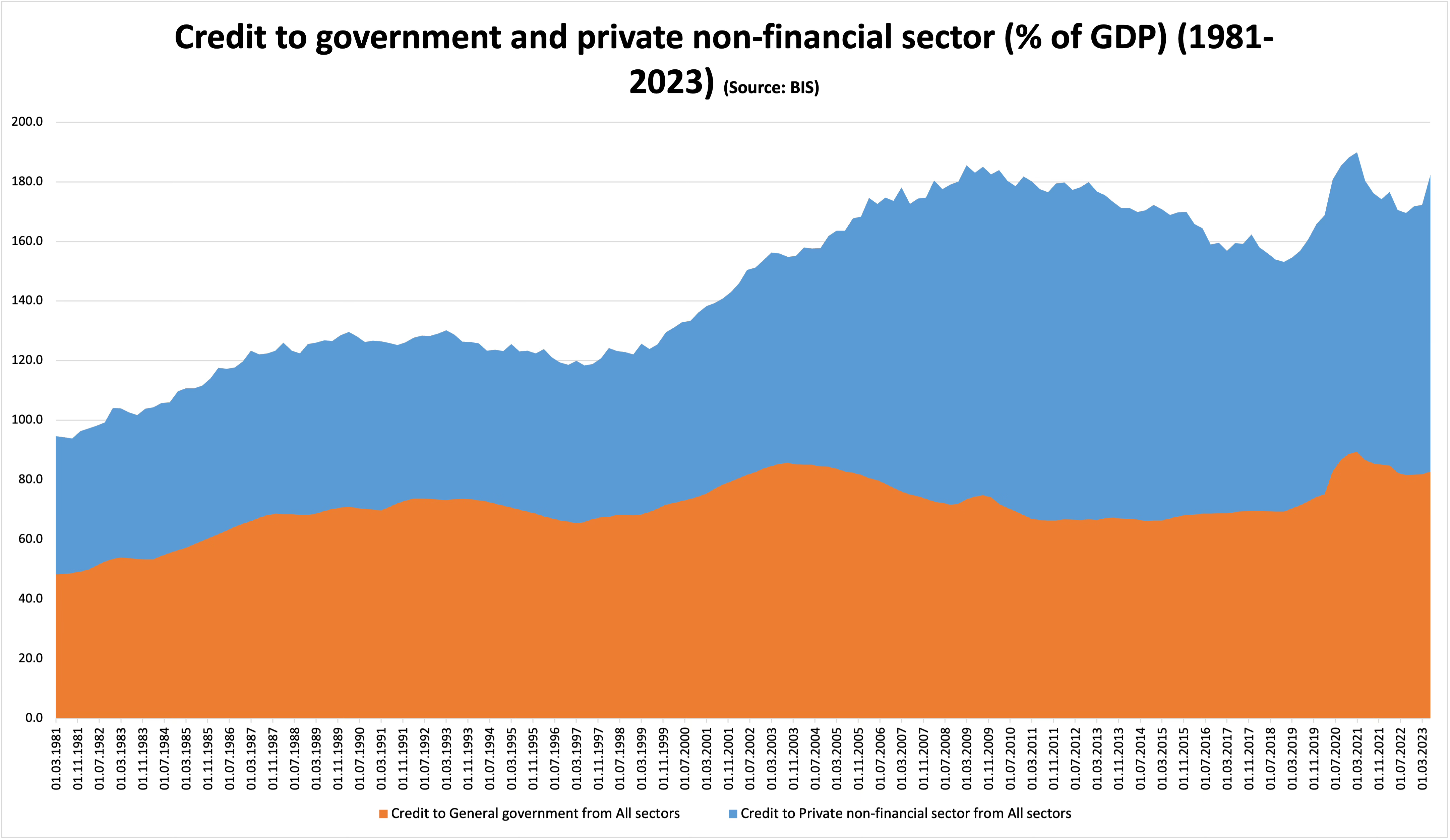
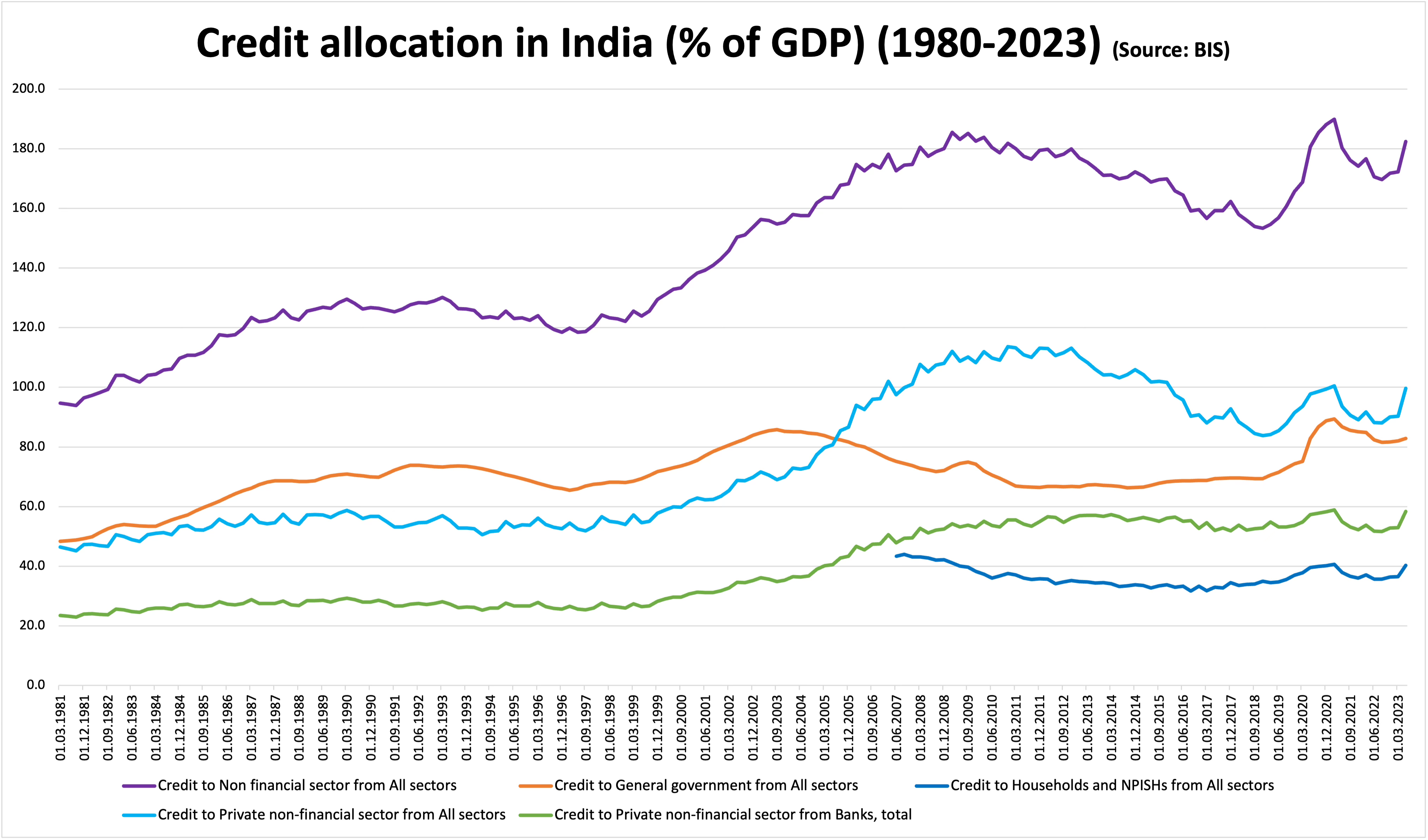
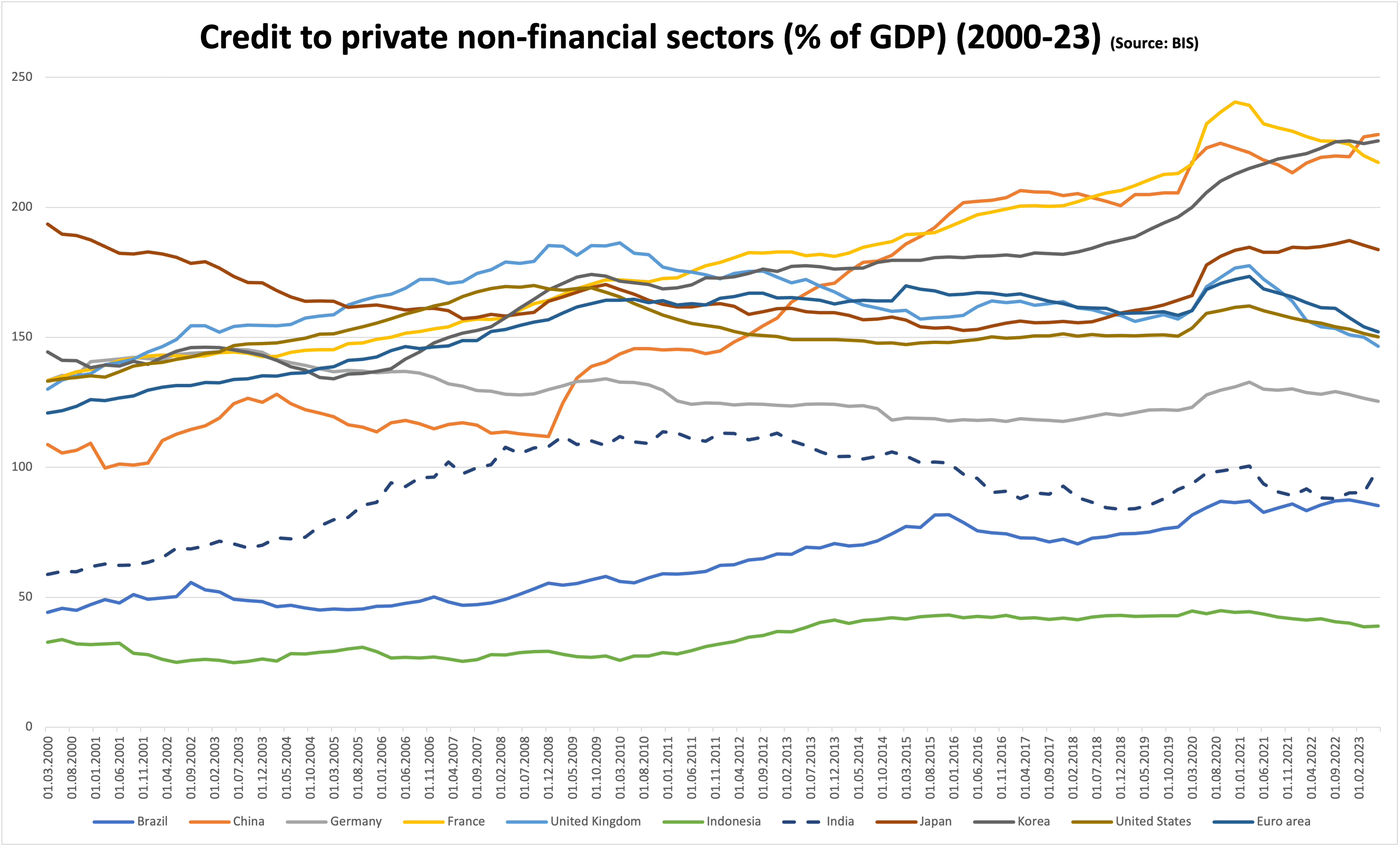
After rising slowly since 1980, credit to government as a share of GDP declined since about 2003 and has been at a stable 65-70% from 2010-18. But it started climbing before the pandemic and rose sharply during the pandemic to 89% of GDP in Q1 2021. While credit to private non-financial sector too followed the same trend, there was divergence since early 2000s when it started to rise sharply to peak by the rime of the global financial crisis. It then declined, only to rise again since 2019. The increased share of credit to private non-financial sector coincides with the increased role of non-bank institutions like capital markets, non-banking finance corporations (NBFCs), external commercial borrowings, private debt etc in raising debt.
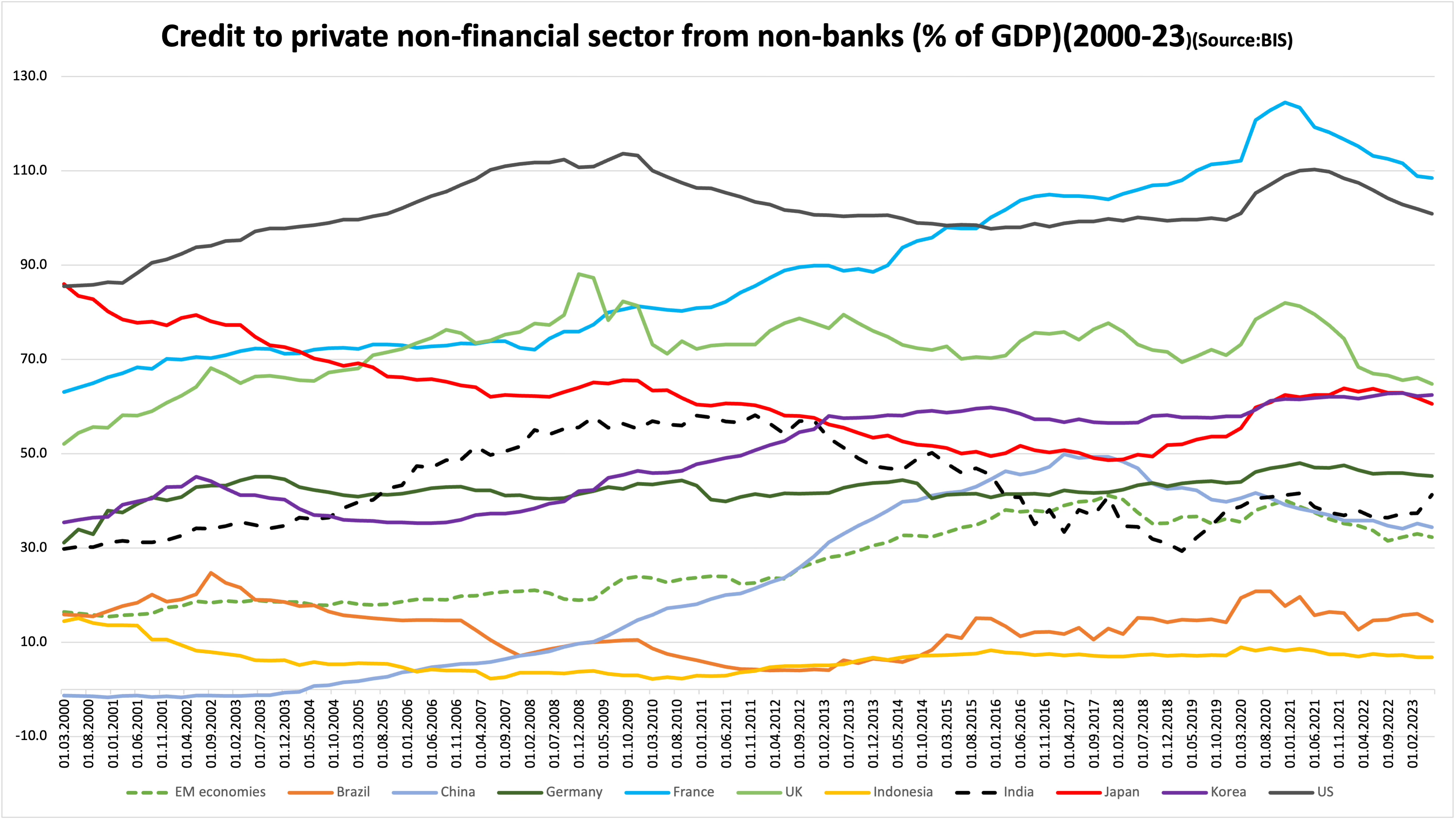
But there was surge in credit from non-bank institutions (bonds, shadow banks, ECBs, private debt etc) to private non-financial sectors from the beginning of the millennium. However, it peaked by 2012-13 and has since declined and stabilised. This trend is in line with the increased use of capital markets and NBFCs in India to raise debt.
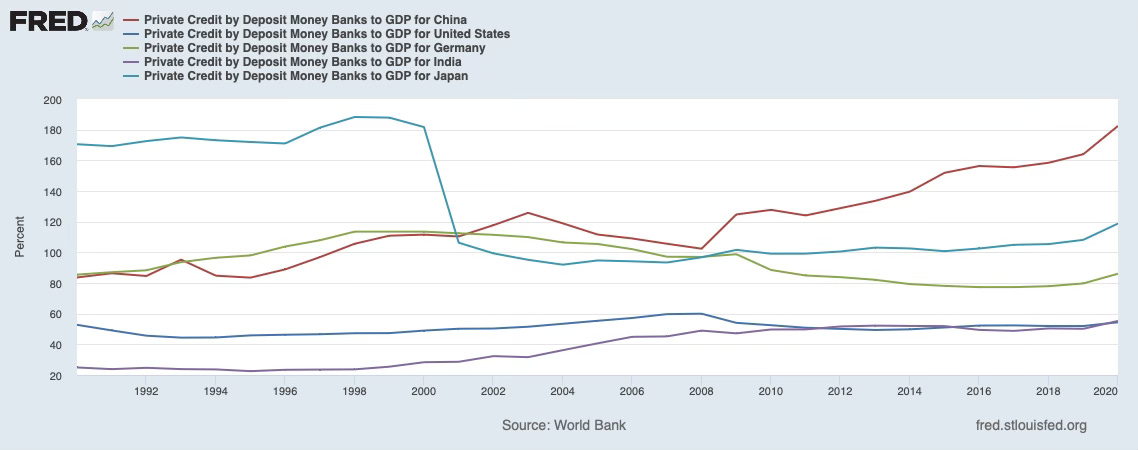
Bank credit has mirrored the trends in private non-financial sector credit as a whole. While it has nearly doubled to about 55% of GDP over the last two decades, it appears to have plateaued since 2008 in the 50-60% range.
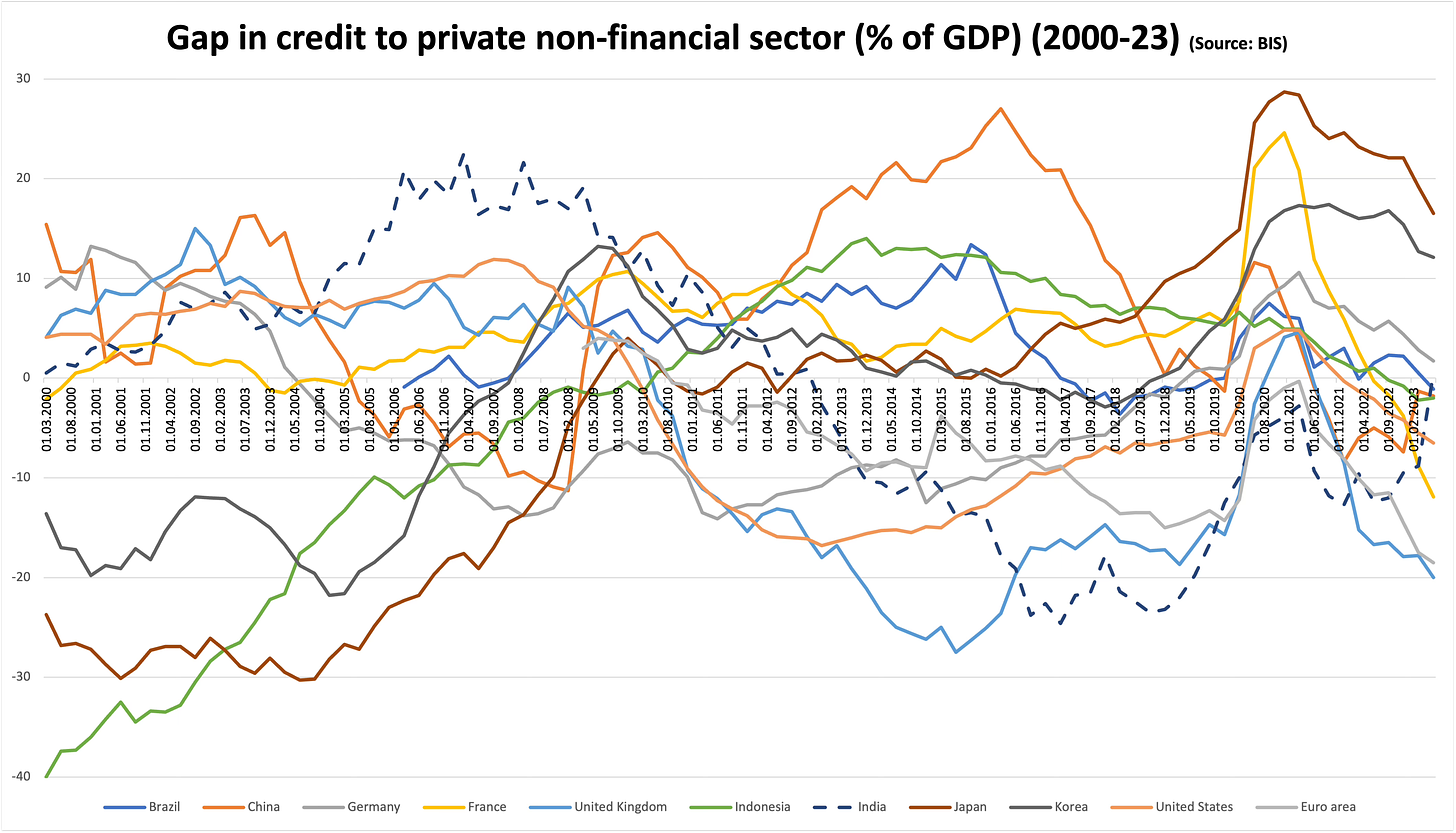
Credit to private non-financial sectors has been on a declining or stagnating trend as a share of GDP in India since the global financial crisis compared to other countries.
Despite all the hype around the rise of fintech and the talk of decline of deposit taking banks, bank credit to the private sector continues to remain stable as a share of GDP. In India it has nearly doubled to about 55% of GDP over the last two decades, though it appears to have plateaued since 2010.
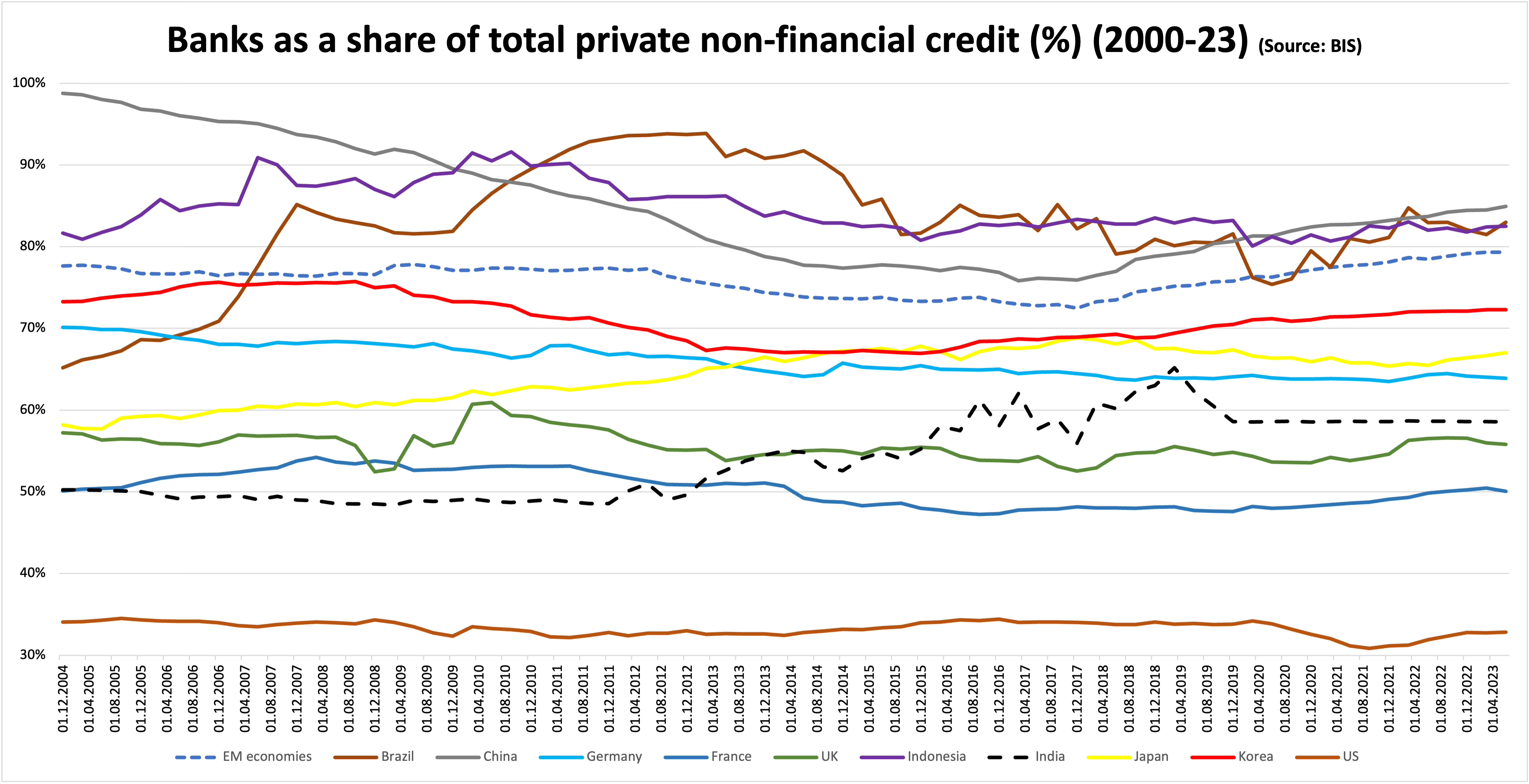
In fact, bank’s share of total private non-financial credit has remained stable across countries, developing and developed, despite the rise of alternative non-deposit taking bank credit institutions (bond markets, shadow banks, private credit etc). In India, its share has risen by about 10 percentage points since 2012 to make up slightly less than 60% of total private non-financial credit.
Credit from non-banks has sharply declined from a peak of 58.1% of GDP at the end of 2010 to 41.3% by end of H1 2023, briefly touching 31% by end of 2018. This runs counter to the widely believed story on the diversification of Indian economy’s credit allocation universe.
Unlike its developing country peers, India has been suffering a credit gap since the beginning of 2012.
![]() |
Availability of affordable capital, equity and debt, is one of the biggest constraints to business formation and expansion in India. The graphics clearly indicate that India has a lot of catching up to do on the debt intermediation side. It’s reflected in the stagnation at low levels of credit to private non-financial sector and the prolonged credit gap for more than a decade. For all the hype about it displacing bank credit, the share of non-bank credit to private non-financial sector has been on a declining trend, even as the share of bank credit has been rising. In this context, notwithstanding the hype around bond markets, I had blogged here about the central role of banks in financing of infrastructure.
In this context, we should be careful not to be misled by misplaced enthusiasm about fintech and other financial innovations, and disdain for boring old-fashioned banking. For those who claim that the future of finance is going beyond banks, the graphs above show that bank lending to private non-financial sector is several multiples higher in developed countries than in India and also they have been on a rising trend. Further, credit to private non-financial sector from non-banks has been on a declining trend since about 2020. This trend is unlikely to change given the end of the era of ultra-low interest rates and return to normalcy in interest rates.
As I have blogged here and here, in the absence of access to financing resources, fintechs can at best be a means to help banks improve intermediation breadth, effectiveness and efficiency. Here too, given the struggles faced by fintech with big-data based credit scoring and limited headway with micro-credit/savings/insurance products there remain several questions. After all the iteration over the coming years, we are likely to converge to a universe where banks partner with fintechs on services like customer acquisition, credit scoring, and payment collections. The core areas of banking like mobilising capital, loan origination, and loan book management are likely to remain with banks. This way banking would have become more efficient and effective. But this is not the future of finance posited by many experts today.
Monday, January 8, 2024
Thoughts on affordable housing VI
I have blogged about the challenge cities face in providing affordable housing, how vertical development is the only way to meet this challenge, how restrictive regulations stifle vertical development, and how this status quo is sustained by entrenched vested interests.
Urban planning is a good illustration of the vicissitudes of progress. For a long-time the only objective of urban planning was to ensure an ordered and planned development of the area. Zoning regulations were enacted to restrict cramped accommodation, prevent large shadows being cast thereby making cities dark, ensure sufficient utilities carrying capacity, and preserve or standardise the urban form.
Over time, these regulations, by restricting construction, led to the emergence of a price premium for properties in those areas. The existing landowners were naturally interested in preserving and maximising those premiums. They not only opposed measures that would increase supply and risk reduction of the premiums but also pushed for measures that erect more barriers to new construction. Many regulations like preservation of historic buildings and areas, green belts, higher parking requirements, more open spaces, and so on suited those already entrenched. Zoning came to be used as an instrument to preserve the status quo.
As the form and shape of these areas became frozen in a thicket of regulations, the expanding city started experiencing rising housing shortages and their prices so much so that it started to become a binding constraint on urban growth. The pressures to ease zoning restrictions and lower barriers to new construction began to rise. In fact, many global cities have reached a stage where further growth is possible only with renewal and easing of zoning regulations.
The Times has a set of excellent graphical articles on New York that illustrate the problems created by zoning regulations and how easing them can lead to the creation of more housing units.
Binyamin Applebaum tours the areas of New York where his ancestors lived and finds those properties are not only surviving but also could not have been built today. He describes the city as a “museum of family history” that preserves “the corporeal city of bricks and steel at the expense of its residents and of those who might live here”. He blames this on to interlocked regulatory barriers - zoning restrictions, tax code that penalises large apartment, rules that give neighbourhoods the power to veto redevelopment plans, and a byzantine permitting process. He writes that New York has witnessed sharp increase in housing rents in recent decades, climbing much faster than incomes.
In 1991, the median rent in New York City was $900. By 2021, the median renter was paying $1,500 a month for housing.
Housing is taking up an increasing share of family incomes,
The average New Yorker now spends 34 percent of pre-tax income on rent, up from just 20 percent in 1965.
Another article has some great illustrations of how restrictive zoning regulations limit the construction possibilities in an area and how they have become progressively more restrictive since they were first approved in 1916. In fact 40% of restrictions in Manhattan could not have been built today. Roughly 15% of the land is reserved for single-family homes.
Whole swaths of the city defy current zoning rules. In Manhattan alone, roughly two out of every five buildings are taller, bulkier, bigger or more crowded than current zoning allows, according to data compiled by Stephen Smith and Sandip Trivedi. They run Quantierra, a real estate firm that uses data to look for investment opportunities. Mr. Smith and Mr. Trivedi evaluated public records on more than 43,000 buildings and discovered that about 17,000 of them, or 40 percent, do not conform to at least one part of the current zoning code. The reasons are varied. Some of the buildings have too much residential area, too much commercial space, too many dwelling units or too few parking spaces; some are simply too tall. These are buildings that could not be built today.
Here are two examples.
And thisInterestingly, nearly three-quarters of the existing square footage in Manhattan was built between the 1900s and 1930s.
The third article, an essay by Vishal Chakrabarthi a former Director of Planning for Manhattan, shows that 500,000 units to house 1.3 million people can be built in New York City by easing the zoning regulations but without radically changing the character of the city’s neighborhoods or altering its historic districts.
Apartments near public transit are convenient for residents and better for the environment, so we started by looking at areas within a half-mile of train stations and ferry terminals. Next, we excluded parts of the city that might be at risk of flooding in the future.In the remaining areas, we identified more than 1,700 acres of underutilized land: vacant lots, single-story retail buildings, parking lots and office buildings that could be converted to apartments. For each lot, we calculated how much housing we could add without building any higher than nearby structures… Last, we considered office buildings that could be converted to apartments… The hypothetical buildings in our analysis would add 520,245 homes for New Yorkers. With that many new housing units, more than a million New Yorkers would have a roof over their head that they could afford, near transit and away from flood zones, all while maintaining the look and feel of the city.
The fourth article describes the challenges of converting office complexes that have become vacant after the pandemic to residential units.
The deep interior of the modern office building, which is perfectly useful for windowless meetings and supply closets, is now largely useless for apartment living… The exterior window system on a building like this would need to be replaced at major expense, because these windows don’t actually open. These buildings have far more elevators than an apartment of the same size would want (adding either more expense in conversion or more wasted space). And in many downtown markets, a modern building like this is worth more per square foot in office rents than in apartment rents. As offices, these buildings can also rent 100 percent (or even more) of their total square footage, according to the quirky math of commercial real estate. That’s because some companies rent entire floors, but also because office tenants — unlike apartment renters — typically pay additional rent for shared building spaces beyond their suites.
To convert any of these properties to apartments, you’d have to add common corridors, bike storage, lounges, a gym — features that take up space but don’t collect rent (at least, not explicitly). In a typical residential building, only 80 to 85 percent of all square footage is considered rentable. That makes conversions particularly unappealing to many office owners… Then local rules add still more complexity: Maybe the building has to meet stricter seismic requirements as an apartment than as an office (much of the West Coast), or the whole facade must be replaced to meet current wind-load standards (hurricane-prone places). Or you can only convert 18 of the 32 existing office floors into residential use (in Manhattan, such use caps depend on a building’s age and location). Or units must average at least 500 square feet in size per building (downtown Chicago). Or every legal bedroom must have its own working window (New York requires this but Philadelphia and San Francisco don’t). Together, these constraints increase the cost of conversion and reduce the possible forms it can take.
This illustration of turning an existing office complex into a residential apartment shows the extent of challenges.
The large Indian cities are already at a stage where housing ownership within the city is unaffordable to all but the richest. Even the suburbs are fast being priced out of the reach of the emerging middle class. Those fortunate to have come in early and bought a property are wealthy rentier landlords enjoying the unearned increment from the city’s growth and housing scarcity. The only reason why things are not worse is because unlike ownership renting is still affordable.
Easing zoning regulations, and drastically at that, is becoming inevitable for these cities if they are to meaningfully address the housing supply problem.