Substack

Showing posts with label Health Care. Show all posts

Saturday, July 11, 2026

Weekend reading links

1. FT long read on how senator Deborah O'Neill, as chair of the Parliamentary joint committee on corporations and financial services, has single-mindedly exposed and brought the knees the Big Four auditing and consulting firms in Australia. 
Deborah O’Neill has led the charge against KPMG in Australia over a client confidentiality scandal that prompted the departure of the firm’s chair, chief executive, chief operating officer, audit leader and a senior partner over the past month... comes on the heels of a similar implosion at PwC. The rival Big Four firm came unstuck when a data leak led to the exit of senior management... An EY employee was charged with accessing the bank details of Prime Minister Anthony Albanese while working on contract at Australia’s biggest bank. Meanwhile, Deloitte partially refunded the Australian government after admitting that it used AI to compile a report...
In 2023, the Labor senator forced the publication of emails that implicated PwC partners in the tax leaks scandal. PwC partners were caught sharing secret government tax plans that one of them had obtained from his work on an advisory board in Canberra, in the hopes of winning business in the US. This year O’Neill used parliamentary privilege to air allegations made by a KPMG whistleblower that had been inadequately investigated by the firm. KPMG has now been exposed as having used confidential information from existing audit clients to try to win new business from rivals — some from PwC as its audit customers looked to switch in the wake of that firm’s woes...

She entered parliament in 2010 having spent her career in education. O’Neill soon discovered that some Big Four consultants acted like some of her former pupils — copying the answers from the back of the book and then marking their own work, as she puts it — and used her role to put the leaders of the firms under pressure.
2. Soumaya Keynes points to a fascinating study by Rebecca Diamond of Harvard University of the use of GLP drugs that appears to show increased confidence and employment rates among women in the US. The study finds, using data gathered between 2021 and 2023, that the poorest third of women in the US suffered an obesity rate 14 percentage points higher than the richest third, whereas the gap was negligible for men. 
The study's main findings:
After 18 months, women using GLP-1 drugs who start off without a job enjoy employment rates 27 percentage points higher than otherwise similar non-users. Women who start off with a job see their employment rate fall slightly, and although the data is too noisy to pick out effects on their earnings, it looks like their household income rises by 10 per cent. That second effect is a bit surprising, and possibly explained by parallel developments in these women’s love lives. Diamond estimates that GLP-1 drugs give single women a dramatic 29 percentage point increase in their chances of coupling up. On average, their new partners are richer than them, giving their household income a bump. Which could explain why a few of the women losing weight then feel able to drop out of work.
The study also points to a more disturbing consequence.
So far at least, GLP-1 drugs are disproportionately used by the rich. In Diamond’s study two-fifths of the women paid for the drugs out of pocket, at a median cost of $275 a month. Research based on Voy prescriptions shows how, adjusting for relative obesity rates, uptake is skewed towards more affluent areas. If obesity becomes an even stronger signal of economic disadvantage, the stigma attached could grow.

3. The rise of London's King's Cross area as perhaps Europe's AI capital.

Two decades ago, King’s Cross was central London’s most neglected district. Today, it is home to the main foreign outposts for several of the world’s wealthiest companies, from Big Tech giants Google and Meta to their richly funded AI challengers including OpenAI, Anthropic and Jeff Bezos’ Prometheus. AI researchers and entrepreneurs are packing out the area’s canal-side cafés so densely that venture capitalists prowling for their next deal are struggling to prevent their coffee meetings from being overheard by rivals.
For many, this resurgence can be traced back to one individual: Sir Demis Hassabis, the DeepMind co-founder and Nobel laureate who stayed in London to build his AI lab following its sale to Google in 2014 for £400mn. “Demis keeping DeepMind in London and resisting the gravitational pull of [America’s] West Coast is the most important thing that has ever happened to the London tech ecosystem,” says Tom Hulme, a tech investor at Alphabet’s GV venture capital unit... Just as PayPal helped launch the careers of a generation of Silicon Valley founders and investors including Elon Musk and Peter Thiel, a “DeepMind mafia” in London is pulling in billions of dollars to AI start-ups founded by Hassabis’s former lieutenants, including David Silver’s Ineffable Intelligence and Tim Rocktäschel at Recursive Superintelligence...
It was Hassabis’s pursuit of an “artificial general intelligence” capable of scientific research and a wide range of human tasks that in many ways kick-started the current AI boom. DeepMind’s sale to Google prompted Elon Musk to set up a research lab to counterbalance the internet group’s dominance of AI; that lab was OpenAI. DeepMind went on to make a series of AI breakthroughs including AlphaGo, which in 2016 beat the board game Go’s world champion Lee Sedol, and AlphaFold, which used deep learning to predict protein structures with superhuman speed.

King's Cross has emerged as the Canary Wharf of tech in UK, and this description is apt and underlines the continuing importance of personal interactions and connections. 

The density of AI talent in King’s Cross was why the government’s scientific research agency Aria took a “very conscious decision” to base itself there rather than Whitehall, says Pippy James, its deputy chief executive. “We were definitely inspired by Kendall Square in Boston,” she says, referring to the area surrounding MIT where Google, Microsoft and Amazon, as well as biotech companies Moderna and Novartis, have offices. “Value creation comes from those serendipitous collisions.” In recent weeks there has been a steady stream of American AI companies announcing moves into the area. OpenAI and Anthropic have signed leases for tens of thousands of square feet in King’s Cross. Others moving in include Bezos’s “physical AI” company Prometheus, Cursor, the AI coding company that recently agreed a $60bn sale to SpaceX, AI agent group Perplexity and open model developer Reflection. Google, which already has many researchers and engineers in the area, plans to start moving staff into its vast new “Platform 37” office this summer after almost a decade in development.

4. This is a striking factoid about the importance of chips now. 

With SpaceX going public, the list of the 10 most valuable US public companies is entirely made up of tech companies for the first time. Of those, three are semiconductor specialists. But with chips a key ingredient in AI, the other seven are also now all designing their own chips.

Some stats about the global chip squeeze.

... Elon Musk’s xAI to rent out spare capacity in its data centres. In recent weeks, Anthropic, Google and start-up Reflection AI have agreed to pay a total of around $2.3bn a month — or $28bn a year. This looks like a big return on Musk’s data centre investments. As of March this year, xAI’s total capital spending over its lifetime totalled $26.5bn... this surge in demand has already prompted a huge increase in supply, both of planned chipmaking capacity and newly minted chip stocks. One sign is the $600bn that memory chipmakers Samsung and SK Hynix said this week they plan to invest in Korea. Another is the $29bn that SK Hynix hopes to raise when its American depositary receipts begin trading in the US next week... TSMC has said it will boost its capital spending by as much as 37 per cent this year, as it did in 2025. But those increases follow two years of retrenchment and would leave 2026 capex only around 50 per cent higher than 2022. Contrast that with the biggest buyers of AI chips. Seven of the largest data centre operators are planning to spend an astounding $848bn this year, at least five times what they spent in 2022, according to a calculation by the newsletter Exponential View.

5. On the new bonds issued by SpaceX.

The bonds enjoyed very robust demand at the point of issuance, but some see that as a problem in itself. Allianz’s chief investment officer has described the market’s willingness to hand money over to Musk as a clear sign that we have moved from “a healthy boom, a stretched boom . . . into bubble territory”. Ominously, the bonds have weakened since they launched.

6. The AI LLMs scorecard

Where will Sarvam stand?

Also national scorecard.
7. The low-margin business of mobile phone assembly. Amber Industries which makes air conditioners for eight of the top 10 brands and more than a quarter of all ACs made in the country, now proposes to assemble smartphones for Oppo. 
Now, the company plans to sub-lease a part of Oppo India’s factory in Noida, set up SMT lines, and start assembling phones there... But smartphone assembly is one of the toughest businesses in electronics manufacturing... The target is to eventually assemble about a fifth of Oppo India’s volumes, scaling from roughly 8 million handsets in the first year to nearly 15 million in the second... Amber expects Ebitda margins of 1.5–2%, excluding benefits from the government’s production-linked incentive (PLI) scheme. That’s well below the 8.8% Ebitda margin generated by its broader electronics business in FY26, and the 7.1% operating margin recorded by its AC-heavy consumer-durables segment... Take Dixon, for instance. The company already accounts for nearly one-fifth of India’s smartphone output. Even at that scale, smartphone assembly, aided by PLI incentives, generates Ebitda margins of only about 3%.

8. AI boom compared with historical episodes.

9. On the rise of non-compete clauses in OECD countries and their adverse impact on productivity.
About 30 per cent of employers surveyed by the OECD said they had increased their use of the clauses in the past five years... It estimates that a 10 percentage-point increase in the prevalence of non-compete clauses in an industry was associated with a 1.9 per cent decline in the level of labour productivity, with workers stuck in sub-optimal jobs and firms less able to gain new skills. In many countries, non-competes have spread into parts of the labour market where the original justification of protecting sensitive information and firm-specific information is “weak or absent”, the research found, pointing to their use among entry-level fast-food staff in the US, manual workers in Italy and childcare workers or yoga instructors in Australia.

10. The market concentration in DRAM chips.

A market in which a monopolist owns 100 per cent gets an HHI of 10,000, a duopoly scores above 5,000, and a perfectly competitive market approaches zero... The US DoJ considers anything between 1,000 and 1,800 points to be “moderately concentrated”. Per Counterpoint Research, as of the first quarter of 2026 the memory market is 38 per cent Samsung (South Korea), 29 per cent SK Hynix (South Korea), 22 per cent Micron (US), 8 per cent CXMT (China), 2 per cent Nanya (Taiwan), and 1 per cent everyone else. This gives us an HHI of 2,838... Both Samsung and SK are two of Korea’s largest conglomerates (the so-called chaebols) which benefit from cosy relations with the state, so viewing them as fierce competitors in the same memory market might be wrong-minded in this case... And if the two companies function as a single economic entity in the global DRAM market, we should probably count them together for HHI purposes. And doing this we get a much higher HHI reading of 5,042. That’s above 5,000 —the HHI of a perfect duopoly.
11. China’s excess capacity in manufacturing requires something similar to what was done by the former Prime Minister Zhu Rongji

In the late 1990s and early 2000s… under Zhu’s slogan of “zhua da, fang xiao” or “grasp the large, let go of the small”, Beijing retained its grip on key strategic industries while relinquishing control of a vast sea of smaller companies and factories…Thousands of mines, steel mills and other industrial sites were shut for good. An estimated 30mn to 40mn workers lost their jobs. The process was deemed painful but necessary: not only in setting up China’s accession to the World Trade Organization in 2001, but in freeing Beijing from supporting uneconomic industries… 

Over the past 15 years, as China’s share of global manufacturing surged to around one-third, the share of lossmaking industrial businesses jumped from about 10 per cent in 2010 to nearly 25 per cent last year, according to the MERICS China Overcapacities Monitor. This dynamic exists across everything from steel and cement to cars, computer chips and robots. Take the automotive sector for example. Domestic car sales last year totalled 23.9mn against estimated production capacity of 45mn to 50mn. Sales are highly concentrated among a clutch of leading companies. According to HSBC, more than 70 per cent of EV sales — including plug-in hybrids — are being soaked up by 10 brands, leaving 47 others jostling for the remainder. In the shrinking market for petrol and diesel cars, 10 brands have about 70 per cent of sales and 73 others compete for the rest.

12. South Korean capitalism and windfall profits sharing - SK Hynix and Samsung edition.

Soaring global demand for high-bandwidth memory chips used in AI systems has propelled SK Hynix and Samsung Electronics to record earnings. This week Samsung announced quarterly operating profit of Won89.4tn ($59.7bn). The windfall is being shared with employees. Last September, SK Hynix agreed to pay workers 10 per cent of annual operating profits for a period of 10 years. Samsung followed with a similar arrangement in May after its union threatened strike action. With both firms expected to earn hundreds of billions of dollars this year, average bonus payouts per memory chip worker could reach about Won600mn ($400,000) at Samsung and even more at SK Hynix. Such amounts are staggering in a country where the average worker earns Won50.6mn per year, according to Korea Enterprises Federation data. 

The Bank of Korea has warned of potential inflationary pressure as a result, and towns where many semiconductor workers live are undergoing property price jumps. Competition is intensifying for places at universities offering semiconductor “contract” programmes that guarantee jobs at Samsung Electronics or SK Hynix upon graduation. Admission scores required for some such courses now exceed the average for natural sciences at Seoul National University, the country’s top-ranked university, and are just below those needed for medicine... The boom is also reshaping Korea’s marriage market. Matchmaking agencies, which are known for using meticulously harsh metrics to rank clients, are now giving higher points to chip workers.

13. Data centres are consuming massive amounts of power and water.

Data hubs already devour more electricity globally than all but 10 countries. About 448 terawatt hours last year if you’re interested. The AI boom means that amount is on track to roughly double within four years... By 2030, they could be using enough water to meet the basic needs of all 1.3bn sub-Saharan Africans for a year, UN researchers estimate.

And it is provoking backlashes. Sample this from the US.

An unprecedented 75 US data centre projects worth around $130bn were blocked or delayed in the first three months of this year, nearly as many as in the whole of 2025, says the Data Center Watch research group. It reckons active opposition group numbers have grown from 396 at the end of 2025 to 833 by the end of March.

14. The Strait of Hormuz squeeze was not as bad as earlier episodes. 

15. Transformers are at the heart of power transmission, distribution, and use. Thanks to the AI and data centre boom, transformer prices have gone over the roof.
Specialist electrical steel — essential for transformer cores — is produced by only a handful of global suppliers, many of whom are struggling to keep up with the surge in demand. Market growth, price volatility and limited mining capacity have also strained supplies of copper, crucial to the conductivity of windingsaround a device’s core. But one of the most acute bottlenecks is the shortage of skilled workers needed to carry out complex, labour-intensive manufacturing tasks...
With up to 80,000 different designs, most transformers still have to be built largely to order, taking three to six months to make. The most demanding stage is the windings, when copper wire is applied around a transformer’s core — a “beautiful” process, according to Bruno Melles, an engineer now leading Hitachi’s global transformer business. Each winding is unique and is “still a human manual activity that we’re very proud of”, he says. The number and pattern of these windings dictate voltage — fewer turns lead to lower voltage while higher-voltage devices can have multiple windings stretching hundreds of kilometres. Once complete, the assembly is placed in a protective outer metal shell, where oil acts to insulate and cool the device...

The world’s biggest transformer manufacturers have reported tens of billions of dollars in backlogs in the first quarter of 2026... US developers are turning to imports. The EU, Mexico, South Korea and Brazil are the biggest suppliers of power transformers to the US, together accounting for more than three-quarters of imports by value last year.

Into this mix come innovations in the form of modular solid-state transformers that use modern power electronics and respond dynamically to changing power needs, enabling real-time monitoring and control (which legacy transformers with their steel and copper cannot do). 

Saturday, May 2, 2026

Weekend reading links

1. China's beggar-thy-neighbour trade policy, titanium dioxide edition.

LB Group produced titanium dioxide at $1,500 a tonne in China, including subsidies, nearly half the estimated $2,800 a tonne cost to produce in the UK... China became a net exporter of titanium dioxide after 2010, with exports rising from just 48,000 tonnes that year to more than 1.7mn tonnes in 2025, creating a global glut of excess production that coincided with a wave of factory closures outside China. Over that 15-year period, factories with a combined capacity of nearly 1.3mn tonnes were shut down in Asia, Europe and the US, according to data compiled by industry analyst Reg Adams, who has tracked titanium dioxide markets since 1993. Chinese capacity hit 5.7mn tonnes at the end 2025.

2. John Burn-Murdoch points to the aspiration gap among today's youth, or the gap between their actual incomes and their expectations. 

Even though today’s young adults, and graduates in particular, are over-represented in the top quartile of the earnings distribution, they are also far more likely to be at the bottom than the top for earnings relative to reasonable expectations. In both the UK and US, even though only 10 percent of graduates are in the lowest earnings quartile, one in three is in the bottom bracket for earnings relative to expectations.
The average thirty-something university graduate in the UK today sits at the same rank of the earnings ladder as the average high school graduate did in 1995 and the average high school graduate today sits at the same rank as someone who never completed school in 1995.
Are today’s twenty- and thirty-somethings earning more than their parents did at the same age? Yes. But their relative position in society is lower than their parents’ was, and their position relative to their peers and expectations is significantly lower. Since it’s the latter that drives satisfaction, young adult malaise should come as no surprise.
3. The US AI spending estimates pale in comparison to the money spent on railways in the late nineteenth century. 
By 1890 railway companies in the US alone had issued about $5bn worth of bonds. Adjusting for inflation that equates to about $180bn in today’s money. However, this understates the enormous scale of the undertaking, because the US economy was much smaller then. In 1890, $5bn was about one-third of America’s GDP, so the investment spree was arguably the equivalent of spending over $10tn today. It also resulted in an epic, generation-defining crash. In 1873, Jay Cooke & Co, the premier investment bank run by America’s dominant financier at the time, suddenly collapsed under the weight of unsold railway bonds. This caused a giant financial crisis and ushered in what was long known as the Great Depression, until the even larger one in the 1930s.

4. McKinsey Global Institute have identified 18 future arenas of growth.

Their performance over the 2022-25 period validates their prioritisation.
They added about $18 trillion in market capitalisation in the last three years.
5. The 2 hour mark in a marathon is broken as Sebastian Sawe of Kenya wins the London marathon.
Both Sawe and Assefa were wearing Adizero Pro Evo 3 shoes, which were only unveiled a few days before the race. Known as “supershoes”, such ultralight, high-tech trainers cost hundreds of dollars a pair, but are worn only once in competition races by elite runners. Since the release of the Nike Vaporfly, the first supershoe, in 2017, the number of men and women breaking new time barriers has risen sharply. Based on a UK size 8.5, the new shoes worn on Sunday by Sawe and Assefa weigh just 97 grams, according to Adidas, making them 30 per cent lighter than the German sportswear company’s previous design. They also cost $500 a pair.

Also this

6. Power subsidy facts of the week.

7. Ajay Shah points to an important opportunity in the Gulf as the post-war reconstruction starts.

The region of the Persian Gulf will have capital expenditure for massive construction and engineering projects, expanding to perhaps $150 billion annually. Simultaneously, the geopolitical environment dictates investment in military capability. Procuring new defence systems to protect against drone and missile attacks will require approximately $100 billion annually. We may then envision this combination of engineering and defence procurement as a new pathway for demand of $250 billion a year into the global economy from the GCC... A lot of the projects in West Asia will be done by global firms, using Indian workers. Remittances from Indian workers will do well. Renewables, drones and missiles, oil and gas engineering: These three areas are important in export markets. The domestic environment in these areas is relatively subdued. Indian firms will do well by trying to obtain revenues from the coming engineering boom in the West Asia, and from the global boom in renewables and defence.

8. So far Apple has ploughed back its massive cash surpluses to buyback more than 40% of its outstanding shares!

This is an important moat for Apple (its profit after tax is set to touch $125 bn this year!).

Around 40 per cent of Apple’s profits now come from services, led by App Store commissions and Apple’s cut of the revenue Google makes on its gadgets. This makes it look less like an innovative tech leader and more like a powerful gatekeeper able to extract tolls from those who want to reach the estimated 1.5bn people with iPhones... Apple’s shares are still close to their all-time highs, reflecting the market’s generally sanguine view that it doesn’t need to join the ruinously expensive AI race that is consuming much of the tech world. Instead it can just sit back and take a cut from distributing the AI services of others to its massive user base.

9. Xiaomi is trying to compete with Tesla et al in the European premium brand market. 

Just two years after building its first car, China’s largest smartphone maker has already delivered 650,000 electric vehicles — on par with the number of Tesla vehicles sold last year in the world’s largest automotive market. Xiaomi founder Lei Jun, who has earned comparisons with Steve Jobs, now aims to take on Elon Musk’s company in Europe with its premium EVs known for their breakneck acceleration and advanced features... Since Lei announced his plan to build a car in 2021, Xiaomi stunned the global car industry with the launch of its first model — the Speed Ultra 7 sports sedan — just three years later... After the SU7 became one of China’s best-selling cars, its second model, the $35,000 YU7 that rivals Tesla’s Model Y with designs resembling Ferrari’s Purosangue model, received 200,000 pre-orders in just three minutes at last year’s launch... 

Xiaomi established an EV research and development centre in Munich last year, hiring more than 75 engineers. Many Chinese brands have rapidly expanded into Europe with prices roughly double those in China, yet they remain affordable due to advanced software... At its only EV factory in China, Xiaomi has deployed its own manufacturing methods and materials to bring down production costs while strengthening the durability of its vehicles. The plant, which produces a car every 76 seconds, has a 91 per cent automation rate with hundreds of robotic arms to assemble the cars while “autonomous mobile robots” carry car parts around the factory.

10. Announced Vs actual Trump tariffs.

11. EV prices are falling and ranges are rising.
Prices for lithium-ion batteries, the primary type used for E.V.s, have fallen to around $100 per kilowatt-hour in 2025, from $1,000 in the early 2010s, according to BloombergNEF. Battery density has gone up too. As battery costs fell and manufacturers built more E.V.s, ranges rose and prices fell. Tesla’s cheapest Model 3 climbed to a range of 321 miles this year, up from 220 when it was launched in the late 2010s, while its inflation-adjusted price decreased. Or consider the Leaf, which debuted 15 years ago. By 2016, the cheapest Leaf had 84 miles of range and cost around $30,000, the equivalent of $40,000 today. Nissan’s $32,000 2026 Leaf has a range of more than 300 miles.

12. Facts about German rearmament.

After loosening its constitutional debt brake last year to unlock virtually unlimited spending on the sector, Berlin intends to allocate €779bn to defence between 2026 and 2030 — more than double the previous five years. By the end of the decade — more than five years ahead of the 2035 target date — the country would surpass Nato’s goal of spending 3.5 per cent of GDP on the military, with an annual budget reaching almost €190bn.

The loss of oil supply is the highest in history.
And it has impacted the prices of several commodities.
14. Microsoft, Meta, Alphabet and Amazon are set to invest $700 bn this year on AI infrastructure.
15. Nice illustration of the conflict of interest problem that bedevils health care.

Saturday, April 18, 2026

Weekend reading links

 1. Net FDI from India has been negative for several months now.

2. WSJ graphics on US health care system. Cost of inpatient procedures are much higher than elsewhere.


Cost of pharmaceuticals too are much higher.
3. The rise and rise of iPhone manufacturing in India
The company assembled about 55 million iPhones in India in 2025, up from 36 million a year earlier, people familiar with the matter said, asking not to be named because the numbers aren’t public. Apple makes about 220 million to 230 million iPhones a year globally, with India’s share of the total increasing rapidly.

4. For those advocating currency depreciation as the response to a sharp increase in oil prices, Sachidanand Shukla has a cautionary note pointing to the importance of stability and credibility of the rupee.  

The allure of a depreciating exchange rate lies in its simplicity: It makes ones’ goods cheaper for foreigners. However, this is often a Faustian bargain. For many emerging and developed markets alike, the reality of a currency in freefall is not a boom in exports, but often a harsh blow to purchasing power and investor confidence. Imagine yourself in the shoes of a big global financial investor. How confident will you be in investing a billion dollars if you lose 9-10 per cent in a year due to depreciation?

On a related note, as the RBI deploys an expansive toolkit to stabilise the rupee, Rajeswari Sengupta writes that RBI has engaged strongly in the forex markets, selling over $30 bn in the spot markets in March. Its other actions were intriguing. 

It imposed regulatory restrictions —barring banks from taking positions in the offshore non-deliverable forward (NDF) market and capping their daily onshore FX exposure to $100 million each... The RBI did not merely restrict new positions; it required banks to unwind existing ones, reportedly at a cost of ₹4,000–5,000 crore. In effect, banks were penalised for actions that were fully legitimate at the time. Such retrospective costs risk undermining confidence and making banks more cautious in FX markets. Lower participation could reduce liquidity. And when liquidity dries up, currencies tend to become more volatile, not less.

5. The human cost of Israel's bombings of Lebanon.

On the day the cease-fire came into shaky effect — and most civilians across the region began to breathe a sigh of relief — Israel proceeded to launch one of the deadliest strikes on Lebanon ever, including in the heart of densely populated Beirut, without any warning. The operation, which the Israel Defense Forces sayattacked Hezbollah command centers, hit 100 targets in 10 minutes, killed over 350 people and wounded well over 1,000, many of them civilians... over the past six weeks, Israeli strikes in Lebanon continue, and have forced more than a million people from their homes and have left over 2,000 people dead and multiple villages in ruins.

6. The rise of China's export control measures.

China announced restrictions on exports 30 times between 2021 and 2025, the report by the EU Chamber of Commerce in China found, up from just 11 in the previous five years. Since 2020, Beijing had turned to “geoeconomic” controls — measures aimed at achieving geopolitical goals, it said. These include 10 that made use of global chokepoints in supply chains, such as China’s rare-earths exports, and 10 others aimed at coercing other countries using economic measures.
China has also announced sweeping new regulations to punish foreign companies that are trying to decouple their supply chains from China by increasing reliance on non-Chinese suppliers. These measures are part of the government's efforts to counter rising protectionism and decoupling from China. 
The 18-point regulations, described in state media as an effort to “prevent security risks in industrial and supply chains,” supplement the already formidable authority afforded to Chinese regulators to investigate multinational corporations for moving supply chains out of China. Under the new rules, regulators can question employees and examine corporate records during investigations. The regulations also allow authorities to bar companies and individuals from leaving China if they are suspected of moving supply chains elsewhere under foreign pressure... The State Council, China’s cabinet, justified the measures as necessary to protect the country’s economic stability and national security — a rationale it has previously used to expand its ability to pressure companies. China has also adopted sweeping state secrets laws to prevent information from leaving the country.
During the pandemic, Beijing vowed to invest $400 billion in the country in the coming decades in exchange for a steady supply of oil. In 2024, it purchased 90 percent of Iran’s oil exports, according to the International Energy Agency. China also accounted for roughly a quarter of Iran’s non-oil exports from 2019 to 2024, according to data compiled by Harvard University’s Atlas of Economic Complexity, purchasing billions of dollars of Iranian chemicals and metals.
Payments are made in renminbi, China’s currency, avoiding the use of dollars and the need to involve American banks, which are often the primary entities used to help enforce sanctions violations. China, in return, appears to provide nearly 30 percent of the commodities that Iran imports, selling everything from furniture to sunflower seeds. There is another crucial layer of trade between the nations not recorded in official statistics. Both countries have engaged in a complicated barter system that involves secret financing channels. Iran ships oil to China and in return, Chinese state-backed construction companies have built airports and other infrastructure.

8. The new fragile European countries - Britain, Italy, and France (or Bifs).

Europeans still trust the EU over their national political systems, and the margin is wider than it has been since the noughties. (More on this later.) Support for the euro, which was as low as 51 per cent in 2013, has grown to a record high of 74 per cent in the EU, and 82 per cent in the Eurozone. To repeat, that is a near-consensus in favour of the single currency at a time of economic malaise in much of the continent. As for the country-by-country findings, 21 per cent of Austrians think membership is a bad thing. That makes them the most Euro-sceptical people in the union.

10. India reached peak college education premium in 2011?

11. Jason Bordoff makes the important point that, unlike earlier, the risk of oil shocks is a less restraining factor on US supplies.

In 2012, the US was far less equipped to absorb even a small disruption. US crude production averaged just 5mn barrels a day in 2009; last year it approached 14mn. Two decades ago, the US imported about 60 per cent of its oil consumption. Today it is a net exporter and the world’s largest exporter of liquefied natural gas.
12. The data centre construction boom in the US is being held back by construction and other delays, with almost 40% of those due this year at risk of falling behind schedule

13. Finally, excellent description of the regressive nature of income taxation especially for the richest Americans.
In 2021, ProPublica published an investigation built on a bunch of leaked tax documents revealing what the richest Americans really pay — or don’t. Warren Buffett had a true tax rate of 0.1 percent; Jeff Bezos had 0.98 percent; Michael Bloomberg had 1.3 percent... Let’s focus on Jeff Bezos because he’s much more of a classic case. Jeff Bezos started his own business. He owns a dominant amount of the stock. And over the course of the years, he has taken a salary that is no higher than $82,000. It’s been more than 20 years now, and his salary is always capped at $82,000.

You might say: Well, why would it be? He started the company — he’s the man. Why isn’t he taking a huge salary to reflect all that he put into the company? The reason is: Salaries are for suckers. When people take a salary, they’re subject to high income taxes and payroll taxes, and Jeff Bezos and a lot of our other multibillionaires have no interest in paying those taxes.

So instead, they take their benefits through the growing value of their stock — and their stock has grown enormously. And that massive growth of stock happens entirely tax free — with no time frame under our current system in which that stock will ever be subject to tax. That is because we only impose a tax if the stock is sold, and Bezos never has to sell the stock because he can simply borrow against the stock and use that money to support his lifestyle and to pay any interest that’s due on the loan... you’re just taking out one loan after another, sometimes paying one loan back with another, and you’re just doing this again and again.

The interview also makes a reference to Andrew Mellon's views on capital gains (or investment returns) taxation.

The fairness of taxing more lightly incomes from wages, salaries and professional services than the incomes from business or from investments is beyond question. In the first case, the income is uncertain and limited in duration; sickness or death destroys it, and old age diminishes it. In the other, the source of income continues; the income may be disposed of during a man’s life, and it descends to his heirs.

Thursday, March 5, 2026

Some thoughts on startup innovation scaling - hospital solutions

The Ken has an article on how the health systems in India are adopting AI applications, specifically ambient AI transcription apps (always-on AI systems that use contextual interpretation to transcribe speech without explicit prompts). The article highlights several important insights about not only AI-adoption but also generally startups in India. 

The idea is simple: use AI transcription tools as scribes to document patient consultations and integrate them into the patient and hospital management workflows, thereby improving efficiencies and quality of care. Besides, “ambient AI could become the layer on which a full AI stack in diagnostics, predictive health, and ICU optimisation” can be built. 

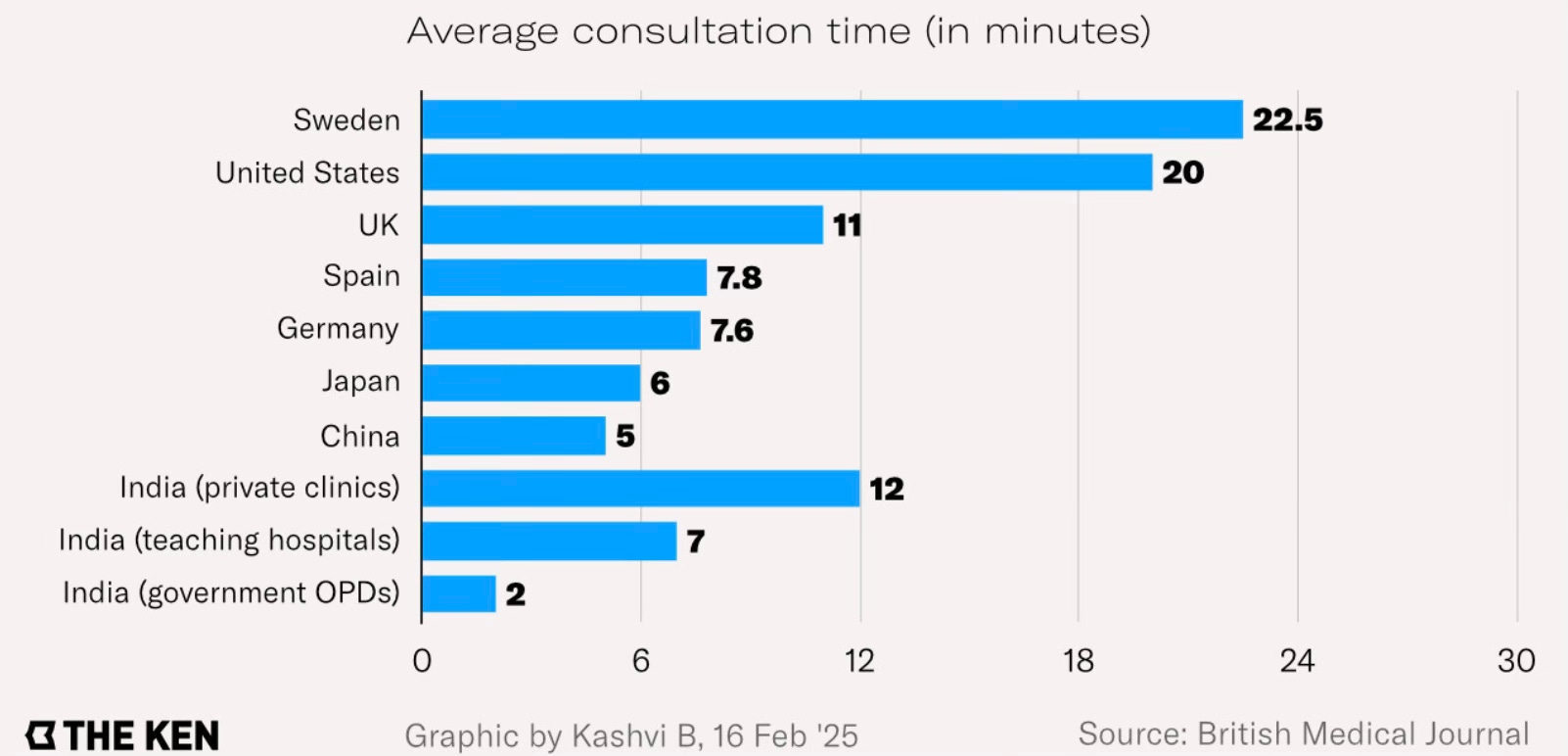
Apart from the inherent productivity-enhancing value of a digital scribe, the felt need in India is the sheer volume of patient load faced by doctors. An Indian doctor sees, on average, 30 patients compared to three for the US doctor.

This is also because India has a doctor for every 811 people, rising to nearly 11,000 in rural areas, compared to one for 300 people in the US. 

This patient load has naturally led to the search for methods to optimise consultations, especially by adopting ambient AI scribes. The well-heeled hospital chains have preferred to use the mature foreign solutions instead of relying on Indian startups. 

The article describes the challenges faced by ambient AI scribe startups in India.

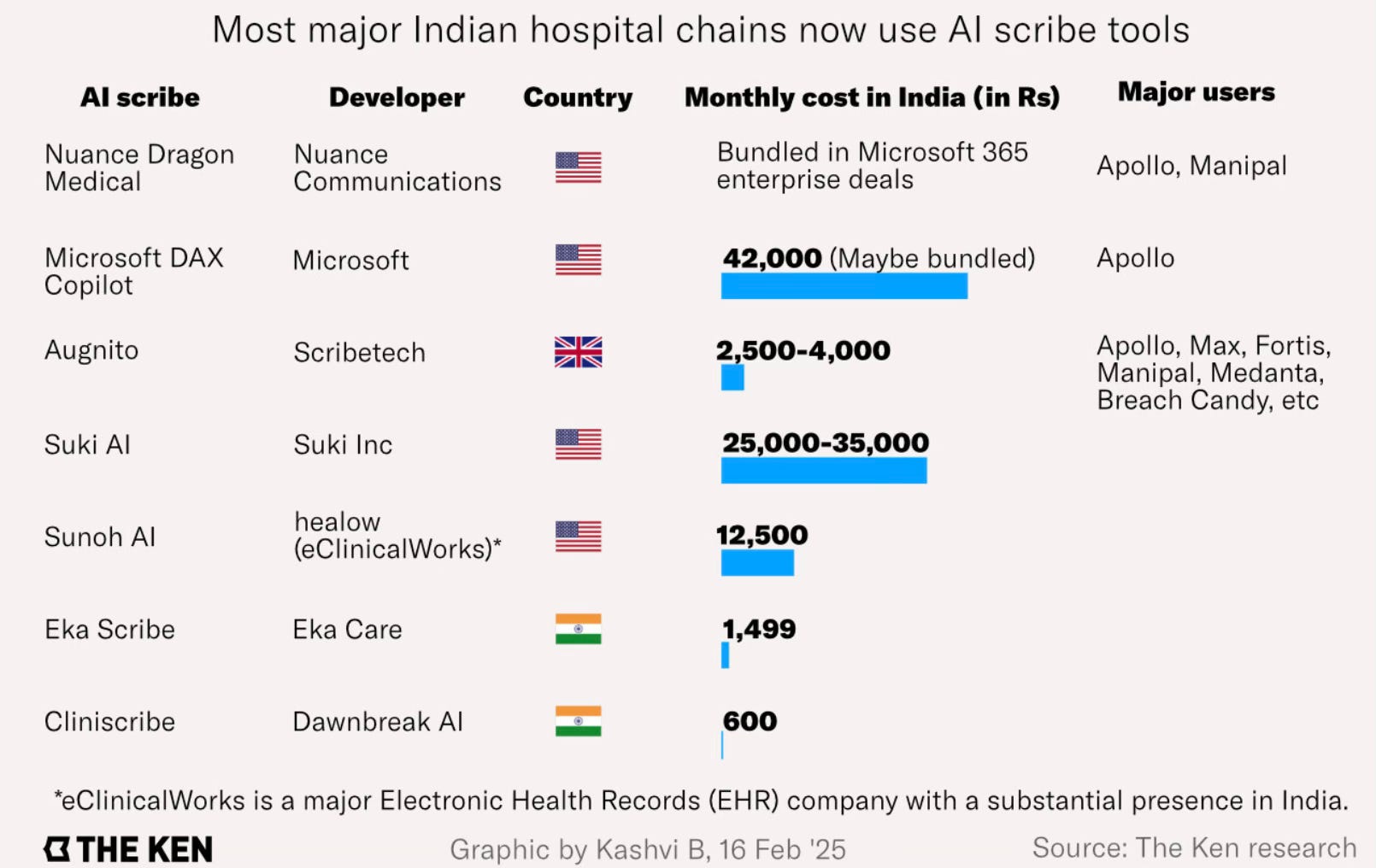
Most hospitals in the country do not have electronic health records, known as EHR, that can integrate such tools… Where EHR systems do exist—mostly in private hospital chains—they aren’t standardised, making the integration of AI-scribe tools into easy-to-use digital infrastructure a custom engineering project for each hospital… An AI scribe can… allow a doctor to see two to three more patients an hour, a tangible capacity gain for high-burden Indian hospitals... After adopting Augnito, a voice-to-text tool from the British firm Scribetech, 35% of Apollo’s doctors saw more patients in 2024… Apollo has deployed Augnito across 37 of its facilities since 2022–23, giving nearly 4,000 doctors access to it… 

The tools would need to be highly precise, though, and customised for the Indian context. Transcription errors can impact drug dosage, change patient outcomes, affect insurance claims, and even invite malpractice lawsuits… A medical journal estimated in 2024 that there had been a 400% increase in medical-negligence cases in the previous few years… At a price point of Rs 600–1,500 per doctor per month, AI scribes need wide adoption to break even. Building AI tools is expensive, as model training and GPU costs are high…

Beyond the big players, however, it will take much more to convince doctors to adopt these tools than just a promise of less clerical work... such tools are hardly affordable for a non-chain clinic… Selling to big chains is hard for a new company, however. “Apollo’s actual deal at a corporate level is with Microsoft,” a hospital industry expert says, requesting not to be named. “They have also bundled in another voice solution, Nuance Dragon, to improve documentation.”… So startups like Dawnbreak and Eka Care started with selling their tools to hospitals that didn’t have any EHR at all… Instead of integrating their tools into existing systems, ambient AI firms are looking to provide lightweight tools that hospitals can use piecemeal…

India’s hospital-information-system landscape is fragmented… there are some 2,000 EHR systems compliant with the Ayushman Bharat Digital Mission… Unlike in the US, where Epic and competitor Cerner command 70% of the market, each EHR system in India is different. For makers of AI scribes like Dawnbreak and Eka Scribe, this means building custom-integration solutions for each client rather than a mass product. Dawnbreak, in one year of its existence, has managed to build compatibility with four EHRs out of nearly 2,000… Indian EHR companies like Healthplix and Docpulse safeguard their databases. If they open their APIs up, they lose their competitive edge. Their clients are locked in long-term contracts, leaving them unable to change their systems or integrate any AI tools. 

This is a good case study on the problems with scaling startup innovation in India. 

1. AI has undoubted potential for significant productivity improvements, including in public systems. Like scribing, triaging of outpatient (OP) cases coming to a primary health centre (PHC), community health centre (CHC), district hospitals, and medical colleges is an area where AI can play a significant productivity enhancing role. In all these places, OP cases come to doctors with limited or no triaging. Further, as we have seen, the daily OP load in these hospitals (at least the better ones among them) is multiples of what a doctor can manage, leaving them overburdened and stressed. The result is inefficient use of the doctor’s time, inadequate diagnosis time, incorrect diagnosis, wrong OP referrals, and so on. 

An AI-based triaging application where the symptoms are entered at the OP-registration, nurse and doctor-level, can dramatically improve work conditions, increase hospital productivity, and enhance the quality of treatment. Triaging is already one of the early emerging successes of AI, with examples like Bank of America’s digital assistant “Erica”, which handles billions of client interactions and has reduced call centre volumes by 40 per cent. 

2. However, the promise of AI is most likely to be constrained in sectors like healthcare and others where health and public safety are critical factors. In these regulated areas, vertical use cases of AI adoption (agentic solutions that can be outsourced specific tasks) is likely to be slower. The regulatory struggles of autonomous driving systems is an illustration. 

Even a clear and credible demonstration that AI is more accurate than the current human-intermediated approach will not be sufficient. Notwithstanding all its flaws, the human psychology and political economy is such that society will demand a very high, near 100%, accuracy from any electronic/digital system that seeks to replace a human-intermediated system. 

3. There are some important market insights here. Econ 101 would have it that since health care has inelastic demand, and also given the sustained high economic growth rates, one would have imagined a large supply side of hospitals in India who deploy such solutions. Similarly, one would have imagined that Indian startups would have grabbed the opportunity presented by developing AI solutions on patient triaging, consultation scribing, diagnostics, EHR, etc. 

I’m not sure about whether the Indian market can support the demand for such apps and services at the price points required to sustain domestic innovation. Sample this on the limited consumption potential of the Indian economy, and the challenge of making money in the country.

While India’s population of 1.4bn offers enviable scale, its market has proven difficult to monetise. According to Sensor Tower, Indian internet users downloaded 24.3bn apps in 2024 and spent 1.13tn hours on them, but total spending was just $1bn.

The advantage domestic startups have is their lower price point. But any scaling pathway for startup innovation that relies on price point may be no scaling pathway at all. A business model that relies on a low price point does not generate the cash surpluses required to finance the significant R&D investments required to refine such products. The net result is that genuinely innovative companies remain elusive. 

I blogged here about the demand-side constraint arising from the deeply price-sensitive nature of consumers and the small size of the consumption class with disposable incomes. It also does not help that Indian firms, including startups, do not have a culture of investing in R&D beyond that required to grow their ongoing businesses. 

4. The dominant narrative on startups, shaped by the Silicon Valley giants, is that of scaling by growing exponentially. But contrary to this, apart from killer apps and the few platforms, the main scaling pathway for ambient scribing startups like Eka Care or Dawnbreak may well be through large IT companies already serving the same or similar market segments. The vast majority of these solutions, and not just in health, are limited in their scope as stand alone applications. But this changes dramatically once they are integrated with a larger ecosystem platform to leverage network effects. 

These startups will struggle to get the big users, large hospital chains like Apollo and Max, to replace their bespoke legacy solutions or those supplied by established foreign vendors. This is a daunting market access challenge that even the startups with great solutions will face in markets like India. 

It raises the important point about a model of the digital economy where startups develop innovations which in turns scales through large firms. This not only makes the large firms even larger, but also maximises value capture by them.

It also raises the question of whether the startups should pursue getting the big hospital chains to become their investors. This will also align the incentives of the hospitals to integrate these solutions with their EHR and legacy systems. 

5. It is here that the failure of India’s software behemoths to build on their first-mover and other competitive advantages assumes significance. Both TCS and Infosys have long experience in global hospital systems management, including multi-year, multi-billion-dollar contracts. Hospital tasks management applications should have been a natural area of business development for these IT majors. But Indian software firms have struggled to break out from their services-led business model and embrace products and solutions which require high R&D investments. 

IT services still dominate with exports set to reach $210bn this financial year, India Ratings and Research forecasts. It has been a powerhouse industry for India but as IT services presented so much low lying fruit, the sector sucked up tech talent and capital from elsewhere. India’s SaaS sector in particular punched below its potential as a result. Software majors treated their services businesses as cash cows, deploying a small share to intellectual property assets. The 10 largest IT services companies had consolidated profits of $114bn in the past decade; 75 per cent of this was paid out via dividends and buybacks.

While the top five Indian IT firms had free cash flows of nearly $13bn in the 2023-24, their R&D investment was a pitiful 0.88 per cent of sales

6. Finally, what can public policy do to solve some of the scaling challenges? An India Stack for digital payments is unlikely to work for the far more complex area of EHR. Public policy cannot solve market coordination problems (like sharing APIs to allow integration and inter-operability), except in some contexts by defining standards. Public sector driven demand-side channels like Ayushman Bharat can gently force some standards. 

The approach of supporting scaling by procuring for use in public systems runs into the problems of punishing public systems with second quality or inferior products and creating perverse incentives among the startups. Providing a small sample of public hospitals does not address the market scaling challenge arising from network effects, besides also creating procurement problems even if the solution is found effective.

Friday, February 20, 2026

Demand and supply side constraints to rapid growth - the case of medical education

Business Standard points to a paradox in India’s medical education - post-graduate seats lying vacant amidst a shortage of specialist doctors. 

It points to data from the Health Dynamics of India report by the Ministry of Health and Family Welfare. 

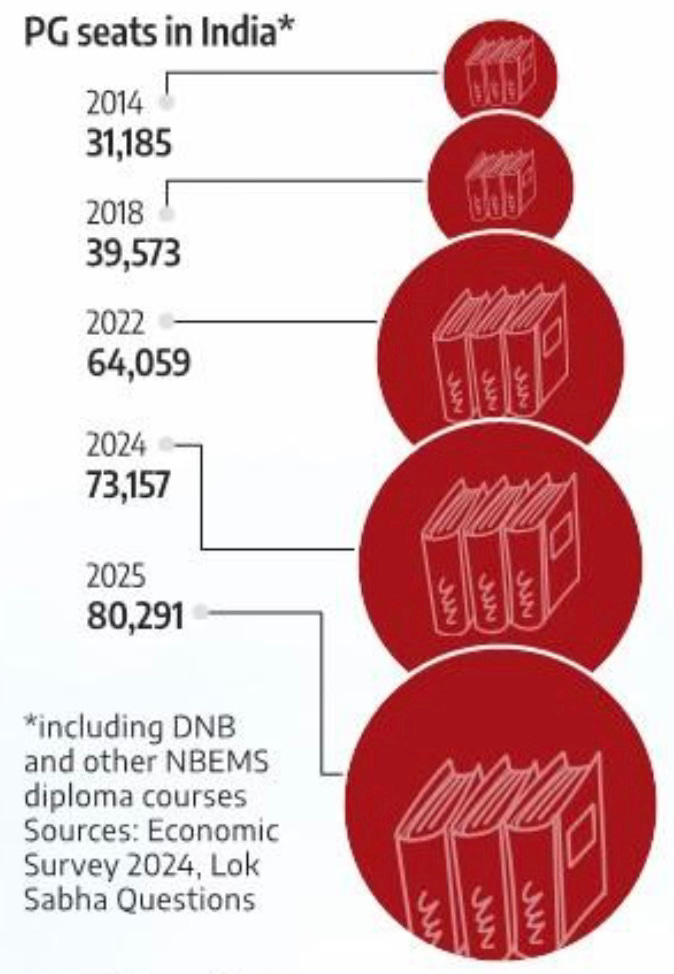
Community health centres (CHCs) in rural India face an almost 80 per cent shortfall in specialists. As of March 2023, just 4,413 specialist doctors were available against a requirement of 21,964 across 5,491 CHCs in 757 districts, each centre serving an average population of nearly 160,000 per centre… The number of PG medical seats for MD and Diplomate of National Board (DNB) courses rose 157 per cent to 80,291 in 2025 from 31,185 in 2014, with the government planning to add another 2,000-3,000 seats by 2029… India generates over 123,000 MBBS graduates per year…

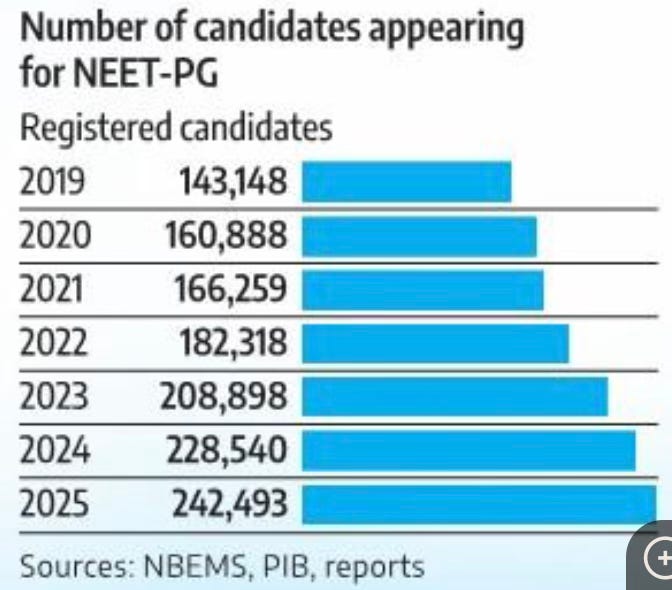
As a result, filling the seats on offer remains a challenge. After two full rounds of NEET-PG 2025, over 18,000 seats remained vacant, forcing the National Board of Examinations in Medical Sciences (NBEMS) to keep slashing qualifying cut-offs… candidates with zero percentile scores became eligible for counselling in further rounds… Zero percentile means candidates who scored the lowest in a test, or that none of the other candidates scored less. Such relaxations have become routine. Cut-offs were reduced to zero percentile in 2023, 2024 and, earlier, throughout the Covid years… Vacancies are most pronounced in private and deemed universities, which account for nearly 10,000 unfilled seats annually… 

Specialities such as cardiology, radiology, gynaecology, orthopaedics, and general surgery traditionally being the most sought after. On the other hand, seats in non-clinical subjects such as pathology, anatomy and biochemistry have vacancy rates of 50-70 per cent, as many candidates prefer to drop a year rather than opt for these disciplines. However, doctors say even traditionally sought-after clinical specialities are now seeing gaps.

The article posits several explanations for the paradox, including high fees, poor quality in private colleges, mandatory service bonds, regional imbalances in seat distribution (half the seats being in the South), declining attractiveness due to safety and other concerns, lack of commensurate increase in MBBS seats, and so on. 

Instead, I am inclined to argue that these are all symptoms of more basic problems. While there is no specific evidence, I feel that this highlights two first-order problems on both the demand and supply sides. 

On the demand side, the vacancies reflect the poor quality of education in general and basic medical education in particular. What does it say about the quality of the MBBS education when nearly 2.5 lakh students could fill only 62,000 out of the 80,000 PG seats after two rounds of counselling, even at cutoff scores of 235-276 out of 800

On the supply side, the sharp 2.6-fold increase in PG seats over a decade appears to have compromised quality. Does India’s medical education ecosystem have sufficient supply of good-quality teaching personnel (human capital) and well-equipped hospitals to adequately train the 2.6X increase in PG seats? I’m not sure. 

This is the point made on multiple occasions in this blog about India’s problems of poor quality of human resources and the low capital base of supply across sectors that constrain sustained high economic growth. Fundamentally, high economic growth can be sustained only if there’s a broad enough capital base (physical, human, industrial, financial, and institutional) to support that growth. 

This is also central to the larger point about high economic growth rates requiring the foundations of a broad base of human development and economic growth.