Substack

Showing posts with label Savings. Show all posts

Friday, June 19, 2026

The quartet of global imbalances

President Donald Trump’s single-minded pursuit of rebalancing the US economy using tariffs is unlikely to yield much without addressing fundamental distortions that have crept into the US economy and financial markets. Trade surpluses are a mere symptom of deeper malaises. I had blogged about the global twin structural imbalances, arguing that an American economy skewed towards consumption and a Chinese one skewed away from consumption are two sides of the same coin. 

Helene Rey (see also this report to G7) has a very nice summary of global imbalances, where she locates it within the dynamics of saving and investment, and questions the focus on tariffs.

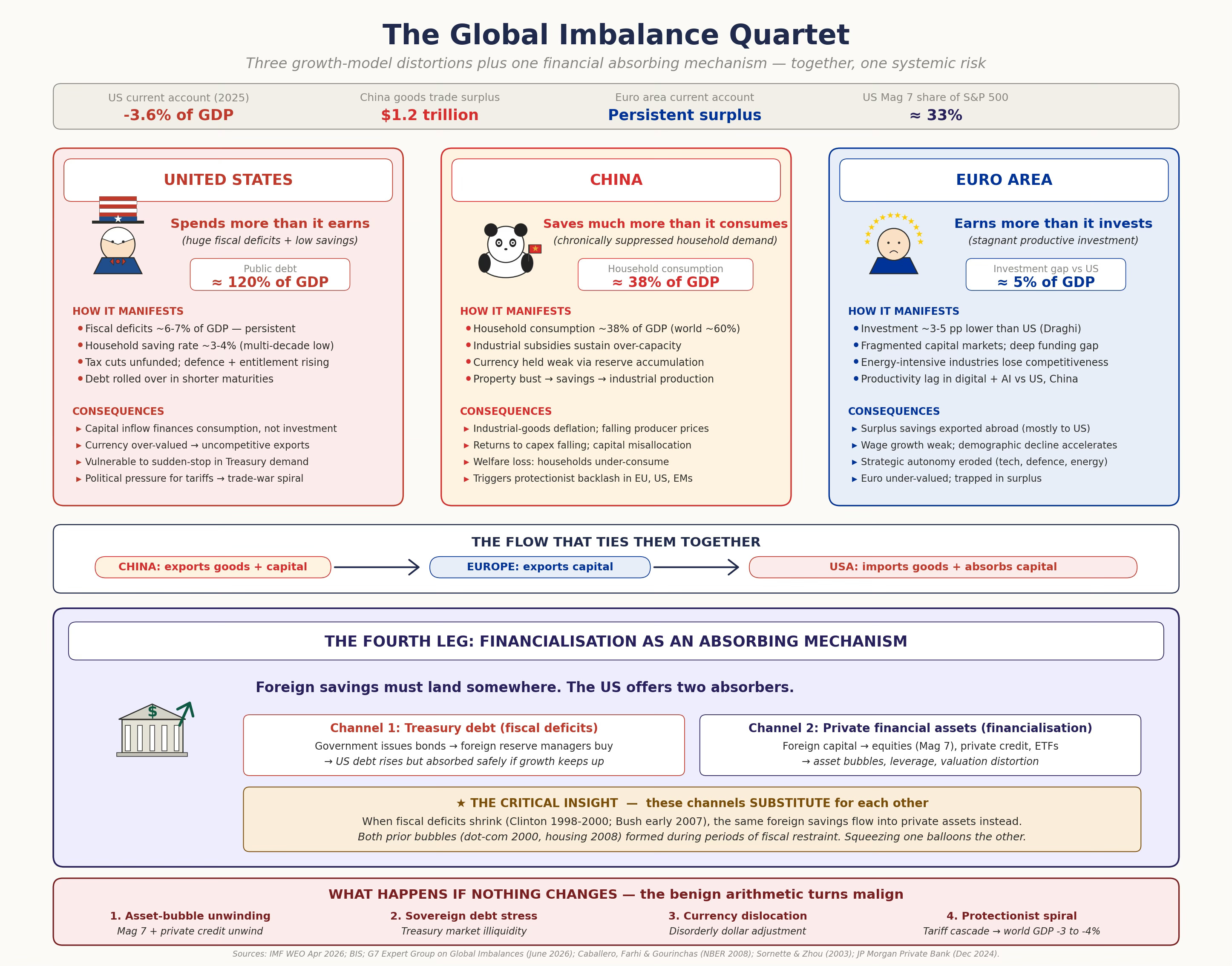
A country that saves more than it invests lends abroad and runs a current account surplus; one that invests more than it saves borrows and runs a current account deficit. It is the collective saving and investment decisions of a country’s households, companies and government that drive imbalances. There is now some agreement — crystallising in the G7 discussions — that the sources of imbalances are linked to unbalanced growth models and mostly made at home: chronically weak consumption in China, feeble productive investment in Europe and outsized fiscal deficits in the US. Tariffs are not an effective mechanism to change any of those and issuing an international currency is no justification to run current account deficits. 

She also proposes the solutions in terms of complementary actions. 

China rebalancing towards consumption, Europe lifting productive investment and America repairing its public finances are not three grudging favours. They are parts of a single, mutually reinforcing policy. One country’s exports are another’s imports; one country’s capital outflow is another’s inflow. When all three move at once, each adjustment cushions the others: the deficit country that consolidates finds external demand waiting as surplus countries spend more at home, and the surplus country that stimulates demand finds a market at home rather than a protectionist wall… The IMF’s scenario of simultaneous rebalancing raises global output by around 0.8 per cent and narrows medium-term imbalances by half a percentage point of world GDP.

I think this analysis misses a critical fourth leg of the imbalance, financialisation. It cannot be seen as merely a symptom of US borrowing. As evidence, there are two natural experiments. The last two episodes of US fiscal deficit reduction (in the late nineties and mid-2000s) were accompanied by financial market bubbles (the dot-com bubble and housing and mortgage market bubble). 

Underlining this, Ricardo Caballero, Emmanuel Farhi, and Pierre Olivier Gourinchas have shown that if the financial markets do not work well, the economy might accommodate investments that deliver a rate of return that is below the growth rate of the economy. In this situation, both stock market bubbles and government debt can play the useful role of displacing inefficient investments. 

Foreign savings flowing into the US must find a US asset to absorb them - either Treasury debt (the fiscal deficit channel) or private financial assets (the financialisation channel). These two are substitutes, not complements. Squeezing fiscal deficits without restraining private credit pushes the same global savings glut into asset bubbles. So US fiscal consolidation alone is not sufficient, and must be paired with financial-sector reform that prevents the likes of private credit from filling the void.

I asked Claude to generate a graphic that describes the global imbalances quartet. 

So, how to address these imbalances?

The rebalancing would require global diplomacy and coordination to mobilise support from all key stakeholders. This looks onerous in a deeply polarised world, of rising tensions between the West and China and the unpredictable and whimsical nature of the Trump Presidency. 

In fact, among the four adjustments required, interventions pertaining to the much-derided Euro area appear to be the most promising and likely to materialise. In fact, on investments, the train has already started. 

It is possible that a deep crisis on the economic front, a very likely near to medium-term possibility in either case, may force both China and the US to rebalance towards consumption and consolidation, respectively. However, there are daunting political economy challenges to be overcome in both countries, especially the US. 

It is the fourth leg that might prove the most challenging. The financial markets are where the power of entrenched interests is so strong that it might require a counter-revolution to upend the order and regulate financial markets more tightly. This will also require global coordination and collective action, and not mere reforms at the US front. 

Wednesday, November 12, 2025

Hard limits to China's growth model

Much of what is written in the media, including in this blog, about China is about its spectacular economic growth to catch up with the US, and its manufacturing dominance. 

Rana Faroohar has a contrarian piece which makes the rare bearish case on China. She points to three facts about China in support. 

First, despite new pledges to raise consumption, the mathematics and politics of doing so are as tricky as ever. Second, while global diplomacy is now Beijing’s game to lose, it has made many fewer gains than it should have so far, given the low-hanging fruit. And third, autocracy remains a hard sell globally, which will make it difficult for China to ever replace the US (or even Europe) in terms of soft power.

I had blogged here about post-peak China. 

On this track, there’s an important paradox about China. Even as it has assumed leadership positions in innovations across sectors, its economic productivity growth has been slowing down. Tej Parikh has a set of excellent graphics that tell the story. This blog will explore this in greater detail and see how it could potentially constrain the country’s growth prospects. 

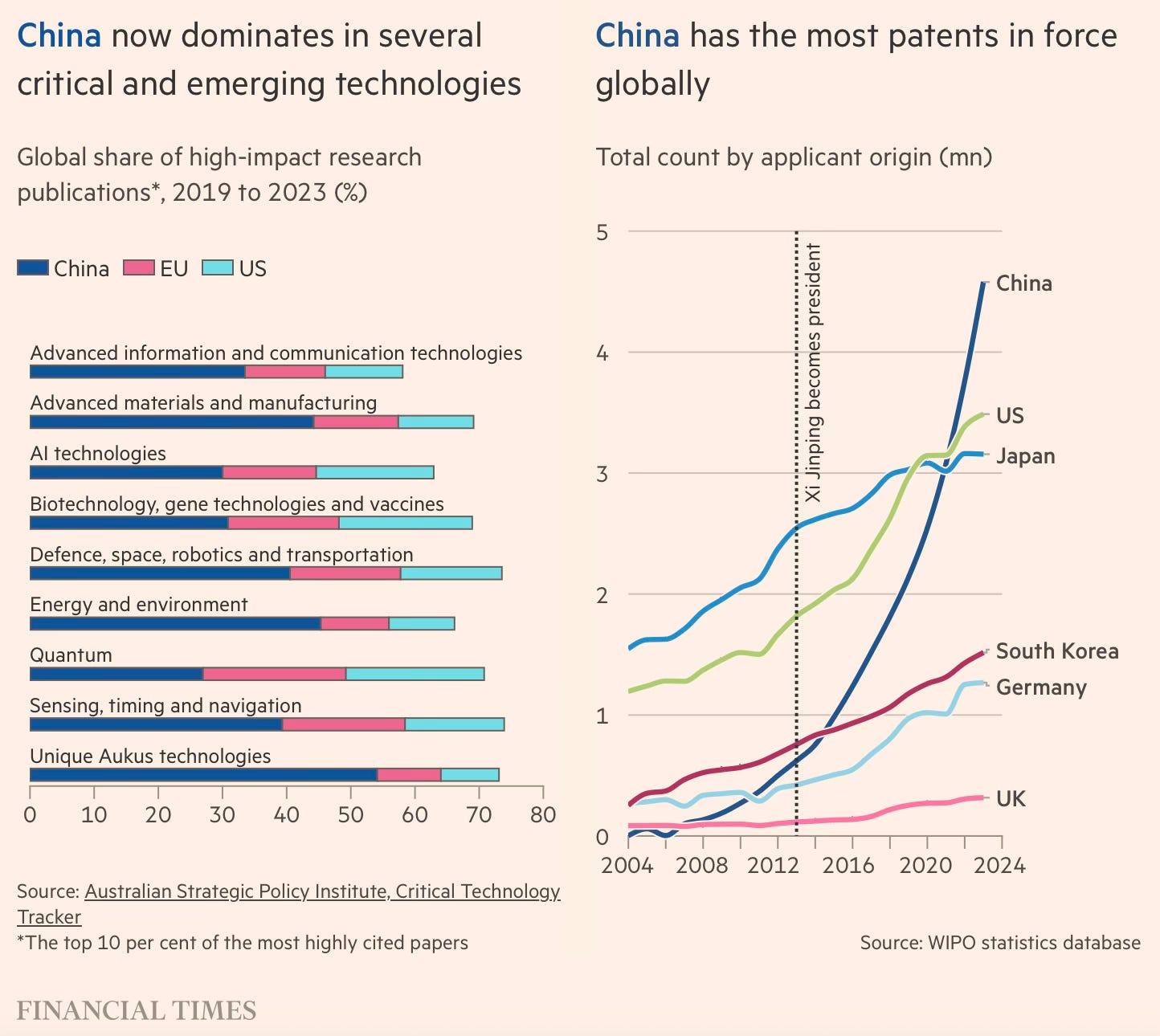
According to the Australian Strategic Policy Institute, China became the global leader in 57 out of 64 critical technologies between 2019-23, up from leadership in just 3 between 2003-07. It leads today not only in manufacturing EVs, batteries, renewables, etc., but has almost caught up with the West on AI, quantum technologies, and biotech. 

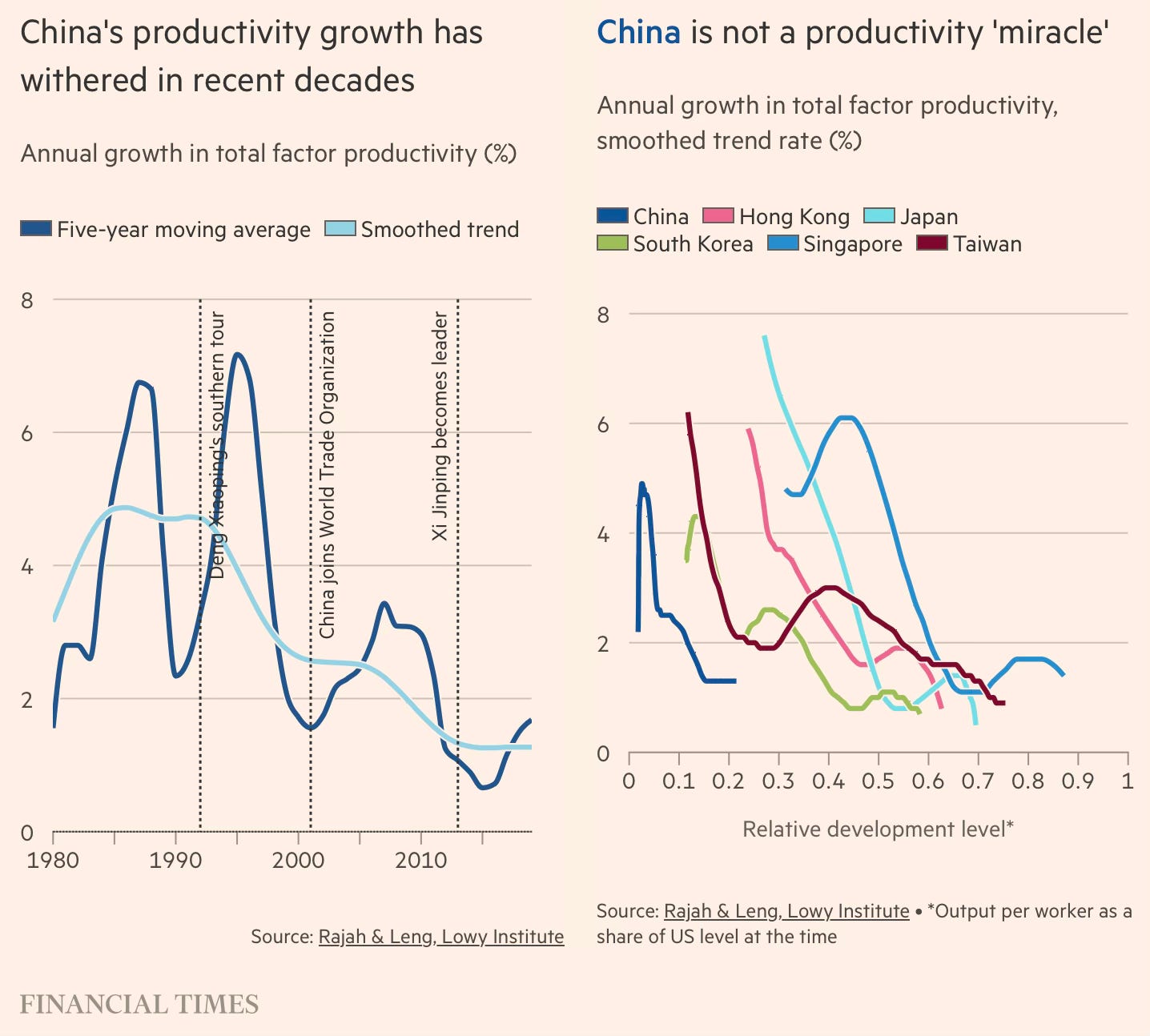
But this leadership in innovation and manufacturing has not translated into productivity growth, where its TFP has slowed down considerably and is now grossly underperforming the East Asian miracle economies. 

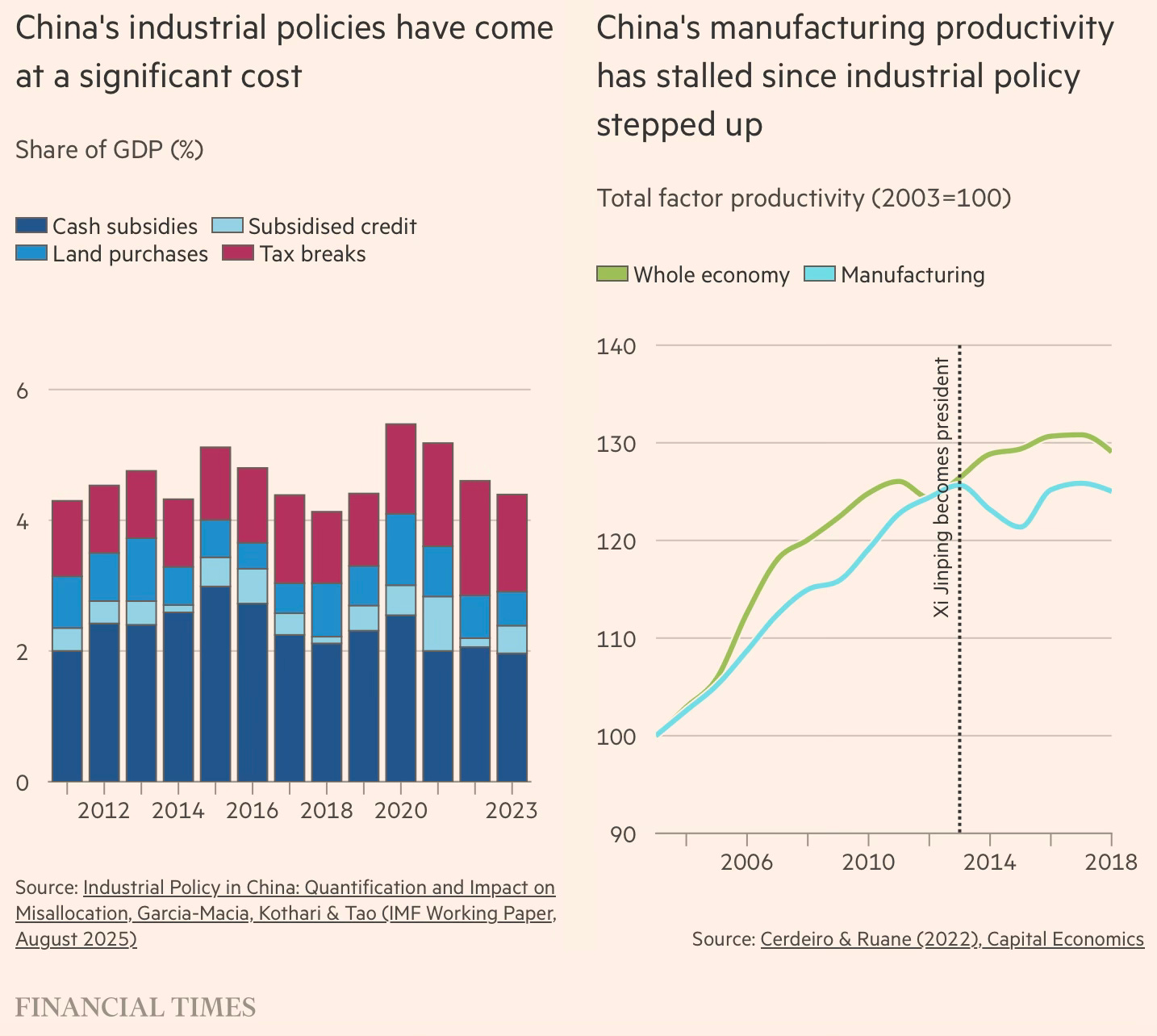
China’s industrial policies may have misallocated resources in a big way, thereby creating excess capacity, deflation, and keeping alive poor performers. IMF economists estimates that these subsidies, estimated at 4.4% of GDP in 2023, may have cut its TFP by 1.2% and GDP by 2%. They have tended to flow to better-connected firms, and raised entry barriers, thereby misallocating both talent and finance. 

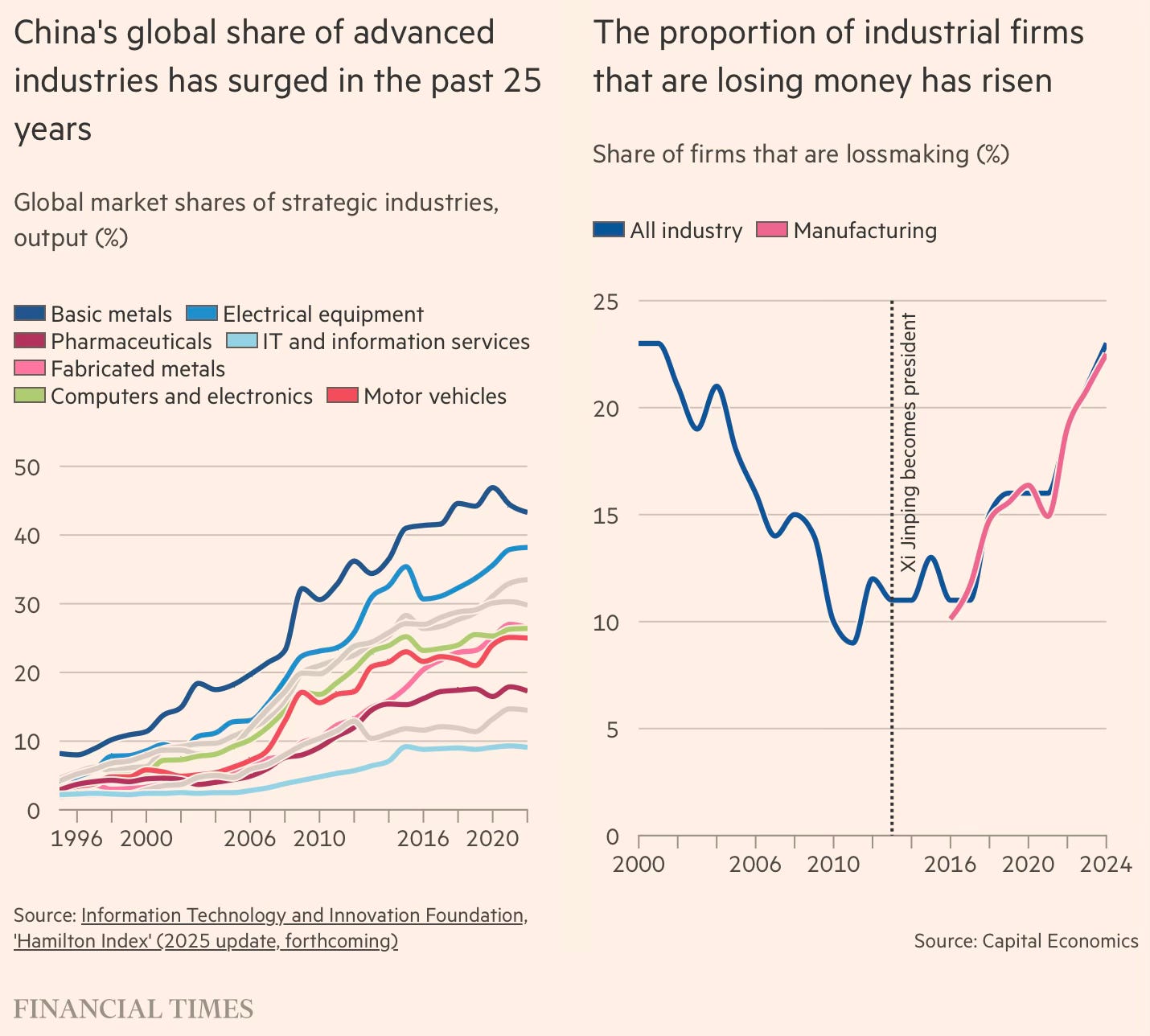
For each success story like BYD or Huawei, there are countless others who are bleeding subsidies, making losses, and will collapse. Analysis by ASR finds that over 25% of listed non-financial firms had earnings before interest and tax-to-interest coverage ratio below 1 in 2024, up from around 10% in 2018. 

China’s paradox of the co-existence of excellence in manufacturing innovation with declining productivity growth is a reflection of the inefficiencies in its industrial policy. China’s much vaunted manufacturing dominance has come at a prohibitive cost in terms of misallocation of resources and talent. 

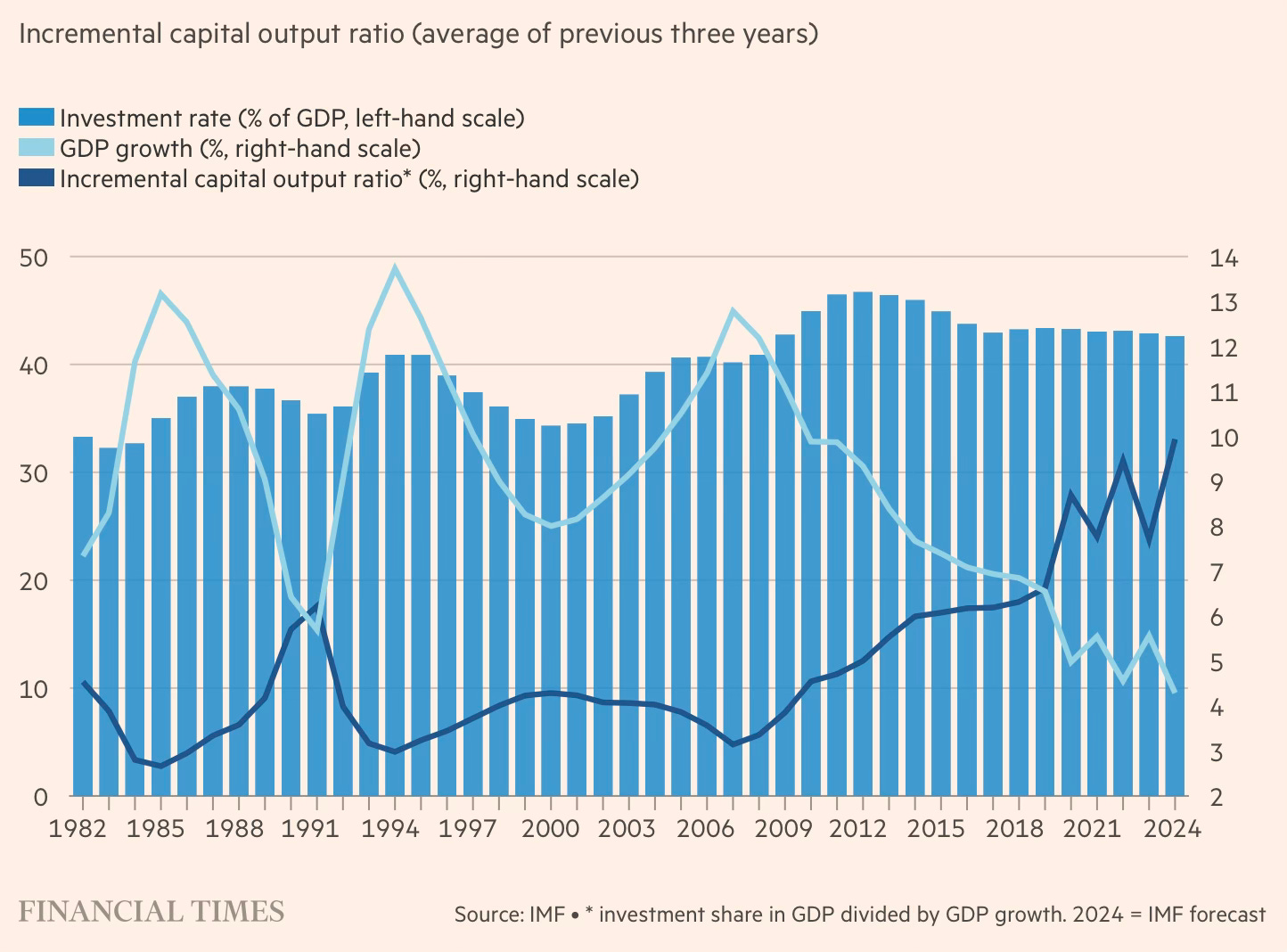
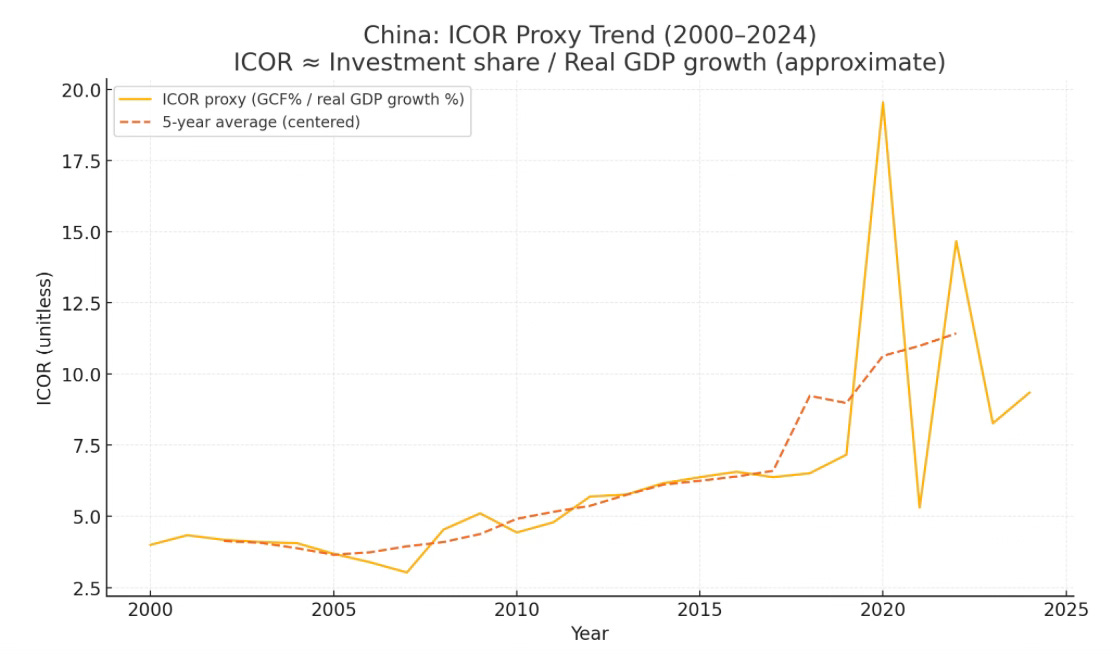
I have blogged here pointing to China’s sharply rising incremental capital output ratio (ICOR). Even as investment has been range-bound at 43-45% of GDP since before the global financial crisis, the ICOR has nearly tripled from below 3.5 to touch 10. This period has also coincided with economic growth declining precipitously from above 12% to just 4%. As the graphic shows, high investments rates brings ever less growth. 

Here is an updated version of the ICOR trends generated from the WB WDI series for investments and GDP growth. 

This misallocation has led to the perpetuation of inefficient firms, the accumulation of massive excess capacity, and the excessive leveraging of local governments and firms. In general, it has also created an economic system that is primed to maximise output with little regard for demand, continuously capture and expand export markets in a beggar-thy-neighbour dynamic, and is oblivious to policies required to boost domestic consumption. This trend is also encouraged by the country’s politico-bureaucratic system, where leadership at provinces, towns, and counties are evaluated on performance (and promotion up the party hierarchy) based on expanding economic output.

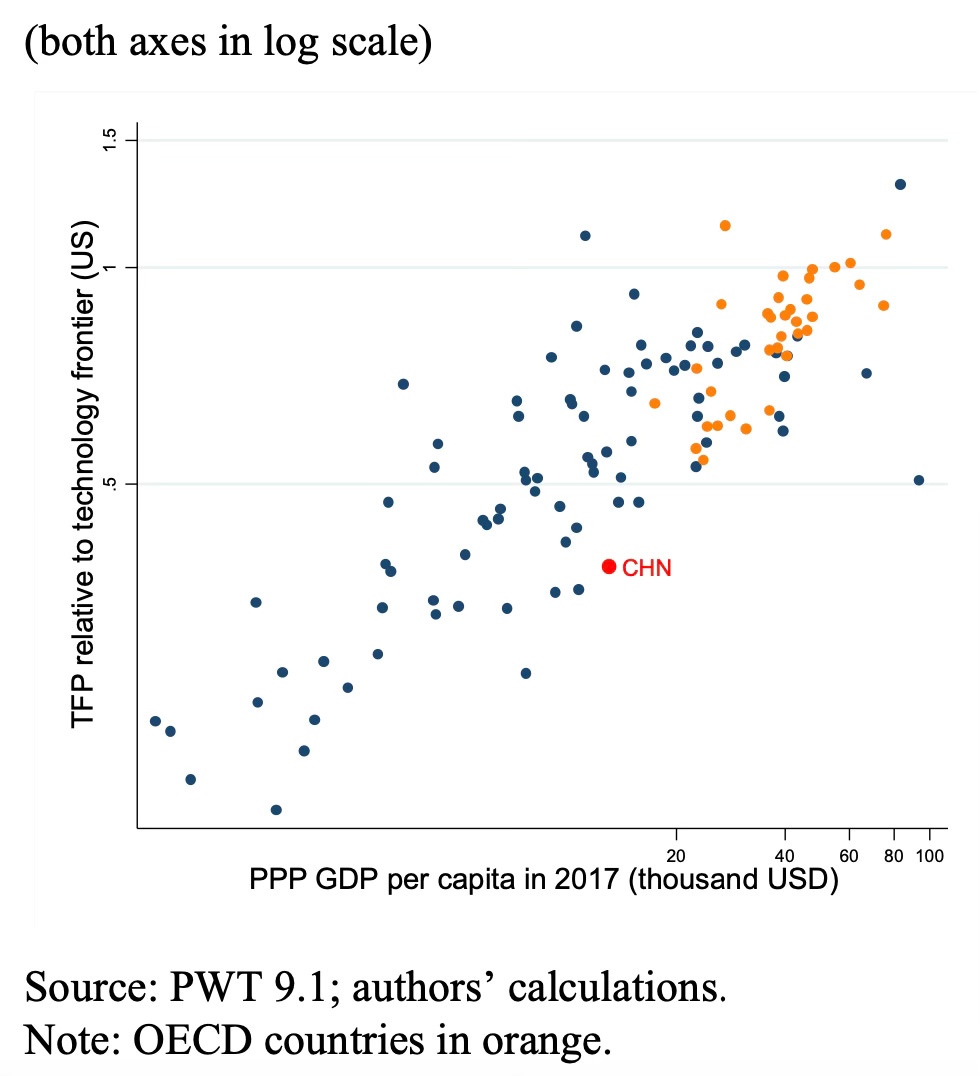
There are at least three hard stops to this model. One is the importance of productivity growth in maintaining reasonable GDP growth in an economy faced with a shrinking labour force, an increasing share of the services sector in the economy, and declining efficiency of investment. An IMF working paper shows that China TFP compared to the technology frontier (US=100) in 2017 lagged even middle-income countries. 

The paper points to a major problem of limited market entry and exit and lack of resource allocation to more productive firms in manufacturing. 

Over 1998–2013, most of the increase in productivity—two-thirds—came from the entry of new firms… The other primary source of growth was improving productivity of incumbents, which contributed 40 percent. Over the entire period, firm exit contributed negligibly to manufacturing productivity growth, reflecting one of several possibilities. Poorly performing firms either did not exit or exited but accounted for only a small percentage of aggregate output. Or the productivity of some firms that exited was average or better. Similarly, there were no gains from reallocating resources (labor, capital, and intermediate inputs) to more productive firms, which would have increased aggregate productivity, all else equal. In fact, the contribution was slightly negative. In advanced countries, this is the most important source of productivity growth, and thus stands out as a possible major source of future productivity growth in China. After 2007, average manufacturing productivity growth in China decreased almost by half. The most important reason for the decline was that the contribution of better entrants disappeared. In some sectors, the contribution of new entrants was actually negative, implying that these firms entered the productivity distribution lower than the sector average.

As I have blogged in China Updates, there are reasons to argue that these trends on exit have worsened in recent years, 

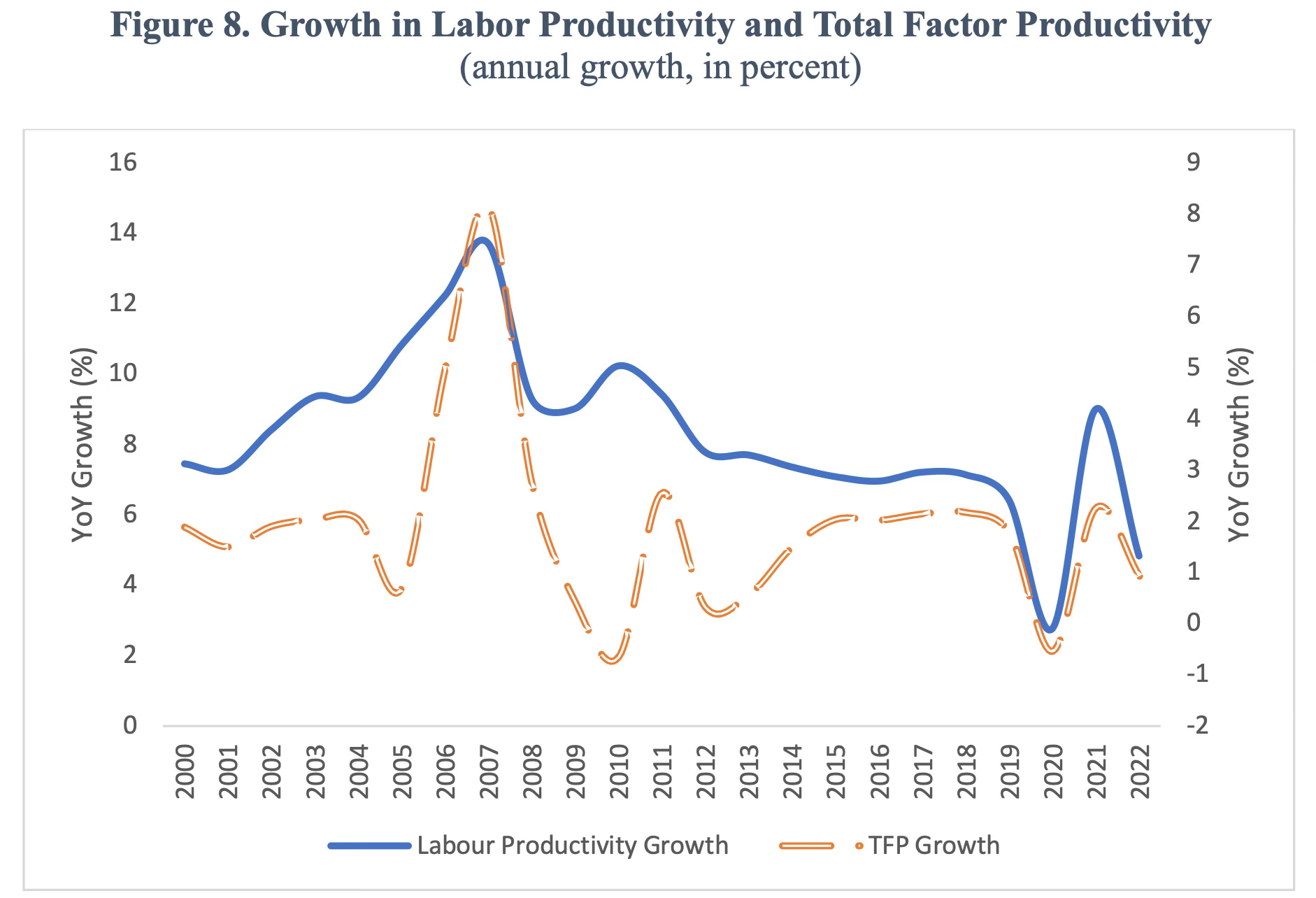
Eswar Prasad has highlighted China’s productivity problem. The country’s TFP growth (RHS) has been stagnant at about 1 per cent over the last decade.

He has explained why this is a big problem.

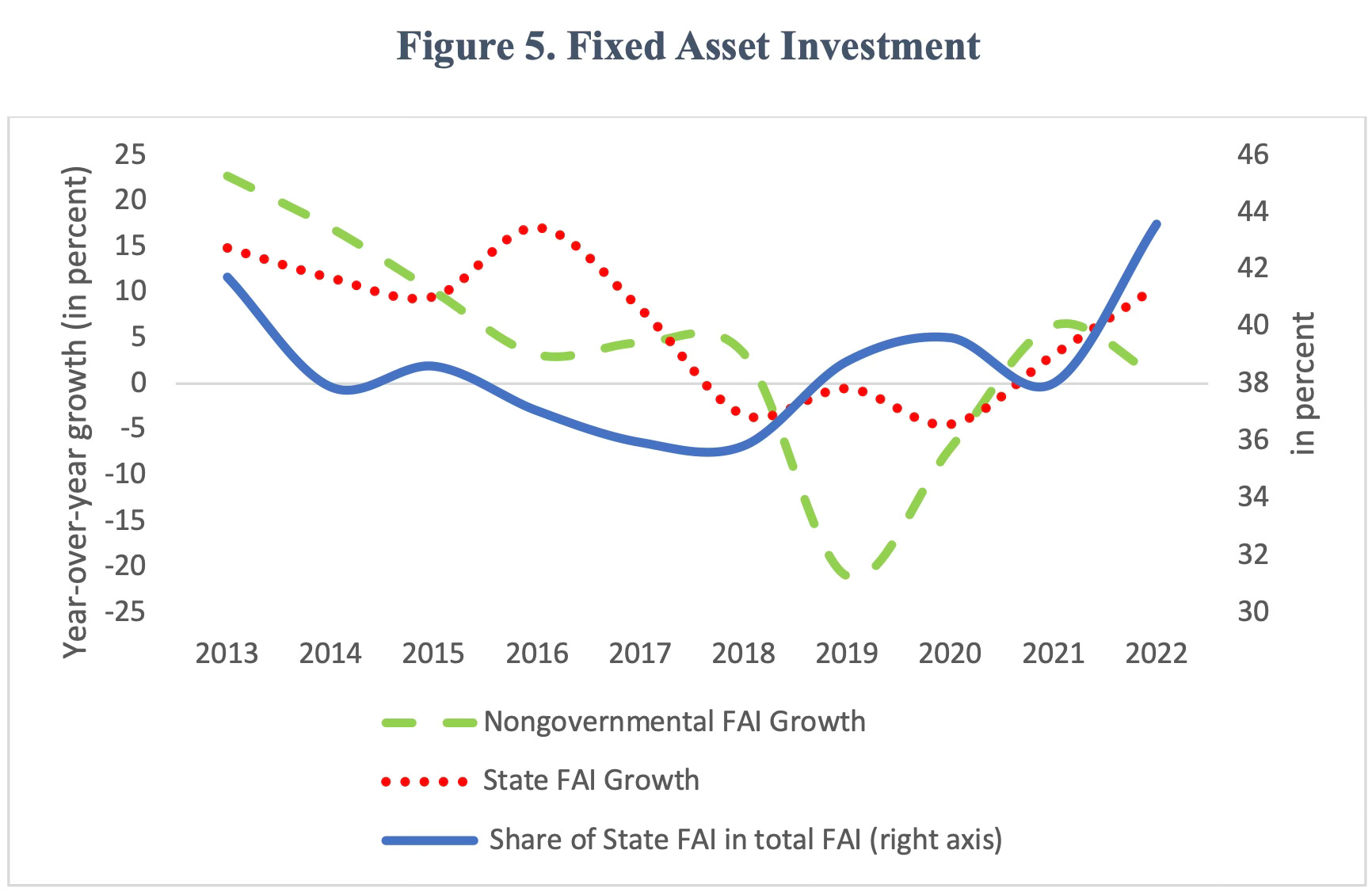
China’s capital to labor ratio is only about 28 percent that of the United States. However, recent investment has been driven by the public (state) sector rather than the nongovernmental sector. In 2022, for instance, state investment amounted to 44 percent of total fixed asset investment, a significant increase relative to the corresponding ratio of about 36 percent during 2017-2018… in China state-owned enterprises, which have collectively received a disproportionate share of bank credit, have typically not generated strong returns on those investments. The recent collapse in nongovernmental investment growth, with state investment accounting for nearly all of the growth in overall fixed asset investment in 2022, is a sign that private businesses might be wary of increasing investment when they see the economic and political environments as unfavourable. Moreover, China’s capital to output ratio is in fact about 50 per cent higher than that of the United States. This reflects lower levels of total factor productivity (TFP) and human capital in China relative to the United States. This implies that increasing investment might not be the optimal way to generate growth. 

This is another useful paper on China’s productivity paradox. 

Second is the ongoing backlash from export markets. Chinese exports to the US are already shrinking, and the same will be true for other advanced economies in the days ahead. As I have blogged on multiple occasions, and Arvind Subramanian and Shoumitro Chatterjee have written, China’s exports are now threatening to destroy the industrial bases of developing countries. 

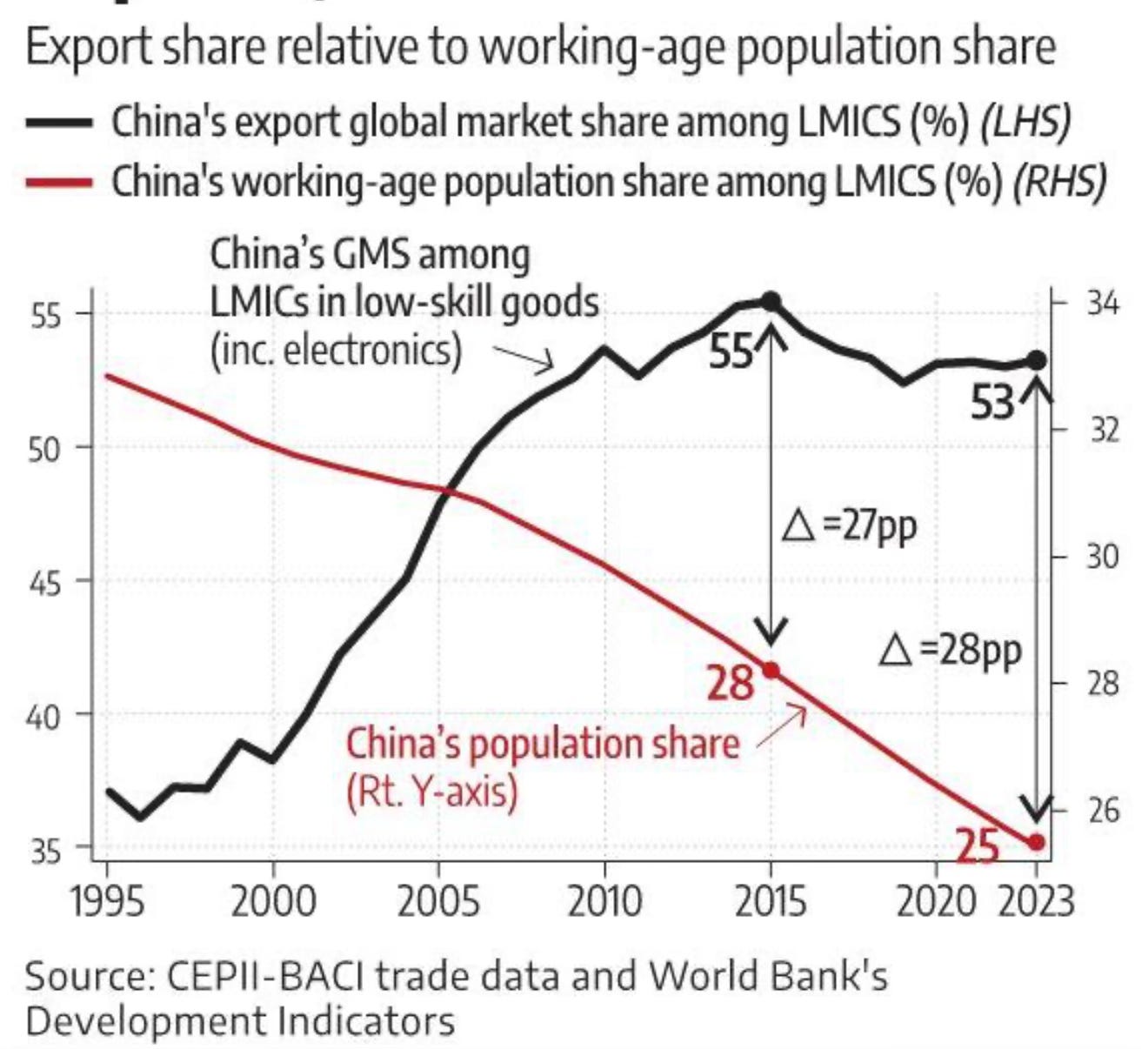
Today, China’s manufacturing trade surplus stands at roughly $2 trillion, about $1.4 trillion of which comes from low-skill goods… Chinese imports still account for about 1.5 per cent of the West’s gross domestic product (GDP)… Accounting for almost 4 per cent of LMICs’ combined GDP, the import shock from China represents a larger (and growing) share of their economies than imports of high-skill goods do in developed countries… compare China’s share of low-skill exports among LMICs to its share of the global workforce… The wedge between China’s export share and its labour-force share — roughly 28 percentage points — suggests that China continues to occupy “excess” export space that could otherwise support tens of millions of manufacturing jobs in poorer economies.

Finally, there is the investment model hitting the debt ceilings for corporates and local governments. Since 2010, government debt has risen from 34% of GDP to over 86% today, and this is most likely a gross underestimate given the large value of off-balance sheet debts of local governments in the form of local government financing vehicles (LGFVs). 

Household debt has risen from 18% in 2009 to 62.5% in 2024, and more than doubled over just the last decade. This is amplified by the fact that property accounts for nearly 60% of household wealth in 2019. These, coupled with restrictive regulations like the hukou system and deficient social safety nets, mean that household consumption, which is already low in China’s share of national output but whose growth is the only way for China to reach a sustainable growth path, is likely to remain subdued. 

The government somehow (perhaps more by luck and throwing the kitchen sink at the problem) managed to stave off a financial crisis from the popping of the real estate bubble in 2020-21. It has instead diverted the credit flows to manufacturing to build up capacity and capture foreign markets. 

The fact that most major banks are state-owned adds one more layer of distortion by allowing the government to keep infusing credit to failing firms to prevent systemic crises. This happened in the aftermath of the real estate bubble bursting, especially when the Evergrande crisis threatened spillovers and a meltdown. This is likely to recur with the manufacturing firms in green technologies and the like. 

It can be said with confidence that if we were talking about any other country, the macroeconomic indicators and their trends, and the dominant economic and political environments, would clearly point to an imminent economic slowdown or crash. The market would be full of shorts for the economy. As Eswar Prasad writes,

The underpinnings of China’s growth seem fragile from historical and analytical perspectives. Things that must end do often end suddenly and in unpredictable ways.

However, in the case of China, we need to take into account the government’s rich track record of adept handling of potential crises and vulnerabilities. But even expertise and luck have their limits.

Thursday, July 10, 2025

Examining the twin global structural imbalances

In this post, I’ll summarise the issue of the structural imbalances facing the global economy, which manifest in the form of China’s dominance of manufacturing and America’s in consumption. I had previously blogged about these issues here.

Martin Wolf has an excellent article on structural imbalances in the world economy, where he has a graphic that captures the crux of the problem that Trump is trying to address with tariffs. 

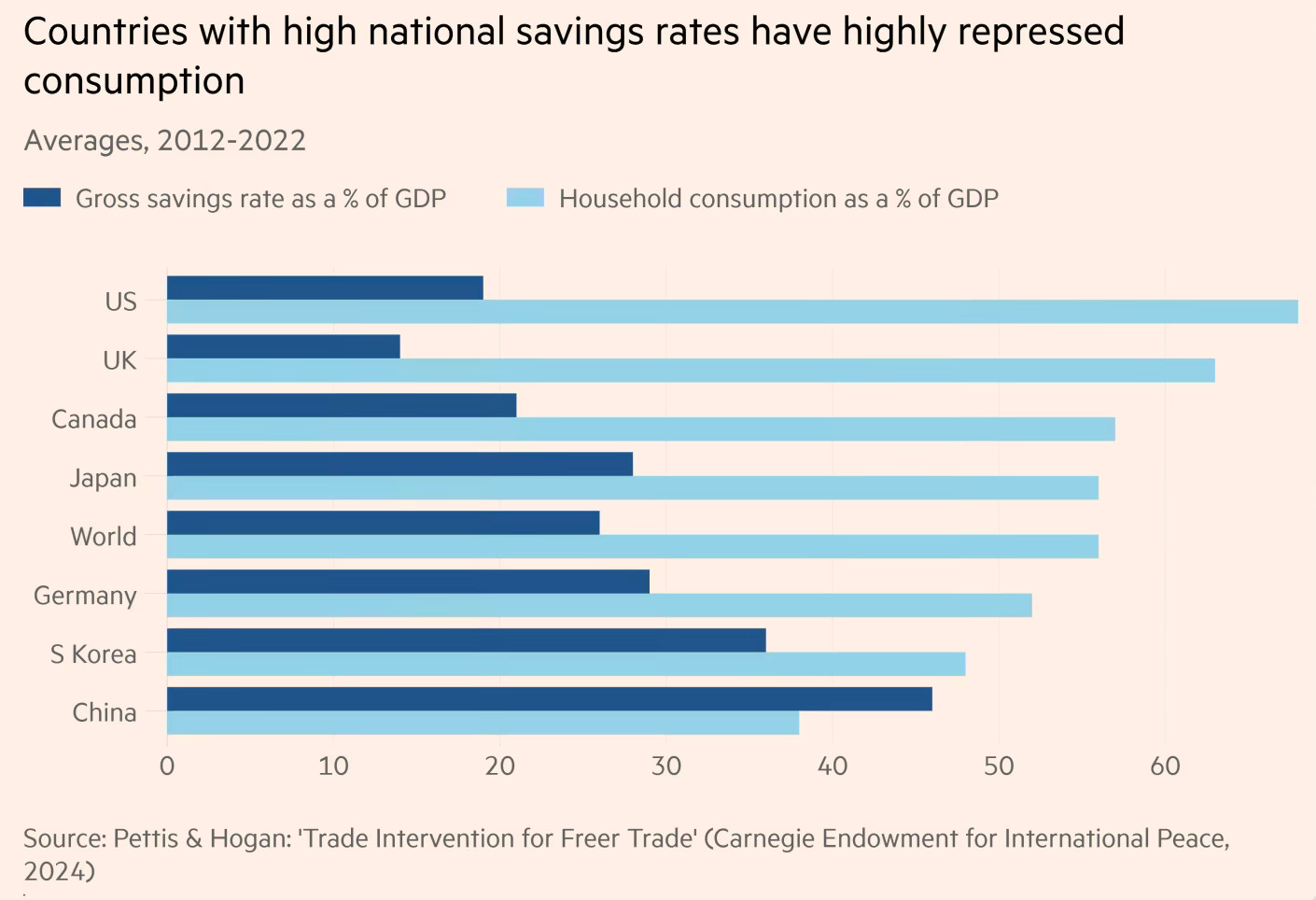
He also cites a paper by Michael Pettis and Erica Hogan to highlight two global macroeconomic correlations, centred around China. One, countries with high savings rates have highly repressed consumption.

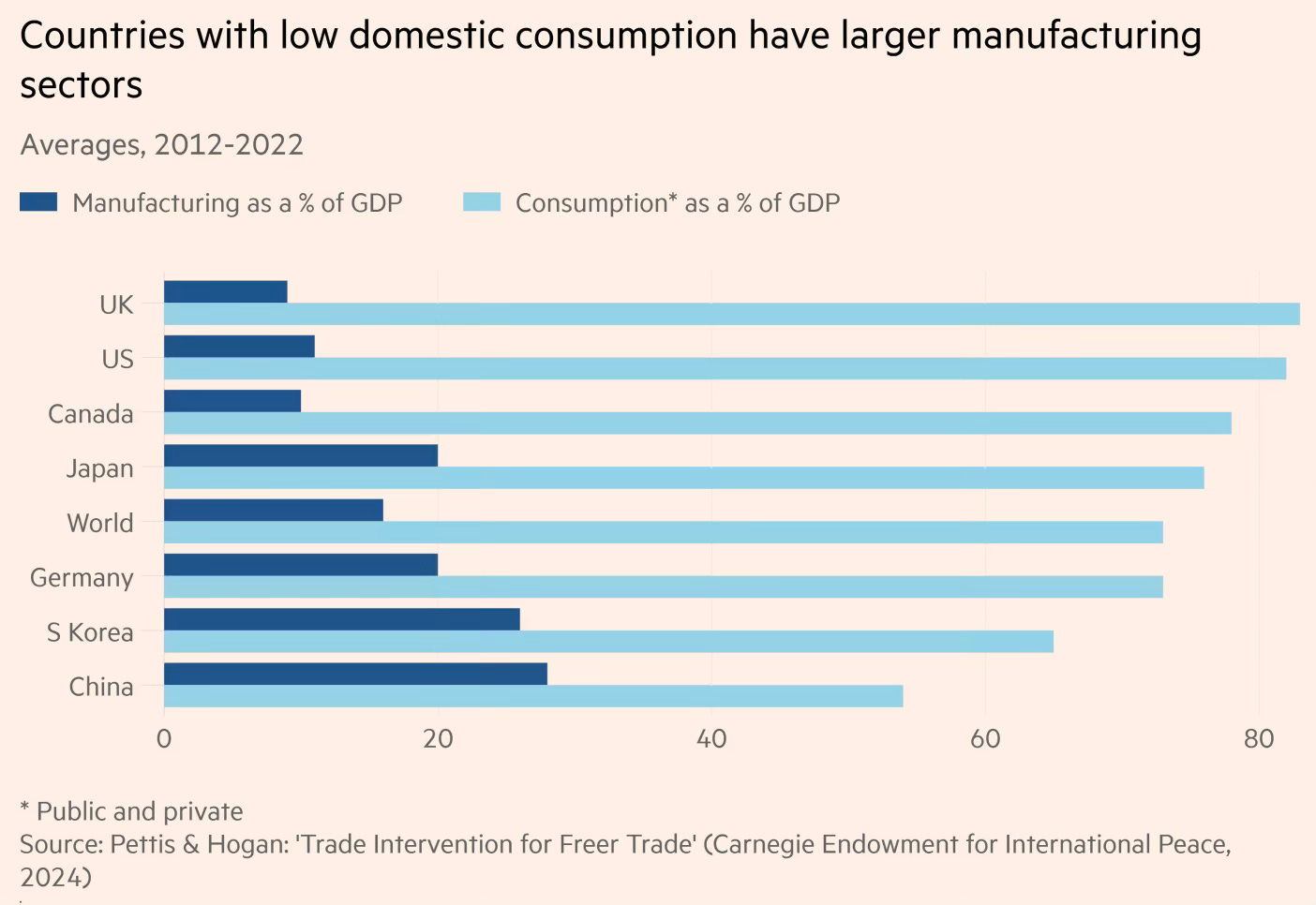
Second, countries with low domestic consumption have larger manufacturing sectors. 

On the structural imbalance in the US economy, The Economist has a very good description. It says that over-consumption, trade, and foreign borrowings are linked, and “is as if shipping containers arrive in America, unload goods, and then sail back filled with Treasury bills or shares in S&P 500 companies”. It writes,

America’s gross domestic savings are around 17% of GDP, compared with an average of 23% in high-income countries. America invests about 22% of GDP, roughly in line with the rich-world average. The difference between saving and investment is the capital the country must import, which last year amounted to $1.3trn. Meanwhile, America’s consumption as a share of GDP—81% once that by the government is included—is the highest in the G7 apart from Britain. Among the other five big rich economies, the consumption share is on average five percentage points lower.

Relying on net capital inflows has left America with deep financial obligations to foreigners. The difference between the assets that Americans own overseas and those foreigners own in America has fallen to -90% of GDP. This is the kind of “net international investment position” (NIIP) that would be hair-raising in almost any other country. For years America could take solace from the fact that its income statement was healthy. Even as its NIIP worsened, the country earned more on its overseas assets than it paid out to foreign investors. Foreigners own lots of low-yielding debt, including Treasuries; Americans own more stocks and FDI, which have higher yields. The stubborn positivity of the country’s net foreign income has been part of the “exorbitant privilege” that comes from issuing the world’s reserve currency. Yet as the NIIP has lurched into the red, this comfort has dissipated. In the third quarter of 2024 America paid more to owners of its assets than it earned on foreign investments for the first time this century, in part because of higher interest rates…

Mr Trump wants the trade deficit to close, meaning that the financial flows must slow, too. But he also wants America to enjoy an investment boom. The only way to make the equation add up is if America ponies up its own capital by saving more. In other words, it must cut its consumption.

The article underlines the importance of America’s credibility in ensuring it’s able to pull of a smooth landing on its massive structural imbalances.

The $62trn-worth of American capital owned by foreigners is distributed across tens of millions of balance-sheets belonging to firms and individuals. A third is debt instruments that cannot be marked down as seamlessly as equity prices or property values; of that debt, two-fifths is government-issued. Moreover, since America’s debt liabilities are mostly denominated in dollars, it should always be able to honour them, at least in nominal terms.

But a loss of faith in America’s ability to deliver the necessary real returns for foreign investors could cause a large depreciation in its asset prices, which have reached eye-watering highs. The country’s bonds, properties and stocks, as well as the dollar itself, would come under intense selling pressure. A much weaker dollar and lower prices for American bonds and stocks would force a rebalancing by reducing the size of America’s external liabilities relative to its external assets. Tighter financial conditions would discourage consumption, whipping the current account into line no matter how uncomfortable such a sudden adjustment would prove.

The question for America, and indeed the global economy, is whether it can defuse its external liabilities without paying such a steep price… Tariffs discourage consumption by raising prices and hurting living standards. Barriers to capital mobility, the first signs of which are buried in Mr Trump’s tax bill, force up domestic interest rates and encourage domestic saving… It makes Americans poorer, and by imperilling the returns earned by foreign investors, threatens to bring about the very crash rebalancing is supposed to prevent… A smoother adjustment—one that does not seek to make America a creditor nation overnight—should be possible. If faith in the country is maintained, its exorbitant privilege means it ought to be able to repay its foreign debts with smaller trade surpluses than other countries, says Menzie Chinn of the University of Wisconsin-Madison. If America avoids sullying its own assets, it can afford to be gradual in its transition towards a trade surplus. 

Let me explain these structural imbalances in greater detail. 

There exist two major structural imbalances in the world economy. The first concerns the imbalance between consumption and investment, and the second concerns that between savers and lenders. They are also linked to each other. While there are also contributors like globalization, trade liberalization, technological advances, and demographics, these imbalances have become excessive enough to spill over as trade wars due to the policies pursued by governments across the world. Reversing these policies is important to addressing these imbalances.

Let’s start with the first. A fundamental problem facing the world economy is the structural imbalance between consumption and investment among countries. The consumption share of national economic output is disproportionately low in some countries, while the investment share of output is similarly excessive. Similarly, some countries with the fiscal space for public investments underinvest in public goods despite having large investment requirements while pursuing economic growth through exports.

The most totemic example, of this consumption-investment imbalance is China. Since the beginning of its current growth phase, the country has maintained investment rates of over 35% of GDP, rising to touch 45% of GDP since the Global Financial Crisis. However, its consumption share of GDP has stayed at a remarkably low 35-40% of GDP, at least a third lower than that for other major developed and developing economies. All told, in 2024 while China accounted for 32% of global manufacturing, double that of the US, it represented only 12% of its consumption

The percentage of Chinese households who had out-of-pocket health spending greater than 10% of total household consumption rose from 20.4% in 2007 to 21.7% in 2018, compared to the global average of 13.2% in 2017 and 7.7% and 1.5% respectively for Russia and Malaysia, two countries with similar per capita GDP as China. Compounding matters, the Chinese government spends only 6% of GDP on individual consumption (services ranging from healthcare to social security), an outlier among major economies and lower than even similarly placed economies. The low public spending forces precautionary savings.

This imbalance has also been sustained by financial repression that keeps interest rates low, the hukou system that restricts access to welfare benefits and reduces consumption, wage controls and other measures that help businesses access a huge class of cheap and mobile industrial workers, inadequate public health care and social safety nets that lead to forced savings, artificially inflated property markets that allows local governments access to plentiful credit, and a shadow banking system and off-balance sheet financing entities that compromises financial discipline and funnels credit. For all these reasons, China is often referred to as a country with a rich government and poor citizens!

This imbalance has reduced domestic demand and channeled manufacturing towards an excessive reliance on exports. It has resulted in China consistently running large trade surpluses, which recently hit an astronomical trillion dollars in 2024.

The imbalance on investment has also been turbocharged by China’s search for alternative engines of economic growth after the real estate crisis that erupted in 2021 with the default of the Evergande Group, the country’s second-largest property firm. Beijing re-directed the large volumes of credit away from real estate towards manufacturing, especially solar, batteries, automobiles, and electric vehicles. Chinese companies rapidly built massive over-capacity which they started exporting at discounted prices, thereby further tilting the playing field towards them and against their competitors in their domestic markets.

China is not alone here. Germany, the largest economy in Europe and for long the engine of European economic growth, has pursued rigid and excessively conservative balanced budget policies. These policies have meant that successive governments have avoided the much-needed public investments in replacing ageing infrastructure facilities and expanding them to meet emerging requirements. This, in turn, has depressed consumption and, like with China, channeled an increasing share of the output of the highly competitive German manufacturing firms towards exports. Germany’s domestic consumption share of the economy at slightly below 50% of GDP in 2023 was the lowest among all G-7 economies and has been continuously declining in the last four decades. The result has been a consistent trade surplus for decades, if only on a smaller scale than China.

The consumption-investment imbalance in countries like China and Germany has been complemented by a similar imbalance in the opposite direction in the US. The cheap imports from China allowed American consumers in particular and their Western counterparts in general, to enjoy and gradually get addicted to good-quality products at very low prices. Their businesses similarly maximized profits by using cheap Chinese inputs and products. It allowed central banks and governments to take disproportionate credit for low inflation and high economic growth rates driven by consumption (and debt, which we discuss next).

This imbalance is also a reflection of the skew in the economic structure of countries like the US, where the non-tradeable services sector has taken a disproportionately high share of the output. A consumption culture that prioritises services tends to squeeze resources from going into tradable manufacturing. This imbalance can also arise when aggregate demand exceeds output, like with a US economy that has been operating close to full employment for a few years.

This imbalance is closely linked to the second imbalance between savers and lenders. China’s Gross Domestic Savings as a percentage of GDP has been in the range of 40% since the eighties and rose above 50% of GDP in the aftermath of the GFC and has remained above 45% since. Financial repression meant that Chinese households have limited avenues to savings outside of the banking system that pays low returns. The hukou system, inadequate welfare and social safety benefits, and high property prices have amplified savings while also depressing consumption. Meanwhile, in countries like Japan, worsening demographics led to reduced investment opportunities and lower returns.

The trade surpluses retained in the country add to their central bank reserves. These reserves, in turn, had to find investment opportunities outside the country. Their safety and liquidity made the US Treasury Bonds the most common and convenient investment opportunity for global central bank reserves. All of this has resulted in what Ben Bernanke famously described as a “global savings glut”. The global financial market integration promoted by institutions like the International Monetary Fund (IMF) has amplified the global cross-border financial flows. The extended period of outperformance of US equity markets and the strong performance of the US economy have made it the most attractive global investment destination.

These inflows have also allowed the US government to borrow at very low rates despite running up large deficits. They have led to a surge in the US debt-to-GDP ratio from 67.5% in 2008 to just below 125% in 2024. Fiscal deficits in the US have risen sharply in recent years, and was over 6% in 2024. A similar trend of rising debt-to-GDP ratios is observed across many developed economies, with the trend having become especially pronounced since the global financial crisis. This also coincided with the period of rising trade surpluses of China and Germany.

In simple terms, the US’s roles as the largest import market, a form of global buyer of last resort, and as the largest borrower, a haven for lenders, are two sides of the same coin. It borrows to buy. Its exorbitant privilege from the ownership of the global default reserve currency coupled with the global savings glut, allows the US government to continually borrow in its currency at cheap rates. The apparently never-ending rise of its equity markets, coupled with the depth of its financial markets, make it the standout investment destination for foreign portfolio investors. At the same time, the strength and dynamism of its economy make it the most attractive destination for foreign direct investments and private equity investors.

The underlying trade and financial transactions reflect an accounting reality that links the two imbalances. The total amount of money coming into a country must necessarily be balanced by that leaving the country. In other words, the current and capital accounts must be equal, or the balance of payment must be zero. This means that if a country runs a large trade surplus, it must necessarily be exporting capital, and similarly, trade deficits go alongside capital inflows.

Underlying these structural imbalances is a more fundamental imbalance, one that manifests across several problems faced by modern society. It’s that of a global economic system that has become unhinged in the pursuit of efficiency and profit maximization and has traded off resilience and equitable distribution of returns to capital. It manifests in the worrying trends of business concentration across industries, widening inequality, and the emergence of a small group of staggeringly wealthy plutocrats.

The most important trends of the global economy since the turn of the nineties have been the globalization of value chains, offshoring and outsourcing, trade liberalization, financial market integration, financialization, and increased immigration. While these trends have contributed to the unprecedented period of global economic growth and prosperity, they have also triggered self-reinforcing dynamics that have taken each of them too far down the road with disturbing consequences and incentive distortions. As the cliché goes, too much of a good thing is a bad thing!

Saturday, January 11, 2025

Weekend reading links

1. Robin Harding writes that AI advances may not help much in the development of humanoid robots.
The obstacles to making an economically viable robot that can cook dinner and clean the toilets are a matter of hardware, not just software, and AI does not in itself address, let alone resolve them. These physical challenges are many and difficult. For example, a human arm or leg is moved by muscles, whereas a robotic limb must be actuated by motors. Each axis of motion through which the limb must move requires more motors. All of this is doable, as the robotic arms in factories demonstrate, but the high-performance motors, gears and transmissions involved create bulk, cost, power requirements and multiple components that can and will break down. After creating the desired motion, there is the challenge of sensing and feedback. If you pick up a piece of fruit, for example, then the human nerves in your hand will tell you how soft it feels and how hard you can afford to squeeze it. 

You can taste whether food is cooked and smell whether it is burning. None of those senses is easy to provide for a robot, and to the extent they are possible, they add more cost. Machine vision and AI may compensate, by observing whether the fruit is squashed or the food in the pan has gone the right colour, but they are an imperfect substitute. Then there is the issue of power. Any autonomous machine needs its own energy source. The robot arms in factories are plugged into the mains. They cannot move around. A humanoid robot is most likely to use a battery, but then there are trade-offs with bulk, power, strength, flexibility, operating time, usable life and cost. These are just some of the problems.

2. Nvidia does not seem to agree as it bets on robotocs as its next big growth driver. 

Nvidia... is set to launch its latest generation of compact computers for humanoid robots — dubbed Jetson Thor — in the first half of 2025. Nvidia is positioning itself to be the leading platform for what the tech group believes is an imminent robotics revolution. The company sells a “full stack” solution, from the layers of software for training AI-powered robots to the chips that go into them... The push into robotics comes as Nvidia is experiencing more competition for its powerful AI chips from rival chipmakers such as AMD, as well as cloud computing groups such as Amazon, Microsoft and Google that are looking to reduce their dependence on the US semiconductor group... a shift in the robotics market is being driven by two technological breakthroughs: the explosion of generative AI models and the ability to train robots on these foundational models using simulated environments. The latter has been a particularly significant development as it helps solve what roboticists call the “Sim-to-Real gap”, ensuring robots trained in virtual environments can operate effectively in the real world, he said... Nvidia offers tools at three stages of robotics development: software for training foundational models, which comes from Nvidia’s “DGX” system; simulations of real-world environments in its “Omniverse” platform; and the hardware to go inside the robots as its “brain”.

3. Pakistan drastically reduces pension benefits of retired civil and armed forces personnel to reduce its growing pension bill, the fourth largest expenditure in the budget. 

The Ministry of Finance on Wednesday issued three separate notifications to discontinue multiple pensions, reducing both the first home take pension and also lowering the base for determining future increases in pensions... According to the Ministry of Finance’s notification, on the recommendations of the Pay and Pension Commission of 2020, “it has been decided that henceforth, in an event where a person becomes entitled to more than one pension, such person shall only be authorised to opt to draw one of the pensions”... Instead of taking a pension on the basis of the last drawn salary, the new pensioner will get a pension based on the average salary of the last two years... It also ended the annual compounding of the pension and any increase would be treated separately from the base pension, a concept that is similar to the ad-hoc salary increase that is not made part of the basic salary to avoid compounding. The changes will take effect from January 1 and will be applicable to both retired civil and military personnel. Many serving federal government employees, who are taking salary and pension, would also be affected by the changes. The finance ministry’s notifications stated that the changes in the pension rules have been made on the basis of recommendations given by a commission constituted by the government of former prime minister Imran Khan in 2020.

4. A good description of how Chinese exporters are responding to US tariffs.

In industry after industry, Chinese companies have found footholds abroad that allow them to bypass trade barriers with the United States. After the United States put hefty tariffs on Chinese solar panels, for example, many Chinese companies opened solar factories in Southeast Asia... U.S. efforts to block critical minerals and electric vehicle batteries from China from receiving government subsidies have also pushed Chinese companies to set up battery-making subsidiaries in Morocco and Singapore... In some cases, global companies have also used accounting and tax tricks to make it appear that their shipments from China are lower, and thus pay fewer tariffs, without making major changes to their supply chains... For example, an electronics company might move one important stage of its supply chain out of China and into Vietnam. That could allow the company to report to U.S. customs agents that the export came from Vietnam, even if the good is still finished in China and exported from China to the United States. Another lever companies could play with, Ms. Brown said, is valuation. They can officially lower the value of the import by stripping out certain “intangible” costs, like payments for intellectual property, royalties, brand or research and development, and recording those to other global subsidiaries. By lowering the value of the import, they then pay a lower tariff.

5. Important point about the origins of uncertainty and risks in the global order today.

According to John Ikenberry of Princeton University, a leading theorist of international relations, “a revisionist state has arrived on the scene to contest the liberal international order . . . it is the United States... Trump is poised to contest almost every element of the liberal international order — trade, alliances, migration, multilateralism, solidarity between democracies, human rights”. As a result, rather than supporting the international status quo, the US is poised to become the leading disrupter. “Every talk I’ve ever given on the geopolitical risks that we face in the world started with China and Russia,” says Ivo Daalder of the Chicago Council on Global Affairs. “But the biggest risk is us. It’s America.” America’s traditional allies are among the countries that feel most threatened by a change in the way that the US exercises its power. Middle-power democracies such as the UK, Japan, Canada, South Korea, Germany and the entire EU have got used to a world in which American markets are open — and the US provides a security guarantee against threatening authoritarian powers... The question of whether and how to respond to Trump tariffs is exercising diplomatic minds across the western world. Finding an answer is all the more difficult because Trump’s true intentions remain unclear.

6. Interesting inequality trends

So we have seen no increase in aggregate inequality. The story for the lowest-paid is unambiguously good but for the bulk of people who sit somewhere in the middle, it could be argued that the two divergent trends combine for a decidedly uncomfortable situation. If the middle class looks upwards, the rich are pulling further away. A top-tier life feels further out of reach than ever. But look down, and the floor is coming up fast. This simultaneous rise of resentment and precarity is a dangerous cocktail, and could certainly have fed into recent political undercurrents.
Professions once considered aspirational are at the sharp end. In Britain, doctors, nurses and police officers have all been slipping down the income rankings in recent years. In the US, the highest-paying jobs are increasingly shared among a handful of ultra-high-status occupations. Tech workers now account for one in six of the top 5 per cent of salaries, up from one in 20 in 1990... In the 1980s, 40 per cent of the highest-paying jobs in America didn’t require a degree. The upper reaches of the income scale included plenty of engineers and doctors, but also senior schoolteachers and the most skilled factory and construction workers. People from all sorts of backgrounds with all sorts of skillsets could dream of making it. Today, the upper part of the scale is dominated by highly skilled tech and healthcare workers. Almost half of the top jobs require an advanced degree. And a huge section of the population knows at a pretty early age they’re not on that path.

7. Some numbers of household savings in India.

Net household financial savings in India rose from 7.7 per cent of gross domestic product (GDP) in 2019-20 to 11.7 per cent in 2020-21, largely because of precautionary and forced savings during the pandemic, but moderated thereafter to a multi-decade low of 5.3 per cent in 2022-23... The share of low-cost current and savings accounts in total deposits has declined the past few years from a peak of 44-45 per cent in recent years to 38-39 per cent. In contrast, mutual funds, especially equity and hybrid schemes, have seen a surge in inflows and have delivered higher returns over the past few years. The share of mutual funds constituted around 6.1 per cent of household savings in 2022-23, with the number of mutual-fund folios jumping from 146 million at the end of 2022-23 to 178 million at the end of 2023-24.

8. Finally, after years of wrangling including several lawsuits, congestion pricing in busy hours goes live in mid-town Manhattan from the morning of 6th January.

Most passenger cars will now have to pay $9 to enter Manhattan south of 60th Street at peak hours, rather than the original $15. Small trucks will have to pay $14.40; large trucks, $21.60. Discounted rates will be offered overnight when there is less traffic. M.T.A. leaders expect the new tolls to help generate $15 billion through bond financing that will pay for a long list of transit repairs and improvements, including modernizing subway signals and stations and expanding the electric bus fleet... State officials said the original plan was expected to reduce the number of vehicles in the congestion zone by roughly 17 percent. They have not specified how the scaled-back program will compare except to say they expect it to cut traffic by at least 10 percent... The tolling plan also does not directly charge drivers and owners of for-hire vehicles, which have exploded on city streets since Uber’s arrival in 2011. Instead, a small per-trip fee — $1.50 for Ubers and Lyfts; 75 cents for taxis — will be added to each fare and paid by passengers... Within the congestion zone, the average travel speed has dropped to under 7 miles an hour for the first time since records were kept in the 1970s, he said. The slowest traffic crawls along at just 4.7 miles per hour in Midtown.

See also this.  

9. As Saudi Arabia wins the bid for the 2034 Football World Cup, FT writes on the country's ongoing boom in infrastructure investments.

Saudi Arabia has launched real estate and infrastructure projects worth $1.3tn since Vision 2030 was unveiled in 2016, according to estimates by consultancy Knight Frank. These projects, such as the Neom linear smart city, include adding more than 362,000 hotel rooms and 7.4mn square metres in retail space. Football has become one of Prince Mohammed’s prime targets for sporting investment. The country’s sovereign wealth fund acquired English Premier League side Newcastle United, while superstars such as Ronaldo and Neymar have been lured to play in the Saudi Pro League. Saudi Arabia’s bid said the 48-team World Cup would be played in 15 stadiums across five cities. Eight stadiums would be in or close to Riyadh, which is already undergoing a construction boom that includes an entertainment zone to the west and a major expansion to the capital’s airport.

10. Adam Tooze points to a UNTD report that highlights the large differences in the cost of debt between Western countries and low-income ones.

11. Doing business, Huawei style.
Huawei’s first business was importing telephone switches before building its own, cheaper versions, copying foreign designs in the process. It later benefited from a government policy to rip out foreign technology in China’s communications network. Huawei developed a reputation for generosity towards government officials and telecoms executives, paying for international travel and hosting lavish banquets at its campus. Dou portrays Ren as an expert networker, including sending birthday cakes to retired telecoms experts who had helped Huawei.

12. Divisions in the Trump coalition that will only grow.

The Maga crowd and the globalists disagree not only on immigration, but on defence, employment and free speech. This is a coalition whose most significant overlap was a desire to take down the previous government. Now that they have, I think it’s unlikely they’ll come together on anything else.

13. Stunning figures about the US economy from Ruchir Sharma

Following the pandemic, government spending rose sharply as a share of GDP. More than 20 per cent of new US jobs are now created by government, up from 1 per cent in the 2010s. Public transfers including Social Security account for more than a quarter of residents’ income in more than 50 per cent of US counties — up from just 10 per cent in 2000.
14. Corporate India's acute deficit of global brands
Many Indian brands have either disappeared or ceded space to foreign competition. Where Onida and Videocon once dominated the domestic market for TVs, washing machines, and household appliances, Japanese, Korean, and, increasingly, Chinese brands now rule the showrooms. In cars, the Premier Padmini and Ambassador vanished when Japan’s Suzuki set up its joint venture to launch the Maruti, an Indian brand only in name. Here, too, it is the Japanese, Koreans, Germans, and Chinese that offer consumer choices, with Tata and Mahindra & Mahindra being the only indigenous exceptions. In fast-moving consumer goods, brands such as Anchor, Nirma, Uncle Chipps, and Binny’s, which once gave multinational players a run for their money, have all vanished or receded to the margins of the market... The abdication of Indian brands to global competition — with many of them converting themselves into contract manufacturers — reflects the lack of long-term thinking and strategic imagination, which are critical to brand-building.

15. This is what US Treasury Secretary-nominee Scott Bessent thinks.

Bessent has also suggested that countries with military protection from America should be forced to buy more dollar debt, as a quid pro quo. “Is there some kind of statecraft to do where you go to [these countries] and say we have these 40- or 50-year military bonds [to buy]?” he said, citing Japan, Nato members and Saudi Arabia.

16. Finally, Tej Parikh presents some facts about European stocks that go against conventional wisdom. Excluding Nvidia, European stocks outperform S&P 500 since the latest bull market started in October 2022!

European stocks are undervalued compared to their American peers.

Tech accounts for around just 8 per cent of the Stoxx Europe 600. AI euphoria has mostly passed the continent by... The Granolas... covers a diverse group of international companies spanning the pharmaceutical, consumer and health sectors. Together, they account for about one-fifth of the Stoxx 600. Their performance against the Magnificent Seven has only recently diverged. The S&P 500 — which has around 70 per cent revenue exposure to the US — got a jolt following the election of Donald Trump... Small listed European businesses also tend to outperform their American counterparts. About 40 per cent of US small caps have negative earnings, compared with just over 10 per cent in Europe. The winner-takes-all dynamic may be stronger in the US, where tech behemoths suck capital and talent away from smaller companies... European corporates also rely more on relationship-based, illiquid funding, unlike in the US, where listed equity dominates. That may encourage longer-term corporate governance in Europe... Regarding the Trump tariff threat, it’s not all disaster for European companies either. Stoxx 600 groups derive only 40 per cent of their revenues from the continent... A stronger dollar would also boost the earnings of European companies with sizeable US sales.