Substack

Showing posts with label Bubbles. Show all posts

Friday, July 10, 2026

The loss of financial market discipline

This post will provide a framework for thinking about the erosion of financial market discipline. 

The FT has an article on an inflating earnings bubble in the financial markets. 

Analysts are now forecasting a 25 per cent increase in S&P 500 company earnings for the coming year, according to Bloomberg data… Ben Inker, co-head of asset allocation at GMO, said forecasts for the next two years were “rising at an exceedingly high rate, nothing we have seen outside of a crisis recovery”. Consensus estimates for coming-year profits have risen by almost 20 per cent in six months, the biggest such jump since 2021…

Capital Economics analysts warned this week that “AI-related equity markets may be approaching a point where earnings expectations and capital expenditure assumptions become difficult to sustain” and a correction in these could “trigger a broad equity market pullback”. Michel Lerner, head of UBS’s investment analytics platform HOLT, said “shares in the AI food chain are priced to maintain supernormal profits” and warned of an “earnings bubble” forming in the market. While exceptional profits appear likely to keep being delivered in the immediate future, he said, “the likelihood of sustaining these levels of profitability and growth is incredibly low”.
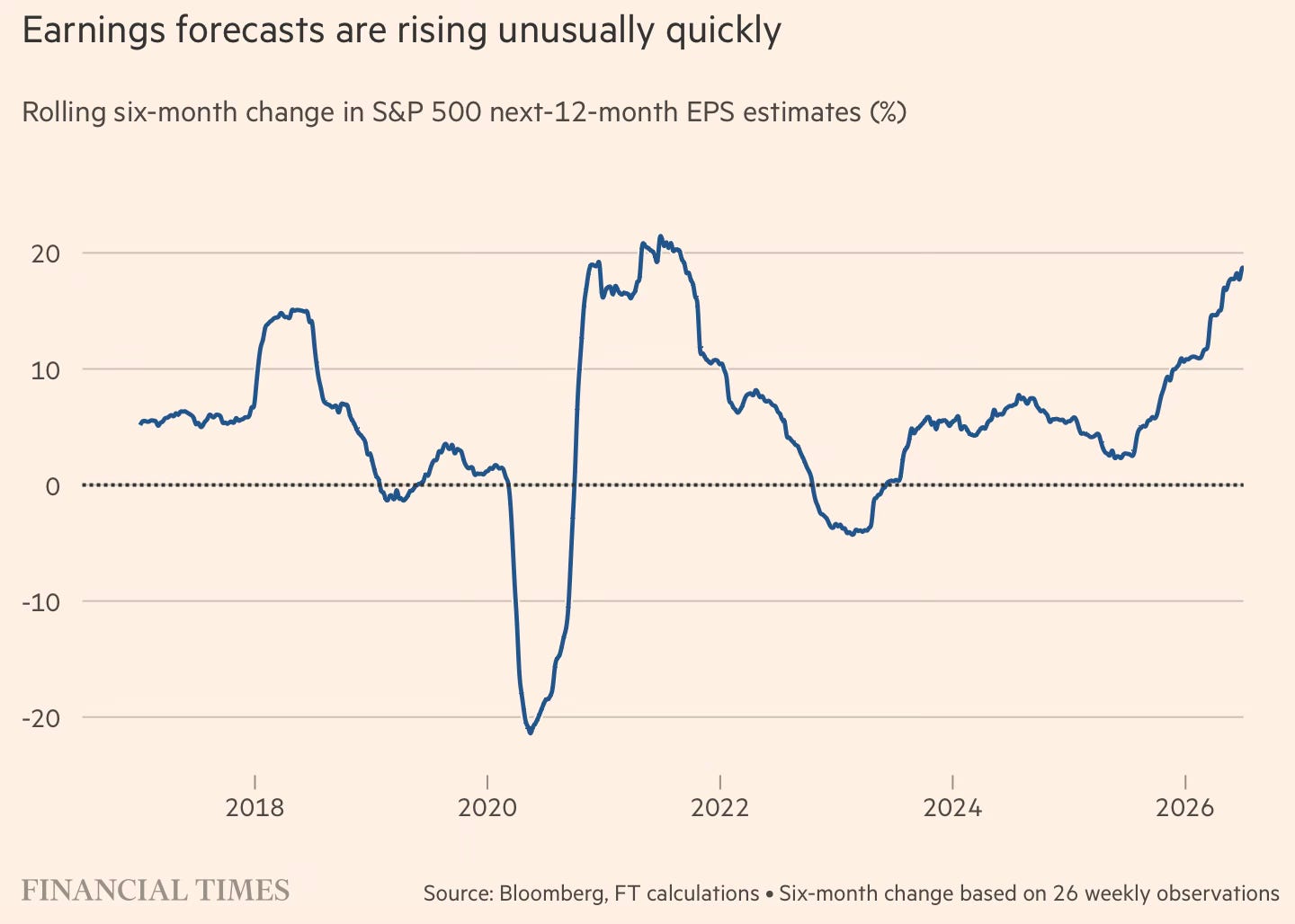
This earnings bubble supplements an already inflated valuations bubble

The BIS Annual Report has an excellent graphic that shows that stocks are pricing an earnings bubble, underpricing risk, and household exposure has increased sharply.
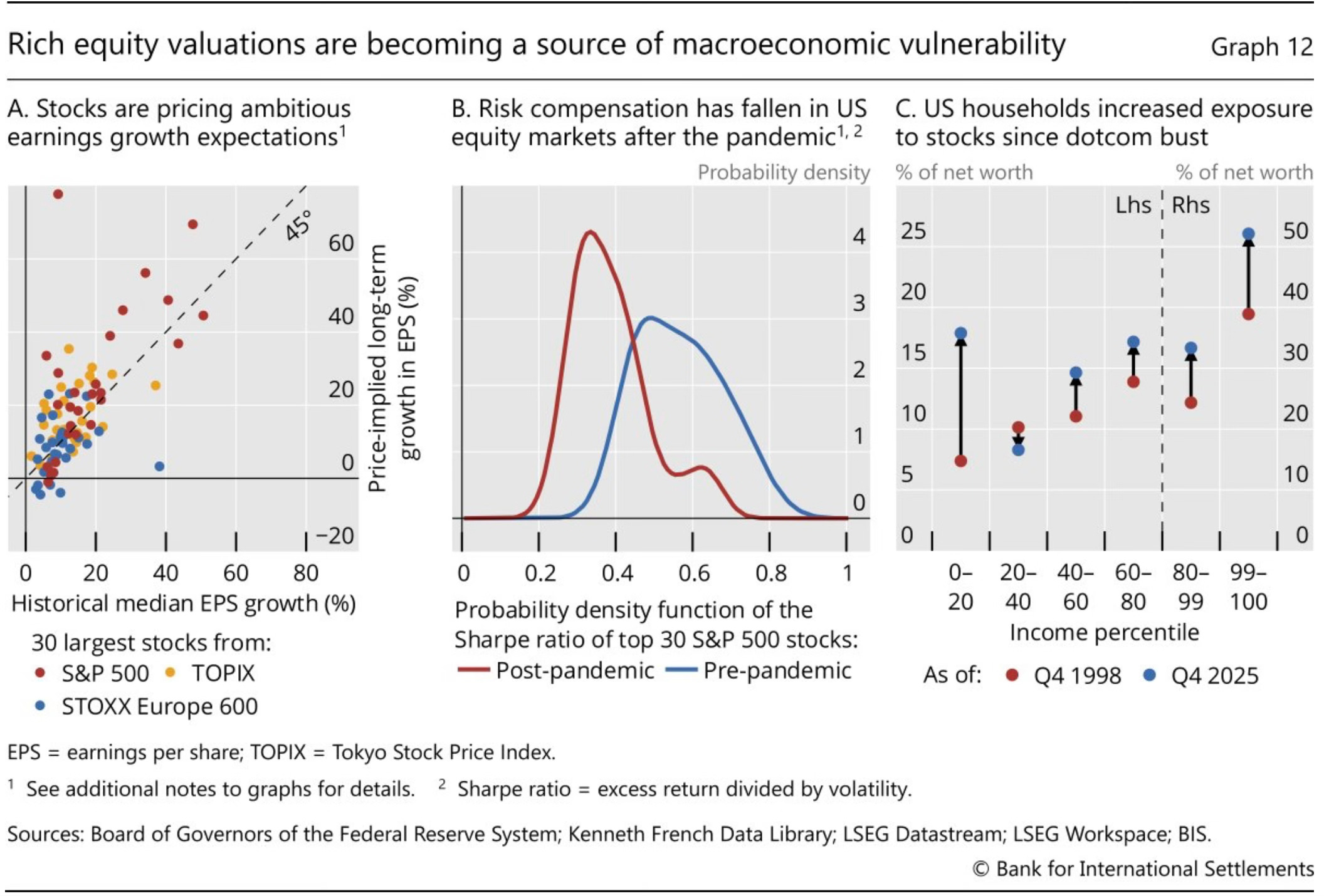
The implied long-term earnings growth for the largest corporations sits well above recent historical benchmarks, with US stocks often trading at large premia to peers in other major markets. These implied rates often exceed even the elevated growth that some of the technology firms have delivered in their relatively short lifetimes. As these firms mature and command a larger share of the market, sustaining such high growth could become increasingly challenging… Risk premia on the largest US stocks have compressed markedly since the COVID-19 pandemic, with the distribution shifting clearly to the left. This points to growing investor complacency and reduced compensation for risk-bearing… A major equity market correction could have larger macroeconomic consequences today than in the past. Household equity exposures have grown over the past few decades, both relative to total wealth and income. A large correction in valuations could have more pronounced wealth effects and sharper consumption pullback than in the past. And with US stocks accounting for an outsized share of global equity markets – about 64% of the MSCI Global index – the wealth impact from a US-led repricing could propagate globally.

And, the report says, all this is fuelled by a complex web of private circular transactions involving hyperscalers, chip makers and AI labs. 

Chip makers and hyperscalers take equity stakes in AI labs or neocloud providers, who in turn commit to multi-year purchases of chips or computing power. Data centre construction is increasingly outsourced to third parties that lease facilities back to hyperscalers on long-dated contracts with embedded exit clauses. The terms of such deals are typically poorly disclosed, with risks of the same asset being pledged multiple times. Together, such arrangements account for a sizeable share of sector-wide financing and forward revenue. A sharp repricing of equity risk could prompt a reassessment of corporate credit risk and lead to tighter credit conditions more broadly… 

Any tightening in credit conditions could expose existing vulnerabilities in the less transparent private credit space, whose reach has expanded among middle market and small firms… A larger shock, whether from a renewed inflation surge or a sharp AI-led repricing, could trigger a more widespread credit crunch… The growing role of private credit also raises concentration risks. Direct lending funds, dominant players in the private credit ecosystem, have quadrupled their lending to the AI and information technology (IT) sectors in the past five years, to about 15% of their portfolios. These loans tend to be larger than those in other sectors, while their terms such as tenor and pricing remain broadly similar, raising questions about lending standards and risk pricing. 

In this backdrop, it is useful to ask the question whether financial markets have lost their disciplining powers. What is it about modern financial markets that makes them underprice risk? 

For sure, greater access to information has bridged information asymmetries, increased transparency, and reduced uncertainties and risks. And this has, in turn, lowered price discovery frictions and increased market efficiency. However, this has gone alongside trends in the opposite direction. Already, the complexity of financial instruments obscures risks and distorts price discovery. But other market practices have emerged in the last two decades that distort incentives and erode the market discipline. Some of them are consequences of the aggressive expansion of central bank monetary policy toolkits in the aftermath of the Global Financial Crisis. 

There is a moral hazard created by the market participants’ internalising the belief that too-big-to-fail institutions or industries will always be bailed out. The institutions themselves come to view this as an insurance against their risk-taking. Well-intentioned actions of central bankers like forward guidance and commitments to backstop against shocks (Greenspan Put and Draghi’s “whatever it takes”) create similar moral hazard across markets. The gradual erosion of gatekeeping standards (ratings inflation, audit failings, index inclusion - e.g., for SpaceX) distorts incentives and leads to underpricing of risks. Excessively bullish market guidance, like with AI stocks now, fuels a cycle of irrational exuberance that amplifies bubbles. Finally, the inherent dynamics of financial markets bake in the fear of missing out among the institutional investors. 

The fundamental basis for any efficient market is that information flows facilitate price discovery, and the costs of the actions of market participants are internalised. Based on this, an analytical framework on financial market discipline can be built on three pillars - information quality (participants must get accurate signals); price discovery (prices reflecting the underlying value); and skin in the game (losses must fall on risk takers). All three must hold simultaneously for market discipline. 
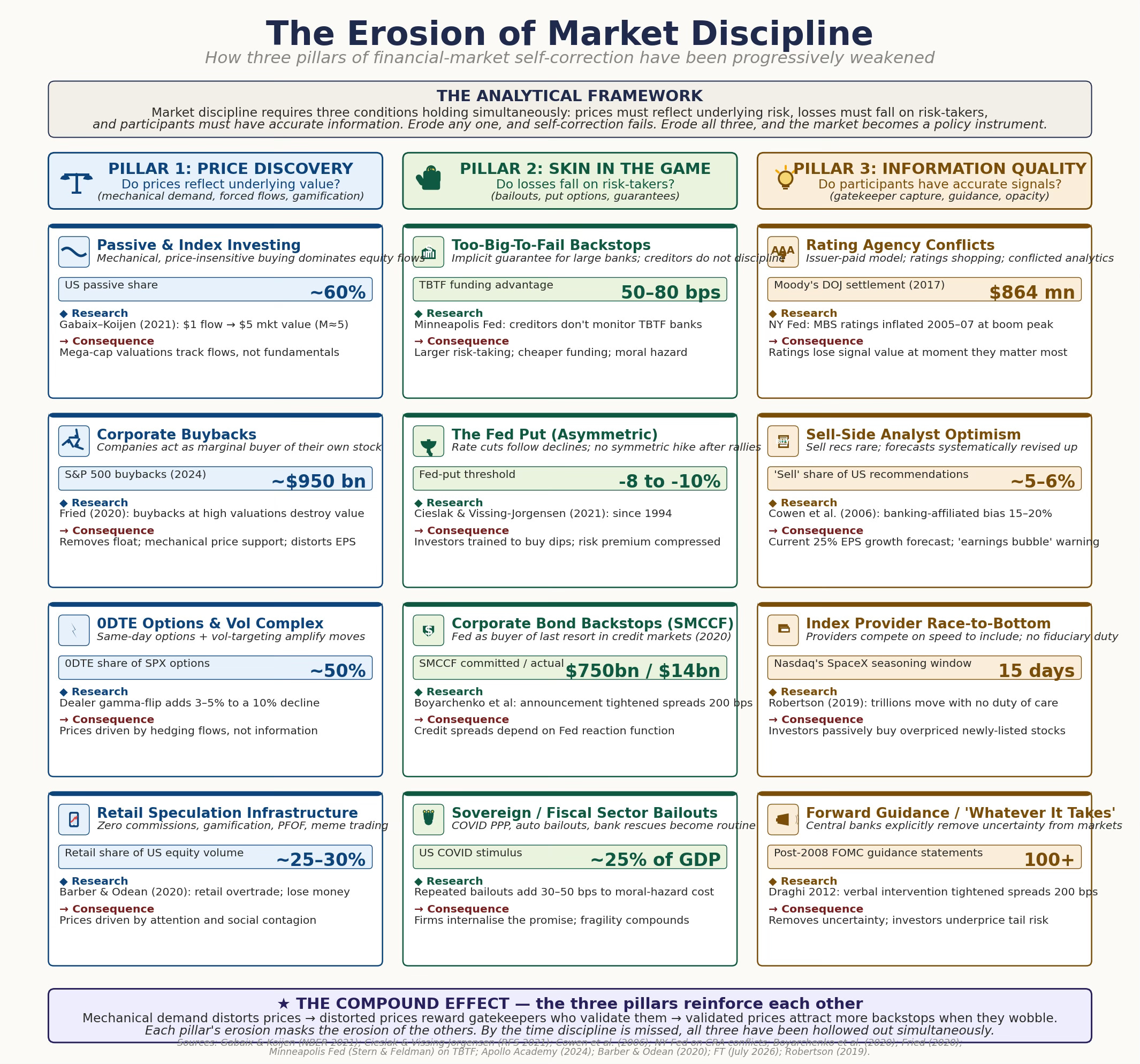
The three erosions are not independent. Mechanical demand distorts prices; distorted prices reward gatekeepers who validate them; validated prices attract more backstops when they wobble. Each pillar’s erosion masks the erosion of the others. By the time discipline is missed, all three have been hollowed out simultaneously. This is why the current market environment can display record-high valuations (Price Discovery pillar broken), narrow risk premia (Skin in the Game pillar broken), and record-optimistic analyst forecasts (Information Quality pillar broken) - all at the same time, without triggering any traditional warning system. The system that would normally catch such a configuration has been progressively disassembled.

Interestingly, each erosion channel began as a reasonable response to a specific problem. Deposit insurance solved bank runs. Forward guidance solved communication ambiguity. Passive investing solved active-fund underperformance. Rating agencies solved information asymmetry. None of them is wrong in isolation. The problem is what happens when all the individual protections are stacked simultaneously, and all of them are pursued to their extremities. The system loses its balance.

The market’s self-correcting machinery is gradually replaced by a suite of external supports, and the participants who set prices become smaller and smaller relative to the participants who follow rules. At some point, arguably reached, the market is no longer a disciplinary mechanism at all. It is a policy instrument with an ambiguous owner. That is why the current earnings-bubble concern is qualitatively different from previous bubbles in that there is no obvious mechanism left through which the market disciplines its own excess.

So what can be done to restore the disciplining powers of the market?

Quite simply, it should be about restoring accurate price signals, consequences and costs of risk taking, and the trustworthiness of information, and all by going back to first principles. 

The restoration of price discovery requires both thickening the market (a high concentration of buyers and sellers) and increasing liquidity (allowing assets to be transacted without significantly impacting the price). The internalisation of the costs of risk-taking demands rolling back moral hazard-inducing backstops and bailouts, or at the least ensuring these interventions are priced appropriately. Finally, restoring the quality and credibility of information requires separating information provision from the transactions side of financial intermediaries, and letting the market guide with information. An agenda is outlined below. 
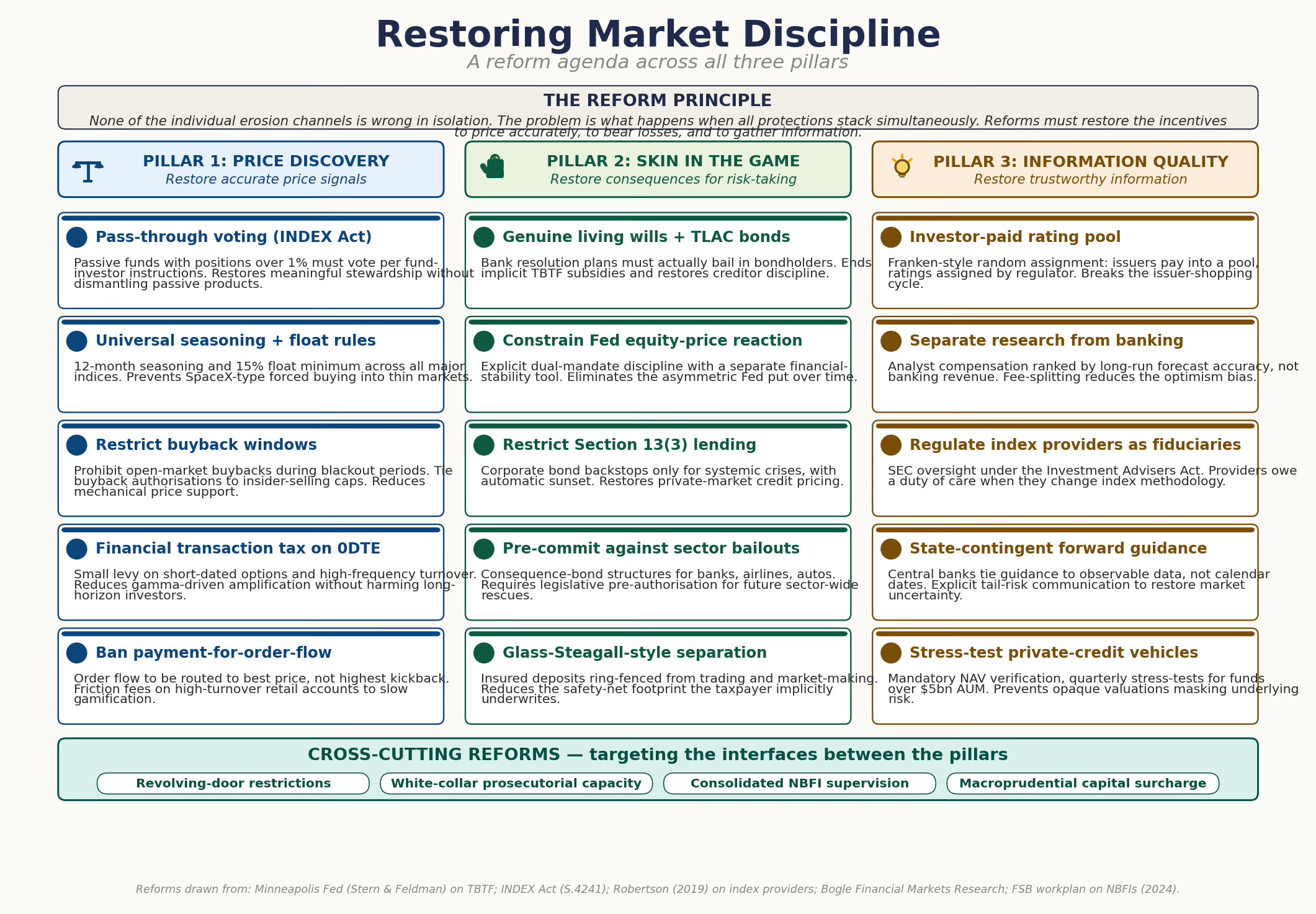
This must be complemented with cross-cutting reforms such as restrictions and greater oversight on revolving-door personnel movements, enhancing the white-collar prosecutorial capabilities of regulators, enhancing the supervision of non-bank financial institutions (NBFI), macroprudential capital surcharges for risk concentration, etc. 

The problem, though, is that these are all very difficult reforms even at the best of times, but particularly difficult now. The silver lining is that a big crash can create the conditions for such reforms.

Monday, July 6, 2026

Some thoughts on the AI trade

The AI trade is clearly blowing into a bubble of utterly spectacular proportions. 

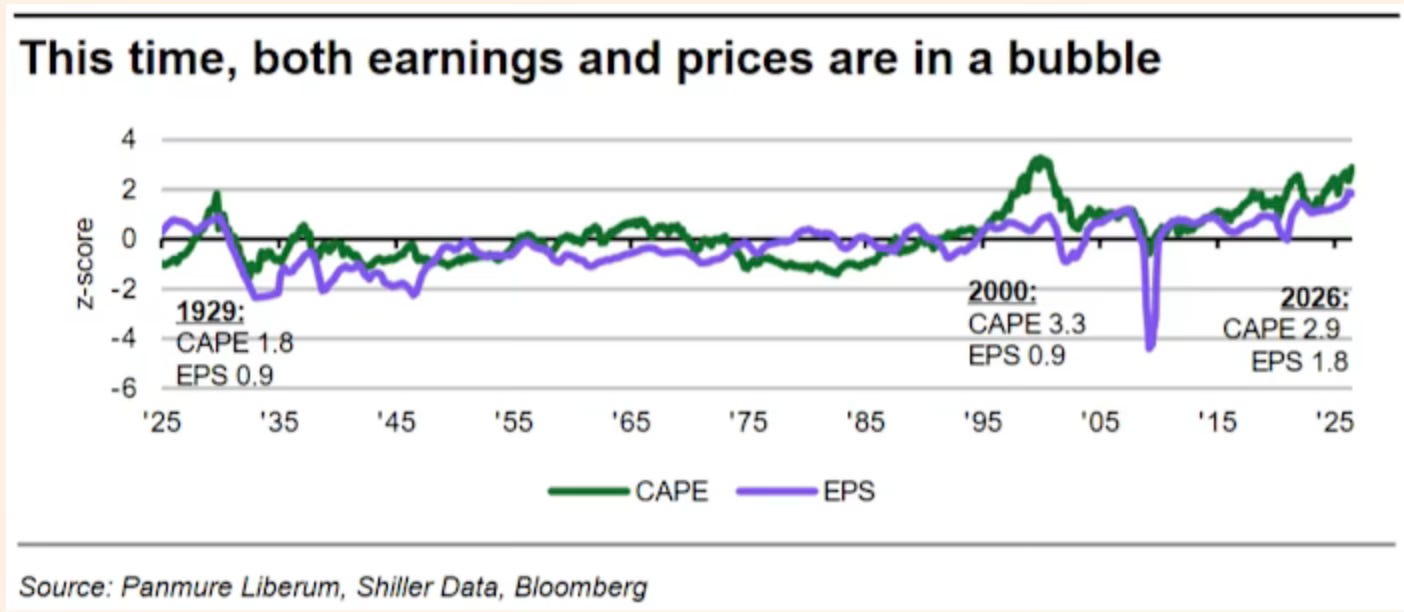
FT Alphaville points to the interesting reality that both equity valuations and earnings of the underlying companies are in bubble territory. They quote from the monthly market update by Joachim Klement and Francisca Reis of Panmure Liberum.

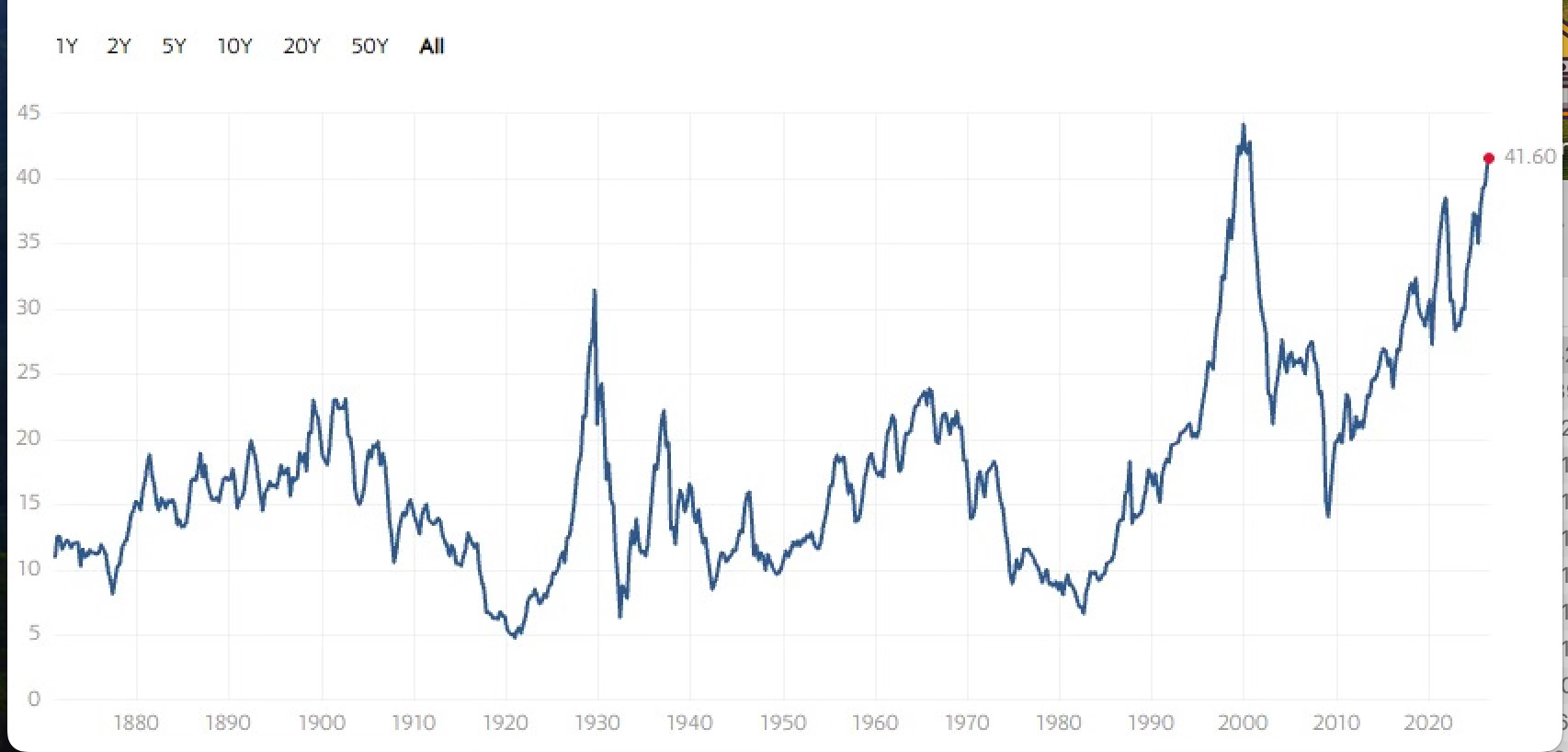
In 1929, the cyclically-adjusted P/E-ratio (CAPE) of the S&P 500 reached 32.6x according to Prof. Robert Shiller’s data. This was 1.8 standard deviations above trend at the time. In 2000, the CAPE reached 44.2x, or 3.3 standard deviations above trend – a clear sign of a bubble. However, as our chart below shows, earnings in both instances were within normal range, less than one standard deviation above trend. Today, the CAPE is at 41.0x, or 2.9 standard deviations above trend. Once again, we are clearly in bubble territory for stock market valuations. 

However, unlike in previous bubbles, we are having extremely high CAPE at a time when earnings themselves are 1.8 standard deviations above trend. In other words, we are in a valuation bubble at a time when earnings are in a bubble themselves. If we correct for the earnings bubble, the current CAPE would be 67.6x or 4.6 standard deviations above trend, a bubble that surpasses anything ever seen in US history by an extreme margin. If valuations followed a normal distribution (which they don’t, so don’t take this literally), this would happen in 0.00019% of months or once every 43,432 years.

See just the Shiller CAPE ratio.

That being the case, what makes any assessment of the AI trade problematic is its unique nature. 

It is the creation of a general-purpose technology that is most certain to transform several aspects of business models, work practices and trends, and life itself (and maybe even more). There are five stakeholders on the supply side of the AI story - semiconductor chips, cloud and data centre infrastructure, LLMs, financing, and support services. They encompass a vast spectrum of businesses - chip designers and makers, equipment makers, cloud infrastructure services, AI LLM developers, data centre developers, utilities, financial institutions, etc. On the demand side are all the different kinds of AI applications users, spanning every imaginable industry. 

While the LLMs and the cloud services are software, the rest are all hardware. At the vanguard are the top public limited companies of our times, all with formidable moats and strong balance sheets. Till the recent surge in private credit, the AI investments were being financed from their large cash surpluses. Further, all of them make massive and growing profits, even creating an earnings bubble. Finally, given the network effects generally associated with digital technologies, the AI landscape is more likely to create winner-takes-all markets. 

Also, so far, the AI trade has been running on the massive investments pouring into the development of AI LLMs and their applications. This investment binge is being driven by an intensely competitive race to outdo each other in improving the LLM algorithms and building up scale capabilities. The achievements to date on this have been truly spectacular. The applications development, though gathering pace, is lagging. No killer Apps or hardware have emerged on the landscape. 

The true reckoning for the AI trade will depend on whether the AI algorithms developed will find commercially valuable use cases. More specifically, whether these use cases, which will emerge in the years ahead, will justify the massive investments already made and being committed. 

Even more specifically, if the market smell tests of the AI promise endure, the bubble will continue to inflate. Such persistence of bubble inflation is, to a great extent, the perpetuation of stories. Elon Musk and SpaceX are the totemic illustrations. The two critical metrics of aggregate profits possible from the AI industry are the addressable market and margins. However, both are nearly maxed out in the valuation pricing on the upstream (supply) side. The best that can therefore be expected is that the downstream (demand) AI applications industry starts to create successful products. This would let the AI trade inflate more, at least for the immediate future.

On the contrary, if the market smell test points to the other way, at least in a few vanguard areas like autonomous driving or software development or healthcare and life sciences, then all bets are off and the wheels will start to come off. Another downward pathway is if the upstream supply-side margins start to get squeezed due to competition or disruption or rising costs. Given the asymmetric nature of such turns (bubble inflated gradually upwards, but the pop could be rapid), we could then see a rapid unravelling of the AI trade, with all its disruptive implications. The disruptions could be economy-wide, far deeper and broader than with the dotcom and other bubbles, given the wide sweep of markets that the AI industry has enveloped. 

Interestingly, even as the seven largest data centre operators are planning to spend $848 bn this year, five times what they spent in 2022, the stock prices of the applications-side hyperscalers are struggling. Microsoft is down nearly 20% this year, and Meta is down 11%. The AI trade is now running purely on the chipmakers. 

The critical place in the market to keep a close eye on may be the downstream side of AI applications and product development.

Saturday, June 6, 2026

Weekend reading links

1. Potato glut hits Europe, and in particular Belgium.
Europe faces a surplus of five million metric tons of the type of potato used for fries. For months, the price of a metric ton of potatoes on the spot market in Belgium, the world’s biggest exporter of frozen fries, has languished at precisely zero. It was nearly 600 euros ($690) three years ago.

2. The Murugappa Group (through Axiro Semiconductors and CG Semi), the Tata Group (through Tata Electronics), and Crystal Matrix are leading India's semiconductor chip design and manufacturing push

3. Very good assessment of a decade of the IBC law.

The idea was to enable timely exit of non-viable firms, preserve viable businesses, restore credit discipline, and unclog credit channels... Till March 2026, 1,419 companies had emerged from insolvency with approved resolution plans, with the proportion of companies achieving such outcomes improving steadily... Creditors have realised ₹4.32 trillion through resolution plans. The oft-cited haircut of around two-thirds, measured against admitted claims, can be misleading because claims are frequently inflated while asset values are deeply eroded by the time firms enter insolvency. A more meaningful benchmark is liquidation value: Resolution plans have, on average, yielded 167 per cent of the liquidation value. Importantly, firms resolved under the IBC demonstrated operational revival post-resolution. Within five years, sales and capital expenditure nearly doubled, asset utilisation improved sharply, and the aggregate market capitalisation of resolved firms rose from about ₹2.8 trillion to ₹9 trillion... 

In all, 3,003 companies have entered liquidation under the IBC, but most had little realistic prospect of revival. Their assets averaged barely 5 per cent of admitted claims, and four-fifths were already sick or defunct before entering insolvency. The IBC merely provided an orderly exit for firms that had failed long before the process began. Yet, the incidence of liquidations in India is comparable to that in the United States and significantly lower than in the United Kingdom and Australia... Resolution plans rescued 78 per cent of distressed assets, while liquidations accounted for 22 per cent. When all pathways to revival are considered — resolution plans, withdrawals, settlements, appeals, and rescues during liquidation — the number of revived companies substantially exceeds those liquidated.

4. John Burn-Murdoch points to evidence that remote working and NOT AI is responsible for the ongoing declines in entry-level hirings. 

Peter John Lambert and Yannick Schindler have a fascinating counter-proposal: the take-off of remote work. Early-career workers require more supervision than experienced hires, and build important skills, knowledge and social capital by observing and working alongside senior colleagues. Working from home adds friction to these processes, making entry-level workers more costly to bring on board in terms of time and resources and slowing their prospects for promotion. As such, the rise of remote work has worsened the trade-off for hiring entry-level workers, while leaving the calculus for senior hires unchanged. The evidence fits the theory. Lambert and Schindler analysed hundreds of millions of new hires and job postings and found that although both occupational exposure to AI and remote working rates line up with the outsized pullback in junior hiring, the link with AI evaporates once you account for whether a role is remote. In other words, it only looks like AI is behind the hiring crunch for junior software developers because coding jobs are also disproportionately done remotely. Jobs less exposed to AI but amenable to remote work (eg lawyers) have also seen weak junior hiring; roles with high AI exposure but an emphasis on in-person work (eg receptionists) have held up better.
5. Is Steve Jobs leaving the greatest corporate legacy ever?
Apple now rakes in sales of over $1bn a day. Its services business alone, driven by the App Store and Apple Pay, generates more revenue than Netflix, Spotify and Adobe combined, with a margin of around 75 per cent. Under Cook, the company has returned around $1tn to shareholders through dividends and buybacks… Nearly two decades since the product launched, Apple shipped well over 200mn iPhones in 2025 and the device still accounts for about half of Apple’s $400bn of annual sales, with high product margins underpinned by the highly efficient, Asia-based supply chain also created by Cook. Apple’s astonishing profitability is sustained by an annual cadence of new iPhones, each iteration featuring largely incremental improvements on the one before. Research and development spending as a proportion of revenue went from 8 per cent at its height in 2001 to a 2 per cent low in 2012 as the iPhone boom began, meaning that for a while Apple was spending proportionally far less than its Big Tech peers.
6. Good primer on why oil prices have remained less elevated than expected - decline in Chinese oil imports (almost 4 m bpd) and rise in US exports (almost 4.5 mbpd).

7. The US economy is increasingly resembling a one-trick pony of AI.
The US corporate profit share has climbed to a record 13.8 per cent of GDP, while net income margins across the broad US equity market have recovered to about 9.7 per cent, close to earlier highs. At the same time, market leadership has become unusually concentrated: a handful of AI‑linked stocks now account for roughly 40 per cent of the S&P 500’s market capitalisation, according to Bank of America data. Headline profitability is being flattered by a small slice of the economy earning extraordinary returns from the scramble to build AI capacity...
Spending strength is increasingly coming from upper-income households where wealth and income are more tied to equities than wages. The stock market has, in effect, become part of the growth model: rising AI profits lift share prices; higher share prices support the spending power of wealthier households; and that spending helps keep demand alive. Lower-income households, by contrast, are more exposed to squeezed real incomes and softer labour-market momentum... Large technology groups have produced surging revenues and margins with only limited growth in headcount... So long as investors believe AI will earn very high long-term returns, the loop can remain self-sustaining: capital expenditure stays firm, equities stay buoyant and affluent consumers keep spending.

8. The spectacular surge in Google's capex.

Five years ago, its capital expenditure on servers, network equipment and such was $25bn, which it funded out of operating cash flows of $92bn. In 2027, analysts expect $250bn of capital expenditure, versus cash flows of $260bn — a tighter fit. In its second quarter next year, Visible Alpha estimates suggest Google will spend more than it makes, for the first time in its listed history.

9. A good illustration of deficient national security discipline comes from how the US is allowing the exports of tungsten scrap to China even as it spends money abroad buying tungsten mines

Since early 2025, Chinese scrap traders have been seeking tungsten throughout the US, prompted by a shortage outside China caused by declining supply and intense demand from the aerospace, weapons and tools industries. The effort has set off a bidding war with American buyers and calls to ban sales of a critical national security resource to overseas buyers... Sellers said they were fielding calls from Chinese buyers looking for the material, while American buyers said they were being outbid by Chinese rivals willing to pay as much as five times the usual price... 

Tungsten scrap commonly comes from worn-out industrial tools such as drill bits and mining equipment. It can be crushed and chemically processed back into tungsten powder or carbide for use in new machinery and tools. The shortage has been triggered by Beijing imposing export restrictions on it and an array of other critical minerals in early 2025 and the country cutting mining quotas. China accounts for more than half of global mined and refined tungsten supply and about half of demand... 

Tungsten is broadly used in military applications, including in bullets and missiles. Traders said stocks were already low before the Iran war and that companies do not typically hold large stores of the metal. There was “no availability” outside China of the so-called “intermediate” products that manufacturers need — mined ore that has been processed... The price of tungsten has risen by more than 200 per cent since May 2025, while tungsten scrap has risen 350 per cent, according to Argus Media.

10. The AI wave is lifting all stocks, including those legacy IT firms like HP and Dell

11. India's non-tax revenue fact of week.

In the last three years, the share of RBI surplus in the government’s non-tax revenue has stayed between 42 and 52 per cent.

12. SpaceX IPO in a graphic.

13. Real Madrid at the top of European football club valuations.

14. The universe of PSUs in India has been rising.
15. Rama Bijapurkar's categorisation of India's consumption class.
The important thing is that 93% of households have annual consumption less than $5700.

Last month, Anthropic crossed $47bn in run-rate revenue, a metric used by start-ups which estimates annual revenues based on short-term performance. This is a more than fivefold increase since the start of the year... Anthropic’s valuation has soared from $350bn to $900bn in 12 weeks. It is now one of the fastest-growing companies in history.
17. The biggest threat to the US superpower status now appears to be its surging public debt, which is now $36 trillion held by the public and federal agencies 
The exorbitant privilege has ensured the dollar's status as the world's pre-eminent reserve currency and the Treasury market's role as the world's safest haven asset, thereby allowing the US access to unlimited global capital at a low cost. While there are no competitors to the dollar on the horizon, the Treasury's safe haven status is facing competition. 

18. The most important difference between the dotcom bubble and the AI bubble.
19. Japan is losing people. 
Japan’s population peaked in 2008 at 128 million, and it is projected to fall to 87 million by 2070. The country is now roughly the same size it was in 1989... All but two of the country’s 47 prefectures reported population decreases in 2025, and the rate of decline is accelerating.

20. Finally, this says as much about the Indian stock markets as about the Korean and Taiwanese markets.

India’s stock market capitalisation was overtaken in the past week first by Taiwan and then by South Korea, as the value of Indian equities held by foreign investors slumped to a 10-year low of 7.3tn rupees ($76bn) on June 1. The value of Indian stocks was more than double that of Taiwanese stocks and roughly 3.5 times that of South Korean stocks 18 months ago, analysts at Bernstein said this week. “Fast forward just five months into 2026, and that lead has evaporated,” they added. 

Saturday, December 20, 2025

Weekend reading links

1. Mouth-watering prospects for Wall Street in 2026.
SpaceX is hoping to be valued at $800bn in its latest private share sale, while Anthropic is targeting $350bn. OpenAI’s most recent share sale was at $500bn. Given that anyone investing now would be hoping for another big lift before IPO day, the eventual numbers, if all goes to plan, would be much larger still. Any one of these would put the previous record for a tech IPO — the valuation of more than $230bn Alibaba achieved in its 2014 debut — in the shade.

2. Barring Tesla, at PE multiples of 20-30, the stocks leading the AI bubble do not look comparable to their peers in earlier bubbles. 

3. As the tech bros pursue self-governing enclaves, Prospera in Honduras offers a cautionary tale
Arguably the most evolved experiment in alternative governance is Próspera, a gated private community on a Honduran island run by a Delaware-based company, where close to 1,000 residents can enjoy co-working spaces, a beach resort and a golf course. As a for-profit semi-autonomous zone, Próspera has low taxes, its own labour rules and an arbitration system run by retired Arizona judges who hear its cases online. Bitcoin is one of the currencies of choice. Its founder, Venezuelan-born wealth fund manager Erick Brimen, describes his work as “an evolved way to drive socio-economic development” through public-private partnerships... Próspera’s hands-off approach to medical regulation has made it a mecca for people seeking experimental treatments as the field of longevity — or trying to live forever — becomes more popular in Silicon Valley circles...

Critics argue that the special economic zones legislation that allowed for Próspera to be established was championed by a corrupt former government whose leader, Juan Orlando Hernández Alvarado, has just been released from prison, where he was serving a sentence for narco-trafficking and weapons crimes, following a pardon from Trump. The government at time of writing (an election took place on November 30) since tried to repeal its charter on the grounds that, as ruled by the country’s supreme court, self-governing special economic zones are unconstitutional. Próspera is now suing the government for $11bn — just under a third of the country’s GDP — for lost future profits, through an international arbitration process... Cornell University historian Raymond Craib, author of Adventure Capitalism: A History of Libertarian Exit, from the Era of Decolonization to the Digital Age, says it offers a warning to elected politicians about the dangers of carving out semi-autonomous zones: “Precisely what Próspera is doing [suing Honduras] is precisely the argument governments are going to make about why you should not be editing your constitution to allow for this.”

4. John Burn-Murdoch has a great post arguing that the rising cost of services in developed economies may not mean that household consumption expenditures and living standards are declining. 

Add together the increased portion of incomes accounted for by healthcare (up by 3 percentage points over recent decades), childcare (up 2 points), housing (up 4 points) and food (up 1 point in recent years), and total spending on these unavoidable costs has climbed from just over a third of middle class disposable income to half of the total. But this squeeze from essentials has not led to an increase in the share of income American households spend in total across all categories, which is broadly in line with the historical average — even slightly down on where it was when all of these things were cheaper in real terms. This has been made possible primarily by dramatic falls in the price of clothes, electronics, household appliances and other mass-produced tradeable goods, which have more than offset the rise in essential services...
Rather than the increasing burden of essential costs suggesting living standards are being eroded, if we take a step back, it’s an indication that people across society are becoming more prosperous... William Baumol’s 1967 famous observation, as countries develop economically, the same productivity growth that drives down the cost of tradeable goods causes the cost of in-person services to balloon. Wages in sectors like healthcare and education that require intensive face-to-face labour, and have slow (if any) productivity growth, are forced upwards in order to attract workers who would otherwise opt for high-paying work in more productive sectors. The result is that even if people keep consuming the exact same basket of goods and services, as living standards in their country increase they will find more and more of their spending is going on essential services.

5.  Water metro facts.

A 75km elevated metro network could cost ₹15,000 crore. But a water metro of the same length would cost roughly ₹1,500 crore... Rail metros require continuous elevated corridors, viaducts, stations, land acquisition and traffic diversions through dense urban areas. Water metros, by contrast, rely on existing waterways, building only terminals, pontoons, control systems and a fleet of electric boats.

On Kochi metro

In Kochi, the water metro is priced to encourage regular use, with single-journey fares typically between ₹20 and ₹40 depending on distance, and monthly passes at ₹600. What makes it especially convenient is that passengers can use the same Kochi1 smart card, issued by KMRL, to access both boats and trains seamlessly... Kochi needs 53 water metro boats for its complete network but currently has only 20 operational vessels. Manufacturing electric-hybrid boats is a specialized, time-consuming process with limited global suppliers... With only 20 boats operating across six of the planned 15 routes, demand is concentrated on tourist-facing corridors... More than 80% of commuters are tourists... The shortfall in boats, and the resulting partial network, means many daily-use routes for local residents are still not operational.

Mumbai is seeking to emulate Kochi to develop a water metro system.

Amchi Mumbai Water Metro, covering nearly 200 nautical miles with more than 30 routes, represents a very different ambition. The planned routes are along the city’s western waterfront and eastern creeks, linking places such as Versova, Bandra, Wadala, Vashi, Airoli, Kalyan and even the upcoming Navi Mumbai airport.
6. For all the 200-plus PE multiples of Tesla riding on robotaxi prospects, the Chinese autonomous driving industry has a reality check
The recent listings of Pony.ai and WeRide in Hong Kong... shares in both have fallen since their November debuts, even as they pledged to use the funds towards scaling their fleets and advancing Level 4 autonomous driving — technology capable of operating without human monitoring or intervention... That is surprising given the businesses are already showing signs of viability. They have deployed more than 2,000 autonomous vehicles across 10 cities in China and have recorded millions of paid user rides. Many cities now allow fully driverless service. One explanation is that for Chinese investors, autonomous driving is still seen as a more costly hardware race than a software breakthrough.

7. Ed Luce sums up Trump's engagement with China.

On the grounds of never interrupting your enemy while he is making a mistake, Xi Jinping is 2025’s winner. The year’s hinge moment was Donald Trump’s cave-in to Xi in South Korea in late October. Trump’s trade war climbdown marked a new epoch. After mulling decoupling for years, talk of US-China divorce was suspended. Even so-called de-risking is now in question. Trump awarded their meeting a 12 out of 10. China took 10 of those points. Xi has profited simply by waiting for strategic gifts to come his way. Rarely has the inverted motto, “don’t just do something, stand there,” been more apt. Last week, Trump added to Xi’s windfall by approving Nvidia’s sale of H200 chips, albeit with a 25 per cent export tariff... Trump just handed China his biggest freebie so far. Advanced semiconductors are the one key area where China is still lagging behind the US. Trump is helping to close that gap.

8. Very good article by Ananth Narayan on India's currency management challenge

From FY2017-18 to FY2021-22, average annualised daily volatility was 5.5 per cent, close to the 6 per cent annualised daily volatility of the DXY index (which tracks the US dollar against a basket of six major currencies). During this period, net investment capital flows into India averaged 1.7 per cent of GDP. In contrast, between FY2022-23 and FY2024-25, annualised USD/INR volatility dropped to 3.3 per cent, even as DXY volatility rose to 7.4 per cent. USD/INR became significantly less volatile than other major currency pairs. Media reports attributed this to active RBI intervention that prevented INR depreciation, while dousing volatility. Notably, capital flows dropped to 0.6 per cent of GDP during this three-year period, pointing to the possible impact and constraint of the trilemma.

9. French President Emmanuel Macron makes the clearest signal towards a nuanced trade and financial market protectionism.

We should not be ashamed of a “European preference” as long as it means supporting strategic production — in automotive, energy, healthcare and tech — within our own borders. Protection against unfair competition is the foundation of resilience. We must not be naive: a credible protection strategy requires that we have the means to defend ourselves against those who break the rules. That is why we have a range of trade protection tools, including tariffs and anti-coercion measures. No one should be in any doubt about our willingness to use them. Second, in order to finance the investment we need, Europe must leverage its pool of around €30tn in savings. Each year €300bn is invested abroad. It is time we Europeans took the risk of investing in our own companies. Regulation simplification, securitisation and unified supervision will free much needed capital. Implementing the Savings and Investments Union will ensure European savings circulate freely to finance innovation and growth. Europe should also seek to reinforce the international role of the euro through the development of euro stablecoins and the introduction of a digital euro, as well as the creation of safe and liquid assets to finance defence and technologies.

He also invites Chinese investments into Europe but at certain terms.

China has long benefited from European FDI and co-operation, including on technology. The EU has invested close to €240bn in China while China has invested less than €65bn in the EU. Today, it leads in energy transition and clean mobility technologies, while Europe continues to lead in many service sectors. An optimal framework for our two regions is a co-operative one. The EU must stay open for China to invest in the sectors where it is a leader, provided the Chinese help generate employment and innovation and share technology.

This is a clear direction for engagement between Europe and China.

During my last trip to China, I made it clear that either we rebalance economic relations co-operatively — engaging China, the US and the EU in a genuine partnership — or Europe will have no choice but to adopt more protectionist measures. I much prefer co-operation, but will argue for using the latter if need be.

10. India FDI facts

Our assessment shows that the average risk-adjusted return on FDI investment in India remains quite attractive. We have estimated returns on inward FDI as the ratio of FDI equity income receipts to the total inward FDI stock, with a time lag (inspired by OECD and Eurostat methodologies). The risk-adjusted return has been calculated as the ratio of the 10-year average return to its standard deviation. Our assessment indicates that the average risk-adjusted return on FDI investment in India over the past 10 years is around 7.3 per cent, ranking second only to Indonesia (10.6 per cent). The risk-adjusted returns for other emerging economies are 6.6 per cent for Mexico, 4.5 per cent for South Africa, and 4.3 per cent for the Philippines, according to our assessment.

11. Good story in The Ken about how southern states are embracing a decentralised model of promoting ICT investments. 

Among the anchor cities in the four states, Visakhapatnam has a major competitive advantage. 

12. Western multinationals are finding ways to exit their China operations.

Global companies are seeking private equity partners in China to take on their local operations as they grapple with an increasingly competitive local market, a sluggish economy and volatile US-China relations. The owners of sports retailer Decathlon, ice cream brand Häagen-Dazs, coffee houses Peet’s and Costa, convenience store operator Lawson and GE HealthCare are all weighing options for their China operations, including selling parts or all of their businesses, said people familiar with their thinking. The rush to rethink China comes amid whiplashing relations with the US, the slowing of the world’s second-largest economy and the rise of fast-moving and better-adapted local rivals across a swath of industries.

13. Ruchir Sharma points to a deadly combination of over-valuation, over-ownership, over-investment, and over-leverage threatening the US economy. 

Households hold a record 52 per cent of their wealth in stocks, which is higher than the peak in 2000 and far above levels in the EU (30 per cent), Japan (20 per cent) and the UK (15 per cent). A closely related signal is overtrading. Over the past five years, the number of shares traded each day in the US has risen by 60 per cent to around 18bn. The retail share of short-dated stock options has grown from a third to more than half... Counting just the Magnificent Seven, AI spending has more than doubled since 2023 to $380bn this year and is on track to exceed $660bn by 2030. The potential returns are far from clear... the Magnificent Seven are not the cash machines they were even a year ago. Amazon, Meta and Microsoft are now net debtors, up from one in 2023. Their profits continue to rise but with so much flowing into AI, only Google and Nvidia still generate piles of cash.

Wednesday, October 29, 2025

Narratives trump theory

It is a reality of life that narratives that are grounded in stories trump sophisticated theories grounded in logic and reason. 

The booming hype cycle on AI is only the latest example. References to AI and ML have become de rigueur in any sales pitch about innovative solutions, regardless of the context. Everything from food delivery to manufacturing in the private sector is being claimed to be dramatically improved with some underlying AI engine. Notwithstanding the lack of any meaningful commercial success, the AI bubble continues to inflate at a rapid pace. 

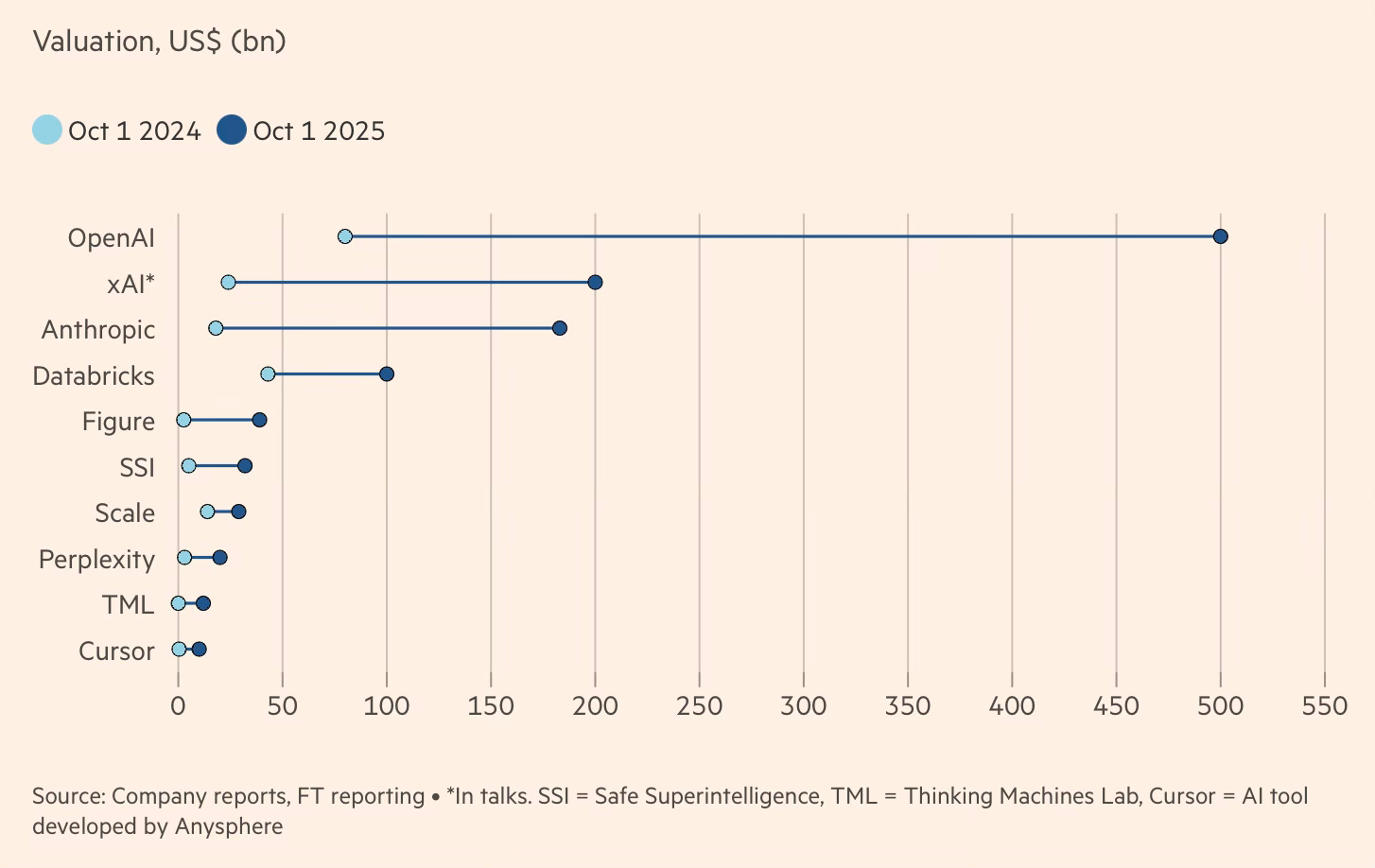
As an illustration, over just the last 12 months, the top ten AI startups, all loss-making, have attracted $161 billion in VC capital (two-thirds of all US VC spend) and gained close to $1 trillion in valuation

The AI mania is not confined to areas of high technology and finance. Even within the more prosaic environments of public systems, it has become a norm to fit AI/ML into any new public policy idea or program or project for virtue signalling. Never mind its relevance and value, proponents put forth claims of using an AI/ML layer to embellish their ideas. Even simple data analytics solutions that are basically data description, without even basic analysis, are presented as having a layer of AI/ML. 

FT’s Gillian Tett points to the practice of “cargo cults” used to describe the phenomenon observed among the native inhabitants of the Melanesian islands that were invaded by Westerners in the 19th century and flooded with previously unseen consumer goods. Dimitris Xygalatas writes

When Indigenous communities throughout the area had their first encounters with colonial forces, they marveled at the material abundance the foreigners brought with them. During World War II, when many Melanesians worked for U.S. and Australian military forces, they observed soldiers who never seemed to engage in any productive activities, such as fishing, hunting, working the land, or crafting anything. All they did was march up and down, raise flags, chant anthems, and signal toward the sky. And when they did that, metal birds appeared and dropped all kinds of goods for them. The Indigenous observers concluded that the strange rituals were causing the cargo to arrive.

With the end of the war, the military bases were abandoned and the goods ceased to arrive. To get the cargo to return, local chiefs began organizing ceremonies that mimicked the rituals of the troops. Soon, elaborate myths and theologies developed around those rituals. Surely, the cargo must have been a gift from the gods—their own ancestors. After all, who else could be capable of producing such wealth? The foreigners had merely discovered the rituals that unlocked these treasures…

But the only airplane present is a full-size wooden replica of a light aircraft. On one side of the strip lies a control tower made of bamboo. On the other sits a satellite dish built of mud and straw. Undeterred by the apparent lack of any actual aviation technology, some of the men light torches and place them alongside the runway. Others use flags to wave landing signals. Everyone raises their gaze to the sky in anticipation.

Tett extends the cargo-cult phenomenon to the current AI mania.

Physicist Richard Feynman borrowed this metaphor to decry “cargo cult science”, cases where researchers “follow all the apparent precepts and forms of scientific investigation, but they’re missing something essential, because the planes don’t land”. The same analogy now applies to AI. Almost every business executive today is eager to tell investors about their AI strategy (even though 95 per cent of companies have not (yet) seen revenue gains) and every VC group is keen to show AI plays. Similarly every Big Tech executive is investing in massive data centres, even though Bain reckons some $2tn of revenue will be needed to fund this by 2030. And charismatic figures like Sam Altman, CEO of OpenAI, keep promising fresh magic. Or as Stephan Eberle, a software engineer, laments: “Watching the industry’s behaviour around AI, I can’t shake this feeling that we’re all building bamboo aeroplanes [like cargo cults] and expecting them to fly.”

In the case of investors, the cargo-cult phenomenon works through fear of missing out (FOMO).

The iconic example of our times of the narrative transcending all logic is how Tesla’s equity market valuation has become tied to the Elon Musk phenomenon. In substantive terms, Tesla has been falling behind in all its major markets and may now be technologically behind its Chinese competitor, BYD. The latter has a superior battery technology, is vertically integrated, and has not only caught up on automatic driver assistance systems (ADAS) but may even have pulled ahead. 

With more than 95% of its global deliveries coming from Model 3 and Model Y, and that too for nearly a decade, Tesla is now a two-trick pony. In contrast, BYD has a dozen models globally and is releasing new models each year. Tesla’s growth has been primarily driven by lowering the prices of its existing models, hoping to offset margin declines with volumes. Its gross margin, excluding regulatory credits, has declined sharply from nearly 30% in the fourth quarter of 2021 to around 17% in the second quarter of 2025. 

But in an inversion of all logic, this decline has been accompanied by an increase in its market valuation to $1.4 trillion, more than ten times that of BYD. Such valuations are built on the premises of high margins, and runaway hits like robotaxis and AI-powered robots. These premises are, in turn, built on the narrative of the cult of Elon Musk and the miraculous powers endowed on him. Tesla is one mega-giant bet on Musk, perhaps the biggest financial market bet on one individual in history, by some distance. 

In each of these cases, once the irrationality has taken hold thanks to the narratives, it tends to find rational explanations. A commonly cited one is that such bubbles may have become the only way to mobilise resources at the scale required to push the technology frontiers. Sample this.

“There will be casualties. Just like there always will be, just like there always is in the tech industry,” said Marc Benioff, co-founder and chief executive of Salesforce, which has invested heavily in AI. He estimates $1tn of investment on AI might be wasted, but that the technology will ultimately yield 10 times that in new value. “The only way we know how to build great technology is to throw as much against the wall as possible, see what sticks, and then focus on the winners,” he added.

This explanation also syncs with the dominant VC model of financial intermediation and allows them, in turn, to raise the massive amounts of capital required to fund the bubble. 

In the case of the AI bubble, there’s also a powerful strategic imperative. As Gillian Tett has pointed out, given the threat to America’s technological superiority posed by China’s state capitalism, such bubbles may well be “the only way American capitalism can ever amass the scale of investment needed to create this type of ambitious infrastructure”.

While it may sound heretical, the AI bubble also highlights the unique nature of American capitalism, which has shown an unmatched appetite to assume excessive risk in the expectation of windfall returns. It is only the latest, albeit far bigger, in the line of irrational exuberance and risk assumption that has distinguished the US economy even in the last five years - WeWork, GameStop, NFTs, cryptocurrency assets, SPACs, etc. As Andrew Ross Sorkin has pointed out, “there is no innovation without speculation” and “speculation built America”. So he writes, 

“Speculation isn’t a bug in America’s economic code, but a crucial component part of the engine… Speculation is often caricatured as gambling. But at its core, it is belief plus risk. It is the act of investing capital in a highly uncertain outcome, hoping for reward.”

In Tesla’s case, too, the irrationality gets justified in terms of Musk’s superhuman talent. This is nicely captured in Tesla’s battles with courts and shareholders to get approval for Musk’s astronomical $1 trillion pay package. 

Tesla management has sold it in terms of binding Musk to remain sufficiently committed to the company, amidst his other multiple business interests. In fact, Board Chair, Robyn Denholm, has justified it, calling Musk a generational talent who would have to expend “time, energy, and effort beyond what most humans can do.” She said, ‘There’s just not anybody, either inside or outside the organisation, that is Elon today.” In what is effectively a blackmail/bluff, Musk himself has said he’ll leave Tesla if he does not get the pay package and gain greater control over the company to protect it from hostile takeovers that can detract from its efforts to develop AI technology and humanoid robots. 

The Musk compensation issue would be unimaginable in any other country. In the US, as Denholm suggests, astronomical compensation packages have become part of an entrenched narrative that those CEOs deserve these amounts. There’s no logic, both in terms of substance (the expertise brought in by the CEO) or market demand (the scarcity of such executives), that can justify even remotely close to these amounts. Numerous studies have consistently shown no correlation between executive compensation and shareholder returns

Instead, the phenomenon of such excessive CEO pay is fuelled by narratives (and the market structures and incentives) that have become part of the US corporate culture. Narratives shape cultures. 

In this context, it is important to remember that the central role of narratives in shaping the biggest mainstream economic trends is a big gap in economic thinking. These narratives, which stand in complete opposition to orthodoxy and logic, must be an essential component of any college or university economics curriculum. 

To some extent, the mainstream economists have grudgingly accommodated parts of it in the guise of behavioural economics and finance. In this reading, while rational economic agents continue to dominate the economic decision-making, human cognitive failures and idiosyncrasies result in some occasional deviations. 

Given how pervasive these deviations are in the real world, this reading must be revised to provide a more central role for narratives that deviate sharply from logic and orthodoxy. Economic decisions, both in corporations and by governments, are also cultural and political choices, and these preferences often dominate. While those choices are grounded in logic and orthodoxy, other considerations also inform them. These considerations are shaped by the specific narratives surrounding them. 

Interestingly, many economic orthodoxies themselves have become narratives sans any empirical basis. I have blogged here about 25 such orthodoxies that dominate the discourse without any empirical basis.