Substack

Showing posts with label Psychology. Show all posts

Saturday, January 17, 2026

Weekend reading links

1. Municipal bond issuance in India hit a record with nine issuances in FY26 till December, comapred with three and one in the previous two years.  
The total municipal bonds outstanding as on 31st December 2025 was Rs 3,783.9 Cr, with Rs 1000 Cr issued in 2025. 
First-time issuers in 2025 included Agra Nagar Nigam, Prayagraj Nagar Nigam, Varanasi Nagar Nigam and Bhavnagar Municipal Corporation, alongside repeat issuers such as Greater Chennai Corporation and Nashik Municipal Corporation. Market participants said the fiscal support under the Atal Mission for Rejuvenation and Urban Transformation 2.0 (Amrut 2.0) was a key factor behind the rise in municipal bond issuances. Unlike earlier reform phases, where incentives were indirect or uncertain, the current framework provides quantified incentives that lower the cost of borrowing. First-time issuers are eligible for incentives of ₹13 crore per ₹100 crore of bonds issued, subject to caps, which reduce interest costs over long tenors. For repeat issuers, incentives are linked to green bonds, providing predictability while aligning with environmental, social, and governance (ESG) objectives. This has made bond issuance a viable funding option for urban local bodies (ULBs).

2. Ruchir Sharma says that India must stop exporting human capital and increase its imports of financial capital.  

3. India's oil import sources.

The good malls are doing better than ever. The bad malls are more challenged than ever,” says John O’Connor, head of acquisitions & development at O’Connor Capital Partners, a property owner. Annual sales per square foot at so-called class C malls are often below $400, while premier class A malls — the hosts of the Apple Store and Louis Vuitton — can bring in more than $1,000, according to Green Street, a real estate research group. The top 100 of America’s roughly 900 shopping malls represent about half of the sector’s asset value, according to Vince Tibone, Green Street’s mall research sector head. The bottom 350 account for just 10 per cent... Per person, mall square footage is more than 12 times higher in the US than in the UK, France or Germany, according to Moody’s Ratings.

5. India is at the lower-end of the ladder among developing countries in the adoption of electric vehicles.

6. China's rising trade surplus, amidst declining exports to the US points to diversion to other countries.

7. India's rice stocks stood at 58 mt in December 2025, and incurs an annual carrying cost of $2 billion.

China now controls more than 80 per cent of production for each key stage of solar panel manufacturing, from polysilicon ingots to wafers, cells and modules... research, technical knowhow and equipment spread from the west to China during the 1980s to 2000s. During this period US and European companies regularly sold production lines or other equipment to China and licensed or shared their technology in exchange for access to the Chinese market...

Germany was a prolific exporter of solar production equipment to China... Similarly Poly Engineering, an Italian maker of polysilicon — the key ingredient in solar panels — transferred key production knowhow to China’s Daqo New Energy in 2008, helping China break the grip on polysilicon supply held by the US, Europe and Japan. That same year, Goldwind, now the world’s largest turbine manufacturer, bought a 70 per cent stake in Vensys, a German pioneer of gearless wind turbines. Goldwind had licensed Vensys’s technology for manufacture in China five years earlier. In the early days of the solar industry in the 1980s, there was “very little caution . . . No one had the fantasy to believe China would compete on an equal footing in 15 years’ time,” says Rasmus Lema, an expert on the spread of green technology at the University of Johannesburg in South Africa...A turning point came towards the end of the 2000s, as China’s rapid development of factories, encouraged by the crucial development of its own polysilicon industry, helped push the industry into overcapacity. 
9. Semiconductor chip prices are being squeezed upwards.
At the centre of the squeeze is DRAM, the memory used in smartphones, laptops and servers. Advanced AI processors, such as those made by Nvidia, depend on a specialised variant known as high-bandwidth memory (HBM), which stacks chips vertically to increase speed while reducing power use. The rapid construction of data-centres has sent demand for HBM soaring. Producing it is resource-intensive: HBM requires three to four times as many silicon wafers as standard DRAM. Supply is highly concentrated. Just three firms—SK Hynix and Samsung Electronics of South Korea, and Micron of America—rake in more than 90% of global DRAM revenue. All three are switching capacity to HBM, which will account for half of global DRAM revenue by the end of the decade, up from 8% in 2023, reckons Bloomberg Intelligence, a research group. HBM typically yields operating margins of 50% or more, compared with 35% for standard memory. Investors have rewarded the strategy... But the flip side is that more basic memory chips, which account for 15-40% of the cost of smartphones and PCs, are becoming scarcer and costlier. The price for the DRAM found in most consumer electronics, known as DDR4, has risen by 1,360% since April 2025 (see chart 2).

10. India's affordable housing market facts.

The recent data from Knight Frank and the National Real Estate Development Council (Naredco) underline the severity of the problem. Across India’s top eight cities, the supply-to-demand ratio for homes priced below ₹50 lakh went down to 0.36 in the first half of 2025 from 1.05 in 2019. Meanwhile, the share of affordable housing in new supply has hit 17 per cent, plunging from over 50 per cent in 2018, signalling a structural retreat by real-estate developers from the segment. The shortage in urban affordable housing is estimated at 9.4 million units, with cumulative demand from economically weaker sections (EWS), lower-income groups (LIGs), and middle-income households projected to reach 30 million units by 2030.

11. Tracxn data on startup funding in India.

India’s top 20 startups by valuation accounted for over half of the combined valuation of $69.3 billion of the top 100 startups in calendar year 2025 (CY25), according to an analysis of Tracxn data. The valuation of the top 20 startups stood at $35.7 billion in CY25... Also, the average fundraise for the top 20 startups stood at $195 million in CY25. The top five — Zepto, GreenLine, Uniphore, Infra Market, and Access Healthcare — together raised $1.26 billion last year, accounting for over 11 per cent of the total startup funding in CY25. Other startups in the top 20 list included Meril ($200 million), Spinny ($129 million), Jumbotail, and Raise ($100 million), among others... Total startup funding declined 12.5 per cent to $11.2 billion in CY25, from $12.6 billion in CY24. In CY23, the total startup funding stood at $11.1 billion... 

The top five startups by valuation now account for more than a third (34 per cent) of the total valuation of the top 100 startups and as much as 66 per cent of the top 20’s valuation. These companies, including Zepto, CRED, and Zetwerk, together command a valuation of $23.6 billion. Other startups in the top 20 by valuation include Udaan ($1.8 billion), Uniphore ($2.5 billion), Spinny ($1.0 billion), Jumbotail ($1.0 billion), and Raise ($1.2 billion), among others.

12. Eswar Prasad argues, rightly, that the rising Chinese trade surpluses are a bigger problem than the Trump tariffs. While the latter will possibly end when Trump leaves, the former will continue until addressed systemically. 

13. Edward Luce writes that Ireland may be Ground Zero for MAGA to ignite right-wing populism in Europe, as Steve Bannon pursues an Irish Trump. 

Ireland is rare among European democracies in not having a significant hard right party. Perhaps some of that oxygen is sucked up by Sinn Féin, Ireland’s leftwing nationalist party... Trump’s national security strategy highlighted Britain and Ireland as countries to which America was “sentimentally attached”. The US now officially wants to help these two “restore their former greatness”. Given Britain and Ireland’s fraught bilateral history, this is an eccentric twin ambition to announce. Ireland lacks its own Nigel Farage to play that country’s part in fighting what the document calls the west’s “civilisational erasure”. As the Irish writer and essayist Fintan O’Toole observed, “the catastrophic decline of Irish Catholicism is Exhibit A in this apocalyptic narrative”. If you add that Ireland is increasingly depicted as an antisemitic country by pro-Israel lobby groups, and the Irish economy’s heavy dependence on US corporate tax revenue, particularly from Big Tech, the country could be in for a stormy passage. Ireland would be taking a risk bigger than any of its EU partners in championing the bloc’s digital privacy and service laws.

14. Thomas Edsall has a fascinating psychoanalytical explanation of Donald Trump's actions. 

It is possible to become addicted to power — particularly for certain character structures. Individuals with pronounced narcissistic, paranoid or psychopathic tendencies are especially vulnerable. For them, power does not merely enable action; it regulates inner states that would otherwise feel unmanageable.

Donald Trump is an extreme illustration of this dynamic. From a psychoanalytic perspective, his narcissism is malignant in the sense that it is organized around a profound inner emptiness.

Malignant narcissism is a combination of narcissism and psychopathology. Because there is little internal capacity for self-soothing or self-valuation, he requires continuous external affirmation to feel real and intact. Power supplies that affirmation. Visibility, dominance and constant stimulation temporarily fill the void.

Wednesday, October 29, 2025

Narratives trump theory

It is a reality of life that narratives that are grounded in stories trump sophisticated theories grounded in logic and reason. 

The booming hype cycle on AI is only the latest example. References to AI and ML have become de rigueur in any sales pitch about innovative solutions, regardless of the context. Everything from food delivery to manufacturing in the private sector is being claimed to be dramatically improved with some underlying AI engine. Notwithstanding the lack of any meaningful commercial success, the AI bubble continues to inflate at a rapid pace. 

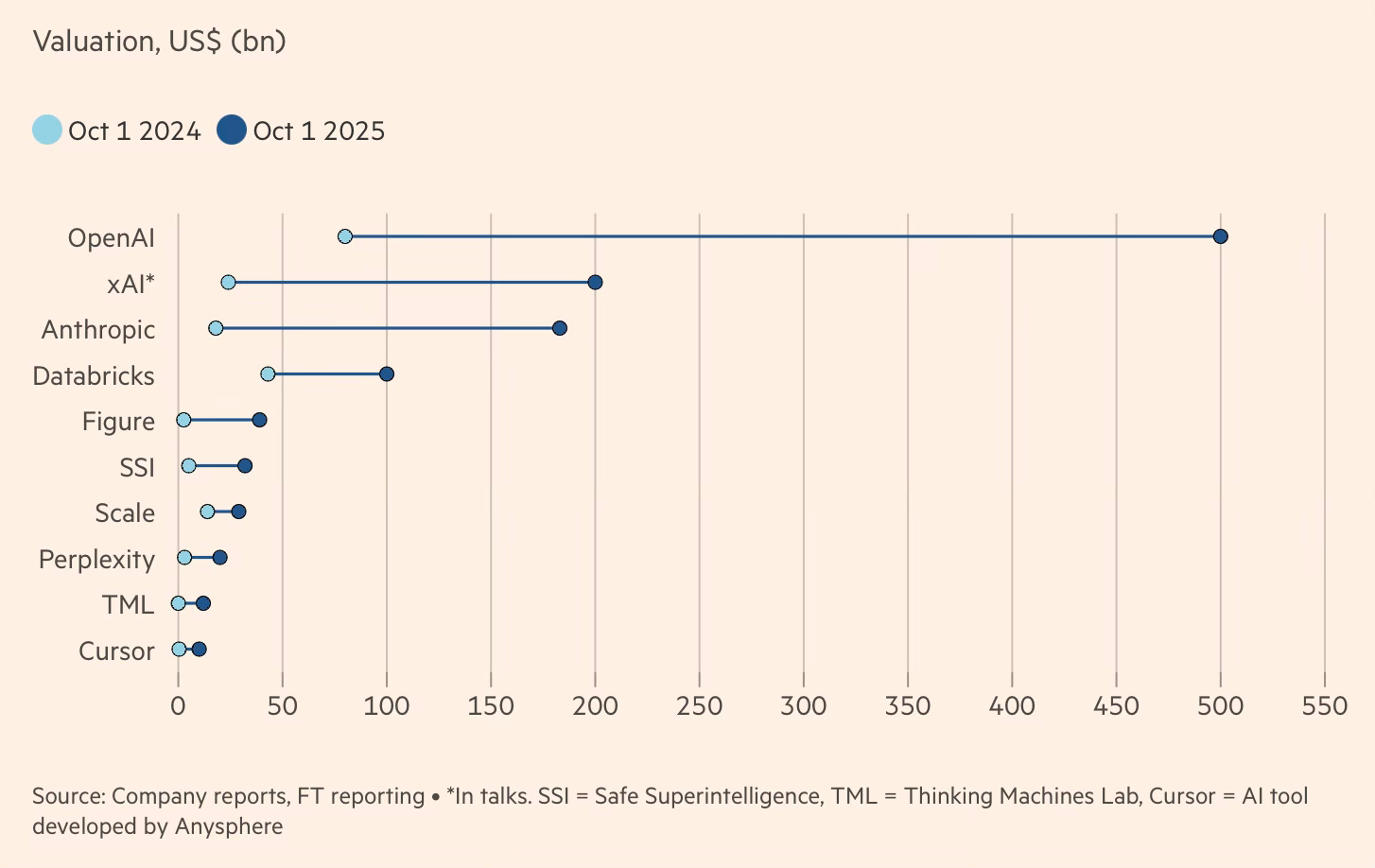
As an illustration, over just the last 12 months, the top ten AI startups, all loss-making, have attracted $161 billion in VC capital (two-thirds of all US VC spend) and gained close to $1 trillion in valuation

The AI mania is not confined to areas of high technology and finance. Even within the more prosaic environments of public systems, it has become a norm to fit AI/ML into any new public policy idea or program or project for virtue signalling. Never mind its relevance and value, proponents put forth claims of using an AI/ML layer to embellish their ideas. Even simple data analytics solutions that are basically data description, without even basic analysis, are presented as having a layer of AI/ML. 

FT’s Gillian Tett points to the practice of “cargo cults” used to describe the phenomenon observed among the native inhabitants of the Melanesian islands that were invaded by Westerners in the 19th century and flooded with previously unseen consumer goods. Dimitris Xygalatas writes

When Indigenous communities throughout the area had their first encounters with colonial forces, they marveled at the material abundance the foreigners brought with them. During World War II, when many Melanesians worked for U.S. and Australian military forces, they observed soldiers who never seemed to engage in any productive activities, such as fishing, hunting, working the land, or crafting anything. All they did was march up and down, raise flags, chant anthems, and signal toward the sky. And when they did that, metal birds appeared and dropped all kinds of goods for them. The Indigenous observers concluded that the strange rituals were causing the cargo to arrive.

With the end of the war, the military bases were abandoned and the goods ceased to arrive. To get the cargo to return, local chiefs began organizing ceremonies that mimicked the rituals of the troops. Soon, elaborate myths and theologies developed around those rituals. Surely, the cargo must have been a gift from the gods—their own ancestors. After all, who else could be capable of producing such wealth? The foreigners had merely discovered the rituals that unlocked these treasures…

But the only airplane present is a full-size wooden replica of a light aircraft. On one side of the strip lies a control tower made of bamboo. On the other sits a satellite dish built of mud and straw. Undeterred by the apparent lack of any actual aviation technology, some of the men light torches and place them alongside the runway. Others use flags to wave landing signals. Everyone raises their gaze to the sky in anticipation.

Tett extends the cargo-cult phenomenon to the current AI mania.

Physicist Richard Feynman borrowed this metaphor to decry “cargo cult science”, cases where researchers “follow all the apparent precepts and forms of scientific investigation, but they’re missing something essential, because the planes don’t land”. The same analogy now applies to AI. Almost every business executive today is eager to tell investors about their AI strategy (even though 95 per cent of companies have not (yet) seen revenue gains) and every VC group is keen to show AI plays. Similarly every Big Tech executive is investing in massive data centres, even though Bain reckons some $2tn of revenue will be needed to fund this by 2030. And charismatic figures like Sam Altman, CEO of OpenAI, keep promising fresh magic. Or as Stephan Eberle, a software engineer, laments: “Watching the industry’s behaviour around AI, I can’t shake this feeling that we’re all building bamboo aeroplanes [like cargo cults] and expecting them to fly.”

In the case of investors, the cargo-cult phenomenon works through fear of missing out (FOMO).

The iconic example of our times of the narrative transcending all logic is how Tesla’s equity market valuation has become tied to the Elon Musk phenomenon. In substantive terms, Tesla has been falling behind in all its major markets and may now be technologically behind its Chinese competitor, BYD. The latter has a superior battery technology, is vertically integrated, and has not only caught up on automatic driver assistance systems (ADAS) but may even have pulled ahead. 

With more than 95% of its global deliveries coming from Model 3 and Model Y, and that too for nearly a decade, Tesla is now a two-trick pony. In contrast, BYD has a dozen models globally and is releasing new models each year. Tesla’s growth has been primarily driven by lowering the prices of its existing models, hoping to offset margin declines with volumes. Its gross margin, excluding regulatory credits, has declined sharply from nearly 30% in the fourth quarter of 2021 to around 17% in the second quarter of 2025. 

But in an inversion of all logic, this decline has been accompanied by an increase in its market valuation to $1.4 trillion, more than ten times that of BYD. Such valuations are built on the premises of high margins, and runaway hits like robotaxis and AI-powered robots. These premises are, in turn, built on the narrative of the cult of Elon Musk and the miraculous powers endowed on him. Tesla is one mega-giant bet on Musk, perhaps the biggest financial market bet on one individual in history, by some distance. 

In each of these cases, once the irrationality has taken hold thanks to the narratives, it tends to find rational explanations. A commonly cited one is that such bubbles may have become the only way to mobilise resources at the scale required to push the technology frontiers. Sample this.

“There will be casualties. Just like there always will be, just like there always is in the tech industry,” said Marc Benioff, co-founder and chief executive of Salesforce, which has invested heavily in AI. He estimates $1tn of investment on AI might be wasted, but that the technology will ultimately yield 10 times that in new value. “The only way we know how to build great technology is to throw as much against the wall as possible, see what sticks, and then focus on the winners,” he added.

This explanation also syncs with the dominant VC model of financial intermediation and allows them, in turn, to raise the massive amounts of capital required to fund the bubble. 

In the case of the AI bubble, there’s also a powerful strategic imperative. As Gillian Tett has pointed out, given the threat to America’s technological superiority posed by China’s state capitalism, such bubbles may well be “the only way American capitalism can ever amass the scale of investment needed to create this type of ambitious infrastructure”.

While it may sound heretical, the AI bubble also highlights the unique nature of American capitalism, which has shown an unmatched appetite to assume excessive risk in the expectation of windfall returns. It is only the latest, albeit far bigger, in the line of irrational exuberance and risk assumption that has distinguished the US economy even in the last five years - WeWork, GameStop, NFTs, cryptocurrency assets, SPACs, etc. As Andrew Ross Sorkin has pointed out, “there is no innovation without speculation” and “speculation built America”. So he writes, 

“Speculation isn’t a bug in America’s economic code, but a crucial component part of the engine… Speculation is often caricatured as gambling. But at its core, it is belief plus risk. It is the act of investing capital in a highly uncertain outcome, hoping for reward.”

In Tesla’s case, too, the irrationality gets justified in terms of Musk’s superhuman talent. This is nicely captured in Tesla’s battles with courts and shareholders to get approval for Musk’s astronomical $1 trillion pay package. 

Tesla management has sold it in terms of binding Musk to remain sufficiently committed to the company, amidst his other multiple business interests. In fact, Board Chair, Robyn Denholm, has justified it, calling Musk a generational talent who would have to expend “time, energy, and effort beyond what most humans can do.” She said, ‘There’s just not anybody, either inside or outside the organisation, that is Elon today.” In what is effectively a blackmail/bluff, Musk himself has said he’ll leave Tesla if he does not get the pay package and gain greater control over the company to protect it from hostile takeovers that can detract from its efforts to develop AI technology and humanoid robots. 

The Musk compensation issue would be unimaginable in any other country. In the US, as Denholm suggests, astronomical compensation packages have become part of an entrenched narrative that those CEOs deserve these amounts. There’s no logic, both in terms of substance (the expertise brought in by the CEO) or market demand (the scarcity of such executives), that can justify even remotely close to these amounts. Numerous studies have consistently shown no correlation between executive compensation and shareholder returns

Instead, the phenomenon of such excessive CEO pay is fuelled by narratives (and the market structures and incentives) that have become part of the US corporate culture. Narratives shape cultures. 

In this context, it is important to remember that the central role of narratives in shaping the biggest mainstream economic trends is a big gap in economic thinking. These narratives, which stand in complete opposition to orthodoxy and logic, must be an essential component of any college or university economics curriculum. 

To some extent, the mainstream economists have grudgingly accommodated parts of it in the guise of behavioural economics and finance. In this reading, while rational economic agents continue to dominate the economic decision-making, human cognitive failures and idiosyncrasies result in some occasional deviations. 

Given how pervasive these deviations are in the real world, this reading must be revised to provide a more central role for narratives that deviate sharply from logic and orthodoxy. Economic decisions, both in corporations and by governments, are also cultural and political choices, and these preferences often dominate. While those choices are grounded in logic and orthodoxy, other considerations also inform them. These considerations are shaped by the specific narratives surrounding them. 

Interestingly, many economic orthodoxies themselves have become narratives sans any empirical basis. I have blogged here about 25 such orthodoxies that dominate the discourse without any empirical basis. 

Saturday, May 17, 2025

Weekend reading links

1. Tim Harford points to "zero-sum thinking", or the frame where we think in terms of winners and losers, us and them. This contrasts with the frame where the pie is expanded and everyone wins, or the rising tide lifts all the boats. 
If one person is to get richer, someone else must get poorer. If China is doing well, then the US must logically be doing badly. Jobs go either to the native born, or to foreigners... a zero-sum thinker tends to be in favour of more redistribution and in favour of affirmative action — traditionally leftwing policies — but also in favour of strict immigration rules. Rightwing populists also think affirmative action is important, they just think it’s important and wrong... Stantcheva’s work strongly suggests that zero-sum thinking isn’t some sort of senseless blind spot. When people see the world in dog-eat-dog terms, they usually have a reason. Young people in the US tend to see the world as zero sum, reflecting the fact that they have grown up in a slower-growth economy than those born in the 1940s and 1950s. A similar pattern emerges across countries: the higher the level of economic growth a person grew up with, the less likely they are to see the world in zero-sum terms. People whose ancestors were enslaved, forced on to reservations or sent to concentration camps are more likely to see the world in zero-sum terms.

2. Early takeaways from the UK-US trade deal. The main theme is the UK's commitment to ensure that Chinese manufactured goods don't enter the US through the UK. The text of the agreement is here

The tariff reductions on UK exports will depend on the findings of the US Section 232 investigations (to determine whether and how specific imports affect US national security). It argues that the the United Kingdom will work to promptly meet U.S. requirements on the security of the supply chains of steel and aluminum products intended for export to the United States and on the nature of ownership of relevant production facilities.

3. China's weaponsisation of its manufacturing dominance should be seen as part of a long-drawn-out conscious strategy. Sample this from Xi Jinping (the speech here).

Chinese leaders must “tighten international production chains’ dependence on our country, forming a powerful capacity to counter and deter foreign parties from artificially disrupting supplies” to China, Mr. Xi said in his speech to the Central Financial and Economic Affairs Commission in 2020.

The Chinese language original version of the speech appeared to have a more threatening tone.

"We should increase the dependence of international supply chains on China and establish powerful retaliatory and menacing capabilities against foreign powers that would try to cut supplies."

4. Interesting long read on the late French philosopher, Rene Girard, who has emerged as an ideologue for those currently ruling the US. His central contribution is the idea of "mimetic desire".

Girard is best known for his theory of “mimetic desire”, the idea that humans don’t desire things in and of themselves, but out of a wish to imitate and compete with others. On the back of this insight, the writer built a distinctive anthropology, borrowing from and contest-ing the theories of Nietzsche and Freud... Girard’s first book, Deceit, Desire and the Novel (published in French in 1961), which describes how Don Quixote, Madame Bovary and characters from Stendhal, Proust and Dostoyevsky come to desire things because others already want them. “Man is the creature who does not know what to desire, and he turns to others in order to make up his mind,” he wrote. The fact that desires are borrowed means they are necessarily competitive. If you desire your neighbour’s husband, you have to contend with your neighbour in order to get what you want — or what you think you want. Mimetic desire leads to fruitless competition, unhappiness and even violence... Over the past half-century, mimetic desire has been Girard’s chief legacy, not only in humanities departments but also, increasingly, among Silicon Valley entrepreneurs and east London brand managers. Inducting Girard into the Académie Française in 2005, the philosopher Michel Serres called him “the Darwin of the human sciences”.

He also came up with a set of ideas on scapegoating and how it impacts politics. 

His second book, Violence and the Sacred, published in 1972 and perhaps the most influential of all his work, describes how human societies enter into periods of crisis in which competition becomes unbearable. The solution, Girard claimed, is a violent act of scapegoating. The scapegoat has certain recurrent features: they are a foreigner, someone with a disability or a person in a position of authority. Such acts are then commemorated in the founding myths of cultures, myths in which the scapegoat becomes deified... Girard rarely used contemporary case studies, preferring to find his evidence in ancient literature, scripture and anthropology, but his view on lynchings ancient and modern was unambiguous: they were unconscionable. The insistence that the scapegoat was innocent would become a justification of Girard’s faith as well as the basis for a darkly pessimistic vision of politics later taken up by both Vance and Thiel. Girard’s next book, Things Hidden Since the Foundation of the World, published in 1978, argues that Christianity had revealed the hidden truth of the scapegoat mechanism. By insisting on their saviour’s innocence, Christians had deconstructed the “primitive” belief in the scapegoat’s guilt. It is for this defence of Christianity that Girard has been called a modern Church Father.

5. After scorning and abhorring arms manufacturing for decades, buoyed by a punishing industrial slowdown and the commitment to much higher defence spending due to the growing unreliability of the US defence umbrella, the German Mittelstand are taking to the defence industry with some vengeance. Thanks to the legacy of industrial co-operation with the Nazis, arms making had become taboo in Germany. 

6. Indians are the largest content consumers in the digital world, but does not rank among the top 7 content creators. 

In addition to its software industry stuck at the lower end of the value chain, the lack of world-class brands and mass market companies, lack of companies and startups who have gone on to become global companies, its startup ecosystem with little to show at the frontier, we now also have its massive entertainment industry which does not figure among the top content creators globally despite being the largest consumption market by volume and digital traffic. 

The FT article points to how Japanese content makers have since the pandemic conquered the world with their anime genre of cartoons, and their manga comic books from which these anime characters and stories are derived. 
The Japanese content industry — including gaming, publishing, movies TV and animation — saw overseas sales triple during the past decade, to an estimated ¥5.8tn in 2023. “The export value of the content industry is bigger than the steel, petrochemicals and semiconductor sectors,” says Minoru Kiuchi, the country’s economic security minister and the man now in charge of its anime and manga strategy. The government now wants to push even harder, Kiuchi says, increasing overseas content sales to ¥20tn by 2033. Yet previous efforts to reap the proceeds domestically have struggled. In 2013, the government launched an initiative called Cool Japan, which funded an ill-fated anime streaming platform called Daisuki that aimed to rival the likes of Netflix. Cool Japan has been relaunched multiple times — most recently last year, with greater emphasis on subsidising better working conditions, combating piracy and promoting overseas expansion.
This is a tantalising possibility
If Japan succeeds in boosting the economic clout of its entertainment industry, then anime, manga and other sources of valuable IP could help offset the effects of the country’s declining population and vulnerable industrial base.

The article is a good short history of the emergence of manga comics and anime cartoons, and how since the pandemic it has gone global. 

Begs the question why India's Jataka Tales or Hitopadesha or Panchatantra in the form of the Tinkle comics did not spread beyond the country's borders.

7. The Supreme Court's ruling overturning the NCLAT order on the sale of Bhushan Steel to JSW, more than four years after its consummation, opens several questions for discussion - the competence and integrity of the Resolution Professionals, the rigour and fidelity of the IBC processes, the competence of the NCLT and NCLAT, and finally, the Supreme Court's decision-making delays and its decision principles. 

This is a good summary of the issues. This is another good article. Finally, this raises some important issues about its impact on investor confidence.
It is a case study in institutional compromise. The Resolution Professional acted more as a passive bystander than a statutory officer. The CoC, far from being a sentinel of creditor interests, capitulated to a flawed plan and later defended it in Court with shifting arguments. The NCLT and NCLAT, expected to be guardians of due process, failed to check even the most basic procedural violations, including eligibility criteria, payment timelines, and the resolution applicant’s bona fides... The Supreme Court invoked Article 142 to direct BPSL’s liquidation. While this may be legally tenable, one is compelled to ask: could this power have been better used to restore legality without derailing an otherwise successful business revival?

Substantively, JSW has already paid substantial sums to creditors, restarted operations, and brought BPSL back into the industrial fold. Was it not possible to preserve this progress by correcting procedural anomalies, imposing penalties, or directing compliance retrospectively? Couldn’t the Court have modified the Plan to align with the IBC instead of nullifying it entirely? This verdict may inadvertently send a chilling message to global investors that in India, even resolution plans implemented over 7- 8 years may be overturned due to procedural infirmities, regardless of real-world success. With the world watching India’s insolvency ecosystem as a key plank in its “ease of doing business” pitch, the implications are serious.

In this context, MS Sahoo makes an important point. 

If irregularities are discovered post-facto, those responsible must face swift and stringent civil, regulatory, or criminal consequences. However, the underlying transaction must remain undisturbed. This principle of punishing the wrongdoer without unsettling the transaction is firmly embedded in securities jurisprudence. Trades executed on stock exchanges are never reversed, nor are public issues unwound, even if grave irregularities are discovered post-facto... It is time the law, policy, and institutions recognised the finality of commercial transactions, which should form the bedrock of all economic regulatory frameworks. The legal architecture should enable rigorous oversight to prevent and deter misconduct and hold wrongdoers accountable. However, such oversight must be disentangled from the validity of commercial transactions once they have been lawfully approved or deemed approved.
 This is the balance sheet of the IBC itself since its formation.

8. Shifting market expectations on tariffs

There is an emerging view that Trump’s tariff climbdown will ultimately bring US duty rates closer into line with his campaign plans; 10 to 20 per cent for most countries, and 60 per cent for China. Given all the tariff twists and turns over the past few weeks, markets might be forgiven for thinking that’s a good outcome. But prior to the president’s inauguration, that was most analysts’ worst-case scenario.

9. Trump tariffs and their impact on the US Dollar is helping indebted developing countries.

In practice, and purely by accident, Trump’s tariff wars have created a surprisingly benign environment for emerging markets. Although no one could claim with a straight face that he is judiciously managing the exchange rate lower as part of some fantastical “Mar-a-Lago Accord”, the dollar has weakened, benefiting EMs that borrow in the US currency. The traditional perverse effect whereby risk aversion arising from eccentric US policymaking actually causes a flight to safety and strengthens the dollar has so far been absent. The net effect of a shambolic trade strategy and weakening growth has also been to reduce US Treasury yields, similarly supporting capital flows to higher-yield markets elsewhere. The spread of EM bond prices over US bonds, which typically rises at times of financial market stress and uncertainty, has remained well contained.

10. UK minimum wages now match those of some white collar entry level workers.

11. Ajai Srivastava of GTRI feels that India's FTA with UK has crossed several red lines.
For the first time in any free trade agreement (FTA), India has agreed to slash car import duties, open up its vast government procurement market to a foreign country, and weaken its patent regime under external pressure... India’s decision to slash car import duties from 100 per cent to 10 per cent — even with quotas — is a first in any trade deal. The cuts also cover electric and hybrid cars where Indian industry is just beginning to grow. India will soon receive requests from the European Union, the United States, Japan, and South Korea, demanding equal or deeper tariff cuts...
Around 40,000 high-value Indian government contracts will now be open to UK companies, covering transport, green energy, and infrastructure sectors. One of the most problematic provisions is that UK firms will be treated as “Class 2” local suppliers if just 20 per cent of their product value originates in the UK. This grants UK firms the same procurement preference previously reserved for Indian suppliers with 20–50 per cent domestic content. It allows them to use up to 80 per cent Chinese or European inputs while still benefiting from local supplier status in India. UK companies will also have access to India’s central e-procurement portal, making tracking and winning public contracts easier... India has, for the first time in any FTA, agreed to rules that go beyond its obligations under the WTO’s Agreement on Trade-Related Aspects of Intellectual Property Rights. This threatens not only access to affordable medicines within India but also its global leadership as a supplier of generic drugs to developing countries. This move hands over a big win to global pharma giants.

12. It's the uncertainty that kills. John Coates writes,

What happens if you go up and over that cortisol curve? Then you start to change. In our studies we found that prolonged volatility elevated cortisol chronically and caused traders to become dramatically more risk-averse. The masters of the universe turned timid (potential pushovers in bonus — or tariff — negotiations). Here again we can see a biological mechanism driving macro events: during a bear market, the higher volatility increases risk aversion, which causes more selling and even more volatility and risk aversion, in a runaway chain reaction that ends in a crash. Uncertainty has this power. Uncertainty over whether something nasty might happen can be more stressful than the nasty thing itself. Experiments have shown this. Imagine you are exposed to something mildly unpleasant, like brief blasts of white noise; but the blasts come at predictable time intervals, say once every two minutes. Between blasts you have downtime and need not brace yourself against the noise. In this timing regime, your stress hormones would probably be only slightly elevated. But now imagine the intervals fluctuate, making it more difficult to predict when to brace yourself, so you brace for longer periods of time. Now your stress hormones begin to rise. As the intervals become random and cannot be predicted, cortisol levels reach a maximum. Under each timing regime, you have been subjected to an identical amount of noise. But your cortisol levels increased with the uncertainty of the timing. 

My colleagues and I observed this effect in traders: their cortisol did not track their profits and losses but rather the variance of their returns. This effect was also observed during the second world war. German soldiers on the front lines during the Battle of Stalingrad faced constant attack, while soldiers manning supply lines faced danger less frequently but more unpredictably, and it was here, behind the front lines, that they suffered a higher incidence of gastric ulcers. So uncertainty over when something nasty is going to happen to you, such as losing money, or a bandage being ripped off, can be more stressful than the actual event. It is the not-knowing when it will happen that keeps us on edge, keeps us revving our engine. In fact, we hate being kept in a state of uncertainty. Some macabre experiments conducted in the 1970s found that animals — and humans too, presumably — will accept four times more aversive stimuli if they are delivered predictably rather than unpredictably.

This has relevance to policy making

This stress biology could be harnessed by policymakers. Central banks, for example, could use uncertainty, as does Ref #2, to control the financial markets, and to deflate bubbles by increasing risk aversion. Paul Volcker, chair of the Federal Reserve from 1979-87, understood this power, and possessed the knack to scare the pants off the financial markets. Part of that fear stemmed from his tendency to move interest rates enormously, in the early 1980s raising the Fed funds rate to 20 per cent. But he also kept the market guessing as to when he would act, and by how much. Street wisdom says do not fight the Fed, and no one did with Volcker lurking in the hood. Today, the Fed could veil its activities with a similar uncertainty as a means of calming market exuberance, even cooling an inflationary economy, and all without raising rates. In fact, a deft application of uncertainty could well drive investors into Treasury bonds, thereby lowering long-term interest rates and reducing the debt burden. Since Volcker’s time, however, central banks everywhere have relinquished uncertainty, one of their most potent weapons, in favour of a policy called forward guidance, which involves communicating clearly their intentions, in other words reducing uncertainty. Not surprisingly, this namby-pamby policy has failed utterly in taming the wild beast that is irrational exuberance. To control the market you need to corral its animal spirits, and uncertainty has more than enough power to do so.

This is important since for all his unpredictability, it's emerging that there's one big predictability with Trump policies - they'll not cross a threshold laid down by the markets. In other words, there's an emerging Trump put to the downside risk with US equity markets. It's no surprise that the markets have responded to the temporary truce with China by rebounding in a manner that makes one feel that the whole issue is now settled. The market reaction was stunning. Wall Street had the biggest one-day gain in five years.

In fact, markets are now behaving as though Liberation Day not only did not happen but the underlying issues have been fully resolved.

Saturday, June 17, 2023

Weekend reading links

1. Simon Kuper and John Burn-Murdoch explore who among Messi and Ronaldo is the greatest. Couple of graphics stood out. Messi appears to be a greater creator than Ronaldo's poacher.

Messi and Ronaldo tower over the other currently active in terms of their goal scoring abilities.
2. China tech stocks fact of the day
Since the start of the pandemic, China’s 10 largest tech groups have collectively lost $300bn in market value, while their largest US peers have added almost $5tn, according to S&P Capital IQ.

And this

China’s largest tech companies have lost $300bn in market value since start of pandemic while US peers have added $5tn.

3. NYT oped draws the parallels between Silvio Berlusconi and Donald Trump.

4. Overcoming stiff public resistance, Denmark scraps a public holiday to pay for extra defence spending!

5. The less discussed but more important Great Stagnation is that of developing country income catch up with developed countries. Martin Wolf writes,
By the end of 2024, economic activity in these economies is expected to be about 5 per cent below levels projected on the eve of the pandemic.” Worse, in more than one-third of the poorest countries, incomes per head will be below 2019 levels in 2024... The report indicates that, without China, incomes per head of emerging and developing countries have stagnated relative to those in high-income countries since the middle of the last decade. The relative incomes per head of the low-income countries have stagnated for even longer. In brief, the reduction in global inequality seems to have stalled.
This is an extraordinary graphic that shows the steep rise in sovereign spread for C-rated countries by 14.4 percentage points since February 2022. 
Such steep rise in borrowing costs is also driving the low income countries into the lap of China. 
Today, remarkably, bilateral debt owed by low-income countries to the high-income members of the Paris Club has become less than half that owed to non-Paris Club countries, mainly China.

6. Fascinating article on the halo effect, that points to good looking people benefiting from better treatment by others. 

A study published in January in the Journal of Economics and Business found that good-looking banking CEOs take in over $1 million more in total compensation, on average, than their lesser-looking peers. “Good looks pay off,” the authors write. New research from Shanghai Advanced Institute of Finance similarly finds that comely managers of mutual funds lure more investments and enjoy more promotions than their homelier counterparts, even though their funds don’t perform as well. The researchers suggest this performance gap may be because handsome managers approach risk with hubristic levels of confidence... attractive people are less likely to be arrested or convicted, even after controlling for criminal involvement, according to a 2019 study of nationally representative data published in the journal Psychiatry, Psychology and Law... physically attractive people often cultivate self-serving beliefs. A 2014 paper in the journal Organizational Behavior and Human Decision Processes, for example, found that those who saw themselves as good-looking sensed they had more power and higher status than their plainer peers. They were also more likely to attribute growing economic inequality in the U.S. to the hard work and talent of those at the top...

Essentially, lucky people tend to believe that life is fair and fate rewards merit, whereas unlucky people are often more alert to systemic bugs and more supportive of efforts to correct for them. A 2016 study in the Journal of Public Economics, for example, found that people who were randomly assigned hard counting tasks in a lab were more inclined to blame their poor performance on circumstantial factors, such as the clarity of the instructions, and more likely to share tokens in a subsequent game. Those who enjoyed an easier counting task not only ascribed their success to personal effort but also were considerably stingier with the tokens... Andrea Fazio, an economist at Tor Vergata University of Rome, analyzed a nationally representative survey of Germans who rated how much they agreed with statements about money and fairness, such as “Income and wealth should be redistributed towards ordinary people.” The results, which he reported last year in the journal Economics & Human Biology, showed that the respondents who were seen as physically attractive by interviewers were also more likely to say that efforts to redistribute wealth were wrongheaded because everyone gets what they deserve.

7. Valuation concentration in US S&P 500 index

The performance of the S&P 500 index is now the most concentrated it has been since the 1970s. Seven of the biggest constituents — Apple, Microsoft, Google owner Alphabet, Amazon, Nvidia, Tesla and Meta — have ripped higher, gaining between 40 per cent and 180 per cent this year. The remaining 493 companies are, in aggregate, flat. Big tech companies dominate the index to an unprecedented degree. Just five of those seven stocks represent nearly a quarter of the market capitalisation of the entire index. At $2.9tn, Apple alone is worth more than the UK’s top 100 listed companies put together... The chipmaker Nvidia... has gained $640bn in market capitalisation just this year. That is almost as much as the combined market worth of JPMorgan and Bank of America, the two biggest banks in the US.
Apple is worth more than the entire Russell 2000 of smaller US companies.
The article points to two self-reinforcing trends that favour Big Tech
As their market capitalisations grew, they constituted an ever-larger proportion of the S&P 500, which like most stock indices weights its constituents according to their market value. Two wider market trends compounded this. One was an accelerating wave of so-called passive investment, where funds simply seek to replicate the performance of an index by mirroring its composition. This meant that as these stocks went up, so too did their index weights, forcing funds to buy more of them. The other was so-called ESG investment, a style that focuses on environmental, social and governance as well as financial factors. Growing interest in ESG has pushed investment dollars into tech at the expense of carbon-heavy sectors such as oil and gas. Active investors, passive investors, momentum chasers and ESG funds are often all chasing the same targets.

8. Simon Kuper points to the impressive transformation in student recruitments by Oxford and Cambridge,

Pressure from the government helped embarrass Oxford and Cambridge into overhauling admissions... Oxbridge colleges now aim for “contextual admissions”, including the use of algorithms to gauge how much disadvantage candidates have surmounted to reach their academic level. For instance: was your school private or state? What proportion of pupils got free school meals? Did your parents go to university? Admissions tutors compare candidates’ performance in GCSEs — British exams taken aged 16 — to that of their schoolmates. Getting seven As at a school where the average is four counts for more than getting seven at a school that averages 10. The brightest kid at an underprivileged school is probably smarter than the 50th-best Etonian... Oxbridge hosts endless summer schools and open days for underprivileged children... The message to the kids is: “You belong here.” 

It’s working. State schools last year provided a record 72.5 per cent of Cambridge’s British undergraduate admissions. From 2018 to 2022, more than one in seven UK-domiciled Oxford undergraduates came from “socio-economically disadvantaged areas”. Twenty-eight per cent of Oxford students identified as “black and minority ethnic”; slightly more undergraduates now are women than men. Academics told me that less privileged students are more likely to experience social or mental-health problems, but usually get good degrees. These universities haven’t relaxed their standards. On the contrary, by widening the talent pool, they are finding more talent.

9. Alan Beatie argues that the long period of low inflation perhaps had less to do with globalisation than being widely imagined. He points to studies which show that changes in monetary policy, lowers anchored inflation expectations, and reduced uprating of wages in line with prices may have had greater effects. 

For one, the periods don’t quite match. The “hyperglobalisation” period when world trade and global value networks grew most rapidly ran from the late 1990s until shortly before the global financial crisis began in 2008. By that point the fall in inflation in the rich world had largely already happened.

Second, given that goods are much more highly traded than services, you’d have expected rising inflation differentials between the two. In fact, the gap remained constant until after the financial crisis, when services inflation actually fell while goods inflation rose. As a rough sense check of the impact of cheaper imports, those goods subject to low-cost Chinese competition like clothing, shoes and electronics make up quite small parts of the consumer price basket. In the eurozone, apparel and footwear are about 5 per cent of the total, compared with 15 per cent for housing and utilities (and that’s using a narrow measure of housing costs) and 10 per cent for restaurants and hotels.

Nor does the integration of the big middle-income countries automatically push inflation down. It means increases in demand as well as supply. During the global food crisis of 2007-08, one very common story was that wealthier households in countries like China were increasing commodity prices by eating more resource-intensive fare, particularly meat.

Saturday, November 13, 2021

Weekend reading links

1. What drives "hot-streaks"? Derek Thompson points to the findings of a new study,

Northwestern University economist Dashun Wang... found that artists and scientists tend to experiment with diverse styles or topics before their hot streak begins. This period of exploration is followed by a period of creatively productive focus. “Our data shows that people ought to explore a bunch of things at work, deliberate about the best fit for their skills, and then exploit what they’ve learned,” Wang said. This precise sequence—exploration, followed by exploitation—was the single best predictor of the onset of a hot streak... At least for artists, film directors, and scientists, neither exploration nor exploitation does much good on its own. “When exploitation occurs by itself,” Wang and his co-authors wrote, “the chance that such episodes coincide with a hot streak is significantly lower than expected, not higher, across all three domains.” Only when periods of trial and error are followed right away by periods of deliberate focus does the probability of a hot streak increase significantly.

The research suggests something fundamentally hopeful: that periods of failure can be periods of growth, but only if we understand when to shift our work from exploration to exploitation. If you look around you at this very moment, you will see people in your field who seem wayward and unfocused, and you might assume they’ll always be that way. You will also see people in your field who seem extremely focused and highly successful, and you might make the same assumption. But Wang’s paper asks us to consider the possibility that many of today’s wanderers are also tomorrow’s superstars, just a few months or years away from their own personal hot streak. Periods of exploration can be like winter farming; nothing is visibly growing, but a subterranean process is at work and will in time yield a bounty... Today’s best exploiters were yesterday’s best explorers.

2. In the context of departure of Jes Staley as Chief Executive of Barclays, Brooke Masters has a list of such departures for personal misconduct in leading UK and European banks in recent times. Makes you realise that the high pay comes despite these common place misdemeanours. Or more appropriately, the high pay (and associated stakes) distorts incentives and makes chief executives cut corners to keep the show going. 

It also emerges that Staley had close connections with the late serial sexual offender Jeffrey Epstein. 

3. In the aftermath of CoP 26 FT has an informative story on the sources of global climate financing. 

This from multilateral agencies

And this from bilateral donors

In this context, as another FT article writes, any illusions that the private sector can take leadership in addressing climate change is plain nonsense. Private companies can only be instrumental in the process if governments back up with appropriate policy mandates. 

This is a good example of fluff by a group with a proven track record of hypocrisy,
The Business Roundtable, for example, argued in September that the country had made significant progress towards reducing emissions “in part because of corporate leadership in the absence of a smart, national climate policy”.

This is a more accurate assessment of the private sector's role,  

Joachim Wenning, chief executive of reinsurance giant Munich Re, feel a growing sense of unease. “Very often I’ve heard things like ‘in the absence of governments doing their job . . . we the private sector, we the economic leaders, have to take care of combating climate change’. It’s almost: ‘Then we have to replace the governments,’” Wenning said. “I think it’s an illusion. It’s not only that we don’t have the mandate. We don’t have the means, honestly.”

The measurement difficulties and lack of standards associated with net zero claims makes any suggestions of private sector leadership deeply questionable. 

4. Brooke Masters on the rise and fall and rise of conglomerates. 
The history of conglomerates is a tug of war, not a straight line. Observers announced the “decline and fall of the conglomerate” in 1994 and declared “conglomerates are dead” in 2007. The 1980s wave of corporate break-ups cut the share of large US groups operating in three or more sectors from half to 30 per cent. ITT split in 1995 and Tyco broke up after a scandal in 2006. Yet each had become big enough by 2011 to split themselves up again. “It becomes the conventional wisdom that conglomerates are no good and need to be broken up. Then we end up with companies that are so specialised that somebody decides that there is merit in vertical and horizontal integration,” says Alexander Pepper, a London School of Economics professor of management. “Ten years later you end up with a conglomerate.” The conglomerate’s resurgent appeal lies in the normal ambition to improve coupled with a hubristic assumption that good managers can manage anything. Entering new business lines seems attractive when competition rules prevent dominance in a single sector. Cynics note that chief executive pay and influence expands along with company size.

5. From the Bank of America's equity derivatives team early this week, via FT, a set of facts which captures the times,

“The S&P has (i) reached new highs each of the past eight trading days, tying the longest streak since 1964; (ii) risen 17 of the last 19 trading days, a feat surpassed only once in 90-plus years, and (iii) for only the second time since 1950, taken less than a month to rebound from twin fragility shocks.”

6. The Economist questions the commercial viability of the ride-hailing and delivery sector. This is a remarkable snippet,

A pizzeria could make money by ordering its own food for a discounted price on DoorDash (which then paid back the regular amount).

The financials of the ride-sharing and delivery apps,

The nine firms that have gone public so far—Uber and its American rival Lyft;Didi, a Chinese ride-sharing app; and six delivery firms, from DoorDash and Delivery Hero, which is based in Berlin, to China’s Meituan and India’s Zomato—collectively raised more than $100bn... the nine listed flywheel firms are still growing nicely—at 103% on average in their latest reporting period compared to the same period the previous year. This explains why they are collectively worth nearly $500bn. But self-levitating they are not. Nor are they profitable. Sales for the group amounted to $75bn over the past year and the operating loss to nearly $11.5bn.

And there may be signs that the ride-hailing sector may be the drag on the sector,

What is more, the company, which has a market capitalisation of $85bn, is now more of a delivery service than a ride-hailing app: Uber Eats generates more than half of sales. DoorDash’s own punchy valuation, of $65bn, rests on revenue that has grown more than fourfold since the last quarter of 2019, albeit during a time when people dined at home more often. But it also bakes in success in new markets that it has recently entered, including groceries and pet food.

7. Livemint has a comparison of the valuations of internet companies with brick-and-mortar companies in the same sector in India. 

8. T N Hari has a good article on the talent crunch facing Indian economy. The frenzy of capital flowing into startups has driven up employee attrition rates and salaries (on the aggregate both by at least 30% each, he claims) and squeezed businesses everywhere. It is a good proxy for the limited depth of good quality talent in India that $20 bn or so funds that have flown into start-ups over the last couple of years has drained talent off from an entire continental sized economy. 

9. A feature of the financial market landscape in India is the belief that government entities cannot fail. This implicit guarantee has created several distortions. One such distortion is the propensity of power sector companies being able to access debt from banks despite severe indebtedness. 

In an important and welcome development, it appears that the power ministry in Delhi has lifted the bankruptcy protections on government power companies. It has said that these entities do not fall under the category of government companies as defined under Section 2(45) of Companies Act 2013 which prohibit insolvency of such companies.

The Supreme Court in a case involving Hindustan Construction Company Ltd and Union of India in the context of the NHAI held that IBC cannot be used on a statutory body which functions as an "extended limb" of the government since no resolution can take over the management of a body which performs a sovereign function. The Power Ministry has rightly taken the view that the Electricity Act allows for state of private ownership of electricity utilities. 

If public sector banks, and more importantly the power finance DFIs PFC and REC, can take defaulting state utilities to the NCLT that would do more than any UDAY to set right incentives and create conditions for sustainable and genuine reforms in the power sector. 

10. As the curtain comes down on GE's century long existence (it split into three units - health care, energy and digital, and aviation), FT writes that Wall Street investment banking firms made more than $7 bn offering services to GE since 2000 despite its value falling about 75% during the same time. 

GE spent $2.3bn on mergers and acquisition advice alone, according to figures from Refinitiv, as it built a sprawling empire through hundreds of deals... The rise and fall of the GE conglomerate has resulted in a windfall for Wall Street with the Boston-based group spending another $3.3bn on fees related to bonds, according to Refinitiv. It spent a further $800m and $792m, on loan and equity fees, respectively. Since 2000, the company has shelled out more on investment banking fees than any other US business, according to the Refinitiv figures... the outsized fees are indicative of how bankers — who have profited despite GE’s market value falling about 75 per cent since 2000 — care more about completing lucrative transactions than acting in the best interests of their clients.

Monday, November 8, 2021

The wisdom of nature and the folly of experts

The global response to Covid 19 has been a teachable moment illustrating the limited boundaries of our knowledge. Not even claims of having developed vaccines in remarkably quick time can gloss over the reality that we still do not know how it originated and spread, what holds for us in terms of future mutations, the timing and nature of a possible third wave etc. In the last eighteen months, expert opinion has vacillated from one idea to another, one moment advocating something to debunking the same a few weeks later. It should have been a sobering reminder about the limitations of experts and expert advice. However, it's unlikely to be the case. 

I had blogged here and here in the early days of Covid 19 cautioning against the folly of relying on expert advice and urged a more nuanced approach that sought to accommodate and co-exist with the virus. 

Ananth points to a very good essay by Norman Doidge who provides a perspective on human beings search for solutions that seek to "eliminate" the virus.

Ancient science was attractively harmless: It saw human beings as inseparable from nature, and tried to describe the web within which we dwell... Nature—as the ancients understood it—was seen as a whole, likened to a vast living organism, meaning something alive and organized... Nature, they believed, could be understood... as in some way, partaking of intelligence. This kind of intelligence, called nous, was not merely the highest human faculty, but also a transcendent principle manifest throughout the cosmos. It was because the human microcosm mirrored that macrocosm that we had the capacity to understand, and resonate with intelligible nature in awe and amazement. This was knowledge for its own sake, a dignified form of contemplation of a cosmic order that inspired the questing feeling that, according to Socrates, underlies the fundamental philosophic attitude: Wonder.

But modern science sees knowledge as power—and science as a means to other, greater, more useful and more practical ends. Since its origins, modern science has emphasized that “nature” is harsh, and often rallies against us, and so, following Francis Bacon (1561-1626), has come to see itself as a method of mastering nature, “for the relief of man’s estate.” Henceforth, “utility” was science’s purpose, not wisdom, and nature was there not to be contemplated, but conquered... Thus, Bacon weaponized the wonder that drove ancient philosophy, and spoke of using the new science to extend “the empire of humanity” over “the universe.” He was to science what Machiavelli —to whom he explicitly said he was beholden—was to politics: He discarded the ancient approach to nature, which took as the primary question of study, how we might understand it better, to live, “the good life,” in accord with nature, and replaced it with the study of the science as a means to acquire power, to master nature.

In the world of Covid 19, this scientism meant that our collective objective was to eliminate the virus. And the consequences of responses motivated by such scientism are often counter-productive.

The officials, blinded by the eradication at all costs mentality, discarded the practical wisdom required to respond to such a crisis, and endorsed an intervention that defies the standard public health practice of taking a holistic approach and always taking into account a measure’s total effects, and not just its immediate effects on the pathogen labeled as “the invisible enemy.” “COVID denial” is real. So is “COVID-management-induced-devastation denial.” The term, in medicine, for the inadvertent harms caused by a medical treatment is “iatrogenic” harm. Because public health exists on a massive scale (compared to individual doctoring), when public health officials make iatrogenic errors, millions suffer. Iatrogenic errors are underestimated for long periods because they are often made with the best of intentions (which is part of the reason they are missed, and repeated), until there is a sudden reckoning. A good rule of thumb is that the more the practitioners are certain of their good intentions (as they define them), the more vigilant we must be about the iatrogenic possibilities.

An alternative and more holistic approach that the essay points to is the work of Janelle Ayres,

She says, “The way we have been thinking about treating infectious diseases is that we have to annihilate the pathogens through vaccines and antimicrobials.” She completely reframes the problem, and challenges our thinking: “Instead of asking how do we fight infections, we should be asking ‘how do we survive infections?’”... The project of developing these new kinds of therapies (which is well underway in Ayres’ lab) requires having a better understanding of the “tolerance defense system,” alluded to above. Not every infection kills us, in part because an innate tolerance system has already evolved to help our bodies coexist in the sea of microbes in which we live, and which dwells within us (the microbiome). It is the product of a cooperative two-way evolutionary process.

To understand this cooperative co-evolution, it’s best to first look at its “opposite,” the traditionally studied antagonistic co-evolution. An organism gets inside us, we evolve ways to kill it, then it evolves ways to resist that, and perhaps we, the host, evolve more aggressive means of attack, but that also leaves us with an overactive immune system, which perhaps then also predisposes us to causing collateral damage to ourselves. This basically describes the traditional immune resistance system, and the collateral “autoimmune” damage it causes. This is not good for us, but, if a pathogen’s host dies it is not necessarily helpful to it either. After all, once the pathogen gets inside us, we are its environment, so, if it kills us (a Baconian specialty) it’s created a disaster for itself (as it were)... In a more cooperative co-evolution, as Ayres calls it, both host and pathogen acquire traits that are not mutually destructive. 

Ayres hypothesized this must exist, and then began demonstrating it did. In cooperative host microbe evolution, cycles occur, in which the host influences the microbe and the microbe influences the host, such that they co-evolve, together, and cause each other to select for traits that maximize their mutual ability to both survive, and replicate. From the point of view of the microbe, for instance, it does well to develop traits that let it acquire nutrients from our bodies to meet its metabolic demands, and to replicate, and get passed on to another host, whom we can meet at a party, because the microbe hasn’t killed us... In this situation, there is an evolutionary pressure on the organism to develop mutations that are less lethal (which happens sometimes) and Ayres and her lab have shown that the host can, in certain cases, trigger these anti-virulence traits in the pathogens, so that while they are present in a host, they don’t trigger a disease. 

In this context, Howard Marks points to two excellent analogies of how systems contain within themselves the mechanisms to treat their problems

In the forestry business, if there's a small fire they let it occur and sometimes they even cause some small fires to burn up the fuel that lies on the forest floor. And if you don't permit any small forest fires, when you finally have one that you can't put out right away, you're going to have a doozy because of all the accumulated fuel on the forest floor.
I believe that if they prevent every recession, that will give rise to such excesses on the high side, it will be, as I say, unsustainable and will cause a recession and that's going to be a doozy. So it just seems to me that if I were running Fed, which I'm absolutely unqualified to do, I would opt for leaving it alone most of the time, the economy, and having it do what it does naturally...We're all in the investment business because we believe in the efficacy of the free market as an allocator of resources. So if you do, then shouldn't you leave the economy and the capital market alone as much as you can so that it can freely allocate resources?

Or on similar lines from John Kay in his book on Obliquity,

From the early twentieth century, the policy of the National Park Service (NPS) was one of zero tolerance. Every outbreak of fire, however small, would be extinguished – the basic-level action. But the incidence of fire did not fall: it increased. Computer simulation of fire control policies suggests the explanation. Most forest fires are small and burn themselves out. In doing so, they remove combustible undergrowth, and create firebreaks that limit the spread of future fires. So the best way to reduce fire is not to extinguish all fires. The Service adopted a different view of the goals that would achieve its higher level objective: controlled burning replaced zero tolerance. But what actions does this goal require? In 1972 the Service decreed a new policy: it would put out man-made fires but allow natural ones to burn.

Sixteen years later, the largest fire in American history swept through Yellowstone National Park. In extremely dry conditions, several fires joined together. Lightning was probably the original cause, though perhaps some fires were lit deliberately by arsonists. By the time the blaze was controlled by a force of 25,000 fire-fighters at a cost of over $100 million, almost half the vegetation of the park had been destroyed. Today’s guidelines allow experienced forest rangers to use their judgement in deciding which fires should be tackled and which left to burn. Experience has shown that too much effort devoted to fire extinction is counter-productive. But some fire-control activity is essential. Time demonstrates, but only slowly, whether policy has gone too far in one direction or the other – whether actions are appropriate to states, whether goals are appropriate to objectives.

However, striking out on your own and opposing the conventional wisdom can be very hard.  

It’s not that modern science doesn’t produce some scientists who urge caution. It’s just that it also creates an appetite, and a climate of opinion, in which those who counsel restraint and moderation (another ancient, but not a modern virtue), just about always lose eventually.

On treading this lonely path, Ananth again points to another essay by Ann Bauer about her personal struggles in fighting the conventional wisdom in treating autism in her son. She describes the sway till the early nineties of the theories by the fraudulently fabricated theories of Bruno Bettelheim over autism diagnosis and treatment.