Substack

Showing posts with label macroeconomic imbalances. Show all posts

Thursday, September 29, 2022

Spillovers in the global over-kill with inflation-fighting

I had blogged earlier expressing hope that the unmistakably clear and co-ordinated monetary tightening by central banks could have the effect of shaping inflation expectations downwards. 

But like with all such actions, there is also the possibility of over-shooting with the tightening. Excessive tightening and associated reshaping of expectations could have the effect of tipping the world economy over into a recession. This is what the World Bank worries in its latest report about the possibility of a global recession. 

But this is also a teachable moment in understanding macroeconomics in a financially integrated and globalised world economy. 

Adam Tooze points to some graphs from the latest World Bank report. On the monetary policy side, the report informs that we are now seeing the most widespread tightening of monetary policy since early 1970s.
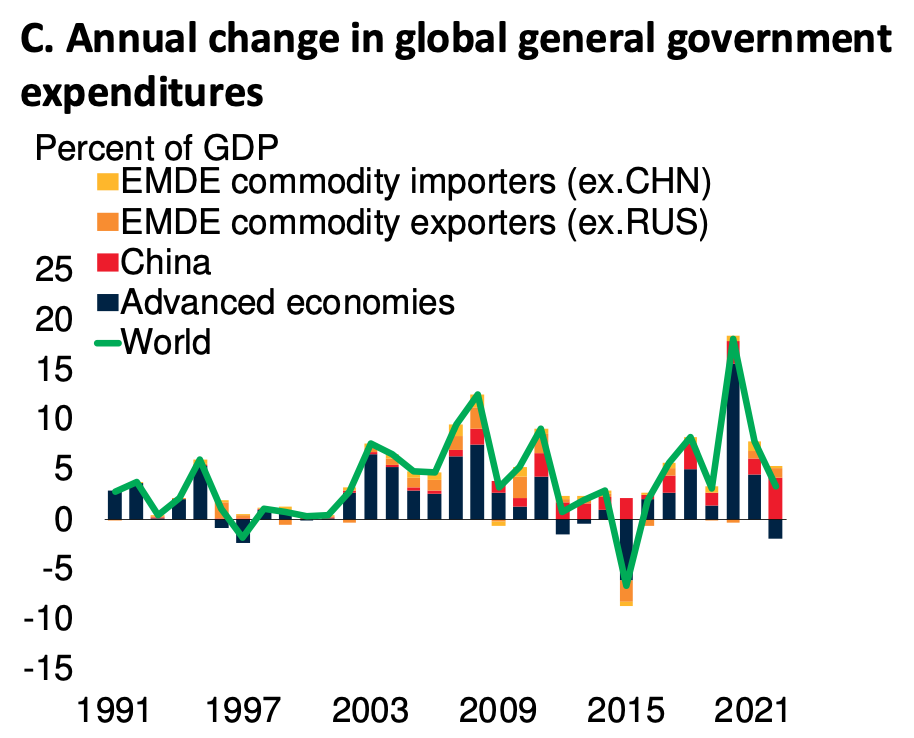
On the fiscal policy side too, the share of countries tightening their fiscal spending is greater than ever.
And the fiscal tightening is universal
Tooze writes,
The level of real interest rates - nominal rates adjusted for inflation - remains low. But this is the most dramatic shift in the stance of policy we have witnessed since the 1980s. The risk is that it will be excessively contractionary and will trigger a worldwide recession.

But this global over-kill towards monetary (and fiscal) tightening can be traced to the US Federal Reserve's delayed reversal of its monetary accommodation. After falling behind the curve big time, the Fed has been catching up with some vengeance. Its collateral damage has been in the form of spillovers to developing countries, forcing those central banks to respond with their own tightening. The spillovers have not spared even those central banks who responded early enough to the inflationary trends and tightened. In fact, those countries, like Brazil, are now being forced to respond with further tightening, thereby adversely impacting domestic growth. Not to speak of the inflationary effects from depreciating currencies. 

There is nothing new in this script. The globalisation of the US monetary policy and its spillovers (especially on developing economies) was a central theme in The Rise of Finance. This is just one snippet,

BIS economists Peter Hordahl, Jhuvesh Sobrun and Philip Turner find that ‘central banks in small economies have only a very limited ability to influence the long-term interest rate in their own currencies’. In other words, taken together, the monetary policy autonomy of small open economies has been progressively declining. They not only have less ability to influence their own interest rates but their long-term interest rates are also vulnerable to shifts in US long-term yields. Another paper by Robin Koepke of the Institute of International Finance (IIF) examined the impact of changes in US monetary policy in 27 emerging economies, specifically in terms of currency and banking crises and sovereign defaults. The paper studied 154 such crises over the 1973–2014 period and claimed that ‘US monetary policy is often just as important as domestic factors in explaining the incidence of EM crises, if not more important’. In other words, US monetary policy is not just a trigger, but one of the underlying factors that amplify EM vulnerabilities. More specifically, it finds that the ‘probability of crises is substantially higher when the federal funds rate is above its natural level (stance), during Fed policy tightening cycles (direction), and when market participants are surprised by signals that the Fed will tighten policy faster than previously expected (surprise)’.

Claire Jones summed it up very nicely,

In March 2021, when the US Federal Reserve was still buying $120bn-worth of securities a month, Brazil’s central bankers raised their benchmark rate by 0.75 percentage points on the back of concerns that a surge in global commodity prices would trigger inflation. It took another year for the US central bank to catch on to the fact that price pressures would prove far from transitory and finally raise the federal funds target from near zero. By then, Brazil had increased borrowing costs to 11.75 per cent. Time has proven Brazil’s monetary guardians right. Yet the Fed’s tardiness in keeping inflation in check is unlikely to leave the South American country — or, indeed, anywhere — unscathed.

The Fed, which on Wednesday made its third 75 basis point increase in a row, is playing catch-up. While that may be the best course of action for the US economy, its aggression is triggering what Maurice Obstfeld, of the Peterson Institute for International Economics, labels “beggar-thy-neighbour” policies. The consequences of the Fed‘s mistakes are effectively exported from the US, burdening America‘s trade partners. Higher US rates have bolstered the dollar, exacerbating inflation elsewhere by raising the cost of commodities which are, more often than not, priced in the greenback. A “reverse currency war” is in full flow, with monetary authorities across the world now ditching their standard quarter-point increases in favour of 50, 75 and — in the case of Sweden and Canada — 100 basis point moves in order to stem dollar declines. Rate rises, while necessary to quell inflation, have become so aggressive the World Bank warned last week they risk sending the global economy into a devastating recession that would leave the world’s poorest countries at risk of collapse. The World Bank described the situation now as akin to the early 1980s, when the surge in global interest rates and slump in world trade sparked the Latin American debt crisis and a wave of defaults in sub-Saharan Africa.

Tooze points toADB's Chief Economist Shang-Jin Wei,

For the 66 smaller economies that peg their currencies to the US dollar – especially those without significant capital controls, like Hong Kong, Panama, and Saudi Arabia – local interest rates tend to rise automatically whenever the US raises its interest rate, even when higher rates are harmful to their economic prospects... an interest-rate hike by any major central bank has the effect of exporting inflation to other countries, forcing other central banks to raise interest rates more than they otherwise would have done... The result is an interest-rate spiral that is more damaging to world output and employment than these countries may wish to see collectively.
And this excellent graphic from Peterson Institute 
This is only the latest example of how the dominance of the US Fed and the Dollar has led to the demise of monetary policy autonomy of central banks elsewhere. The impossible trilemma has been replaced by the impossibility of monetary policy autonomy. This also means that exposure to vulnerabilities have to be reduced in the first place. Based on this reality, this was our conclusion in The Rise of Finance,
Given integrated capital markets and the unipolar importance of the US dollar to the international payment system, commodities and capital markets, spillovers from policies pursued in developed countries to developing countries is inevitable. Developing countries lack instruments and coercive power to dissuade advanced nations from pursuing domestic policies that have negative spillover effects for them. Since the world has no alternative to the US dollar presently, the only option left to avoid spillovers is to reverse integration of capital markets and free capital flows. In the absence of restrictions on capital flows, both the impossible trinity and the financial market trilemma have been reduced to the impossible duality and financial market dilemma, respectively. Therefore, capital controls cannot be the policy of last resort to be deployed in the event of financial instability. It is central to ensuring financial stability. Developing countries must be cautious in liberalizing external commercial borrowings for their domestic borrowers and in inviting foreigners to invest in domestic debt.

This episode is a cautionary note to policy makers in countries like India. Policy makers, entrusted with protection of national interests, should be cautious with the advice and wary of lobbying on capital account liberalisation from market intermediaries and ideological enthusiasts whose incentives are aligned differently. This is especially important since the pressure from foreign institutional investors and their domestic supporters to liberalise capital account in the guise of deepening bond markets will be the highest now, also because India appears to be the only big EM game in the town for now. Policy makers should resist this temptation. 

Update 1 (01.10.2022)

Central bank real rates are negative across most countries

Update 2 (03.10.2022)

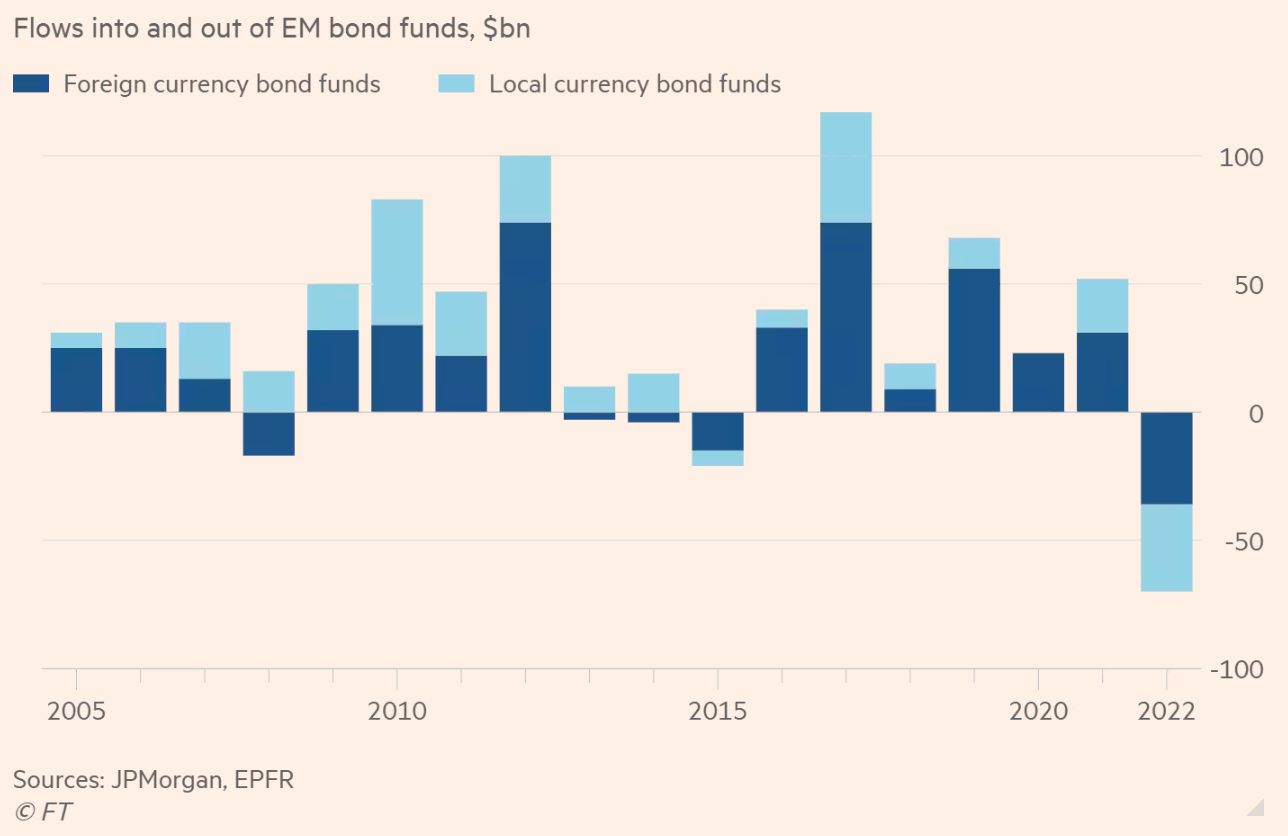
FT reports that bond investors have pulled out over $70 bn from EM bond funds this year, the highest ever.
The investor flight underscores how emerging markets are facing mounting risks from surging interest rates in developed markets, which make the typically high yields on EM debt look less attractive... Rather than weighing the relative risks of currency exposure, investors are simply getting out. It marks a sharp turnround: flows were positive into both types of bond funds for each of the previous six years, at a combined average of more than $50bn a year.
No matter how strong the domestic economic fundamentals, sudden stops and capital flights from developing countries to the safe haven of dollar assets are inevitable in times of global economic crisis. This cannot be avoided. The only way to mitigate its adverse effects is to limit exposure to the global financial markets in the first place to only what's required to manage macroeconomic balance. This is a cautionary note on capital account liberalisation.

Monday, August 26, 2019

Reforming the global monetary and financial system

It is gratifying when no less a person than the Governor of Bank of England Mark Carney breaks ranks from orthodoxy and summarises our book, The Rise of Finance. The core of the speech goes to the heart of what we have argued in our book. The global financial and monetary system is broken and the role of dollar is central to the problem.

In his speech at the annual Jackson Hole gathering of central bankers, Carney highlighted the problems associated with the world's reliance on the US dollar and spillovers especially on emerging economies from US monetary policy actions. He questioned the macroeconomy stabilisation orthodoxy on flexible inflation targeting and floating exchange rates. He advocated the creation of a new international monetary and financial system (IMFS) based on many more global currencies, where IMF could play a role to avoid having countries self-insure themselves against sudden-stops and capital flight by the inefficient and wasteful hoarding of US dollar assets, and greater global monetary policy co-ordination.

On the problems with the prevailing system,
Globalisation has steadily increased the impact of international developments on all our economies. This in turn has made any deviations from the core assumptions of the canonical view even more critical. In particular, growing dominant currency pricing (DCP) is reducing the shock absorbing properties of flexible exchange rates and altering the inflation-output volatility trade-off facing monetary policy makers. And most fundamentally, a destabilising asymmetry at the heart of the IMFS is growing. While the world economy is being reordered, the US dollar remains as important as when Bretton Woods collapsed. The combination of these factors means that US developments have significant spillovers onto both the trade performance and the financial conditions of countries even with relatively limited direct exposure to the US economy.
He argues that these developments have lowered the global equilibrium interest rates, which in turn influences domestic monetary policy actions, which in turn become a bigger problem when the US economic conditions warrant tightening by the UD Federal Reserve even as economic condition elsewhere are weakening. The result is a structural disinflationary bias in the world economy.

Greater cross-border trade, growth of global value chains, and globalisation in general have synchronised producer prices globally and also introduced a disinflationary bias on the world economy. This increase in global trade has been accompanied by the DCP or trade invoicing in dollars even when the trade does not involve the US, thereby weakening the automatic (external side) stabilisation effects of a floating exchange rate.
The resulting stickiness of import prices in dollar terms means exchange rate pass-through for changes in the dollar is high regardless of the country of export and import, while pass-through of non-dominant currencies is negligible. As a result, import prices do not adjust efficiently to reflect changes in relative demand between trading partners, in part because expenditure switching effects are curtailed, and global trade volumes are heavily influenced by the strength of the US dollar.
It has been shown that, controlling for the global business cycle, a 1% appreciation of the dollar against all other currencies leads to a 0.6% contraction in trade volumes in the rest of the world within one year.

In addition to trade invoicing, dollar is also the dominant currency in the financial markets, and all this creates a self-reinforcing spiral that predominates dollar ever more,
As well as being the dominant currency for the invoicing and settling of international trade, the US dollar is the currency of choice for securities issuance and holdings, and reserves of the official sector. Two-thirds of both global securities issuance and official foreign-exchange reserves are denominated in dollars. The same proportion of EME foreign currency external debt is denominated in dollars and the dollar serves as the monetary anchor in countries accounting for two thirds of global GDP. The US dollar’s widespread use in trade invoicing and its increasing prominence in global banking and finance are mutually reinforcing. With large volumes of trade being invoiced and paid for in dollars, it makes sense to hold dollar-denominated assets. Increased demand for dollar assets lowers their return, creating an incentive for firms to borrow in dollars. The liquidity and safety properties encourage this further. In turn, companies with dollar-denominated liabilities have an incentive to invoice in dollars, to reduce the currency mismatch between their revenues and liabilities. More dollar issuance by non-financial companies and more dollar funding for local banks makes it wise for central banks to accumulate some dollar reserves. 
And the net result is that actions of US government and the Federal Reserve have enormous spill-overs on the world economy, even in countries which have limited US exposure. Helene Rey has described the global financial cycle as a dollar cycle. Carney points to evidence on the harmful effects of spillovers,
For EMEs, this manifests in volatile capital flows that amplify domestic imbalances and leave them more vulnerable to foreign shocks. One fifth of all surges in capital flows to EMEs have ended in financial crises, and EMEs are at least three times more likely to experience a financial crisis after capital flow surges than in normal times. While the typical EME receiving higher capital inflows will grow 0.3 percentage points faster, all else equal, the typical EME with higher capital flow volatility will grow 0.7 percentage points slower... Bank research suggests that the spillover from tightening in US monetary policy to foreign GDP is now twice its 1990-2004 average, despite the US’s rapidly declining share of global GDP. Financial instability in advanced economies also causes capital to retrench from EMEs to ‘safe havens’, as it did during the 2008 financial crisis and the 2011 euro-area crisis. Connally’s dictum “our dollar, your problem” has broadened to “any of our problems is your problem”... Bank of England work finds that redemptions by EME bond funds (with large structural mismatches) in response to price falls are five times those for EME equity funds (with lower structural mismatch). In turn, EME equity funds are twice as responsive as advanced economy equity funds.
So what does he suggest? In the short-run he suggests transparent pursuit of flexible inflation targeting, with focus on trading off domestically generated inflation and output volatility, as well as co-ordination with fiscal and regulatory policies, at both national and international levels.
In the medium term, policymakers need to reshuffle the deck. That is, we need to improve the structure of the current IMFS. That requires ensuring that the institutions at the heart of market-based finance, particularly open-ended funds, are resilient throughout the global financial cycle. It requires better surveillance of cross border spillovers to guide macroprudential and, in extremis, capital flow management measures. And it underscores the premium on re-building an adequate global financial safety net... EMEs can increase sustainable capital flows by addressing “pull” factors including... expanding the scope and application of their macroprudential toolkits to guard against excessive credit growth during booms. Bank of England research finds that tightening prudential policy in EMEs dampens the spillover from US monetary policy by around a quarter... At the same time, it is in the interests of advanced economies to moderate push factors, including risks in their markets and institutions... Pooling resources at the IMF, and thereby distributing the costs across all 189 member countries, is much more efficient than individual countries self-insuring. To maintain reserve adequacy in the face of future larger and more risky external balance sheets, EMEs would need to double their current level of reserves over the next 10 years – an increase of $9 trillion. A better alternative would be to hold $3 trillion in pooled resources, achieving the same level of insurance for a much lower cost.


In the longer term, we need to change the game. There should be no illusions that the IMFS can be reformed overnight or that market forces are likely to force a rapid switch of reserve assets... Any unipolar system is unsuited to a multi-polar world. We would do well to think through every opportunity, including those presented by new technologies, to create a more balanced and effective system... Multiple reserve currencies would increase the supply of safe assets, alleviating the downward pressures on the global equilibrium interest rate that an asymmetric system can exert. And with many countries issuing global safe assets in competition with each other, the safety premium they receive should fall. A more diversified IMFS would also reduce spillovers from the core and by so doing lower the synchronisation of trade and financial cycles. That would in turn reduce the fragilities in the system, and increase the sustainability of capital flows, pushing up the equilibrium interest rate.

Sunday, September 20, 2015

The problems with a public investment-led growth strategy for India

Srinivas Thiruvadanthai makes a good case for a public spending driven economic growth restoration strategy for India. I agree with the broader thrust, though I am not persuaded that many of the assumptions will hold as readily as envisaged. Consider the following,

1. The assumption that the rising corporate free-cash flows would lead to investment spending once the public spending kicks-off may not prove right. What if the free-cash flow is being used to deleverage, as is the case in many sectors? Does the government have the requisite fiscal fire-power (in size and time) that would enable the deleveraging to play out enough to ignite the investment cycle? Even assuming this fiscal space is available, is it just a deleveraging problem or are there other factors involved? What if many of the corporate investments are simply commercially unviable and insolvent (it would not be a stretch to assume that a large proportion of the infra projects are simply insolvent, and in some like steel, significant parts of the sector itself may be under water)? By itself, market is unlikely to force such projects/corporates to liquidate. We may need more aggressive actions by creditors, which in turn runs into institutional challenges like bankruptcy code etc?

2. The assumption about current account deficit moderating may not play out. It may be that oil stays low for some time, but gold, especially with the return to normalcy in US (and potential uptick in inflation), may start to recover, though not to the same previous levels. In any case, the last four months, gold imports have been rising. And once public investment cycle starts, the imports of equipments (even mineral ore commodities etc) etc will rise forcing up the imports. And, with no prospect of exports rising, the pressure on CAD may not be as benign as is being thought of. 

3. The assumption about inflation remaining under control too may not be correct. From everything we have seen, the Indian economy simply does not have the capacity to sustain very high growth rates for more than 3-4 years. From cement to pulses, once the supply and demand side expands, constraints will start to bind, driving up inflationary pressures. This is a constant theme in the speeches of the RBI Governor himself. 

4. Finally, the flow Vs stock juxtaposition of the public debt, while logically unexceptionable, may be less so in the real world. Given the impending return to normalcy in US credit markets, the continuing global economic weakness and uncertainty in the global financial markets which are unlikely to disappear anytime soon, the professed desire of India to attract patient foreign capital in infrastructure, and its recent history of macroeconomic imbalances, the global credit markets (rightly or wrongly, a fact beyond anyone's control) may not view a return to higher fiscal and current account deficits as good signal. And we all know that these things impose significant costs on open economies, however good the fundamentals, once the volatility strikes and sudden stop ensues. As to our comfortable debt stock, the high inflation has undoubtedly been the key player in keeping it low. Now that inflation is low, the trajectory of the stock remains to be seen.

However, having said this in provocation, public spending in infrastructure should go up considerably, even at the risk of slightly bumping up the twin deficits. In its absence, with exports not an option, corporate balance sheets weak, banks under stress, and household spending not broad-based enough, there is simply no engine to restore growth and the economy may remain entrapped in the gridlock for long enough to do irreparable damage.

A more broader case to be cautious about a public investment led growth strategy is made out in an earlier post here

Wednesday, June 27, 2012

The negative externalities of finanical market integration

It is now widely acknowledged that economies, howsoever strong their fundamentals, cannot remain insulated from negative global economic shocks. In simple terms, this means that irrespective of the domestic strength and size of an economy, adverse global economic events have the potential to generate macroeconomic distortions that can destabilize the economy. A fundamentally strong economy can, in quick time, become a victim of global economic events for essentially no fault of its.

Floyd Norris highlights the latest example of an economy, Switzerland, that appears to be falling victim to a crisis that it had no role in fuelling. As the Eurozone crisis progressed, investors searching for safety found in Switzerland and the Swiss franc an attractive safe haven. The country had stayed away from the Eurozone, had deep financial markets, and reasonably strong economic fundamentals.

Capital flowed in massive quantities, driving up the Swiss franc which appreciated spectacularly from its long-term stable value of around 1.4 francs to a euro to almost being on par with the euro. The Swiss central bank responded by publicly committing to not let the franc fall below 1.2 to a euro. It undertook massive purchases of euros, accummulating huge euro reserves. It also lowered Swiss interest rates to nearly zero. But despite all this, the Swiss economy has not been able to stave off the effects of the capital inflows. The declining external competitiveness has driven down exports, a consumption boom has been triggered, and a real estate bubble is rapidly inflating.


One cannot but not wonder whether Switzerland is actually paying a penalty for running its economy reasonably well! In many respects, Switzerland is facing the same challenges which many of the peripheral Eurozone economies, albeit with much less strong fundamentals, faced when they experienced a massive capital rush, again for different reasons, in the aftermath of the currency union.

As I have blogged earlier, the crisis in countries like Spain and Ireland is not the result of government fiscal profligacy but of Eurozone-wide macroeconomic forces unleashed in the aftermath of the monetary union. These countries, with relatively strong economic fundamentals, experienced a sudden and sharp lowering of borrowing costs and massive capital inflows, both of which led resource misallocation distortions and imbalances.    

All this once again highlights the importance of macroeconomic regulatory oversight in a globalized economy. If, some years down the line, Switzerland is forced to confront an economic crisis triggered off by a real estate bubble and its attendant larger macroeconomy and financial markets distortions, several questions will be asked about what the Swiss government could have done to avoid the fate. This becomes all the more so since, if that happens, it would be virtual repeat of the problems currently being faced by the peripheral economies.

In the circumstances, should Switzerland enforce some form of regulatory capital controls as it faces the massive inflows of foreign capital? It is interesting that one of the flagbearers of capitalist democracy, the International Monetary Fund, has already lend its imprimatur to some form of regulatory restraint on capital inflows so as to ensure economic and financial stability.

In fact a recent working paper by Marie-Aimée Tourres points to the success of India and China with use of capital controls to curb dangerous capital flows. She argues that "capital controls help to provide short-term monetary policy independence within the impossible trinity and that long-standing capital controls is possible leading to a mid-way path". I cannot but not be in greater agreement. 

Tuesday, April 17, 2012

Eurozone's rebalancing challenge

Regaining external competitiveness dented by a decade of massive external capital inflows, asset price bubbles, and investment booms, is arguably the biggest challenge facing many of the beleaguered Eurozone economies. Martin Wolf, quoting two Goldman Sachs research papers, “Achieving fiscal and external balance”, points to the magnitude of this re-balancing challenge facing the peripheral economies.
To achieve a sustainable external position, Portugal needs a real depreciation of its exchange rate of 35 per cent, Greece one of 30 per cent, Spain one of 20 per cent and Italy one of 10-15 per cent, while Ireland is now competitive. Such adjustments imply offsetting appreciation in core countries. Moreover, with average inflation of 2 per cent in the eurozone and, say, zero inflation in currently uncompetitive countries, adjustment would take Portugal and Greece 15 years, Spain 10 years and Italy 5-10 years. Moreover, that would also imply 4 per cent annual inflation in the rest of the eurozone.
But the danger is that even if the required inflation environments can be sustained for long periods, the austerity policies being followed by these economies could choke off any growth and push them down a contractionary spiral. Spain's targeted fiscal correction by 5.5% of GDP over two years, with 3.2% adjustment proposed for 2012, from its fiscal deficit of 8.5% of GDP for 2011, is one of the biggest fiscal adjustments ever attempted by a large industrial country. Such severe austerity threatens economies with large unmeployment rates, debt-ridden banks, and fiscally constrained governments. Predictably, as with the case of Spain, the markets have reacted with alarm driving up Spanish bond yields and CDS spreads.

Friday, April 13, 2012

More on China's macroeconomic imbalances

Much has been written about China's economic policies that sought to boost exports at the cost of everything else. It is now very clear that it has come with significant costs and serious external and internal macroeconomic imbalances. Externally, Beijing has aggressively intervened in the market to keep the renminbi undervalued. Internally, it has kept interest rates artificially low which in turn has resulted in severe financial repression and suppressed domestic private consumption.

Economix has an interview with Nicholas Lardy who outlines why these two imbalances, external and internal, are closely linked,
The government adopted a low-interest-rate policy at that time. Deposit rates were held down so that the after-inflation return on bank deposits for savers turned negative. That reduced household income below the path it otherwise would have achieved, leading to a slowdown in the rate of growth of household consumption expenditure. Since most households lack adequate health insurance and retirement programs, they also responded to lower deposit rates by saving even more, so as not to be delayed in reaching their savings goals. That put further downward pressure on private consumption expenditure.

China has adopted a low-interest-rate policy as a mechanism to reduce the costs of simultaneously maintaining price stability and an undervalued exchange rate. The central bank intervened massively in the foreign exchange market to moderate the pace of appreciation of the renminbi, China’s currency. And that intervention led to a large, ongoing increase in the domestic money supply, which the central bank had to offset by the sale of central bank bills and requiring banks to increase their reserves deposited at the central bank. The central bank had to pay interest on these bills and reserves, and the low-interest-rate policy made the cost of these operations less than it would have been had interest rates been market determined.
One could add several other consequences of the low interest rate policy. While it has been a major contributor to the promotion of China's investment driven economic growth strategy, it has also generated distortions in resource allocation, the most prominent and of greatest concern being the real estate bubble.

Stripped off all its macroeconomics, China's investment and export based economic growth strategy has been underpinned by massive government inflated bubbles, in multiple sectors. And for much more than a decade now, the country has managed to successfully carry on the strategy. The government kept interest rate and exchange rate suppressed so as to boost investment and exports. Coupled with capital controls, low interest rates, boosted the coffers of the country's public sector banks with cheap capital, which they on-lend to businesses at low rates. Real estate market boomed, which amplified the finances of state entities and local governments which owned all the land. These agencies leveraged the high real estate values to raise resources to finance their massive infrastructure investments. On the external side, the low exchange rate raised export competitiveness, which in turn encouraged massive inflows of foreign direct investment. A sustained period of widespread global economic growth provided all the favorable conditions for China to pursue this export strategy uninterrupted.

There are several dangers associated with this strategy. Lardy himself points to one such transmission channel,
Urban households have piled into property investment in part because of negative real interest rates on bank deposits, and capital controls that prevent most households from investing abroad. The property boom is based on the widespread assumption that property prices will continue to move upward with only brief and shallow price corrections. If this expectation changes, investment demand in residential property could evaporate. Demand for output of steel, cement, copper, aluminum and many other products is driven largely by residential real estate, so if that sector slumps it could usher in a long period of much slower economic growth.
While the rulers in Beijing certainly deserve their share of compliments for the country's spectacular economic growth, it cannot be denied that China has enjoyed more than its fair share of luck and benefited from favorable external circumstances. Now that the consequences of the imbalances, especially the internal ones, are becoming ever more apparent, Beijing ins being forced to re-evaluate its options. Low interest rates are becoming unsustainable for a variety of reasons, making over-reliance on the investment-driven growth strategy unsustainable. Propsects of anemic economic conditions in much of developed world for the foreseeable future puts question marks on the export-led growth approach.

In the circumstances, re-balancing will have to involve nudging the Chinese consumers to play a more central role. This will require rewarding and incentivizing them with higher interest rates and more diversified and remunerative investment alternatives for their savings (read greater financial liberalization). Further, manufacturing wages will have to become more market determined, so that people's purchasing power increases proportionately with the economy's growth. Both these will have to be accompanied by domestic policies that establish a comprehensive social safety net and enabling greater access to affordable urban housing, tertiary education, and so on.

Wednesday, February 22, 2012

Eurozone crisis in graphics

A series of excellent graphics from Paul Krugman that points to the underlying causes behind Europe's current crisis.

Contrary to conventional wisdom, surging public debt and fiscal irresponsibility was not the cause for the current problems, even among the peripheral economies. Greece was the only exception. The graphic shows how public debt to GDP ratios continued to decline across the PIIGS throughout last decade till the crisis struck.


However, in the aftermath of the Eurozone integration, there was a sharp surge in capital inflows from the core to the peripheral economies. Both demand and supply side forces drove these flows. On the demand side, the single currency and the resultant sharing of sovereign risk lowered the cost of capital for all these economies, thereby making debt available at cheap rates for the domestic industry.

On the supply side, this capital flow bubble was induced by the sudden decline in the sovereign risk of the peripheral economies (given their integration into a single currency union), the bright economic prospects and the potential for higher returns. Investors assumed that the biggest supporters of European integration, Germany and France, would never let a weaker eurozone country default on its obligations, for fear of derailing the political union of Europe. This belief enabled precisely such countries and their private financial institutions to borrow heavily at cheap rates. Predictably, these flows led the emergence of large current account imbalances.


The sudden influx of easy money led to a sharp increase in price levels and wages across the PIIGS economies. The economic competitiveness of these economies took a hit, especially in relation to the core area economies.


Despite the austerity programs under implementation in these economies, the debt-to-GDP ratios are not expected to come down anytime soon. The shrinking economies have contributed to the declines in interest rates.


Update 1 (28/2/2012)

Paul Krugman on what caused the Eurozone crisis,

At root, their problems are primarily caused by balance-of-payments rather than sovereign debt issues; they had huge capital inflows between 1999 and 2007, which led to inflation, and now they need somehow to regain competitiveness. But overlaid on this is a sovereign-debt crisis, which has forced them to seek aid — and the lenders are demanding harsh austerity in return, which is further depressing economies already suffering from severe overvaluation.


See also this set of graphics from Krugman. This shows the impact of austerity on Greece.

Saturday, February 18, 2012

Examining Spain's twenty-plus unemployment rate

Among all the dismal macroeconomic indicators pouring out from the peripheral Eurozone economies, the biggest concern is the high unemployment rates. In an environment of fiscal austerity, high rates of unemployment rates have the potential to severely destablize the society. Nowehere is this a bigger concern than in Spain, which has the highest unemployment rate.


Though, this graphic from Zero Hedge is scary, as Ezra Klein points out, it may not be as depressing as it appears. The vast majority of kids in this age group are in school and therefore should not be considered as part of the workforce.


Historically Spain has had extrteme volatility in its labour market. Its unemployment rate surged since early 2008, mirroring its rise in the first half of the nineties. Ezra Klein writes,
Construction in Spain was a whopping 13 percent of employment during the housing bubble — far bigger than even the United States — which led to an especially big crash. Also, it’s much harder to fire workers in Spain (which in turn makes jittery employers more reluctant to hire in the first place) and much easier to use temp workers.
Temporary workers form 33% of the total employees in Spain, the highest among all major economies. A CEPR study of the labour markets in Spain and France finds that in case of the former, the cost of firing temporary labour is minimal whereas the cost of firing the permanent labour is very high. This temporary-permanent labour contract costs is an important structural imbalance in the Spanish labour market. It has echoes in India's own labour market policies.

Spain's problems can be traced to a real estate bubble and a private consumption boom. Paul Krugman captured Spain's problems succinctly,
There was a huge boom in Spain, largely driven by a housing bubble — and financed by capital outflows from Germany. This boom pulled up Spanish wages. Then the bubble burst, leaving Spanish labor overpriced relative to Germany and France, and precipitating a surge in unemployment. It also led to large Spanish budget deficits, mainly because of collapsing revenue but also due to efforts to limit the rise in unemployment.
An examination of the macroeconomic indicators highlights Spain's vulnerability. Since the mid-nineties, the Spanish debt-to-GDP ratio has declined gradually to just 36.1% in 2008. However, it has since ballooned to 60.1% in 2011. Gross capital formation has declined from 29% of GDP in 2008 to less than 23% in 2010. Tax revenues as a share of GDP has fallen from slightly below 14% in 2007 to just above 8% for 2009. Since 2007, the structural balance, or output gap, has widened from just above 1% to more than 7% in 2011. Strained by the depressed economy and the resultant fall in revenues, the fiscal balance slipped from a surplus of nearly 2% of GDP in 2008 to a deficit of 9.3% in 2011. If macroeconomic indicators are any reflection, since 2009, the Spanish economy has fallen off the cliff.

The austerity is likely to worsen the situation. However, given its high unemployment rates and the adequate fiscal space available, Spain should be following expansionary policies till recovery takes firm hold.

Update 1 (25/6/2012)

FT has an article that questions the basis of measurement that projects these very high youth unemployment rates in Europe. These unemployment rates are obtained by dividing the number of unemployed youth by the total number of youth in the workforce. The denominator excludes those attending university and also those undergoing job training. This number is therefore likely to be very high.

It prefers using another indicator, the unemployment ratio, which is measured by dividing the number of unemployed youth with the total population of young people under 24. Interestingly, when measured this way, the figures drop sharply. For example, the youth unemployment rate for Spain is 48.9 per cent, but the youth unemployment ratio is only 19 per cent. The youth unemployment rate in Greece is 49.3 per cent; its youth unemployment ratio is only 13 per cent. In both Ireland and Italy, the rate is 30.5 per cent, but the ratio is only 11.7 per cent and 8 per cent respectively. For the eurozone, the youth unemployment rate is 20.8 per cent but the ratio only 8.7 per cent. In fact, while the eurozone’s youth unemployment rate has increased since 2009, the youth unemployment ratio has stayed the same.

Update 2 (3/7/2012)

FT has a section on youth unemployment and its long-term consequences. The graphic below captures some of the stark figures associated with yout unemployment.


Tuesday, October 18, 2011

China and US - Contrasting paths to structural imbalances?

In many ways, China and US are classic examples of how both free-market capitalism and statist capitalism, through contrasting routes, have produced severe macroeconomic imbalances that have brought the later to its knees and threatens the former. The graphic below insightfully captures the respective problems of the American and Chinese economies.


It was unbridled financial market liberalization and sustained expansionary monetary policy, which fuelled massive property and financial asset bubble and debt-financed household consumption binge, that is the source of much of America's current woes. Notional household income share of the GDP rose on the face of the twin bubbles. Households spent as though there was no tomorrow, running savings down to the bottom. Finally when the bubble burst and the recession took hold, households faced the brunt of the slowdown and even after four years, recovery remains uncertain.

In China, the policies enacted in late nineties, in response to bankruptcy problems facing state-owned companies and banks, looks set to have much the same impact in not the distant future. Beijing assumed tighter control over interest rates and exchange rates, keeping them artificially low to finance cheap loans to businesses and government agencies and increase external competitiveness so as to drive its preferred export-led and infrastructure investment driven economic growth model. This period also coincided with the government abandoning the communist era policies of life-long employment and liberal social safety nets, thereby forcing households to increase their savings to meet educational, health care and housing needs for themselves and their children.

These policies amounted to a huge transfer of wealth from the households to businesses, both government and private, and government agencies. Banks and state-owned companies staged excellent recoveries. But all this was at the cost of households - household consumption, already among the lowest at 45%, fell to just 35%, and savings rate rose sharply to about 40%.


As the Times and the FT point out in two excellent essays, this model worked well so long as the export markets were vibrant and the infrastructure deficit was filled, and the government was able to control the supply and price of credit and thereby keep cost of capital artificially low. As the two primary growth drivers weaken, as is happening now, and the unregulated shadow banking system assumes an increasingly dominant role (it now supplies more credit to the economy than the formal banking system) thereby weakening Beijing's ability to control credit, the sustainability of this growth model becomes doubtful. The sliding property market which financed a major share of the investment spending, especially by local governments, is yet another source of concern.

George Magnus writing in the FT has this to say about China's rebalancing strategy from an investment-centric and credit hungry model to one built around consumption,

"It involves a redistribution of income from capital and profits to labour and wages; radical changes in the role of the exchange rate, interest rates and capital markets; and strategies to counter the high propensity to save by households, corporates and central government. It is also politically divisive because power and economic privilege have to be wrested from party elites, state enterprises and banks, and given to new beneficiaries such as private companies, households, college graduates and rural migrant workers."


It is increasingly inevitable that China can sustain its high growth rates only if its domestic consumers can step into the space being vacated by the traditional growth engines. The question is whether Beijing has the stomach to embrace the required structural reforms to enable this transition?

Thursday, October 13, 2011

The desirability of an expansionary credit-driven recovery?

Even as the debate rages about how best to achieve recovery, there is the issue of what should constitute recovery. Though there cannot be much argument about the need to bring down unemployment rates to the pre-recession lows, the need to restore the other macroeconomic parameters (notably those related to financial sector and household consumption) to its pre-recession peak is questionable.

Roger Farmer, an ardent advocate of the superiority of quantitative easing over fiscal expansion and a strong believer of the self-fulfilling effect of market confidence, writes,

"Housing wealth in the US has fallen by 34% since its peak in 2006, and is still declining. The stock market fell by almost 50% from its 2007 peak and remains down by nearly a third. This enormous loss of wealth caused a large and persistent drop in consumption demand, which has led to an increase in unemployment... A quantitative-easing policy in which a central bank buys risky assets can prevent price fluctuations and restore the value of financial wealth...

My work provides a new and coherent approach to macroeconomics that explains how a lack of confidence can lead to persistent unemployment. It supports the purchase of equities by central banks to reduce asset-price volatility, restore the value of wealth, and prevent a future market crash...

The Great Recession did not turn into Great Depression II because of coordinated action by governments around the world. Although fiscal expansion may have played a role in this success, central bank intervention was the most important component by far. Quantitative easing works by increasing the value of wealth."


The underlying assumption behind Prof Farmer's hypothesis is that normalcy can be achieved only with a restoration of the pre-crisis financial asset values. The same assumption drives the logic of those advocating expansionary policies - somehow consumers will start to buy, businesses will invest, and banks will lend, thereby restoring normalcy in economic growth, and this in turn requires adequate time so that market confidence will revive and asset values will regain their old highs.

The logic behind monetary accommodation is to buy some time so that the forces of economic growth can be catalyzed into action. It is hoped that if market expectations can be shaped, it could pave the way for growth - investments, jobs, and consumption - which in turn would restore asset values to the pre-recession era standard.

Expansionary policies, especially on the monetary side - like maintaining ultra-low interest rates for an extended period of time - have the potential to generate and amplify existing distortions. One manifestation of this is the deepening divide between the bigger firms and the small and medium businesses in the US. While the former have continued to access credit at ultra-low interest rates and pile on record profits, the later have been badly squeezed in the credit markets. Risk averse banks have been wary of lending to these companies, who are the predominaty actors in creating jobs in the US economy. The result

Another example is the phenomenon of the existing TBTF institutions getting even bigger and more riskier riding on the back of the favorable policy regime. In fact, as Nassim Nicholas Taleb and Mark Spitznagel have argued persuasively in a recent article, the US Treasury and the Fed, as part of TARP and the numerous other unconventional monetary policies, have transferred an astonishing $2.2 trillion to the major American banks and this figure is estimated to reach $5 trillion by end of the decade. They write about how banks, despite their recklessness, were bailed out by the US government.

"Banks take risks, get paid for the upside, and then transfer the downside to shareholders, taxpayers, and even retirees. In order to rescue the banking system, the Federal Reserve, for example, put interest rates at artificially low levels; as was disclosed recently, it also has provided secret loans of $1.2 trillion to banks. The main effect so far has been to help bankers generate bonuses (rather than attract borrowers) by hiding exposures.

Taxpayers end up paying for these exposures, as do retirees and others who rely on returns from their savings. Moreover, low-interest-rate policies transfer inflation risk to all savers – and to future generations. Perhaps the greatest insult to taxpayers, then, is that bankers’ compensation last year was back at its pre-crisis level."


Banks benefitted immensely from the prolonged period of access to ultra-low interest rates, blanket credit guarantees, collateral standards dilution, and massive capital injections. At the height of the crisis, the Fed backstopped bank losses by becoming the lender, insurer and even purchaser (buying up illiquid and risk-filled mortgage backed securities to prevent values plummeting) for the entire financial system.

As the crisis expanded and the strains started showing on some of the largest financial institutions, it became increasingly evident that their failure would have catastrophic consequences on the economy. So the momentum gathered to provide all possible liquidity support and even direct bailouts, if need be, so as to contain the spread of systemic risks. The underlying premise was that it was mainly a liquidity crisis (and not a solvency one), and if the banks were given enough time, market confidence would be restored, asset values would recover, and balance sheets will be repaired.

It can be safely argued that this strategy worked, and the balance sheets of the biggest banks have recovered considerably from the depths of 2008-09. However, unfortunately, this relatively quick recovery has blanked out all institutional memory of the lessons from the sub-prime crisis. Apart from some cosmetic changes, financial markets continue merrily with limited regulation.

The same old unhealthy practices, ones that led to the build-up of systemic risks in the first place, are back along with the driving force behind these trends - distorted incentives of traders, executives and managers. Executive compensation is back to the halcyon days of the pre-crisis era. The big financial institutions have gotten bigger and enjoy the benefits of a market place where even as their smaller competitors are credit constrained, they themselves have access to capital at utlra-low rates for an extended period of time. It clearly appears as though nothing has changed, and the cycle looks set to repeat, with the markets in wait for the next bubble to inflate.

In a recent post about the Eurozone crisis, Tyler Cowen had written that though the Eurozone governments had on paper a balanced budget, their commitment to a single currency was a massive naked put, relative to their GDP, which was not internalized into the national budgets. Similarly, the growing sizes of the TBTF institutions and the resultant concentration of risks, is a very large naked put by the US government in favor of its TBTF institutions, one which is unfortunately not reflected in the US government's fiscal balance. Only when disaster strikes and the bailout checks have to be signed, the true magnitude of the fiscal commitment becomes obvious.

Finally, there is the impact of the extraordinary monetary accommodation in the US on the world economy, especially the emerging economies. The massive stocks of easy money sloshing around poses great threats to financial market stability. For a start, it can trigger off destabilising capital inflows into emerging economies and undesirable sharp currency appreciation. However, these flows can quickly reverse, leaving currencies and equity markets battered.

The aftermath of the sub-prime mortgage crisis presented a great opportunity for regulators to clamp down on the several unhealthy business practices in financial markets that were primarily responsible for the mess. However, that window of opportunity is almost gone. And more worryingly, the market conditions that has emerged in the aftermath of the crisis may be perpetuating or even amplifying many of the worst offending excesses.

We appear to have been left with the worst of all worlds. The regulators have failed to seize the opportunity. The market conditions in the aftermath of the crisis works towards making the big institutions even bigger. And amidst all this, the credit markets remain seized up and the economy continues to show no signs of any recovery.

Saturday, June 4, 2011

Rebalancing China's savings-investment imbalances

One of the biggest macroeconomic challenges for the world economy in the years ahead lies in the manner in which China's economic growth is managed as its economy moves into the next stage of growth.

Over the past decade-and-half, China's spectacular economic growth has pulled hundreds of millions of Chinese out of poverty and provided the engine for global economic growth itself. This growth was was driven by a massive export-led industrial and infrastructure investment boom, that channelized the very high domestic savings rate and huge foreign direct investments.

Whenever, economy threatened to slowdown the government further boosted its fixed investment share of the GDP. In fact, the decline in exports during the recent global recession, the government increased the fixed-investment share of GDP from 42% to 47%, and increased further in 2010-2011, to almost 50%. Nouriel Roubini who feels that such growth is unsustainable, describes the results

"No country can be productive enough to reinvest 50% of GDP in new capital stock without eventually facing immense overcapacity and a staggering non-performing loan problem. China is rife with overinvestment in physical capital, infrastructure, and property. To a visitor, this is evident in sleek but empty airports and bullet trains (which will reduce the need for the 45 planned airports), highways to nowhere, thousands of colossal new central and provincial government buildings, ghost towns, and brand-new aluminum smelters kept closed to prevent global prices from plunging.

Commercial and high-end residential investment has been excessive, automobile capacity has outstripped even the recent surge in sales, and overcapacity in steel, cement, and other manufacturing sectors is increasing further. In the short run, the investment boom will fuel inflation, owing to the highly resource-intensive character of growth. But overcapacity will lead inevitably to serious deflationary pressures, starting with the manufacturing and real-estate sectors."


The only way out of this is to prune down investments and increase domestic consumption, which remains the lowest among any major economy. I have blogged earlier about China's savings paradox (massive savings, when interest rates are so low) which has generally been attributed to the uncertainty Chinese feel about their income and the market-oriented nature of Chinese reforms. It has been argued that an extensive social safety net, universal medical insurance, reduced cost of higher education, and expansion of public services would lower the uncertainty and get Chinese consumers to spend more.

However Roubini feels the challenge goes beyond this, and requires more fundamental structural changes. He argues that these structural factors contribute towards a massive transfer of wealth from households (through their savings) to corporate sector. It is natural that domestic consumption was just 35% last year, since the share of GDP going to household sector is less than 50%, again among the lowest in all major economies. These structural factors and their impacts are

1. Low interest rates - means that the returns for savings are very low, and corporates enjoy negative real rate on their borrowings. This constitutes one of the biggest direct transfer of spending power from savers to borrowers or households to corporates.

2. Artificially deflated exchange rate - Works in two dimensions. One, it increases export competitiveness. It encourages businesses, already benefitting from artificially suppressed wages and lower cost of capital, to over-invest in facilities for exports. A build-up of imbalances and excesses in export-oriented manufacturing is the result. Two, it lowers import competitiveness. Therefore, domestic consumers are prevented from enjoying cheaper imports and are forced to pay higher prices to buy lower quality domestically manufactured goods. This adds an inflationary dimension to the consumers spending, thereby reducing their real effective purchasing power.

3. Low rate of corporate taxation - This too keeps the cost of production artificially low. Higher taxes would generate higher revenues, which could be used to fund a comprehensive social safety and welfare system, besides expanding the coverage of public services. This also would dis-incentivize over-investments, apart from transferring wealth from coporates to governments and then to consumers.

4. Low wage growth - Labour repression, with policies like the household registration (hukou) system and overt arm-twisting of labor groups, have kept labour wages low. Businesses benefit by way of lower cost of production, whereas workers do not get to share proportionately the gains of higher economic growth.

5. Repressed financial markets - This is one of the most under-stated and less discussed issues, and a critical determinant of how China addresses its structural challenges. Greater depth and breadth to its financial markets would provide much higher returns to savers, who could then use it to increase their purchasing power. It would also provide a more efficient channel for the Chinese government to raise resources and invest their surpluses.

Roubini has some doomsday predictions for the Chinese economy,

"But boosting the share of income that goes to the household sector could be hugely disruptive, as it could bankrupt a large number of SOEs, export-oriented firms, and provincial governments, all of which are politically powerful. As a result, China will invest even more under the current Five-Year Plan. Continuing down the investment-led growth path will exacerbate the visible glut of capacity in manufacturing, real estate, and infrastructure, and thus will intensify the coming economic slowdown once further fixed-investment growth becomes impossible."


In this context, the findings of a recent NBER working paper by Barry Eichengreen and others on economic slowdowns in fast-growing economies is instructive. They use international data since 1957 and find that

"International experience suggests that rapid-growing catch-up economies slow down significantly, in the sense that the growth rate downshifts by at least 2 percentage points, when their per capita incomes reach around $17,000 US in year-2005 constant international prices, a level that China should achieve on or soon after 2015. Our estimates suggest that high growth slows down when the share of employment in manufacturing is 23 per cent; while current data on employment shares in China are not readily available, observation and extrapolation suggest that China is nearly there. Our estimates similarly suggest that growth slows when income per capita in the late-developing country reaches 57 per cent of that in the country that defines the technological frontier, a level that China is likely to reach only somewhat later... Most provocatively, slowdowns are more likely and occur at lower per capita incomes in countries that maintain undervalued exchange rates and have low consumption shares of GDP."


They find that countries which are more open to trade are able to maintain higher growth rates for a longer period of time. However, higher old-age dependency ratios make growth slowdown more likely, and China will have a higher old-age dependency ratio in the not-too-distant future.

Tuesday, January 18, 2011

Rebalancing global current account imbalances

The biggest medium-term concern for the world economy is the management of the global macroeconomic (specifically, current account) imbalances - getting the deficit countries to save and the surplus generators to spend more.

Joseph Gagnon feels that current account imbalances are likely to return to record levels over the next five years and the recent narrowing of imbalances was almost entirely a result of the global recession and that global recovery will unwind this effect. About the fundamental reason for the continuing build up of these imbalances, he writes,

"The primary culprit, in my view, is the development strategy increasingly being adopted by emerging markets — most notably China — of deliberately undervaluing one’s currency by official purchases of foreign assets in order to get net-export-led growth. Most developing economies are now piling onto this strategy in a big way (hence the currency wars), and it is a major problem for the U.S. We all want net exports to grow but we cannot all get it."


About the way ahead, he writes,

"To avoid a return of large global imbalances, economies with current account deficits should cut fiscal deficits more than is currently projected and economies with current account surpluses should reduce official financial outflows and allow their currencies to appreciate as well as take steps to boost domestic demand.

Fiscal consolidation in surplus economies — though necessary in some cases — is detrimental to rebalancing and should proceed at a slower pace and to a lesser degree than in deficit economies. Even in deficit countries, the pace of fiscal consolidation should be slower in economies where the recovery from the crisis remains weak.

Monetary policy should remain accommodative and even ease further in economies where output remains below potential and inflation threatens to fall below desired levels. In developing countries in which inflationary pressures are rising, a tighter macroeconomic policy stance is indicated. However, the form of the tightening should differ based on country circumstances: Surplus economies should tighten via exchange rate appreciation, whereas deficit economies should tighten via fiscal policy."


I am not sure whether Gagnon's assessment of the reasons and the possible solutions captures the full picture. While he offers clarity on the measures to be undertaken by the surplus generators, there is ambiguity about policies to be adopted by the deficit countries. He under-estimates the contribution of the extraordinary monetary accommodation (by way of quantitative easing) in the US to sustaining the imbalances. The resultant capital flows into emerging economies have played an important role in fuelling financial market excesses and over-heating there.

Monetary accommodation, while required to mitigate the adverse impact of the recession, cannot be a substitute to avoid the hard choices required. Given the extraordinary structural imbalances that had crept into the domestic economy (eg, the out-sized prominence of the financial markets), economies like the US cannot restore normalcy without undergoing considerable pain and implementing policies that can reform the domestic structural imbalances.

For a start, debt-laden household and business balance sheets have to contract considerably for any recovery to be sustainable. Currently, apart from boosting aggregate demand and investment, policy-makers are adopting an ultra-accommodative monetary policy for three reasons. One, keeping real interest rates low so as to lower the interest burden. Two, buy time for recovery to take hold by allowing businesses and households to re-schedule their debts. Three, hope that asset values will regain a major share of their values, so that some of the notional balance sheet debts will disappear.

However, all these assumptions may not stand closer scrutiny. Asset values are far down from the boom peaks and are not likely to return to anywhere near those values anytime in the foreseeable future. Further, buying time while keeping an ultra-accommodative monetary stance, may as Raghuram Rajan and others have argued, fuel other bubbles and even more asset mis-allocation. All this would be pumping more steroids on a patient already pumped up with an over-dose of them!

America's persistence with more quantitative easing in the name of expanding credit and lowering real long-term rates (and thereby raise asset values and boost consumption) is similar to China's policy of keeping the renminmbi under-valued so as to keep exports competitive. The Americans say that without this, the economy risks tipping into a deeper recession. The Chinese fear that currency revaluation will reduce Chinese exports, weaken economic growth, and generate social tensions. Both sides are grossly over-estimating the relative impacts and their policies are playing an important role in sustaining the current account imbalances. Further, both are band-aid policies that reveal a reluctance to embrace more fundamental changes required to remedy deeper domestic structural problems.

Micheal Spence has a few excellent suggestions, which may be germane to a more effective resolution of the imbalances. He advocates a pull-back from the quantitative easing policies and policies that increase the share of America's tradeable sector. He writes about,

"... a pull-back from quantitative easing in the US, which is subjecting the emerging economies to a flood of capital, rising commodity prices, inflation, and asset bubbles. Intervention may be needed in fragile sectors of the US economy, like housing, where faltering performance could produce another downturn. But such intervention can and must be far more precisely targeted than QE2. America’s reluctance to target areas of weakness or fragility leaves the impression externally that QE2’s real goal is to weaken the dollar...

global economy will be out of balance so long as the US runs large current-account deficits... that gap needs to be filled by higher foreign demand and increased export potential... The tradable sector accounts for just 30% of the US economy (by value added), and employment growth in the tradable sector is negligible... If exports are to grow substantially, the scope of the tradable sector must expand."


He also makes a subtle point about China's internal re-balancing,

"In the case of China, a key part of its 12th five-year plan is to shift income to the household sector, where the savings rate is high but still lower than the corporate rate. The economy can then use household savings (with appropriate financial intermediation) to finance corporate and government investment, rather than the US government."


Such internal re-balancing can be done only if China liberalizes its labor markets so as to remove restrictions on wage increases and puts in place a social security system to cushion workers against rising uncertainty (and this is one of the major causes for higher savings rate). It has to be hoped that such policies will encourage the Chinese consumers to loosen their purse strings.