Substack

Showing posts with label Manufacturing. Show all posts

Wednesday, October 7, 2026

Emerging industrial policy opportunity in batteries

It is well known that the convergence of renewable energy and battery storage would have transformational impacts on electricity markets. It overcomes the intermittancy problem that bedevils renewable generation. However, the high battery costs have been a problem. 

But two recent news articles highlight why that may be a thing of the past. One, for the first time, battery storage costs have fallen below thermal. Estimates by think tank Ember suggests that the cost of battery packs used in grid-scale storage systems fell by 45 per cent last year alone.
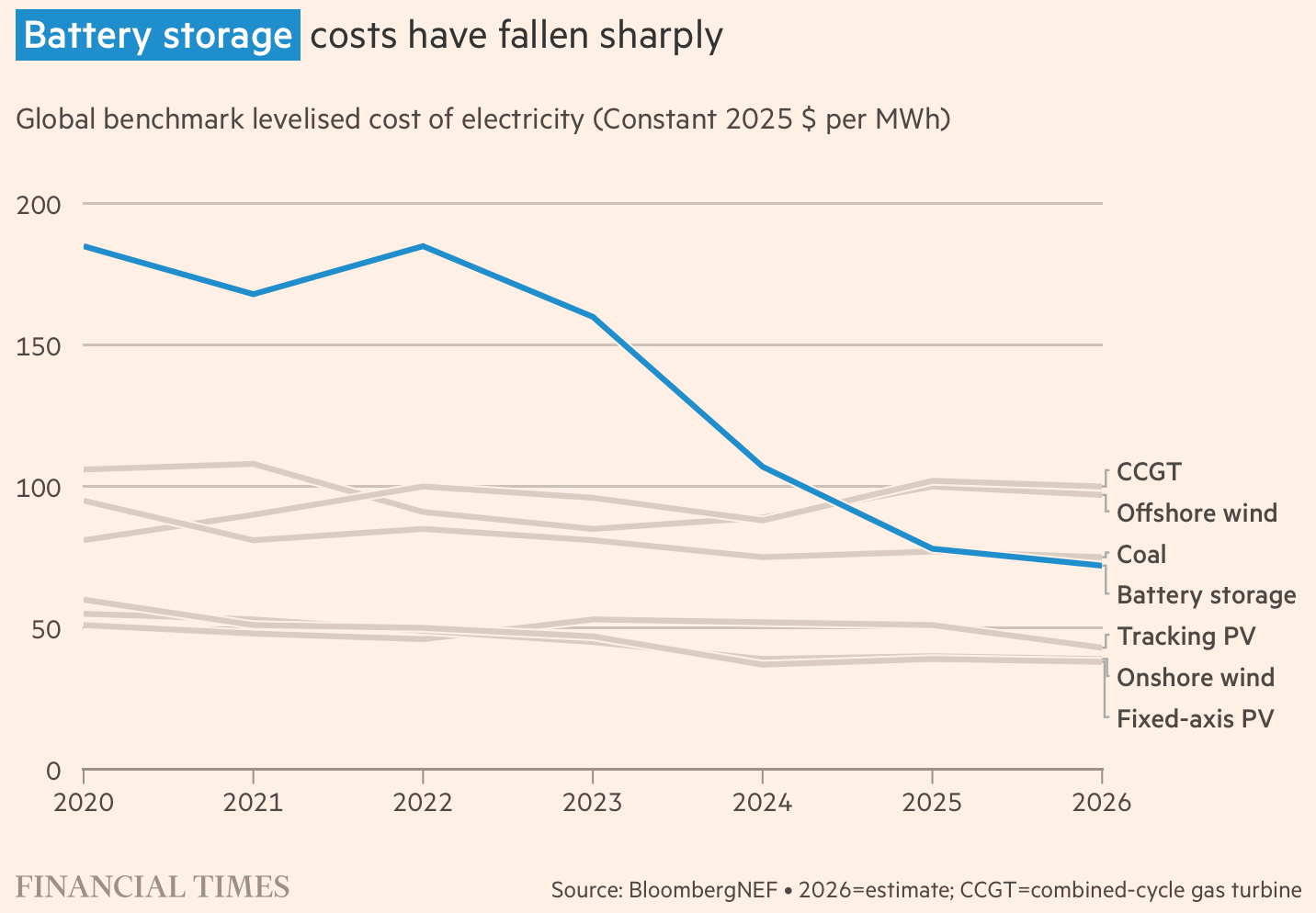
This trend has been expedited by the geopolitical convulsions of recent times, with the surging demand from data centres and the oil and natural gas supply squeeze due to Iran war turbocharging it. In 2026, 40 per cent more large-scale batteries are estimated to be installed than in 2025. 

Second, this convergence is being reflected in tenders being called in India to procure battery power.

Solar Energy Corporation of India (SECI) ran an auction to buy electricity capacity where they (SECI) demanded the availability of a thermal generator. A bidder who plans to use solar or wind is then forced to load up with the batteries required, to charge in the day, so as to deliver thermal-style availability. This auction discovered a price of ₹5.25 per kWh, guaranteed for 25 years. It is hard to identify a single comparable price for coal thermal in India because coal-extraction rights are given by the state in non-market ways. But if we look at recent new coal-power contracts in India, they are priced at ₹5.38-6.30 a unit. The SECI-discovered thermal-mimicking price for renewable power is now 10 per cent cheaper than that for new coal.

However, this convergence is accompanied by the now common concern about dependency on China.

Chinese producers account for 95 per cent of large-scale storage batteries, says Benchmark Mineral Intelligence. The sector’s rapid growth is strengthening China’s position as the dominant force in low-carbon energy, compounding opportunities for Chinese companies in adjacent markets such as wind and solar generation equipment… The seeds of China’s battery storage boom were sown in the years after Xi Jinping took power in 2012, with his pledge to build an “ecological civilisation”.

An industry in China that emerged from China’s industrial policy efforts to support battery production for EVs is now shifting towards grid storage. 

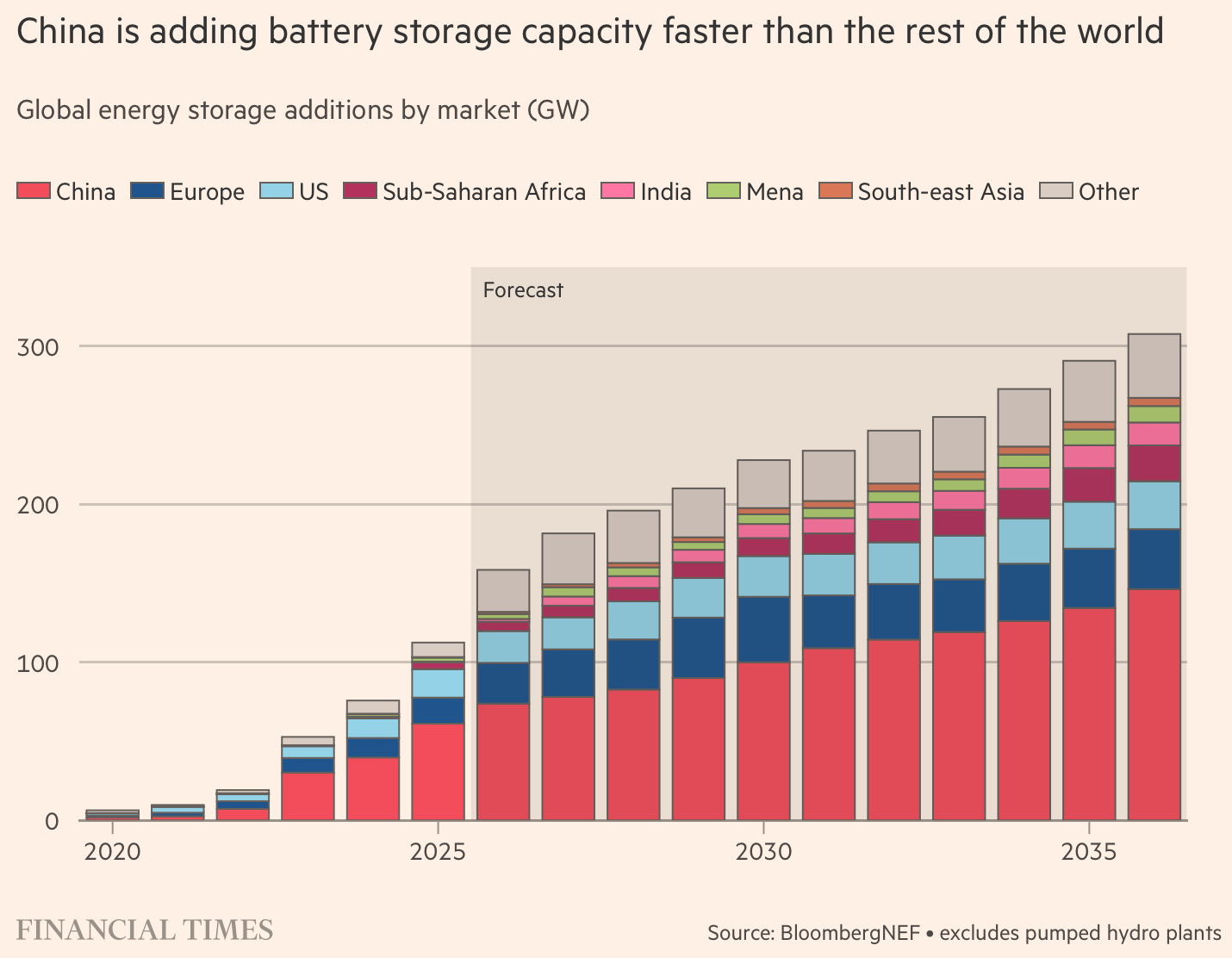
By 2021, it had become clear to the Chinese state that a vast amount of renewable power was being wasted, with solar and wind plants often generating far more electricity than the grid could absorb. So it launched a strategic push to deploy battery storage on the grid at large scale. Across much of the country, developers were required to build or commission large-scale storage as a condition of approval for new wind and solar plants. Again CATL has been at the forefront of this effort. Its fastest-growing business line today is the production of cells for large-scale energy storage systems. The company accounted for 22 per cent of cell sales for these systems globally in the first half of the year, making it the market leader in China and abroad. As a result of the state’s drive, China’s battery storage capacity expanded from 2.4 gigawatts in 2020 to more than 140GW at the end of last year, according to the Energy Institute, an industry membership body. In the first half of this year, coal’s share of Chinese power generation fell below 50 per cent for the first time ever. Exports of China’s large-scale battery technology have also surged. Researchers at BloombergNEF estimate that new battery storage capacity of 84.6GW will be added outside China this year — 65 per cent higher than last year.
Understandably, the Western governments have been taking action to reduce the dependence on China. 

In August, Trump authorised the energy department to block Chinese-linked battery storage equipment from the US grid on national security grounds. Washington has also revised the rules around tax credits for battery storage, in effect limiting the amount of Chinese equipment American companies can use. Some US officials say that Chinese-made storage equipment could potentially contain chips enabling it to be controlled or switched off remotely. Similar worries have emerged in the EU, where the authorities have moved to restrict public funding for storage projects using certain key components from “high-risk” countries including China… The US crackdown will force a growing reliance on kit made by alternative suppliers such as South Korea’s Samsung SDI and LG Energy Solution, whose storage batteries are significantly more expensive.

Buoyed by the success of the SECI auction in August that secured 1 GW of solar and storage capacity, the Government of India plans to emulate China and drive battery storage.

Chinese-made batteries are now being deployed en masse in the country, which in the first half of this year added seven times as much new power storage as it had in total at the end of 2025, according to energy research company Mercom India. Much of the rise comes from a single huge solar and storage project built by the Adani Group... The government is now planning regulation that would require storage to be installed alongside new solar and wind power plants — similar to the rules that drove China’s storage lift-off. Climate advocates hope this will reduce the country’s heavy reliance on coal, the most carbon-intensive fossil fuel.

However, India’s independent power producers have relied heavily on Chinese manufacturing capabilities to import commoditised thermal BTG equipment in the first decade of the millennium, and solar cells and wind turbines in the second decade. In both cases, the country missed the opportunity to leverage the massive demand to develop indigenous manufacturing capabilities. 

In both industries - thermal and renewables - the biggest multi-sector corporate groups in India, with a great appetite for entering new industries, led the capacity addition. But instead of thinking long-term and seeing manufacturing as a vertical integration opportunity, they preferred the short-term and easy way of importing from China. 

Another opportunity in power sector that is playing out right now is that of smart meters, where too the same corporate groups have been satisfied with importing Chinese meters and making the easy money by being contractors to install and maintain them. 

The massive future demand for batteries presents a fourth opportunity in power sector itself over the last two decades for both the government and the same corporate groups to learn from their mistakes in thermal and solar generation and smart meters. Many large Indian corporate groups are already engaging in the battery energy storage systems (BESS) industry. The Adani group has already started work on the 30GW Khavda renewable energy park, one of the largest in the world. 

These, as I have blogged here, are opportunities for an industrial policy that involves partnering with large domestic corporate groups to catalyse domestic manufacturing. 

Only these groups have the heft to overcome the coordination problems, financing deep pockets, and risk-aversion to be able to manufacture at a scale that’s attractive enough to break away from the vice-like grip of Chinese manufacturers, and shift component manufacturing in India. Even with the most generous industrial policy and the favourable geopolitical tailwinds of diversifying out of China, there are hard limits to how much industrial policy and market dynamics on their own can go in relocating component makers from China… For countries like India, without any large domestic OEM and without the unique circumstances behind Apple’s engagement with China, local corporate groups may be valuable assets to succeed with the objective of deepening and broadening their manufacturing base. 

In this context, there’s always the risk of crony capitalism. Already, there are strong trends of business concentration across sectors in the Indian economy, driven by the large corporate Groups. But this risk should not be an excuse to overlook the large body of evidence from across the world about the value of large domestic corporate groups in national economic growth.

Such engagement by the private corporate group would involve some very logical long-term bets. For one, the Indian market itself presents a great opportunity for huge growth, and therefore a strong case to forge strategic partnerships, acquisitions, technology licensing, and invest in R&D and innovation, to build domestic capabilities in battery manufacturing. Besides, this would be a bet not only on the large Indian market, but also the global market in an emerging technology where there is an acute scarcity of non-Chinese manufacturers. 

Further, for these groups, grid-scale battery business has deep synergies with their existing businesses, thereby providing them important leverage in negotiations on joint ventures, technology licensing, and domestic manufacturing. This is important since Indian corporates have preferred to leverage the scale of their purchases for short-term pricing considerations when negotiating with their suppliers. 
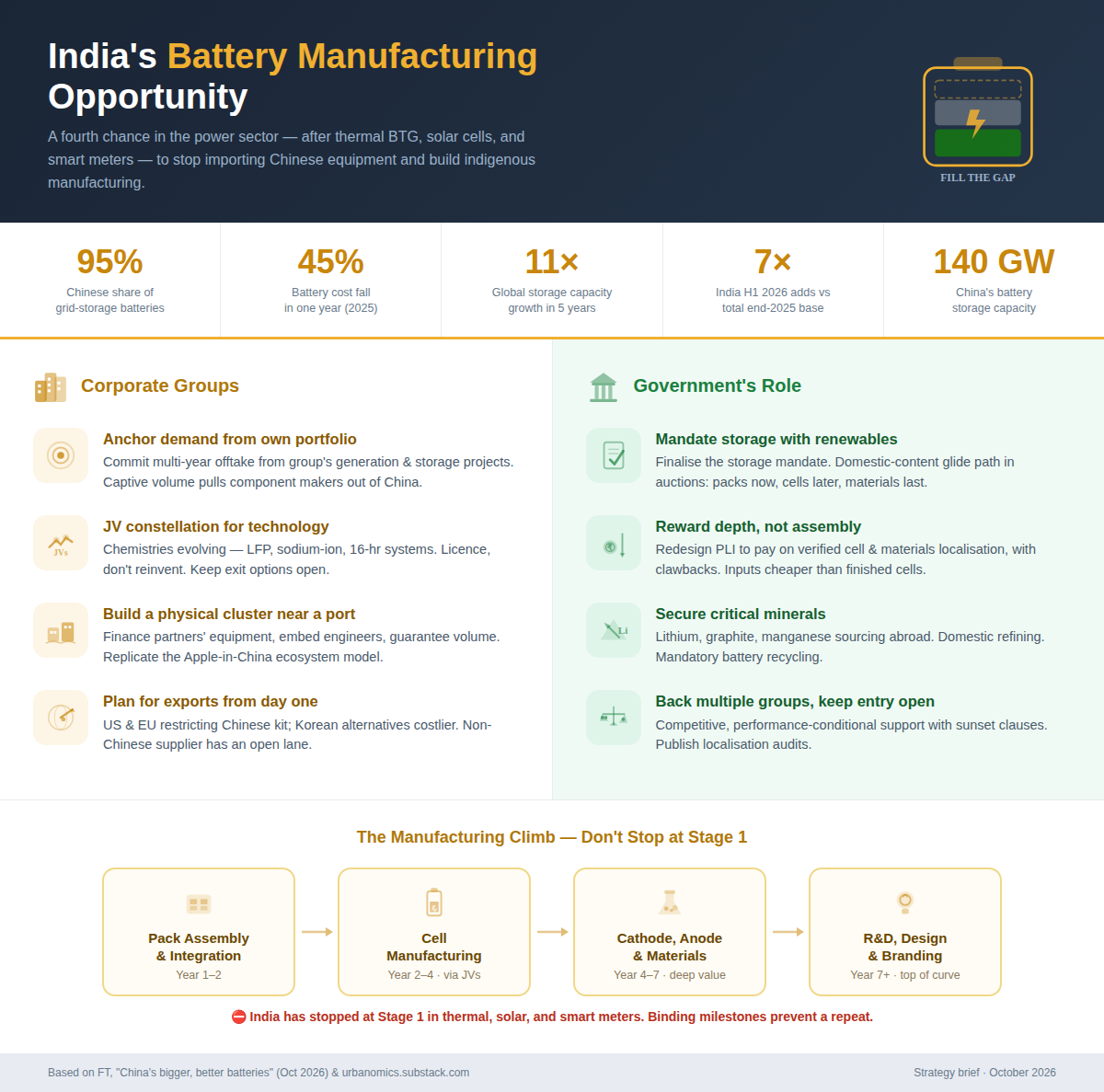
The Indian corporate groups must summon a long-term vision to both grow into an emerging frontier technology, and also invest in capabilities in R&D and innovation that allow movement up the value chain. They would have to formulate 4-7 year strategies for acquiring capabilities in battery chemistry, starting with the current system integration (or assembly) role to moving up the value chain from licensed to proprietary manufacturing. This would be taking a leaf out of what CATL, BYD, and Sungrow have done. 

The government could provide a big boost by coupling battery and renewables in future power purchase agreements, thereby creating an effective advance purchase volume commitment (even if at competitively determined prices). The new version of the Production Linked Incentive (PLI) scheme should embrace the details outlined here (for smart meters) to encourage progressively increasing domestic value addition. It could use diplomacy to support this with securing access to the various chokehold inputs required for the industry. 

But most importantly, a non-negotiable requirement for government support should be mandatory export competition from the outset to ensure that a globally competitive industry emerges in the country. 

As strategy, it may be useful to bring all the fiscal and other support, including the likes of Viability Gap Funding (VGF) financing, under one umbrella so as to ensure efficient administration and ease of access by companies. This is an important enough agenda to merit such a dispensation. Further, the selected industry partners should be made to commit to medium-term action plans that are linked to simple and easily verifiable milestones and outcomes, and they should periodically report on them. All public policy support should be made contingent on realisation of these outcomes. 

Wednesday, September 23, 2026

Public policy for domestic semiconductor design and components in general

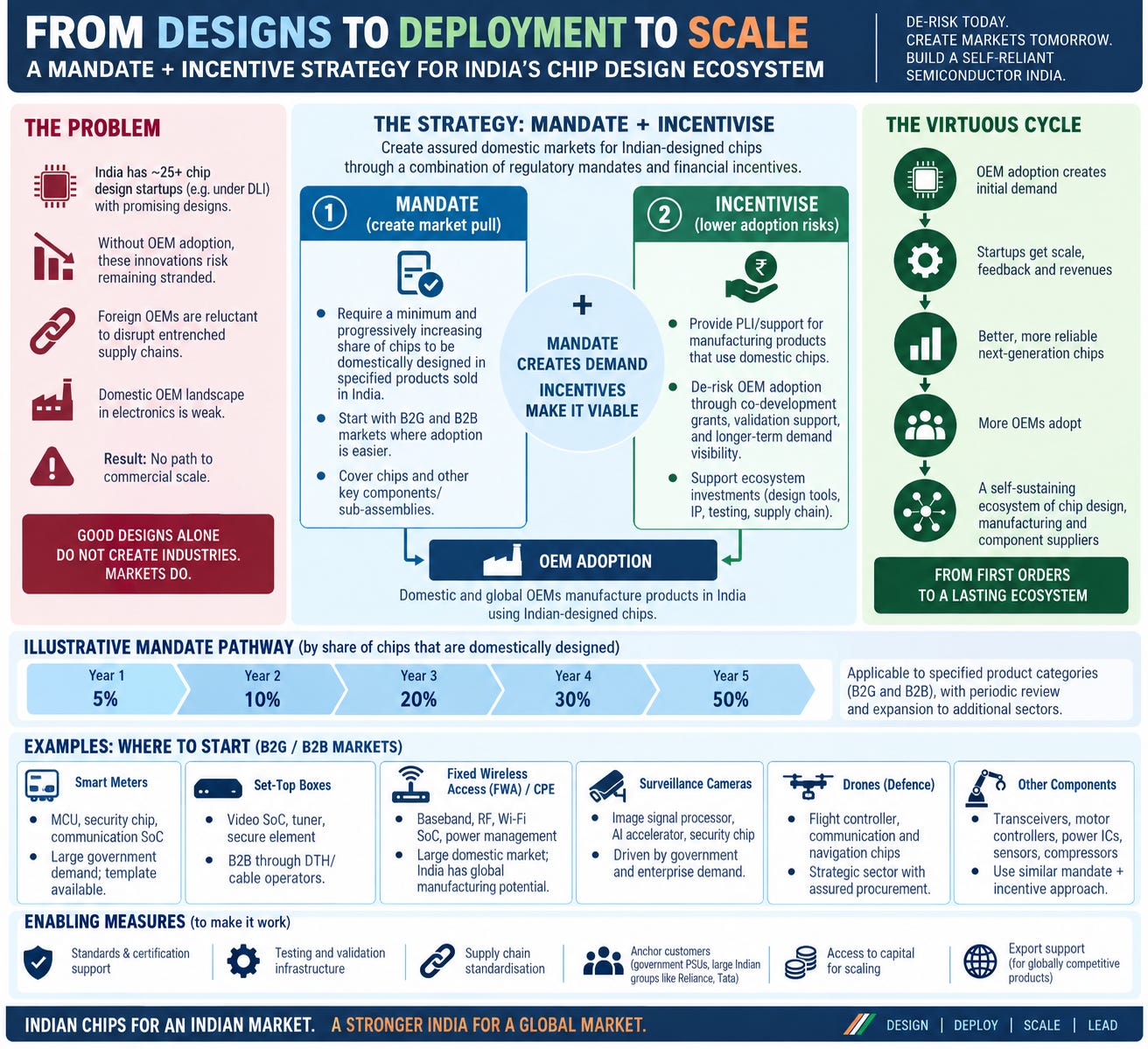
India is spending scarce fiscal resources to support domestic semiconductor chip design startups. These startups and their innovations are most likely to remain stranded unless this support is supplemented with a market access strategy. This is the binding constraint to their scale-up. 

I have articulated this in multiple posts on this blog. This provides a policy framework for public funding of innovation; this looks specifically at catalysing the chip design market; this describes how large domestic corporate groups can be roped into catalysing domestic manufacturing; and this provides a template for the most promising opportunity in smart meter manufacturing. However, given its importance, I think the issue merits one more post. 

India now has a stable of chip design companies, including the nearly 25 startups that were funded under the Design Linked Incentive (DLI) scheme. They have designed chips of various kinds, and at least some are at stages of deployment, if not commercial scaling. 

True, they still need to get their tapeouts to be of good enough quality, build internal capabilities to be ready with version updates, and generally ensure that the chip fabrication and supply chain are standardised and de-risked. While the chip design startups must work on getting these right, this work also requires the visibility of a scaling pathway. 

But such deployment and scaling require Original Equipment Manufacturers (OEMs). But unfortunately, India’s domestic OEM landscape in electronics is barren. And foreign OEMs will not risk disrupting their well-entrenched chip supply chains by experimenting with an Indian chip design firm. There are too many uncertainties associated with such supplier shifts. We therefore have a demand-side binding constraint on the scaling of chip design startups.

So the only option to enable scaling is to create the conditions for OEMs to adopt these chips. There are two strategies in this regard. One is to mandate the use of domestically designed chips, at least some share of it, in those products sold in India. The other strategy is to incentivise the same with some industrial policy support.

I have articulated such a policy in detail here. It is a combination of both strategies. It involves mandating a progressively increasing share of the chips used in their products to be domestically designed, and supporting such product manufacturing with a Production-linked incentive (PLI). 

This approach is easier to adopt effectively in products that are B2G or B2B in nature. Smart meters for electricity consumers, set-top boxes and fixed wireless access devices, surveillance cameras, drones purchased by defence agencies, etc., are examples. The relative simplicity of B2G and B2B markets can be leveraged to formulate market-shaping policies. 

This strategy would be useful for the indigenisation of other components and sub-assemblies too, ranging from compressors to transceivers. Mandate and incentivise the use of a progressively increasing share of components from domestic firms. 

This would emulate the Chinese playbook through which they have come to develop a vast ecosystem of domestic component manufacturers and OEMs. The Chinese smartphone OEMs like Huawei, Xiaomi, Oppo, and Vivo were instrumental in the emergence of domestic chip design firms. India will have to develop both the OEMs and component makers. 

This would require a high level of state capabilities in both designing the policy and calibrating and closely monitoring its implementation. But more critically, it would require a very high degree of inter-departmental coordination among the departments and ministries in the Union government. For example, smart meters would involve collective ownership and close coordination across the Ministries of IT, Power, and Finance, and financing agencies like REC and PFC. This would require a genuine breakdown of silos within the government.

Saturday, September 19, 2026

Weekend reading links

1. A fascinating article by Ed Conway documents how a cod fish caught off the Scottish coast travels 30,000 nautical miles to Rotterdam, Shandong, China (for manual deboning and skinning), and back to the UK, where it is breaded and sold as fish fingers.

Scientists plug in numbers to the NS equations to derive accurate answers for the behaviour of moving fluids. But the NS equations can sometimes return apparent nonsense, predicting things like infinite velocity and zero volume (called a “singularity”)... Can it be proved that the NS mathematics don’t allow infinite velocity? Or alternatively, can it be proved that this can happen in some theoretical cases, weird as that may seem? Mathematicians refer to this possibility as a “breakdown” in the “existence and smoothness” of NS. .. NS is one of the seven famous Millennium Problems that were listed in 2000. The Clay Institute offers a prize of $1million for a proof that, one way or another, addresses four specific conditions for NS. 

On Tuesday, September 8, OpenAI announced that it had found a solution to the NS problem by using a new AI model after 88 hours of intense computation involving 10,000 AI agents and 17 hours of verification. The agents exchanged 3 million messages and used 130 billion output tokens, which amounts to costs of well over $10 million. OpenAI claims its AI resolved two out of the four statements in the proof demanded by the Millennium Prize and that, indeed, infinite velocity is theoretically possible under certain conditions.

3. Brilliant description of the Dauphin discount, applied when a founder-owner hands over the reins to his entitled but not similarly competent children. 

4. There may have been an inflation regime shift in the US in the last few years. Consumer prices overall have risen more than 30 percent since the beginning of 2019. That’s two and a half times as much as they went up from 2012 to 2019.

Prices have risen sharply across the board.
5. US inflation clearly owes to the Iran misadventure. 
6. Benn Steil has one more reason for the rising US bond yields. 
The interest rate demanded by investors to absorb this debt appears not to be a straight linear function of its growth. Instead, more debt seems to accelerate the rise in the rate demanded. The reason lies in who buys the debt. Nineteen years ago, 76 per cent of US Treasury bonds were held by price-insensitive investors, such as central banks, who bought them more or less reflexively according to their stable reserve-management policies. Today, they hold only 43 per cent. The majority is now held by price-sensitive investors, such as households and investment funds, which demand greater returns as government debt grows and inflation erodes their purchasing power...
The twin problems of surging Treasury supply and stagnant foreign official demand will be exacerbated further still if new Federal Reserve chair Kevin Warsh ploughs forward with his stated ambition of reducing the central bank’s security holdings. The last episode of Fed balance-sheet reduction saw the share of Treasuries held by price-sensitive investors soar by 17 percentage points over 2022 to 2025, while the so-called term premium — the extra compensation demanded by investors to hold long-term debt — rose by 1.1 percentage points. Given the continued increase in price-sensitive investor dominance, further Fed balance-sheet reduction could see yet sharper rises in the price of long-term US debt.

7. VC wealth multiplication.

Founders Fund, for example, turned a roughly $600mn investment in Musk’s rocket, satellite and AI group into a stake worth more than $50bn at the company’s initial public offering, according to PitchBook estimates.

8. More on the collateral benefits of Aliko Dangote's business activities (HT: Adam Tooze).

Africa’s richest man, Aliko Dangote, wants his drivers, cooks and security guards to own a share of the continent’s largest refinery. At a signing ceremony in Lagos, Nigeria, on Monday, 7 September, Dangote Petroleum Refinery and Petrochemicals (DPRP) free establishment zone launched the formal process for what is expected to be Africa’s largest public share sale, aiming to raise ₦2.15trn ($1.4bn). The offer comprises 4.1 billion ordinary shares at ₦525 per share, with a minimum subscription of 10 shares. It opens on 14 September and closes on 13 October. “There is no segregation of who can own the share. We want every human being living on the continent to be part of this action,” says Dangote, president and chief executive of Dangote Industries Limited. “This is why we have called it the IPO for the people.” 

He said the offer, which opens on 14 September and closes on 13 October, is designed to allow “drivers, cooks, servers, our managers, everybody” to own a stake in the refinery. The IPO is targeting about 10 million retail investors, according to FirstCap Limited, one of the parties to the transaction. “This transaction is not just about the size of the offer; it’s about the significance and how it’s going to shape retail investment in Nigeria’s capital markets,” said Ukandu Ukandu, MD/CEO of FirstCap, describing the deal as digitally driven and built for mass participation. “Family members, security guards, drivers, colleagues, schoolmates, community members are all encouraged to participate.” Dangote described the raise as less of a financing exercise than a wealth-distribution one, calling the ₦2trn target “too small” and “a meagre amount” relative to the group’s needs. He said the proceeds are earmarked for the refinery’s expansion.

9. Tiruppur facts of the week.

Its knitwear exports rose from $3.3 billion in 2020-21 to $5.3 billion in 2024-25 (TEA, 2026). The cluster accounts for about 68 per cent of India’s knitwear exports and supports the livelihoods of more than a million workers, around 70 per cent of them being women. Within roughly 20 km, yarn, knitting, dyeing, printing, stitching, finishing, packaging and dispatch are woven into one production ecosystem. Nearly 20,000 units operate across different stages, from knitting, dyeing and printing to garmenting and ancillary activities. This is the ecosystem effect where firms specialise, workers specialise, and thousands of jobs are created around a common market.

10. India's affordable housing market facts.

The preference for midsize housing priced between ₹45 lakh and ₹90 lakh fell to 21 per cent in H1 2026, from as high as 35 per cent in H1 2021. Similarly, preference for housing priced below ₹45 lakh declined from 27 per cent in H1 2021 to 18 per cent in H1 2026. “This is also mirrored in supply, with affordable housing’s share of new launches across the top seven cities declining from 26 per cent in H1 2021 to just 8 per cent in H1 2026,” says Anuj Puri, chairman of Anarock.

11. KP Krishnan makes very important points while questioning the RBI's recent FCNR (B) scheme which attracted $136 billion.

The capital flow of $136 billion is brought in by providing currency hedging to commercial banks at no cost. A forward guarantee on the exchange rate creates a contingent liability for the state. If macroeconomic fundamentals guide the exchange rate to ₹110 per dollar in three years, the RBI will pay ₹15 per dollar. This is a cost of approximately ₹2 trillion... Such tricks have been done before. India Development Bonds 1991 raised an estimated 0.6 per cent of gross domestic product. Resurgent India Bonds of 1998 raised 1 per cent, and India Millennium Deposits 2000 raised 1.2 per cent of GDP. The 2013 FCNR(B) exercise raised 1.4 per cent of GDP. The 2026 FCNR(B) raised 3.5 per cent of GDP. The scale, the opacity, the complexity have gone up. ... The daily inflow and outflow across India’s borders is $11 billion. The global daily trading volume on the rupee is $140 billion. Throwing just $2 billion a day at the problem for 250 days will burn through $500 billion.

We should instead take one step back and ask the foundational question: All this drama is in return for what? Recent research by Hande et al. (2026, https://bit.ly/4dlXP5d) indicates that the natural annualised volatility of the USD/INR exchange rate, without intervention, is approximately 7.5 per cent a year. The apparatus of intervention generates a realised volatility of roughly 5 per cent a year. We suffer fiscal risk, distorted monetary policy, instability, and constraints on financial development, which impact the people through inferior economic growth. In return, we get a 2.5 percentage point reduction in currency volatility, which benefits a small set of business users.

12. This is a staggering statistic on IPOs 

Anthropic’s investors are expecting the company to reach a valuation of $2tn when it goes public in the coming weeks. Add in SpaceX, which began trading at $2tn after its IPO in June, and OpenAI, which is considering raising money privately at $1.2tn ahead of a public listing next year, and these companies alone could be worth well north of $5tn. Now compare that with the entire history of IPOs from 1980 to 2025. The 3,365 tech companies that went public in that period were worth a combined $4.1tn when they started trading, according to data compiled by Jay Ritter, emeritus professor at the University of Florida’s Warrington College of Business.

13. The return of conglomerates, but with overlapping national strategic goals.

In China, Huawei has gone from an empire with two business lines to a local champion with 70 per cent of sales at home in five divisions. Chinese car companies own their supply chains — BYD operates ships. To defuse sovereignty fears abroad, they are willing to forfeit control, using licensing and joint ventures. India’s Reliance and Tata have re-embraced nation building across industries, from cola to air defence. Even in America, Amazon and Alphabet have become conglomerates that own parts of their supply chains, such as chip design. SpaceX’s strategy is to be a techno-national champion with up to nine divisions, from asteroid mining to tourism. In the pursuit of state-endorsed AI, OpenAI has gone further than Amodei, offering Uncle Sam an equity stake. US pharmaceutical companies want new drugs invented in China, but geopolitics makes takeovers impossible. Instead, there is a surge in licensing. Bristol Myers Squibb and Pfizer have made bets worth up to $26bn. In Europe, some firms are diversifying to plug strategic holes. The parent of Lidl, a supermarket, does data centres. Renault is expanding into military drones. Governments are trying to dilute US tech companies’ control over their local subsidiaries.

14. Gig work platforms are a form of unemployment insurance, and are now running the risk of being disrupted by the likes of autonomous vehicles and robo-delivery agents. 

Gig platforms have indeed become a safety net for people who have fallen out of — or struggled to access — the formal labour market. A report by the World Bank in 2023 estimated there were between 154mn and 435mn online gig workers globally, representing between 4.4 and 12.5 per cent of the global labour force. Among the advantages of this development, according to the report’s authors, are that it “helps manage income shock” and “serves as unemployment insurance”.

China is perhaps the best example of a country in which gig work has served as a labour market shock absorber. Amid a prolonged construction downturn and the increasing automation of manufacturing work, the number of people who work as food delivery or ridesharing drivers in China increased by 10mn in two years to reach 53mn in 2025, according to estimates by the China New Employment Forms Research Center, a Beijing think-tank. 

15. A very good oped by Boddu Srujana raises the important point about what UPI has done for its users, especially those in the informal sector whose services are now captured in the formal net. She writes,

This system has made India’s informal workers extraordinarily visible to banks, lenders, the state and to the platforms that manage their labour, without making them correspondingly secure... A worker who has been absorbed into a real-time national payments system is traceable and taxable, still has no pension, no enforceable minimum earning, and no institutional means of bargaining... The JAM trinity — Jan Dhan, Aadhaar, mobile — was to deliver subsidies with less leakage. UPI extended that logic to everyday commerce by enabling a vegetable vendor not to worry about carrying cash, with payments settled in seconds rather than requiring a trip to a bank that takes hours. But this is not the same as securing income and financial inclusion. As operationalised in India, it has functioned as a substitute for the much harder political project of labour formalisation... 

A worker’s UPI trail has become the raw material for an entire private lending and “alternative credit scoring” industry, sitting atop a public rail, useful to someone who lacked collateral, but built with little meaningful consent. The same logic now governs platform work. UPI-enabled instant settlement is what allowed gig and delivery platforms to scale... it has done so by making these workers legally almost unclassifiable — employee or contractor — and by subjecting them to algorithmic discipline such as ratings and incentive structures, without any corresponding algorithmic right to contest a rating or know why an account was switched off.

16. Finally, some FDI facts about Indian states.

Nearly 82 per cent of all FDI equity inflows into India went to just six states or Union territories — Maharashtra, Delhi, Karnataka, Gujarat, Tamil Nadu, and Andhra Pradesh (including Telangana) — from January 2000 to March 2026... Among sectors, services had the highest share at 16.37 per cent in gross FDI equity inflows from January 2000 to December 2025, followed by computer software and hardware (15.62 per cent) and trading (6.55 per cent). Financial services accounted for the largest share within the services sector.
And several questions about the value of EoDB and Business Reform Action Plan (BRAP) rankings in determining FDI flows. 

States such as Maharashtra, Delhi, Karnataka and Tamil Nadu fared poorly in the Ease of Doing Business (EoDB) rankings released by the government in different years over the past decade. For instance, Delhi and Tamil Nadu featured outside the top 10 in 2015, 2016, 2017 and 2019, while Maharashtra and Karnataka’s best performance in these four years was the eighth rank... On the other hand, states like Madhya Pradesh, Chhattisgarh, Jharkhand, Rajasthan and Telangana had relatively better rankings but considerably lower FDI inflows to boot... None of the top FDI receiving states was in the top two categories in the latest ranking of 2024. Experts say EoDB and BRAP rankings are not the prime reason behind FDI inflows. Instead inflows reflect states’ infrastructure, access to ports, prosperity and presence of industrial networks.

Monday, September 7, 2026

Some thoughts on Chinese manufacturing dominance and deglobalisation

Richard Baldwin has multiple blog posts that mine the data to add nuance to the Chinese manufacturing dominance, which, while undoubted and growing, includes some important subplots. 

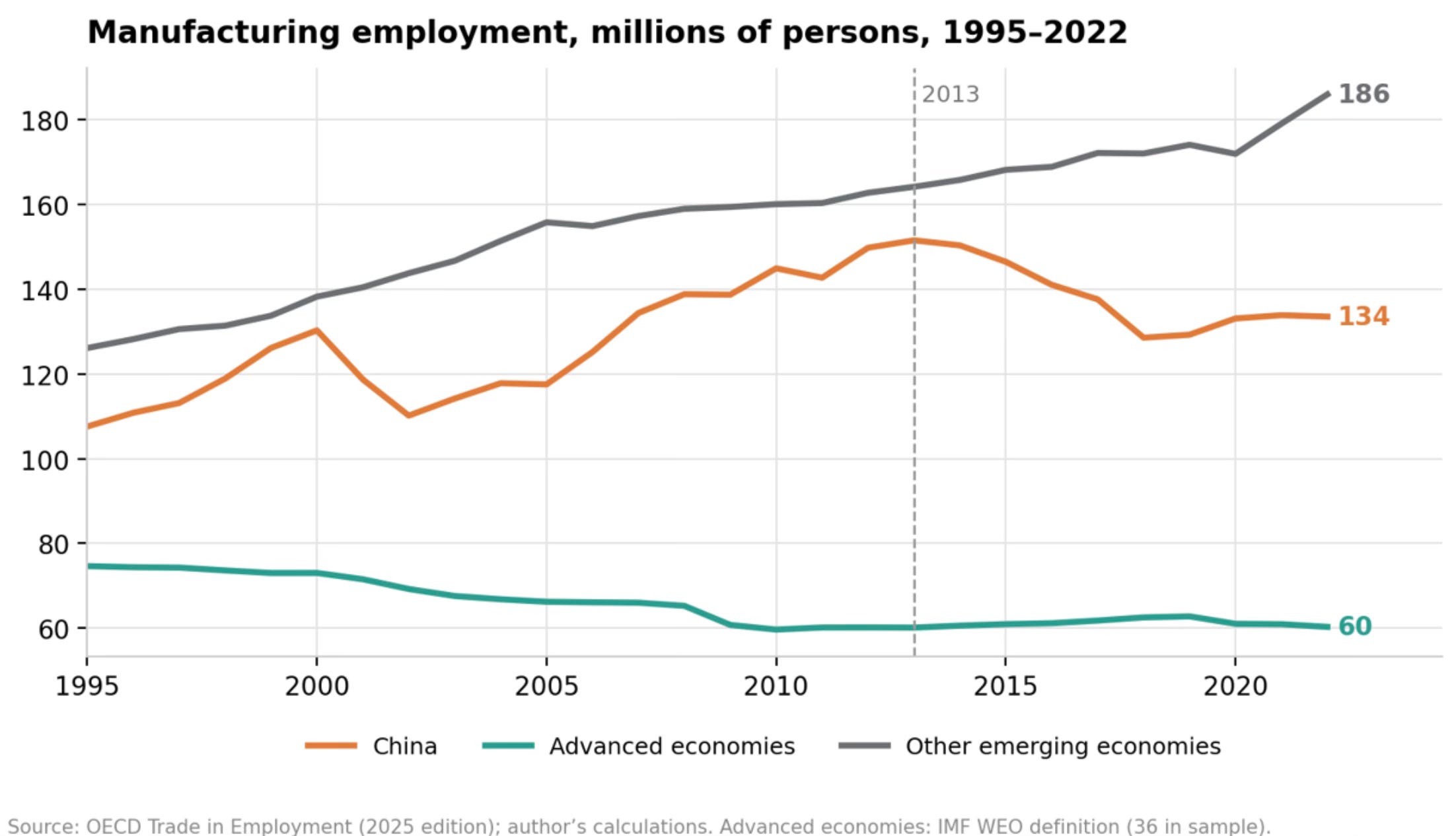
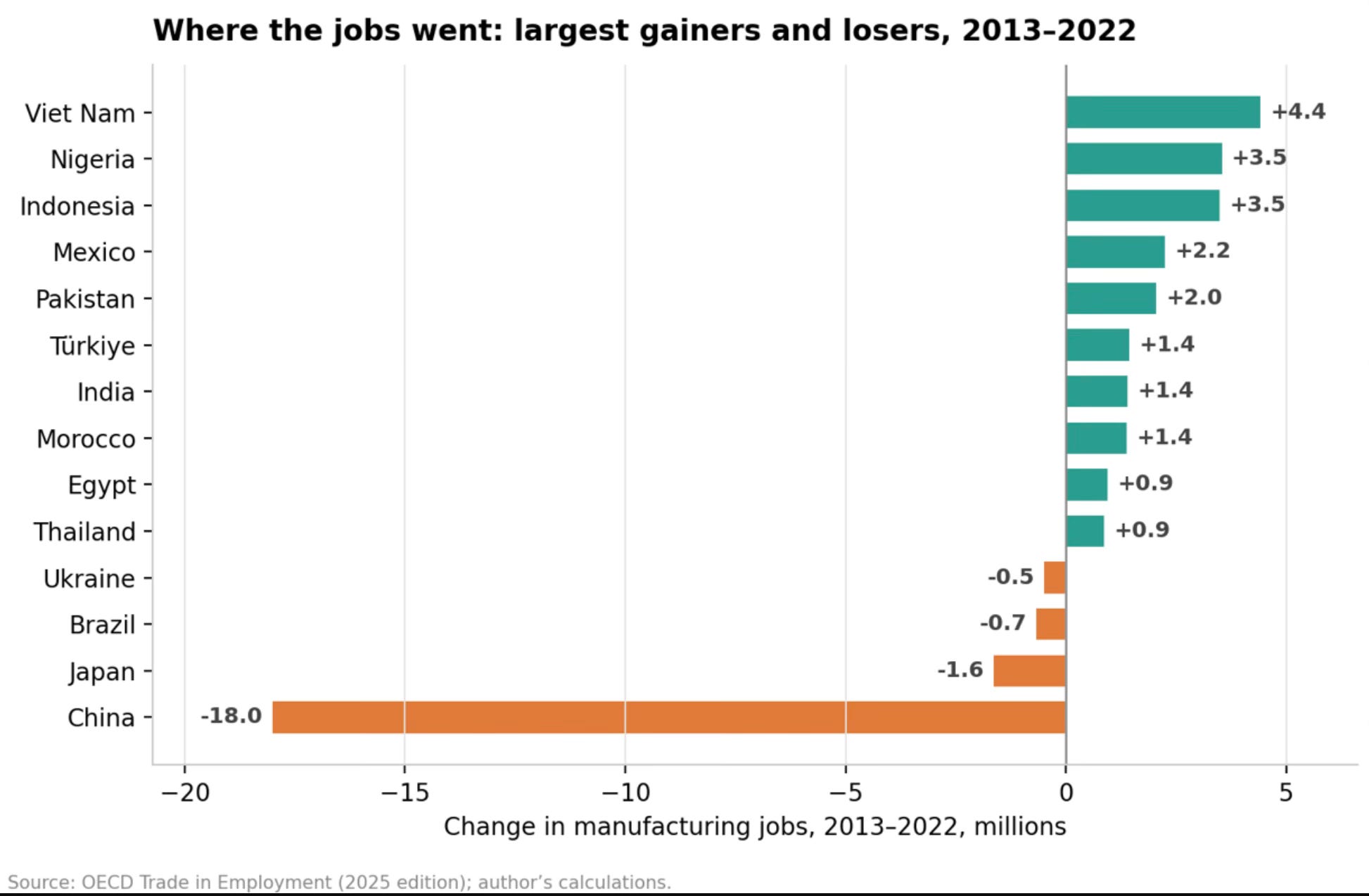
For one, rapid productivity gains have widened China’s competitiveness gap but also reduced manufacturing employment, though it appears to be reversing slightly or stabilising since 2019, with Xi Jinping’s push toward high-technology industries and the Make in China 2025 campaign. But while manufacturing employment has been declining in the advanced economies, it has been rising in the emerging economies (excl China). 

The rise in emerging economies is especially pronounced since the pandemic. It has also been inching upwards in the advanced countries too.

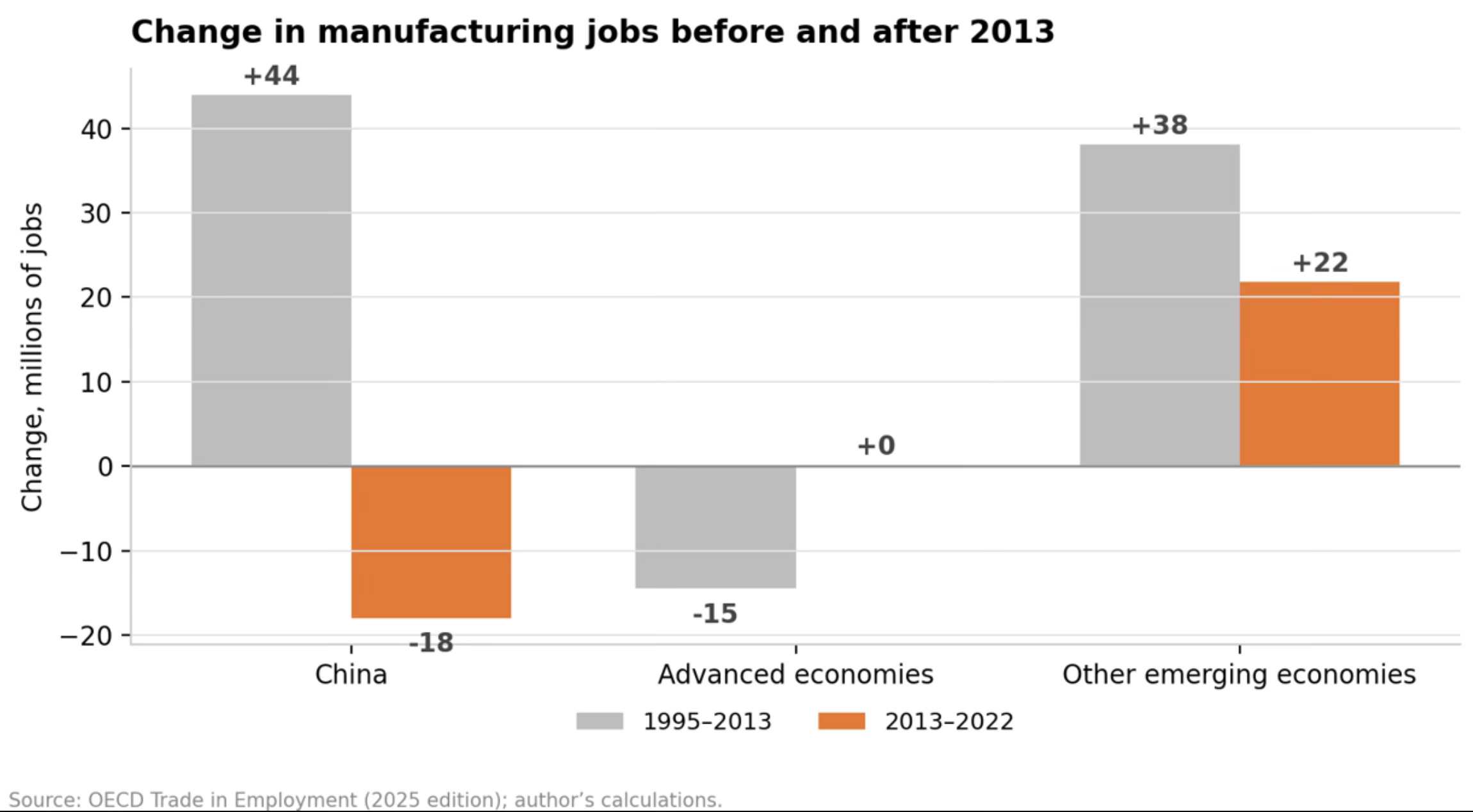
Putting both together, Baldwin makes the case that since 2013, while China has been shedding manufacturing jobs, losing about an eighth of its base, emerging economies have been gaining and advanced economies have plateaued. However, with 134 million factory workers, China has twice more than the advanced countries combined.

Among the gainers in this giant manufacturing jobs reallocation, Vietnam, Nigeria, and Indonesia lead. Nigeria and Pakistan are surprising candidates. India has been a notable laggard. Together, the developing countries added 22 million. 

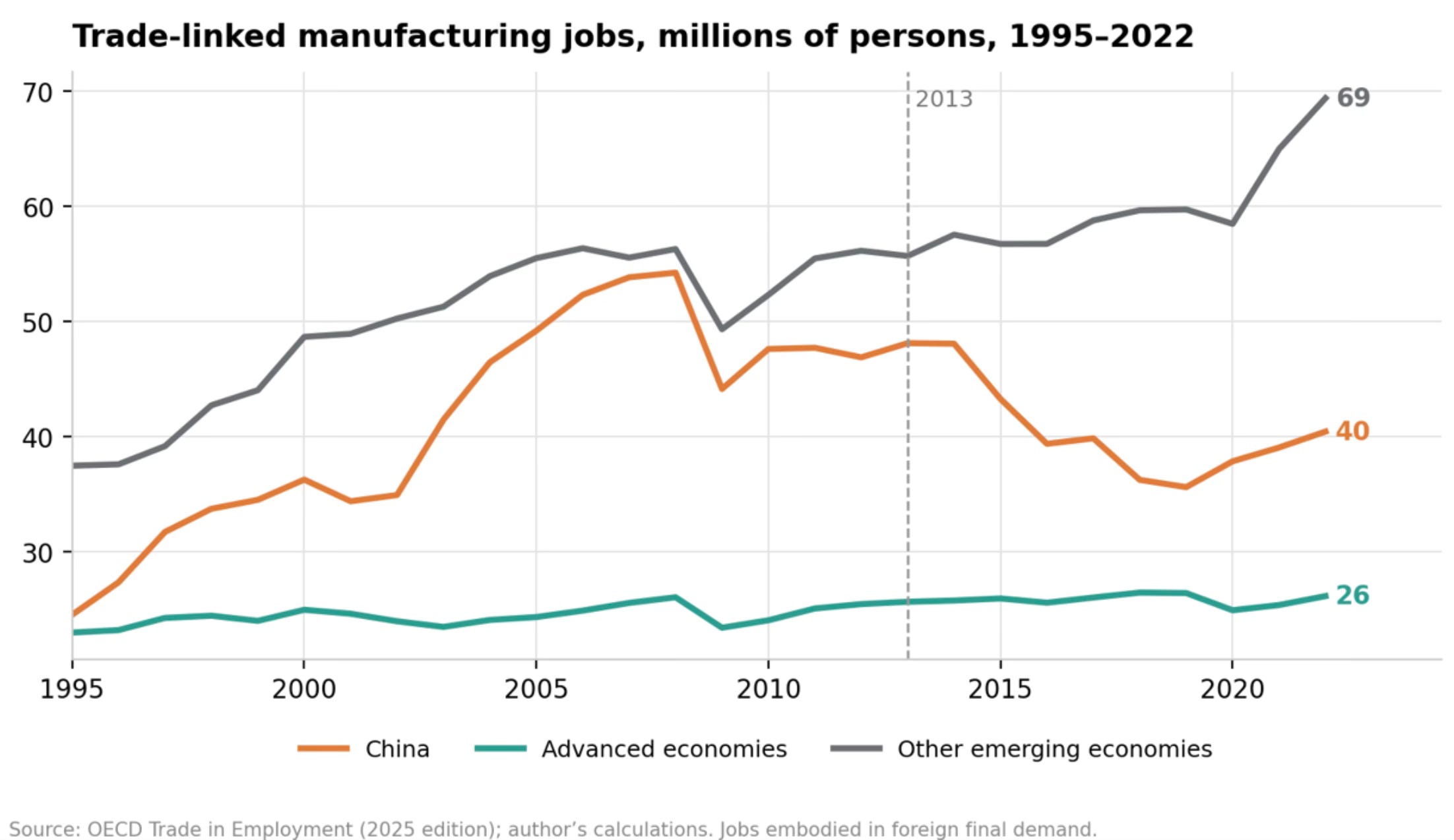
China’s export-supported factory employment is down 16% since 2013 and its share of the world total has fallen from 37% to 30%… China’s factory employment is now doing what the advanced economies’ did decades earlier: shrinking as productivity rises and as labour-intensive stages migrate to lower-wage locations.

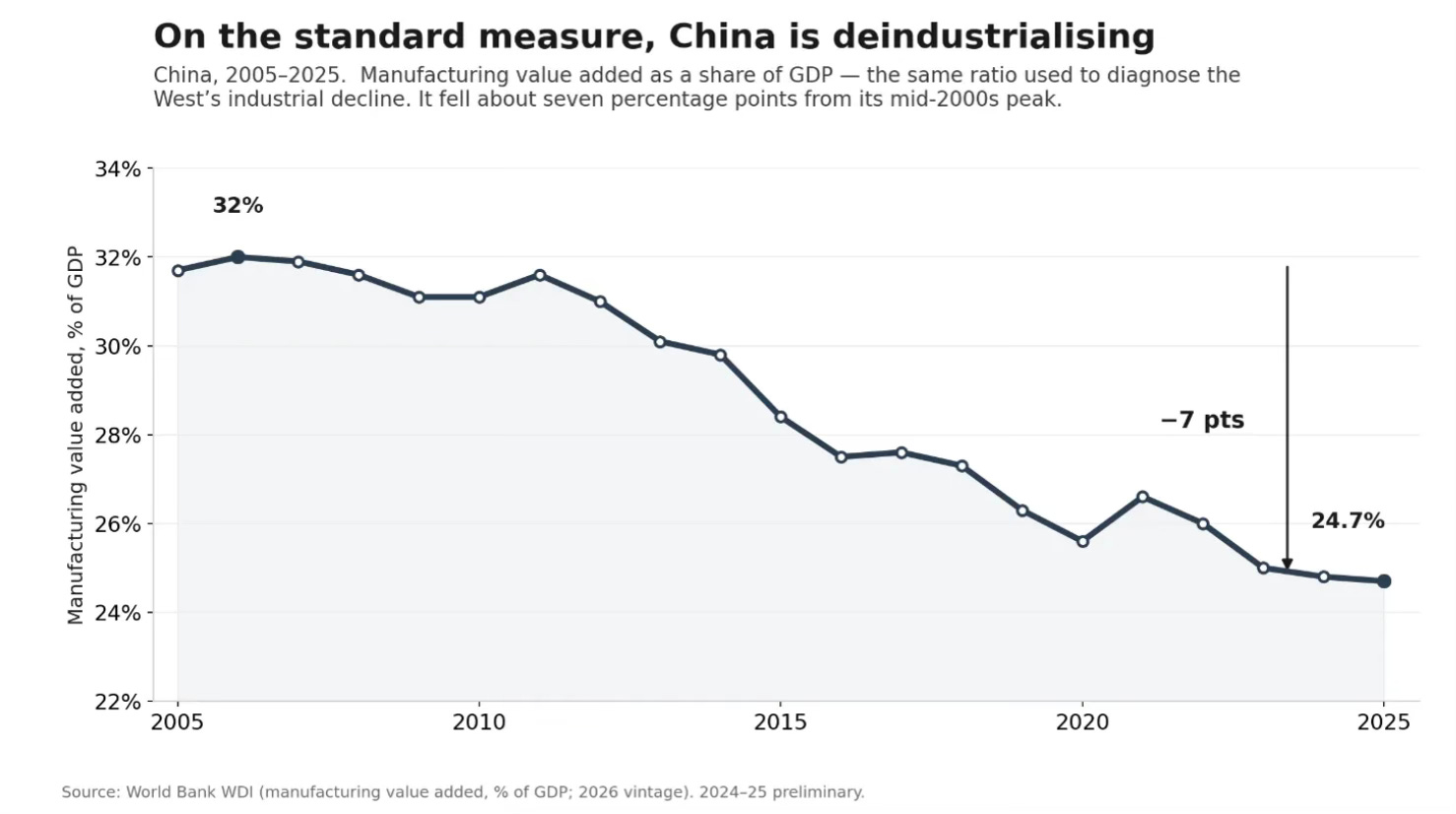
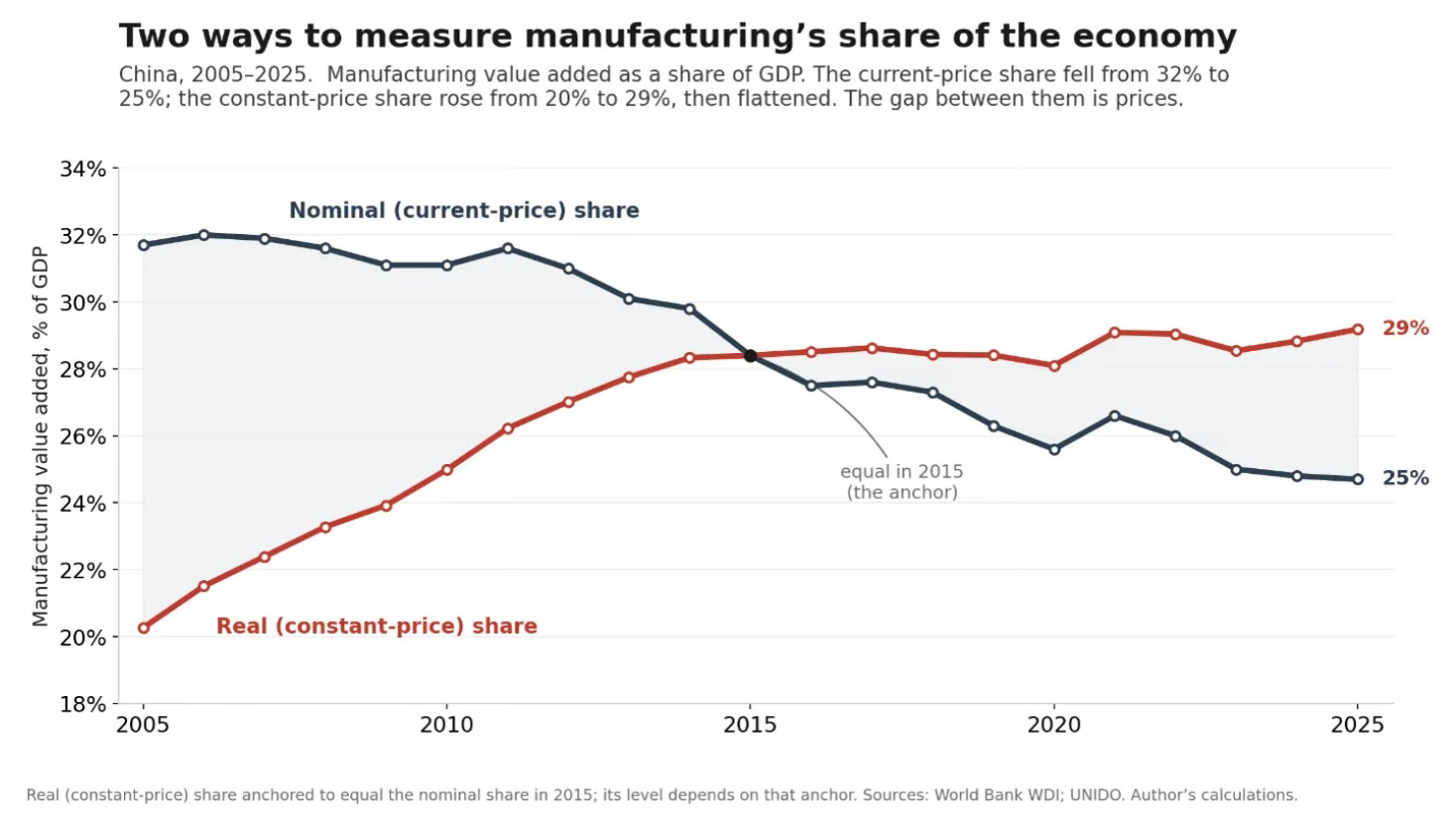
This decline in Chinese manufacturing employment comes alongside a steeper decline in its manufacturing value added as a share of GDP. Its manufacturing GDP share has fallen over 15 years, from a peak near 32% in the mid-2000s to under 25% today. 

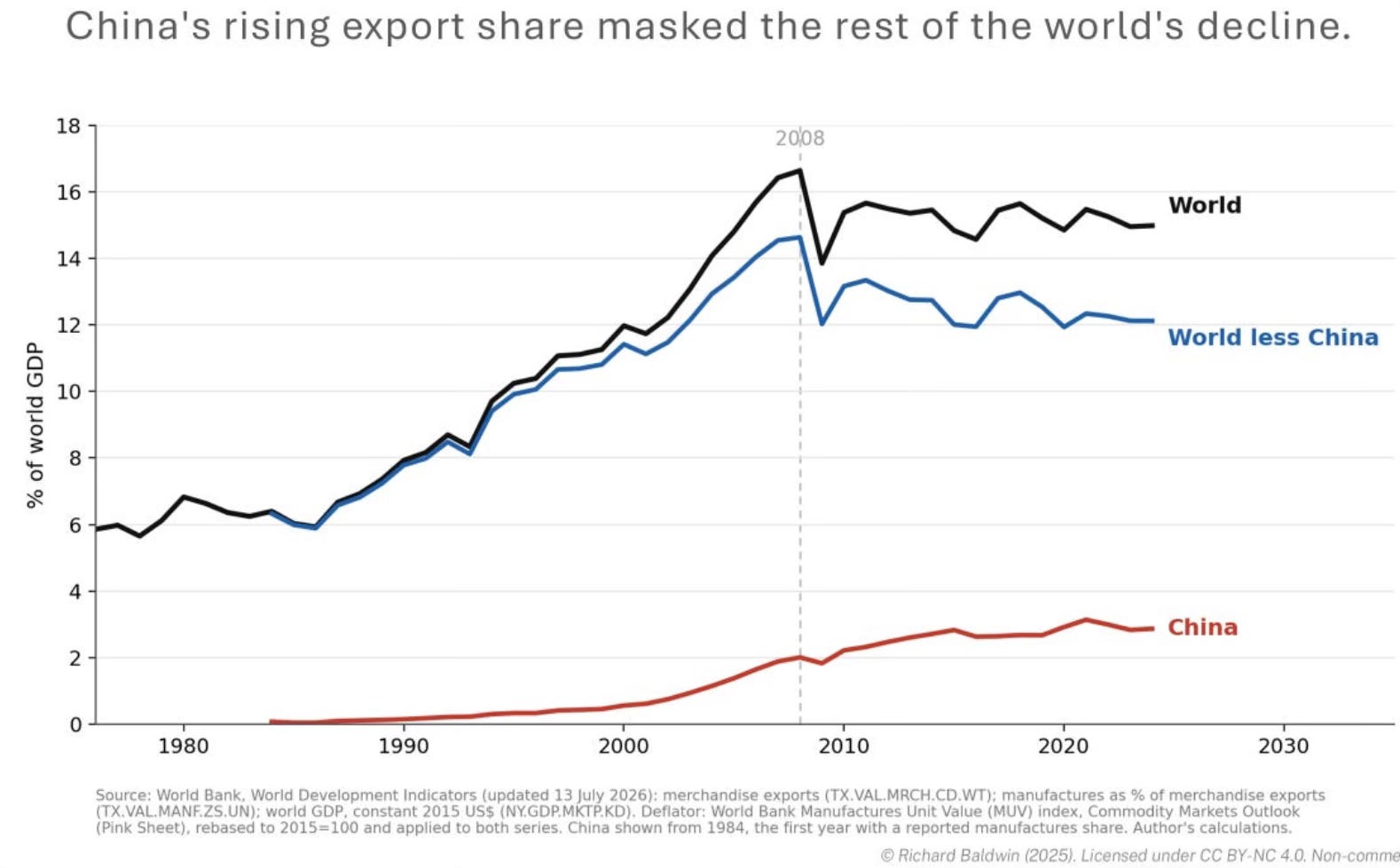
However, declines in manufacturing employment and share of value addition do not mean China’s dominance and vice-like grip on manufacturing is on the way down. Far from it. In fact, China’s manufacturing merchandise exports as a percentage of world GDP have been rising, even as they have declined for the rest of the world. 

In fact, the percentage has nearly doubled in the same period. It has also risen for Vietnam and India. The advanced countries have been the clear losers.

So, what explains this apparently contradictory trend of deindustrialisation in employment and value addition, co-existing with the doubling of global manufacturing export share?

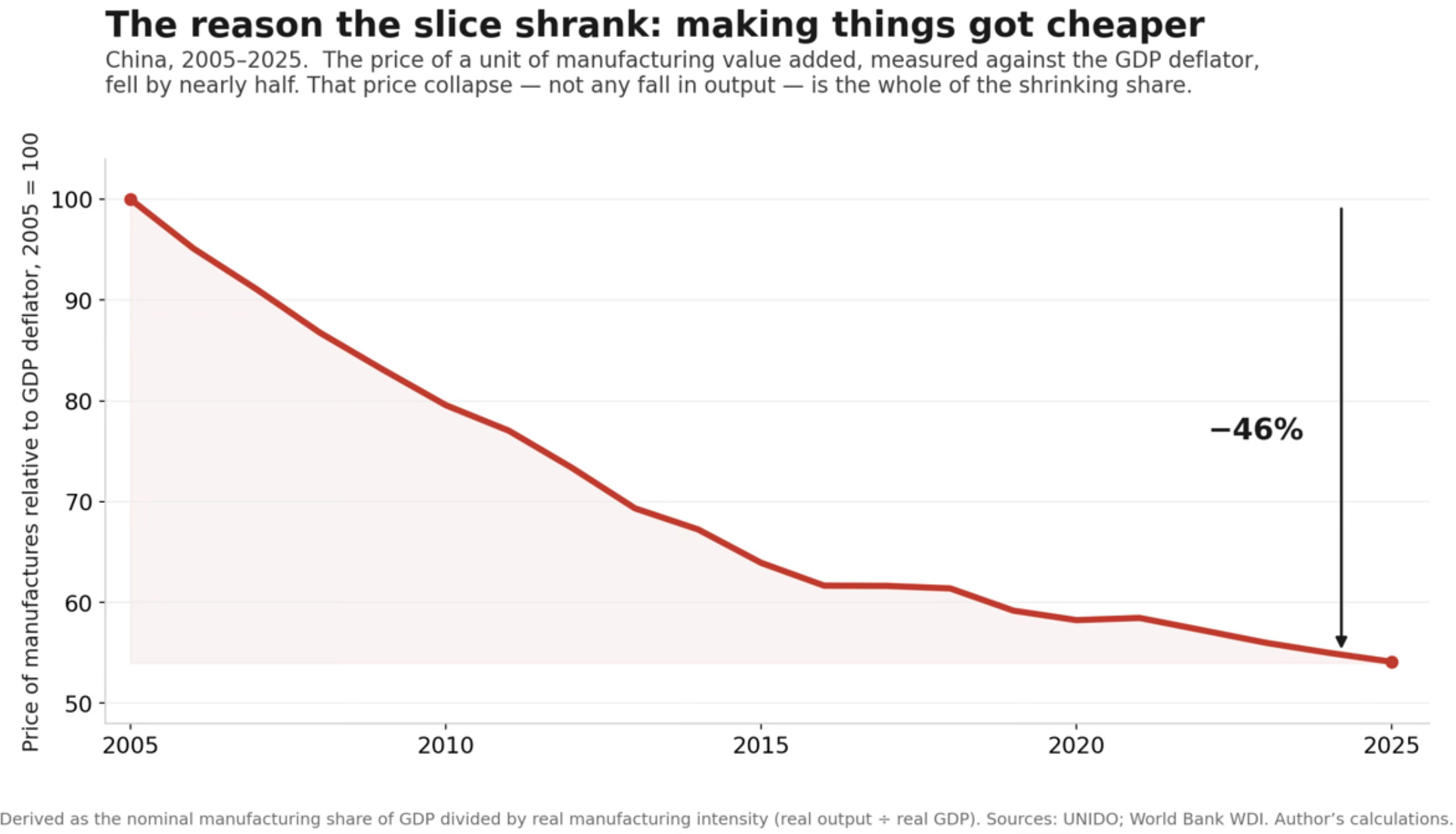
The answer appears to lie in productivity. Over two decades, the price of a unit of China’s manufacturing value added fell by nearly half, which explains the whole of the decline in value addition by manufacturing. 

It reflects the most consequential fact about Chinese manufacturing: Chinese goods are getting cheaper at an astounding pace. Fast enough to distort the whole economy, maybe even the whole world economy. That price collapse is also why the Chinese are such fearsome competitors globally. It is why the rest of the world’s industry feels squeezed, and why politicians are responding with plans to hobble Chinese exports.

… there is a China-specific factor that is driving down manufacturing prices even faster. In China they call this competition “involution.” If you think the competition is tough outside of China, you should see it inside the country. China experts talk about the ruinous internal scramble in which too many domestic firms, egged on by rival local governments, drive down prices until nobody makes money.

This comes out clearly if we map the nominal and real price shares of manufacturing value addition. Since about 2014, the manufacturing sector has grown at the same real rate as the economy as a whole. 

The Chinese economy has made much more with a smaller set of resources. 

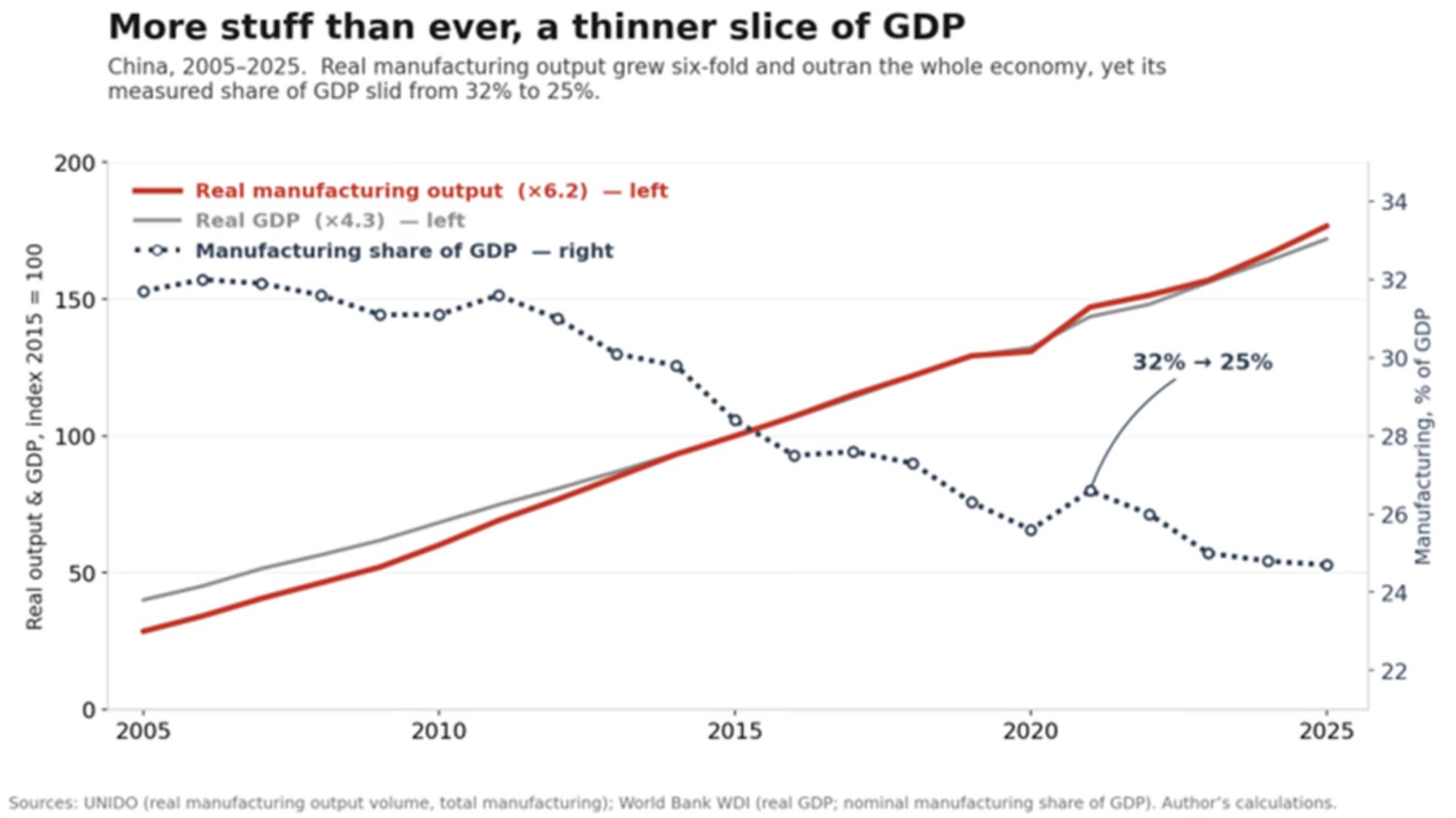
There is no doubt that the expansion of the Chinese manufacturing sector has been an era-defining phenomenon. The rise can be seen in the red line in the chart below. Real manufacturing output in 2025 is more than six times its 2005 level. That’s amazing. That’s the China shock 1.0 and 2.0 in a nutshell. Over the same twenty years, the whole economy (the grey line) grew only four-and-a-third times. So, manufacturing did outrun the economy. But only up to the mid-2010s.

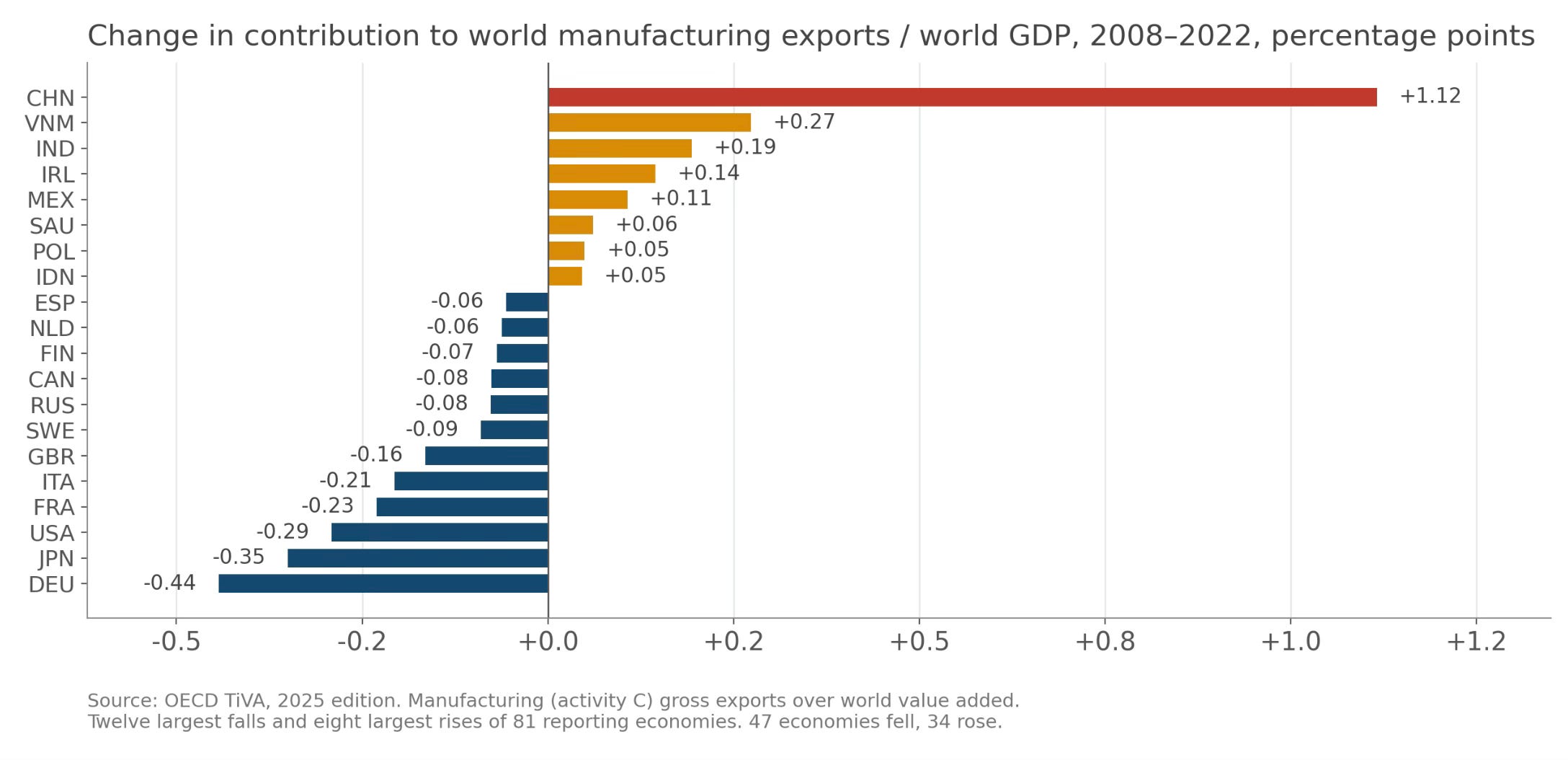
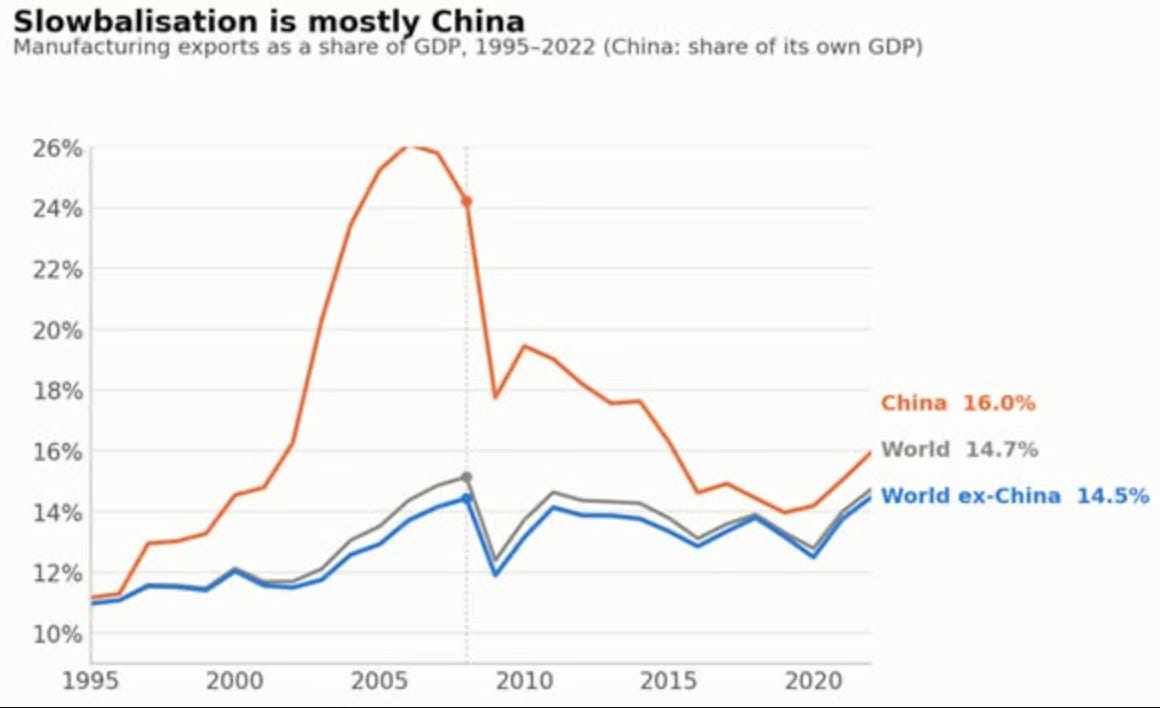
Finally, he disputes the oft-cited deglobalisation argument. He points out that while the global manufacturing trade ratio fell by 2.6% in the 2008-22 period, it rose slightly by 0.3% if we exclude China. 

The main contributor was China’s GDP growing faster than its manufacturing exports.

China’s manufacturing exports boomed, but its GDP boomed more. China’s share of world manufacturing exports rose from 11.5% in 2008 to 19.3% in 2022. China’s share of world GDP went from 7.2% to 17.9%. Exports relative to China’s own GDP fell from 24.2% to 16.0% as it morphed into a normal mega-economy and became its own best customer.

Another driver of this was the reshoring of supply chains into China. However, this deglobalisation by China did not mean similar trends elsewhere. The rest of the world expanded the global value chains in their manufacturing. 

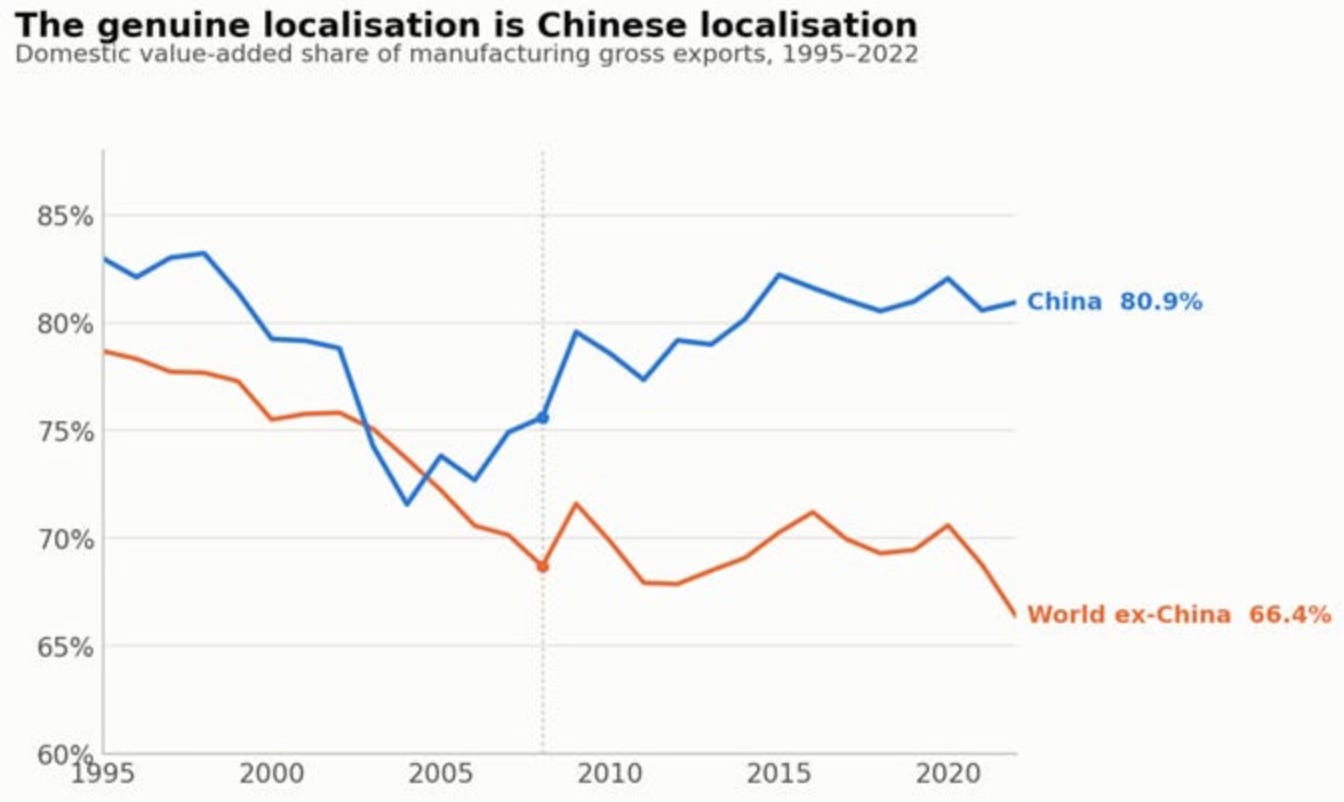
China’s domestic value-added share fell from 83% in 1995 to 72% in 2004, as the processing-trade boom stuffed Chinese exports with imported parts. It then climbed steadily to 81% by 2022. From the 2004 trough, that is nine percentage points of genuine input localisation… For the world excluding China, the domestic value-added share moved the other way: 68.7% in 2008 to 66.4% in 2022. Everyone else’s manufacturing exports became slightly more dependent on foreign inputs, not less. If you special-case China, there hasn’t been any localisation of manufacturing. The domestic content share has not risen and seems to be continuing to fall.

It would be useful to disaggregate the value addition destinations of the manufacturing exports of countries excluding China. It will not be surprising that a significant share of that value addition is coming from China. 

So, not only is China increasing the localisation of its own manufacturing, but it is also capturing a greater part of the value addition of its trade partners’ exports. 

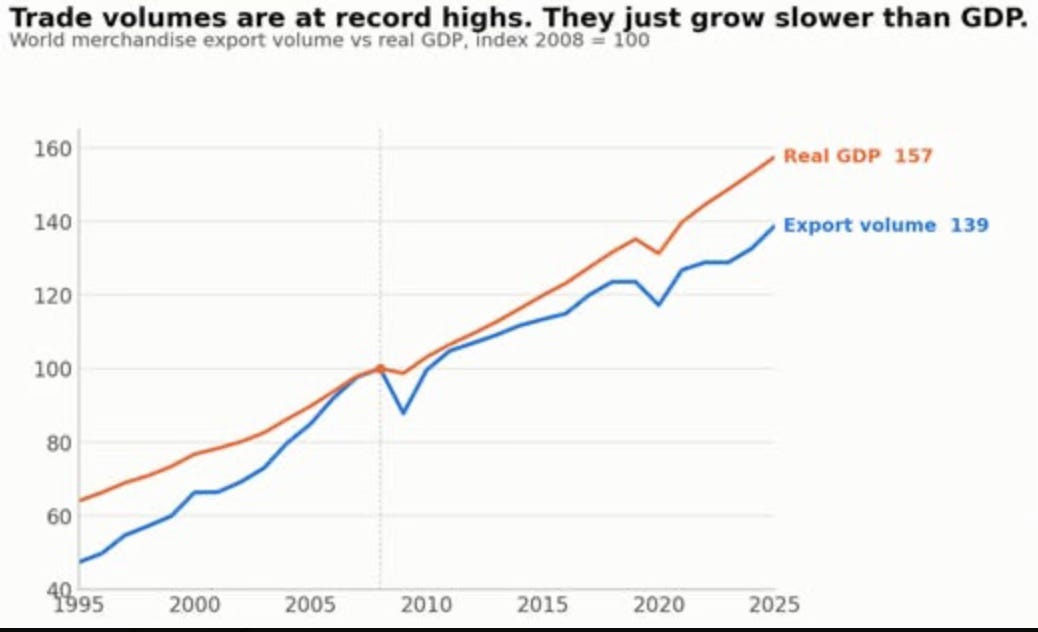
Baldwin also points to how global export volumes continue to rise unabated, thereby contradicting talk of deglobalisation. He says that world trade never stopped growing, but only stopped outgrowing the world economy, pointing to a deceleration but not a reversal. 

None of these nuances and qualifications take away from the reality of the world economy’s China problem. Its manufacturing dominance and export dumping is among the biggest problem facing the world economy. 

China inverts the conventional wisdom of a large developing country in its development trajectory being a large importer of goods and services. Instead, even as its own market remains largely walled off, it has become a massive exporter of components and goods spanning the full spectrum of sophistication.

China also contradicts the orthodoxy of developing countries vacating lower-skilled industries and moving up the value chain as they develop. Apart from some limited vacation of space, as discussed above, China has uniquely retained its competitive advantage across the value chain of industries. Its competitive advantage spans across sectors, supply chains, and value chains.

This has also meant that even as the world has globalised supply chains, China has ended up increasing its localisation. As mentioned above, this means that China’s manufacturing dominance is boosted by both the localisation of its own manufacturing and by capturing an increasing share of the rest of the world’s supply chains. 

All this has meant that China neither offers its large consumption market nor vacates any significant part of the manufacturing landscape for its trading partners. Further, it wants to use the rest of the world as a dumping ground for its heavily distorted manufacturing industry. Furthermore, it is now showing an increased willingness to weaponise its manufacturing dominance not only for national security and strategic reasons, but to also prevent efforts to diversify supply chains away from the excessive dependence on China.