Substack

Showing posts with label Auctions. Show all posts

Saturday, April 16, 2022

Weekend reading links

1. Food inflation illustrated through BLT sandwich. 

War in Ukraine and the resetting of supply chains following pandemic lockdowns mean prices for the ingredients in one of the UK’s most popular sandwiches — the BLT (bacon, lettuce and tomato) — are up by 56 per cent on average since 1 January 2019, according to data compiled by commodity research group Mintec and the Financial Times. That rise is led by a huge spike in the price of sunflower oil, of which Ukraine is the world’s largest exporter. But prices for other ingredients are also surging: wheat and tomatoes have each increased by 63 per cent since the start of 2019, while the cost of lettuce has increased by nearly a quarter. Pork is the only ingredient to have remained level. Food manufacturers and retailers say they have never had to contend with such a rapid surge in all of their input costs. The sandwich, whose assembly and distribution requires fresh ingredients, large factories, labour and prompt, chilled transport, is emblematic of the struggle they face.

2. Branko Milanovic on global inequality reduction prospects,
So if we really want to continue with global inequality reduction, leaving Covid aside for the moment, we need to count on India growing fast and Africa growing very fast. When you translate that into growth rates that are needed for Africa to achieve this, these per capita growth rates are 4 or 5 per cent, which means 6 to 7 per cent overall for the GDP, or even 8 per cent. These are not growth rates that African countries have historically been able to sustain over a ten-year period, much less over a 20-year period. So I became relatively pessimistic about the ability to maintain the trend of declining global inequality.

3. Good explainer by Vivek Kaul in Livemint of US dollar as a reserve currency.

4. Interesting data on autocracies and economic growth from Ruchir Sharma

Looking back in 150 countries to 1950, autocracies account for 35 of the 43 cases in which a nation sustained gross domestic product growth of more than 7 per cent for a decade. However, autocracies also account for 100 of the 138 cases in which a country grew a full decade at slower than 3 per cent — a rate that feels like a recession in a developing country. In extreme cases, 36 countries have been whipsawed for decades by swings between years of rapid growth and years of negative growth: 75 per cent of those were autocracies, many in petro states such as Nigeria, Iran, Syria and Iraq.

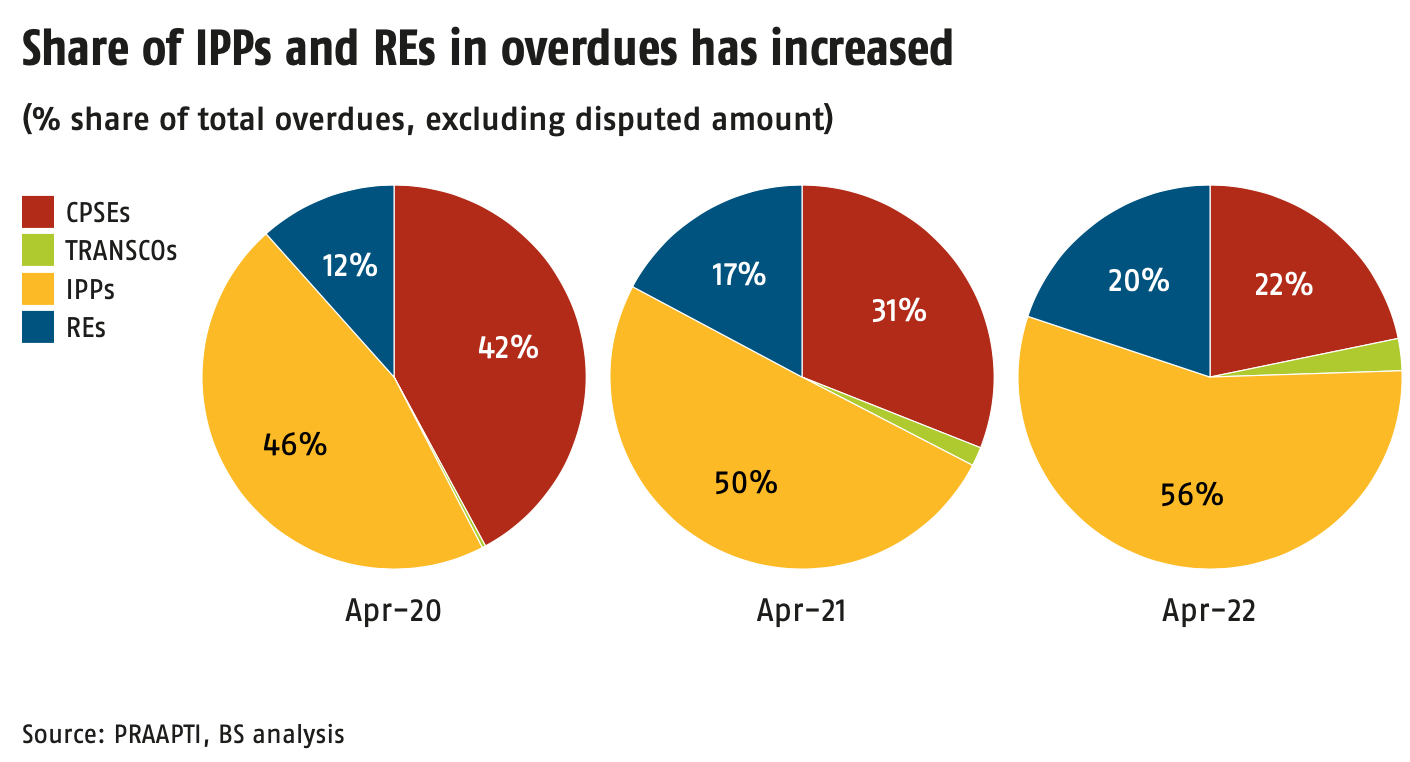
5. After all the reforms, the power sector is no better off today. The Business Standard reports that the amount owed by discoms to power producers touched a new high of Rs 1.05 trillion in April 2022 a 20.4% rise over the last two years. Further, 21 out of 34 states and UTs recorded a rise in overdues in that time. 

It's also reported that the overdues position worsened for private producers, whose share of over dues rose from 46% to 55.7%. 
And this is important,
The number of disputes raised by discoms also doubled from Rs 13,576 crore to Rs 25,129 crore. Independent power producers accounted for 80 per cent of the disputed amount owed by discoms.

Thinking aloud here. Why should there not be a merit order for payment of producers dues where private producers are given preferential treatment? After all, those are sovereign contracts of the government. 

6. Importance of gold in the savings basket of middle-class Indians

And this is important,

The consumption, IGPC said, was not affected by demonetisation or goods and service tax (GST) implementation. In the last five years, at least 74 per cent of the households confirmed buying gold with 90 per cent of such households preferring to make the payment in cash while buying the yellow metal, IGPC said.

7. In a welcome step, the Telecom Regulatory Authority of India (TRAI) has recommended a 36% cut in the 5G spectrum auction base prices. However, the industry associations are demanding even further cuts. It's reported that 5G spectrum prices in India are 2.6, 3.8, and 4.4 times higher than that in Germany, UK, and South Korea respectively. 

This raises the classic auctions challenge. How do we reconcile the classic auctions dilemma of reconciling the conflicting risks of leaving money on the table with that of winner's curse? One way would be to have something of a two-tier spectrum pricing - a low base-price, and an increasing block spectrum fee levied on some easily observed and difficult to manipulate commercial parameter (say, like ARPU). This would ensure that the operator is not burdened with the high upfront costs and the government retains its claim on higher profits. 

8. As the French Presidential election hots up FT has a graphic which captures the respective bases of Macron and Le Pen.

9. Fascinating article on the ageing crisis gripping Japan. Large numbers of business owners without heirs face the prospect of their business closing down after they die. 
According to recent government figures, the single biggest cohort of business owners in Japan are 69-year-olds. Demographics have long posed huge challenges to the country’s rapidly shrinking and ageing population. But the national shortage of heirs was largely overlooked. Two years of pandemic restrictions have deepened the sense of urgency. Many owners in their mid-seventies have chosen to accelerate plans to either hand over control or watch their cherished firms disappear. As a consequence, Japan faces what some fear could be the most extensive evaporation of knowhow and institutional memory in modern history. The effect on the country will, Ohashi fears, be huge since so much of Japan’s culture is embedded in its businesses and the skills they have amassed between them. The idea that the country could somehow allow all this to disappear, and that the process may even alienate parents from children, is a source of national sorrow...

Decades of stellar postwar economic growth helped create a large, university-educated workforce. These younger generations have been a source of enormous pride to their parents, but in a culture that has long emphasised filial piety and family cohesion, their determination to turn their backs on the family business has brought disappointment too. Many children of baby boomers have moved into cities and have no interest in taking over the small factories or repair shops started by their parents in their now-depopulating hometowns. More than 40,000 small firms a year are in need of a successor, government data shows.

10. As public support for it rises, Finland and Sweden are contemplating joining NATO. This is another example of how the invasion has rebounded on Russia.

11. AK Bhattacharya has an assessment of the tax revenues trends of government of India. 

12. Good presentation by Eileen Applebaum on the impact of Private Equity investments in businesses. This on PE practices in the US health care sector.  

13. Harish Damodaran writes about the rising fertiliser prices and how the subsidy regime hinders its availability in the Indian market. In case of urea, India produces 24-24 mt out of annual consumption of 34-35 mt and while it's sold at an administered MRP of Rs 5360 per tonne, companies are fully compensated for any import or manufacturing cost differential. However, in case of DAP, MOP, and NPKS, while the MRPs are decontrolled in theory and the subsidy is limited to a fixed per-tonne subsidy based on nutrient content, in practice companies are not allowed to freely set MRPs.

DAP, MOP and the popular ’20:20:0:13′ NPKS fertiliser are currently being retailed at Rs 27,000, Rs 34,000 and Rs 28,000 per tonne, respectively. Companies are further getting per-tonne concessions of Rs 33,000, Rs 6,070 and Rs 15,131, respectively, on these fertilisers — translating into a gross realisation of Rs 60,000, Rs 40,070 and Rs 43,131, respectively. According to the industry, these realisations are too low to manufacture or import at today’s international prices. The quoted price (cost plus freight) of DAP imported to India is about $1,250 (Rs 95,000) per tonne — it is $700-750 (Rs 53,200-57,000) per tonne for MOP and $780 (Rs 59,280) per tonne for ‘20:20:0:13’. The gross realisations, thus, don’t cover even the landed cost of imports.

14. Robots policing Covid lockdown in Shanghai,

Preserved Egg roams Shanghai’s empty streets with a megaphone strapped to its back. The robot dog is about the size of a terrier and barks orders to residents: stay inside, wash your hands, check your temperature.

15. Finally, Scott Galloway has a great post where he highlights how today's business winners tries to keep out competitors once they are on the pole position. 

Nothing threatens today’s competition more than yesterday’s winners... Today’s largest companies offer a masterclass in anticompetitive behavior. Amazon bars sellers on its platform from offering lower prices elsewhere, then uses the information it gleans from them to design and market its own, lower-priced products. It gives favorable search results placement to vendors that use Amazon fulfillment services (for which it’s been fined $1.3 billion by the Italian government). Defenders of the company say this is all business as usual … yet Amazon lied to Congress, repeatedly, about all of it.

Apple takes a 30% cut of app revenue, which it says it needs to run the app store, but it books billions in profit instead of cleaning up obvious frauds or copycats, while giving preference to its own products over competitors. (Can you get your iPhone to stop trying to play music through Apple Music instead of Spotify?) Microsoft charges more for its applications when users run them on a competing cloud provider. Google doesn’t merely sit on both sides of the digital advertising negotiation, it owns the negotiating table. And Facebook has stated that it acquired Instagram to eliminate a competitor.

This is a great snippet which exposes the reality of Big Tech collusion,

In the 2000s tech titans conspired to suppress competition for employees. For example, when Steve Jobs learned that Google was recruiting an Apple engineer in 2007, he emailed CEO Eric Schmidt: “I would be very pleased if your recruiting department would stop doing this.” Schmidt forwarded the email to an underling: “Can you get this stopped and let me know why this is happening?” He was told the recruiter would be “terminated within the hour” and to “please extend my apologies as appropriate to Steve Jobs.” Then a Google SVP chimed in: “Please make a public example of this termination with the group.” (We only know about Jobs and Schmidt channeling their inner Rockefellers thanks to a class action lawsuit former employees brought against the companies, which led to a $415 million settlement.)

Sunday, August 1, 2021

Weekend reading links

1. Electric vehicle sales in 2020

2.  The changing profiles of English Premier League teams' shirt sponsors,

Once small and local (Arnold Laver, a timber merchant, sponsored Sheffield United from 1985 to 1995), now sponsors are multinationals. In the late 1990s tech and telecoms companies predominated; then financial and insurance firms muscled in. Since 2005, when gambling laws were liberalised, betting firms have worked their way up the league. This season they sponsor 45% of teams.

3. The Economist reports of application of auction theory to counter the declining population of migratory turtle-birds in the British Isles, 

Paul Klemperer, Elizabeth Baldwin and Alex Teytelboym, all of Oxford University... have designed a reverse auction in which farmers bid publicly for contracts to provide suitable habitats. This is trickier than it sounds. Turtle doves need wildflower seeds to eat, shallow-sided open water to drink and thick scrubby hedgerows in which to nest—all in proximity. A farmer might wish to provide just one or two of these, and to rely on neighbours to provide the rest. Moreover, breeding pairs must be able to find the sites, but they must not be too clumped together. And finally, the habitats offered by farmers can vary in quality as well as price... To solve it this time round, the economists constructed an index of turtle-dove happiness (TDH, or “ta-das”). An algorithm searches combinations of bids, seeking to maximise ta-das for a given budget. Bids both compete with and complement each other: a high-priced offer to grow wildflowers might beat a cheaper one if they would be nearer a nesting site, and would thus create more ta-das. The Royal Society for the Protection of Birds, a charity, has used the system in two pilot auctions in Norfolk and Suffolk, attracting 63 bidders. The latest closed in June, and seeds should be sown in the autumn.

Though it'll be some time before the results become evident, it would be very interesting to see its results. 

4. India's and China's US-trade fact of the week,

From October 2017 onwards, China's goods exports have lost ground in the US to the extent of 6.5 percentage points, while India has gained 0.4 percentage points.

5. Tamal Bandopadhyay points to the near demise of Mudra bank, established in April 2015 as a refinancing institution for small business loans,

In five years, till 2020, it disbursed Rs 25,494.65 crore of which Rs 3,018.5 crore, or 11.84 per cent, flowed to the MFIs. During this period, Mudra’s refinance was just 2.13 per cent of the loans disbursed by all lenders under PMMY. A 2019 RBI inspection found that Mudra was allotted Rs 40,000 crore under Priority Sector Shortfall Fund (PSSF) since its inception but only Rs 22,500 crore had been drawn by it. “…It is lacking in achieving its objective/ mandate to provide refinance support to banks, NBFCs and MFIs for loans under PMMY and ultima­tely support to micro/small enterprises,” the inspection report says.

By 2021, the total amount drawn from RBI under PSSF dropped to Rs 20,084 crore... Banks are to channel 40 per cent of their loans to the small and medium enterprises, agriculture and other segments under the so-called priority sector norm. The shortfall in meeting the priority loans target, which the banks used to keep as deposits with Nabard and Sidbi, is given to Mudra. Incidentally, Sidbi dismantled its wing, SIDBI Foundation for Micro Credit (SFMC), in 2019 and transferred its Rs 271 crore India Microfinance Equity Fund (IMEF) to Mudra. The foundation was launched in 1999 to develop microfinance, and the fund was floated in 2011 to support small MFIs with equity and quasi-equity. I wonder whether Mudra has supported any small MFI as yet. It is governed by a truncated board without the full complement of independent directors.

6.  Andy Mukherjee point to a Deutsche Bank analysis to advocate nationalisation of debt-strapped Vodafone India,

“Private investors are extremely unlikely to save the company, given successive governments seeing telecom capital as something to target,” the Deutsche analysts write. The only viable solution for India to keep Vodafone Idea as a going concern “is for the government to convert its debt into equity.” The carrier’s stock market value of $3.3 billion comes to just over a 10th of the debt. So even with some borrowings written off, existing shareholders will get diluted heavily.

The company owes most of its $30 bn debt to the government. 

7. Property registrations have surged in Mumbai following the government's decision to lower the stamp duty temporarily. After an initial cut in August 2020, it was further cut to 2% till December, and 3% till March 2021. 

8. The latest amendment to the Factoring Regulation Act is a step in the right direction. It allows any NBFC to offer factoring of receivables.

9. Zomato's IPO highlights attention on what's turning out to be an excellent year for IPOs in the Indian stock market. While 28 companies have raised over Rs 42,000 Cr, over 50 more have announced intentions to access the public market. 


This is a good read in Livemint that provides numbers to put the Zomato IPO in perspective. 


In terms of revenue multiple, 

At ₹1.04 trillion, Zomato is valued at 49 times its latest full-year revenues. At ₹75,000 crore, Paytm would be valued at 24 times revenues. By comparison, the median revenue multiple of the sample set of 73 companies is 5 times. DoorDash, the largest food-ordering company in the US, listed in December 2020 at a revenue multiple of 11 and is currently valued at 20 times. Zomato’s only direct competitor in India, Swiggy, is unlisted. Food franchise businesses like Jubilant Foodworks (Domino’s Pizza) and HardCastle Restaurants (McDonald’s) are valued at 13 times and 9 times revenues, respectively.

Saturday, November 21, 2020

Weekend reading links

1. Chris Caldwell writes about the Trump phenomenon,

At heart, this movement is a democratic revolt against expertise. Citizens in the west have surrendered a great deal of their decision-making power to experts — central bankers, writers of search-engine algorithms, epidemiologists. Mr Trump speaks for those who want this power back. He doubts the motives of experts. He even doubts they are experts in the first place. He thinks they’re operators, not serving the country so much as exploiting it.

Whatever happens going forward, it cannot be denied that Trump has decisively reshaped American politics. Populist anger is going to be a central force; the relations with China has been irretrievably changed; revival of American manufacturing has become a priority. It's hard to believe that these shifts could have happened in such decisive manner without Trump. 

In stark contrast, when one thinks about President Obama, one takes away with the feeling that he just keep the show going for the elites. 

2. This (HT: Ananth) is stunning. Two priceless graphics in Bloomberg indicating the top 100 each of employers and occupation categories which were the biggest donors to Biden and Trump. 

Of the employers included in this analysis, those whose employees tilted the most to Trump were the New York Police Department and the U.S. Marines, with almost 70% of employees who made contributions to one of the two presidential campaigns favoring the incumbent. The employers with the greatest share of Biden donors were Facebook and the University of Washington, with over 97% of their donors giving to Biden... Trump generally fared better with manual laborers, with 84% of donors who reported being ranchers and 75% of construction workers giving to him. The vast majority of donors who work as college professors, deans or who were otherwise employed by colleges or universities gave to Biden.

The divide is cognitively striking. The knowledge-based companies and more educated occupational categories were overwhelmingly pro-Biden.  

3. Another one in the long line of Japanese monetary policy experiments,

Using the government’s relief program for small and midsize companies hit by the coronavirus pandemic, banks have extended the equivalent of more than $250 billion in loans in less than six months, according to the Small and Medium Enterprise Agency... Relative to the size of its economy, Japan’s program is bigger than the main U.S. pandemic-aid program for small business, the Paycheck Protection Program, which delivered more than five million loans totaling $525 billion. And Japan is still pumping out the money. The PPP ended in August.

4. Talking of US Paycheck Protection Program(PPP), WSJ reports of massive fraud with the program,

Evidence is growing that many others took advantage of the program’s open-door design. Banks and the government allowed companies to self-certify that they needed the funds, with little vetting. The Small Business Administration’s inspector general, an arm of the agency that administers the PPP, said last month there were “strong indicators of widespread potential abuse and fraud in the PPP.” The watchdog counted tens of thousands of companies that received PPP loans for which they appear to have been ineligible, such as corporations created after the pandemic began, businesses that exceeded workforce size limits (generally 500 employees or fewer) or those listed in a federal “Do Not Pay” database because they already owe money to taxpayers. Tens of thousands of organizations also appear to have received more money than they should have based on their headcounts and compensation rates, it said... One type of suspicious activity banks reported were multiple government payments from coronavirus-relief programs to a single account, suggesting potential abuse... Several hundred PPP-related investigations have been opened, involving nearly 500 suspects and hundreds of millions of dollars of loans, according to the Federal Bureau of Investigation.

5. The government of India is considering a policy on scrapping of vehicles after 15 years, which includes some public subsidy. Under the policy, the vehicles registration ceases after 15 years and there is a very steep fee for re-registration. I have no informed views on this. But it does suggest a bit intuitively odd that the life of a vehicle is only 15 years. 

What's the basis for the 15 year limit? Is the median shelf-life of a vehicle in the Indian context only 15 years? Is this yet another case of India adopting western aspirational standards for scrapping? If yes, does this not lead to net welfare and economic value destruction?

6. The first round of auctions to allocate coal blocks for commercial mining to private firms after the deregulation of the coal mining sector has been successfully completed. The auctions have generated competitive interest, with 19 mines and 42 bidders for 51 mt annually. The auctions were awarded on revenue share basis, with the bid amount to be counted as variable cost passed-through to consumers.

The floor price is kept at 4 per cent of revenue share. Bidders place bids in multiples of 0.5 per cent of revenue share till it reaches 10 per cent and thereafter in multiples of 0.25 per cent.

The good news is about the competitive nature of the auctions, also indicated by the fact that Adanis have won just 2 out of the 19 blocks. Just four of the twenty appear excessive. This can be termed as a good example of learning from previous experience (of the 2015 washout auctions) and conducting realistic auctions. The Ghost of Vinod Rai appears finally exorcised from Coal Ministry.

7. Economists tend to discount the equilibrium impact of disruptive technologies arguing that it creates a new category of jobs to employ those displaced. A new study on the impact of automation of telephone switching in the US from the 1920s finds,

Telephone operation, one of the most common jobs for young American women in the early 1900s, provided hundreds of thousands of female workers a pathway into the labor force. Between 1920 and 1940, AT&T adopted mechanical switching technology in more than half of the U.S. telephone network, replacing manual operation. We show that although automation eliminated most of these jobs, it did not affect future cohorts' overall employment: the decline in demand for operators was counteracted by growth in both middle-skill jobs like secretarial work and lower-skill service jobs, which absorbed future generations. Using a new genealogy-based census linking method, we show that incumbent telephone operators were most impacted by automation, and a decade later were more likely to be in lower-paying occupations or have left the labor force entirely.

The last part is important. The losers of any such disruption are real and attending to them should be an important policy consideration.  

8. The government of India's active promotion of UPI and RuPay cards (coupled with other things like the 30% limit of digital transactions for any one provider) through the NPCI are good examples of public policy to break up entrenched competition and create a more sustainable market.

9. Good explainer on serological studies by Manoj Mohanan here. 

10. Krishna Kant in Business Standard analyses that listed PSUs have paid out Rs 2.75 trillion in revenues in the last five years, despite falling profitability. 

In the past five years, the 55 listed PSUs cumulatively paid equity dividend worth Rs 2.75 trillion, against their cumulative net profit of Rs 3.85 trillion, which translates to a record pay-out of 71.5 per cent. This was more than twice the pay-out ratio of Nifty50 firms, which was 32 per cent. The amount the PSUs paid was separate from the sums they paid the government for share buy-backs. Between FY17 and FY20, PSUs cumulatively spent around Rs 41,000 crore on share buy-backs. This takes the total dividend pay-out ratio to around 82 per cent on average in the past five years. The bulk of the dividend was paid-out by commodity producers and industrial companies such as ONGC, Coal India, NTPC, Power Grid, Bharat Heavy Electrical, Indian Oil and Bharat Petroleum Corporation (BPCL) among others. These non-financial PSUs paid nearly Rs 42,000 crore combined as equity dividend accounting for 89 per cent of dividend pay-out by all listed government-owned companies.

11. Business Standard reports of a proposal by central government to designate manufacturing hubs and allow private operators to supply electricity to industrial consumers. Difficult to understand what's new here nor how this can help. 

If one thinks through even the first round of end-to-end effects, one will realise that there are no technical or top-down fix to this disentangling this knot. The wires will be owned by discoms, the distribution will be managed by the discom, and the regulation will be by the state government, and so on. There is only so much that can be forced down. That, perhaps, may be the saving grace!

12. Pratik Datta has a very good article on the issue of judicial action on RBI decisions. He invokes the work of Lon Luvois Fuller to argue in favour of a polycentricity test to determine judicial intervention,

Fuller’s central thesis was that adversarial adjudication is not suitable for resolving “polycentric” problems. He compared polycentricity with a spider’s web — a pull on one strand distributes the tension throughout the web in a complicated pattern. Applied to adjudication, polycentric problems normally involve many affected parties and a somewhat fluid state of affairs. The range of those affected by the dispute cannot easily be foreseen and their participation in the decision-making process by reasoned arguments and proofs cannot possibly be organised. As a result, the adjudicator is inadequately informed and cannot determine the complex repercussions of a proposed solution. Fuller argued that attempts to resolve polycentric problems through adjudication would lead to inferior outcomes. Either the solution would fail, or the adjudicator would be forced to ignore judicial proprieties to try out various solutions. Worse, the adjudicator may reformulate the problem itself to make it amenable to adjudicative disposition... Fuller did, however, recognise that all disputes submitted to adjudication have some elements of polycentricity... He, therefore, concluded that ultimately it is a question of knowing when the polycentric elements have become so significant and predominant that the proper limits of adjudication have been reached.

Disputes involving certain central bank functions are highly polycentric and are unsuitable for resolution through judicial review. For example, consider monetary policy function. This involves varying short-term interest rate to control supply and demand of money in the economy, which, in turn, influences economic activity and inflation. If judicial review supplants the central bank’s decision on this rate with the decision of the adjudicator, the repercussions would affect every single borrower and saver. Yet, the adjudicator can neither offer a meaningful hearing to all those affected parties, nor can he effectively process all the necessary information to determine an optimal solution. Evidently, disputes about monetary policy rate are highly polycentric and are better resolved outside the court... judicial review could be effectively used to resolve bipolar disputes involving the central bank if they exhibit low polycentricity... Overall, the polycentricity test offers a conceptual framework for determining if a commercial dispute brought before the court involves a question of public policy that should ideally be kept beyond the remit of substantive judicial review. Adopting this test within constitutional jurisprudence would help sustain the legitimacy of judicial review while retaining the accountability of technocratic institutions such as the central bank.

A very useful framework to restrain kritarchy, which is increasingly evident in judicial pronouncements in recent times involving central bank decisions.  

13. The Government of India appears to have seized on production-linked incentives (PLIs) as a magic-pill to overcome antecedent problems and attract investment and manufacturing to India. Mobile phones happened. Does not at all mean that anything close to similar impact with other sectors using PLIs is assured. 

Friday, August 10, 2018

Weekend reading links

1. Ananth points to the stunning shift in the market for leveraged loans,
Right now roughly 78% of the more than $1 trillion in outstanding U.S. leveraged loans are cov-lite, compared to just 29% in 2007, at the peak of last credit cycle (and just before the financial crisis). Cov-lite loans place fewer restrictions on a borrower than do traditionally structured credits... the average discounted recovery rate on cov-lite loans undertaken before 2010 is 78%. That figure drops to 56% for cov-lite loans originated in 2010 and after...
2. As the 5G telecommunications spectrum auctions beckon, Mobius Philippose raises the inevitable questions around winner's curse,
The recommended price for the 5G spectrum on offer is over seven times of what was discovered in a recently held auction in South Korea for 3,500 MHz spectrum. 
At the recommended reserve prices, the Telecom Regulatory Authority of India (TRAI) estimates the auctions would be worth over ₹5 trillion, or as much as $78 billion. Mobius feels that given their troubled balance sheets, the high reserve prices are likely to deter telecom providers from bidding for spectrum. 

I am inclined to agree with his view, but not the conclusion that keeping reserve prices high "shows that the regulator and the government don’t care much about the financial health of surviving telcos".

3. SEBI has a draft proposal to deepen capital markets in India by mandating corporates with outstanding long-term borrowing greater than Rs 100 Cr and with credit rating of AA and above to raise 25% of borrowings through corporate bond market. It is proposed for implementation from 1 April 2019, would be on a "comply or explain" mode for the first two years, and would have fines ranging from 0.2-0.3% of the shortfall.

Tamal Bandopadhyay has a nice article which highlights some of the concerns. 
According to a recent analysis by Care Ratings, as of March 2017, the credit limit of such borrowers was 1.5 times the amount of loans actually taken. The Care analysis finds that 106 large companies with over ₹ 10,000 crore credit limit in March 2017 sourced 47% of funds from banks and 16 of them have never entered the bond market. From a group of 42 companies with bank credit limit between ₹ 7,500 crore and ₹ 10,000 crore, 11 never raised money from the bond market...


In a rising interest rate scenario, companies prefer to borrow from banks where the cost is relatively lower than the bond market which reacts fast to rising rates. In the first quarter of current fiscal year, ₹ 66,997 crore has been raised from the market against little over ₹ 1.48 trillion in the year-ago quarter. The volume of gross issuance was ₹ 6.4 trillion in 2017 but dropped to ₹ 5.8 trillion in 2018 and will reduce further in the current year given the rising yields...
Currently, the bond market is dominated by AAA issuers and the issuances by A-rated entities are a measly 2%. The key reasons for the lack of appetite for the A and lower-rated companies’ papers (a bond is considered investment grade if its credit rating is BBB- or higher by Standard & Poor’s or Baa3 or higher by Moody’s) are that most of the investment regulations either do not permit investment in private corporate bonds with rating lower than AA and, even where it is permitted, discouraged through regulatory interventions.
4. Dani Rodrik makes the case to reform WTO to make it accommodate more diversity, 
Negotiated at a time of neoliberal triumphalism, WTO reached inside the border to constrain domestic policies in subsidies, health and safety and intellectual property. Any domestic regulation with an adverse impact on imports could now be treated as a trade restriction. Subsequent trade agreements went further, prioritising trade and foreign investment over domestic concerns. Western policymakers tend to think of today’s global trade rules as neutral and impartial, treating all participants fairly. But trade agreements are political documents, reflecting the interests of dominant coalitions. Multinational corporations, international banks and Big Pharma play a particularly important role in shaping them. It is no surprise that long-term concerns about development, or indeed labour rights and the environment, are given short shrift... When trade threatens to undermine domestic labour standards, fiscal systems, or investments in advanced technology, rich nations should be just as entitled to privilege these concerns over imports and foreign investment...  
If the WTO has become dysfunctional, it is because our trade rules have over-reached. A fair world trade regime would recognise the value of diversity in economic models. It should seek a modus vivendi among these models, rather than tighter rules.
The point being made is less about a justification of China as a case for flexibility within international  trade frameworks, but more about allowing the freedom for individual countries to respond to trends which are genuinely detrimental to their interests.

5. Global tourism has been growing at an explosive pace,
International tourism rose from fewer than 300 million trips in 1980 to some 500 million in 1995, before exploding to 1.3 billion trips in 2017—a number that’s expected to rise to 1.8 billion in 2030.
And China has been the main driver,
China also accounts for an estimated 80 percent of the growth in tourism spending over the past 10 or so years.
6. NYT chronicles Mawlynnong, the cleanest village in India.

7. One of the less discussed problem mounting up across the US and now UK (and elsewhere too) is the financial crunch faced by local governments and its impact on their ability to continue the delivery of regular civic and utility services. Sample this from UK,
Central government funding for local authorities has been reduced in real terms by 49 per cent between 2010-2011 and 2017-18, according to the National Audit Office, parliament’s spending watchdog. Nearly half of England’s 353 local authorities recorded real-terms falls in their reserves between March 2015 and March 2017, according to an FT analysis conducted earlier this year
With economic stagnation, declining or stagnant median incomes, widening inequality, rise of part-time jobs, and so on, cuts in important civic services and consequent pressure to pay for them could be adding fuel to the fire of discontent that feeds populist politics.

8. There is no bigger market failure than in the market for audit services. Talk about the illusion of competition and conflicts of interest in that market,
No fewer than 98 per cent of FTSE 350 constituents (the largest companies on the UK market) have their books vetted by one of KPMG, EY, Deloitte or PwC. In the US, the figure is 99 per cent for the S&P 500... Conflicts are often hidden discreetly beneath the surface. Accountancy firms are not required to be open about the consulting work they provide to companies, from pension and tax advice, to advising on pay policies or restructuring. These ancillary activities can often be much more lucrative than a plain audit contract (which, in addition to legal risk, also limits a firm’s ability to bid for non-audit business)... While situations where conflicts restrict large companies to considering at best two, or in some cases one, of the Big Four are rarely public knowledge, they are relatively routine.
And the conflicts can be egregious,
PwC was recently confirmed as the “delivery partner” to the regulator, Ofwat, for its next price review in 2019, This involves vetting industry business plans to determine appropriate prices. PwC undertook the previous price review in 2014, at a time when it audited or advised no fewer than nine of the UK’s 19 water companies. This time its role is more modest. But it remains statutory auditor to three firms, including the UK’s largest, Thames Water, and provides services to several more. Prem Sikka, professor of accounting at the University of Essex, said of the situation: “Such links will no doubt be exploited to attract clients and say that the firm will show you how to duck and dive and negotiate the regulatory environment. Firms can’t serve more than one master and must be banned from having their fingers in all pies.”
There are also more pernicious forces at work that deter smaller rivals from competing for audit contracts,
Across Britain’s largest listed companies, 61 of the 100 audit committee chair positions at the end of last year were held by Big Four alumni, according to Accountancy Daily. The ties that bind the Big Four to big business extend beyond the boardroom, to the worlds of politics and regulation. This creates a feedback loop that reinforces the giants’ dominance as their connections give them a powerful advantage when bidding for public or private work.
Wholesale break-up of the Big Four or separation of consulting and audit business or selection of the audit firm by a regulator, stock exchange or government are ideas under discussion to address the problem.

9. Finally, comparing China, India, and Vietnam,
“In China, the government can do everything; in India they can’t do anything,” says Huynh The Du, a lecturer at Saigon’s Fulbright University. “In Vietnam it’s somewhere in between: sometimes the government can’t do things because of the resistance of the people.”

Sunday, May 14, 2017

Weekend reading links

1. I have blogged on several occasions urging caution that the solar generation bids were characterised by irrational exuberance. The spectacular decline in tariff quotes rings several alarm bells. And I am surprised at the lack of serious research and commentary on this issue. But this article by Sajal Ghosh and Rohit Prasad is a welcome contribution,
International peer-reviewed studies suggest another series of winners’ curses in the making. J.J.C. Barros and others in 2016 estimated that the levelized cost of electricity for solar is around Rs9/kWh (converted from euro to rupee using average exchange rate for 2015-16) while that for coal is approximately Rs4.8/kWh... India’s solar programme is heavily dependent on imported solar cells and modules, mainly from China. In 2015-16, India had imported $2,34 billion worth of cells out of which 83.61% were from China... Under such circumstances, Indian solar project developers may find their projects unviable in the event of currency fluctuations or changes in China’s policy on solar cell and module exports. Project developers should also keep in mind the effects of declining output. In a recent study, Mike Bergin of Duke University along with others has found that dust and particulate matter might reduce the energy yield of solar power systems in north India by 17-25%.
The authors suggest changes in the auction design by introducing dynamic open reverse auctions as against the current sealed price reverse auctions. But that is unlikely to change anything. The issue here is that bidders just want to win the tender at any cost. It has been the case with such infrastructure contracts over time and across the world. Renegotiations are therefore passé. 

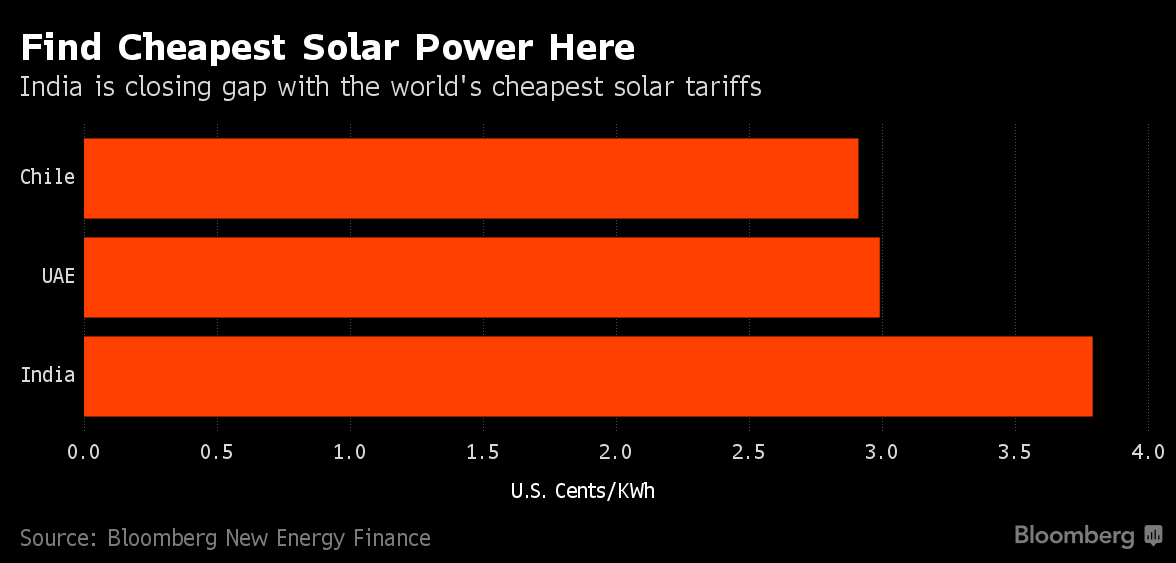
2. Staying with solar, the latest bids make India the third cheapest solar market in the world at Rs 2.62 or 3.8 cents per unit.

3. Interesting Buttonwood column highlights the challenges facing the investment management industry from proliferation of cheaper index funds; automation trends that dispense with brokers who intermediate between fund managers and savers, and with fund managers themselves (robo-advisors); and changes in investment channels. On index funds,
Big tracker funds can drive down fees through economies of scale. The expense ratio for Vanguard’s S&P tracker is just 0.04% of its assets. The average active American equity fund, which tries to beat the index, charges 0.8%. Such fund managers may claim they can outperform the market but in practice few do so consistently. Over the 15 years to the end of December 2016, less than 8% of American equity funds managed that feat. As an old quip has it, “you make your money working in active management but invest the proceeds passively.”
As companies shift pension strategies, there is the likelihood of more consolidation among asset managers,
Another challenge for fund managers is a change in the corporate-pensions market. Fewer companies are offering defined-benefit (DB) pensions, which are linked to a worker’s salary; new employees now have a defined-contribution (DC) pension, the benefits of which are not guaranteed. Employers offering DB pensions need to generate a high return to keep contributions down, so many tend to use specialised “boutique” managers. But DC plans often offer a default fund, chosen by most employees; these usually employ a more limited range of fund managers. The market tends to be concentrated in the hands of big fund-management groups and insurance companies, which can handle the administration of the scheme as well as the investing. The result is that the industry seems bound to consolidate.
4. Another article in Economist points to the declining number of listed companies in the US as well as the trend of start-ups to stay private for longer causing an IPO drought.
A big trend in American business is the collapse in the number of listed companies. There were 7,322 in 1996; today there are 3,671. It is important not to confuse this with a shrinking of the stockmarket: the value of listed firms has risen from 105% of GDP in 1996 to 136% now. But a smaller number of older, bigger firms dominate bourses. The average listed firm has a lifespan of 18 years, up from 12 years two decades ago, and is worth four times more. The number of companies doing initial public offerings (IPOs), meanwhile, has fallen from 300 a year on average in the two decades to 2000 to about 100 a year since... Although the total population of companies in America has been steady, their propensity to list their shares has roughly halved... Private markets, meanwhile, have become more sophisticated at supplying the funds they do require. Many big, mainstream fund managers, such as Fidelity and T. Rowe Price, are investing in unicorns, meaning private firms that are worth over $1bn, of which there are now roughly 100.
Several reasons have been attributed ranging from fear of red-tap to the reduced capital intensity of technology intensive firms (one of the basis of secular stagnation hypothesis) to the belief that private markets are better at allowing firms to take a long-term perspective. The last strikes at the heart of the conventional wisdom, nay holy cow, on financial intermediation. And one more reason for the shrinking universe of listed firms is disturbing,
Exits from the stockmarket by established firms—the second factor behind listed firms’ shrinking ranks—are growing in number. About a third of departures are involuntary, as companies get too small to qualify for public markets or go bust. The rest are due to takeovers. Some firms get bought by private-equity funds but most get taken over by other corporations, usually listed ones. Decades of lax antitrust enforcement mean that most industries have grown more concentrated. Bosses and consultants often argue that takeovers are evidence that capitalism has become more competitive. In fact it is evidence of the opposite: that more of the economy is controlled by large firms.
5. Staying on the issue of private markets allowing firms to take a long-term perspective, John Asker and colleagues have a new working paper which finds supporting evidence,
We evaluate differences in investment behavior between stock market listed and privately held firms in the U.S. using a rich new data source on private firms. Listed firms invest less and are less responsive to changes in investment opportunities compared to observably similar, matched private firms, especially in industries in which stock prices are particularly sensitive to current earnings. These differences do not appear to be due to unobserved differences between public and private firms, how we measure investment opportunities, lifecycle differences, or our matching criteria.
6. Greg Ip strikes a contrarian note to the conventional wisdom that robots are destroying jobs,
The U.S. has many problems, but job creation isn't one of them. In April, nonfarm private employment rose for the 86th straight month, the longest such streak on record. Monthly job creation has averaged 185,000 this year, more than double what the U.S. can sustain given its demographics... If automation were rapidly displacing workers, the productivity of the remaining workers ought to be growing rapidly. Instead, growth in productivity -- worker output per hour -- has been dismal in almost every sector, including manufacturing. In a compelling study released this week, the Information Technology and Innovation Foundation demonstrates that the supposed gale of technology-driven job destruction a myth.


Rob Atkinson, president of the industry-supported think tank, and researcher John Wu examined government data back to 1850 to measure jobs lost in slow-growing occupations and jobs created in fast-growing occupations, their proxy for job creation and destruction driven by technology and other forces. By this measure, churn relative to total employment is the lowest on record.
7. Is the hub-and-spokes model of airline industry under threat,
Two new aircraft—the Boeing 787 and the Airbus A350—make it profitable to carry smaller numbers of passengers over long-haul routes. Secondary cities half a world away from each other can increasingly sustain direct connections. That eliminates the need to change planes in the Middle East. Big legacy carriers, in addition to long-haul, low-cost pioneers such as Norwegian and AirAsia X, are buying these planes in huge numbers. The fact that Airbus has 750 outstanding orders for its A350, compared with just 107 for the A380s that Emirates flies, shows where airlines think the future of aviation is heading.

Sunday, March 5, 2017

The return of bad loans resolution debate

Arguably the biggest obstacle to India's medium term economic growth prospects is the twin-balance sheet problem. It is therefore unfortunate that it has not received the sort of attention that it deserves. 

The new deputy governor of the Reserve Bank of India, Viral Acharya, has re-ignited the debate with a comprehensive proposal involving a two-track approach. He proposes the establishment of a Private Asset Management Company (PAMC) and a National Asset Management Company (NAMC) as private and quasi-government entities to resolve assets categorized based respectively on short-run and long-run economic value realisation. 

This broad contours syncs well with the proposal laid down by Ananth and me here. See also the blogposts here, here and here. The details of the proposal is here. The only differences being that instead of direct sales to ADCs or other buyers, he suggests a PAMC route to manage resolution and sales, and he also proposes the establishment of a new NAMC instead of leveraging an existing institution like the NIIF or IIFCL. In fact, this blog's proposal goes beyond what the Deputy Governor suggests and offers two more alternatives - sale of some assets to PSUs like NTPC, and bundled auctions of certain other types of assets like steel facilities. These two are potentially easier to tackle and can be the trigger points to catalyse the process. 
This blog feels that using existing institutions may be better than the creation of new institutions. For a start, new institutions will take time. For example, the NIIF, despite its creation more than a year back is yet to have a full-fledged team and the appointment of its CEO took more than six months. Creation of another PAMC will duplicate expertise currently available with IIFCL and NIIF, both of which are themselves sorely under-utilised. 

On the private side too, existing AMCs, ARCs, PE, and private infrastructure funds can be invited to  participate in the auctions and manage these assets. This is all the more relevant since the PAMC will also end up floating several funds or special purpose entities to resolve and revive the vast portfolio of such distressed assets. Further, establishing one or more PAMCs, as fully private entities, and allocating assets to them will raise its set of problems of price discovery etc. Finally, mobilisation of skilled resolution and revival professionals for these new AMCs may take inordinately long times.  

As with all such grand plans, the devil is in the details. Some of them will doubtless emerge as thorny issues - credibility of the credit ratings, stripping and removing existing management, co-ordination problem among banks, avoiding promoters sneaking back as buyers etc. Consider the following,
Haircuts taken by banks under a feasible plan would be required by government ruling as being acceptable by the vigilance authorities. Sustainable debt would be upgraded to standard status for all involved banks. The promoters, however, would have NO choice as to what restructuring plan is accepted, and may potentially get replaced and/or diluted, as per the preference of and depending on the price at which the new managing investors come in.
This is all fine to say. Government can always lay down the process and decision criteria. The vigilance findings will generally revolve around some process details. But it is not possible to cover all contingencies. Post-facto, with the benefit of hindsight, some omission, always likely, will get packaged as part of a criminal conspiracy. And even if the vigilance authorities are kept out, PILs and Courts cannot be. And about prohibiting promoter's choice, it is always likely that they will raise some interpretation of a procedural lapse, again difficult to avoid, and litigate.

In any case, what ever be the details of the process adopted, there will be two critical challenges. 

1. The biggest challenge to the whole process will have to be in figuring out the most (likely to be) acceptable mechanism for price discovery. After all, nothing about the process will be more scrutinised and more critical to the success of the proposal than the degree of haircuts. In such cases, there are no fair valuations, howsoever objective, since judgements on such valuations are always made on post-facto considerations. A haircut arrived at through a professional approach of evaluating alternative resolution plans is no guarantee against post-facto scrutiny. Procedural lapses and process vitiations are always round the corner. Given the size of the problem, as the process proceeds, auctions are likely to generate single bids or no bids, thereby necessitating revised bids, again only to generate single bids. Further, a handful of asset managers could corner the vast proportion of the best assets and make handsome gains down the line.   

Therefore, we may need to make prudent compromises. A Committee headed by a very credible retired judge of the Supreme Court (Justice Sri Krishna?) can be given the mandate to approve the haircuts. This will both ease the vigilance fear as well as possibly limit excessive judicial trespass. 

2. Then there is the issue of recapitalisation. There is only so much that can be raised for recapitalisation through equity dilution upto 51%. Even this will run into political difficulties. Dilution below 50% is a political taboo and may not be desirable too given the distressed valuations. Therefore, the vast majority of recapitalisation will have to come from the government. It will be a few times more than the proposed Rs 70,000 Cr over the 2014-19 period. And there is also the additional capital required to meet the Basel III norms. 

In the circumstances, the banks may need at least a 0.5% of GDP annual recapitalisation for the coming 4-5 years.

Finally, apart from the Deputy Governor's caution on cherry-picking parts of the proposal and ignoring others, it would be necessary to complement this proposal with the provision of real operational autonomy so as to increase valuations and set the stage for phased divestments. 

Saturday, February 20, 2016

Resolving bad loans and reconstructing assets

I had blogged earlier that addressing India's banking crisis would require both resolving bad loans and reconstructing assets. And both would have to be complemented with devolving complete operational autonomy and massive recapitalization. 

The first step would be to classify stressed assets into completed infrastructure projects, ongoing projects, and all remaining retail, credit card, and commercial loans. In the case of the last category, equity holders should be stripped and assets auctioned off to private Asset Reconstruction Companies (ARCs). 

As regards completed infrastructure projects, where it is possible to monetize the revenue stream, the current Strategic Debt Restructuring (SDR) may be the best course of action. But banks ability to dispose-off these assets remains questionable. An alternative, therefore, may be to auction them off to ARCs, stripping equity holders and with haircuts on banks, with a cascaded and backend clawback of some share of future revenues to the banks and equity holders. This could avoid the political backlash likely in case the asset generates windfall revenues once the economy recovers. 

Finally, ongoing projects would need financial reconstruction. A vast majority of them are likely to be commercially viable once completed, but may require further equity infusion. Further, the construction risks associated with them make them less attractive for long-term investors like infrastructure debt and equity funds. And, in any case, such risks are best borne by the government. In the circumstances, a preferable strategy would be to value them and sell off to a public entity like the IIFCL. The IIFCL, by itself or through the newly created National Infrastructure and Investment Fund (NIIF), can raise three or four dedicated infrastructure debt funds, leveraging long-term foreign patient capital, to finance these purchases. These funds, with professional project management units, should manage the completion of these projects. The financing patterns can even be restructured once the construction is completed. A distinction may have to be made between public good assets like roads and private assets like power and steel plants, in terms of the extent of public financing. 

All this would have to be done quickly and simultaneously. The entire process may be concurrently audited and all requisite clearances taken to pre-empt post-facto audit and vigilance objections. As aforementioned, it would have to go with clearly defined operational autonomy as well as an equally clear recapitalization schedule. The operational autonomy would have to include eschewing the urge to saddle banks with various social obligations without sufficiently compensating them. 

The biggest uncertainty with this approach rests on the supply side. Does India's credit and capital markets have the capacity to absorb such scale of transactions? Will there be enough buyers for these assets? The gross NPAs are estimated to reach Rs 5.5 trillion by end-March 2016, and maybe double that by including all the other badly stressed assets. To put that in context, the total incremental non-food bank credit in 2014-15 was Rs 5.46 trillion, new bond and equity issuances Rs 0.17 trillion, new PSU bond issuance Rs 0.38 trillion, net CP issuance Rs 0.87 trillion, and all disbursements by public financial institutions Rs 1.03 trillion.

Update 1 (22.02.2016)

Links to articles that explain how an ARC works, problems faced by ARCs, more on problems, high ARC asset acquisition costs and banks' risk aversion, systemic problems, and disturbing relationships between bankers, promoters and ARCs.

Update 2 (26.02.2016)

Corruption is never far away with such deals. Livemint reports of a circular by the RBI on,
... fears that promoters of companies acquired by banks after they failed to repay loans may be using shell entities, in India and elsewhere, to buy back these assets at much lower prices... If that is the case, it would also allow unaccounted-for or black money stashed by Indian businessmen overseas to come back into India.
And on the progress with the Strategic Debt Restructuring (SDR) scheme,
Since June 2015, when SDR rules were introduced, lenders have converted debt to equity in a number of firms including Electrosteel Steels Ltd, Ankit Metal and Power Ltd, Rohit Ferro-Tech Ltd, IVRCL Ltd, Gammon India Ltd, Monnet Ispat and Energy Ltd, VISA Steel Ltd, Lanco Teesta Hydro Power Pvt. Ltd, Jyoti Structures Ltd and Alok Industries Ltd. Of these, the only known case where lenders are closing in on a sale is Electrosteel Steels.

Thursday, September 17, 2015

The 'asymmetric contracting' risk with auctions

The Economic Times reports that the just concluded FM radio auctions resulted in aggressive bidding in the metros and no bidders in 13 towns,
With bids in metro cities that far exceed what operators had expected, the auction has the broadcast industry wondering if it is subscribed to the winner's curse. The bid price for a station in Mumbai was Rs 122.8 crore, Delhi Rs 169.2 crore and Bangalore Rs 109.3 crore, while 38 stations in 13 cities had received no bids at all because of high reserve prices. Just these three metro circles account for 45% of the total bids received... For the major cities there is now a significant scarcity premium... this is a direct result of reducing the number of stations being auctioned in the "premium" locations — top cities into which all operators will rush, in order to preserve their businesses.

After the tumult surrounding sordid crony capitalism in the discretionary allocation of natural resources, India has embraced auctions with vengeance. Coal, telecom spectrum, mineral resources, and now petroleum reserves are being auctioned and notional receipts are being booked. Nobody doubts the intent behind these auctions and everybody applauds the efficiency with which they are being carried out. But the long-term sustainability of these auctions may not be as robust as it appears (more on this is in a later post). Is it therefore a case of the cliched 'operation successful, but patient dead'?

Most infrastructure projects in developing countries are characterized by several uncertainties. The commonest problem relates to site allocation and environmental and other clearances, which are par for the course for any project, and whose delays immediately translate into cost escalation. Then, there are the market risks, arising from lower than expected traffic forecasts or smaller market. Finally, there are the inevitable costs associated with rent-seeking, which no entrepreneur can escape. 

Under ideal conditions, market participants factor in all these elements when they make their bids, resulting in market-competitive price discovery. But in the real world, market participants suffer from cognitive biases (over-estimations of their ability to control the pace and trajectory of the development, in accordance with their laid out plans), and ex-ante overlook these factors when making their bids. Developers instinctively refuse to acknowledge errors in their business cases. Since these real factors generally always strike, the successful bidders are ex-post left with no option but to resile from their commitments. They skimp on their investments or renegotiate. The tortured fate of infrastructure projects, in the form of stalled projects, is for all to see. 

All this, coupled with winner's curse and moral hazard (from the inevitability of renegotiations), generates an asymmetric contracting, where efficiency in the price discovery process intersects with inefficiencies in the project development eco-system, amplified by human cognitive biases, resulting in a low-level equilibrium. But the politics associated with the auctions system, especially given the context in which it was embraced, may prove insurmountable to permit any tinkering with it, leave aside replacement. 

Thursday, January 26, 2012

Discretionary public policy - the case of 2G spectrum allocations

This post will be provocative. I have a simplified interpretation of India's controversial 2G telecoms spectrum allocation process.

The fundamental issue is that the government of the day decided to allocate the spectrum without any competitive price discovery process, and subsequent events (spectrum resales by a few purchasers) point to the allotment having been made at a steep discount thereby causing huge losses to the public exchequer. In simple terms, the spectrum was sold cheap, and private spectrum purchasers benefitted at the expense of the tax payers.

Critics of the allotment process claim that if the spectrum was auctioned off, as happened with the subsequent 3G auctions, the government would have raised huge amounts. The bidders would have paid close to the actual cost of the spectrum. There would have been no corruption. So what gives?

Here is a thought experiment. I can imagine two forces that were generated by the low spectrum prices.

1. The substantial discounts enabled the telecom operators to keep their initial fixed investments low. They now had resources to spend on technology and more importantly, aggressive expansion. Furthermore, it gave all players the initial cushion to establish the market, without having to over-charge. Such over-pricing is a characteristic feature of any nascent market, as the first generation of firms try to establish themselves. It generally takes time before the market stabilizes and the firms start responding to market competition signals.

2. It cannot be denied that the lower spectrum prices dramatically reduced entry barriers and contributed towards creating an intensely competitive marketplace. The threshold cost to enter the market was lowered. In simple terms, the government subsidized the private operators significantly.

As the private operators got established, the market stabilized, customer base exploded, these two aforementioned factors interacted to generate fierce competition. This competition benefited the customers and the market itself.

Consider the counterfactual. Assume the spectrum was allocated by auctions. It is most certain (especially given the information asymmetry in a new market) that the process would have been affected by "winner's curse", whereby bidders would have quoted a premium on the fair market value. The successful operators would have entered the market with strained balance sheets and limited inclination to be aggressive in their investments and pricing. Instead of spectacular explosion, the market would have grown in fits and starts. Most certainly the government would have had to intervene subsequently to prop up the market with various types of fiscal concessions.

The central point I want to make is that the discounted allocations provided the operators with the required cushion to be aggressive and innovative in a nascent market. This in turn helped lay the foundation for a very competitive and vibrant telecoms market in India. The aforementioned dynamics is true of any emerging market. China is the best and most recent exemplar of the wastage, excesses, and corruption that lubricates such emerging markets.

In any typical emerging market, governments provide considerable fiscal support, directly and indirectly. In its absence, the only way in which a market can emerge is if large foreign competitors, with deep-pockets and a commitment to take sustained losses for some time, enter the market.

Much of this support is not planned and is a response to problems posed by emergent difficulties in the growth process of the particular sector. In fact, there is considerable corruption (sanitized through lobbying which conceals an equally nauseating underbelly of quid-pro-quos) involved in these policy decisions. It would be interesting if we could compare the fiscal support given to sunrise sectors like IT and biotechnology with that given to the mobile telecom sector.

The critical governance question here should be about the extent of malafide discretion involved in the allotment process. The acrimonious post-mortem has revealed that the government, or influential people within the government, played an important role in picking winners and enriching themselves at the cost of the public exchequer. It is this market failure that should be the cause for the greatest concern.

This also raises another question. If auctions would have led the market into a low-level equilibrium and discretionary allotments spawned massive corruption, what is the alternative? What process of allotment would have given the participants with the required cushion and allowed the market to develop fast without causing incentive distortions that spawn corruption? I am not sure there is any such process.

This brings us back to the inevitability, even desirability, of discretionary public policy, espcially in incubating new markets. In the circumstances, the focus should be on minimizing corruption in the discretionary public policy making space.

Wednesday, May 11, 2011

Winner's curse and market failures in resource allotments

One of the most controversial areas of public policy in recent years has been that involving allotment of public resources to private interests. As the role of the private participation in the economy expands, many hitherto public assets - land, mines, telecom spectrum, municipal infrastructure, etc - are increasingly being operated by private participants.

In light of the numerous resource allocation scandals in recent months, a debate has been generated about what is the most effective strategy to allot public resources. Though competitive allocation of resources appear to be the best strategy for such allotments, there are very valid enough reasons to be sceptical. Critics point to the need for governments to be flexible and retain discretion in such allotments in the larger public interest. Let us examine both sides and see how the balance sheet squares up.

Conventional wisdom would have it that competitive markets always result in efficient allocation of scarce resources. However, real world experience reveals that competition also has the potential to generate market failures that create inefficient outcomes. In particular, all sides in the bargain are vulnerable to the winner's curse - over-paying for your purchases. This happens irrespective of whether the allotments are done in a transparent and competitive manner or by discretionary allotments. So what is the most efficient method to allot public resources to private interests?

The most famous recent example of winner's curse is the 3G spectrum auctions in Europe at the turn of the century. Telecom operators who bid fantastic sums to claim 3G licenses soon realized the folly of their excessive commitments. It had a devastating impact on their balance sheets and adversely affected the sector itself. Subsequently, the subject has generated considerable research and analysis and many prescriptions have been offered on efficient auction designs (see Paul Klemperer here).

However, nothing seems to have been learnt from the European debacle by both policy makers and the industry itself. Though it is a little early to tell, there is enough evidence to suggest that most of the telecom operators in India over-bid during last year's 3G spectrum auctions. The poor latest quarterly results of these operators are an indicator of the strains imposed by their excessive bids.

All these represent classic market failures. It is astonishing that professionally competent managers who run these telecom operators could not have learnt the bitter lessons from the European auctions. Equally baffling is the failure of financial institutions that supported the respective bidders to exercise the required due diligence that would have exposed the risks inherent in such irrationally exuberant bidding. Policy makers too should take the blame for failing to take into account the inevitability of winner's curse in such auctions and their inability to design the auction so as to mitigate these risks.

However, one of the critical, albeit less-discussed, reasons for such exuberance in bidding could be attributed to the moral hazard arising from the increasing trend of contract re-negotiations. The number of recent precedents of governments permitting such re-negotiations on very specious and flimsy grounds, after the completion of a competitive price discovery process, has considerably eroded the sanctity of contracts. Bidders realize this and rationalize that they could bid on the higher side and mitigate any risk of winner's curse by lobbying to re-negotiate away the unpalatable terms and conditions. And when all bidders play the game on the same assumptions, then winner's curse becomes superfluous.

There is another side to the debate. Economies in transition, especially in a closely integrated world, face an interesting dilemma. On the one hand, they have to compete with others to attract investments and engender business confidence. This competition exists among nations and within them between regions. Governments therefore have to accommodate the requirements of this competitive environment and tailor policies that encourage investors. This often demands discretion-based decisions that appear to favor or provide preferential treatment to certain private groups or firms.

Consider this. A state government faces stiff competition from other states to provide additional incentives to lure say, an IT company, to prefer the state over competitors to set up its new development center. Apart from standard infrastructure sops (like assured quality of power, good connectivity etc), such incentives typically include fiscal concessions, exclusive infrastructure, and additional land. Over the past few years, states have wooed such investors with huge land allotments, far in excess of the specific investment requirements.

Arriving at the right type and degree of incentives is at best of times a very difficult exercise. There is a fundamental information asymmetry in this process. The private firm has clear information of what are the respective offers of individual states and can make its decision based on them. However, the state governments work in an environment of information asymmetry. Unaware of the promises and intentions of their competitors, a state government is forced into marking up its offer on the higher side so as to pre-empt its competitors. The private firm is fully aware of this game and contributes more than its fair share to exacerbating the information asymmetry and trying to bargain the best possible deal from its interlocutor states. The net result is that the successful government invariably ends up with a winner's curse by offering excessive concessions.

Since the environment in which these decisions have to be taken is bedevilled with information asymmetry, it is no surprise that preferential offers made to attract individual investments are mostly controversial and involve some form of corruption.

More worryingly, this challenge has to be managed by public institutions and a civil society that are rarely strong enough to exercise the vigilance required for ensuring fairness in such decisions. Most often, the public institutions are captured by the private firm and the terms of the bargain severely compromised against public interest.

The civil society and its opinion makers mistake the trees for the woods by falling prey to the attraction of a public media trial of a few scapegoats. The public debate gets circumscribed and rarely tries to address the problem with systemic solutions.

Given the prevalance of winner's curse with both strategies, how do we address the problem of public resource allotments? In an ideal world, the benevolent and wise ruler would negotiate with the best interests of his citizens at heart and commit just enough concessions to tip the investment in their favor. But as discussed, the real world is rife with information asymmetry, moral hazard, and winner's curse. Besides there are real-people (read officials and politicians) prone to colluding with unscrupulous investors and a public who are either powerless or distracted by media trials and the lure of instant justice.

Allotments of public resources by way of both competitive bidding and discretionary approaches face the problem of winner's curse. In the former, the private firms end up over-paying and ultimately ending up defaulting or atleast compromising on its commitments. In case of the latter, public resources get allotted on the cheap to private interests.

So the issue boils down to which approach is likely to work best, given these circumstances? Alternatively, which risk - winner's curse for bidders or governments - is less difficult to mitigate? Here, I am inclined to hold that ensuring transparency in the process of allotments of public resources on a discretionary mode, even through empowered committees of eminent people (who are the eminent people and how honest are they), is an almost impossible task in most developing countries, including India. Institutional mechanisms to minimize corruption is difficult to implement for a variety of reasons.

However, markets are versatile enough to mitigate the adverse consequences of winner's curse. After all, the fundamental ideological issue here is over whether the individual wisdom and knowledge of government (and a few of its officials) is superior to the collective wisdom of the market in both ensuring most efficient price discovery and in mitigating the effects of possible incentive distortions like winner's curse. This debate has been settled for some time now.

However, if markets are to determine the allotment process, it is important to structure its institutional design details by taking into account the specific issues related to the sector and lessons from failures across the world. Besides trying to resolve any winner's curse, the design should also address the other sector-specific problems that come in the way of success with such allotments. This not only ensures transparency and efficiency, it can also mitigate the consequences of the market failures that result from various incentive distortions.