Substack

Showing posts with label Bureaucracy. Show all posts

Friday, January 30, 2026

Individuals matter, and more so in public bureaucracies

I blogged here about the importance of strong public oversight and in-house expertise for the successful execution and management of infrastructure projects. 

Mainstream development discourse focuses disproportionately on institutional and systemic challenges, and overlooks the important role played by individual officials in effective public services delivery and the realisation of policy outcomes. 

Specifically, I am referring to the commitment and expertise of individual public servants in important positions at all levels of the government. By important, I’m not confining to leadership positions, but any position where they can make significant contributions to influence the agenda. 

The importance of individual officials in the success of development interventions is generally overlooked amidst systemic and institutional factors. This also comes from the belief that the success of development interventions is determined by good ideas, comprehensive planning, and rigorous monitoring. This theory of change overlooks the reality that successful development interventions tend to emerge iteratively over the course of their implementation. Such iteration, in turn, requires capable and committed leadership, especially important given weak state capabilities. 

In fact, it is no exaggeration to argue that capable, proficient, and committed officials are perhaps the most important ingredient of state capability. 

The importance of capable individual officials is also borne out by academic research. I blogged here, drawing attention to the work of Philipp Barteska and Jay Euijung Lee, who examined the impact of the bureaucratic capabilities (of export promotion officers) on the effectiveness of industrial policy in terms of export performance in South Korea. They found the following:

We exploit the three-yearly rotation of managers of South Korea’s export promotion offices in 87 countries between 1965 and 2000 to show that a one standard deviation increase in bureaucrat ability boosts exports by 37%. Under higher-ability bureaucrats, South Korean exports respond more strongly to a country’s import demand, suggesting a more effective transmission of market information.

An increase in exports by nearly two-fifths with just one standard deviation increase in bureaucratic capability tells us that the quality of officials might matter more than (or at least as much as) fiscal incentives and regulatory changes in trade promotion efforts. 

Alessandra Fenizia studied the impacts of managers in the public sector in Italy using a dataset containing an output-based measure of productivity. 

Exploiting the rotation of managers across sites, I find that a one standard deviation increase in managerial talent raises office productivity by 10%. These gains are driven primarily by the exit of older workers who retire when more productive managers take over. I use these estimates to evaluate the optimal allocation of managers to offices. I find that assigning better managers to the largest and most productive offices would increase output by at least 6.9%.

Cristobal Otero and Pablo Munoz study government managers in public health provision in Chile. 

Using novel data from public hospitals in Chile, we document that top managers (CEOs) account for a significant amount of variation in hospital mortality. We then use a staggered difference-in-differences design, and show that a reform which introduced a competitive selection system for recruiting CEOs in public hospitals reduced hospital mortality by approximately 8%. The effect is not explained by a change in patient composition and is robust to several alternative explanations. The financial incentives included in the reform—performance pay and higher wages—do not explain our findings. Instead, we show that the policy changed the pool of CEOs by displacing older doctors with no management training in favor of younger CEOs who had studied management. The mortality effects were driven by hospitals in which the new CEOs had managerial qualifications. These CEOs improved operating room efficiency and reduced staff turnover.

Michael Carlos Best, Jonas Hjort, and David Szakonyi analyse data on public procurements in Russia and find the value of bureaucratic effectiveness. 

Using data on 16 million public purchases in Russia, we show that 39 percent of the variation in prices paid for narrowly defined items is due to the individual bureaucrats and organizations who manage procurement. Low-price buyers also display higher spending quality. Theory suggests that such differences in effectiveness can be pivotal for policy design.

R D Metcalfe, A B Sollaci, and C Syverson

In this setting, managers move between stores but management practices are set by firm policy and largely fixed, allowing us to hone in on managers’ personal roles in determining store performance. We find: (i) managers affect and explain a large share of the variance of store-level productivity; (ii) negative assortative matching between managers and stores, which may reflect both firms’ decisions and a selection-driven bias that we characterize and argue might apply in other settings using movers designs; (iii) managers who move do so on average from less productive to more productive stores; (iv) female managers are less likely to move stores than male managers; (v) manager quality is generally hard to explain with the observables in our data, but is correlated with the ratio of full-time to part-time workers; (vi) managers who obtain high labor productivity also tend to obtain high energy productivity, revealing some breadth in managers’ skills applicability; (vii) high-performing managers in stable growth times are also high-performing during turbulent times; and (viii) exogenous productivity shocks improve the quality of initially low quality managers, suggesting managers can learn. We explain implications of these findings for productivity research.

Ricardo Dahis, Laura Schiavon, and Thiago Scot investigated the performance of state judges in Brazil. 

We investigate this question focusing on state judges in Brazil. Exploring monthly data on judicial output and cross-court movement, we estimate that judges account for at least 23% of the observed variation in number of cases disposed. With novel data on admission examinations, we show that judges with higher grades perform better than lower-ranked peers. Our results suggest competitive examinations can be an effective way to screen candidates.

On a slightly different note, Kevin Hawickhorst shows how technical expertise built up within public systems in the US allowed for the nurturing and flourishing of capable officials, created public confidence, and thereby enhanced the credibility of governments. 

However, over time, expertise has come to be crowded out due to the conscious shift in the way government bureaucracies came to be organised. 

At the turn of the twentieth century, agencies followed a distinct blueprint: they were organized by subject matter, not by abstract function. Each bureau focused on a single domain—such as soils, mines, or forests—and combined research, regulation, and grants under one roof. In the U.S. Department of Agriculture (USDA), the Bureau of Entomology, for example, studied insect-borne diseases, issued rules to contain them, and funded farmers to protect their crops, all as part of a single mission. This structure helped agencies recruit experts by offering broader, more meaningful work than corporations could, and it built a shared sense of mission rooted in a vocational community.

Today’s agencies look very different. After World War II, reformers dismantled the integrated subject matter bureaus and reorganized government along what they called “functional” lines. In this system, regulation is one bureau, research another, and grant administration still another; each bureau covers a wide range of subjects and is defined by its activity rather than its mission. It is the model we now take for granted. The Bureau of Entomology is gone, and USDA now houses all agricultural research in a single unit. New agencies were built this way from the outset: the Department of Housing and Urban Development, created in 1965, was designed as a grantmaking machine, never a vocational community.

The shift was a well-intentioned one and backed by a wide coalition of reformers, businessmen, and interest groups. Functional departments looked modern, rational, and efficient: they simplified charts, tightened chains of command, and promised to reduce duplication. But what seemed like sensible reform gradually hollowed out the structures that had made expertise durable. Once government agencies lost their vocational missions, they stopped drawing on networks of expertise and started looking like paper mills, less able to command political respect, and more vulnerable to capture and drift… logic of the Progressive-era model: that research and administration had to remain intertwined within a unified mission if expertise was to thrive.

However, this wealth of internal technical expertise has, over time, given way to the tribe of generalist managers. 

The core mistake was a shift in what we thought expertise was. The Progressive reformers built vocations that were tied to missions, visible to the public, and legible to politicians. Their successors redefined expertise as a credential: the knowledge of process rather than mastery of a craft. To businessmen and academic reformers alike, competence meant general managerial skill, not professional vocation. As this view took hold within the bureaucracy, “expertise” came to mean knowing the procedures rather than knowing the work. We have traded the civil engineer and the entomologist for the program analyst, the management consultant, and the diversity officer—experts who know how to manage the process but not how to do the work.

This redefinition of expertise hollowed out our idea of representation. We now equate representation with participation and diversity, as if the state were legitimate only when citizens can see themselves in its officials. The Progressives, by contrast, recruited from the country’s varied vocations and made that work visible to the nation. Expertise was representative not because it resembled the public but because it served the public, visibly and competently… Their institutions were built to make expertise endure, by recruiting promising candidates from vocational schools and professional societies, dressing them in uniform, and sending them to work alongside state engineers, agricultural agents, and university researchers…

The Navy cannot build ships. In 1940, faced with the same problem, Congress did the obvious: it created a Bureau of Ships, put engineers in charge, and got ships built. That bureau is gone, and we treat its return as unthinkable. Yet the remedy remains the same. If we want ships, we should once again have a Bureau of Ships to build them… Repairing our institutions will ultimately require returning to the vocational conception of expertise… We have built institutions that valorize process in place of vocation, producing a bureaucracy that neither embodies skill nor commands respect. What matters now is not saving “expertise” in the abstract but rebuilding the institutions where it can serve visibly and credibly.

Hawickhorst’s essay points to several individual public leaders in the US who built institutions and brought credibility and confidence in public agencies through their careers - George Uhler (headed Steamboat Inspection Service for 20 years from 1903), Logan Page (Office of Public Roads, founded in 1905), Joseph Kinyoun (headed the Hygienic Laboratory, a precursor to the National Institutes of Health), and Gifford Pinchot (founded the Forest Service). Every country has such leaders across levels. 

In their search for better outcomes in public policy, governments tend to expend effort and resources on interventions involving financial support, regulatory enablers, and technology adoption, while overlooking personnel choices. This bias is also reflected in public commentary and academic research that shapes public narratives. 

However, as the case of the South Korean export promotion officers starkly demonstrates, for governments intent on reform and impact, personnel choice decisions may be the lowest-hanging fruit. In most policy areas, the range between the opportunity cost of a bad personnel choice and that of a capable personnel choice may be much greater than that for any other policy intervention.

The private sector addresses the issue of the importance of capable individuals by incentivising them with extrinsic material motivations like financial rewards and fast-tracked promotions. While neither of these instruments is available to governments, it can appeal to the intrinsic motivation of public-spirited officials. 

This would require acknowledging capabilities and merit (as borne out strictly by performance track record, not merely in some narrow quantitative sense). This requires differentiating capable bureaucratic leaders from their larger peer group by entrusting them with higher responsibilities, appointing them to identified important positions, drawing on their expertise in various forms, recognising their work through different non-financial channels, and generally signalling their differentiation. 

An explicitly professed intent, let alone a rigorously implemented process, that seeks to differentiate among officials at all levels, can be a powerful force to shape expectations and align incentives within public systems.

Wednesday, May 21, 2025

Deregulation is rarely a stroke-of-pen reform

There’s a widespread belief that deregulation, as the name appears to suggest, is about the elimination of certain regulations. Eliminate those restrictive provisions with the stroke of a legislative order or an executive decree, and you are all set in the new deregulated world. Unfortunately, while there are some strokes-of-pen deregulations, the vast majority are far from that easy and require sustained engagement. 

Urban planning is a fertile ground for stillborn deregulation. The three commonly discussed planning variables are FAR, height restrictions, and land-use restrictions. Deregulation, as is perceived by commentators, would involve raising FAR and height limits, and promoting mixed-use construction, coupled with measures to ease the process of getting the requisite permissions. But this overlooks several layers of small detail that have the potential to derail any deregulation. 

For illustration, this is the common building rules of a state government. Even without the Annexures, the Government Order itself runs into 26 pages with several details on setbacks, minimum road width, minimum plot size, parking provisions, open spaces, amenities, fire safety and other compliances. This is a consolidation of all the relevant documents and is more than 370 pages long. As can be imagined, the devil is in the details.

It’s therefore not surprising that some Indian cities that claim to have implemented urban planning reforms, including higher FAR and Transit Oriented Development (TOD), have achieved little in substance. One study of a metropolitan city found that onerous details (in terms of minimum plot size and road width requirements) meant that very few sites were able to utilise the liberalised norms on FAR and height. As aforementioned, given the highly detail-oriented context of the reform, notwithstanding its high-minded objectives, it was dead on arrival.

Another example is the Ease of Doing Business (EoDB) rankings. Its biggest failure was its excessive focus on stroke-of-pen changes to laws/rules. The mere enactment of a legislation or issuance of an executive order to change a process was enough to improve rankings, often significantly. The net result was that EoDB resulted in a lot of performative enactments and decrees, with far less substantive improvements in the actual ease of doing business. 

Take the example of the Insolvency and Bankruptcy Code (IBC), hailed as ushering in dramatic improvements in the insolvency restructuring process and contributing to a step change in India’s EoDB ranking. But as the recent Supreme Court judgment on the takeover of Bhushan Steel by JSW shows, effective implementation of the IBC requires addressing the serious deficiencies at the levels of Resolution Professionals (RPs), Committee of Creditors (CoC), NCLT, NCLAT, and the Supreme Court itself. 

The form of an IBC does not automatically translate to the substance of an effective and expeditious bankruptcy resolution. It requires painstaking, long-drawn engagement that complements the iteration and refinement of the law itself with the building of capabilities and ecosystem to ensure effective implementation. 

In general, while there are some such stroke-of-pen reforms, for most changes, the statutory order is often only the first step in a long journey. 

This is a global problem. 

Consider two examples from the UK of the challenges with the effective implementation of deregulation. The Labour government in the UK came to power promising to build aggressively and expand the affordable housing supply. One area of focus is the redevelopment of blighted sites

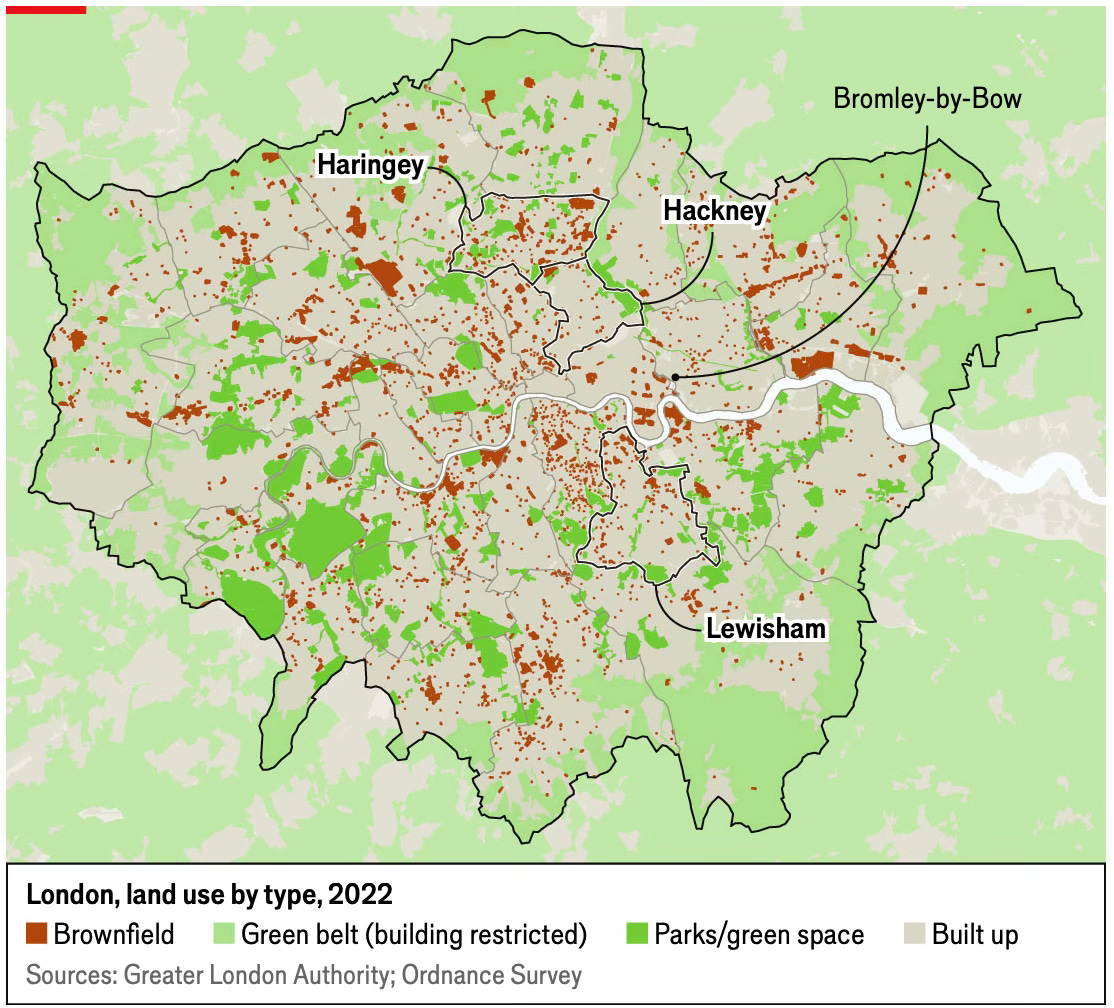
Britain’s cities contain large tracts of brownfield (ie, underused, previously developed) land, thanks to rapid deindustrialisation at the end of the last century. London alone has some 3,500 hectares (8,650 acres). That is around 25 times the size of Hyde Park, and enough space for more than 400,000 homes (London has a target of around 80,000 new homes a year). Clustered by the canals and rivers that were once industrial arteries, the sites are pretty much the only available land in the city. And yet few are being taken on by developers. Building work for just 1,200 new private housing units started in London in the first quarter of 2025, the lowest since 2009 and just 5.5% of the city’s quarterly target, according to Molior, a consultancy. 

But the challenges of building in these sites are immense.

Many borough councils, which largely wield permit power, insist that as many as half of homes in a given development are “affordable”, which immediately rules out smaller sites. At the same time developers are hemmed in by height restrictions and minimum room and unit sizes. From 2026, any building over seven storeys will have to have a second staircase… Some sites, like the former gasworks, require extensive remediation… Ironically, a big problem with ex-industrial plots is biodiversity… Developers must prove that existing biodiversity levels will be increased by 10%, and maintained for 30 years… Such rules illustrate how incentives are skewed. Brownfield developers must go to great lengths to raise the ecological value of derelict, inaccessible sites, often by offsetting. Meanwhile, less environmentally friendly greenfield developments in the suburbs face far lower hurdles.

Another area of focus has been to speed up planning decisions and build on the green belts. But tens of thousands of houses are “stuck in a pipeline because the new Building Safety Regulator is imposing complex design requirements and delaying construction by as much as 18 months.” Then there are mandates on solar panels on all new homes in the spirit of “everything bagel liberalism”. 

Even well-intentioned reforms get caught in the regulatory quagmire that ends up stifling or even killing them. In their book Abundance, Ezra Klein and Derek Thompson write,

“In California broadly, and San Francisco specifically, dozens of pro-housing bills have not led to the construction of more homes, in part because those bills are layered with additional requirements and standards that builders must meet in order to take advantage of the newly streamlined processes. For developers we spoke to, the added costs of compliance weren’t worth it, so the legislation hadn’t led them to build any new homes at all, much less build them faster. The breakneck deployment of wind and solar infrastructure and battery manufacturing has been slowed by outdated permitting and procurement rules that split the Democratic coalition.”

If deregulation is (mostly) not about high-level legislative or regulatory enactments, not one-off enactments, and involves detailed executive orders and painstaking iteration, it’s important that the spirit of deregulation must be imbibed by officials. 

Governments make laws/rules to govern certain activities that must be regulated in the public interest. In terms of the nature of activities being regulated, regulations broadly cover the issue of statutory certificates, payments and benefits (household cash transfers to industrial policy incentives), municipal and utility services (property tax assessment to electricity connections), licenses and permissions (driving licenses to running a school or hospital to consent for establishment of an industry), procurement processes (eligibility requirements to contract enforcement), and generally compliance with existing laws and regulations (Labour Codes to Companies Act). 

These laws/rules have two broad parts: technical guidance and implementation safeguards. The former can consist of a standard (on, say, a technical aspect like safety or efficacy), identification, an eligibility qualification (technical and/or financial) to perform the activity, a legal requirement, or a combination of some or all of these. The latter consists of provisions to prevent abuse of the implementation of the technical guidance (multiplicity of validations). It also includes compliance reporting. While not alone in culpability, many hassles and accessibility problems arise from the latter (implementation safeguard), which applies to the implementation of the enactment. 

I blogged earlier here on many of these issues in brief. 

Every day, government agencies are issuing orders and notifications across central, state, and local governments. Some norms and principles must restrain this process. All such new orders must be examined with respect to these norms and principles. I’ll present a few below whose spirit must be individually and collectively imbibed within the bureaucracy and polity:

1. The first requirement for any new regulation or condition should be a clear and simple articulation of its objective, identification of the stakeholders impacted, and the manner they will be impacted (in terms of their compliance and reporting). It’s not uncommon to find extra layers of regulation creeping in due to a lack of focus on the objective or trying to cover multiple unrelated objectives. . 

2. The second requirement is prudence on the extent of regulation required, which involves a trade-off between objective and practical considerations. 

Consider a product or a technology or a process in the private sector. Their regulatory validation is contingent on meeting some threshold for success. Any increase in the threshold would entail significant incremental costs. The cost-benefit assessment deems this threshold acceptable. This also assumes a certain acceptable likelihood of failure, false negative or false positive. 

However, in public policy, government agencies often tend to frame guidelines to eliminate any abuse. This leads to tight gatekeeping and access requirements that invariably end up detracting from the objectives. It manifests in the form of enhanced eligibility requirements, additional documentation and certifications, physical verifications, etc. To prevent the likelihood of abuse by 1%, the remaining 99% are penalised with the additional implementation safeguards. 

One way to address this problem would be to have a mechanism that requires officials formulating the safeguard to necessarily examine and trade-off between the elimination of abuse and harassment of the stakeholders in an explicit manner, and then make a choice. 

3. A third requirement should be that the compliance criteria should be defined with clarity, without leaving it open to interpretation. The flexibility to exercise discretion in the interpretation of a regulation, especially in high-stakes issues, is a recipe for harassment and corruption. 

4. A fourth requirement is that the regulation must be formulated with the least burdensome and lowest cost path to achieve the objective. So if there’s an alternative formulation that meets the objective and is less burdensome (or invasive), the same must be preferred. 

5. If a regulation/condition is difficult to define and/or monitor and/or enforce, it’s better to eliminate it (if existing) or not enact it at all (if newly proposed). For example, the assessment of the income of a household to issue an income certificate is fraught with problems. Similarly, the requirement of setbacks on small plots (say, less than 200 sq yards) is most often violated and engenders perverse incentives.

6. If a criterion or compliance requirement is so onerous as to be impossible for compliance by all but a few, it’s best avoided. It should be replaced with a second-best compliance requirement. 

So, for example, if testing facilities are too few, it’s impractical to mandate the criterion/standard. Or, where compliance reporting burden/cost is prohibitive in terms of transaction costs and can be monitored with reasonable certitude through governance interventions like random sample audits, they should be preferred. Another option is to accept self-certifications and supplement them with random sample audits to ensure deterrence, depending on the stakes involved. 

7. The uniform application of a regulation that’s primarily intended for a subgroup must be avoided. For example, if one subgroup poses a risk, it’s best to confine regulation to that group rather than have it applied to everyone. It’s best to have targeted regulations, or have differentiated regulations appropriate for each subgroup, or use governance mechanisms to regulate the subgroup. 

8. Governments tend to respond to emerging reports of abuse of the provisions of a law by incorporating additional safeguards that act as a new layer of regulation. This should be done with caution, since while the new safeguard will likely limit the abuse by those few, it will also increase compliance burdens for everyone. 

Therefore, as a default, the abuse of a system should be addressed through better governance instead of regulation. Such governance would involve more rigorous monitoring, use of data analytics, digital workflows etc., without adding a new regulatory/compliance layer. 

9. On a related note, in general, a very high standard of scrutiny must be applied for any proposal to add to or tighten an existing condition/regulation. They should have a compelling justification that’s recorded by the competent authority. 

10. If there are significant and quantifiable costs associated with the regulation, it’s useful to quantify and undertake a cost-benefit assessment. If the stakeholders must bear these costs, it’s useful to also examine how it would impact them (for example, in the case of a business, its business model). 

11. Finally, as a principle, the incorporation of any new regulatory/compliance requirement should be accompanied by the easing out of two old requirements.

All of the above can be consolidated into a checklist that can be applied to screen any new regulation/condition that imposes a compliance on an individual or company. Foremost, can the objective be achieved by some other mechanism, which is less invasive or burdensome? Can compliance be monitored and enforced? Is the process for compliance easy and simple? Is the reporting of compliance easy and simple? Are the abuse safeguards onerous? And so on. 

On the same lines as for new compliances, any reform involving deregulation should be subject to a similar test on implementation. Does the deregulation achieve its objective in practice? Are there implementation details that are likely to derail its applicability? And so on. 

It may be useful for governments to consolidate these principles and issue them in the form of executive directives to guide the formulation and implementation of regulations. 
Wednesday, December 11, 2024

What constitutes development administration?

This post is meant to be a summary of several posts on development. It seeks to illustrate the fundamental issues of development by examining the activities and tasks of four departments. 

Consider the fundamental question facing government officials in a few departments.

What’s required to achieve student learning outcomes and create a skilled and employable workforce? What’s required to deliver good quality public health and sanitation to prevent epidemics, maternal and child health, and diagnostic-cum-treatment services? What’s required to improve crop productivity and raise farmer incomes? What’s required to ensure hassle-free access to good quality municipal facilities and services?

Education, Health, Agriculture, and Municipal Administration officials must figure out the answers to their respective fundamental challenges and then execute them.

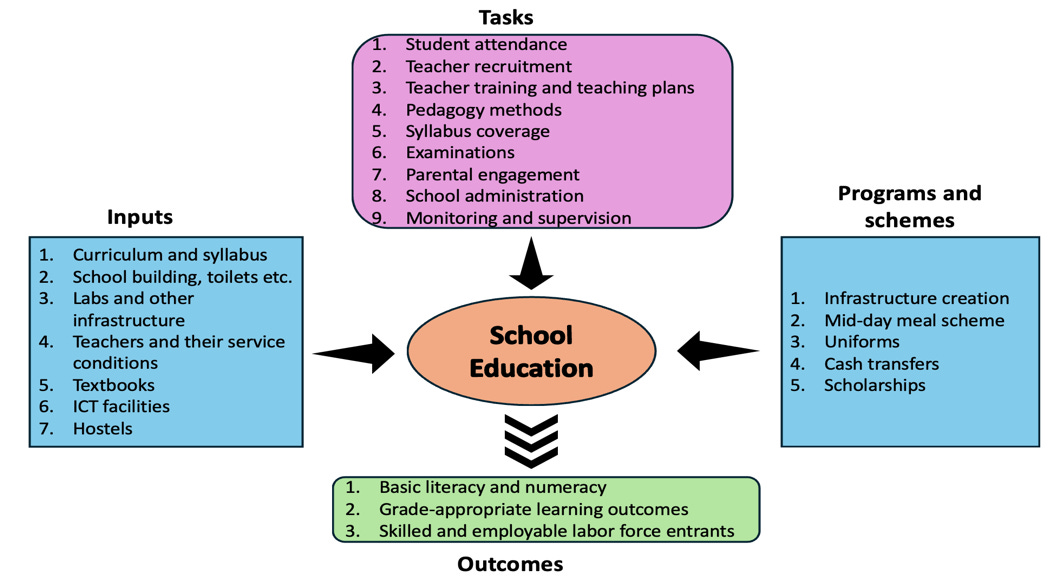
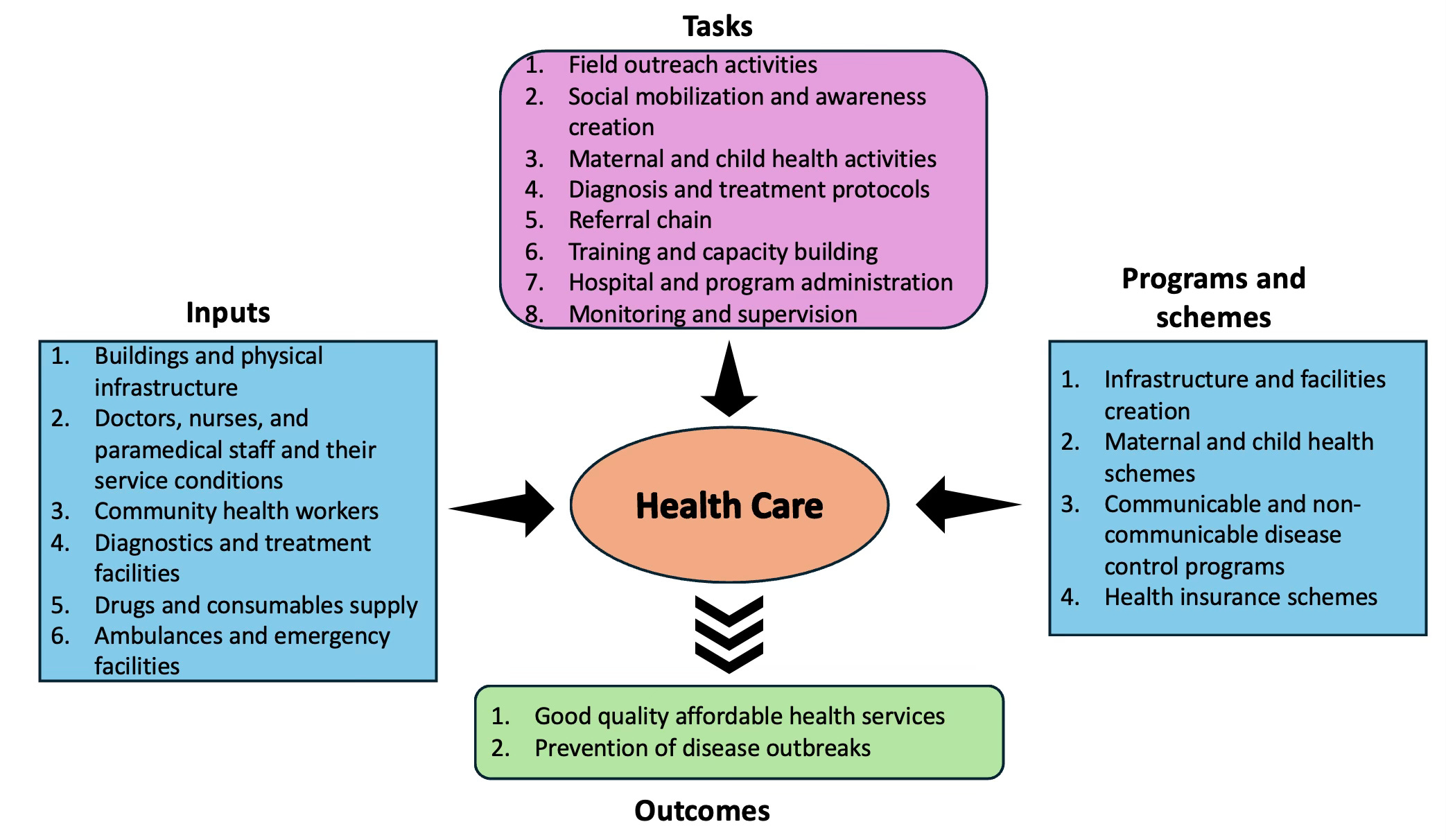
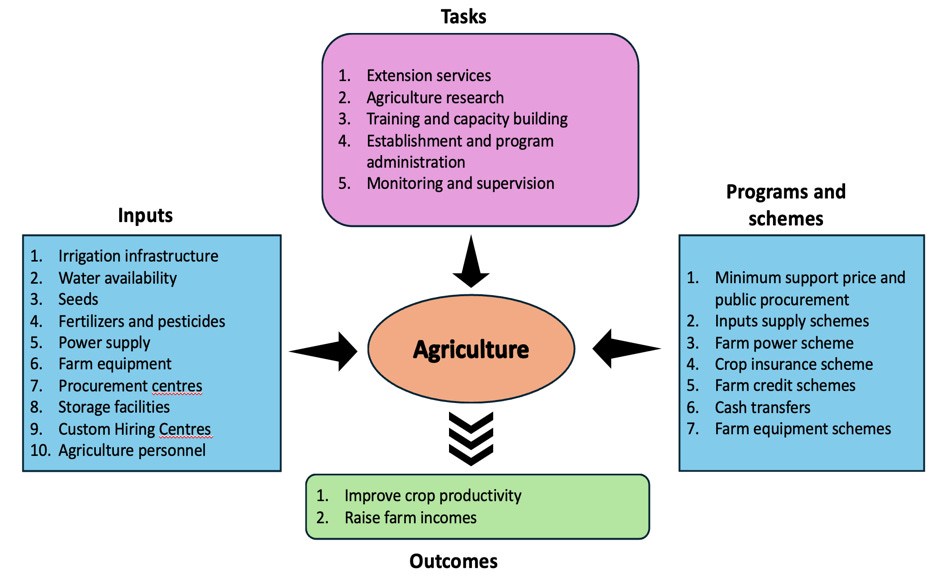
Let’s use a framework to analyse each sector. Government departments apply inputs, including those from programs and schemes, and undertake a set of tasks. The department’s theory of change is that their effective combination would lead to its desired outcomes.

Accordingly, Figure 1 lists the school education department's inputs, programs and schemes, and tasks.

Figure 1: School Education Department

A diagram of a school education

Description automatically generated

Figures 2-4 do the same for Healthcare, Agriculture, and Municipal services.

Figure 2: Primary and Secondary Health Department

Figure 3: Agriculture Department

A diagram of agriculture

Description automatically generated

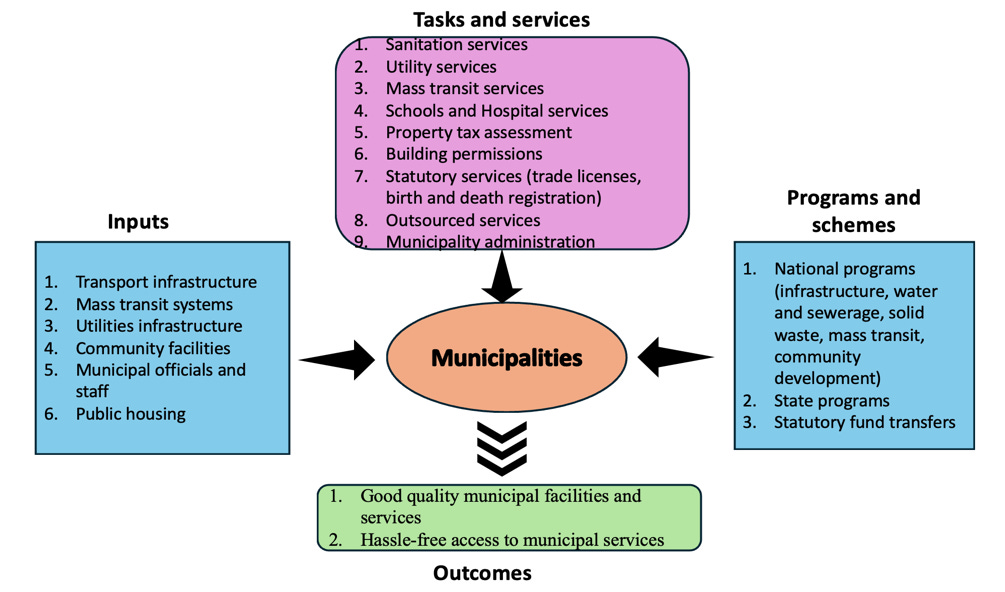
Figure 4: Municipal Administration Department

A diagram of a municipality

Description automatically generated

While these are just four samples, they form a major part of the development landscape. Their features broadly represent development in general, across developed and developing countries.

An examination of the lists in each case reveals some important insights. One, despite all the changes in the world around us, the lists of inputs, programs, and tasks in each sector are both universal and have remained the same over a long time. Two, any program and scheme generally contribute some of the inputs to the departmental tasks. Third, a set of activities/tasks combines all the inputs and programs in some manner as specified (based on the theory of change) in their implementation guidelines. Fourth, the effectiveness of implementation is critically dependent on how these activities/tasks are executed. Finally, it’s assumed that all these activities/tasks can be executed effectively through the standard bureaucratic administration, with its associated monitoring and supervision.

Given their centrality to effective public service delivery, it's useful to examine closely the nature of these activities/tasks performed by departments. Four points come to mind.

For a start, close examination would reveal that most of these activities/tasks are basic enough, but complicated by their interaction with the context and the dynamics that emerge from that interaction. Two, the nature of these activities/tasks is such that they generally require high engagement by government officials. In other words, the quality of the performance of these activities/tasks depends on the quality of engagement by the relevant officials.

Three, related to the previous point, there’s only so much that improvisation and technology can do to commoditise or simplify the activities/tasks such that they can be delivered without compromising quality. Finally, notwithstanding this limitation, the effectiveness of implementation can be enhanced, mostly only at the margins, with improvisation and innovation like process reforms and the use of digital and other technologies.

All these have some important implications for development thinking.

One, the scope or possibility for new programs or improvements to the design of existing programs (or generally new ideas) that can significantly improve outcomes is limited. Two, instead, the primary role of innovations and new ideas would be to improve the fidelity of implementation. But there are clear limits to how much they can contribute. They cannot cover up for deficiencies in governance and state capabilities. Three, the primary focus for the administration of these departments should be on the effective execution of its activities/tasks and its programs and schemes. This is all about implementation by government officials through public institutions.

Fourth, in the circumstances, the primary role of evidence is to enhance the effectiveness of implementation. This means administrative data, surveys, and qualitative feedback are important instruments. Finally, given the nature of these activities/tasks, the effective implementation of many of them involves problem-solving, iteration and adaptation, management of people and activities, and exercise of good judgment. All these are activities/tasks that require high individual and institutional capability levels. 

Monday, November 25, 2024

Management theories and public systems administration

In a recent speech, N R Narayanamurthy, the co-founder of Infosys, suggested that recruitment to the Indian Administrative Service and Indian Police Service should be done from Business Schools rather than through UPSC examinations. 

“It is time for India to move from an administrative mindset to a management mindset. The administration is all about the status quo. On the other hand, management is all about vision and high aspiration. It’s about achieving the plausible impossible,” he said. According to the Infosys co-founder, the current system of competitive UPSC examinations can only produce civil servants trained in general administration. He recommended a management-based approach that focuses on vision, cost control, innovation, and rapid execution to cater to the changing demands of governance.

This comment comes even as Donald Trump has enlisted Elon Musk to lead the new Department of Government Efficiency in his administration to cut inefficiencies in government (substitute for removing extra staff and deregulating processes).

The underlying premise is that public bureaucracies are inefficient in terms of bloated staff and being mired in red tape. They could be improved by importing management practices taught at business schools and widely applied in the private sector. This is the latest reprise of a well-versed cliche with a long history. 

Narayanamurthy and Elon Musk stand on the same side in their deep ignorance of the nature of the activities of governments. Let me try to explain. 

Google AI search informs that the core principles of modern management consist of division of work, authority and responsibility, discipline, unity of command, unity of direction, subordination of individual interest, and remuneration. Management 101, as applied in the private sector, essentially consists of enhancing efficiencies and hastening decision-making through process re-engineering and system transformations, minimising costs primarily by shrinking staff, and improving execution by selecting the right people and aligning incentives among them. 

I can think of several insurmountable areas of divergence between these management theories and the challenges of actual policy implementation.

1. The core activity of government involves running large and dispersed institutional networks, to deliver statutory (Tahsildar, police, and regulatory offices) and non-statutory (schools, hospitals, anganwadis, municipal, welfare etc.) services, through officials recruited on a lifetime employment basis and who are deeply enmeshed in the local political economy

These core activities of governments across sectors have hardly changed over time. Neither have the methods and instruments available to them to implement and administer those activities. The problem has been the state’s failure to ensure the effective implementation of those basic sets of activities. This arises from state capability deficiencies and governance failings. 

There’s a belief, drawn from the private sector, that public sector problems can be addressed through innovations. But as I have blogged here, it’s misleading to assume that we can leapfrog fundamental state capability deficiencies and governance failings and innovate (or digitise or privatise or outsource) the way out, as is the practice in the private sector. Instead, there’s a need for boring and painstaking work of building capabilities and delivering good governance. Management 101 is unlikely to be of much value in this endeavour. 

2. Since governments are trustees of public interest and use public resources, strict procedural safeguards in public-sector decision-making processes are unavoidable. This is especially desirable in weak institutional systems like in India, which are prone to corruption and capture by vested interests. This places inherent limitations on the freedom, flexibility, and speed of decision-making. Besides, decision-making in a political system involves tight coordination between the bureaucratic and political executives. Such coordination happens through institutional processes and rules that further constrain decision-making freedom. Furthermore, important public sector decisions invariably require the mobilisation of electoral support, something which is outside the control of even the political representatives. 

These constraints are inherent to public systems across developed and developing countries and have remained so despite all the social, technological, and other changes over time. The private sector is not constrained by any of these factors. 

3. Management 101 extols the wisdom of allocation of roles and responsibilities and delegation of powers. However, in public systems, such delegation tends to backfire. The underlying premise is that people once appropriately empowered or authorised are both capable and incentivised enough to fulfil their responsibilities, failing which they can be replaced. These assumptions do not hold with public systems. Complicating matters, measurement or attribution is a challenge with their activities, thereby making the enforcement of accountability very difficult. 

Therefore, in public systems where capabilities are weak, most often it’s required to supplement managerial work allocation with direct monitoring of the frontline. At the least on critical tasks, leadership must cut through layers and engage directly with the frontline officials to both limit transmission losses in instructions and ensure reliable feedback. 

Management 101 would argue that such direct engagement will weaken the chain of command and distort incentives. And it does. But without it, it’s most likely that execution in public sector contexts will flounder. 

4. Traditional management theories can break down when faced with the management of government employees. For a start, organisational leaders cannot select their team (or even deputies) and must work with those available (or unavailable) in systems where incentive misalignment has uncontrollable contextual roots. There are deeply constraining limits to disciplining, let alone removing people. Even the standard role-allocation and authorisation-based management strategies are blunt in systems where meaningful performance accountability and its enforcement are, at best, extremely challenging and normally impossible. 

5. Management 101, following the pervasive trend in the private sector and public sector in developed countries, similarly advocates the virtues of outsourcing work to consultants and third-party service providers. In public systems, such parcelling out work is unlikely to be effective for multiple reasons - inherent difficulties in disaggregating core activities, limited or weak supply side for these services, and difficulties in monitoring the quality of service delivery. 

6. There’s very little that management theories can teach us in managing relationships with politicians, media, and civil society groups. The very wide variety in the features of these relationships and their interaction with the social and cultural norms of the contexts makes them ill-suited to templates or cookie-cutter approaches. They require good judgment that’s heavily influenced also by the specific context and circumstances. 

7. Finally, development contexts exhibit a very wide variance across people, tasks, and situations. This also means that management in such contexts will have to go beyond templates and theories and involve the exercise of judgment, one which emerges from experiential learning. In many respects, public sector management is a specialisation in itself.

Thursday, September 26, 2024

Cricket batting and management theory

In management theory, there are two duelling approaches to how incoming leaders should manage their initial days. 

On the one hand, some emphasise the first 50 or 100 days as the time for the leader to make his mark. The leader should seize the initiative from Day One and lay down priorities, get some quick wins, and establish credibility. Another approach is to wait and watch, and gradually ease oneself in. Under this approach, the leader should start imposing him/herself only after having settled down.

The first approach can be compared to a T20 cricket match batting, while the second compares with a Test match opener’s batting. 

This comparison is also appropriate for the posting tenures of the officers of the Indian Administrative Service (this might be true of many other occupations).

The career of IAS officers starts with field postings in sub-divisions and rises along local governments, districts, corporations and public sector units, and state and central governments. These postings cover program/policy implementation and policy/program formulation. Their tenures in a post range from 2-4 years. Needless to say, most of their postings are deeply enmeshed in the political economy. 

Let’s discuss the cricketing analogy for IAS posting tenures. 

A good classical test match opener displays some of the following attributes, especially at the beginning of the innings. He tries to leave as many balls as possible. He plays close to the body and late to adjust for the movement of the ball. He plays the forward defensive to straight balls. He generally plays in the V, driving along the ground with a straight bat. He avoids horizontal bat shots. He prefers singles instead of boundaries. He rotates the strike. Generally, he’s technically correct.

The range of his stroke play will be determined by his assessment of the pitch, the weather conditions, the bowler, the team batting strength, the match situation, the innings score, and his own form. 

He waits for the cloud cover to lift, the morning moisture to disappear, the pitch to ease up, the bowlers to get tired, and get some runs on the board, before he starts to attack the bowling. 

On the same lines, the IAS officer must account for the nature of the post (pitch), the political economy (weather conditions), the opponents of all kinds (bowlers and fielders), the team of officers available (batting strength), the organisational or departmental capabilities (bench strength or team depth), the stakeholder support (the team score), and his/her own credibility (form and class). 

While starting, he must avoid abrupt changes and critical decisions (leave balls), keep his cards close to the chest (play close to be body and late), continue following precedents (forward defensive), go strictly by rules (play in the V), avoid any new initiatives (avoid horizontal bat shots), prefer incremental changes (singles over boundaries), studiously avoids media glare (rotate strike), and generally follow the rules (technical correctness).

Just like the opener, the IAS officer too could use the initial weeks to build confidence among colleagues and credibility among external stakeholders, before he starts to open up with his policy decisions and actions. 

Further, just as the test opener varies his approach based on the types of bowlers, the IAS officer too should bat differently against pace (populist opposition), seam and swing (opposition from experts and opinion makers), and spinners of all kinds (internal saboteurs). 

In contrast, the T20 batsman/officer adopts an opposite approach. He goes hard at the ball from the start. He charges the bowler. He’s loath to give away a dot ball. He’s unafraid to take the aerial route. He plays horizontal bat shots. He prefers boundaries over singles. He arouses the stadium. He’s generally unorthodox. 

He shows no respect for the bowler, pitch, weather, score, and his own form. He displays no fear and does not worry about the reputations of bowlers. Painstaking accumulation is not his forte. 

On the same lines, the T20 batter equivalent IAS officer enters and immediately initiates changes (goes hard at the ball), transfers and suspends officials (charges the bowler), throws aside conventions and precedents (takes the aerial route), goes after big bang changes or disruptions (boundaries over singles), courts the media (arouses the stadium), and exhibits a willingness to stretch the rules (unorthodox).

He’s also indifferent to the opponents and critics, adopting the same approach of unbridled aggression against all. 

He’s in a hurry to establish himself, no matter the department, political conditions, opposition (or lack of support), capabilities of colleagues and organisation or department, and his own inexperience. 

So which could be the right approach for an IAS officer?

It’s easy enough to argue that certain batsmen are instinctive hitters who are suited to the T20, and certain technically correct accumulators are best suited for the test match opener’s role. To an extent, there’s some nature, but as the history of cricket shows, it’s about adapting. 

In any case, in the case of IAS officers, I’m inclined to argue that it depends. Generally, but not always, field postings may require the cavalier attitude of T20 batting whereas policy-making roles demand the caution and restraint of test match opening batting. 

In the field postings, you are thrown into the deep end of a pool and there’s most often a need to establish credibility quickly. By their very nature, implementation and work exigencies are immediate and there’s little time to settle down. 

Besides, in weak state capability environments and given the enormous implementation challenges, there’s a case to galvanise the organisation by imposing the officer’s personal stamp. The sincerity, hard work, inspections, rigour of reviews and follow-up, and discipline of the young officer can paper over the institutional weaknesses and personnel deficiencies to ensure effective implementation. It’s most often like how Brian Lara used to carry the West Indian batting on his shoulders and win matches on his own. 

In contrast, policy-making roles in state and central government require understanding the context and the issues, mobilising stakeholder support and coalitions, deliberating the proposal, ensuring procedural correctness, finding the opportunistic Overton windows, and so on. All these require the learnings from the initial caution and restraint of the opening batsman. 

But just like the test opener who goes on the offensive after having watched and assessed the match situation, playing conditions, and opponents, the policy-making IAS officer should start to hasten with policy ideas, decisions, and approvals after having done the hard grind of assessing and creating favourable conditions. Like with a settled batsman who finds scoring easier with time (starts to see the ball big), the officer too would have established credibility to push ahead faster with his/her reforms. 

In conclusion, like with the good all-format batsman, the IAS officer too should adapt to the nature of the posting and the conditions and strike a balance between restraint and caution and breakneck-paced execution. 

Wednesday, September 18, 2024

Management theory meets reality

Paul Graham listens to a speech by Brian Chesky of Airbnb and questions the conventional wisdom on managing companies (or more specifically startups that have started to scale).

As Airbnb grew, well-meaning people advised him that he had to run the company in a certain way for it to scale. Their advice could be optimistically summarized as "hire good people and give them room to do their jobs." He followed this advice and the results were disastrous… The audience at this event included a lot of the most successful founders we've funded, and one after another said that the same thing had happened to them. They'd been given the same advice about how to run their companies as they grew, but instead of helping their companies, it had damaged them…

In effect there are two different ways to run a company: founder mode and manager mode. Till now most people even in Silicon Valley have implicitly assumed that scaling a startup meant switching to manager mode… There are as far as I know no books specifically about founder mode. Business schools don't know it exists… The way managers are taught to run companies seems to be like modular design in the sense that you treat subtrees of the org chart as black boxes. You tell your direct reports what to do, and it's up to them to figure out how. But you don't get involved in the details of what they do. That would be micromanaging them, which is bad. 

Hire good people and give them room to do their jobs. Sounds great when it's described that way, doesn't it? Except in practice, judging from the report of founder after founder, what this often turns out to mean is: hire professional fakers and let them drive the company into the ground.

Coming from the likes of Paul Graham and Brian Chesky, hope this is taken seriously by management schools. 

I have a slightly nuanced take on this, drawn from leadership trends in government organisations. 

Consider the example of an officer who heads a department, a local government or a public sector unit who is passionate and committed to bringing significant change (not those interested primarily in virtue signalling to their political masters as a pathway to a better posting/opportunity). Such officers are like the founders of startups, in full ownership of their roles. 

Here I distinguish between such government leaders, and the rest - those who are not only doing virtue signalling but also the median leaders who tend to put in effort but don’t fully own up their roles. 

Management 101, as Graham writes, would have it that bureaucratic leaders should clearly define tasks (at most prescribe them in detail), allocate task responsibilities to the senior officials reporting to them, empower them, and let them implement the tasks. Then periodically review them, address co-ordination failures, guide them where required, and use rewards and punishments appropriately. I’m not sure this will work. 

The challenge that they face is that at the level just below him/her, there are a tiny few, if any, who are both self-motivated and are bought into the Department’s mission and objectives. Only such people can be entrusted with a task and be expected to take it to its conclusion. All others require varying levels of micro-management. 

Such micro-management involves prescribing tasks with their details and constantly monitoring their compliance. It would involve level-skipping to engage directly with their subordinates to give directions (already made to their unit heads) and assess progress, and periodic inspections to directly experience field realities. Finally, it would also involve opening multiple formal and informal feedback channels to assess what’s going well and more importantly, what’s failing. 

This routine must be followed with rigour and militant intensity, especially in the initial months of a posting. It’s an almost essential requirement for success within government (and as Chesky says, within private corporations too).

The challenge is with right-sizing this strategy. Not get deep enough and you lose out on valuable feedback and information. But get too much into the weeds and you are lost. This balance varies across organisational contexts and figuring it out will take time, but is time well spent. It’s also required to vary the level of such intense engagement depending on the responsiveness of the reportee officer. 

On this, a note of caution is to avoid extending this management strategy to the tiny few direct reportees who are already self-motivated and bought into the vision. That will be self-defeating for multiple reasons. For one, it demoralises the officer and the leader loses a very powerful force multiplier. Worse still, he’s demoralising an organisationally respected individual (as these officers are likely to be) whose impacts will be adversely felt across the department. This will only hurt the leader, and significantly at that. 

It’s also a challenge identifying the few self-motivated and passionate second-rung officials. It can often take time. And mission-alignment with such individuals requires the leader to spend time understanding and engaging with them. It’s an investment well worth it. 

I’m not sure that management theory can ever teach us something insightful about getting the balance right or identifying the committed officers. Instead, management schools could acknowledge the realities of the field, and clearly propose alternative frameworks like the one described here. It would be up to individuals to choose from among them, and iteratively right-size the strategy to suit their specific requirements.

The practical application of the strategy and its right-sizing is akin to an immersive problem-solving exercise, where you diagnose, choose the framework, and then iterate with it with tight feedback loops to get to the right strategy. It can appear daunting when done first. But once you internalise the process, it’s not as complicated. 

The point that Graham makes about management theories and business schools resonates with the point this blog has made on several occasions (see here and here) regarding our excessive (even blind) faith in theoretical experts for practical advice. This turns out consistently bad in areas like macroeconomic policy-making, public policy issues, and, as Paul Graham writes, management. Theory unfiltered by practical considerations generally leaves the system worse off. 

A corollary to this is the allure of ideas (among all of us) while discounting their implementability. It’s a cognitive blindspot. It’s all too common for experts offering ideas to address all the ills in the world, with scant attention to the really hard part of the details of their implementation. I blogged here highlighting that no matter how brilliant the idea or policy, what matters is its implementation. 

As I have blogged here, it’s a near-impossible task for theoretical experts to appreciate the challenges of practical implementation and the several layers of nuances and conditions required for the application of their theories. The practitioners have no option but to undertake the struggle (as with most other complex problems in life and career) to be able to get the strategy right. It’s just the same for founders of startups or corporate leaders, as it’s for bureaucratic leaders. 

They only know management who have struggled long enough with actual management! 

Thursday, August 15, 2024

The importance of the space for policy experimentation

There’s an important reason why despite professions of wanting to usher in reforms during electoral campaigns, democratic governments struggle to implement them. It’s as if the bureaucrats and politicians stumble while attempting to cross a valley that separates a reform idea from its implementation. 

There are perhaps two approaches to doing public policy reform. The first is to formulate a comprehensive and water-tight proposal and implementation plan, get the buy-in of all the stakeholders, and then implement the reform. The second approach is to come up with a basic program design, prepare its implementation plan, get the broad support of important stakeholders, implement it, and then iterate based on emerging insights. As per this approach, the important thing is not the idea or the design or the plan, but the quality of iteration

The second approach assumes significance, especially in the context of public policy issues. I have written here about the value of iterating with the Minimum Viable Product and scaling up promising public policy ideas. The uncertain elements of a new idea are too many to make any comprehensive en-ante design/plan impossible. We need to iterate to allow the uncertain features to play out, and then address them. 

Consider the practical challenges with the first approach. If we were to dot all the i’s and cross all the t’s of any reform’s design and implementation, we would start to encounter several problems. Any reform idea by nature is treading new ground. Any public policy intervention will have several design features, and being new, each design feature will have several uncertain aspects. And then there are imponderables of practical implementation for each design feature. Finally, there are the risks associated with the emerging political economy responses, which can manifest in the form of adverse news items and public protests. 

When faced with such extreme uncertainties, bureaucrats tend to batten their hatches and pull back from the reform. Perversely, this kind of risk aversion is especially likely with a bureaucrat who is prone to do his homework and diligently examine all the possible issues associated with the reform idea. 

It’s for this reason that I’ll argue that any reform requires some space for strategic ambiguity. 

There are some good frameworks to describe such ambiguity. Three come to mind. 

Albert Hirschman proposed a theory of hiding hand to describe the need for governments to have a cloak over complete information if they are to proceed with complex reforms. Accordingly, for example, if a government were to become fully aware of the several uncertainties and costs associated with building a hydropower project, it might in the first instance never set out to build one. 

Similarly, Bent Flyjvberg has described the idea of strategic misrepresentation as an essential requirement to get approval for large infrastructure projects. Given that such large projects invariably cost massive amounts, and are prone to cost and time over-runs, governments, especially the Finance Departments, are likely to resist approving them. Therefore, to win approvals for such projects, the sponsoring ministries and their agencies end up misrepresenting by low-balling estimates to win approvals, in the firm belief that they’ll be able to renegotiate the estimates upwards once the original project is approved and implementation starts. It’s difficult impossible for any government to pull back and leave the project incomplete. 

Deng Xiaoping famously institutionalised Capitalism with Chinese Characteristics, which was essentially about the strategy of “crossing the river by feeling the stones”. See this, this, and this. Local and provincial government officials were encouraged to undertake low-profile experiments of various kinds that went radically counter to the dominant principles of communism and the Chinese Communist Party. These experiments were then closely watched but outside the glare of any publicity, which allowed them to happen in a low-stakes environment. But once an experiment started to show promising results, it would get adopted by the Party and scaled up nationally (famously exemplified by Deng’s high-profile personal visits and announcement to scale up the initiative). 

Such strategic ambiguity requires work at the bureaucratic, political, and civil society levels. In fact, I would argue that the space for such ambiguity emerges from a virtuous cycle that intertwines the motives and actions of all three stakeholders. 

First, the bureaucrats must become more willing to break out of their risk aversion and bite the bullet based on their judgment of what are good ideas that are steps in the right direction and have a reasonable likelihood of success if done well and over some reasonable period. 

Second, the bureaucrats’ willingness to accept the risk emerges from their political masters’ willingness to accept and tolerate failures. This space is critical and must be communicated widely within the bureaucracy for the individual bureaucrats to summon the courage to trust their judgments and propose/approve reforms. In other words, there must be a politically created culture that encourages experimentation and reform, that’s underpinned by a tolerance for failures.

Third, this political appetite for failure, in turn, comes from the civil society’s acceptance of honest failures. This is formed by the institutional maturity of the press and the wider public commentariat. Instead of excoriating missteps and condemning officials and politicians who dared to pursue these reforms, the public commentary must restrain itself from sensationalism. Public intellectuals and scholars must rise above partisan politics and populist grandstanding to support genuine and well-intentioned reform endeavours.

The third requirement is extremely difficult in polarised political situations, that is now common across democracies. 

In the circumstances, it’s all the more important for at least some bureaucrats and politicians to show leadership and the courage of conviction to break free from the shackles of risk-aversion and pursue reforms that they are convinced about. Such individual initiatives therefore become the only outlets for reform. It’s important that those individuals, especially bureaucrats with the inclination to pursue reforms, are provided the space to do so. 

A very useful way to increase the likelihood of success with public policy reforms is to do it quietly and outside the glare of publicity. Unfortunately, this runs counter to the incentives within the bureaucracy and the political system, where the natural propensity is to claim credit for doing something new and where the tenures of officials and politicians are not enough for them to experiment and successfully scale up complex public policy interventions. Besides, this propensity also comes in the way of bureaucrats, in particular, cutting corners to make the reform look good in the short-term but with serious long-term consequences. Worst of all, it creates perverse incentives to pursue reforms that while creating some immediate good (or the form of “good”) end up leaving greater long-term damage. 

While it’s understandable for the politician to claim credit, it’s especially unacceptable for the supposedly impersonal bureaucrat to flaunt their reform and claim credit. It may therefore be useful to align incentives within the bureaucracy by backing genuine reform attempts and honest failures. For sure identification of such honest reform endeavours is difficult. But equally, they are not impossible and can be done with good judgment by experienced bureaucrats. 

A useful marker or validation for backing bureaucrat-led reform efforts could be signatures that the reform is not being pursued with the intention of publicity and for furthering the personal agenda of the bureaucrat (most often when pursued with these considerations, its negative signatures are clearly visible within the bureaucracy).

A more institutional approach may be to explicitly acknowledge an experiment as just that and with all the associated risks of failure. This would be akin to providing a virtual ring-fenced reform sandbox, thereby creating the conditions for experimentation and encouraging honest reform endeavours. This is harder to achieve but creates the public space for such reforms to be pursued without all the usual constraints and fetters. 

Thursday, August 8, 2024

The missing "account" of the ease of doing business

One of the most valuable frameworks for understanding public policy is the distinction that Lant Pritchett makes between two forms of accountability - accounting and account-based.

The former refers to the traditional top-down log-frame supervision and monitoring, where performance is defined in terms of certain metrics and official accountability is assessed by tracking those metrics. The latter refers to an organic internalisation and ownership of the collective mission and objectives of the organisation, an account, and a commitment borne thereon that drives their efforts. The former is about externally driven engagement, whereas the latter is about intrinsic motivation built around an account about organisational goals. 

Pritchett used this distinction in the context of school education, where the organisational structures and institutional incentives were aligned towards accounting based accountability. The teachers and school managers did not have, much less internalise, a common account about their shared purpose.

This is an excellent description of the comparison between India and Vietnam, which achieved enromous success with student learning,

After pushing our Vietnam team to say, “What was the answer? Why did Vietnam do so well?” in the end, one of our researchers, who I have a lot of respect for, he said, “Look, it’s just—they wanted to. They wanted to, and because they wanted to, they found a way to do it.” So you’re pressing for proximate determinant causes that aren’t the ultimate causal driver of this. If you want to know why Vietnam has really high learning performance among the students, it’s because they consistently, coherently wanted to. If you don’t want to, knowledge of the type of this program versus that program, it’s just not necessarily going to work as designed when you implement it. Because it’s not going to get implemented, or it’s not going to be implemented as well... 

Yes, you got to want to, and if you don’t want to—and I think what India got wrong is India, as a society, as a government, was never really (and still to this day isn’t truly) committed to the belief that every child can and should achieve a relatively high level of learning performance. They’ve never really committed to it, still aren’t. There’s still the belief that education is a process of choosing the elite few who are good at it and devil take the hindermost, even inside Indian classrooms today. I think India is in the process of coming around to the “you got to want to” stage where there is generating a lot more social concern over this. But until India gets there, as we saw with SSA [Sarva Shiksha Abiyaan] was this massive, massive investment. During that whole period, as best the evidence can tell, overall learning per year of schooling of children was on a stagnant at best, but probably declining trend during that whole period.

The missing ingredient was the ‘want’, captured in the form of a collectively internalised ‘account’!

The same framework can be applied to diagnose the Ease of Doing Business (EoDB) movement. The movement was part of the efforts to liberalise, simplify, and workflow automate the processes faced by businesses to access to statutory services and permissions from government authorities. The World Bank formulated a set of parameters covering the number of procedures, time and cost of registering business, getting statutory permissions and utility services, accessing credit, paying taxes, investment protection, enforcing contracts etc., and ranked countries based on a composite EoDB score. 

Given the need to quantify parameters and rank countries, the EoDB rankings naturally confined itself to measurable (read procedural) indicators and avoided any assessment of the quality of service delivery. For other issues with such procedure-focused perception surveys read this.

We need introspect whether nearly two decades of EoDB rankings has led to bureaucrats and institutions in countries like India imbibing the spirit of easing the business improvement. Have they internalised the “want” to make India a truly desired investment destination? For sure the forms of ease of doing business have improved, even dramatically in some areas, but I’m not sure we can say the same about the substance and spirit of ease of doing business.

Have there been significant changes in the manner the building inspector or tax agency official or municipal authority or police inspector or higher level regulatory or adjudicating official engages with businesses and citizens? Has there been a mindset change in the way the bureaucracy and the government views businesses? 

I’m afraid that a honest answer to both have to be in the negative. In the absence of a collective commitment and personal conviction in EoDB campaign, the bureaucracy reduced it to a purely notional box-ticking exercise.

Consider the example of something as simple as a utility service. Yes, we can do accounting of the time taken to issue the connection or pay the bill, and even workflow automate the process. But what about maintenance, services, and other routine continuing engagement for the business with the same utility officials? Can we do effective accounting of those?

Or, we can lower taxes, simplify tax registration, and ease payment processes, and have all of them monitored using an accounting framework. But how do we monitor the repeat game involving assessments, issuing demand, adjudication, appeals, and so on. No accounting-based accountability system can ensure these are all done well. The recurrent examples of outrageous tax demands by taxation officials are a reflection of their failure to imbibe the spirit of ease of doing business. As also are the constant inter-departmental/unit struggles at both central, state, and local government levels to improve the business environment. 

From hindsight, it can be argued that the EoDB enthusiasts made at least three cardinal mistakes. One, while focusing on the details of the ease of doing business activities, they overlooked the account. The did not realise that the the accounting of the EoDB had to arise from a shared account among the implementers of the EoDB movement. The system had to internalise the culture of ease of doing business. 

Two, they made the mistake of believing that it was possible to create oases of a simplified and easy transacting environment for businesses that co-exist with the struggles faced by common citizens in their engagement with the government. They overlooked that EoDB has to go with the ease of living (EoL) for citizens, with the former originating in the latter. Perhaps the campaign should have focused on EoL, with business being just one of the constituents. 

Three, related to the distinction between EoDB and EoL, I’m inclined to argue that the EoDB movement has been almost completely focused on large domestic and especially foreign investments. The more important requirement of creating the right business environment for the local small businesses that create most of the jobs, has been a marginal concern. This bias has been an important factor behind the EoDB movement’s failure to not only achieve the shared account but also create a domestic political constituency for itself. 

Having said all this, we should be careful not to underplay the significant achievements of the EoDB movement. It has doubtless elevated ease of doing business to an important public policy priority, galvanised the system to work on EoDB, and improved the business environment, albeit from a low baseline. It has helped a bad system move to the average. 

But to move further upwards, there must be a collective want. The account must be internalised.