Substack

Monday, November 21, 2022

Indian economy - thoughts on the growth trajectory

This is the latest post on my evolving thoughts on the Indian economy. I'll have two posts on this. The first will focus on the expectations about the trajectory of economic growth going forward and the second on some emerging trends in the quality of economic growth.

In Can India Grow, we had argued that India does not possess the capital foundations to sustain high rates of growth for long periods. It does not have the physical infrastructure, human resources, financial capital, and institutional capabilities to grow in the 7-9% ranges without engendering serious distortions and overheating. The last such episode of high growth in the 2003-11 period required nearly a decade for companies to deleverage and for banks to overcome their bad assets. While some commentators have since come forth with similar views citing aggregate demand etc, I think we were the earliest to put forth a clear case for lowering expectations and targeting a 5-6% economic growth rate. 

In this context, if we examine the country's real GDP growth rates since 1972, it reveals some interesting insights (a friend pointed me to this). 
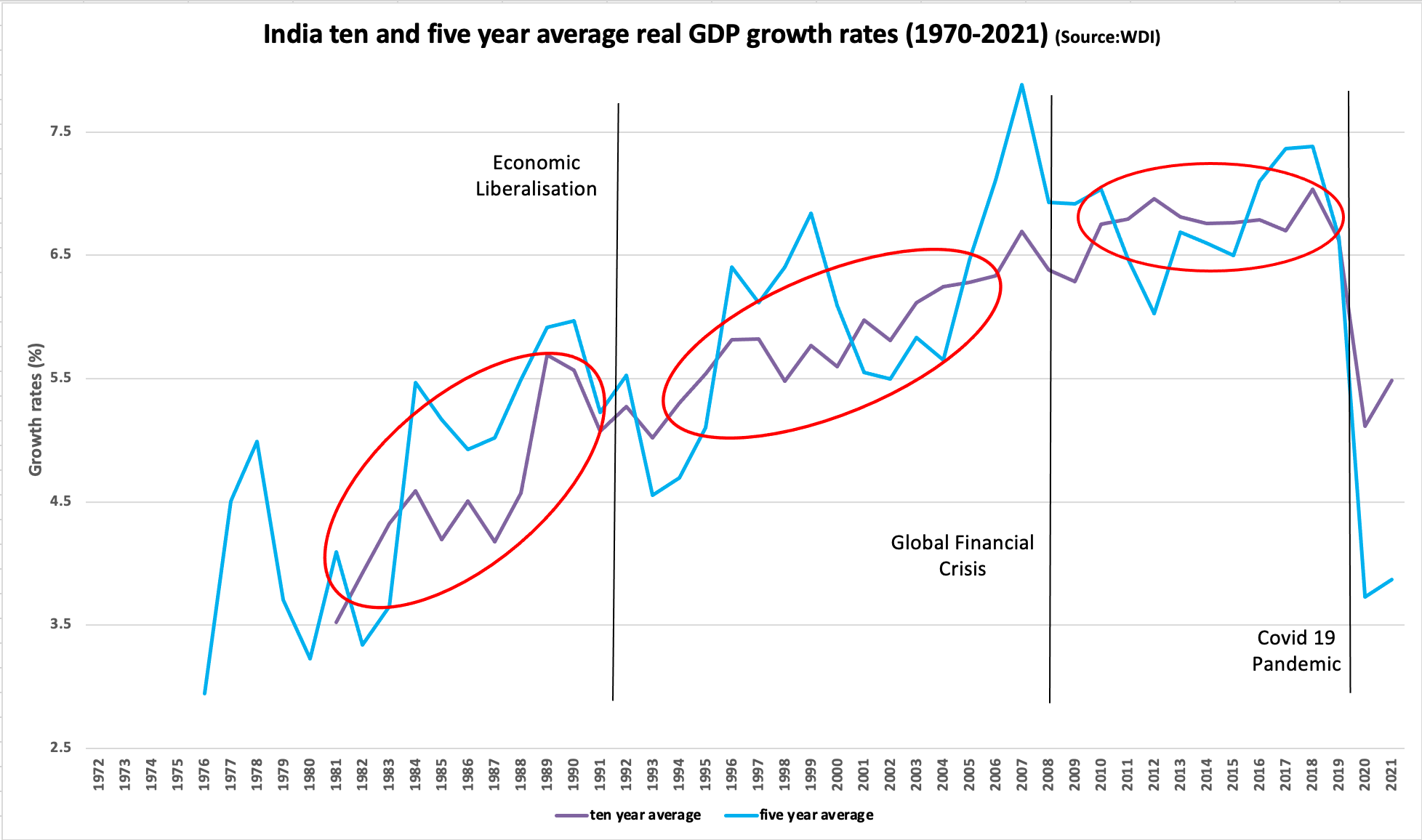
The average GDP growth rates for the five decades from seventies were 2.8%, 5.7%, 5.8%, 6.3%, and 6.6%. Strikingly, out of 41 such periods, there has been only one ten-year period, 2009-18, when the average growth rate touched 7%. Even on a five-year average, there has been only six five-year periods out of 46 such periods over the 1972-2021 when the average growth rate touched 7%. 

Further, the growth trends have been progressively flatlining over time. The higher growth rates over the last two decades are amplified by the pent-up growth spurt in the nineties post-liberalisation and the very high growth of 2003-11 (especially the the overheating in the later half of this period). The business as usual potential growth rate today may therefore be closer to 6%. This tallies perfectly with the IMF's latest projection of India's current potential output.

In a recent paper, two RBI economists, Saurabh Sharma and Harendra Behera, used a DSGE model to figure out India's potential output and output gap. They write,
The results suggest that a combined deceleration in neutral and investment-specific technology growth post 2016, brought down the potential growth to around 6 per cent in 2020Q1. The output gap also witnessed a persistent decline since 2018Q1, primarily due to weak demand and a rise in investment adjustment costs reflecting heightened stress in the investment and financial sectors... We find that the long-run efficient output is a better estimate of potential output... According to this estimate, potential growth in India witnessed a sustained increase from 2002 to 2007, and remained subdued thereafter... We also find that the sudden uptick (2002 onwards) in potential growth is mainly driven by neutral growth.
Underlining the point made earlier, they highlight the overheating that happened in two spells over 2006-08 and 2010-12.
A 6% baseline growth for the next three decades would be extraordinary. Underlining this point, as Ruchir Sharma has written, there are only six countries which have grown at 5% for four decades - Taiwan, Japan, South Korea, Singapore, Malaysia, and China. As the data shows, India has become the seventh. But just two have done it for five decades in a row - South Korea and Taiwan. Given that China looks certain to fall short, India could become just the third. It could go one better and strive to become the only country to grow at 5% for seven decades in a row. This would be exceptional at a time when developed countries will struggle to grow at even 2%.

Sustained high growth rates demand that there is adequate supply and demand-sides to support it. Both are not as easy to expand rapidly as imagined. For example, in construction, it would mean upstream capacity expansion in cement, steel, and bitumen (and the risk capital to make the investments; incremental credit expansion by lenders); ancillary requirements like sand mining, metal crushers, ready mix concrete plants, centering materials supply etc; local factors like skilled labour of lathe operators, road-benders, masons, and so on; regulatory system which can expedite clearances and permissions; demand-side for private construction (like residential housing and commercial property); and the fiscal strength to support public investments. A too rapid growth will invariably drive up signatures of overheating - high inflation, property bubbles and land valuations, spike in wages, environmental damage, clogged infrastructure like traffic congestions and water scarcity etc. The same applies to other sectors too. 

So what should economic policy making in India target? India should strive to maintain macroeconomic stability so that it can target a baseline growth of 5-6% for the next three decades, and grab emergent opportunities, especially ride global tailwinds, to episodically increment growth by 1-2 percentage points. We should simultaneously use the growth to build the capital foundations - increase domestic savings, deepen financial inclusion, develop robust financial intermediation systems, expand physical infrastructure, prioritise human capacity development, and develop and strengthen state capabilities. 

Fortunately, a feature of macroeconomic policy making in recent years has been the commitment to fiscal consolidation and transparency in its budget accounting. It is therefore not at all surprising that the country has so far weathered well the supply and demand shocks from the pandemic and the Ukraine invasion. It has been pragmatic enough in times of crisis to expand and focus on the quality of expenditures. It's essential that it continue to stay the course. 

But where it could change stance would be to eschew high growth claims and exhortations, and lower expectations based on realistic understanding of the country's potential output growth rate. Under-promise and over-deliver could be sound economics and sounder politics.

Thursday, November 17, 2022

The challenge of sustaining DB pension funds

The shock in the UK market for liability driven instruments (LDI) has drawn attention to the issue of hedging for gaps in the existing defined benefit (DB) pension schemes, and the larger issue of returns for pension funds. Along side the declining returns on investments, at least for sometime, pension funds (DB ones) face the problem of rising inflation and therefore higher inflation adjusted pension liabilities. 

Since corporate balance sheets have to show pension liabilities on mark-to-market basis, pension funds are forced to constantly rebalance their portfolios. This, in turn, makes them rely on derivative instruments like LDIs as insurance-type contracts to match the shortfall between their assets (bonds etc) and liabilities (pension payouts). Pension funds have to post additional cash as collateral against their LDI derivatives when the underlying bond prices decline. Once the yields on gilts rose sharply, the margin calls for cash collaterals increased steeply. This left pension funds scrambling for cash to cover their positions.

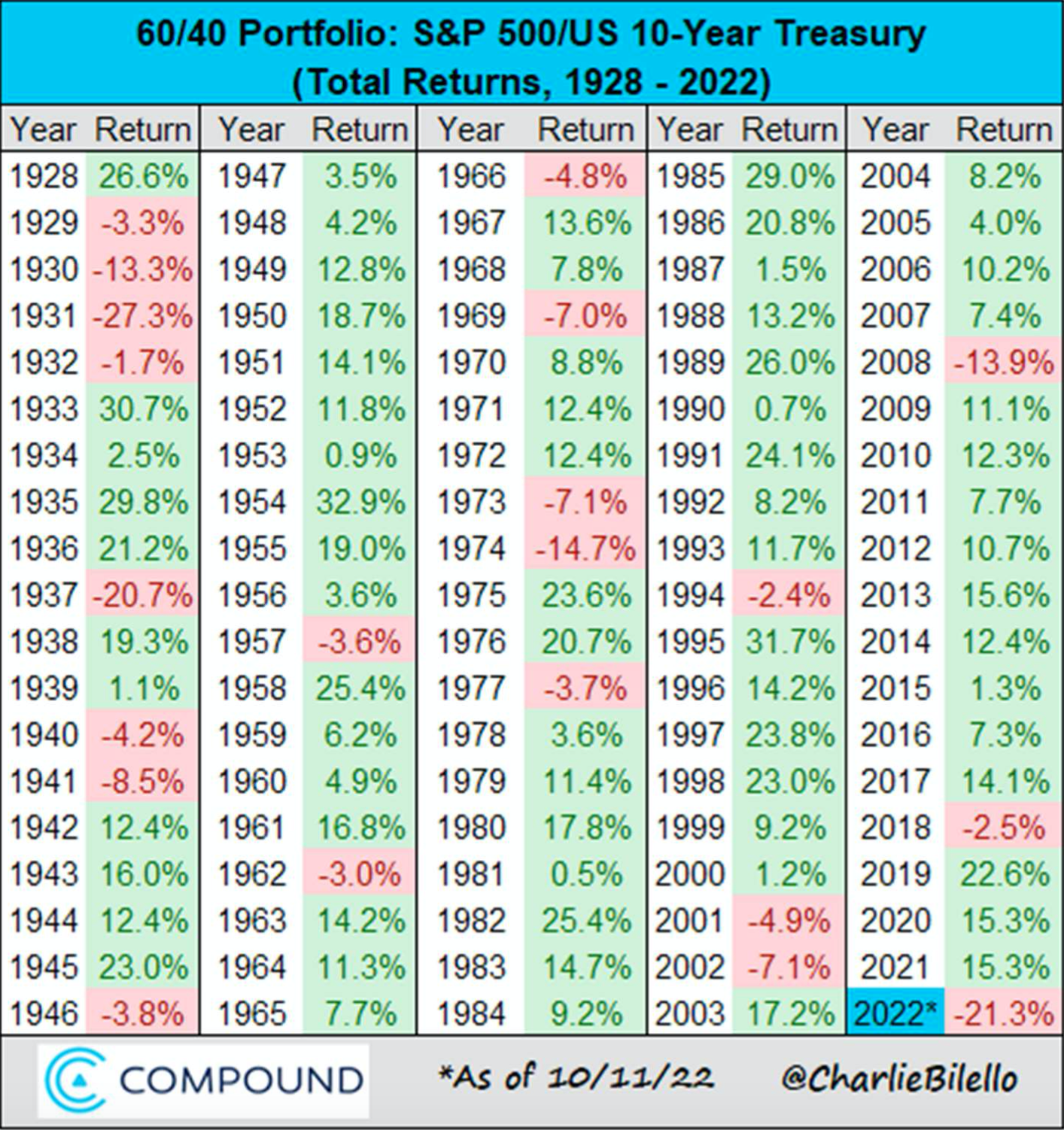
John Mauldin points to how the traditional 60:40 stocks to debt portfolio, the workhorse portfolio of investment, is being whacked this year, as bonds are having one of their worst years ever.  

Government bonds are having the fourth worst year in 2022 after 1721, 1865, and 1920. 
This about LDIs is spot on and applies for investment advice in general,
Years of falling interest rates raised pension liabilities—a big problem for plan sponsors and managers. Lower interest rates reduced the return on the bond portion of a pension fund. In a world of zero and negative interest rates, pension funds simply couldn’t make their target returns (typically 7% and sometimes more) when 40%+ of the portfolio was making 2‒3% (at best!). Consultants then pushed them toward something called “Liability-Driven Investment” or LDI, basically a leveraged hedge fund strategy betting interest rates would keep dropping. They showed data that for the last 30 years the trade ALWAYS won. Except the last 30 years was a period of falling rates and inflation, which everyone assumed would continue. It worked well until rates went higher.

In the US, the problem is not with LDIs but the high exposure to equities and alternative assets, which could have an extended period of downturn. 

An FT long read points to the dramatic shifts in the portfolio allocations of UK's DB Pension Funds, driven by regulatory shifts,
Asset allocation by the UK’s 5200 odd DB schemes has shifted dramatically over the past 15 years. These funds collectively have more than 10mn members and £1.5tn assets under management. At the end of 2021, they were 72 per cent allocated to bonds, 19 per cent to equities and the rest to other investments such as property and hedge funds, according to the Pension Protection Fund, the lifeboat scheme for the sector. This contrasts with 2006, when they were 62 per cent invested in equities and 28 per cent in bonds. This trend reflects how regulation and politics have pushed DB pension funds out of equities to invest more heavily in bonds, which are considered “safe” assets that reduce the risk to the portfolio and sponsoring employer.

Now with bond yields back to more normal levels, the demand for higher yielding but riskier and illiquid private equity assets should decline. This will have implications in the market for PE fund raising. 

The bond market turmoil should not come as a surprise. For years now, and especially after the pandemic, the central bank purchases had kept the bond yields excessively low for an excessively long period of time. Whole cohort of investors and fund managers had come to believe in the central bank put. A break from this entrenched trend will naturally shake sentiments. Just as the monetary accommodation was co-ordinated, the reversal too is happening with everyone pulling out simultaneously. The scale of reversal is massive, and leaves a demand hole that's difficult to fill. Rise in bond yields become inevitable. And all this is happening at the beginning of the reversal, which itself does not yet involve sales of bonds but merely abstaining from purchases.

On the issue of pension systems, Mauldin points to a Mercer report that evaluates different pension systems. 

Mauldin points to the idea of sandpiles while build up only to collapse at some tipping point.
Economic sandpiles that have many small avalanches never have large fingers of instability and massive avalanches. The more small, economically unpleasant events you allow, the fewer large and, eventually, massive fingers of instability will build up.

Efforts by regulators and central bankers to prevent small losses actually create the large fingers of instability that bring down whole systems and spark global recessions. And, increasingly, the unfunded liability of government promises will be the most massively unstable finger.

In that crisis, things that should be totally unrelated will suddenly become intertwined. The correlations of formerly unrelated asset classes will all go to one at the absolute worst time. Panic and losses will follow. Governments will try to stem the tide, perhaps appropriately so, but, eventually, the markets have to clear.

There is a surprising but critically powerful thought in that computer model from 35 years ago: We cannot accurately predict when the avalanche will happen. You can miss out on all sorts of opportunities because you see lots of fingers of instability and ignore the base of stability. And then you can lose it all at once because you ignored the fingers of instability.

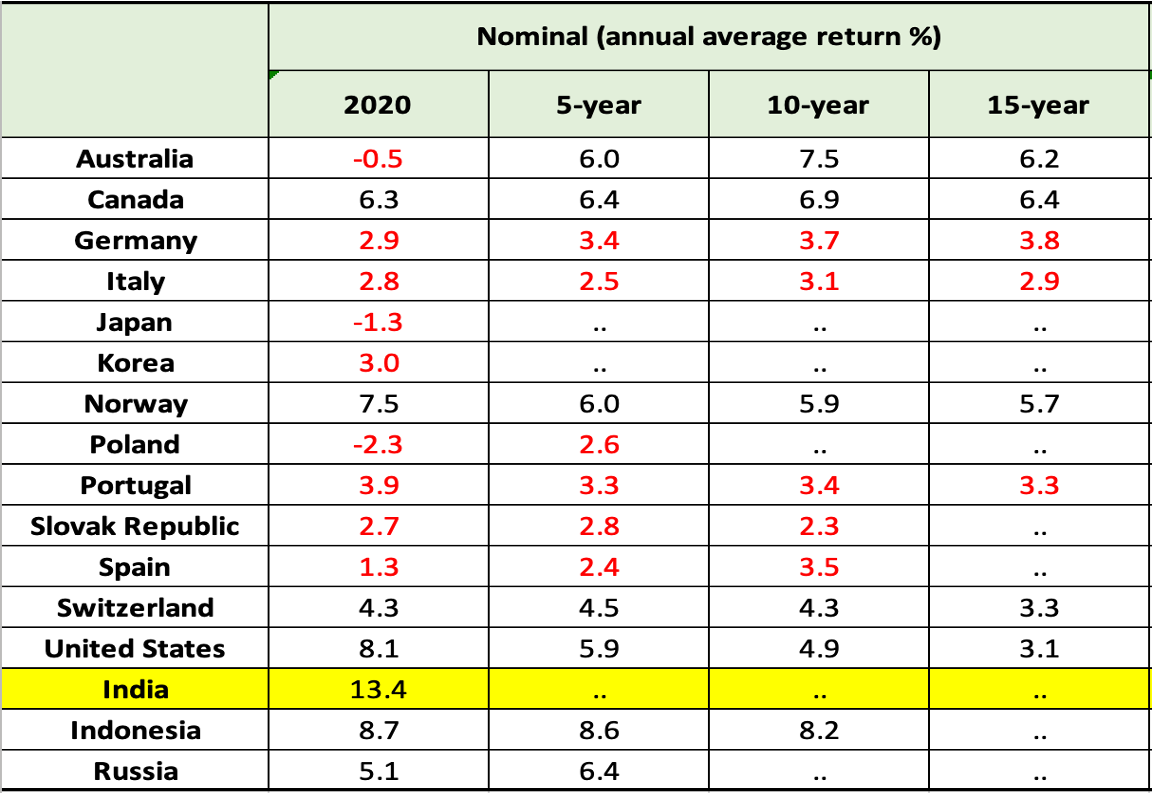
The point about the risks with DB plans is of relevance to India too. The high returns earned by the New Pension Scheme (NPS) trust till date should not blind us to the strong likelihood (I would go so far as to say near inevitability) of far lower returns in the decades ahead. As the OECD Pensions Survey indicate, India's annual average returns are much higher than in any other country. 

The 2020 and the last 5, 10 and 15‐year annual averages are calculated over the periods Dec 2019‐Dec 2020, Dec 2015‐Dec 2020, Dec 2010‐Dec 2020 and Dec 2005‐Dec 2020 respectively, except for Australia (from June to June) and Japan (March 2019‐March 2020).

This is perhaps validated by the much higher 10 year government bond yields in India compared to the standards of emerging economies, a trend which cannot be sustained as the country undergoes more global financial market integration.

I had blogged earlier drawing attention to the role of demographics and other factors in contributing to a secular decline in global interest rates. There is nothing to suggest that the same should not apply to India. Taking all together, the days of near double-digit pension growth rates clearly appear on the rear-view mirror. 

All this makes the trend on reversion to defined benefit pension schemes in some Indian states even more disturbing. 

Monday, November 7, 2022

PE asset stripping - Albertsons and Kroger edition

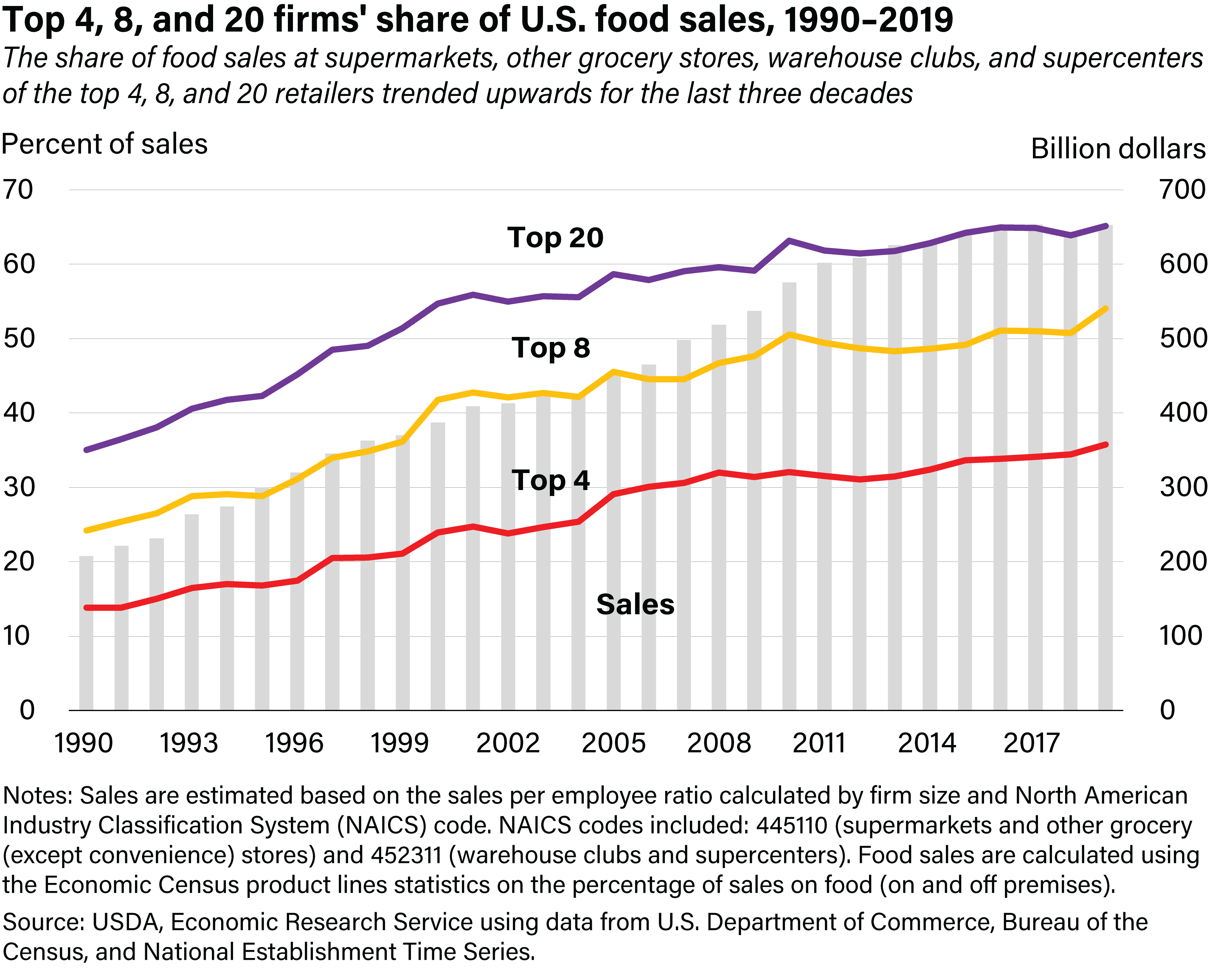
The announcement that grocery chain Kroger would be buying Albertsons for $24 bn has raised a controversy. For one, the combined entity would be the second largest supermarket chain in US after Walmart, with 15% of national grocery business, employ over 700,000 people, have over $200 bn in revenue, and more than 40,000 private label brands. 

This is the major source of controversy,

The merger announcement said that, as part of the transaction, Albertsons Companies will pay a special cash dividend of up to $4 billion to its shareholders of record on October 24, 2022... This dividend equals about a third of the supermarket chain’s market value. Almost 70 percent of this special dividend will go to its former private equity owners plus Apollo Global Management, which purchased a minority share in Albertsons last year. This will be a spectacular windfall for Cerberus, enriching the PE firm and its owners while putting the future of the Albertsons chain and its workers at risk... While the general view of financial markets is that the FTC and the courts will not let the merger go through, the payment of this special dividend sets Albertsons up for failure and provides Kroger with a powerful “failing firm” defense of its merger proposal. Kroger can argue that Albertsons will face bankruptcy if the merger is not approved.

Matt Stoller points to the problems with the $4 bn special dividend, 

The problem is that in this case, that cash is pretty much all the liquidity that Albertsons has. According to the firm’s latest 10Q, Albertsons has $3.213 billion of cash and $565 million of receivables, which can be quickly sold to raise cash. There’s your special dividend right there.

He also writes that the merger is the latest in a trend over the last thirty years whereby supermarket chains have consolidated the nearly $1 trillion grocery industry, which provides the source for what Americans eat. The consolidation in the industry has been steep.

There has been tremendous concentration on both a national and local level already. As Errol Schweizer at Forbes noted in an excellent piece published immediately after the deal came out, “There are already 30% fewer grocery stores than a few decades ago and most major metropolitan areas (with the exception of New York City) are heavily concentrated among just a handful of grocery chains.” That means large chains not only secure better prices for goods than their smaller counterparts, but can also increase prices faster than costs, contributing to inflation. Suppliers, consumers, and workers will all feel the pressure from Kroger/Albertsons, and since suppliers buy from farmers, farmers will feel it too, at least indirectly... 

There will be layoffs in white collar jobs such as “office-based marketing, procurement, analytics, digital sales and category management roles,” which the firm calls ‘synergies.’ Kroger will have more bargaining power over suppliers, as it will have 5,000 stores and can “more easily set payment terms, negotiate shelf space and assortment, and extract better costs and greater trade allowances for promotions, couponing, ad placement and slotting fees.” In addition, deals like this concentrate grocery shelves with the goods of certain dominant firms in packaged foods categories, such as “Pepsico, Kraft Heinz, Nestle and Kelloggs, as well as meat and poultry barons such as Tyson, JBS and Smithfield, centralizing industrial agricultural supply chains.” This will further centralize the food supply overall and could potentially prevent the stocking of more seasonal and local food. Finally, Kroger and Albertsons are combining their data hoards and advertising network, which could be quite significant.
The deal attracted action from state governments across the US. A group of six state attorneys asked Albertsons to delay the payment of $4 bn dividend until officials reviewed the deal. Albertson's rejected the request saying that the dividend was part of a strategy to return capital to shareholders and was not part of the merger. The attorney's approached a Washington state court which has, in a very rare step, temporarily blocked the dividend payout. 

Sunday, November 6, 2022

Weekend reading links

1. Tamal Bandopadhyay draws attention to the workforce decline in the banking industry,

In 2005, clerks and subordinates combined had at least 63 per cent share of employees in scheduled commercial banks. By 2021, this figure has more than halved — 30 per cent. A large part of the shrinkage happened in the past decade. Till 2010, clerks and subordinates formed at least 55 per cent of total banking employees. Blame it on technology. As digitisation progresses, more and more jobs of the clerical cadre are turning redundant... As a result of the core banking solution (CBS), customers no longer bank with a branch; they bank with a bank (at any branch across the nation)... The number of branches has gone up by more than one-fourth in the past decade but the number of employees has fallen.

2. FT has a long read which highlights how Taiwan's strategic interests may be coming in the way of America's desire for TSMC to diversify quickly by building facilities in US. 

TSMC has grown into a giant with an effective stranglehold on the global chip supply chain. Taiwan sees this dominance as a crucial security guarantee — sometimes referred to as its “silicon shield”. The government believes that the concentration of global semiconductor production in the country ensures the US would come to the rescue if China were to attack. “Everyone needs more advanced [ . . . ] semiconductors,” economy minister Wang Mei-hua said during a visit to Washington this month. Being a key global player in this way will “make Taiwan [ . . . ] safer and [secure] peace”, she added. But Taiwan’s determination to keep as much of the industry as it can on the island is clashing with US strategic goals and its fears of China... As competition between the US and China heats up and the risk of a military conflict over Taiwan increases, Washington is seeking to both cut Beijing off from supplies of key advanced semiconductors and reduce its own dependency on Taiwan for chip supplies. Both of those objectives potentially undermine TSMC, whose success is built on serving customers in all markets and on doing so from a cost-efficient cluster of plants almost entirely in Taiwan.

Its dominance of the market is complete

Taiwan now accounts for 20 per cent of global wafer fabrication capacity, the single largest concentration in one country, and a staggering 92 per cent of capacity for the most advanced chips. The US share in global chip manufacturing has dwindled from 37 per cent in 1990 to 10 per cent in 2020.

3. Another aspect of Japanification is the hollowing out villages and empty houses

Next year, according to a recent estimate, Japan will have roughly 11mn unoccupied residences — slightly more than the entire residential stock of Australia. By 2038, under one scenario in the same forecast, just under a third of Japan’s dwelling units could lie empty. A gloomy prognosis for Japan, where spooky, semi-abandoned rural villages already abound, but a portent of much bigger trouble, potentially, for China. For many economies, Japanification may be a vague worry; where bubbles are concerned there is danger. And there’s a warning klaxon that Japan may now be sounding for China relating to the effect of demographics.

4. Arvind Subramanian makes one of the strongest yet cases on restricting capital flows. 

... cross-border flows of private financial capital do not foster sustained economic growth. The substantive benefits from financial globalisation, if any, are too few to offset the costs of sudden shocks, capital flight, and loss of policy control... Developing and emerging-market countries must impose constraints on the cross-border flow of certain forms of capital, particularly volatile portfolio flows. Only “good capital”— for example, foreign direct investment that has a long-term stake in the recipient country and brings technology, skills, and ideas to it — should enjoy the right to move across borders.

Instead of panic-driven capital controls when capital flows reverse, developing countries should eschew the temptation to further liberalise capital flows, especially for short-term gains. 

5. After the struggles with overcoming its gas dependency on Russia, Germany grapples with the challenge of derisking its economic fortunes away from China. But Chancellor Olaf Scholz appears as yet not ready to take harsh decisions with the country's China relationship. 

The FT writes about the controversy around and tensions created within Germany about the recent purchase of a minority stake in a Hamburg container terminal by a Chinese shipping company Cosco,

Rarely has a deal encountered such strong government opposition. Six German ministries came out last month against Chinese shipping company Cosco’s planned acquisition of a stake in a Hamburg container terminal. But it went through anyway. The man who ensured its safe passage through the German cabinet was Chancellor Olaf Scholz. He insisted on a compromise — Cosco would have to make do with a 25 per cent stake, rather than the 35 per cent that was initially proposed. But the German foreign ministry remained opposed, even after Scholz pushed it through. State secretary Susanne Baumann wrote an angry letter to Scholz’s chief of staff, Wolfgang Schmidt, saying the transaction “disproportionately increases China’s strategic influence over German and European transport infrastructure and Germany’s dependence on China”. Scholz, however, clearly could not afford to see the deal collapse. On Friday he will become the first G7 leader to hold talks in Beijing with Chinese president Xi Jinping since the start of the Covid-19 pandemic. Nixing the Cosco transaction would have cast a long shadow over a trip with huge symbolic importance to both Beijing and Berlin...

The coalition agreement negotiated last year by Scholz’s Social Democrats, the Greens and the liberal Free Democrats was notable for its critical tone on China and its focus on human rights. But the Hamburg deal shows deep divisions persist between the Greens and parts of the SPD about the future of the relationship. Green scepticism about China has only grown since last month’s Communist party congress, during which President Xi stacked the Politburo Standing Committee with loyalists and cemented his position as the most powerful Chinese leader since Mao Zedong... The Ukraine war exposed the folly of Germany’s decades-long reliance on Russian gas. Now, the pessimists fear, it may be about to pick up the tab for its even deeper dependence on China, a country that has long been one of the biggest markets for German machinery, chemicals and cars. Thomas Haldenwang, head of German domestic intelligence, summed up the concern at a hearing in the Bundestag last month. China, he said, presented a much greater threat to German security in the long term than Russia. “Russia is the storm,” he said. “China is climate change.”

Interestingly, even as the smaller companies are tapering down their China operations, it's the bigger ones that appear reluctant, with some like BMW and BASF even expanding operations despite the obvious risks. A clear example of the divergence between national interests and those of multinational corporations. 

Scholz's reluctance to bite the bullet with China is surprising since China may be needing Germany more than the other way round given China's deepening rift with the US. The Times writes,

China now makes a very wide range of factory equipment that it used to buy from Germany. Covid lockdowns and a wave of nationalism have also hurt consumer spending on imports in China. At the same time, Germany has gone on buying ever more goods from there. The result is that Germany’s longtime trade surplus with China vanished late last year and has been replaced by a steadily widening deficit. Many German companies now see China as a competitor at home instead of an opportunity abroad. “People always talk about how China is a big market — no, China is a huge economy with a small accessible market,” said Jörg Wuttke, the president of the European Union Chamber of Commerce in China. Overall, E.U. exports to China are only slightly larger than those to Switzerland... President Emmanuel Macron of France had urged Mr. Scholz not to travel to Beijing on his own but as part of a joint delegation. The head of Germany’s foreign intelligence agency warned that the country was “painfully dependent” on China.

6. Even as Germany prevaricates on China, there are signs that Europe may be succeeding faster than expected in weaning itself away from Russian gas. The price at Dutch-based virtual natural gas trading point, TTF, has declined.

Natural gas prices have dropped by 65% since the August all-time peak, storage caverns across the continent are filled to the seams and set to meet at least two months demand, and sea-borne LNG tankers are plentiful so much so that there are traffic jams outside European terminals as ships wait to unload cargoes. But there is more to go,
Prices remain eye-wateringly high, particularly for early next year, and when the cold weather finally hits there remain concerns Europe could quickly burn through its gas reserves, potentially still leading to extreme tightness in supplies after Christmas. Gas at around €115 per megawatt hour is still equivalent to almost $180 a barrel in oil terms. Contracts in December and January are above $230 a barrel equivalent... 
But weather’s dominance over the gas market means Henning Gloystein at Eurasia Group is not quite prepared to say the worst is definitely over. If the winter is mild, then Germany, Europe’s biggest economy, could end the season with its storage facilities almost half full. But if it is just slightly colder than normal, then “German gas inventories would be virtually depleted by end-March, possibly requiring late winter rationing or supply cuts”, Gloystein said.

Whatever the final outcome in the months ahead, the European collective resolve to wean away from Russia is succeeding. Germany led this effort. It now needs to lead a similar effort to de-risk from China. 

7. Martin Wolf writes about deglobalisation.

Interestingly, rich countries with greater trade integration are associated with lower inequality, pointing to possible gains from trade which benefits the entire economy.

Friday, November 4, 2022

No free lunches in development

In a recent interview to the NYT, lamenting at the rich countries reluctance to help developing countries during the recent pandemic, Nobel laureate economist Esther Duflo said,

Rich countries could have agreed on a financial package for the poor nations, so they could help their citizens. But it didn’t happen, so the rich nations spent about 24 percent of their GDP in fiscal stimulus measures but the poor nations only had 2 percent to spend. It would have been a drop in the bucket for the rich countries to help the poor nations spend the same proportion of GDP because their GDPs are much smaller.

This argument is commonplace in several contexts, especially in the context of aid and international development and in public finance allocations. Since the cost of financing some important expenditure is only a small share of the total expenditure being borne by the entire government, it's easy to meet the requirement. 

This comparison is as strikingly appealing as it's profoundly misleading. It's pure rhetoric. 

All public finance, especially given the times of severely strained national government fiscal balances, is about allocation of acutely scarce resources among several equally important (in the eyes of different stakeholders) competing needs. Some demands will be met, and many not. So there is a serious  and fiercely competed opportunity cost to the allocation for any expenditure item, howsoever small. This rationing of allocation squeezes out certain equally important expenditure needs, which deprive beneficiary stakeholders and hurts the respective implementing bureaucracies. It's therefore natural that those losing out in the rationing process push back very strongly. 

In case of aid, in times of burgeoning domestic needs and constrained budgets, it's only natural that the public question the idea of supporting poverty eradication efforts in some distant developing country. Even within the government, the Transport or Education Departments, which have received far less than they demanded, would naturally quibble at their allocations being pruned down to meet the aid requirements. There are no free lunches!

I'm not saying anything against the merits of giving aid. All I want to say that such arguments are pure rhetoric. They serve only to make political points without in any way addressing the problems being highlighted. Fundamentally, governments have no discretionary slack available in their revenues, and all expenditures (howsoever small and whether efficacious or not) have some or other strong interest groups behind them who'll strongly oppose any displacement from their budgets.  

Monday, October 31, 2022

Some thoughts on the polycrisis and progress

Adam Tooze points to a world facing a "poly crisis",

A problem becomes a crisis when it challenges our ability to cope and thus threatens our identity. In the polycrisis the shocks are disparate, but they interact so that the whole is even more overwhelming than the sum of the parts. At times one feels as if one is losing one’s sense of reality. Is the mighty Mississippi really running dry and threatening to cut off the farms of the Midwest from the world economy? Did the January 6 riots really threaten the US Capitol? Are we really on the point of uncoupling the economies of the west from China? Things that would once have seemed fanciful are now facts... What makes the crises of the past 15 years so disorientating is that it no longer seems plausible to point to a single cause and, by implication, a single fix. Whereas in the 1980s you might still have believed that “the market” would efficiently steer the economy, deliver growth, defuse contentious political issues and win the cold war, who would make the same claim today? It turns out that democracy is fragile. Sustainable development will require contentious industrial policy. And the new cold war between Beijing and Washington is only just getting going. Meanwhile, the diversity of problems is compounded by the growing anxiety that economic and social development are hurtling us towards catastrophic ecological tipping points.

I'm not convinced by the economic (winding down of the monetary accommodation etc), political (threats to democracy), geo-political (new Cold War), social (widening inequality), and medical (pandemics) aspects of the polycrisis. We've been through these and congruently at that. On each of these, one can point to examples of simultaneous and deep crisis over the last hundred years, which have been overcome and societies have flourished. Without being complacent, I am inclined that the over-exposure and over-analysis traits of our present times may be exaggerating the threats of these trends beyond earlier times. 

But the environmental challenges are different. Unlike the earlier times, we may be treading the boundaries of irreversible and catastrophic "tipping points". It's not the rise of temperatures or recession of coastlines or the depletion of glaciers or the recurrence of floods, droughts, and wildfires or breakout of pandemics that is the matter of worry. It's the staggering and unprecedented pace of these changes that should worry us. Given that there are thresholds beyond which our eco-systems start to fail, this is indeed a bigger crisis than any of the ones that modern humanity has encountered. 

What makes the problem deadly is that any solution involves fundamental and significant changes to our current livelihoods and lifestyles. And the extent of adjustments will be inversely proportional to people's wealth. It's fundamentally about asking the elites and well-off to adjust downwards their expectations and consumption. The developed economies should be satisfied growing at 1-2% and developing countries at 5%. We need an Age of Great Moderation. Try telling this to them. 

It's actually even more difficult. Human beings are collectively wired towards expanding the boundaries of knowledge and increasing prosperity. The central thesis of western philosophy is progress. Consider the ongoing debates on the Great Stagnation, even as human beings enjoy the quality of life which would have been unimaginable for those living even forty years back. The lament about Great Stagnation while surprising given the quality of life enjoyed by people today is also understandable given our insatiable hunger for continuing improvements in human condition. 

Upending this norm is the biggest challenge. Societies, like individuals, accept deep changes only when it's forced on them. But by then it's too late to salvage the situation, in case of irreversible catastrophic changes like climate change. It's for this reason that the long history of humanity is recurrent with cycles of growth and disappearance of civilisations and populations. It remains to be seen how likely will we be able to avoid this trend.

This is not case for freezing progress, but instead looking at progress in more holistic, equitable, and sustainable terms. For a start, it's worth keeping in mind that there is nothing to support the belief that economic growth of this generation and a couple earlier is the natural order of things. It is well-acknowledged that the growth spurt since the late nineteenth-century has not only been unprecedented but also outside the norm for centuries of human existence, and there is therefore nothing to suggest that it should continue.

It's also about eschewing the current benchmarks of progress which is focused on income growth, greater convenience, greater efficiency, and constant and rapid innovation. In any physical system, there is a limit to how much can be extracted out of it. The same is true of earth too, and there are enough signs that we may be at those limits, if not already exceeded it. Similarly, some degree of physical labour, inconvenience, stress, pain and slack may be essential to ensure that individuals and societies learn, remain vigilant, and retain the capacity to protect what we often take for granted. In this context, this commencement speech by Robert Foster Wallace is a must watch. There is a case that the quest for convenience and efficiency has reached a stage of damaging returns. 

So what would be an alternative path to progress? 

Reversing some of the damages that have been inflicted and ensuring that we get back to within the sustainable boundaries should become the top priority. This should be a collective commitment of humanity. And given the importance of leadership, it's imperative that the elites and rulers assume this role. While there is policy engagement, this is more about reshaping expectations and adjusting and changing lifestyles. It's also about formulating a new purpose of life, which goes beyond the purely material and reductionist modern western philosophy and embracing the Eastern and classical philosophies.  

Besides, it's undeniable that we a problem of poverty, which is an issue of development and redistribution. This should become the single biggest public policy challenge. It's a shame that we live in societies, all of which have shameful excesses of plenitude co-existing with acute deprivation. This, along with improving the quality of progress, should be the policy endeavour. The objective function of progress should incorporate resilience, sustainability, fairness, equity, and political aspirations, in the place of efficiency. The application of innovation and entrepreneurial energies should be focused on these paths of progress. 

In a model, the current version of Progress can be defined as 

P (Now) = f (GDP, efficiency)

The alternative version would be

P (Alternative) = f (GDP, resilience, sustainability, fairness, equity, political demands)

Simon Kuper has an article which points to the possibility of Netherlands being possibly the first country to hit the limits to growth.

Update 1 (06.11.2022)

Martin Wolf has two graphics which highlight the enormity of the environmental changes confronting us. The first shows the alarming rise in atmospheric carbon dioxide, to the highest levels ever and rising steeply.

The second refers to the rise in average land-sea temperature difference.

There are irreversible tipping points which are being crossed.

Saturday, October 29, 2022

China economic prospects in perspective

Ruchir Sharma, as always, brings together several interesting facts to put China's economic growth prospects in perspective

China is now a middle-income country, a stage when many economies naturally start to slow given the higher base. Its per capita income is currently $12,500, one-fifth that of the US. There are 38 advanced economies today, and all of them grew past the $12,500 income level in the decades after the second world war — most quite gradually. Only 19 grew at 2.5 per cent or faster for the next 10 years, and did so with a boost from more workers; on average the working age population grew at 1.2 per cent a year. Only two (Lithuania and Latvia) had a shrinking workforce. China is an outlier. It would be the first large middle-income country to sustain 2.5 per cent gross domestic product growth despite working-age population decline, which began in 2015. And in China this decline is precipitous, on track to contract at an annual rate of nearly 0.5 per cent in the coming decades. Then there’s the debt. In the 19 countries that sustained 2.5 per cent growth after reaching China’s current income level, debt (including government, households and businesses) averaged 170 per cent of GDP. None had debts nearly as high as China’s...

China avoided a deeper slowdown thanks to a tech sector boom and, more importantly, by issuing more debt. Total debt is up to 275 per cent of GDP, and much of it funded investment in the property bubble, where all too much of it went to waste. Though capital — largely property investment — helped pump up GDP growth, productivity growth fell by half to 0.7 per cent last decade. The efficiency of capital collapsed. China now has to invest $8 to generate $1 of GDP growth, twice the level a decade ago, and the worst of any major economy. In this situation, 2.5 per cent growth will be an achievement. Sustaining basic productivity growth of 0.7 per cent will barely offset population decline. To hit 5 per cent GDP growth, China would need capital growth rates near those of the 2010s. Most of that money went into physical infrastructure: roads, bridges and housing. Given the scale of the housing bust, it’s likely overall capital growth will fall back to about 2.5 per cent.

This, on the economic side, goes along with the political risks associated with President Xi Jinping's policies. I have blogged extensively on the perils of the Xi Jinping Turn, and how Xi looks likely to turn out to be China's latest Bad Emperor. The knock-on effects of President Xi's policies on the Chinese economy will be severely damaging. The Xi Jinping discount could clip another percentage point from China's economic growth in the years ahead.