Substack

Showing posts sorted by relevance for query experts. Sort by date Show all posts

Saturday, April 4, 2020

The path to disaster is paved by experts - a Covid 19 narrative

The response of governments across developing countries to Covid 19 should count as an example of triumph of theoretical knowledge over practical wisdom. It looks likely to be a triumph of experts at a colossal human cost. 

A few observations about the sequence of events that have brought us here. 

1. The horrifying initial unfolding of events from China and Italy framed a narrative on the SARS-CoV-2 virus. The devastation would play itself out everywhere without immediate and complete lockdown. Experts and their models outbid each other to paint alarming pictures. Some flipped back and forth, and the governments too followed suit. The narrative got globalised.

2. Without questioning whether these models and associated prescriptions were appropriate for developing country contexts, local experts borrowed and extrapolated these models. If the best health system in Europe could not handle the pandemic, the broken health care systems in developing countries would stand no chance. India and Africa would be swamped.

Social media and talking heads in television amplified and disseminated these doomsday prophecies.  This is a representative sample of such alarming tales. Even the more perceptive experts who waste no time to caution against one-size-fits-all approaches in public policy began to sing from the same hymn sheet.

This narrative was further shaped by the democratic nature of the virus itself. In fact, atleast initially, the jet-setting well-off within developing countries were more vulnerable. Being more inclined to trust the experts, their support strengthened the narrative.

3. Governments had no time to react and set their agenda. They therefore had no choice but to act on the forced narrative. To their credit, given the narrative and all the uncertainties and stakes involved, most developing country governments acted with alacrity, though with varying degrees of effectiveness. 

4. What about those models? A model is only as good as the parameters selected and assumptions made. The canonical SIR epidemiological models are extremely limited and does not account for variations across regions and population groups (except for demographics). Take the R0. How does it vary across asymptomatic, pre-symptomatic, and symptomatic cases, across geographies, age groups, racial groups, and so on? Then there is the sample data from which it is developed. In this case, it is mostly from the narrow sample of initial stages in China, South Korea and Italy. 

In these circumstances of uncertainty, sample this, this, and this about the impossibility of reliable modelling. The world of epidemiological modelling was taken over by mathematicians, physicians, and economists and their neat but alarming models zipped around in social media.

5. Experts acknowledge that with infectious diseases "context matters" and they do not "spread the same way everywhere" and across seasons. So what is the conceptual basis for the belief that the infection (and more importantly death) rates are likely to be uniform across the world? 

6. Buttressing the above is the only evidence for now, that of observed emerging reality. And this tells a very different story. A story of two distinct and diverging trajectories of progression of Covid 19 as far as deaths are concerned. One for countries in a latitude band in the northern hemisphere, and another for the rest of the world. Evidence-based policy making dictated the case for a differentiated narrative.

7. Further, the only reliable statistic is the number of deaths. The number of cases are perhaps off by several orders of magnitude. But even governments narratives are being driven by the linear graph of ever-rising number of cases. Never mind that cases have only one way up, and exponentially at that, given greater surveillance and increased testing.

8. Governments are now stuck with lockdowns and a manic popular narrative. Any suggestion of a roll-back can be politically suicidal, given the "exponentially growing" cases. Ask Donald Trump. But the costs of a lockdown are spiralling towards unacceptable levels, as to make an exit in the immediate future inevitable. What are be the exit strategy options to the lockdown chakravyuha? 

9. But the experts and their amplifiers have been doubling down on lockdowns. They uniformly argue in favour of maintaining lockdowns and then following the trace, test, isolate, and treat strategy. Follow the South Korean model. Anything else will be suicidal. 

Even among the experts, the rare exception who tries to buck the dominant narrative gets excoriated by peers. Lockdown and testing has become the dogmatic party line among experts. Even experts have cast off evidence and objectivity and become captives to technical models and fear. 

10. But what is the exit strategy with this expert advice? Never mind the cases, it is a fair assumption that at least a month since the detection of the first case, we are well into community transmission in many developing countries. In the circumstances, what if you test elaborately over the coming few weeks and find that 10 million people are infected? First, do these countries have the resources and state capacity to conduct even anything remotely close to the PCR tests required to validate positive cases (the antibody tests will only validate those infected and cured)? Also what about the reliability (false negatives) of these tests, their interpretation, and challenges with related patient management protocols? If validated, do they have anything even remotely close to the capacity within the health system to keep them isolated? Or is it at all even practical to have them isolated at their homes, with all the social stigma and other associated problems? Imagine the social and communal problems that are likely with having home isolation cases scattered across the country. 

The need of the hour is prudence. One which uses a practical combination of social distancing, multi-pronged testing and isolation strategy, and targeted but limited lockdowns. What are the alternative strategies? Instead of harping on an impractical lockdown-testing strategy, the experts and public intellectuals need to step up to give governments the political cover to pursue a practical exit strategy. Faced with an overwhelming narrative, politicians need this cover now more than ever. Unfortunately, collective prudence is as rare as black swans. 

Granted politicians and bureaucrats do not generally cover themselves with glory. They deserve most of the blame they get. But do we deny that public policy choices in conditions of extreme uncertainty and involving existential considerations are by definition exercise of political judgement, even if informed by science and facts? Or do we want to reduce such decisions to an algorithmic exercise of technocratic thinking? This is a teachable moment.

Update 1 (05.04.2020)

Here is a summary of twelve medical experts who question the panic view on the pandemic.

The Economist points to the superiority of judgement over models in conditions of such uncertainty,
Nicholas Reich of the University of Massachusetts, Amherst, and his colleague Thomas McAndrew have used a questionnaire to ask a panel of experts on epidemics, including many who make models, how they expect the pandemic to evolve... Asked what they were basing their responses on, the experts said it was about one-third the results of specific models and about two-thirds experience and intuition. This offers a way to take the models seriously, but not literally, by systematically tapping the tacit knowledge of those who work with them. In studies run over the course of two flu seasons, such a panel of experts was consistently better at predicting what was coming over the next few weeks than the best computational models.
Update 2 (07.04.2020)

After the lockdown horse has bolted, some of the economists and think tanks are trickling out with their scepticism about models and lockdowns. Universities are scrambling to dissassociate themselves from viral models - again only too late for the scaremongering damage has been done!

In another month, like with models and lockdowns, the world of experts, who are now united in their calls for mass-testing, will gradually trickle out with acknowledgements of their folly on mass testing. For anyone conversant with these contexts, it is just impractical and has no end game.

In the meantime, the one area where expertise could help trigger public debates and inform government is the principles and details of a strategy to exit from lockdowns. Again, by the time experts would have started thinking about this, this horse too would have bolted.

Plumbers have little to offer for real-time policy making but are good at post facto adjudication and castigation of government failures! This speech was an ad-hominem attack which mocked Kerala's health care officials, who today stands tallest fighting the pandemic. 

It is indeed impressive that states like Kerala (with a comprehensive exit strategy) and cities like Chandigarh and Bombay are showing the way with practical and locally relevant exit strategies or elements of them. 

Ananth nails it here in an excellent interview. This is the point,
epidemiologists are incentivised to exaggerate and always stress the worse-case scenarios rather than the better-case scenarios. experts and officials, in the advice they give govts, push worse-case scenarios and not better-case ones. The media picks this up and sensationalises the predictions. Public opinion whips itself into a frenzy. Consequently govts come under irresistible pressure to act on the worse-case basis. This gets further reinforced when all other govts act the same way. No govt or leader wants to act differently.
Update 3 (09.04.2020)

Bibek Debroy urges caution on lockdown and argues against the panic reaction.

Update 4 (10.04.2020)

Based on stories from South Korea, opinion makers have piled pressure on governments in countries like India to undertake mass testing. Forget the lack of end-game, even the reliability of available testing options appear questionable,
But “there are a lot of things that impact whether or not the test actually picks up the virus,” Priya Sampathkumar, an infectious diseases specialist at Mayo Clinic in Minnesota, told AFP. “It depends on how much virus the person is shedding (through sneezing, coughing and other bodily functions), how the test was collected and whether it was done appropriately by someone used to collecting these swabs, and then how long it sat in transport,” she said. The virus has only been spreading among humans for four months and therefore studies about test reliability are still considered preliminary. Early reports from China suggest its sensitivity, meaning how well it is able to return positive results when the virus is present, is somewhere around 60 to 70 percent. “In California, estimates say the rate of COVID-19 infection may exceed 50 percent by mid-May 2020,” she said. With 40 million people, “even if only one percent of the population was tested, 20,000 false-negative results would be expected.” This makes it critical for clinicians to base their diagnosis on more than just the test: they must also examine a patient’s symptoms, their potential exposure history, imaging and other lab work. Part of the problem lies in locating the virus as its area of highest concentration shifts within the body. The main nasal swab tests examine the nasopharynx, where the back of the nose meets the top of the throat. This requires a trained hand to perform and some portion of the false negatives arises from improper procedure. But even if done correctly, the swab may produce a false negative. That’s because as the disease progresses, the virus passes from the upper to the lower respiratory system.
Update 4 (12.04.2020)

Excellent advice from Aruna Sundararajan here, channeling what policy makers would have wanted from experts, 
We can no longer go solely on the basis of international precedent. Nor can our sole consideration be to halt the pandemic, no matter the cost. India’s present lockdown has been rated as the severest in the world and the most disruptive by far, impacting a seventh of the world’s population. Whatever decision we take, we must keep foremost the impact of the lockdown on the poorest and the most vulnerable: For it is they who are likely to bear the brunt... While we know that the COVID pandemic is much more infectious and more virulent than the flu, it is also a widely accepted fact that viral epidemics abate only when around 60-80 per cent of the population acquires “herd-immunity” — either by vaccination or by acquiring the disease... It is incumbent that our experts and advisors present the decision-makers with the full facts, the latest knowledge and insights and a broader array of options rather than merely a single option; namely, to extend or not extend.
Update 5 (26.04.2020)

On coronavirus, the WSJ puts things in perspective (HT: Ananth),
Infectious respiratory diseases are a fact of nature. Beijing was finally driven to action by the same consideration that drove other countries to action—when the number of infected people and the duration of their cases overwhelmed a local hospital system. This is the proximate crisis that called for a public response around the world. Novel pandemic diseases are not a black swan. Our lockdown response was a black swan... "What happened? From Bill Gates to your local editorialist, a new priority waddled to the fore. We decided that, whatever contributes to killing Americans at a routine total rate of 8,000 or so a day, it shouldn’t be the coronavirus. 
Accidents, yes—6% of deaths. Heart disease, yes—23%. Flu and pneumonia, yes—20%.


These deaths are allowed but not deaths from the coronavirus even at the cost of economic ruin for millions. Of course the media and public are free to decide now they never wanted flatten the curve; they wanted to be spared the virus altogether. But explain how this is to be done. And explain why."
Update 6 (26.05.2020)

Ananth has a very good article in Swarajya on how a transnational technocratic elite has taken charge of Covid response policy across countries.

Yinon Weiss has a very good summary of how reliance on experts and groupthink contributed to the Covid 19 response.
This article by John P A Ioannidis, Professor of Medicine and Epidemiology at Stanford University is  a widely referenced contrarian, data-based view.

Update 7 (21.07.2020)

Debraj Ray and Samanth Subramanian have a very good article that highlights how a first-world response to Covid 19 may have led to a humanitarian problem whose costs may exceed that of the pandemic itself. 

Monday, June 8, 2020

The problem with relying just on experts

It is an oft-repeated refrain that serious issues of the world should be left to the experts. So who are the experts?

Take any important public issue. On the economy, we often come across debates on whether the interest rates should be increased or not, or what fiscal policy instruments are most appropriate, or there should be some deregulation in a sector or not, or some particular industrial policy action should be initiated or not, or a non-cash subsidy should be replaced with a cash transfer, or a government provisioning of a product or service should be replaced with market-based delivery, and so on.

Similarly, there are debates about the right responses to global issues like climate change and global warming, deforestation, globalisation and trade, and so on. Then there are local issues pollution of air and water bodies, traffic congestion, unaffordable housing, high malnutrition and so on. Then there are specific policy failures like poor student learning outcomes, poor quality of healthcare, weak state capacity etc.

Interestingly, for each of these examples, there are experts with varying, often conflicting, solutions. In fact, it is not incorrect to paraphrase Newton that for every expert opinion, there is an equally compelling opposite expert opinion. 

The belief behind the conventional wisdom is that experts are objective, and offers a solution which is unique, which is correct, which is also universally accepted, and which would leave everyone better off than any alternative. However, none of these five assumptions hold when subjected to scrutiny.

But in reality, far from being objective, any expert is captive to some ideology. And there are multiple ideologies or perspectives, each of which leads to a different solution. Further, as with any ideology, there is nothing which is correct or wrong. There are only shades of grey, and that too depending on one's world views and preferences. It follows that there is no universally accepted solution. It also follows that any solution would leave at least some others worse off.

Jonathan Haidt has a good talk where he touches upon the point being made here. He refers to the 1973 book, Dilemmas in a general theory of planning, where Horst Rittel and Melvin Webber made the distinction between tame (drug or vaccine for a disease) and wicked problems (poverty or global warming).

The former is a field for experts, since the solutions are linear and technical, and to that extent objective and mostly unique. In case of tame problems, there are facts and tools, and it works the same for everyone. At the least they are not disputed.

However, in the latter, the views of experts are shaped by their moral and political values. Sample this from Nordhaus and Shellenberger,
"Experts could only define (wicked problems) in relationship to background solutions, which are themselves shaped by underlying values and a vision of a good society... As a result, disagreements over social and environmental policy cannot be resolved by experts, who in many ways make them more intractable."
And, as Haidt finds in one of his studies, there exists vast variations in the positions of people from differing ideological sides on even apparently simple moral issues.

So, given that every expert opinion on a public issue is therefore underpinned by a particular set of moral values and those values vary widely based on one's original ideological predispositions, it is only natural that there are large variations among expert views on that public issue.

The idea here is not to dismiss experts or expert opinion. Instead it is to highlight the need to recalibrate the narrative away from the unqualified belief in expert opinions. Expert opinions, of all shades, should be one of the inputs in the decision-making process. But the decisions themselves should essentially be an exercise of judgement that weighs all the factors.

Covid 19 is only the latest example of the problems in placing faith completely on experts. See this and this.

Update 1 (13.06.2020)

On the issue of the credibility of what gets put out by experts in the so-called peer-reviewed journals, Andrew Gelman has a scathing critique,
The problem with peer review is the peers. Who are “the peers” of four M.D.’s writing up an observational study? Four more M.D.’s who know just as little as the topic. Who are “the peers” of a sociologist who likes to bullshit about evolutionary psychology but who doesn’t know much about the statistics of sex ratios? Other sociologists who like to bullshit about evolutionary psychology but who don’t know much about the statistics of sex ratios. Who are “the peers” of a couple of psychologists who like to imagine that hormonal changes will induce huge, previously undetected changes in political attitudes, and who think this can be detected using a between-person study of a small and nonrepresentative sample? That’s right, another couple of psychologists who like to imagine that hormonal changes will induce huge, previously undetected changes in political attitudes, and who think this can be detected using a between-person study of a small and nonrepresentative sample. Who are “the peers” of a contrarian economist who likes to make bold pronouncements based on almost no data, and whose conclusions don’t change even when people keep pointing out errors in his data? That’s right, other economists who like to make bold pronouncements based on almost no data, and whose conclusions don’t change even when people keep pointing out errors in their data. Who are “the peers” of a wacky business-school professor who cares more about cool experiments than data management and who doesn’t seem to mind if the numbers in his tables don’t add up? Yup, it’s other business-school professors who care more about cool experiments than data management and who don’t seem to mind if the numbers in their tables don’t add up? Who are “the peers” of fake authors of postmodern gibberish? Actual authors of postmodern gibberish, of course.
His conclusion is very important,
So, the peer-review system is either the last bastion protecting us from a revised old boys’ network, or a waste of time and resources that could better be spent on post-publication review. It’s either an efficient if imperfect tool for sifting through millions of research articles published each year, or an absolute disaster. Probably it’s both.
Two observations. One, what comes out as expert opinion is often flawed. Two, gatekeepers to reputed journals are mostly censors of particular world views. 

Thursday, July 4, 2019

The return of the generalist central banker?

If you were following public commentary surrounding the Reserve Bank of India in recent years one would have been excused for coming away with some or all of the following views.

1. Monetary policy is an exercise in arcane mathematical models and complicated econometrics - Taylor Rule, DSGE models, potential output etc. Monetary policy making is therefore an exercise in technocracy.

2. It is therefore best left to expert economists, more specifically monetary macroeconomists. And as a corollary, everyone else knows little about the arcane world of central banking. Generalist bureaucrats and politicians in general are the least preferred options.

3. In fact, even among the economists, we need "monetary policy hawks", purist economists who follow the textbook on targeting inflation and maintaining price stability. 

4. These experts are exceptional and deeply committed individuals, who can do no wrong technically and whose intentions are always right. It is the RBI and India's great good fortune to have these exceptional individuals. And as the counterpoint, government (and the Ministry of Finance) is always the exact opposite. 

5. Worse still, the government is always trying all possible means to exercise control over the central bank, and the experts from outside are valiantly trying their best to safeguard the central bank's independence.  

6. Furthermore, even as the RBI is trying to maintain macroeconomic stability and foster economic growth, the government is doing everything to destabilise growth with fiscal irresponsibility and not biting the bullet on big bang reforms. 

It is in this backdrop that three exhibits assume significance.

First, Daniel Moss in Bloomberg, is effusive in his praise for the current RBI Governor,
India is becoming the gold standard for monetary policy in Asia, if not the world. While global markets are giddy from hints that the Federal Reserve may cut interest rates, India’s central bank has been easing since February. Just as important, the Reserve Bank of India has been very consistent in its message: Borrowing costs need to come down to juice growth... The RBI's approach is correct. There’s no point targeting inflation if growth is waning and the very thing you’re aiming at is dormant... So give Governor Shaktikanta Das his due. The RBI's rate cut in February was risky – few economists anticipated it – but appropriate. The signaling power was immense. Officials followed that up with another reduction in April. The outlook has only deteriorated since then. Central banks in Malaysia, the Philippines, Australia and New Zealand concurred. India was, and still is, ahead of the curve – all the more remarkable given emerging markets tend to follow the Fed. Even the chaos surrounding the withdrawal of most banknotes from circulation in 2016 has slipped from the foreground... Das was drawn from the ranks of India’s bureaucracy rather than the central bank. It was clear the government didn't want any freelancing... Given Das’s success in monetary-policy development and execution, India would do well to keep him around.
This is a delicious irony. The exit of the previous Governor was not accompanied by the expected "wrath of the markets", flight of the confidence fairy, and mayhem on the financial markets. It is a different matter that ideologically captured commentators never learn. The premature exit of the present Deputy Governor has been met by similar prophecies of doom and question marks about central bank independence. This too will pass and the morning after the night before will remain no different.

Now comes the surprising announcement of another career politician/bureaucrat Christine Lagarde to be the President of European Central Bank, replacing economist Mario Draghi,
European leaders have agreed a deal to fill the EU’s most important jobs, backing Christine Lagarde to lead the European Central Bank and Ursula von der Leyen to be president of the European Commission... The selection of Ms Lagarde, not an economist or one of the front-runners to replace Mario Draghi, was unexpected. She has become a superstar of international finance after eight years as head of the IMF and four as French finance minister. But she has no direct experience of monetary policy which could prove a disadvantage as the ECB searches for new ways to combat weak inflation and boost the eurozone economy.
They join Haruhiko Kuroda, a bureaucrat, who heads the Bank of Japan and Jerome Powell, a lawyer, who heads the Federal Reserve. The BoJ under Kuroda has been acclaimed for being the trendsetter for the extraordinary monetary accommodation by central banks of developed countries by way of quantitative easing and negative interest rate. With Ms Lagarde's appointment, Mark Carney of Bank of England and Yi Gang at People's Bank of China remain the only economist Governors of the major central banks. 

I had blogged earlier highlighting the misguided nature of the debate on central bank independence.

Finally, in this context of fascination with experts, it is useful to quote Andres Velasco,
Conflicting motivations are probably a more important reason why citizens increasingly distrust experts. There is a misconception at work. Policy wonks think of themselves as unbiased purveyors of high-quality, evidence-based advice. Informed citizens reasonably fear that the wonk in question may be in thrall to a particular ideology or methodology; that the advice may be politically motivated; or that advisers may tailor their counsel to their own career concerns (how to get that plum job on Wall Street after leaving government, for example)... So, as with so many political issues nowadays, it comes down to a matter of identity: can voters identify with the expert or the politician whom the expert advises? Can voters sense that they belong to the same tribe and uphold the same values? Typically, the answer is no. And there lies the root of the problem. Policy gurus and politicians probably spend too much time with others like them – top civil servants, high-flying journalists, successful businesspeople – and too little time with ordinary voters. This undoubtedly shapes their worldview. As a Spanish-language saying goes “Tell me who your friends are and I’ll tell you who you are.” So how can experts regain citizens’ trust? The answer is paradoxical: by becoming intellectually more modest, less beholden to the rarified ways of the ivory tower and the lecture hall, and likelier to listen to people who do not have a PhD. If they could become “humble, competent people on a level with dentists,” as John Maynard Keynes once suggested, then there is at least a chance that voters will identify with the nerdy pointy-heads and find them trustworthy.
And this summary of the findings of Philipp Tetlock is instructive,
Experts who confidently believe in only one approach and view the world through a single conceptual lens are particularly bad at forecasting. By contrast, experts who recognize how little they know and therefore proceed by trial and error, constantly adapting their forecasts, are less likely to get it all wrong.
Who are the second type of experts referred to above? Politician or bureaucrat or anyone who is experienced in dealing with the real world and its messiness. There is nothing about being a central bank Governor that requires him/her to be an expert in macroeconomics. 

Apart from understanding the dynamics of the economy and the relevance of monetary policy, the central bank Governor should have the ability to listen and consolidate opinions from different stakeholders, especially democratically elected governments, distil them, and be able to exercise good practical judgement. The same ability to exercise good judgement is invaluable as a regulator. Prudence, arising from depth of experience. Besides, he/she should also be able to administer a large organisation like the RBI. The reality is that these unsexy and less discussed traits matter much more than pure wonkery.

I am inclined to think that recent experiences may have conclusively sealed one thing for the RBI. For the foreseeable future, it is very difficult to see any government choosing an expert as the RBI Governor. And that may not be a bad thing.

Wednesday, March 15, 2023

Certifications and accreditations are no substitute for governance

I have been a sceptic of the efficacy of the increasingly common use of certifications and accreditations as a means to assure service quality of public services. Such certifications are done by both the government directly or through arms-length agencies and by the industry themselves. I'll argue that such certifications cannot be a substitute for governance, and in the absence of good governance even the best certifications are ineffective. Worse still, band-aid solutions like these induce false confidence and detract from serious engagement from the problem itself thereby worsening things. 

Indian Express has in recent days carried two investigations highlighting the problems faced by the industry certification of the forest produce, and government certification of universities and colleges in India. 

The first concerns certification of the forest produce not being linked to afforestation or illegal activities
Forest certification is a sunrise industry, driven by a growing preference to avoid any product that can be linked to deforestation or illegal logging. In India, the forest certification industry is growing at 8 to 10 per cent every year, mainly catering to exporters wanting to tap the US and European markets that have strict regulations to ensure the legality of wood products coming in. Only processed wood is allowed to be exported from India, not raw wood... The investigation revealed that certifications in India were mainly a tool to bypass regulatory requirements in Europe and the US, where India’s forest-based products have an export market worth Rs 4,000 to Rs 5,000 crore every year. “It is easy to obtain forest certifications in India, if you are willing to pay the fees. There are several unscrupulous operators who are willing to make a quick buck. In fact, because of the intense competition amongst certification bodies, it is largely a buyers’ market. If you negotiate hard enough, you can drive down the costs of certification considerably,” said an executive of the India-based office of a foreign certification body... 

The main seekers of certifications have been exporters of wood products and other forest-based goods... Forty per cent of all certificates issued in India by two of the largest global certification systems – FSC or Forest Stewardship Council, and PEFC or Programme for Endorsement of Forest Certifications – have not been renewed... FSC and PEFC, and others like them, are developers and owners of certification standards, much like the International Organisation of Standardisation (ISO) or the Bureau of Indian Standards (BIS). The actual work of evaluation, recommendation of certifications, and monitoring of compliance is carried out by certification bodies and their subcontracted auditors.

The forest certification system has spawned an industry in green-washing.  

The second concerns a recent report of a panel appointed by the National Assessment and Accreditation Council (NAAC), which grades India's 43,796 colleges and 1113 universities, into its own functioning has thrown up several alarming signals,
According to the review panel’s report... the process of selection of experts who comprise peer teams that are sent to assess applications for accreditation is “neither random nor sequential”. It points out that nearly 70 per cent of experts from the pool of assessors do not appear to have received any opportunity to conduct site visits while some others have had multiple such visits. According to an NAAC official, there are 4,000 experts, who are mostly academics attached with higher educational institutions, serving as members of peer teams in NAAC. Sources involved in the process said only about 30 per cent of these experts are involved in the accreditation process, which was a “clear indicator” of the “extent of rot” due to “allotment through manual interventions without valid reasons”. Sources said the other “glaring” gaps highlighted in the report include the presence of multiple “super admins” who have full access to the NAAC’s internal system and the power to allot experts; and, “non-maintenance of logs which may have adverse fall outs”... Under NAAC’s accreditation process, the first step involves an applicant institution submitting a self-study report (SSR) based on quantitative and qualitative metrics. The data is subjected to validation by expert teams of NAAC, with quality reviewed during site visits by peer teams.

The Chairman of NAAC Mr Bhushan Patwardhan who has resigned in frustration has alleged "vested interests, malpractices, and nexus among the persons concerned". In simple terms, as governance of the colleges and universities themselves and that of state and central higher education regulatory authorities have weakened, the certification process which provided the fig leaf of credibility appears to have been completely captured. 

In India from the days of ISO certifications of all kinds of government facilities from Tahsildar offices to citizen service centres to electricity sub-stations, in recent times certifications have been used to declare villages open defecation free (ODF), rank cities for their cleanliness, and accredit skilling centres. This has been a questionable strategy. Worse still, they have detracted attention from the real painstaking and long-drawn struggles required to bring about sustainable change. In sum, the recent mindless expansion of certifications in both scope and scale does much more harm to the cause than good. 

The underlying belief that a one-time certification process can, like with outcomes-based financing (see this, this, this, and this), discipline a weak and unruly system into complying with processes and generating outputs is deeply questionable. This comes from the ideological belief in the efficacy of new public management approaches to public systems. 

The results are always the same - the innovation (certification or outcomes-based financing) gets captured and slowly discredited. There is also the difficulty of creating the supply-side (trained auditors/certifiers, monitoring systems etc) to rapidly expand such activities to serious scale and across activities or sectors. They are no substitute for the hard task of efforts at governance and capability improvements.

Update 1 (17.03.2023)

Two points about the NAAC accreditation process. One, if you set impossibly ambitious goals, failure is inevitable. To get a sense of the gap between the scale of ambition and reality,

The National Education Policy (2020) has set an ambitious target of getting all higher educational institutes to obtain the highest level of accreditation over the next 15 years. However, according to information shared by the Centre in Lok Sabha in February, out of the 1,113 universities and 43,796 colleges in the All India Survey on Higher Education Report 2020-21, only 418 universities and 9,062 colleges were NAAC-accredited as on January 31, 2023... According to current and former officials of the NAAC, the fear of obtaining poor grades holds institutes back from applying... Its parameters include curriculum, faculty, infrastructure, research and financial well-being. The grades issued by NAAC range from A++ to C. If an institution is graded D, it means it is not accredited.
Two, it's difficult to maintain the fidelity of any process which involves evaluating institutions on a number of parameters through physical visits assigned to individuals and that too at a nation-wide scale and involving a high-stakes decision which determines the fate of the institution.
Under NAAC’s accreditation process, the first step involves an applicant institution submitting a self-study report (SSR) based on 137 quantitative and qualitative metrics covering seven broad areas. The data is subjected to validation by DVV partners, which is followed up by site visits by peer teams drawn up from a panel of over 4000 assessors. The Joorel panel, which submitted its report last September, also flagged that the NAAC’s internal system has several super admin users (who enjoy full rights in terms of access and bringing changes) who are “no more employees” of the council... In its report, the committee flagged 13 cases, where grades between A++ and A+ were issued, having “anomalies” “which may be tip of the iceberg”, the source quoted the report as having observed. In one such case, the committee found, one university was graded A+ despite “over 50% of metric values entered by it in its SSR found to be wrong”.

Wednesday, October 14, 2020

Policy making in times of technocracy

There are two imprimaturs of sophistication and professionalism in our times - the objectivity of quantitative methods, and the wisdom of experts. Together they form the application of the scientific method to problems faced by humanity. Their counterpoints are the subjectivity of anecdotes and judgements based on experiences, and the unsophisticated bureaucracies and popular commentary.

These two imprimaturs constitutes a set of twin tyrannies of our times.

So a public policy idea requires evidence. Evidence means its demonstration, and that too to the standards of physical sciences. And the techniques of science are quantitative. So the primacy of quantitative assessments and data analytics. Even those, like the management gurus, who cannot describe their worlds in neat quantitative terms have their serious syntax to signal gravitas - analytical frameworks, n X n tables, scorecards, diagrams and flow-charts, and so on. Leave aside anecdotes and experiences, even ethnographies and other non-quantitative analyses become faulty and riddled with subjectivity. Evidence is about demonstrable facts. And it is not about experiential judgements.

Business leaders, entrepreneurs, academicians, researchers, and consultants apply their technical expertise to engage with an issue or a problem. They are the experts. Their ideas and engagement have been certified as credible and wise. Their tools and practices are the mark of applying expertise. Accordingly, for example, practices followed by businesses should be applied to the realm of public policy.

Every public decision should be seen as an exercise in technocracy. Central banks are technocracies, and fiscal policy too should be a technocratic exercise. Covid 19 response is about technocratic distillation of evidence drawn from models and testing to define protocols for socially distanced lives and livelihoods. Taken to its logical conclusion, experts should be entrusted the responsibility of everything. Even politicians should be technocrats. At the least, Ministries like Finance and Infrastructure should be headed by technocrats.  

This interpretation is claimed as being democratic in nature. It levels the playing field. It does not confine making policies on public issues to the bureaucrats and politicians. It does not discriminate against the inexperienced or the young, nor against the outsider. Smart young professionals are considered just as competent (if not more) to advise on public policy as experienced practitioners. Economists and epidemiologists are considered better placed than bureaucrats to engage (or undertake plumbing) on public policy.

After all they are experts. Provided they have acquired (preferably through a degree from an Ivy League University) the technical competency, anyone can engage with any problem in the world. Like with the caste system, here too a heirarchy of expertise operates, based on where you sit and preach. The incumbents of a big Wall Street financial institution or Fortune 50 company or an Ivy League US University or a Washington think tank or the World Bank or International Monetary Fund are the brahmins of this caste system.

It can be a deeply empowering situation for outsiders who are attracted by the glamour of engaging on complex public issues without any responsibility whatsoever on the consequences of their actions.

In international development, it has spawned a self-serving class of self-declared experts consisting of academic researchers, consultants, advisors, opinion makers, and influence peddlers. Think tanks and global development tourism seminars and workshops are the best places to find them.

It overlooks the reality that public issues involve social choices, an issue in the realm of politics. It involves values that go beyond efficiency and technical expertise. It is more importantly about fairness and dignified lives and livelihoods, adherence to societal-cultural norms, sustenance of the social contract, redistribution to those impacted for no fault of theirs, and so on. 

The space available for these considerations have shrunk even as that for logical reasoning, quantitative assessments of evidence, and technical expertise has expanded to take its place. The elevation of technocracy to the status of wisdom, and the marginalisation of all else, in policy making is an unfortunate reality. Its consequences are being felt. 

Monday, July 3, 2023

When the struggle is a strategic choice - inflation and wicked problems

Arguably the most important current macroeconomic debate is about the persistence of inflation. How persistent will it be? What should be done to address this persistent inflation?

The challenge facing policy makers in governments and central banks is that of engineering a soft landing and bringing inflation under control without engendering a recession. The critical part is bringing inflation under control. Economic orthodoxy has become wedded to the faith that inflation is under control when it's below 2%, and therefore as long as it stays higher than 2% inflation remains a problem. Policy makers are forced into accepting this orthodoxy by both the economists and monetary policy experts advising them as well as the market expectations of what constitutes stable inflation.  

There's a problem with this orthodoxy. As has now been widely exposed, there's nothing objective or sacrosanct about the 2% target. It was, for all practical purposes, arbitrarily pulled out of the hat by a group of experts based on the circumstances prevailing then. If the same set of people sat down today and were to fix a target, they are more likely to have fixed 4% (or some such higher target). 

Further, the 2% may have been fine for the near four-decade long Age of Moderation since the early eighties. This period coincided with the emergence of several factors that contributed to keeping inflation and interest rates down. They include globalisation of trade and finance achieved through economic and financial opening up of the world economy and the emergence of globalised value chains in goods and services aided by technological advances; the emergence of China (in particular) as the factory of the world supplying goods at cheap prices; and favourable demographics and other factors contributing to a global savings glut. The tailwinds from these forces were enough to create globally integrated markets for labour, capital, goods and services, thereby lowering the cost of production significantly and putting downward pressure on prices. 

Now that all these tailwinds have disappeared and some have turned to become headwinds, it's only natural that inflationary pressures mount and interest rates rise from their previous normal. At the least, a return to the low inflation and ultra-low interest rates of the last decade and more will be almost impossible. Therefore, there are strong reasons to argue in favour of raising the inflation threshold to say, 4%. The IMF endorsed it as early as 2010,

A four percent target would ease the constraints on monetary policy arising from the zero bound on interest rates, with the result that economic downturns would be less severe. This benefit would come at minimal cost, because four percent inflation does not harm an economy significantly.

Olivier Blanchard, first as the IMF Chief Economist and subsequently, has been a consistent advocate. The likes of Kenneth Rogoff have earlier advocated a much higher target of 6% for the US, mainly to inflate away some of the accumulated pile of public debt. There's the precedent of post-war debt example of inflating away public debts in many developed countries. This is another strong case made out for a higher inflation target.

However, for policy makers to disown the orthodoxy and adopt a higher inflation target is not easy. While raising the inflation target to 4% citing the aforementioned logic might have stood a chance of being accepted in good times (though it's unlikely that any economist would have had the courage, leave aside foresight and wisdom, to break-away from entrenched academic faith and support such choices when things are going well), it becomes stigmatised in bad times and will be seen as a panic stricken response. It's similar to imposing capital controls in response to capital flight as against doing the same when times are good. The market reactions to the same set of actions will be very different.  

This would go against the advice of experts and the prevailing technical expertise-based narrative. It's widely perceived that it will not be taken kindly by the markets and will result in market convulsion that would destabilise the economy. This risk is also perceived as being higher given the several fault lines in an economy that had become addicted to low interest rates for a long period of time. There's a self-reinforcing dynamic to this - experts spout the orthodoxy, markets internalise this belief, policy makers shy away from making choices that go against the experts, market expectations get reinforced, the beliefs get entrenched, and on it goes.

In the circumstances, a prudent strategy may be to let things be. Policy makers should be seen to be doing everything possible to bring down inflation, but stopping short of triggering a recession. This is a fine line that nobody knows and would therefore necessarily involve actions that will be perceived by at least some as being half-hearted and muddled. That may well be the requirement. 

Instead of moving decisively to tighten and stop inflation (with the risk of a hard landing and recession) or moving equally decisively in the other direction to raise the inflation target to 4% (with the risk of a market backlash and recession), the circumstances demand that the system find its way to the soft-hard landing and higher inflation target. The path dependency (to reach 4% or some other target and the soft-hard landing) is important. The system has to collectively (the market perception in particular) undergo the tortuous struggle of trying and exhausting all options of achieving a soft landing before it becomes ready to accept the new inflation target. The struggle is the solution. 

This is a teachable instance in dealing with wicked problems, or those that are so complex and beset with incomplete, changing and contradictory requirements, as to have no clearly defined solutions. Inflation today and raising inflation target are wicked problems. 

The solutions to wicked problems can be considered as being path dependent. Their resolution depends on the nature of the collective struggles and its accumulated set experiences (especially the difficult and bitter experiences). Therefore the solution, to the extent it can be called a solution, is the struggle. The struggle generates its dynamic, creates the conditions, clears the fog of uncertainty, and shows the path for bringing down inflation. It's apt to recollect this quote attributed to E L Doctrow in some other context,

'Writing is like driving at night in the fog. You can only see as far as your headlights, but you can make the whole trip that way.'

The struggle to address wicked problems should embrace this strategy. The challenge then is to steer the struggle by intervening at opportune moments. It's not to avoid the struggle, but to minimise the pain from the struggle by steering the course.  

This framework is useful to explain several issues in public policy and international development. Consider the issue of aid and international development. It's common to find external experts suggesting innovative solutions to deep-rooted social problems like poverty alleviation, poor student learning outcomes, improving public health etc, in low income countries and donors and philanthropic organisations supporting those innovations. 

Such transplanted and reductive prescriptions are a serious obstacle to sustainable development. They prevent these countries and their societies from undergoing the difficult struggles to face up to the reality of their situations and the enormity of the challenges ahead, make conscious and collective decisions, craft solutions appropriate for their contexts, prioritise the allocation of scarce resources, create the systems required to implement their decisions, and generally feel the ownership of the solutions and the need to generate value for money from these expenditures. 

Sometimes we need to accept that there are no clear solutions. And the pathway to a solution is to embrace the collective struggle. This can be difficult, even profoundly unsettling, for human mind to accept. But that may be the reality. 

Update 1 (07.07.2023)

Inflation status across the world

Wednesday, October 22, 2025

Technocracy and fiscal management

I have blogged on multiple occasions, pointing to the perils of excessive reliance on experts. 

Central banks are considered the epitome of technocracy in economic policymaking. Much has been written about how independent central banks manned by technical experts and using technical rules like the Taylor Rule and inflation targeting have tamed inflation and ensured macroeconomic stability. Never mind the several questions and disputes surrounding this narrative. I have blogged hereherehere, and here, trying to place central bank independence and competence in perspective. 

Since the global financial crisis, there has been an extraordinary expansion of the toolkits used by central bankers. Policies like quantitative easing, yield curve control, purchases of corporate bonds, forward guidance, and so on, all emerged anew into the monetary policy basket under the leadership and technical expertise of academic scholars and experts like Ben Bernanke and Janet Yellen. These policies have been hailed for rescuing and restoring the economy and financial markets, both during the GFC and after the COVID-19 pandemic.

However, it is now apparent that the long period of monetary accommodation engendered by these policies, under the watch of esteemed experts, has contributed to an addiction to cheap money, perpetuated zombie companies, turbocharged financial models like private equity, and inflated financial market bubbles. It’s a legitimate and very compelling argument that these policies have prevented the small recessions necessary to clean up excesses and realign incentives. 

Instead of technocracy binding politicians to the mast and restraining them from the pursuit of excessively loose monetary policy, the expert central bankers appear to have shown the politicians the way with new toolkits to perpetuate cheap money policies. The most egregious expression of this reshaping of expectations is Donald Trump’s demands from the US Federal Reserve. 

This fetish with technocracy is not confined to central banking. Based on the successes attributed to technocratic central banking, economists have argued in favour of fiscal councils to independently evaluate and monitor the expenditure and tax policies of governments. They say that fiscal councils, with their independent role, can counter the deficit bias of governments and prevent fiscal dominance. Accordingly, many Western countries have some form of fiscal councils. 

In this context, Andrew Haldane, former Chief Economist of the Bank of England and one of the most respected economic commentators, has set the cat among the pigeons by questioning the role played by the UK’s Office of Budget Responsibility (OBR) in the country’s fiscal management. The OBR was established in 2010 to provide an independent assessment of the country’s public finances and thereby depoliticise fiscal policy analysis. It mimics the independent fiscal policy councils operating in some countries, which provide an independent view on the Government’s macroeconomic forecasts and fiscal decisions. 

However, the OBR’s role goes beyond mere assessment of fiscal policy to playing the central role in making macroeconomic forecasts and assessing the impact of fiscal measures. It had, as Haldane writes, “monopoly rights over judgments on debt sustainability.” In other words, the Treasury outsourced its role in this to the OBR, including transferring much of its in-house expertise to do this role. This was a pure form of technocracy. 

Haldane says this outsourcing to a technical entity has contributed significantly to the UK’s current economic stress by subordinating economic growth to excessive fiscal discipline, with its inevitable political consequences. 

Since 2010, fiscal policy has involved delicately balancing measures to stimulate growth with maintaining fiscal discipline. The OBR’s mandate covers only the second. Its scoring of fiscal measures decisively tips the institutional balance towards conservatism over growth. Or rather, it has reinforced the Treasury’s long-standing fiscal-first instincts… After years of under-investment, the UK’s public sector capital stock is estimated to be around £2tn lower than its international counterparts in 2019, a gap almost certainly larger now. Not coincidentally, growth has stalled. An unedifying sequence of gossamer-thin growth plans has been accompanied by mounting political disquiet at OBR conservatism.

This culminated in Liz Truss’s decision to sideline the OBR in preparations for the fateful 2022 “mini” Budget. The resulting bond market meltdown led present chancellor Rachel Reeves to hardwire OBR assessments into fiscal events, making the de facto monopoly de jure. Buyer’s remorse has been rapid. With a weakening outlook and far too little fiscal wriggle room, Reeves finds herself impaled on the OBR’s horns. On its educated guesses — and that inevitably is what they are — now hang the fortunes of the chancellor, the economy and tens of millions of taxpayers… Nigel Farage, whose Reform UK party leads comfortably in opinion polls, suggests that weak growth is the OBR’s fault.

As Haldane writes, the OBR appears to have done its job all too well, only to the extent of squeezing hard on economic growth itself. In this backdrop, Haldane’s suggestion is to limit OBR’s role to auditing the Treasury’s assessments. 

One way of freeing the government’s fiscal hands is by partially taking back control of fiscal assessments. Outsourcing your brain is rarely wise. As with the Bank of England for monetary policy, the Treasury should produce and publish its own economic projections and assessments of fiscal choices. The OBR’s role, as in other countries, would then be to audit these assessments. With the Treasury no longer as tightly bound by OBR conservatism, the institutional balance would be tipped towards growth while preserving independent scrutiny. Increasing transparency around fiscal choices improves public debate.

In the context of the debate about the superiority of independent technocratic entities like central banks or fiscal councils, especially given the fiscal bind in the UK, India’s post-pandemic experience is instructive. 

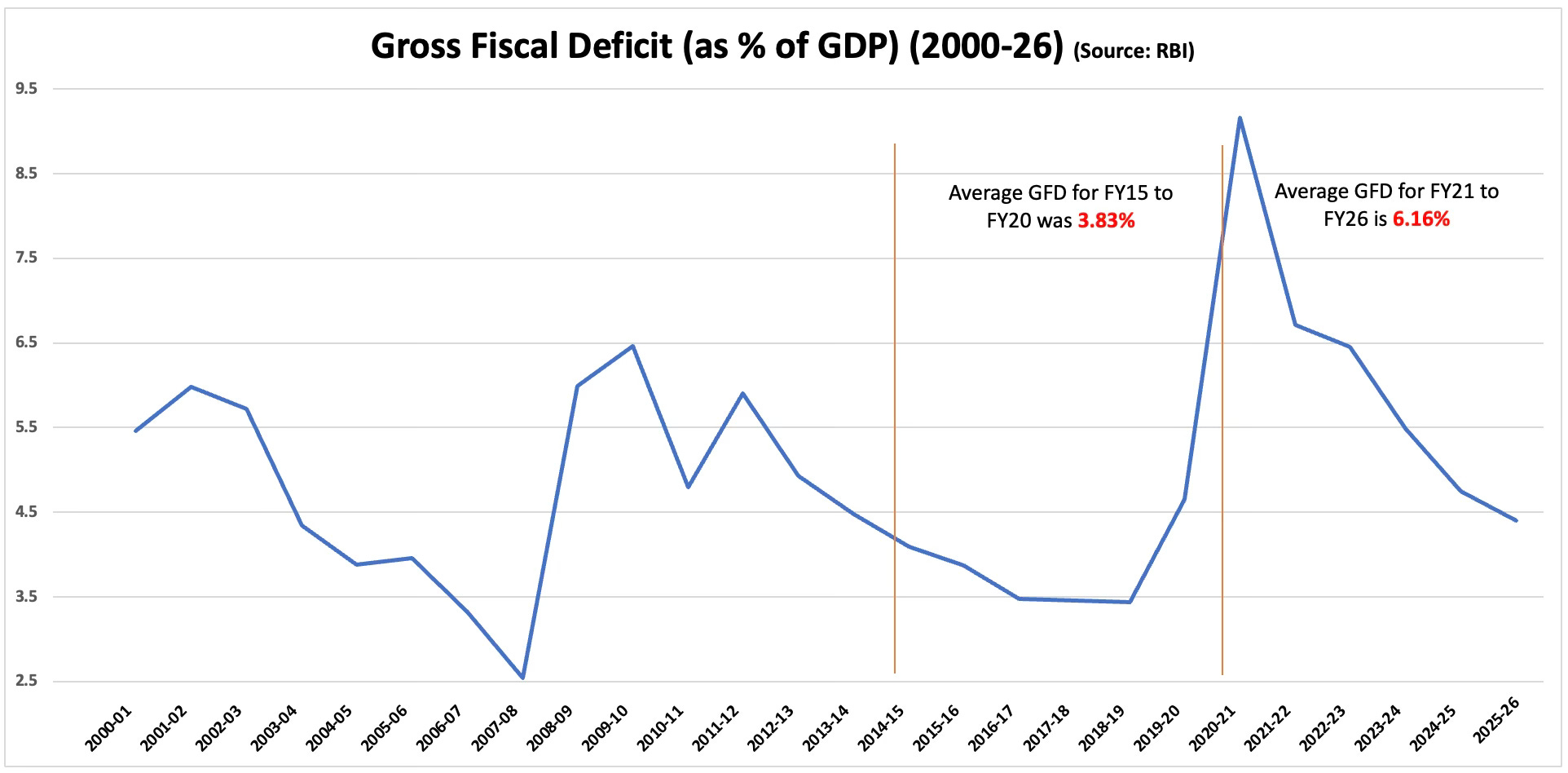
The country’s fiscal framework, enshrined in the Fiscal Responsibility and Budget Management (FRBM) Act, mandated governments to keep their gross budget deficits under 3% of the GDP, a benchmark that has no objective basis but was straight borrowed from the EU (where, too, it was forced without any objective basis). While it was never strictly followed (except for state governments), it nudged successive central governments not to stray too far from this number. 

The pandemic helped break away from this constraint and allowed the central government to find an average of nearly 2.5 percentage points of GDP of additional fiscal space (comparing the six years immediately before the pandemic with those immediately after). This additional fiscal space has been critical, almost single-handedly responsible, in sustaining and boosting economic growth. It is to the government’s credit (a surprisingly less acknowledged thing) that it used this additional fiscal space not to dole out subsidies and other revenue expenditures, but on good-quality capital expenditures that created durable assets, and also to clean up its budget books. 

The big post-pandemic fiscal deficit and the failure to reverse course quickly to the FRBM benchmark raised criticism from experts and opinion makers. They warned of macroeconomic instability, a surge in public debt, capital flight, growth squeeze, and a knock-on effect on the equity markets. None of these has materialised, and, despite the headwinds from global uncertainties and weaknesses, the Indian economy remains in reasonably good shape. 

Inflation has been low and growth high, especially when compared to peers and advanced economies. In fact, while it will be a matter of debate, there may now be a case to even revisit the fiscal framework to anchor the benchmark at about 4% of GDP.

The point here is not to reject technical expertise and technocracy in macroeconomic policymaking and public policy in general, but to caution against excessive reliance on them. Public narratives tend to endow them with expertise and prescience far in excess of what they possess, especially in complex areas like macroeconomic decision-making. Given the deeply political nature of these decisions, it’s more appropriate if they are taken within governments, by drawing on the inputs and expertise of technical experts.

Wednesday, March 3, 2021

Assessing Covid 19 response - when experts got it wrong, again!

Siddharth Mukherjee has a great long form in New Yorker examining the epidemiological mystery around Covid 19,

The usual trend of death from infectious diseases—malaria, typhoid, diphtheria, H.I.V.—follows a dismal pattern. Lower-income countries are hardest hit, with high-income countries the least affected. But if you look at the pattern of covid-19 deaths reported per capita—deaths, not infections—Belgium, Italy, Spain, the United States, and the United Kingdom are among the worst off. The reported death rate in India, which has 1.3 billion people and a rickety, ad-hoc public-health infrastructure, is roughly a tenth of what it is in the United States. In Nigeria, with a population of some two hundred million, the reported death rate is less than a hundredth of the U.S. rate. Rich countries, with sophisticated health-care systems, seem to have suffered the worst ravages of the infection. Death rates in poorer countries—particularly in South Asia and large swaths of sub-Saharan Africa—appear curiously low. (South Africa, which accounts for most of sub-Saharan Africa’s reported covid-19 deaths, is an important exception.)

This on the so-called Models,

... for rich countries, deaths predicted by the model weren’t far from what we’ve seen, or, anyway, what we can now reasonably extrapolate. The surprise emerged when looking at South Asia and most of sub-Saharan Africa. The model—which, it should be emphasized, took age differences into account—appeared to be off, in most cases, by a staggering margin. Pakistan, with a population of two hundred and twenty million, was predicted to have as many as six hundred and fifty thousand deaths; it has so far reported twelve thousand. Côte d’Ivoire was predicted to have as many as fifty-two thousand deaths; by mid-February, a year after the pandemic reached the continent, it had reported under two hundred... Nigeria was predicted to have between two hundred thousand and four hundred and eighteen thousand covid-19 deaths; the number reported in 2020 was under thirteen hundred. Ghana, with some thirty million residents, was predicted to see as many as seventy-five thousand deaths; the number reported in 2020 was a little more than three hundred. These numbers will grow as the pandemic continues. As was the case throughout much of sub-Saharan Africa, however, the statistical discrepancy was of two orders of magnitude: even amid the recent surge, the anticipated devastation still hasn’t quite arrived.

In the days and years ahead, there will be volumes written on the Covid 19 response by governments. This post is a very brief early assessment, based on some emerging data.

This blog has written on multiple occasions from the very beginning of the pandemic arguing that for some unknown reason the pandemic mortality was lower in developing countries than in developed countries. The emergent evidence was unambiguous enough to make this as a simple affirmation. This and this, and this and this, are two very early posts each urging less aggressive lockdowns and proposing a plan of action for opening respectively which are worth revisiting (in case people think this is hindsight analysis). 

This demanded a different and less aggressive response in terms of lockdowns and restrictions on economic and other activities in most developing countries. And this case was based on available real-world evidence and judgement on the likely costs and benefits. It stood in contrast to the panic reaction among experts arising from purely theoretical models-driven assessments, with little consideration for the emergent reality in developing countries. Epidemiologists, public health specialists and even economists assumed the stage of expertise and scared politicians and bureaucrats everywhere into persisting with the aggressive overkill on lockdowns. 

In recent weeks there have been numerous serological studies from across India which point to very high levels of Covid 19 infection rates, almost reaching herd immunity levels. So much so that the demand for even the AstraZenca/Oxford vaccine has been lukewarm. State governments are facing resistance among significant numbers of people in accepting the vaccine. Dose completion rates are disturbingly low. This, in a country where, unlike in the US, vaccines are commonly and widely accepted and administered.

Another argument that has commonly been used in the western media is that systematic large under-reporting was responsible for the low mortality rates in developing countries. Dispelling this, if it needed any at all, comes data on all-cause deaths from Kerala. It dipped from 2.64 lakh to 2.35 lakh, a decline of 11.1%. As this report points out, given the low levels of deaths due to road accidents and communicable diseases, there is a case that Covid 19 deaths in 2020 were no more than would be expected of any normal disease. 

This raises the question that will be asked in the days ahead.

After the initial month or two of hard lockdown, should India and other developing countries not have opened up more (allowing economic activities, schools etc with mandatory mask wearing and practical social distancing) while accepting slightly higher deaths than has been the case, but thereby limiting the economic damage and human suffering?

The experts (with their western orientations and biases) won the day with the Covid 19 response. But at what cost?

It also raises the question on how much should public policy be determined purely by technical experts, overlooking other equally important considerations. This post explains how the pre-pandemic economic weakness in India may have been the doing of excessive reliance on the opinions of experts.

We over-estimate the importance of pure technical expertise in the management of complex public policy choices. For sure they are important as critical inputs into decision-making. But they have to be considered along with other equally important contextual factors and judgement exercised. 

Wednesday, June 7, 2023

The importance of experience

I just completed Bent Flyvbjerg's How Big Things Get Done. He talks about the importance in project planning of experimentation and experience, captured in the Latin word experiri

This about the importance of experience in successful project execution (and a lot else) 

But as the scientist and philosopher Michael Polanyi showed, much of the most valuable knowledge we can possess and use isn’t like that; it is “tacit knowledge.” We feel tacit knowledge. And when we try to put it into words, the words never fully capture it. As Polanyi wrote, “We can know more than we can tell... Highly experienced project leaders like Frank Gehry and Pete Docter overflow with tacit knowledge about the many facets of the big projects they oversee. It improves their judgment profoundly. Often, they will feel that something is wrong or that there is a better way without quite being able to say why. As a large research literature shows, the intuitions of such experts are, under the right conditions, highly reliable. They can even be astonishingly accurate.. This is “skilled intuition,” not garden-variety gut feelings, which are unreliable. It is a powerful tool available only to genuine experts—that is, people with long experience working in their domain of expertise...

When Aristotle discussed the nature of wisdom more than 2,300 years ago, he didn’t scorn the knowledge we get from classrooms and textbooks. It is essential, he said. But practical wisdom, the wisdom that enables a person to see what’s right to do and get it done, requires more than explicit knowledge; it requires knowledge that can be gained only through long experience—a view supported by Michael Polanyi and a great deal of psychological research 2,300 years later. As previously mentioned, that practical wisdom is what Aristotle called “phronesis.” He held it in higher regard than any other virtue, “for the possession of the single virtue of phronesis will carry with it the possession of them all [i.e., all the relevant virtues],” as he emphasized.
He describes the importance of experience in the success of several important large projects.
Experience is what elevates the best project leaders—people like Frank Gehry and Pete Docter—above the rest. And in both planning and delivery, there is no better asset for a big project than an experienced leader with an experienced team. How does experience make people better at their jobs? Ask someone that question, and you’ll likely hear that with experience people know more. That’s true as far as it goes... When a highly experienced project leader uses a highly iterative planning process—what I earlier called “Pixar planning”—good things happen... the process of building the Disney Concert Hall taught Gehry a host of lessons that he used in building the Guggenheim Bilbao and has used in projects ever since. Who has power, and who doesn’t? What are the interests and agendas at work? How can you bring on board those you need and keep them there? How do you maintain control of your design? These questions are as important as aesthetics and engineering to the success of a project. And the answers can’t be learned in a classroom or read in a textbook because they are not simple facts that can be put fully into words. They need to be learned as you learn to ride a bike: try, fail, try again. That was what Gehry did and Utzon didn’t. One had built experience, the other had not.

The importance of experience arises from its role in people's ability to exercise good judgement. It's about phronesis, the ability to exercise good practical judgement, the highest intellectual virtue as per Aristotle. 

A simple theory of knowledge processing I have found useful is that it has three parts - learnt knowledge, lived life, and lived career. The first is the theoretical and the second and third are experiential knowledge. The Aristotlean phronesis emerges from an interaction of the theoretical and experiential knowledge. You need a combination of the three to process knowledge, understand the world, and make good judgements. 

The importance of practical wisdom increases with the complexity of the issue being examined. And there are few more complex issues in the world than policy making and implementation on development and economic growth. As I blogged here, decision making in development contexts is invariably about the exercise of judgement. Good judgement is the difference between success and failure. 

From this aforementioned perspective, international development discourse has a fundamental problem. It elevates theoretical knowledge as superior and discounts experiential knowledge. It also elevates the knowledge of the sayers and discounts that of the doers. I have blogged about the sayer-doer dissonance in development,

The sayers are informed by their knowledge of the why and what ought to be done, the concepts and theoretical frameworks of the issue. The doers are informed by their judgement of what is possible and doable given the circumstances. Each side understand their role and acknowledge it. The sayers draw on their concepts and analytical frameworks to supply the inputs which the doers can apply in their decision making. The doers screen the inputs from the sayers by drawing on countless insights and data points from their practical experience, and thereby exercise good judgement in their decisions. 

The sayers acknowledge the limitations and narrowness of their knowledge, the absence of insights and data points gathered from the experience of a lived life. This gives them an epistemic humility... The acknowledgement of role distinction comes from their respective expertises and perspectives. The sayer's expertise is largely theoretical. The doer's is experiential, the lived experience of doing things. The sayer has the comfort and luxury of working in sanitised environments - contemplating, theorising, designing and experimenting. The doer has to respond to the issue in real-time and based on a multitude of emerging contexts and scenarios. It's accepted that the doers will apply their judgement to the outputs of sayers and tailor their responses accordingly. It's therefore also accepted that these responses will sometimes incorporate the inputs from the sayers, sometimes modify them, and sometimes reject them. It's considered the normal course of things in their respective areas. Flawed judgements by the doers are assumed to be part of the deal.

The development experts and the discourse framed by them offer no such leeway to its practitioners. Instead, the entire debate tends to get side-tracked into one between experts and generalists, where the latter are considered of inferior quality and expected to take the advice offered by experts and implement them unconditionally. This view gets reinforced by the dominant narrative about the inefficiencies and incompetence of governments, politicians and bureaucrats.

This feature of international development discourse is interesting since there is a clear distinction between the sayers and doers in all other fields. The sports coach, management guru, research team of fund management house, and election campaign manager acknowledge their advisory role and leave the execution to the phronesis of the sportsperson, chief executive, fund manager, and politician respectively.

Update 1 

This is a great illustration of the difference between knowledge and experience.