Substack

Saturday, January 24, 2026

Weekend reading links

Over the past decade, India’s top five outsourcing companies have managed to raise labour productivity by less than 2 per cent annually because of their squeamishness to put more fixed capital behind human effort: The average value added by an employee has risen to roughly $40,000 a year, from $34,000 in 2015. The modest gains are going to labour, although not at the entry level where salaries have been stagnant. Profit per worker, in my calculations, has been practically unchanged in dollar terms.


The top 10 most valuable private companies, including OpenAI, ByteDance, Anthropic and SpaceX, have been sucking up funding mega-rounds and are collectively valued at $2tn. The top 10 most active VC funds, including General Catalyst, Andreessen Horowitz, Sequoia and Accel, are heavily focused on AI. “The most influential investors are essentially running concentrated AI funds, not diversified portfolios,” CB Insights concluded. 

One other significant difference today is how the Big Tech companies are reshaping the start-up universe given their overlapping roles as suppliers, customers, competitors, funders and acquirers. The Magnificent Seven US tech companies — Nvidia, Alphabet, Microsoft, Amazon, Apple, Meta and Tesla — dominate the tech landscape in a way that was not the case at the dawn of the internet era. These giant companies are massive allocators of capital in their own right, investing almost as much as the entire VC industry. They also provide start-ups with AI software, cloud computing services and direct investment funding through their own sizeable corporate venture capital arms. But they are furiously rolling out AI themselves in sectors as varied as video generation, healthcare, autonomous driving and scientific discovery. Every time a giant AI company releases a new generative AI model, scores of undifferentiated start-ups shrivel up and die.
Oil executives seem to not only be balking at the risk of having assets nationalized but also expressing a view that has become standard across the sector: Big new projects have to survive intense scrutiny. Venezuela’s tar-like oil has to be diluted to flow through a pipeline. It has to be upgraded locally before it even gets to a refinery. That’s a multi-billion-dollar expense. For most of the past 15 years, Big Oil was focused on projects — such as drilling for North American shale oil — that have a quick and predictable payback, even though their production drops off steeply after the first year. To some extent, the companies deprioritized projects such as those in offshore oil, or heavy crude deposits like Venezuela’s, that keep producing at low cost for 10 to 20 years but require more upfront investment to bring online.

So a lot of oil came from fields that were low in risk but relatively high in cost. According to Rystad Energy, a research company, in 2024 North American shale had a break-even cost of $45 a barrel. That was expensive compared with offshore deepwater ($43), offshore shelf ($37) and onshore Middle East ($27). From 2014 to 2024, daily crude production in the United States increased 71 percent, while production in the rest of the world actually decreased a couple of tenths of a percent, according to data in the Statistical Review of World Energy 2025. That’s changing a bit. North American shale is beginning to be tapped out, although the oil majors are using advanced technology to get more oil out at lower costs. Since around 2022, when Russia invaded Ukraine and oil prices spiked, the oil majors have shifted some of their interest back toward higher-risk, longer-payout projects in parts of the world where the oil is cheapest — not North America. Exxon and Chevron have explored bidding on exploration opportunities in Libya. Last year, Chevron signed an agreement in principle to develop Iraq’s vast Nasiriyah oil field and other assets. Exxon is also in discussions with Iraq.

Interesting that Trump is forcing his oil companies to invest in a country that has historically been univestable despite its abundance of oil reserves, one reason being the high cost of extraction of the country's heavy crude (costs $70 to extract a barrel, when oil sells for $58). 

4. In 2017 when Donald Trump said he was going to pull the US out of the Paris Agreement, this was the reaction of corporate America.  

“Today’s decision is a setback for the environment and for the US’s leadership position in the world,” wrote Lloyd Blankfein, Goldman’s then chief executive, in his first post on what was then Twitter. Facebook’s Mark Zuckerberg agreed, saying the move was “bad for the environment, bad for the economy, and it puts our children’s future at risk”. Tesla’s Elon Musk and Walt Disney’s Bob Iger both quit White House business advisory councils. At Apple, Tim Cook said he had tried but failed to persuade Trump to abandon a move that would have “no impact on Apple’s efforts to protect the environment”. And other corporate leaders spoke out with equal force.

Last week he announced US exit from both the 34-year old parent of the Paris Agreement, the UN Framework Convention on Climate Change, and the UN's 38-yar-old Intergovernmental Panel on Climate Change, it was met with silence from the same people. 

5. China violates Taiwan's airspace with a drone for the first time,

A Chinese surveillance drone entered the airspace of Pratas, a Taiwan-controlled island in the South China Sea also known as Dongsha, for four minutes on Saturday. The unmanned aerial vehicle was a WZ-7 known as ‘Soaring Dragon’ according to a Taiwanese national security official. It flew at an “altitude outside the range of our air defence weapons and left following warnings Taipei broadcast via international radio channels”, Taiwan’s defence ministry said in a statement... “China has found another soft spot,” said Kitsch Liao, an associate director at the Atlantic Council’s Global China Hub. “They can repeat this to demonstrate that they can enter Taiwan airspace with impunity. And what do you do if they start flying lower and lower? If you decide to shoot the drone down when it comes into range, China can blame Taiwan because it didn’t do anything before.”

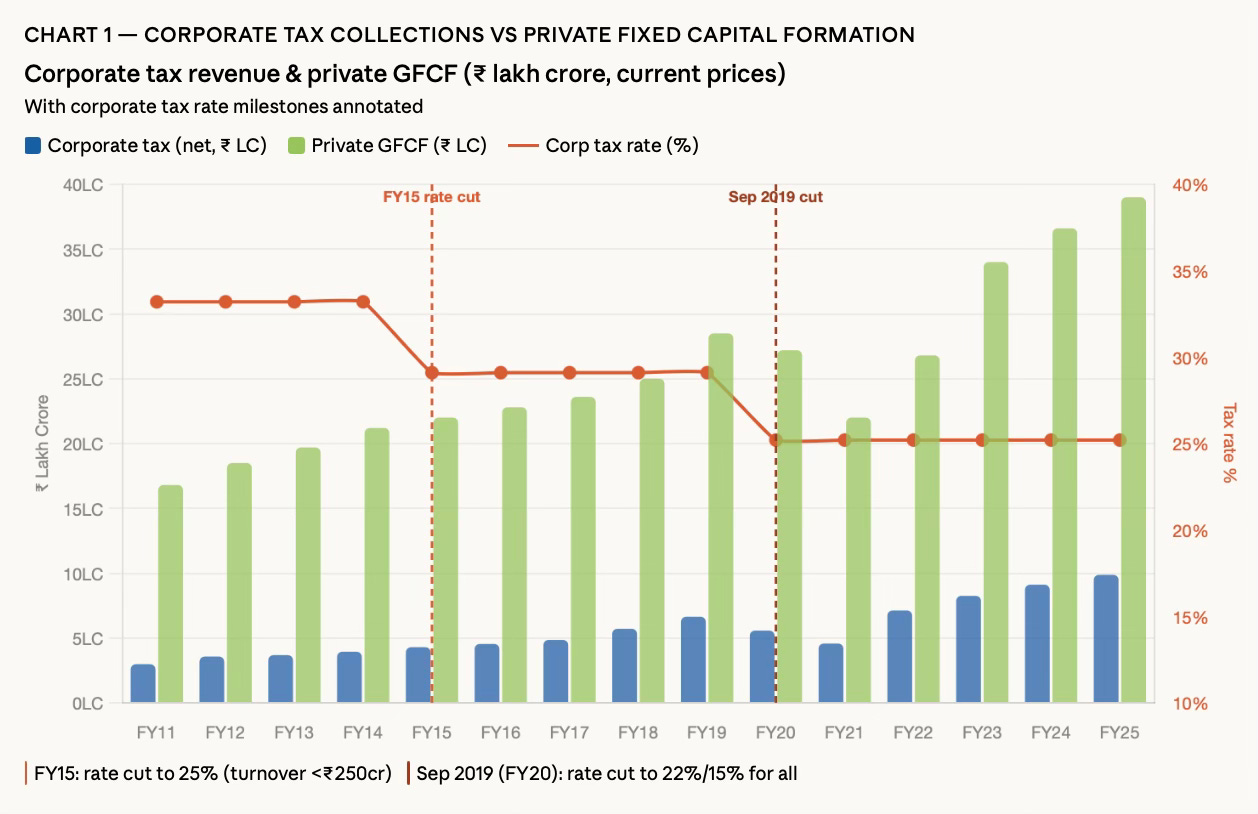
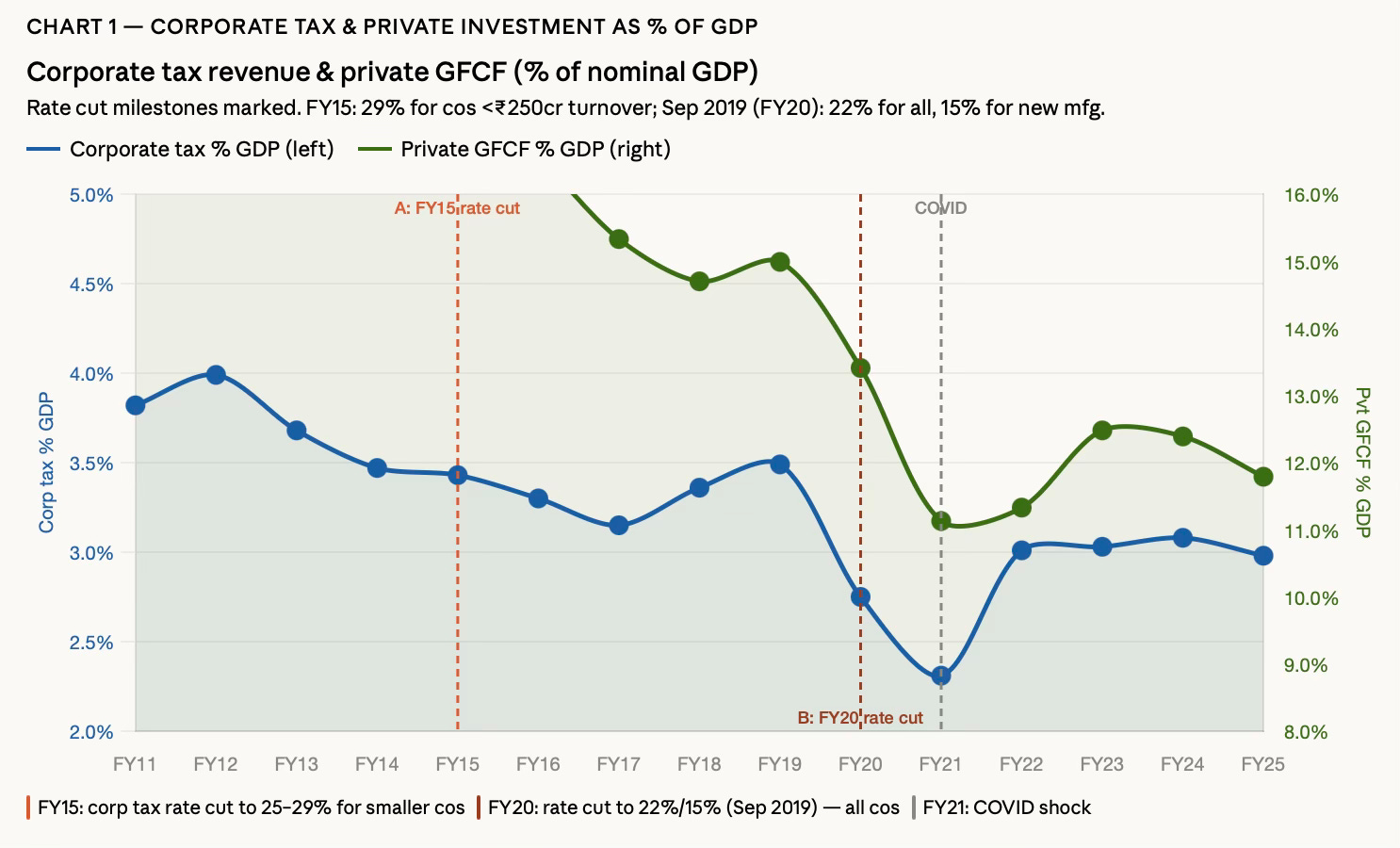
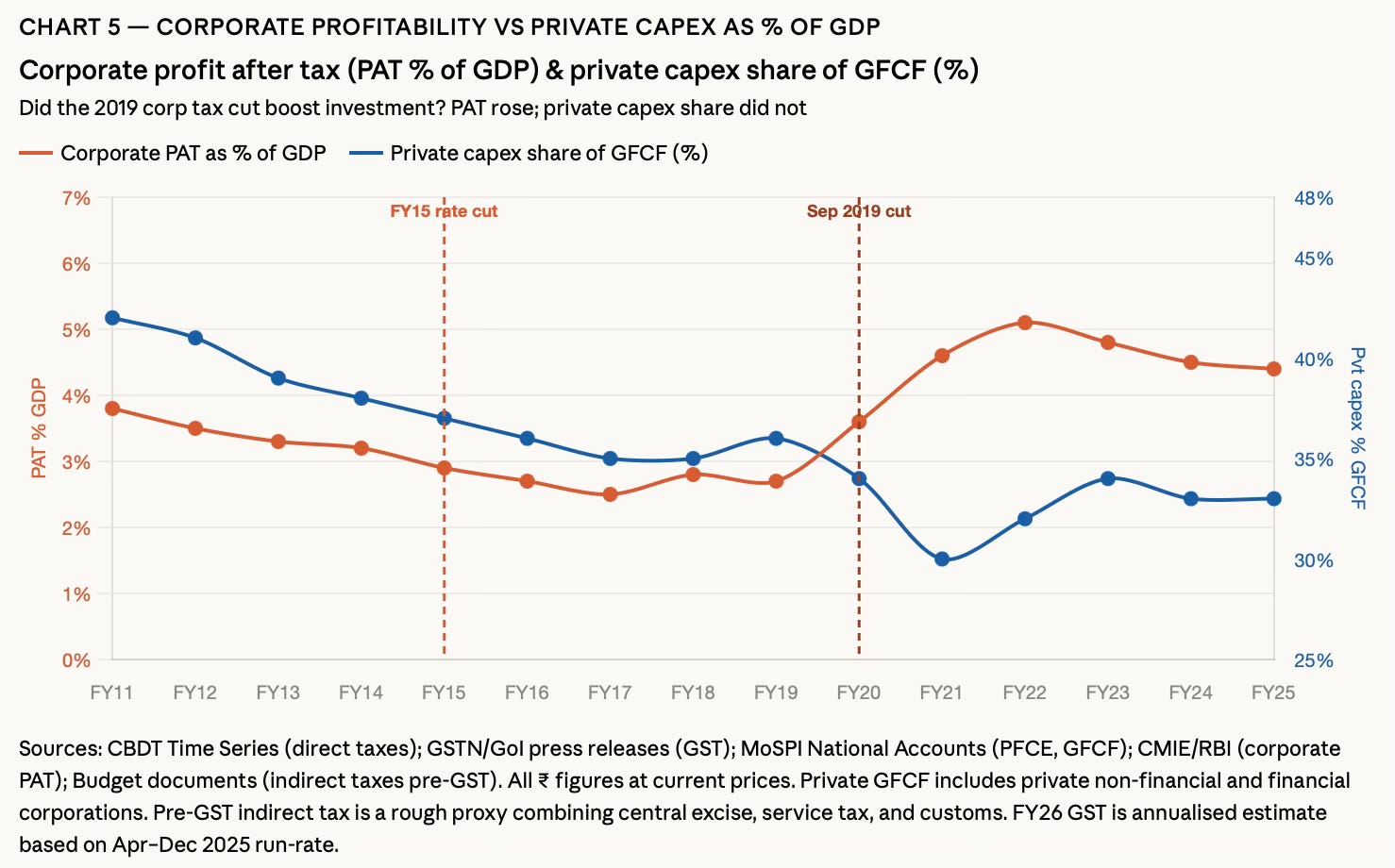
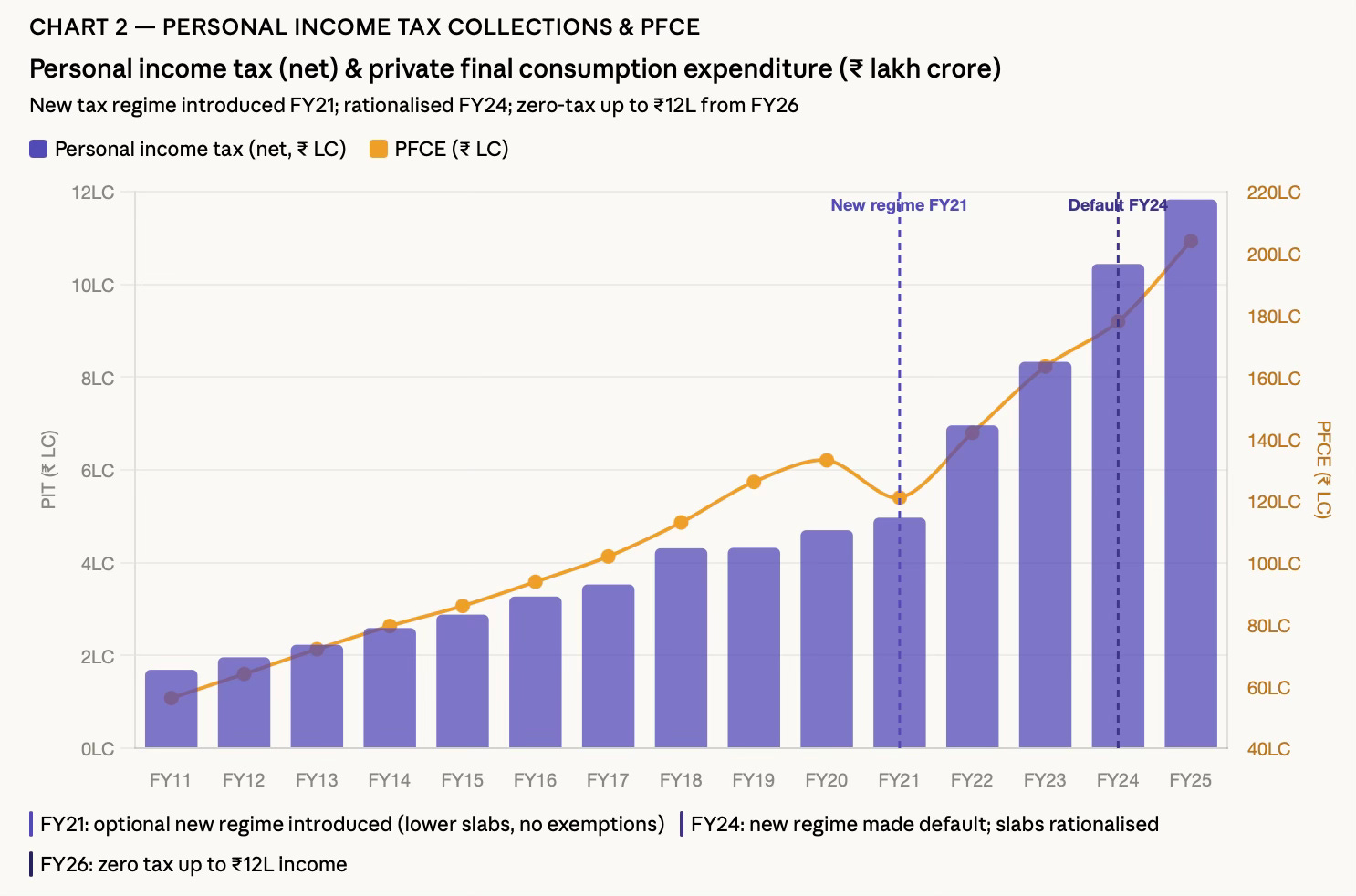
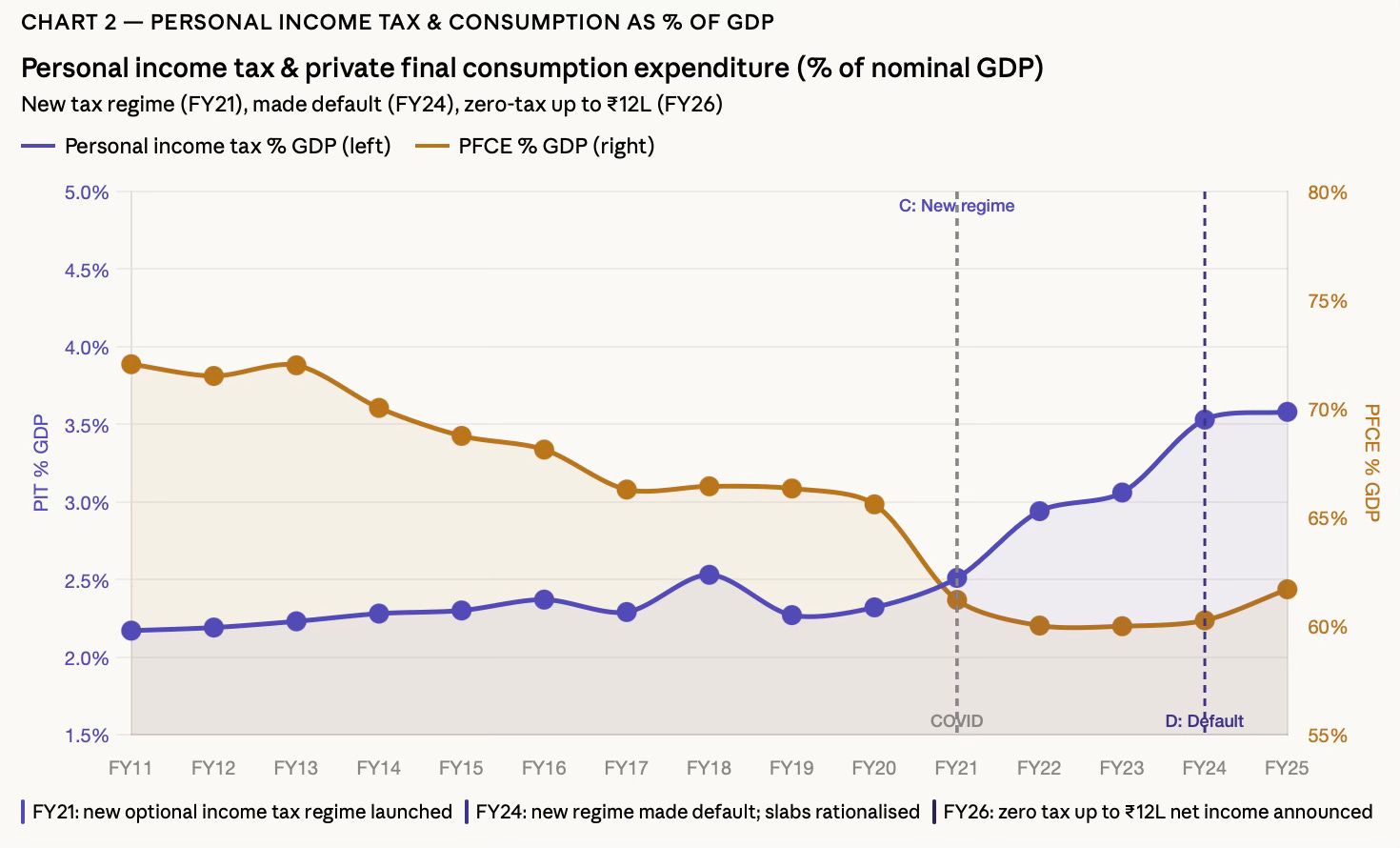
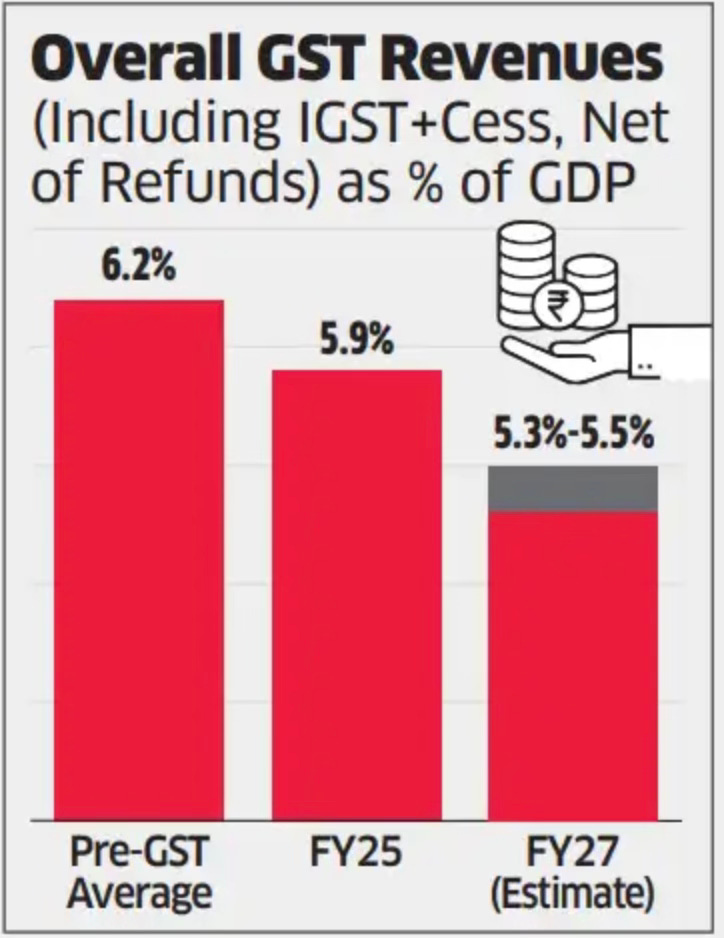
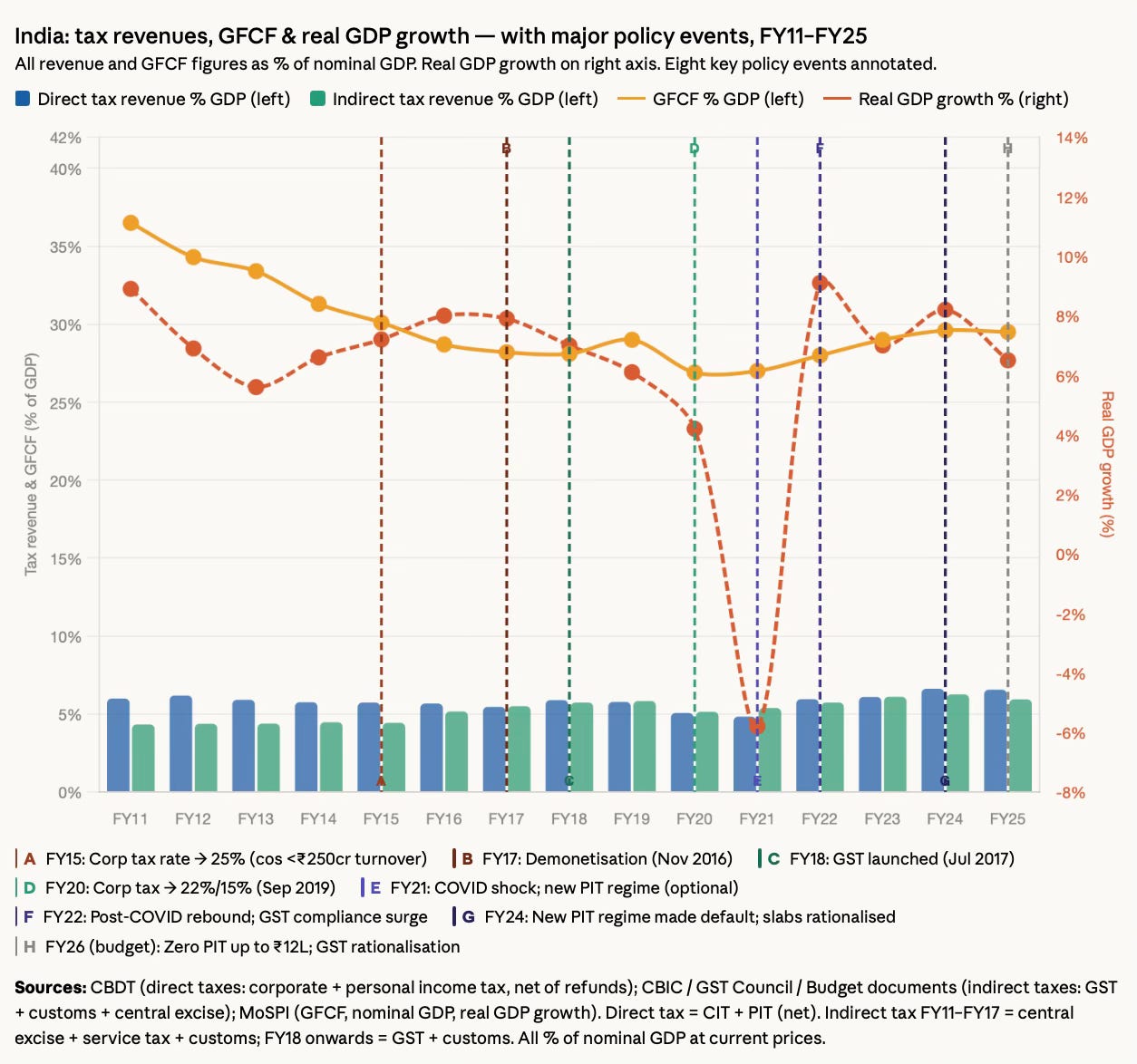
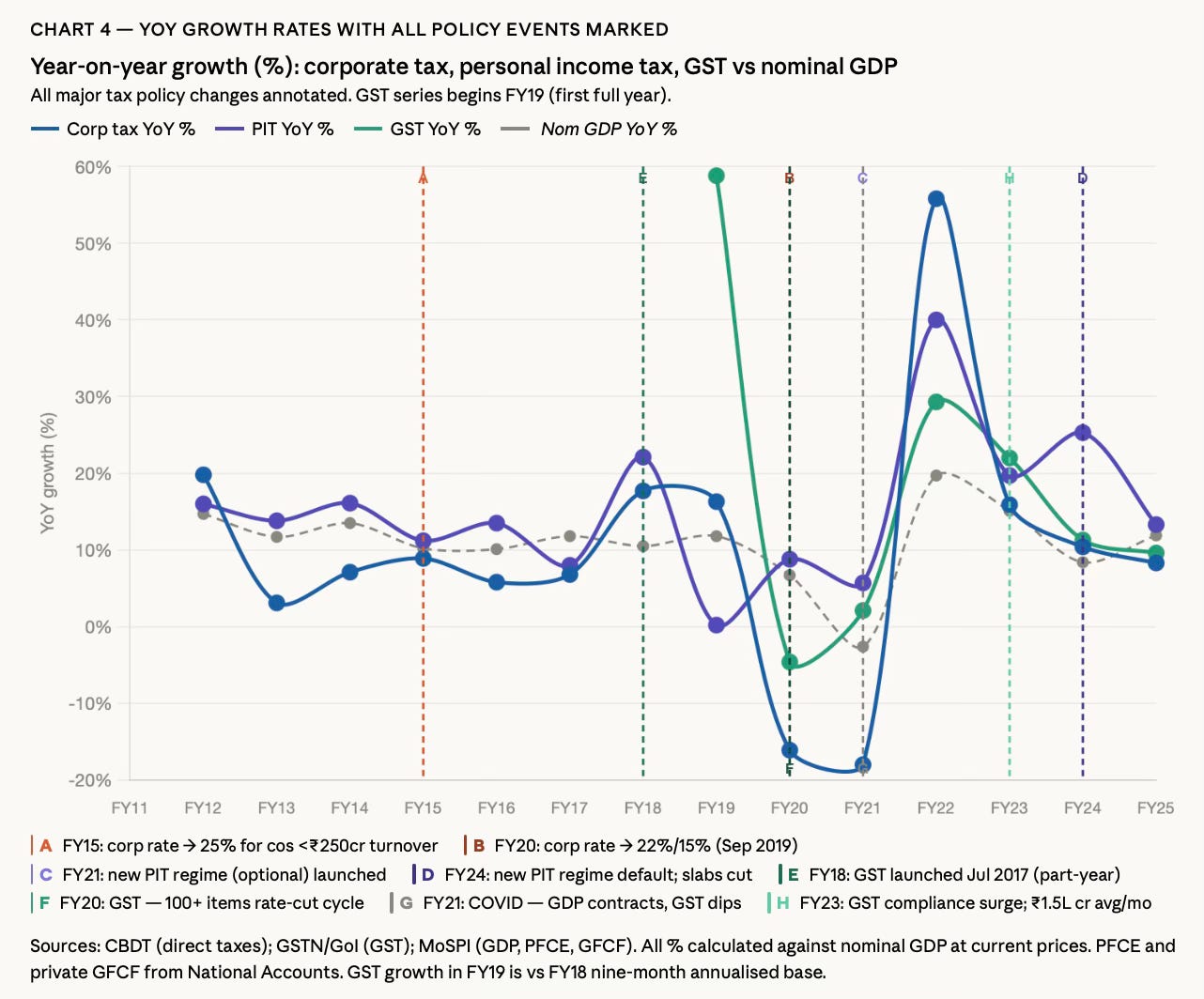
6. Ishan Bakshi makes some very important points on the central government's tax revenues on the back of the lowering of corporate taxes in 2019, the rejigging of the personal income tax slabs in the Union Budget of 2025-26, and the GST rate rationalisation of late 2025.

The net impact of these fiscal steps — even as the direct and indirect tax base has significantly expanded over the past decade — is constrained finances, forcing governments to restrain expenditure, despite the bluster of lavish spending. The estimates of the extent of revenue foregone due to these tax cuts vary considerably. Nonetheless, they are quite significant. For the corporate tax cuts, the initial estimates pegged the revenue foregone at Rs 1.45 lakh crore, while in the case of the income taxes, it was around Rs 1 lakh crore. For GST, while precise estimates are difficult to arrive at, they will reflect slowly in tax collections... Over the past decade, the Centre’s tax collections have barely inched upwards – net tax revenues were 7.2 per cent in 2014-15 and were budgeted at 7.9 per cent in 2025-26. Collections may, in fact, end up being lower this year.

7. Tim Harford writes about smart fitness tracker watches and their health behaviour tracking. 

...in a study conducted with behavioural scientists Linda Chang, Erika Kirgios and Sendhil Mullainathan. The researchers asked a simple question: “Do we decide differently when some dimensions of a choice are quantified and others are not?” The answer emerged loud and clear from a series of experiments: yes, we do. Whenever experimental subjects were offered a choice between two options, they would tend to favour whichever option looked better on numerical measures and overlook qualities that were expressed as graphical elements, letter grades, star symbols or in words (“moderate”, “excellent”, “highly likely”). This was true whether the choice was between hotels, job applicants, conference locations, public works projects, restaurants or charitable causes. Numbers loomed large. What was quantified, got attention. This matters because fitness trackers purport to excel at quantifying some things and do not pretend even to quantify others. If quantification fixation applies, we would expect to see such trackers systematically pushing people towards the quantified behaviour at the expense of other things.

And the perverse incentives generated from such health behaviour tracking.

Larger studies strongly suggest that fitness trackers do not usually hinder weight loss, but the surprising and disheartening finding is an example in miniature of the quantification-fixation problem. In this case, both groups were equally active, but those using a fitness tracker were getting automatic, effortless validation of their effort, which they could then use to justify more indulgent eating. The lead researcher, John Jakicic, speculated at the time: “People would say, ‘Oh, I exercised a lot today, now I can eat more.’ And they might eat more than they otherwise would have.” Calorie counting is joyless, easily fudged — and not automated by the watch. We’re all familiar with the tendency to be virtuous in one aspect of our behaviour, then let ourselves off the hook somewhere else — choosing a healthy salad, then using it as permission to order dessert. Psychologists call this behaviour “self licensing” and fitness trackers encourage it by supplying us with asymmetric data. We are told how much we moved, but not what we ate. We get stark feedback on heart rate and step count, but the tracker looks the other way if we order french fries and a glass of beer.

8. Tej Parikh thinks that China will win the AI race with the US. I think this piece is one of the least persuasive ones from Parikh.

9. As anti-immigration and nationalism trends rise, it is likely that US companies will show increasing preference for US-born chief executives
Foreign-born CEOs already face a more difficult time than native ones. Academic research shows they are held to a higher standard for performance and are more likely to be dismissed when things are going wrong. They also have to work harder to prove their legitimacy and trustworthiness. In politicised environments, the margin for error becomes smaller.

10. The continuous weakening of rupee despite the combination of low inflation, high GDP growth rates, and low current account deficit (around 1% of GDP) can be traced to the worsening trade balance and weak FDI inflows

Merchandise imports averaged about $62 billion a month in 2025, far exceeding exports of roughly $37 billion and leaving a $25 billion trade deficit. Although services exports offset much of this gap, weak goods exports and a rising import bill — driven in part by higher gold and silver prices — have skewed demand towards dollars... In 2025, foreign portfolio investors (FPIs) withdrew about $19 billion from Indian equities on a net basis — the worst outflow on record... Gross FDI inflows have been stuck at around 1.7 per cent of GDP since early 2023, well below the 3 per cent seen in the mid-2000s... Between January 2024 and October 2025, gross FDI inflows averaged about $7 billion a month, while withdrawals ran close to $4 billion, leaving net inflows of barely $3 billion — negligible for a $4 trillion economy. Once rising outward investment by Indian firms, averaging $2-3 billion a month, is taken into account, the picture worsens. In effect, India has received close to zero net FDI each month over the past 22 months.
Data shows that net FDI in November was negative $446 million, compared with negative $1.67 billion in October.
Lowering the government’s stake to 51 per cent in 78 listed public-sector enterprises (PSEs) could unlock value worth about ₹10 trillion.

12. Ashok Gulati has a summary of the food subsidy.

In the case of rice, the economic cost hovers around Rs 42/kg, and for wheat, it’s around Rs 30/kg to FCI. It gives 5 kg of free rice or wheat to about 813 million people under the PM Garib Kalyan Yojana. Roughly 56 per cent of the country’s population of around 1.5 billion is covered. The introduction of point of sale (POS) machines in more than 5 lakh fair price shops (FPS) was a significant reform of the Modi government. It helped to reduce massive leakages in PDS. But how rational is giving free food to 56 per cent of the population, when, according to the World Bank’s extreme poverty criteria — $3 per capita/day/in purchasing power parity (PPP) terms at 2021 prices — India’s poverty came down to just 5.3 per cent of the population in 2022? Even at a higher poverty line of $4.2/per capita/day, poverty in India was about 24 per cent. One can argue that the extremely poor need to be given free food (antyodaya). Viewed from this perspective, only about 5 per cent of the country’s population needs free food, while others should pay at least half of the MSP. If not, then this policy is nothing but the biggest political revdi (dole) the government is giving consumers for votes.

13. FT Alphaville suggests that the threat of pulling out from the $35 trillion foreign holdings of US financial assets is not a credible option for Europeans and others trying to exercise leverage over the US. 

While the US’s large current account deficit suggests that in theory there is the potential for the USD to drop should international savers stage a mass retreat from US assets, the sheer size of US capital markets suggests that such an exit may not be feasible given the limitations of alternative markets.

14. Amidst China's real estate crisis, this stands out

China had about 440 square feet of housing for each man, woman or child living in cities in 2024, up from 340 square feet only 15 years earlier. It was less than 100 square feet per person before Mao Zedong’s death in 1976.

15. In a ruling that has far-reaching implications for how India applies tax treaties to offshore transactions, the Indian Supreme Court has ruled on the tax treatment of Tiger Global's capital gains from the sale of its investment in Flipkart (done through three Mauritius-based entities) to Walmart for about $1.6 billion in 2018. 

Tiger Global had argued that capital gains on the transaction should only be taxed in Mauritius and not India, in line with a treaty in place between both countries for decades. While a significant amendment in 2017 to the treaty had made capital gains on transactions in Indian shares taxable in India, it also exempted share purchases that were made before the change came into force. The Delhi High Court agreed with this view at the time. Last week’s ruling essentially strikes down this interpretation and makes all transactions vulnerable to being taxed in the country. The exact amount Tiger Global will have to pay the tax authorities is unclear, but some estimates suggest that tax plus penalties may be close to $1.5bn... 

The court said holding a tax residency certificate was not a “magic wand” that automatically bestowed the benefits of the treaty, and that Indian tax authorities could examine whether the structure of an investment had been created primarily to avoid taxes. In his concurring opinion, one judge wrote: “Taxing an income arising out of its own country is an inherent sovereign right. Any dilution of this is a threat to a nation’s long-term interest.” This signals that the court could take a similar approach if presiding over other investments. Foreign investors typically use Singapore, Mauritius, the Netherlands or other treaty jurisdictions to structure their investments into India. The supreme court’s order will force a rethink on this.

16. China is influencing the course of the Russia-Ukraine war by informally supplying drones to both sides

China already makes 70-80 per cent of the world’s commercial drones and dominates production of critical elements such as speed controllers, sensors, cameras and propellers, according to analytics provider Drone Industry Insights. That has made it a hidden fulcrum in the conflict. “It just puts into perspective how much control the Chinese actually have over the outcome of this war,” says Catarina Buchatskiy of the Snake Island Institute, a Kyiv-based military think-tank. “They could just choose to supply or not to supply the Ukrainians. I mean, the drone is such a definitive battlefield weapon now. It underlines how China has kind of evolved into a really influential player.” China’s Ministry of Foreign Affairs said the country had “always maintained an objective and just position on the Ukraine crisis” and had “never supplied lethal weapons to any party to the conflict and strictly controls the export of dual-use items, including drones”.

17. AI-related capex contributed as much to the US economic growth in H1 of 2025 as consumer spending, which makes up 70% of the economic output.

18. This sort of sums up Trump's presidency
Trump’s behaviour seems to be becoming even more erratic. Since the beginning of the year, he has staged a military operation in Venezuela; promised to intervene in Iran; threatened to annex Greenland; dispatched hundreds of masked federal agents to Minnesota; and launched law suits against the head of the Federal Reserve, Jerome Powell, and the head of JPMorgan, Jamie Dimon. That is in just three weeks and there are three years of his presidency left to go.

Wednesday, January 21, 2026

State capability in construction management

This post will highlight that strong public oversight and in-house expertise are essential requirements for the infrastructure bid process, construction, and contract management. This goes against the conventional wisdom that infrastructure projects are best managed when done primarily by relying on expertise drawn from outsourced project management consultants and with limited public management. 

As an illustration, FT has a long read on how the much-awaited 225 km London-Birmingham High Speed (HS2) railway link, which was started in 2019 and is projected to be completed by 2035 at a total cost of £80bn (2024 estimates). At $537mn per km, it is easily the most expensive project in the Transit Costs Project research group’s dataset of 94 railway projects. Taxpayers are already paying about £7bn a year, or £140mn a week, for HS2, which is being built at barely half the length originally envisaged.

The FT article points to possible reasons for the cost increases. 

HS2, a taxpayer-funded body, was set up in 2009 to deliver the scheme, but contractors, who had lobbied for the railway, were embedded as project managers in the organisation’s offices at Canary Wharf. The Department for Transport as the sponsoring department was expected to provide oversight. Network Rail, which runs the country’s rail infrastructure, was sidelined but should have played a larger role, according to a government-commissioned report into HS2 in 2025... That left too much power in the hands of contractors and government officials without technical expertise.

In Japan, by contrast, the project management for new railway construction projects, including the Shinkansen high-speed lines, is handled by the Japan Railway Construction, Transport and Technology Agency (JRTT), a public body with technical capabilities. JRTT plans and determines the route, equipment and project costs and secures funding. It also carries out technical reviews once construction has started and adjusts the budget when there are design issues such as changes in groundwater and geology, which are common in large civil engineering projects…

At HS2, however, contractors signed off huge contracts on a “cost-plus” basis, where companies are paid a percentage of the total value of the work. This gave contractors an incentive to go over budget and “get more money as more money is spent”, the Stewart report found. In Japan, construction work is also outsourced, but bids that were too low were excluded to ensure the quality of the works, said Kanayama. The JRTT monitors the construction as it proceeds.

Closer to home in India, it has become a norm, especially (but not only) in state government projects, of project execution through teams with limited in-house expertise. The SPVs administering PPP concessions, and their respective infrastructure and industries departments in both central and state governments, have limited internal technical capabilities. 

Governments have become increasingly reliant on outsourced project management consultants to undertake feasibility studies and make detailed project reports, manage the bid process, finalise tenders, evaluate execution quality, manage contracts, and decide on emerging contractual issues (including renegotiations). These decisions often conform only to the form of due-diligence without the rigour and practical expertise that only in-house experience and associated expertise can bring. 

The exceptions in this regard are projects executed by the Indian Railways and the Department of Defence, which continue to rely primarily on in-house expertise on these activities. In contrast, the state government Public Works Departments (PWDs) are generally kept out of the conceptualisation, tendering, execution, and O&M of large infrastructure projects executed by many state governments through their infrastructure and industry ministries. 

While the PWDs are generally known for their failings, deficient expertise, and pervasive corruption, they also have competent officials with expertise and commitment whose services are often overlooked. In any case, the solution to the deficiency of capabilities in these entities is not to outsource critical project activities but to build up these capabilities internally. 

The article also points to another common reason for cost overruns in large infrastructure projects.

Very large rail schemes in Britain are typically authorised through their own bespoke parliamentary bills. That reduces the risk of subsequent legal challenge, which HS2 has indeed survived, but also limits the ability to make changes later, something that with a scheme this immature was to prove disastrous. The scope locked in through this process is now widely seen as excessive: the fastest conventional-tracked railway in the western world, with a speed of 400kph, one-third above the European high-speed standard even though distances between English cities are short. A faster line needs to be flatter and straighter, with more earthworks, tunnels and viaducts, and higher-quality track and structures, all of which cost more.

This is perhaps unavoidable in the case of massive multi-generational public-financed projects, even desirable to get the bipartisan consensus that’s essential for the sustenance of such long-drawn projects.

Monday, January 19, 2026

The rule of law and predictability underpins effective markets

The US invasion of Venezuela and capture of Nicolas Maduro is the signature intervention under the emerging Donroe Doctrine. However, Venezuela’s oil reserves, precisely the reason the US intervened, may end up complicating matters. For a start, despite the President’s exhortation to US oil majors to line up and invest in the country, they appear to bereluctant

Ricardo Hausman hits the nail on the head with this brilliant articulation of the paradox - the manner in which the whole thing has been executed undermines the credibility of the objective itself.

Capitalism is not simply private ownership. It is voluntary exchange under predictable rules — rules that bind the powerful as well as the weak, and that survive electoral transitions. Those rules are what make long-horizon investment possible. Predation is what happens when power writes the rules opportunistically, then demands they be treated as law. That distinction matters most when it comes to oil. Reviving Venezuela’s energy sector would require large, frontloaded capital spending to repair and expand infrastructure. Those expenses would have to be followed by many years of positive cash flows to repay sunk costs and earn a return. 

Oil is the opposite of a quick-turn business. Its economics hinge on whether rights will be respected long enough to recover the initial outlays. These rights do not emanate from threats. They come from a legitimate state: a government that can claim consent; a legislature that can authorise commitments; regulators and courts that can enforce them; and a political system that investors believe will honour yesterday’s deal tomorrow. Unpredictability may occasionally be an asset in international affairs, but trust is the real strategic currency. And trust is precisely what a coercive interim arrangement cannot supply. Delcy Rodríguez, Venezuela’s interim president, has no electoral mandate and inherits institutions whose legitimacy is contested. Contracts signed now — especially if shaped under foreign pressure — will be politically and legally fragile. A future democratic government would have reasons to revisit them, if not repudiate them outright. In anticipation, US oil majors will not invest. 

Investors can price commodity risk. They can hedge operational risk. What they cannot hedge is foundational illegitimacy: the risk that the very basis of a contract will later be judged void because it did not emanate from an authorised government. If Washington’s message is that legality follows power rather than constraining it, capital will rationally assume that every deal is hostage to the next shift in power, whether in Caracas or Washington. The political sequencing is also backwards. It is not prosperity that creates legitimate government; it is legitimate government — namely, democracy and the rule of law — that empowers people to create prosperity. With these foundations, markets can do what they do best: decentralise initiative, mobilise investment and reward productive effort rather than proximity to power.

This is brilliant and has resonance elsewhere. Two markets in particular come to mind: infrastructure and technology. 

Predictability arising from the sanctity of the rule of law is the most important requirement for the functioning of private markets. It is this confidence that allows investors to invest their money, and just as importantly, entrepreneurs to put their efforts. Predictability extends not only to business creation and ease of doing business, but also to retaining control of their businesses. The latter is important given trends in industries like emerging technologies and infrastructure, where a dominant industry leader swoops in to forcibly take over a promising emerging firm. 

Ambitious entrepreneurs are driven by their belief in scaling their businesses and leading their industries. And in many sectors, especially but not only infrastructure, these are also long-drawn journeys spanning decades. In other words, building one enduring and dominant business is an endeavour of a lifetime. 

In this backdrop, any threat of being forcibly ousted and taken over can be a serious, if not prohibitive, deterrent to entrepreneurship. Why would an ambitious entrepreneur put in his sweat and toil to build a business if he runs the imminent threat of being forced out by a dominant rival precisely at the time his business starts to show promise and reaches the scaling pathway? Similarly, why should investors put their money in such risky and long-drawn projects when they know that they run the risk of seeing the entrepreneurs they backed being ousted and their upside being capped? 

Thanks to network effects and resultant market structures, the commanding heights of the digital technology industries are oligopolies or monopolies. Therefore, in the technology industry, once a promising startup comes up with a new or disruptive idea in any of the frontier areas like AI, chip design, or robotics, they run the risk of being harried and bullied into being absorbed by the Big Tech firms. Apart from snuffing out any potential competitor, Big Tech firms want to deepen their moats by capturing all innovations in their ecosystem. These pressures and threats are triggered through multiple channels - product development ecosystem, market access, investors, legal notices, and so on. 

Infrastructure sectors, being deeply enmeshed in the political economy and where the dominant incumbents formulate the rules of the game, are rife with crony capitalism and regulatory capture. Therefore, in the infrastructure industry, once a firm builds up a good portfolio of projects after several years of hard work and persistence, they run the risk of the dominant market leader swooping in and taking over by ousting the management. 

The new entrants are vulnerable to being coerced off their assets, even without a fair return or compensation, and often with the active support of the governments. In addition, in the context of Indian states, it is not uncommon to find the ownership of prime infrastructure assets changing hands (or shareholding patterns shifting) from the contractors preferred by the previous government to those favourable to the incoming government. 

All these act as significant deterrents for investors and entrepreneurs. Sectors like infrastructure and information and communications technology (ICT) are critical drivers of economic growth, and incentive distortions that discourage investors and entrepreneurs can be binding constraints on economic growth. 

Saturday, January 17, 2026

Weekend reading links

1. Municipal bond issuance in India hit a record with nine issuances in FY26 till December, comapred with three and one in the previous two years.  
The total municipal bonds outstanding as on 31st December 2025 was Rs 3,783.9 Cr, with Rs 1000 Cr issued in 2025. 
First-time issuers in 2025 included Agra Nagar Nigam, Prayagraj Nagar Nigam, Varanasi Nagar Nigam and Bhavnagar Municipal Corporation, alongside repeat issuers such as Greater Chennai Corporation and Nashik Municipal Corporation. Market participants said the fiscal support under the Atal Mission for Rejuvenation and Urban Transformation 2.0 (Amrut 2.0) was a key factor behind the rise in municipal bond issuances. Unlike earlier reform phases, where incentives were indirect or uncertain, the current framework provides quantified incentives that lower the cost of borrowing. First-time issuers are eligible for incentives of ₹13 crore per ₹100 crore of bonds issued, subject to caps, which reduce interest costs over long tenors. For repeat issuers, incentives are linked to green bonds, providing predictability while aligning with environmental, social, and governance (ESG) objectives. This has made bond issuance a viable funding option for urban local bodies (ULBs).

2. Ruchir Sharma says that India must stop exporting human capital and increase its imports of financial capital.  

3. India's oil import sources.

The good malls are doing better than ever. The bad malls are more challenged than ever,” says John O’Connor, head of acquisitions & development at O’Connor Capital Partners, a property owner. Annual sales per square foot at so-called class C malls are often below $400, while premier class A malls — the hosts of the Apple Store and Louis Vuitton — can bring in more than $1,000, according to Green Street, a real estate research group. The top 100 of America’s roughly 900 shopping malls represent about half of the sector’s asset value, according to Vince Tibone, Green Street’s mall research sector head. The bottom 350 account for just 10 per cent... Per person, mall square footage is more than 12 times higher in the US than in the UK, France or Germany, according to Moody’s Ratings.

5. India is at the lower-end of the ladder among developing countries in the adoption of electric vehicles.

6. China's rising trade surplus, amidst declining exports to the US points to diversion to other countries.

7. India's rice stocks stood at 58 mt in December 2025, and incurs an annual carrying cost of $2 billion.

China now controls more than 80 per cent of production for each key stage of solar panel manufacturing, from polysilicon ingots to wafers, cells and modules... research, technical knowhow and equipment spread from the west to China during the 1980s to 2000s. During this period US and European companies regularly sold production lines or other equipment to China and licensed or shared their technology in exchange for access to the Chinese market...

Germany was a prolific exporter of solar production equipment to China... Similarly Poly Engineering, an Italian maker of polysilicon — the key ingredient in solar panels — transferred key production knowhow to China’s Daqo New Energy in 2008, helping China break the grip on polysilicon supply held by the US, Europe and Japan. That same year, Goldwind, now the world’s largest turbine manufacturer, bought a 70 per cent stake in Vensys, a German pioneer of gearless wind turbines. Goldwind had licensed Vensys’s technology for manufacture in China five years earlier. In the early days of the solar industry in the 1980s, there was “very little caution . . . No one had the fantasy to believe China would compete on an equal footing in 15 years’ time,” says Rasmus Lema, an expert on the spread of green technology at the University of Johannesburg in South Africa...A turning point came towards the end of the 2000s, as China’s rapid development of factories, encouraged by the crucial development of its own polysilicon industry, helped push the industry into overcapacity. 
9. Semiconductor chip prices are being squeezed upwards.
At the centre of the squeeze is DRAM, the memory used in smartphones, laptops and servers. Advanced AI processors, such as those made by Nvidia, depend on a specialised variant known as high-bandwidth memory (HBM), which stacks chips vertically to increase speed while reducing power use. The rapid construction of data-centres has sent demand for HBM soaring. Producing it is resource-intensive: HBM requires three to four times as many silicon wafers as standard DRAM. Supply is highly concentrated. Just three firms—SK Hynix and Samsung Electronics of South Korea, and Micron of America—rake in more than 90% of global DRAM revenue. All three are switching capacity to HBM, which will account for half of global DRAM revenue by the end of the decade, up from 8% in 2023, reckons Bloomberg Intelligence, a research group. HBM typically yields operating margins of 50% or more, compared with 35% for standard memory. Investors have rewarded the strategy... But the flip side is that more basic memory chips, which account for 15-40% of the cost of smartphones and PCs, are becoming scarcer and costlier. The price for the DRAM found in most consumer electronics, known as DDR4, has risen by 1,360% since April 2025 (see chart 2).

10. India's affordable housing market facts.

The recent data from Knight Frank and the National Real Estate Development Council (Naredco) underline the severity of the problem. Across India’s top eight cities, the supply-to-demand ratio for homes priced below ₹50 lakh went down to 0.36 in the first half of 2025 from 1.05 in 2019. Meanwhile, the share of affordable housing in new supply has hit 17 per cent, plunging from over 50 per cent in 2018, signalling a structural retreat by real-estate developers from the segment. The shortage in urban affordable housing is estimated at 9.4 million units, with cumulative demand from economically weaker sections (EWS), lower-income groups (LIGs), and middle-income households projected to reach 30 million units by 2030.

11. Tracxn data on startup funding in India.

India’s top 20 startups by valuation accounted for over half of the combined valuation of $69.3 billion of the top 100 startups in calendar year 2025 (CY25), according to an analysis of Tracxn data. The valuation of the top 20 startups stood at $35.7 billion in CY25... Also, the average fundraise for the top 20 startups stood at $195 million in CY25. The top five — Zepto, GreenLine, Uniphore, Infra Market, and Access Healthcare — together raised $1.26 billion last year, accounting for over 11 per cent of the total startup funding in CY25. Other startups in the top 20 list included Meril ($200 million), Spinny ($129 million), Jumbotail, and Raise ($100 million), among others... Total startup funding declined 12.5 per cent to $11.2 billion in CY25, from $12.6 billion in CY24. In CY23, the total startup funding stood at $11.1 billion... 

The top five startups by valuation now account for more than a third (34 per cent) of the total valuation of the top 100 startups and as much as 66 per cent of the top 20’s valuation. These companies, including Zepto, CRED, and Zetwerk, together command a valuation of $23.6 billion. Other startups in the top 20 by valuation include Udaan ($1.8 billion), Uniphore ($2.5 billion), Spinny ($1.0 billion), Jumbotail ($1.0 billion), and Raise ($1.2 billion), among others.

12. Eswar Prasad argues, rightly, that the rising Chinese trade surpluses are a bigger problem than the Trump tariffs. While the latter will possibly end when Trump leaves, the former will continue until addressed systemically. 

13. Edward Luce writes that Ireland may be Ground Zero for MAGA to ignite right-wing populism in Europe, as Steve Bannon pursues an Irish Trump. 

Ireland is rare among European democracies in not having a significant hard right party. Perhaps some of that oxygen is sucked up by Sinn Féin, Ireland’s leftwing nationalist party... Trump’s national security strategy highlighted Britain and Ireland as countries to which America was “sentimentally attached”. The US now officially wants to help these two “restore their former greatness”. Given Britain and Ireland’s fraught bilateral history, this is an eccentric twin ambition to announce. Ireland lacks its own Nigel Farage to play that country’s part in fighting what the document calls the west’s “civilisational erasure”. As the Irish writer and essayist Fintan O’Toole observed, “the catastrophic decline of Irish Catholicism is Exhibit A in this apocalyptic narrative”. If you add that Ireland is increasingly depicted as an antisemitic country by pro-Israel lobby groups, and the Irish economy’s heavy dependence on US corporate tax revenue, particularly from Big Tech, the country could be in for a stormy passage. Ireland would be taking a risk bigger than any of its EU partners in championing the bloc’s digital privacy and service laws.

14. Thomas Edsall has a fascinating psychoanalytical explanation of Donald Trump's actions. 

It is possible to become addicted to power — particularly for certain character structures. Individuals with pronounced narcissistic, paranoid or psychopathic tendencies are especially vulnerable. For them, power does not merely enable action; it regulates inner states that would otherwise feel unmanageable.

Donald Trump is an extreme illustration of this dynamic. From a psychoanalytic perspective, his narcissism is malignant in the sense that it is organized around a profound inner emptiness.

Malignant narcissism is a combination of narcissism and psychopathology. Because there is little internal capacity for self-soothing or self-valuation, he requires continuous external affirmation to feel real and intact. Power supplies that affirmation. Visibility, dominance and constant stimulation temporarily fill the void.

Thursday, January 15, 2026

The coming electro-tech revolution

This post tries to document in brief and graphically the emerging electro-industrial stack that has the potential to transform the physical world just as digital technologies have done elsewhere. 

This post draws mainly from four sources - Noah Smith’s introduction to the Electric Age, a succinct primer on the electro-industrial stack by Ryan McEntush on a16z, a brilliant 40,000-word comprehensive essay by Packy McCormick and Sam D’Amico, and an excellent graphical distillation of the electrotech revolution by Ember. 

McEntush describes these technologies as the “bridge between software and the physical world… enabling machines to behave like software: minerals and metals processed into advanced components, energy stored in batteries, electrons channeled by power electronics, force delivered by motors and actuators, all orchestrated by software running on high-performance compute.”

Noah Smith has a good summary of what’s driving the electrotech revolution:

Basically, these three things allow electric motors to replace combustion engines (and steam boilers) over a wide variety of applications. Batteries make it possible to store and transport electrical energy very compactly and extract that energy very quickly. Rare-earth motors make it possible to use electrical energy to create very strong torques — for example, the torque that turns the axles of a Tesla. And power electronics make it possible to exert fine control over large amounts of electric power — stopping and starting it, rerouting it, repurposing it for different uses, and so on. With these three technologies, combustion’s main advantages vanish in many domains. Whether it’s cars, drones, robots, or household appliances, electric technology now has both the power and the portability that only combustion technology used to enjoy.

Thanks to low-cost, high-energy density batteries, we can now store, move, modulate, and deliver electricity efficiently, powering everything from data centers to drones. There are four parts to what McCormick and D’Amico call the electrotech stack - batteries, power electronics, motors and actuators, and a compute layer. McEntush describes the importance of power electronics.

Power electronics are the hidden nervous system of modern machines. At their core are power semiconductors which, unlike logic chips that process information, manage energy itself — converting, inverting, and regulating flows between sources and loads. Historically, power systems relied on slow silicon switches, steel-core transformers, and bulky analog controls. At high voltage and frequency those approaches are at their limits. Wide-bandgap devices — like silicon carbide (SiC) and gallium nitride (GaN) — switch faster, withstand higher temperatures, and enable precise digital control. This software-driven, solid-state (no moving parts) foundation stitches together the electro-industrial stack… Scaling WBG power electronics is also critical to easing the grid’s growing infrastructure bottlenecks… the way forward is solid-state transformers built with domestically produced WBG power electronics… Future systems will require vast amounts of precisely managed power; delivering it will depend on solid-state electronics under digital control.

And that of motors and actuators

Motors and actuators convert electrical energy into mechanical motion, like in a drone motor or an industrial robot arm. Today’s performance leader is the brushless permanent-magnet synchronous motor (PMSM) using NdFeB magnets, prized for torque density, efficiency, and compactness. But that advantage comes with a strategic cost: dependence on rare earths. Alternatives for motion systems span both motor design and actuation type, each with trade-offs… Actuation choices are also evolving. Flight surfaces, reclining seats, missile fins, landing gear, and industrial end-effectors are shifting from old-school hydraulics to electromechanical systems for lower weight, higher reliability, and precise digital control… The market is testing these across applications… Small gains in motor and actuator efficiency compound across the stack, and as general-purpose robotics scale, this industrial “muscle” will move larger fractions of GDP.

Finally, the compute layer is no less demanding.

The compute layer converts electrical energy into intelligence, controlling everything from autonomous vehicles to advanced weapon systems and industrial robots. Today’s performance leader is 2 to 4 nm-class logic — most often, GPUs designed by Nvidia and fabricated by TSMC… Compute extends beyond the GPU alone; advanced packaging now sets performance limits as much as transistor scaling. System design has expanded from single chips to whole machines, like co-optimizing die, memory, and interconnects alongside rack-level power delivery and cooling. Just as important, software frameworks, compilers, kernels, and drivers map models onto this topology, manage communication and memory, and orchestrate performance across infrastructure. Chinese firms lead in scale for mature nodes and low-cost packaging; the West leads in EDA, lithography, and software ecosystems, but still lacks true leading-edge manufacturing capacity outside Taiwan.

This graphic captures the composition and evolution of the four parts of the electro-tech stack.

The revolution in electrotechnologies has been driven by innovations that have dramatically increased performance outcomes… 

… while also equally dramatically lowering costs…

… and become competitive enough with existing technologies. 

The result of all this is that electricity has become the largest source of energy…

… across sectors…

… and is becoming the major share of incremental demand.

These technologies build on the foundations of an emerging category of critical minerals, which have unique properties, have limited substitutes, and have fragile supply chains, and are “becoming as strategically contested as oil was in the 20th century”. This is a good graphic.

China dominates the midstream of these minerals - the chemistry, metallurgy, and finishing that creates chemicals, alloys, foils, laminations, and powders. It involves the highly specialised and high margin operations of chemical processing (where raw concentrates — from ore, brine, or slurry — are refined into high-purity compounds and metals) and manufacturing of advanced materials with high purity, unique chemical, structural, and magnetic properties (battery precursors and active materials, magnets, and specialty alloys), that feed directly into end-use industries. Manufacturing is more sophisticated and challenging to master.

This isn’t assembly-line work, but precision materials engineering. Processes like heat treatment, doping, sintering, and nanostructuring push performance limits. Minor deviations in particle size or crystal structure can affect battery cycle life or magnet strength. Specs are tight, recipes proprietary, and tolerances unforgiving. Manufacturing follows a different logic than mining or refining: it prioritizes consistency, qualification, and yield over sheer volume. This is especially true for defense-critical components like high-temperature magnets — strategically vital but smaller markets with strict regulatory regimes, long product cycles, and little tolerance for disruption. OEMs tend to value reliability and traceability over novelty. Incumbents like Umicore (cathodes) and Vacuumschmelze (magnets) have spent decades mastering complex processes and earning deep customer trust. Their edge in materials science, process control, and compliance makes it difficult for new entrants to compete.

This is a great summary by McCormick and D’Amico on how the West gifted its leadership in all four parts of the electrotech stack to China.

The four key Electric Stack technologies were invented at various points between the 1960s and 1990s in America, Japan, and the UK, and reached critical maturity around the same time in the 1990s. Then, in many cases, we sold the future. GM sold its neo magnets division, Magnequench, to China for $70 million. A123 Systems, which invented the Lithium Iron Phosphate (LFP) battery, went bankrupt and sold to Wanxiang for $257 million in 2013… By controlling these four technologies, China has become the world leader in everything from EVs to drones to electric bikes to robots.

A giant piece of this is that mastery of this stack applies across domains, allowing market leaders like BYD to make everything from cars, to home energy products, to iPads, to much of the world’s drones. Within the whole sector – the components, software, and expertise largely transfer – meaning mastery of one product of the stack allows success in scaling others. Advantages compound. The result has been China getting the best “LEGO set” in the world, with regards to this stack. 

Three imperatives are driving the electrotech revolution - physics, economics, and geopolitics. Let’s briefly examine each. Electrotech is three times more efficient than fossil fuels in sectors making up two-thirds of fossil fuel demand (electricity, road transport, and low-temperature heat), and is more efficient than other solutions like CCS, biomass or hydrogen.

And it requires over 50 times less material than fossil fuel systems. 

Electrotech has enormous opportunities to innovate and improve efficiencies and drive down costs. 

And it is small and modular, thereby allowing for greater scope and span for experimentation.

Furthermore, unlike fossil fuels, electrotech fuels (such as solar and wind energy) are available globally, thereby increasing energy security.

How, China being the runaway leader on electrotech, brings serious security risks.

Finally, a matrix of policies aimed at the promotion of electrotech technologies.