Substack

Showing posts with label subsidies. Show all posts

Saturday, June 13, 2026

Weekend reading links

1. Ruchir Sharma goes behind the record corporate profits share of GDP in the US (11% of GDP, up from 7% in the 1990s) and finds two problems. One, the share is boosted by the lower corporate tax rates which translate into higher fiscal deficits.

Lately the US deficit has risen to more than 6 per cent of GDP and a deficit that high reflects a large transfer of income to households and corporations. Under a well-established accounting formula, the Kalecki-Levy Equation, corporate profits are in part a mirror image of the government’s deficit. Based on this framework, deficits were the single largest contributor to the increase in earnings as a share of GDP since the late 1990s. And in this decade, deficits have accounted for more than half of corporate profits, twice the level of the dotcom era. Strip away government support, and US profits look less extraordinary.

Second, the share falls sharply when we include the universe of private companies.

Since the dotcom bust in 2000, the number of publicly listed businesses has fallen by half, with many new companies remaining private for longer, funded by private equity and venture capital. This is the new home of excess and weak earnings. As a result, the profit growth of the average business listed in standard indices provides a misleading picture of the overall economy. Profit growth has been less impressive once the private companies are included in the data. Further, private firms planning to go public are much larger and less profitable today than in the 1990s. The biggest names in the IPO pipeline, including SpaceX, Anthropic and OpenAI, have little to no profits.

2. Britain's much-delayed HS2 railway project's cost has increased by another £20bn to £102.7bn (a range of estimates ( £87.7bn to £102.7bn in 2025 prices) and will be completed only by the 2040s, with the first trains not expected till 2036. 

3. Why has oil not hit $150 or $200 despite about 12-15 mbpd being taken out?
One of the biggest surprises for the oil market has been China, the world’s largest importer. It slashed inbound shipments by almost 40 per cent in May compared to last year’s average, according to Vortexa Ltd. The reduction is enough to offset anywhere between a third and a fifth of the barrels lost to the war, depending on the estimates used. At the same time, the US has emerged as the world’s most important swing supplier since launching strikes on Iran in late February. American crude and fuel exports in May were more than 2 million barrels a day higher than the average for all of last year. Other emergency measures have also eased the strain. Governments around the globe coordinated a historic release of strategic reserves, while Gulf producers rerouted shipments through alternative export routes. Some tankers continued moving cargoes via the strait despite the risks, using increasingly opaque methods to avoid military threats... Saudi Arabia’s East-West pipeline shipped millions of barrels a day to the Red Sea, while the United Arab Emirates has been piping barrels to the port of Fujairah outside the gulf.

And this is important. 

Another factor keeping a lid on prices has been Trump’s relentless jawboning, making it hard for even the most bullish traders to hold long positions for prolonged periods of time. Open interest in Brent crude futures is the lowest since August as elevated market volatility forces traders to roll back risk exposure. Steep price drops on the prospect of peace have pushed many oil bulls to the sidelines, leaving them to hold small positions for very limited periods of time, several traders said. The lack of risk-taking has helped keep a lid on financial flows, while supply levers have averted the worst hit to the market. The question now, is whether that can last without a peace deal.

4. The evidence to date points to widespread AI use not translating into anything proportionate in terms of business value creation. Sample this from the software industry pointed out by John Burn-Murdoch

5. EU energy subsidies during the Ukraine invasion and spike in gas prices. 

Between late 2021 and mid 2023, EU countries spent about €540bn on subsidising energy prices to protect consumers from price shocks in the aftermath of Russia’s full-scale invasion of Ukraine and to cushion energy-intensive industries from soaring costs. Of that total, €158bn was accounted for by Germany, whose industry heavily depended on Russian gas supplies. In the wake of the Ukraine energy shock, Brussels also relaxed state aid rules for the rest of the decade to allow governments to subsidise clean technologies and industrial decarbonisation.

6. Emerging AI-related roles in the software industry.

Agent engineers who build and fine-tune agents; architects who determine how humans and agents divide tasks; AI governance specialists who keep agents compliant and accountable; AI transformation advisors who help enterprises navigate workflow reimagination; solution designers who translate business problems into agentic solution architectures; and AI assurance partners who help clients govern their own AI deployments.

7. Rana Faroohar makes the point that we may be at the cusp of a new investment super-cycle driven by the combination of AI, clean energy, defence, and manufacturing.

In a recent issue of his TPW Advisory Monthly report, investor Jay Pelosky did just that, collating data on AI, clean energy and defence spending around the world from sources including Gartner, BloombergNEF (on energy), the Stockholm International Peace Research Institute and the International Institute for Strategic Studies (on defence) and others. So far, $6.9tn was spent globally in 2025 in the three areas, and the number will probably reach $10tn by the end of this year and $16tn by 2030. 

What’s more, says Pelosky, these three areas reinforce one another, amplifying potential investment. AI requires more energy. The move towards tech sovereignty in the US, China and even Europe (in a nascent way) adds to the need for investment in AI and energy, while the move towards a more 19th-century “spheres of influence” geopolitics calls for greater defence spending globally. Add to this the desire of policymakers in all three regions to increase resilience in critical sectors affected by concentration or globally dispersed supply chains: products such as advanced semiconductors, active pharmaceuticals and lithium batteries, for example.

8. Rupee trajectory over the last two years

The rupee depreciating by nearly 6 per cent against the dollar in the first five months of 2026 alone, exceeding the combined full-year declines recorded in 2025 (5 per cent) and 2024 (2.8 per cent). The rupee touched a record intraday low of 96.57 per dollar on May 19 and has lost roughly 14 per cent of its value against the greenback over the past two years. Against the euro, the erosion has been equally stark, with the Indian currency declining by more than 7 per cent over the past 12 months and nearly 16 per cent in the past two years, he added.

The problem with a depreciating rupee is that foreign investors now must earn an extra 14% over the last two years to offset the depreciation.

9. India's FTAs may be creating a perverse incentive for even domestic manufacturers due to the inversion of duty structures.

Many finished goods now enter India at low or zero duty from partners such as ASEAN, Japan, South Korea, the UAE and Australia. As a result, Indian manufacturers often pay high duties on imported inputs, especially those sourced from non-FTA countries, while competing against finished products imported duty-free under FTAs. For example, steel and aluminium attract MFN duties of 7.5-10 per cent, but machinery, industrial equipment and engineering products made from these materials can enter India duty-free under several FTAs. Indian manufacturers, therefore, face higher input costs when competing with tariff-free imported machinery produced with globally priced inputs.

Similar distortions exist in chemicals, plastics, rubber and textiles. Duties on inputs such as caustic soda, soda ash, polypropylene, PVC and SBR raise production costs. At the same time, many finished products in these sectors can be imported at low or zero duty... the growing incentive for firms to manufacture outside India rather than within it. When raw materials and components attract duties in India, but finished products can be imported duty-free from FTA partners, companies may find it more profitable to locate production abroad and export back to the Indian market. In such cases, FTAs effectively encourage offshore manufacturing at the expense of domestic value addition. ASEAN countries are increasingly becoming manufacturing hubs for supplying the Indian market.

10. The Gulf War has resulted in a surge in Chinese exports of solar panels, especially to South East Asian and African countries. This came at a time when many Chinese firms laden with excess capacity, low margins, and large indebtedness were facing an existential crisis. 

11. The revival of manufacturing in the US hits the wall of labour scarcity.

Perhaps the largest problem for would-be reshorers is a lack of labour. Despite widespread nostalgia for manufacturing jobs, new US factories often struggle to find reliable workers. When Japanese group Panasonic started producing electric vehicle batteries near Reno, Nevada in 2017, the company suffered more than 100 per cent annual turnover in its early years. Not only were employees reluctant to take jobs in an access-controlled, sterile environment, but every November, the group would lose workers to seasonal logistics jobs at nearby Amazon facilities that paid a similar wage... Despite political enthusiasm for reviving manufacturing, jobs posted on LinkedIn receive fewer applications than other sectors it competes with, such as technology.

12. More on the SpaceX bubble.

Goldman Sachs, the investment bank leading the IPO, projects that SpaceX’s AI revenues need to increase 100-fold by 2030, reaching $322bn from $3.2bn today. But its AI lab remains far behind Anthropic, Google and OpenAI at the frontier, and shows little sign of catching up. Morgan Stanley also estimates that overall revenue needs to increase 180-fold to $3.4tn by 2040, up from $18.7bn last year. Earnings must flip from a $4.9bn loss in 2025 to $2.7tn.

SpaceX ends the first day of trading at 20% premium on its $135 listing price, which raised $75 bn and left it with a valuation of $2.1 trillion. The listing prospectus claimed at $28.5 trillion addressable market.

SpaceX plans to use the IPO proceeds for a range of ambitious projects, from its skyscraper-sized reusable Starship rocket, founding a 1mn-strong colony on Mars, starting a lunar economy to building a network of orbital AI data centres capable of delivering vast amounts of computing capacity... A portion must also go towards repaying a $20bn bridge loan the group took out in March to back its merger with Musk’s lossmaking AI start-up, xAI, and social media platform X.

This is staggering. 

It also hands Musk a vast financial windfall, with his 42 per cent stake in SpaceX valued at more than $800bn. Combined with his $280bn holding in electric vehicle maker Tesla, his wealth has now surpassed $1tn, equivalent to about a third of the market value of the UK’s FTSE 100 index.

Richard Waters explains the rationale driving the astronomical valuation.

It is hard to find changes in SpaceX’s business prospects that account for a fourfold valuation jump within the space of a year. Rather, it is testament to Musk’s unrivalled grip on the public imagination, transmuted into Wall Street gold. When the history of SpaceX’s record-breaking IPO is written, it will go down as a textbook case of Musk’s ability to conjure a compelling vision of the tech future for both Silicon Valley and Wall Street, ably backed by an army of promoters in the financial world. (With fees estimated at about $500mn, it’s probably not surprising that there were few warnings from the Wall Street establishment that the shares might be overvalued.)... 

Musk has been busy in recent months spinning up new visions capable of embellishing his company’s prospects... What starts out sounding like science fiction fantasy doesn’t take long to seem not only plausible but even downright likely. Wall Street has been more than willing to translate Musk’s tech dreams into financial projections capable of supporting the sky-high valuation, implausible as those numbers may seem. Goldman Sachs, the lead bank on the IPO, predicted that revenue would soar to $474bn by 2030, most of it from AI...
The IPO involved only about 4 per cent of SpaceX’s shares, but a high level of demand was built in, partly because some index investors will soon be required to add the company to their portfolios. Even without the index funds, SpaceX’s sheer size — at about 2.5 per cent of US stock market capitalisation — has made it too big for many investment managers to avoid.

13. South Korean capitalism is spreading wealth around

Samsung Electronics... agreed last month for employees to share the chipmaker’s blockbuster profits from an AI-led boom... SK Hynix... handed employees a similar profit-sharing deal last year... Samsung is also going to give Won500mn loans at low rates to employees... Samsung and SK Hynix together control much of the market for the advanced memory chips used in AI servers. Employees at both companies are in line for average annual bonus payouts of Won600mn, which compares with a national average salary of about Won50mn... district of Hwaseong... expected to gain corporate income tax receipts of Won1tn to Won1.3tn from Samsung alone this year, an extraordinary sum for a city authority whose annual budget is about Won3.5tn.

14. Germany amps up spending on its ailing railways sector, where on-time arrivals of long-distance trains have fallen from 84% two decades back to 60%. 

By the end of 2026, Deutsche Bahn will have rebuilt 900 kilometres of train lines since 2024, close to a quarter of its 2036 target. That is equivalent to half of the roughly 1,900 kilometres of new lines built after 1945. Flix, which started as a coach operator but also runs long-distance trains, has earmarked €2.4bn for up to 65 new high-speed trains that it plans to roll out from 2028. Italian high-speed train operator Italo also has ambitions for Germany, promising up to €3.6bn of investment in new trains if it gets multiyear access to the network.
 

Monday, April 20, 2026

The second China shock and the challenge facing its trade partners

A China shock 2.0 is in full play. It is destroying domestic manufacturing bases, upending international trade regimes, and triggering backlashes in advanced and developing countries. In addition to its economic consequences, China’s increasing weaponisation of its manufacturing dominance and the integration of trade and national security policies are alarming its trade partners. With the US decoupling under the policies of Trump 2.0, the frontline for China shock 2.0 is in Europe and Southeast Asia. 

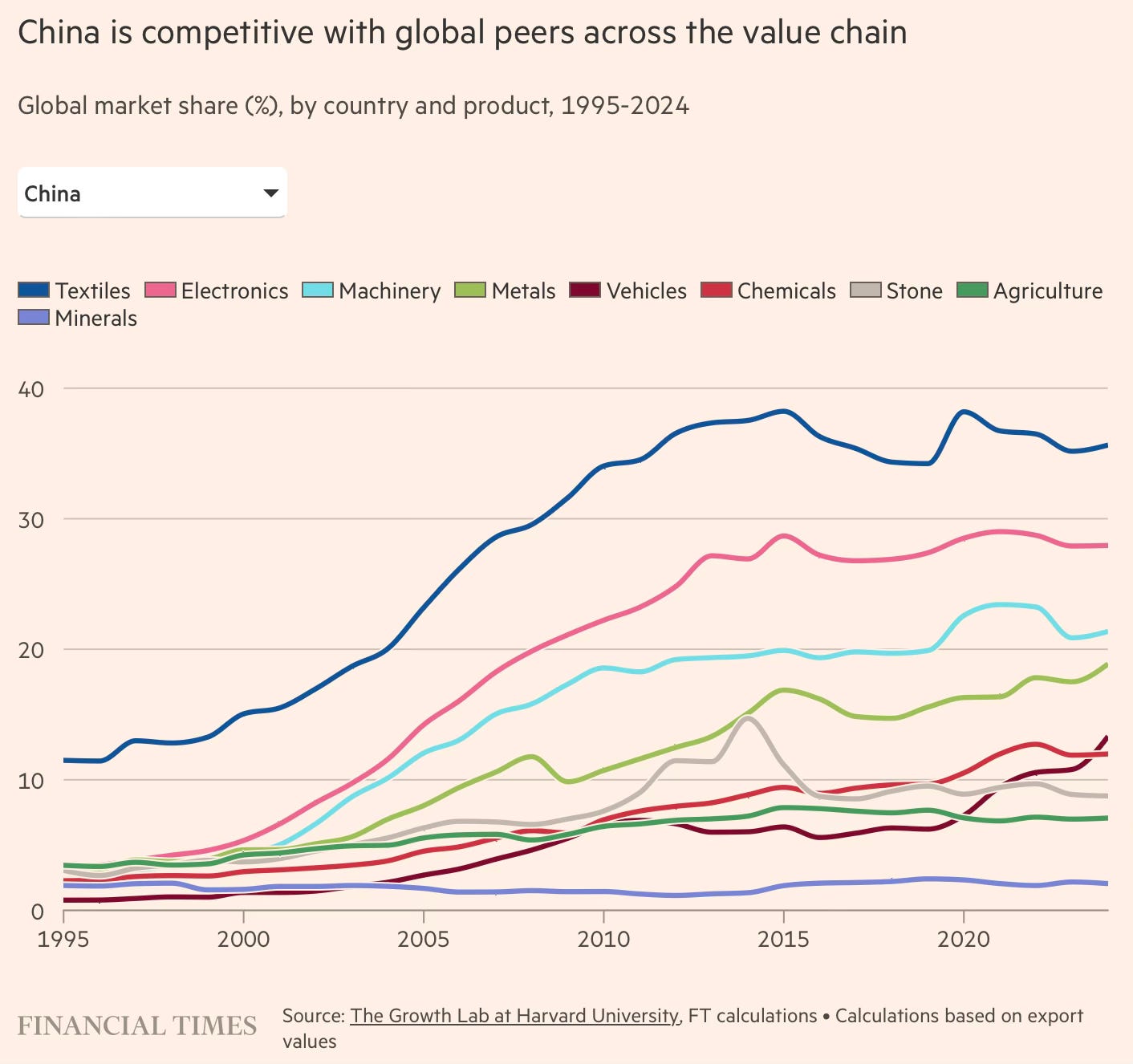
There’s now a clear recognition that the global competitiveness of Chinese manufacturers goes much beyond their manufacturing efficiency. Instead, the former is substantively built on a massive foundation of subsidies, low-interest loans, cheap inputs, and so on. Its scale is such that these anti-competitive practices completely skew the playing field, cannot be matched by anyone else, and therefore cannot be allowed to go unrestricted. The challenge, though, is how to respond given that China holds pretty much all the cards in the manufacturing supply chain, especially all metals and intermediate inputs. 

What complicates matters is that the growth strategy being pursued has boxed Beijing itself into a corner. Subsidies, cheap credit and inputs have fuelled a capacity buildup in multiples of the domestic market, leaving export market expansion as the only outlet. Any pullback risks factory closures and job losses, stoking public discontent and worsening matters in a struggling economy. It also risks a cascade of corporate defaults that could imperil the financial system. In these conditions, even efforts to recalibrate the economy towards consumption would be extremely challenging. 

This post will examine these issues in greater detail, drawing from an excellent FT series on the second China shock and a new Rhodium Group report on how China came to dominate industrial metals.

1. This is a representative illustration of a story that has been playing out for years in industry after industry. 

Huang Xian’s product is about the size of his fist, a sensor that detects electrical current leakage and slots into electric vehicle chargers as a safety guard between the car and the grid. The device is not just a symbol of the innovation and accomplishments of China’s high-tech sector. It also reflects a trend eviscerating high-end manufacturing across the world, to the near despair of governments from Asia to Europe and beyond. The EV boom has propelled Huang’s sensor shipments to a projected 10mn units this year, up from about 20,000 in 2019, when his company Mega-Senway Electronic Technology entered the market. Back then it was still a niche product, supplied by a handful of German and Swiss groups that sold the sensors for roughly Rmb200 (around $30) — or more per unit. Mega-Senway made its first sensors for about Rmb40 each and sold them for Rmb100, leaving Huang with a healthy margin. As Chinese competition poured in, prices started to fall. European groups gradually exited the market. Huang’s Shanghai-based company now sells some sensors for as little as Rmb10 a pop. 

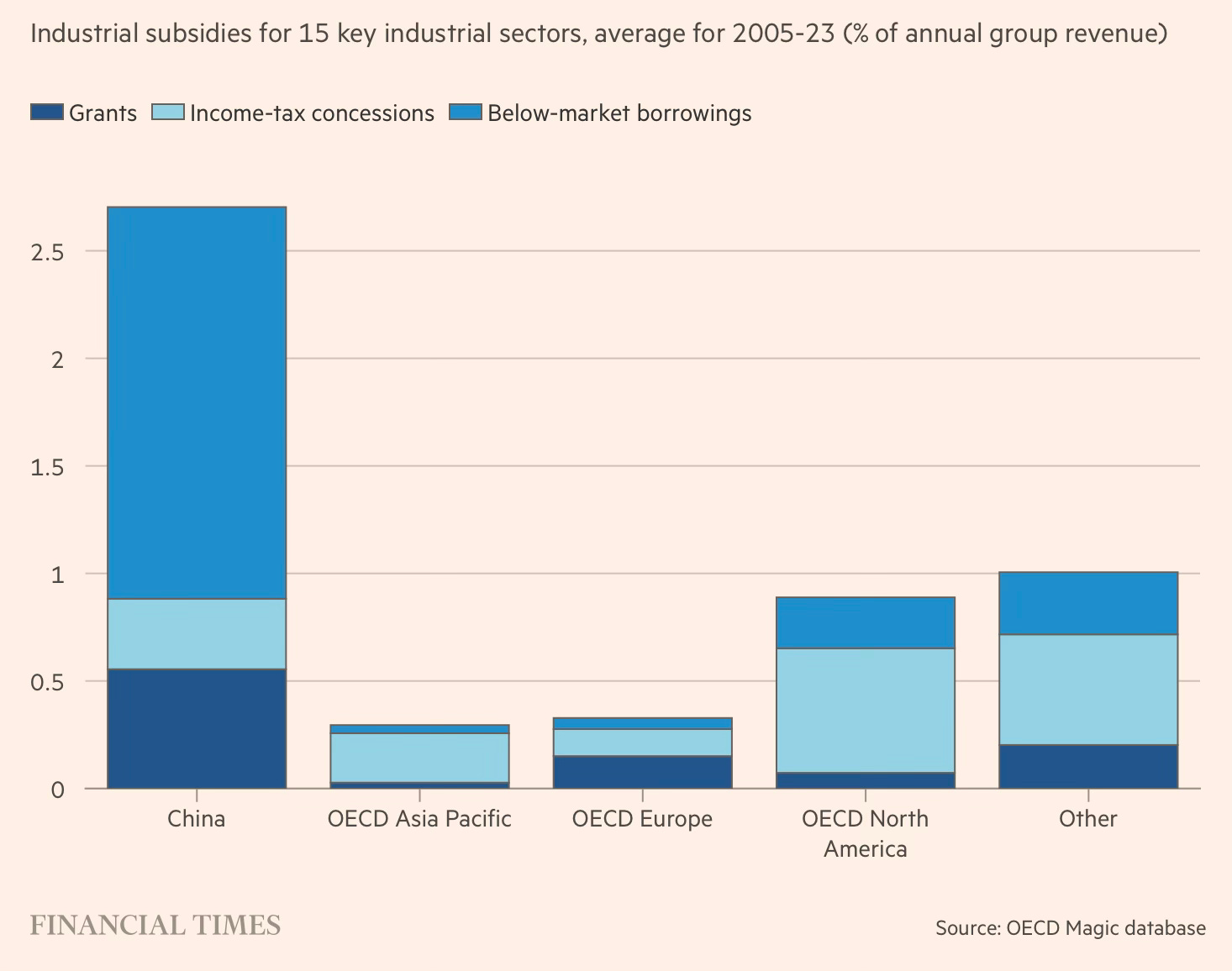
2. The scale of Chinese subsidies is staggering compared to the rest of the world.

Recent OECD analysis underscores the role of subsidies. Company-level analysis of Chinese industry by the 38-member organisation estimates that Chinese businesses are subsidised at between three and nine times the rate of their rich-world counterparts. As well as grants and tax breaks, the OECD data finds that the biggest subsidies come in the form of loans from Chinese state banks offering below-market rates to Chinese companies that undercut international competition.

The role of weak currency in driving the Chinese surpluses should not be underestimated.

Lower inflation relative to Chinese trading partners has led to a real exchange rate devaluation in the past three years, helping boost net exports and the current account surplus, which stood at 3.7 per cent of GDP last year. The IMF estimates the country’s real effective exchange rate — which measures the real value of the currency against a basket of competitors — is undervalued by around 16 per cent, fuelling the competitive advantage enjoyed by Chinese exporters. China has kept exports competitive by buying dollars and depreciating the currency, accumulating “shadow reserves” through a complex web of state-owned banks.

In this context, Michael Pettis makes an important point about China’s global competitiveness. 

“Analysts often confuse the global competitiveness of Chinese manufacturing with manufacturing efficiency but these are two very different things. China’s manufacturing competitiveness depends on an undervalued exchange rate, very cheap financing and very low wages relative to productivity.”

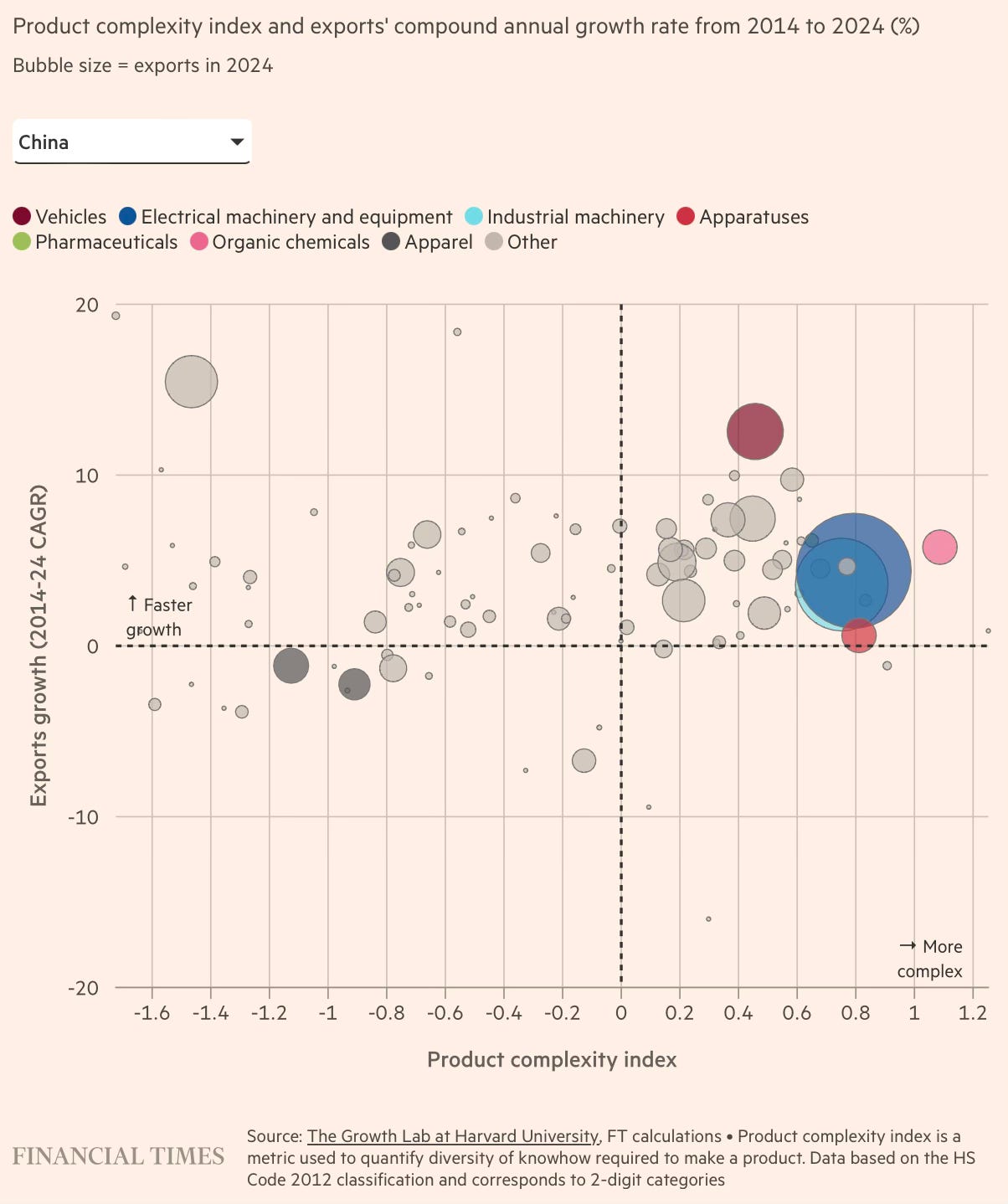
3. The first China Shock, famously documented by David Autor et al as having cost nearly 2 million jobs in the US and having caused significant localised deindustrialisation, covered lower-cost clothes and footwear, consumer electronics, furniture, and appliances. The China Shock 2.0 is about high-end manufacturing, covering products such as solar panels, wind turbines, heavy equipment, electric vehicles, batteries, robots, speciality chemicals, and so on. 

While the China Shock 1.0 did cause job losses in the advanced countries, it did not have the same effect as China Shock 2.0 is having since the advanced countries had been vacating the lower-end manufacturing and had been focused on high-end manufacturing, which the China Shock 2.0 threatens to upend. 

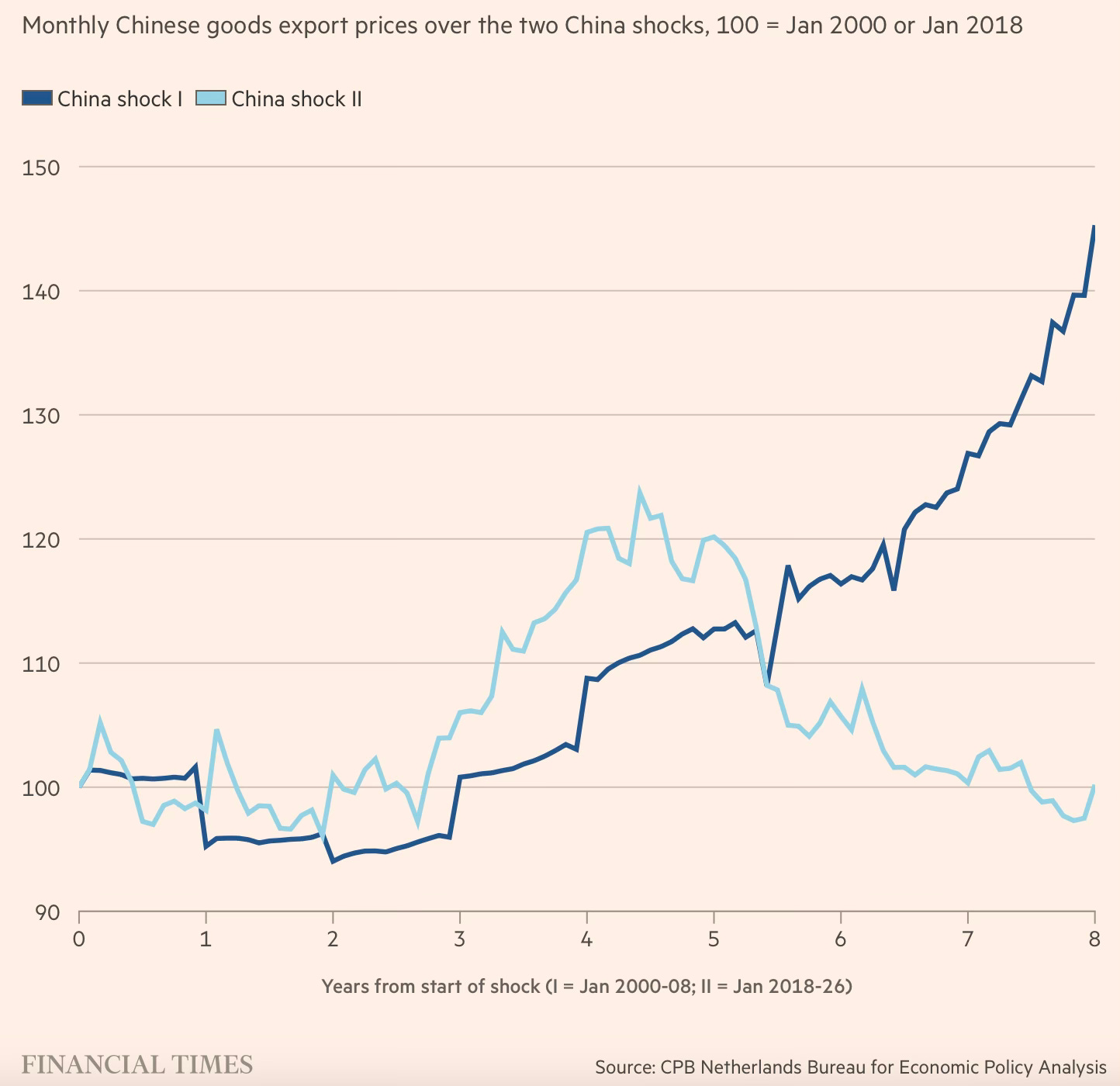
4. Soumaya Keynes points to some differences between the first and second China Shocks. For one, unlike the first shock when China’s goods export prices rose by about 40% in the 2000-07 period, they were at the same level in 2025 as they were in 2018. 

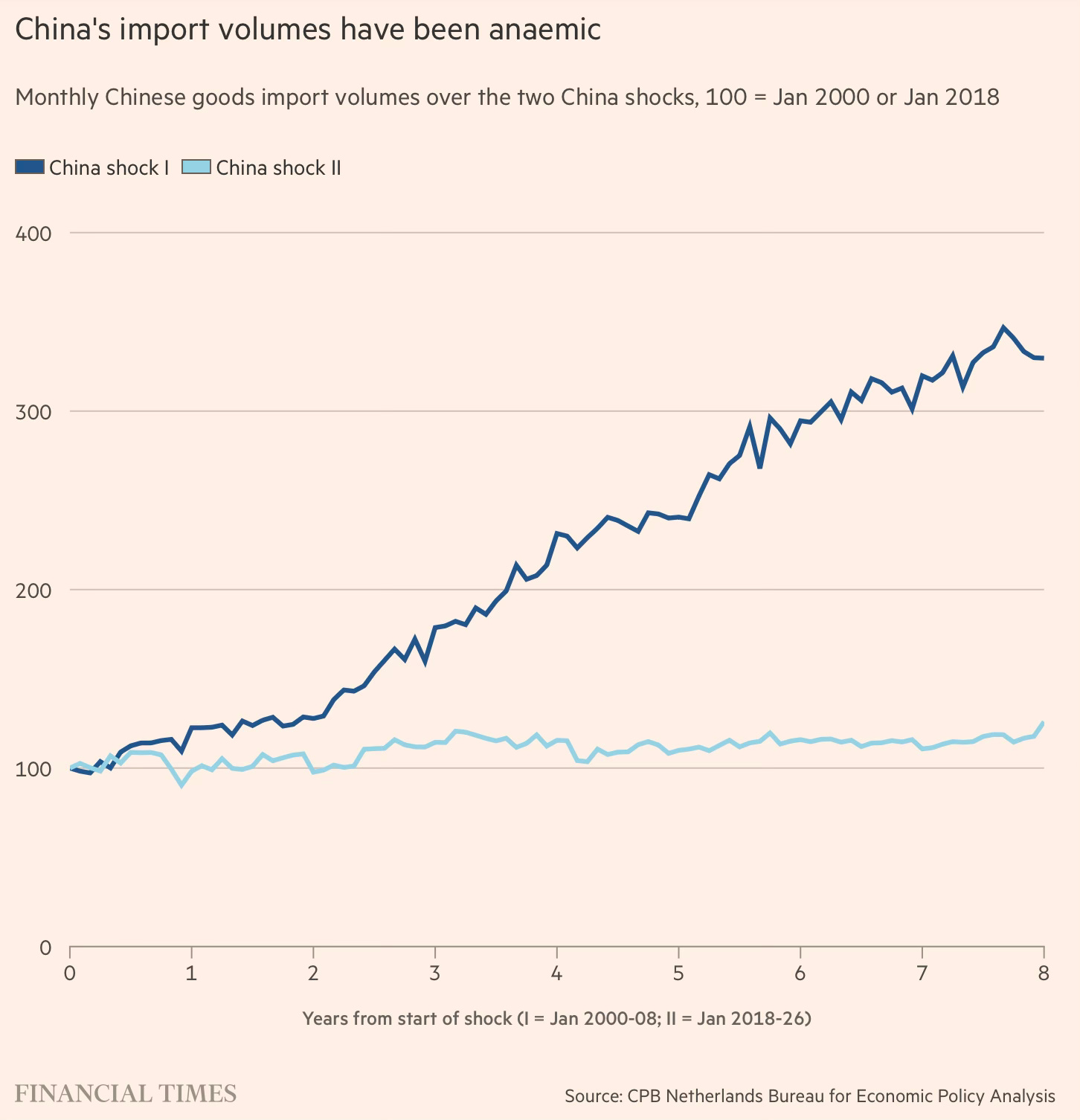
Another important difference is that while during the first shock, China’s imports rose as it bought the manufacturing equipment for its exports, whereas today it makes even these equipment and has not vacated the low-end manufacturing it dominated in its early stages of growth. 

5. There are two sides to this phenomenon. On the external front, domestic manufacturers in advanced countries are unable to compete with the flood of cheap, high-quality Chinese-manufactured products. This is causing deindustrialisation and job losses in these countries. 

On the domestic front, Chinese manufacturers, both public and private, have entered these industries in large numbers and built up massive manufacturing capacities, far in excess of domestic demand, and are competing fiercely by undercutting each other in remorseless price wars. There are over 125 EV companies and over 150 humanoid robot companies, all benefiting and kept alive by the generous flows of subsidies of all kinds. This phenomenon, described as neijuan, or involution, has resulted in a race to the bottom with steep declines in profitability. Everyone is innovating more and working harder for ever-diminishing returns, and volumes keep rising even as profits are shrinking or negative

It forces companies like Mega-Senway to move fast. Huang explains how they cut their own costs so dramatically over just a few years. First they acquired the factory that manufactured the sensors they designed. Then he visited nearby factories to study their best practices. A worker testing their finished sensors initially did it one at a time, he says. Huang redesigned the testing jigs to test four at a time, then eight, with a worker constantly loading or unloading batches. Now he has replaced the workers with robotic arms. “We would update our processes two or three times a year,” Huang says. “The pressure came that fast.” 

The five-year product cycles with annual price negotiations that the auto industry once ran on have disappeared, he says. One large automaker has cut out all middlemen and puts out tenders each month directly to manufacturers up the supply chain such as Mega-Senway. They submit prices, are told if they are the lowest or not, and submit again — round after round, until no one will go lower. Huang, in turn, has had to bring in more suppliers to pit against each other. “I’m being squeezed, so my only option is to pass my pressure on to them,” he says… Huang says he wishes he could escape the ruthless competition. “We started the company because we loved developing new products,” he says. “Now every year when I’m working through the budget, I’m asking how much can I squeeze out to invest in building something new.”

The phenomenon of involution has been amplified by similarly fierce competition among local governments and provinces. 

China has a ream of policies to help companies get off the ground, with local governments in particular battling with each other to offer the best subsidies, cheap land, financing and tax breaks to lure in manufacturers and seed new industries on their turf. The competition between localities can be so great that some businesses move from one place to the next as they chase subsidies and investment. They have become known as “migratory bird enterprises”.

All this creates a self-reinforcing spiral and a bad equilibrium from which breakout is difficult.

Corporate data provider Qichacha lists 1.2mn Chinese companies with “robot” in their name or business scope. Some have recently pivoted from fields like cosmetics, green energy or semiconductors. The founder of a robotics company in western China ticked off the subsidies that have helped him get started: grants to help his customers purchase his robots, subsidies to expand his factory vertically instead of horizontally, money for rooftop solar panels and energy storage and a “smart factory” plaque from the provincial government with more attached benefits. His competitors get the same benefits, he says, acknowledging it may have contributed to the onslaught of new rivals that has forced his prices down 10 per cent over the past year… The system creates more and more companies fighting for the same piece of pie, says Huang He, whose group, Northern Light Venture Capital, is an investor in Mega-Senway. The problems arise when the government money for nurturing companies becomes what sustains them, he says. “Local governments are reluctant to let their local companies fail,” he says. “That’s why overcapacity is so hard to fix.”

The way the Chinese system works, local officials have every incentive to protect their companies. Value added tax generates nearly 40 per cent of China’s tax revenue, and the central government splits the receipts with the localities where products are made, giving them a direct stake in keeping factories running. Adding local production capacity also creates the growth that officials are largely judged on, and any large-scale lay-off could threaten social stability, Beijing’s overriding priority. “Officials are scared of missing their GDP targets. Nobody is scared of overcapacity,” says another founder, who asks to remain unnamed. “As long as you’re manufacturing, there’s VAT revenue. Whether you sell [a product] or make a profit, that doesn’t really affect them.”.. Huang of Mega-Senway suspects some of his competitors are losing money on every sensor they sell and are being sustained by investment from local government funds… The result is that companies which should exit the market keep operating, sustained by government capital, especially China’s politically favoured industries, such as solar, wind, batteries and EVs.

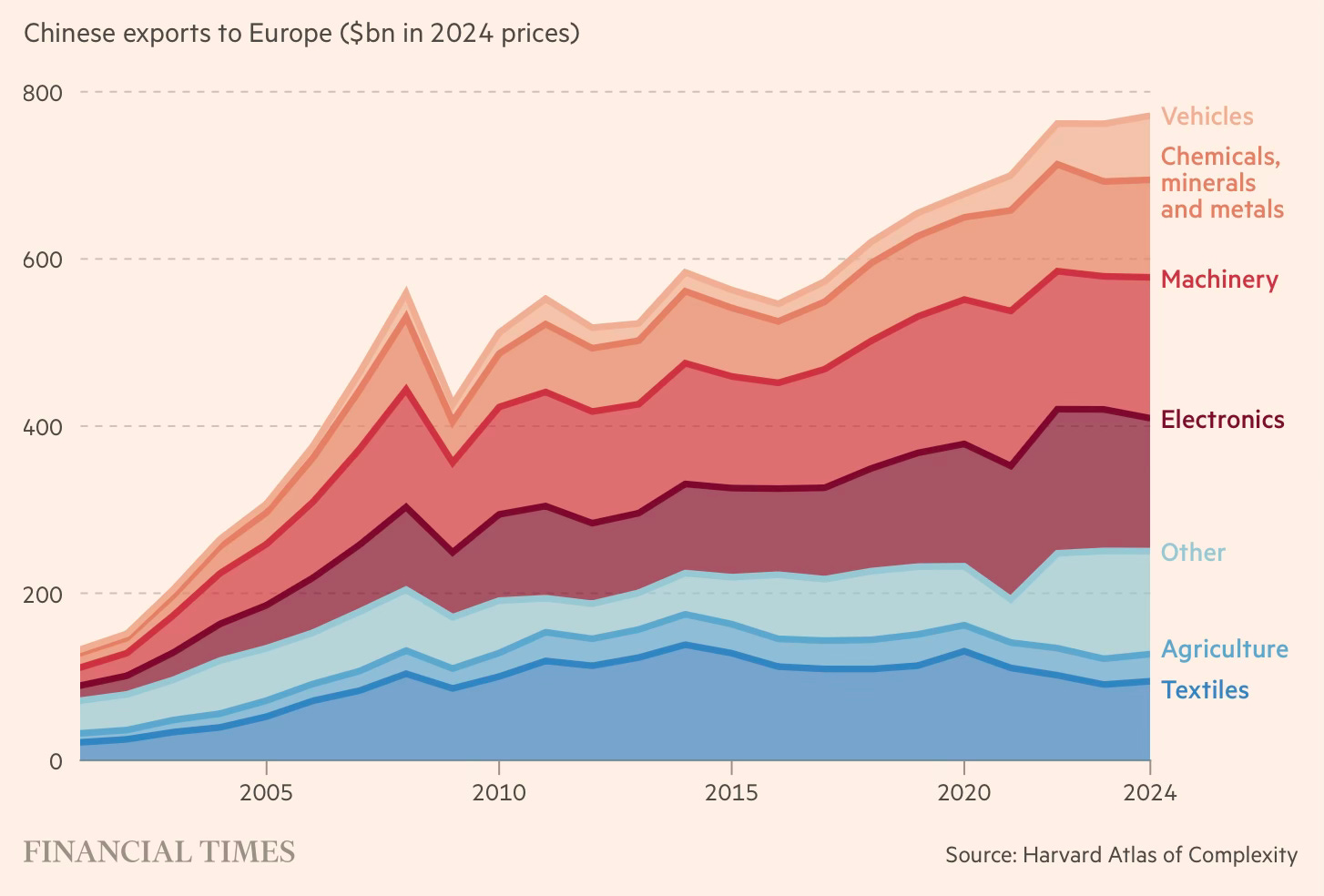
6. The Europeans are emerging as the biggest losers from the China Shock 2.0. Their companies had maintained a competitive advantage in automobile manufacturing, engineering and high-tech manufacturing, which is now being dismantled clinically by Chinese competition. In fact, the surge in Chinese exports in the first three months of 2026 was driven by shipments to the EU by 21.1%, even as those to the US fell. High-tech products have driven the growth in Chinese exports to Europe

China’s trade policy is also tightly integrated with its national security policy, and nowhere is this more evident than in Europe, where China is trying to establish manufacturing facilities in countries like Hungary, Serbia, and Spain, to diversify supply chains and also gain access to the large EU market. 

Xi is explicit about his goal to foster foreign dependence on China’s advanced manufacturing, which Beijing sees as a source of leverage in an era of geopolitical shocks. Salvation for one country can look like the seeds of subjugation to others. The question for Europe is whether it should welcome Chinese investment or repel it… Spanish historian Florentino Portero said: “China’s trade policy is in fact part of its national security strategy. We are seeing how China is taking control of certain companies and integrating them into its own system at our expense.”

In response, taking a leaf out of the playbook that China used so effectively to catch up with the Western manufacturers, the EU recently announced a Made in Europe Bill (the Industrial Accelerator Act, IAA) that mandates Chinese manufacturers to establish facilities to share technology. There is a strong consensus among Europeans that “Europe must be a complete industrial base and not a mere assembly platform”.

The bill lets member states veto any FDI exceeding €100mn in strategic sectors if the investor is from a country with more than 40 per cent of global manufacturing capacity. Those sectors include batteries, EVs, solar panels and the extraction and processing of critical raw materials — all areas where China dominates. To win approval, investment projects must fill at least half of their jobs with EU workers and satisfy three of five other conditions. One is that the investment must be undertaken via a joint venture. Another is that the foreign partner does not own more than 49 per cent of the entity — a condition unpopular with Chinese companies, according to European officials. Other conditions cover the licensing of intellectual property rights, spending 1 per cent of revenue on research and development in the EU, and publishing a strategy for sourcing 30 per cent of inputs from the bloc. The legislation will give companies meeting its requirements access to public funding from the EU, national and regional governments. Without such financial support, Europe’s relatively high labour costs versus China make many industrial investments unviable.

7. Even more than the Europeans, the biggest losers from the China shock 2.0 may be its neighbours in South East Asia, who had been hoping to move up the industrial value chain when China shifts to ever more sophisticated products and services. But, as mentioned earlier, China seems unwilling to vacate any space in the manufacturing landscape. Worse still, its exports are destroying its manufacturing bases. 

They are becoming dependent on China for lower-value products, industrial inputs for manufacturing, and also finished goods like EVs and solar panels. 

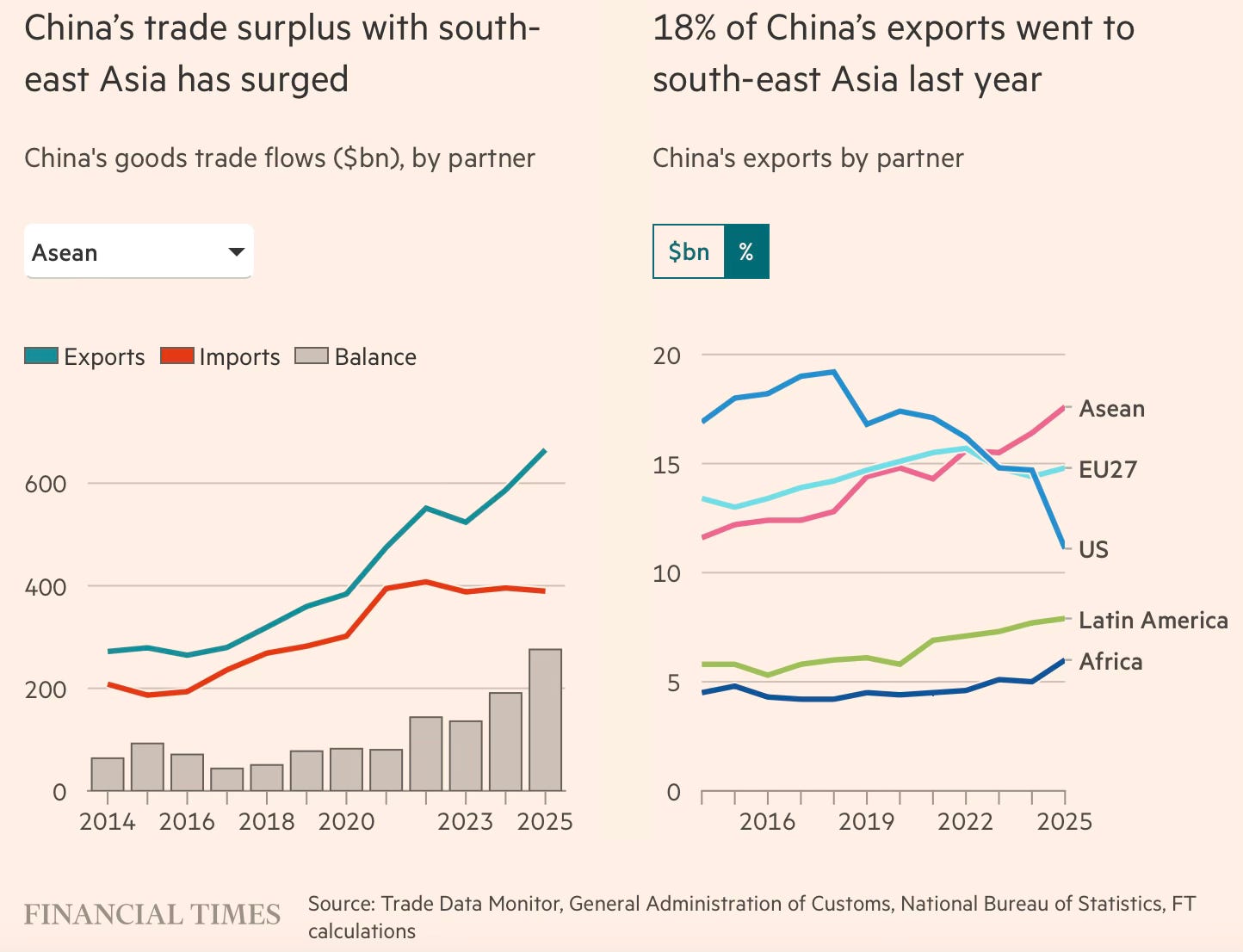
China’s trade surplus with the 11-nation Asean bloc hit a record $276bn in 2025 — up 45 per cent from the year before — with strong growth in intermediate goods, including electronics and capital goods such as machinery used by manufacturers. Labour-intensive manufacturing sectors such as shoes and clothing have been particularly affected. In Indonesia, around 60 factories closed between 2022 and 2025, according to the Indonesian Textile Association… The textile association estimates that 250,000 jobs have been lost in the sector over the past four years… At the other end of the value chain, Chinese exports of EVs, batteries and solar panels to members of the Association of Southeast Asian Nations increased more than 50 per cent last year to nearly $22bn. Vietnam imported $84bn in electrical machinery and electronics from China last year, up 43 per cent, according to the Asia Society Policy Institute (ASPI) think-tank.

This flood of cheap Chinese imports and its impact on domestic manufacturing in terms of factory closures and job losses is already generating backlash in these countries.

Indonesian finance minister Purbaya Yudhi Sadewa said in March that Jakarta was considering measures to curb the growing dominance of Chinese products on the country’s e-commerce platforms. “If this continues without intervention, it would be as if we are handing over our domestic market directly to China,” Purbaya said… Liew Chin Tong, Malaysia’s deputy finance minister, has warned that Asian countries that long relied on the US as their export destination of “first and last resort” now risk crashing each other’s markets, “resulting in cut-throat price wars, involution and deindustrialisation of fellow Asian economies”.

8. There’s little to indicate that even with the rising global backlash at Chinese exports, including among developing countries, Beijing has any intention to change course and focus on domestic consumption. After the property slump and given the reluctance to rebalance towards consumption, manufacturing investments have emerged as the engine for sustaining the 5% growth target. Exports have become a convenient outlet to sustain growth and prevent domestic discontent through factory closures and job losses. 

9. The solar industry is a good illustration of all these distortions.

As Chinese factories rushed into solar, production capacity skyrocketed. The country has the ability to manufacture 1,200GW of solar panels annually, roughly double the 647GW installed worldwide last year, according to the China Photovoltaic Industry Association and energy think-tank Ember… local governments poured money into building solar plants over the past five years, contributing more than 50 per cent of funding for many projects. Almost none was built without local government capital involvement… 

“Why was it possible to build capacity exceeding global demand by double in such a short time?” asked Li Dongsheng, the chair of television and solar conglomerate TCL. “The key reason is the distortion of resource allocation and inappropriate local government participation,” he said in an interview with local media last month… In the solar industry, overcapacity has led to vast losses, which China’s top six publicly traded solar groups indicated would cumulatively total Rmb43bn for 2025. Yet the subsidies continue. One of those six companies, Jinko Solar, received Rmb1.3bn in subsidies in the first half of 2025 but still lost Rmb3bn in the period. Another, Trina Solar, received hundreds of millions of renminbi during the period… 

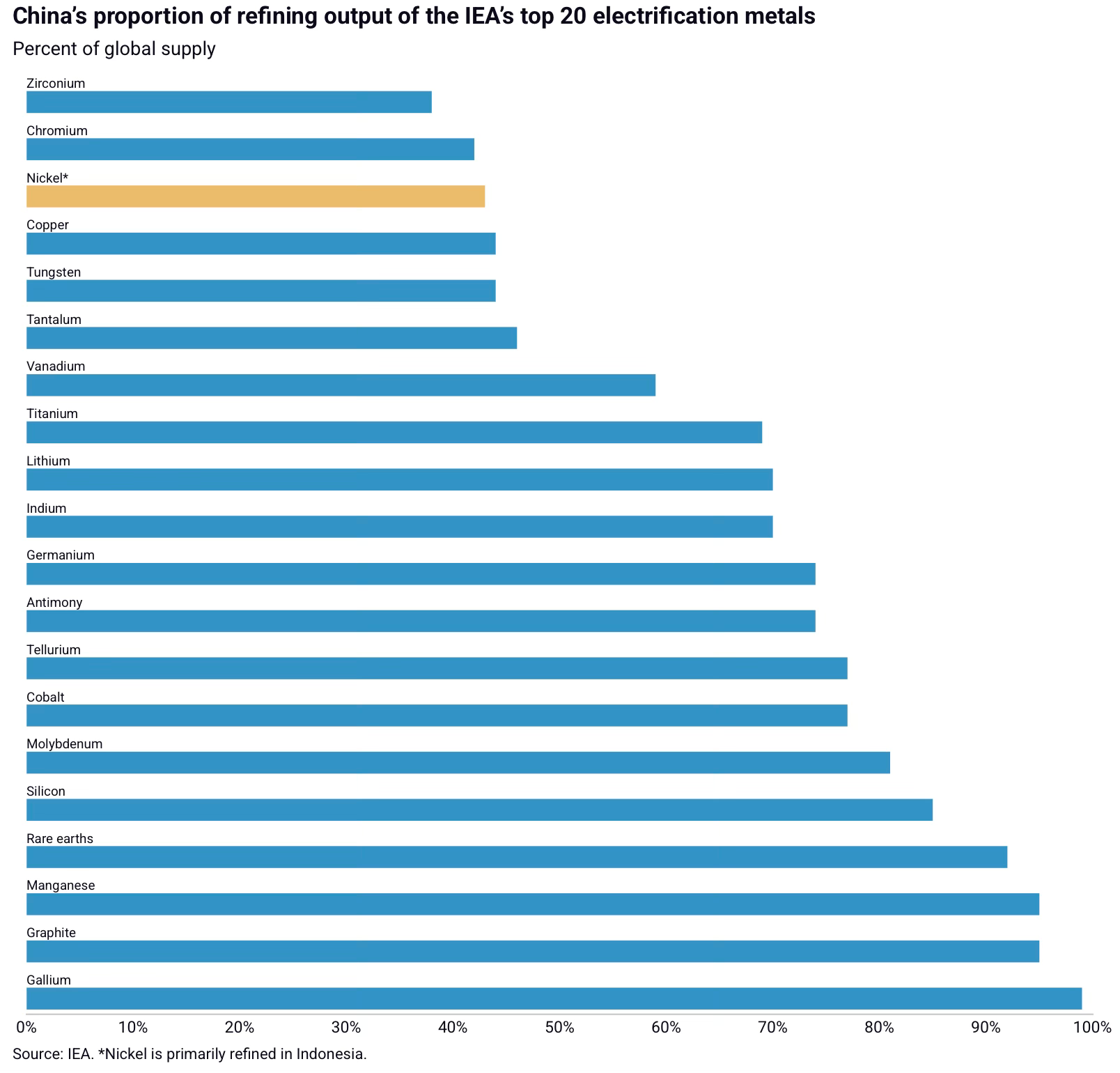
10. The Rhodium Group has an excellent report on how China managed to construct an “electro-state” that has electrified power generation and transportation, and has become so utterly dominant in the manufacturing of the likes of electric vehicles and batteries. Abundant and cheap electricity enables metals processing, which is the foundation of hardware manufacturing. It attributes this outcome to Beijing’s “expansion of cheap electricity, the agglomeration of upstream materials production (metals refining, synthesis, and fabrication, which are low-margin, energy- and capital-intensive businesses), and policies that enabled China to develop a dominant position in green technologies, while maintaining its competitive advantage in manufacturing of almost anything with an electric current.”

This is a good summary of the dynamics that led to the emergence of the electro-state:

Local government incentives to invest heavily and a financial system granting cheap credit to state-owned enterprises allowed Chinese energy-intensive industries to develop much faster than the growth of domestic downstream demand… Policy choices incentivized fully localized industrial clusters regardless of the costs of maintaining them, and central planners then prioritized the expansion of power supply and grid development to facilitate these investments.

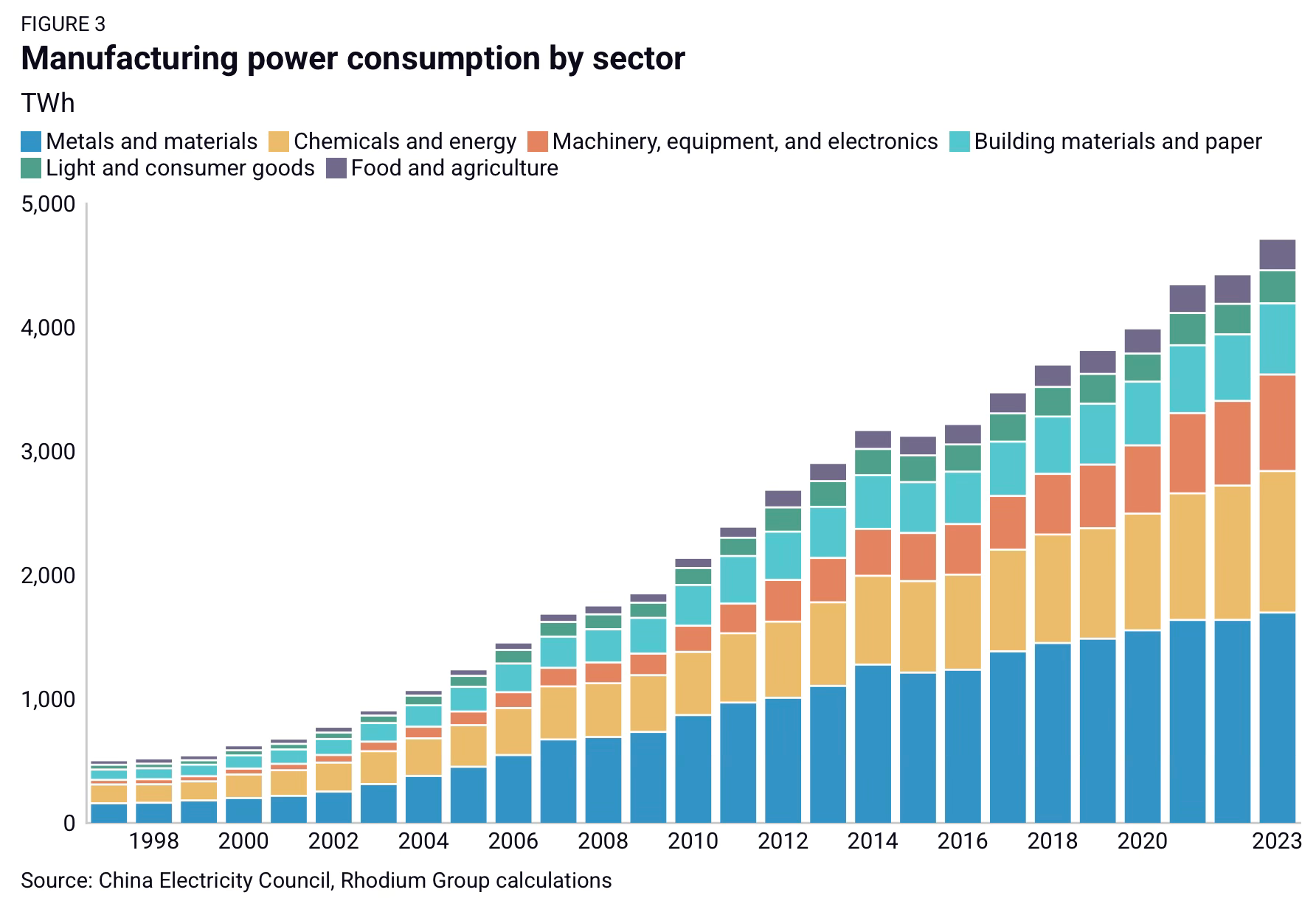
11. It describes the explosive growth in manufacturing sector's power consumption. 

Nowhere is the dominance more pronounced than in metals refining. 

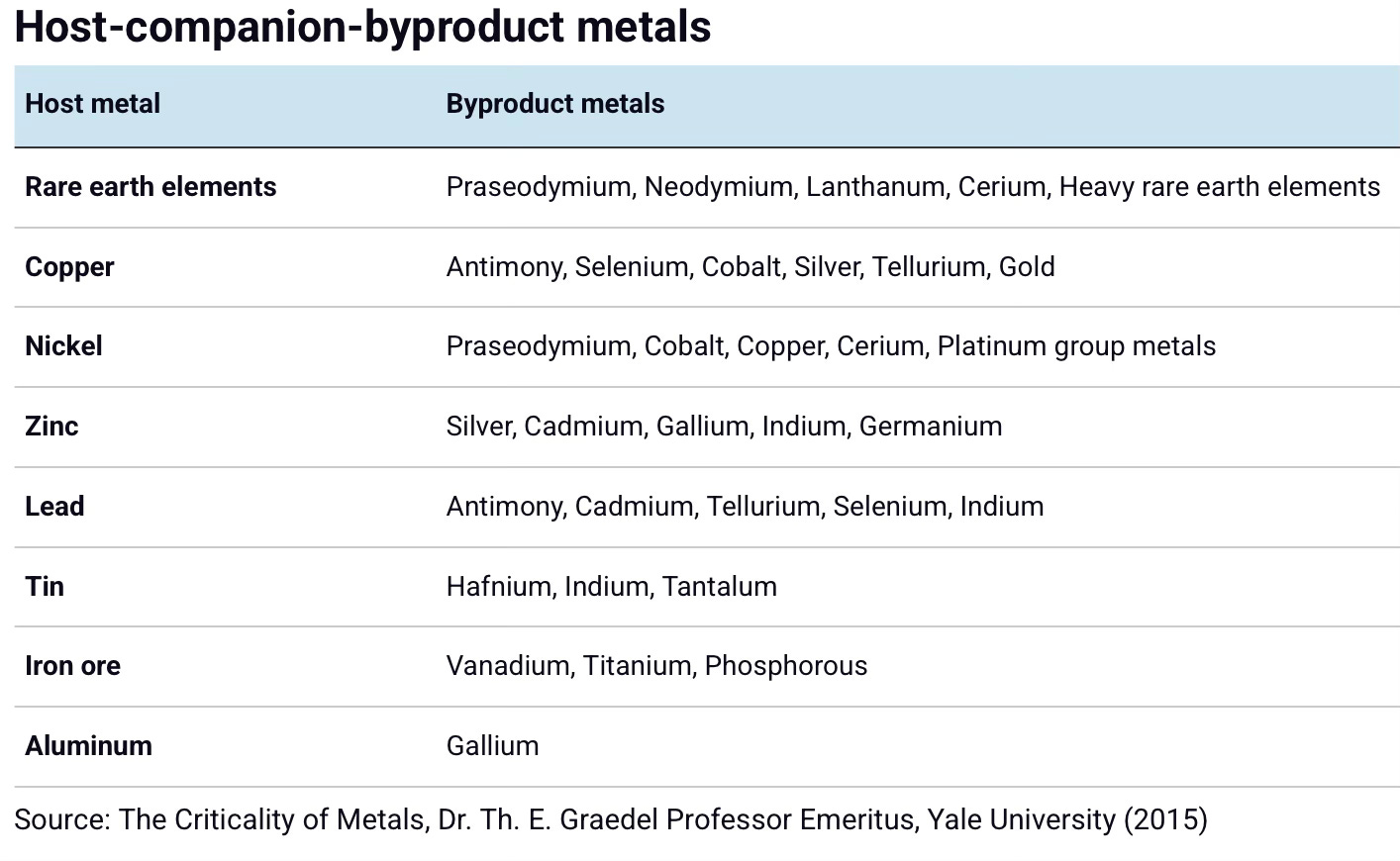
This is a very good description of the industrial metals processing and refining ecosystem. 

Ore bodies almost always host multiple metals, but the economic viability of extracting non-primary metals varies… These companion and by-product metals require specialized refining capacity to recover, which can be costly… There are several well-known examples of critical minerals that originate as byproducts of major host-metal supply chains… While some of these metals can be mined from dedicated deposits, if they are not captured during host-metal processing, they typically end up in tailings, slags, or other waste streams. Many companion and byproduct metals are traditionally considered too costly to extract, and as a result they often accumulate in waste piles outside processing facilities. Installing the additional capacities required to recover metals such as gallium, germanium, indium, or tellurium involve significant capital expenditures that are difficult to justify given the relatively small market size and historically low prices of these materials. In most markets, this makes recovery and processing uneconomic.

The challenge of the commercial viability of extraction, processing, and refining is overcome by China’s downstream manufacturing ecosystem.

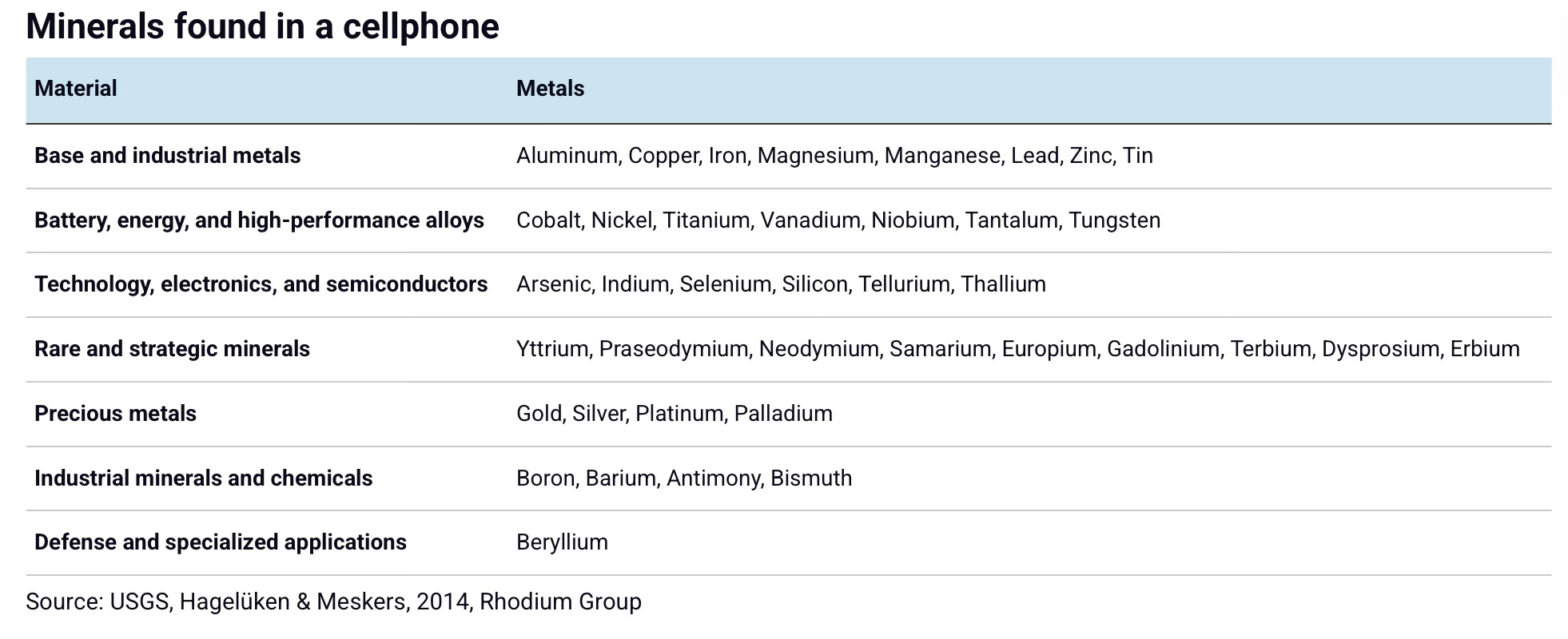
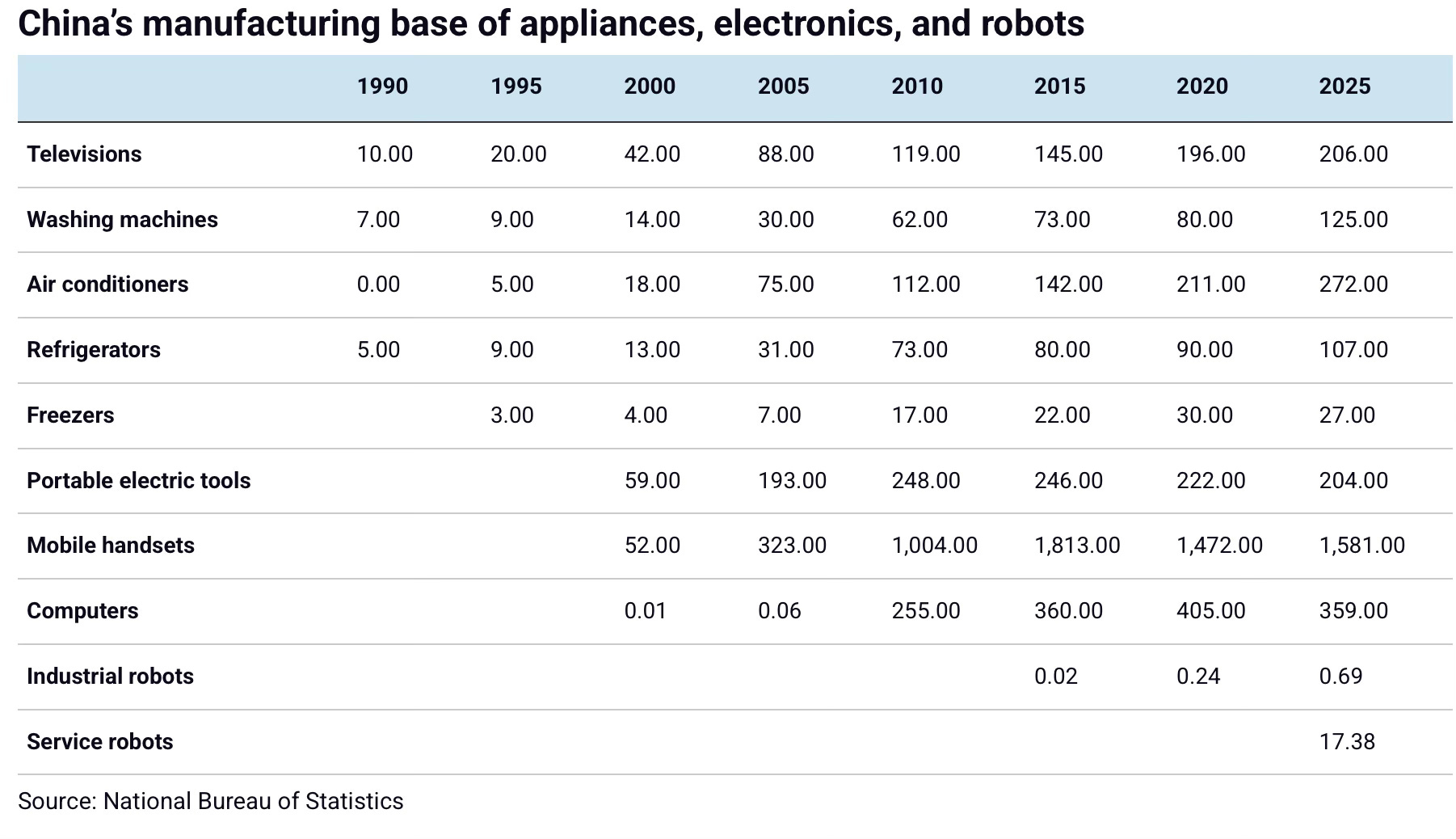
Because Chinese mobile phone, battery, semiconductor, LED, and other manufacturers require stable supplies of minor metals, refiners can enter into offtake agreements that guarantee downstream demand from the domestic manufacturing ecosystem. This reduces commercial risk and allows smelters and refineries to justify capital expenditures for byproduct recovery in ways that are not feasible elsewhere. For minor metals, especially companion and byproduct metals, the offtake agreements are essential to start production. Major metals benefit from the ability to sell refined output to exchanges. Minor metals maintain a smaller set of potential customers because materials are produced for specialized purposes. Because minor-metal refineries depend on continuous operation, producing output without assured demand represents a material commercial risk that most firms are unwilling to assume.

The symbiotic relationship between refiners and manufacturers within the Chinese industrial ecosystem reduces uncertainty in upstream supply chains while also empowering incremental innovation in downstream manufacturing. The outcome is a supply chain that combines upstream metals processors with downstream metals consumers that simply does not exist anywhere else in the world… China produces 200 million televisions and 1.5 billion smartphones per year. Producing the TV sets guarantees offtake of 25 to 30 metals, while the phones require close to 60 metals. By establishing the world’s largest manufacturing base, the ecosystem ensures the greatest volume and diversity of offtake for processed metals and minerals. The total volume of downstream manufacturing enhances midstream processing competition for upstream materials to fabricate or process on behalf of downstream buyers.

There’s no way this tightly coupled ecosystem can be replicated anywhere globally. The only option is to start with this ecosystem and figure out ways to gradually diversify. 

The report is essentially a warning that Western efforts to diversify critical mineral supply chains face a structural disadvantage: China's advantage is not simply about individual metals or policies, but about the integrated system that links cheap electricity, processing expertise, state-backed finance, and massive downstream manufacturing demand. Replicating any one piece is feasible; replicating the whole ecosystem is a generational challenge.

12. By illustrating with the example of the metals manufacturing ecosystem, the report highlights the dilemma faced by China’s trade partners. On the one hand, continuing business as usual access to Chinese imports will invariably destroy their local manufacturing bases. On the other hand, domestic manufacturers will not only be uncompetitive with respect to Chinese manufacturers, but they must also necessarily rely on Chinese suppliers for critical inputs like specialised materials that go into manufacturing. 

When faced with such a dominant manufacturing power, there are very few choices. For sure, they must resort to tariffs and other trade barriers to restrict entry. The European IAA is a good example of an effort aimed at attracting Chinese investments on the condition that it would transfer technology and localise manufacturing, instead of mere assembly. But there are daunting barriers, including strong resistance and subversion by the Chinese investors. 

While no country, including the US, can compete against China, the situation changes when countries form supply-chain alliances to diversify and decouple from China. I blogged earlier, pointing to Kurt Campbell and Rush Doshi who have argued in favour of America forging alliances with like-minded partners to create a meta-economy that can outcompete China and manufacture at scale.

To achieve scale, Washington must transform its alliance architecture from a collection of managed relationships to a platform for integrated and pooled capacity building across the military, economic, and technological domains. In practical terms, that might mean Japan and Korea help build American ships and Taiwan builds American semiconductor plants while the United States shares its best military technology with allies, and all come together to pool their markets behind a shared tariff or regulatory wall erected against China. This kind of coherent and interoperable bloc, with the United States at its core, would generate aggregate advantages that China cannot match alone.

Unfortunately, the Trump administration’s policies are pulling in exactly the opposite direction in terms of antagonising and decoupling from its traditional alliances.

Saturday, January 24, 2026

Weekend reading links

Over the past decade, India’s top five outsourcing companies have managed to raise labour productivity by less than 2 per cent annually because of their squeamishness to put more fixed capital behind human effort: The average value added by an employee has risen to roughly $40,000 a year, from $34,000 in 2015. The modest gains are going to labour, although not at the entry level where salaries have been stagnant. Profit per worker, in my calculations, has been practically unchanged in dollar terms.


The top 10 most valuable private companies, including OpenAI, ByteDance, Anthropic and SpaceX, have been sucking up funding mega-rounds and are collectively valued at $2tn. The top 10 most active VC funds, including General Catalyst, Andreessen Horowitz, Sequoia and Accel, are heavily focused on AI. “The most influential investors are essentially running concentrated AI funds, not diversified portfolios,” CB Insights concluded. 

One other significant difference today is how the Big Tech companies are reshaping the start-up universe given their overlapping roles as suppliers, customers, competitors, funders and acquirers. The Magnificent Seven US tech companies — Nvidia, Alphabet, Microsoft, Amazon, Apple, Meta and Tesla — dominate the tech landscape in a way that was not the case at the dawn of the internet era. These giant companies are massive allocators of capital in their own right, investing almost as much as the entire VC industry. They also provide start-ups with AI software, cloud computing services and direct investment funding through their own sizeable corporate venture capital arms. But they are furiously rolling out AI themselves in sectors as varied as video generation, healthcare, autonomous driving and scientific discovery. Every time a giant AI company releases a new generative AI model, scores of undifferentiated start-ups shrivel up and die.
Oil executives seem to not only be balking at the risk of having assets nationalized but also expressing a view that has become standard across the sector: Big new projects have to survive intense scrutiny. Venezuela’s tar-like oil has to be diluted to flow through a pipeline. It has to be upgraded locally before it even gets to a refinery. That’s a multi-billion-dollar expense. For most of the past 15 years, Big Oil was focused on projects — such as drilling for North American shale oil — that have a quick and predictable payback, even though their production drops off steeply after the first year. To some extent, the companies deprioritized projects such as those in offshore oil, or heavy crude deposits like Venezuela’s, that keep producing at low cost for 10 to 20 years but require more upfront investment to bring online.

So a lot of oil came from fields that were low in risk but relatively high in cost. According to Rystad Energy, a research company, in 2024 North American shale had a break-even cost of $45 a barrel. That was expensive compared with offshore deepwater ($43), offshore shelf ($37) and onshore Middle East ($27). From 2014 to 2024, daily crude production in the United States increased 71 percent, while production in the rest of the world actually decreased a couple of tenths of a percent, according to data in the Statistical Review of World Energy 2025. That’s changing a bit. North American shale is beginning to be tapped out, although the oil majors are using advanced technology to get more oil out at lower costs. Since around 2022, when Russia invaded Ukraine and oil prices spiked, the oil majors have shifted some of their interest back toward higher-risk, longer-payout projects in parts of the world where the oil is cheapest — not North America. Exxon and Chevron have explored bidding on exploration opportunities in Libya. Last year, Chevron signed an agreement in principle to develop Iraq’s vast Nasiriyah oil field and other assets. Exxon is also in discussions with Iraq.

Interesting that Trump is forcing his oil companies to invest in a country that has historically been univestable despite its abundance of oil reserves, one reason being the high cost of extraction of the country's heavy crude (costs $70 to extract a barrel, when oil sells for $58). 

4. In 2017 when Donald Trump said he was going to pull the US out of the Paris Agreement, this was the reaction of corporate America.  

“Today’s decision is a setback for the environment and for the US’s leadership position in the world,” wrote Lloyd Blankfein, Goldman’s then chief executive, in his first post on what was then Twitter. Facebook’s Mark Zuckerberg agreed, saying the move was “bad for the environment, bad for the economy, and it puts our children’s future at risk”. Tesla’s Elon Musk and Walt Disney’s Bob Iger both quit White House business advisory councils. At Apple, Tim Cook said he had tried but failed to persuade Trump to abandon a move that would have “no impact on Apple’s efforts to protect the environment”. And other corporate leaders spoke out with equal force.

Last week he announced US exit from both the 34-year old parent of the Paris Agreement, the UN Framework Convention on Climate Change, and the UN's 38-yar-old Intergovernmental Panel on Climate Change, it was met with silence from the same people. 

5. China violates Taiwan's airspace with a drone for the first time,

A Chinese surveillance drone entered the airspace of Pratas, a Taiwan-controlled island in the South China Sea also known as Dongsha, for four minutes on Saturday. The unmanned aerial vehicle was a WZ-7 known as ‘Soaring Dragon’ according to a Taiwanese national security official. It flew at an “altitude outside the range of our air defence weapons and left following warnings Taipei broadcast via international radio channels”, Taiwan’s defence ministry said in a statement... “China has found another soft spot,” said Kitsch Liao, an associate director at the Atlantic Council’s Global China Hub. “They can repeat this to demonstrate that they can enter Taiwan airspace with impunity. And what do you do if they start flying lower and lower? If you decide to shoot the drone down when it comes into range, China can blame Taiwan because it didn’t do anything before.”

6. Ishan Bakshi makes some very important points on the central government's tax revenues on the back of the lowering of corporate taxes in 2019, the rejigging of the personal income tax slabs in the Union Budget of 2025-26, and the GST rate rationalisation of late 2025.

The net impact of these fiscal steps — even as the direct and indirect tax base has significantly expanded over the past decade — is constrained finances, forcing governments to restrain expenditure, despite the bluster of lavish spending. The estimates of the extent of revenue foregone due to these tax cuts vary considerably. Nonetheless, they are quite significant. For the corporate tax cuts, the initial estimates pegged the revenue foregone at Rs 1.45 lakh crore, while in the case of the income taxes, it was around Rs 1 lakh crore. For GST, while precise estimates are difficult to arrive at, they will reflect slowly in tax collections... Over the past decade, the Centre’s tax collections have barely inched upwards – net tax revenues were 7.2 per cent in 2014-15 and were budgeted at 7.9 per cent in 2025-26. Collections may, in fact, end up being lower this year.

7. Tim Harford writes about smart fitness tracker watches and their health behaviour tracking. 

...in a study conducted with behavioural scientists Linda Chang, Erika Kirgios and Sendhil Mullainathan. The researchers asked a simple question: “Do we decide differently when some dimensions of a choice are quantified and others are not?” The answer emerged loud and clear from a series of experiments: yes, we do. Whenever experimental subjects were offered a choice between two options, they would tend to favour whichever option looked better on numerical measures and overlook qualities that were expressed as graphical elements, letter grades, star symbols or in words (“moderate”, “excellent”, “highly likely”). This was true whether the choice was between hotels, job applicants, conference locations, public works projects, restaurants or charitable causes. Numbers loomed large. What was quantified, got attention. This matters because fitness trackers purport to excel at quantifying some things and do not pretend even to quantify others. If quantification fixation applies, we would expect to see such trackers systematically pushing people towards the quantified behaviour at the expense of other things.

And the perverse incentives generated from such health behaviour tracking.

Larger studies strongly suggest that fitness trackers do not usually hinder weight loss, but the surprising and disheartening finding is an example in miniature of the quantification-fixation problem. In this case, both groups were equally active, but those using a fitness tracker were getting automatic, effortless validation of their effort, which they could then use to justify more indulgent eating. The lead researcher, John Jakicic, speculated at the time: “People would say, ‘Oh, I exercised a lot today, now I can eat more.’ And they might eat more than they otherwise would have.” Calorie counting is joyless, easily fudged — and not automated by the watch. We’re all familiar with the tendency to be virtuous in one aspect of our behaviour, then let ourselves off the hook somewhere else — choosing a healthy salad, then using it as permission to order dessert. Psychologists call this behaviour “self licensing” and fitness trackers encourage it by supplying us with asymmetric data. We are told how much we moved, but not what we ate. We get stark feedback on heart rate and step count, but the tracker looks the other way if we order french fries and a glass of beer.

8. Tej Parikh thinks that China will win the AI race with the US. I think this piece is one of the least persuasive ones from Parikh.

9. As anti-immigration and nationalism trends rise, it is likely that US companies will show increasing preference for US-born chief executives
Foreign-born CEOs already face a more difficult time than native ones. Academic research shows they are held to a higher standard for performance and are more likely to be dismissed when things are going wrong. They also have to work harder to prove their legitimacy and trustworthiness. In politicised environments, the margin for error becomes smaller.

10. The continuous weakening of rupee despite the combination of low inflation, high GDP growth rates, and low current account deficit (around 1% of GDP) can be traced to the worsening trade balance and weak FDI inflows

Merchandise imports averaged about $62 billion a month in 2025, far exceeding exports of roughly $37 billion and leaving a $25 billion trade deficit. Although services exports offset much of this gap, weak goods exports and a rising import bill — driven in part by higher gold and silver prices — have skewed demand towards dollars... In 2025, foreign portfolio investors (FPIs) withdrew about $19 billion from Indian equities on a net basis — the worst outflow on record... Gross FDI inflows have been stuck at around 1.7 per cent of GDP since early 2023, well below the 3 per cent seen in the mid-2000s... Between January 2024 and October 2025, gross FDI inflows averaged about $7 billion a month, while withdrawals ran close to $4 billion, leaving net inflows of barely $3 billion — negligible for a $4 trillion economy. Once rising outward investment by Indian firms, averaging $2-3 billion a month, is taken into account, the picture worsens. In effect, India has received close to zero net FDI each month over the past 22 months.
Data shows that net FDI in November was negative $446 million, compared with negative $1.67 billion in October.
Lowering the government’s stake to 51 per cent in 78 listed public-sector enterprises (PSEs) could unlock value worth about ₹10 trillion.

12. Ashok Gulati has a summary of the food subsidy.

In the case of rice, the economic cost hovers around Rs 42/kg, and for wheat, it’s around Rs 30/kg to FCI. It gives 5 kg of free rice or wheat to about 813 million people under the PM Garib Kalyan Yojana. Roughly 56 per cent of the country’s population of around 1.5 billion is covered. The introduction of point of sale (POS) machines in more than 5 lakh fair price shops (FPS) was a significant reform of the Modi government. It helped to reduce massive leakages in PDS. But how rational is giving free food to 56 per cent of the population, when, according to the World Bank’s extreme poverty criteria — $3 per capita/day/in purchasing power parity (PPP) terms at 2021 prices — India’s poverty came down to just 5.3 per cent of the population in 2022? Even at a higher poverty line of $4.2/per capita/day, poverty in India was about 24 per cent. One can argue that the extremely poor need to be given free food (antyodaya). Viewed from this perspective, only about 5 per cent of the country’s population needs free food, while others should pay at least half of the MSP. If not, then this policy is nothing but the biggest political revdi (dole) the government is giving consumers for votes.

13. FT Alphaville suggests that the threat of pulling out from the $35 trillion foreign holdings of US financial assets is not a credible option for Europeans and others trying to exercise leverage over the US. 

While the US’s large current account deficit suggests that in theory there is the potential for the USD to drop should international savers stage a mass retreat from US assets, the sheer size of US capital markets suggests that such an exit may not be feasible given the limitations of alternative markets.

14. Amidst China's real estate crisis, this stands out

China had about 440 square feet of housing for each man, woman or child living in cities in 2024, up from 340 square feet only 15 years earlier. It was less than 100 square feet per person before Mao Zedong’s death in 1976.

15. In a ruling that has far-reaching implications for how India applies tax treaties to offshore transactions, the Indian Supreme Court has ruled on the tax treatment of Tiger Global's capital gains from the sale of its investment in Flipkart (done through three Mauritius-based entities) to Walmart for about $1.6 billion in 2018. 

Tiger Global had argued that capital gains on the transaction should only be taxed in Mauritius and not India, in line with a treaty in place between both countries for decades. While a significant amendment in 2017 to the treaty had made capital gains on transactions in Indian shares taxable in India, it also exempted share purchases that were made before the change came into force. The Delhi High Court agreed with this view at the time. Last week’s ruling essentially strikes down this interpretation and makes all transactions vulnerable to being taxed in the country. The exact amount Tiger Global will have to pay the tax authorities is unclear, but some estimates suggest that tax plus penalties may be close to $1.5bn... 

The court said holding a tax residency certificate was not a “magic wand” that automatically bestowed the benefits of the treaty, and that Indian tax authorities could examine whether the structure of an investment had been created primarily to avoid taxes. In his concurring opinion, one judge wrote: “Taxing an income arising out of its own country is an inherent sovereign right. Any dilution of this is a threat to a nation’s long-term interest.” This signals that the court could take a similar approach if presiding over other investments. Foreign investors typically use Singapore, Mauritius, the Netherlands or other treaty jurisdictions to structure their investments into India. The supreme court’s order will force a rethink on this.

16. China is influencing the course of the Russia-Ukraine war by informally supplying drones to both sides

China already makes 70-80 per cent of the world’s commercial drones and dominates production of critical elements such as speed controllers, sensors, cameras and propellers, according to analytics provider Drone Industry Insights. That has made it a hidden fulcrum in the conflict. “It just puts into perspective how much control the Chinese actually have over the outcome of this war,” says Catarina Buchatskiy of the Snake Island Institute, a Kyiv-based military think-tank. “They could just choose to supply or not to supply the Ukrainians. I mean, the drone is such a definitive battlefield weapon now. It underlines how China has kind of evolved into a really influential player.” China’s Ministry of Foreign Affairs said the country had “always maintained an objective and just position on the Ukraine crisis” and had “never supplied lethal weapons to any party to the conflict and strictly controls the export of dual-use items, including drones”.

17. AI-related capex contributed as much to the US economic growth in H1 of 2025 as consumer spending, which makes up 70% of the economic output.

18. This sort of sums up Trump's presidency
Trump’s behaviour seems to be becoming even more erratic. Since the beginning of the year, he has staged a military operation in Venezuela; promised to intervene in Iran; threatened to annex Greenland; dispatched hundreds of masked federal agents to Minnesota; and launched law suits against the head of the Federal Reserve, Jerome Powell, and the head of JPMorgan, Jamie Dimon. That is in just three weeks and there are three years of his presidency left to go.