Substack

Showing posts with label Start-ups. Show all posts

Saturday, September 12, 2026

Weekend reading links

1. A bond market story of the last two weeks has been the rise of the 10-year Japanese government bond yield above 3% for the first time since September 1996, following a weakening yen and an unprecedented bilateral market intervention with the US Treasury to shore up the currency.

The market expects a rate hike by BoJ from its current 1% to prop up the yen and also quell rising inflation. However, this would clash with the commitments of Prime Minister Sanae Takaichi for fiscal spending to boost the economy. 

The pressure on yen and rising bond yields are also a matter of concern for the US, since it could trigger repatriation of the massive Japanese investments in dollar assets, including the holding of US Treasury bonds.

Japan is the top foreign holder of US government debt, with more than $1tn, much of it held by financial institutions... market concern that Japan’s enormous pension funds and life insurers, nursing tens of billions in paper losses on their bond holdings, could shift their investment strategies as yields at home become more attractive... Citi’s Takashima said life insurers had been waiting for yields on 20-year JGBs to hit 2.5 to 3 per cent but were still not buying at scale as they feared that prices could drop further.

2. This is an excellent article on baby diaper manufacturing in India. The two costliest items are not manufactured in India and are imported.

Further, there's an inverted tax structure.
At the 56th GST Council meeting on 3 September 2025, diapers were moved from 12% to 5%, effective 22 September 2025... But SAP sits under HSN 3906, taxed at 18%... Output at 5%, inputs at 12% to 18%... input tax credit piles up faster than it can ever be set off against output tax. The credit is not lost. It is refundable under Section 54(3), and from 1 October 2025 the government began granting 90% of such refunds provisionally. But refundable is not the same as available.

Diapers are covered under PLI, and it is ending up supporting contract manufacturers who import SAP. 

Until an Indian chemical major commits to commercial SAP capacity, every rupee of PLI is subsidising the assembly of imported chemistry. We are building the world's fastest converting industry on someone else's molecules.

In this case, the PLI should target the SAP manufacturing in India. Supporting contract manufacturers to make what they are already doing does not require PLI. It underlines the point that PLI needs to focus on domestic value addition and not merely investment and sales. This requires more detail-based policy making. 

3. Tata Capital Healthcare Fund appears to be doing what public innovation funds ought to be doing, de-risking new market segments in healthcare. 

TCHF is not really in the business of spotting the next unicorn and riding it to a listing. It is in the business of manufacturing acquisition targets. It finds a chronic, non-negotiable demand, dialysis, cancer, joint replacement, wraps a proven clinical model in Tata credibility, scales it into Bharat where nobody else will do the asset-heavy work, de-risks the operations, and hands a finished, cash-generating, regulation-cleared asset to a global consolidator or a domestic roll-up desperate to enter that exact niche...

TCHF works because of a stack of things that have nothing to do with money: extreme sector focus, operational depth, brand-as-regulatory-passport, a structure that insulates it from its own parent, and the patience to build assets strategic buyers are forced to buy. Take any one away and the model wobbles... The winners in corporate venture will look... more like TCHF: narrow, patient, operationally heavy, and quietly building things the giants of their industry will one day have to acquire.
Jayant Mundhra's Substack is excellent.

Also on AI, the latest PISA student learning outcomes survey findings show uniform declines in reading and math. 
The new report shows that reading scores across the OECD have fallen by 25 points and maths by 22 points since 2018. “Given that 20 score points is roughly equivalent to a year of learning, this implies that a majority of 15-year-old students across the OECD in 2025, on average, were performing at a level typically expected of 14-year-olds,” according to Pisa. Schleicher linked the decline in the latest scores to the dominance of distracting short-form videos on platforms such as Instagram and TikTok, as the report suggested that “digital distraction” is harming education across the world. “We cannot say for sure, but skimming social media feeds and rapidly processing information may be contributing to worsening ability and motivation to engage with complex texts and data,” the report said.

5. US labour-capital share of output - rising corporate profits amidst falling wage share. 

Pre-tax earnings hit an annualised $4.8tn in the second quarter, or 18 per cent of national income, according to Bureau of Economic Analysis data, the highest share since the aftermath of the second world war. Employees’ share from wages and benefits fell to 60 per cent, the lowest level since the 1950s... Bumper returns largely benefit richer Americans, who receive much of their income from investments, while middle- and lower-income households rely more heavily on pay cheques. Inflation has also outpaced wage growth, causing real hourly earnings to fall by 0.2 per cent in July versus a year earlier.
6. A global whisky glut, or whisky loch, amidst rising consumption in India.
The amount of whisky maturing in casks has soared from less than 400mn litres a decade ago to around 1.4bn litres this year, or 389mn cases — enough to meet current consumption levels for three years, according to Martin Purvis and Duncan McFadzean’s Commercial Spirits Intelligence newsletter. That has caused many of Scotland’s distilleries to curtail output by more than a third, insiders say... Today’s glut is the result of increasing production during the 2010s, which led to an excess of casks maturing during times of global economic uncertainty.

7. California, the bastion of liberalism, struggles to build. 

A high-speed rail line that voters approved in 2008 but that has yet to lay a track. A large housing project outside Los Angeles and the redevelopment of a Navy yard, both in planning stages for decades. The state has arguably the nation’s worst housing crisis, with rent and home prices that far exceed the national average. The high cost of living, combined with strict environmental and land-use regulations, has led to a steady migration of companies and residents to less expensive states. The main problem, Mr. Metcalf continued, is that California’s overlapping regulatory processes, scattered among state and local agencies, make it nearly impossible to approve — or even outright deny — a project. Even when the governor or state legislators get behind an idea, local governments often have effective veto power. Delay becomes the normal course of nonaction.

8. London's experience in reducing knife crimes.

Knife crime rose dramatically in Britain from 2017, especially among teenagers... Hospitalisations for “assault by sharp object” have fallen by a third in London since their peak. Knife-related homicides have shrunk by a half. Last year teenage homicides in the capital fell to their joint lowest level (similar to 2012) in almost 30 years... As English politicians scrambled for answers during the 2017-19 “epidemic”, Lord Sadiq Khan looked to Scotland. In the previous decade Glasgow, once labelled Europe’s murder capital, had achieved impressive reductions in violent crime. One reason was the roll-out of the Scottish Violence Reduction Unit (VRU), which aims to prevent violent crime by bringing the police, schools, hospitals and sports clubs together to identify at-risk children and direct them away from crime. Between 2008 and 2018 Scotland’s VRUs were credited with bringing about a 38% fall in homicides and a 43% drop in attempted murders and serious assaults—many of them knife-related. 

Lord Khan announced England’s first VRU in London in 2018. Today there are 20 such units across England and Wales, covering areas that account for 80% of all knife crime. A recent Home Office review found that England’s VRUs caused a 12% fall, since 2019, in hospital admissions for violent assault among the under-25s. That is modest compared with Glasgow, but the Home Office looked only at the national average. Violent crime has fallen most in cities like London—dense urban areas where the model is easiest to implement.

9. The state of gender empowerment.

In India violence against women is so normalised that nearly 40% even of women think a husband is sometimes justified in beating his wife. In Mali the figure is nearly 70%... In South Asia only a third of women are in the labour force; in the Middle East and north Africa, only a fifth are. Since 1990 the share of labour income that accrues to women has risen from 35% to 44% in liberal France; in patriarchal Pakistan, from 1.5% to a still-woeful 9%. Removing the barriers to women working would raise income per person by a fifth in many countries, estimates the World Bank—a bigger economic benefit than avoiding a typical civil war...

Yet even the most sexist laws can be scrapped, as Saudi Arabia has shown. Before a series of reforms that started in 2011, women there were barred from all but a handful of jobs and not even allowed to drive. Now they are free to work, drive and shun the hijab if they choose. The share of women in the labour force has nearly doubled since 2010, from 18% to 34%. That is startling progress for a kingdom many thought hopelessly stuck in the past—even if there is still a long way to go.

See also this. 

10. Nvidia is the central bank of AI?

Over the past three years it has pledged over $70bn in investment in startups and offered $300bn in financial support to its customers... It has promised around $25bn in future equity investments. It owes around $33bn in debt. Its potential liabilities to customers amount to about $300bn, but only come into play in a downturn and so do not appear on its balance-sheet. These include the $105bn guarantee behind Open­AI’s data centre; as much as $125bn through the Wall Street partnership; and around $67bn in other backstops.

Also this

Nvidia’s financial engineering is partly a response to its biggest customers’ transformation into rivals. “Hyperscalers”, tech giants such as Amazon, Google, Meta and Microsoft, account for roughly half of Nvidia’s revenue. This year they are projected to invest around $800bn, largely on AI infrastructure. But most of them have begun designing their own chips, which puts their future purchases from Nvidia in doubt. For the hyperscalers, these custom chips are much cheaper, costing between a fifth and a third as much as Nvidia’s...
Hyperscalers have investment-grade credit ratings, which keep their borrowing costs low. Upstart neoclouds have similar spending needs, but little revenue. Their loans are naturally much more expensive. Alphabet, Google’s parent company, sold $2.75bn of 50-year bonds in November, at an annual interest rate of 5.7%. The rate at which CoreWeave, the biggest neocloud, borrowed $2.6bn in July was almost double. It is this gap, between hyperscalers’ borrowing costs and everyone else’s, that the bank of Nvidia would like to narrow. One way it does that is by taking equity stakes in startups that will be customers themselves or that will help fuel demand for Nvidia’s chips indirectly. Last year Nvidia made about 90 such investments, nearly twice as many as two years earlier. This year it has already agreed another 60-odd. 

Some of these cheques aim to propagate open-weight AI models, which users can download free of charge and adapt, unlike proprietary offerings from firms like Anthropic, OpenAI and Google, which users tend to access via subscriptions and whose inner workings are hidden. In August Nvidia agreed to pay Poolside, a startup building AI coding models, $6bn to license its software and a further $1bn for a stake. It has also agreed to buy Hugging Face, a platform hosting open-weight models, for $12.9bn. The intention behind such investments is to fuel demand for Nvidia’s chips by creating a proliferation of AI products and companies that are independent of the hyperscalers... In early July it announced a new stratagem in which it promises to top up neoclouds’ income from new data centres to an agreed floor. These undertakings, the exact terms of which vary from deal to deal, often last for six years. Throughout that period, Nvidia promises to pay a set price for “compute”, as the jargon has it. If the neocloud manages to sell the capacity in question at a higher price, Nvidia receives a share of the difference. This safety-net makes neoclouds’ future revenues much more predictable and so lowers the cost of the debt they take on to build new data centres. That, in turn, spurs demand for Nvidia’s processors.

In the graphic below, red are neoclouds, yellow are AI labs, and blue are financial firms. Also, the dashed circles are equity stakes, and the black boxes indicate guarantees and purchase commitments. 

But things may still be under control.
Morgan Stanley, an investment bank, reckons Nvidia’s “all-in” debt will rise from $53bn early next year to $200bn by the beginning of 2029 as guarantees come into effect. But that is offset by a stash of cash and liquid securities currently worth $99bn, and a business that will generate about $200bn in cash this year. Only a cataclysmic downturn that caused all Nvidia’s guarantees to come due and its profits to evaporate almost entirely would imperil the company—as things stand. The picture may change, however, if Nvidia’s commitments keep growing.

See also this. 

11. Friendships across classes matter for life outcomes. 

Recent research suggests... having pals across class boundaries appears to be one of the strongest predictors of upward mobility for people in low socio-economic groups... What’s more, children who grow up in areas with more cross-class mixing go on to earn more on average, controlling for parents’ income. To isolate the effect of the county itself, the researchers tracked families who moved. Assuming those moves were not related to their children’s future prospects — a reasonable assumption — the analysis found that people who spent a larger portion of their childhood in a better-connected county went on to earn more.
12. The graduate premium is reversing in US and UK.
13. The Indian space ecosystem is a reform success.
India’s space ecosystem has expanded significantly, with more than 450 space industries and over 440 startups now engaged in the sector. Isro is facilitating greater private-sector participation through the government-owned, company-operated (GOCO) model, under which private industry can manufacture, test and supply components and subsystems using its own facilities and infrastructure. Isro has facilitated nearly 440 technology transfers so far, enabling wider adoption of space technologies.

14. The victory of the far-right Alternative for Germany (AfD) in the Saxony-Anhalt province in the east of Germany was expected. Though it has fallen short of a majority by just three seats, an FT editorial calls for allowing it to form the government.

The firewall, a well-intentioned policy of non-cooperation with the far right, which is considered a threat to democracy, has turned into a trap for the mainstream parties, particularly the Christian Democratic Union of Chancellor Friedrich Merz. As support for the CDU shrinks, it is forced to share power invariably with its leftwing opponents in dysfunctional coalitions, whose quarrelling and meagre results drive votes to the AfD, further reducing the scope for compromise between the centrist parties. The firewall has failed to stem the AfD’s advance and is probably furthering it. The alternatives, though, are all bad given the far right’s current strength... 

The least bad outcome there would be for the party to take power with the backing of the Bündnis Sahra Wagenknecht (BSW), a small leftwing nationalist movement that rejects the firewall approach. An AfD regional government would lack the powers to enact some of its more outlandish policies, such as abolishing the right to asylum or renewing energy imports from Russia. To be sure, it could be an extremely uncomfortable time for Germans of immigrant backgrounds and other minorities living in the state. But extra vigilance from the courts and civil society could help to keep a far-right regional government in check. The far right would pose less danger in power regionally than nationally and executive responsibility could deflate its support. In any case, its opponents lack the seats to form an alternative majority. To try to do so would look undemocratic, given AfD’s vote share, and could backfire electorally.

15. Despite all its ubiquity, India's media and entertainment industry is a small revenue earner in proportion to its size.

Last year, IT accounted for 7.3 per cent of India’s GDP, against 0.8 per cent from M&E. The figure is 7 per cent for the US and 4.6 per cent for China... At $32 billion in revenues, the Indian M&E business is abysmally small. It is about a third the size of the Walt Disney Company or roughly equal to that of Tata Consultancy Services. Given the numbers, almost 700 million smartphone users, 650 million television viewers, and 421 million newspaper readers — the size of the firms in any of these segments doesn’t even scale up to Indian standards, let alone global ones... There are only two large media firms with any scale — JioStar and Google India — both at roughly $4 billion in top line. For a country that loves to chat and debate, there is no news brand that has found traction elsewhere. Ninety per cent of all that is watched in theatres, on TV or streaming is Indian stories. Yet there is no global entertainment firm of any heft from India... there is talk about Indian cinema’s soft power globally. But our presence in the global market is a blip compared with, say, Hollywood or Korea. The Indian movie business has been stuck at $1.5-$2 billion in domestic revenues for years. Indian studios simply do not have the money or distribution heft to attempt full-fledged global releases. It is only when the domestic market hits $10 billion or more will you have Indian studios that can have the strength and appetite to go global.

16. This contradicts the oft-repeated claim that a generous social safety net has made Europe a region of shirkers.

17. Huw van Steenis channels Charles Goodhart on the importance of practical wisdom in monetary policy.

Goodhart once put it to me, “every Monetary Policy Committee should have members who have a real-world understanding of the plumbing of financial intermediaries”. In my shorthand: the PhDs need the plumbers.

18. The latest PISA school test scores, where Swedish student scores declined, draws attention to the debate on the country's decision to encourage private schools. Contrary to public perception, Sweden has gone the farthest among continental European countries in privatisation of schools, healthcare, and elderly care, through a series of reforms in the 1990s and 2000s. 

About one in five Swedish children now goes to an independent school... This week’s scores in the international Pisa survey revealed the country’s worst-ever rankings of levels of reading, maths and science of 15-year-olds... The Swedish system is as distinct as it is extreme. Unlike most countries with private schools, Sweden’s system is meant to be egalitarian — so the schools are open to all, through the same free system as state-funded institutions. The private schools receive funding from the state in a voucher system that means they get the same amount of money per pupil as state schools, but can make profits from it if they run things efficiently.

19. Chinese exports have been growing faster than world imports since the turn of this decade. 

20. Finally, an excellent long read on how Javier Milei is taking deregulation to boost Argentina's oil and gas and mining sectors. 

Wednesday, July 1, 2026

The problems of additionality and technology sector skew in the public funding of startups and innovation

Public risk capital funding of innovation and startups in India is done almost entirely through the VC-driven Fund of Funds (FoF). The RDIF is only the latest effort. 

However, as I have blogged earlier, there are two important concerns with public funding of innovation through the FoF approach. 

One, would it primarily expand the investable universe of startups (genuine additionality) or primarily subsidise returns on investments that would have happened anyway (returns-amplification for private investors)? Second, would it prioritise scalable digital technology innovations at the cost of manufacturing and industrial innovations? 

The evidence on both suggests returns amplification for private investors and the dominance of technology innovators. This should raise concerns about whether scarce public funds are being deployed most effectively. This post points to yet more evidence in this regard. 

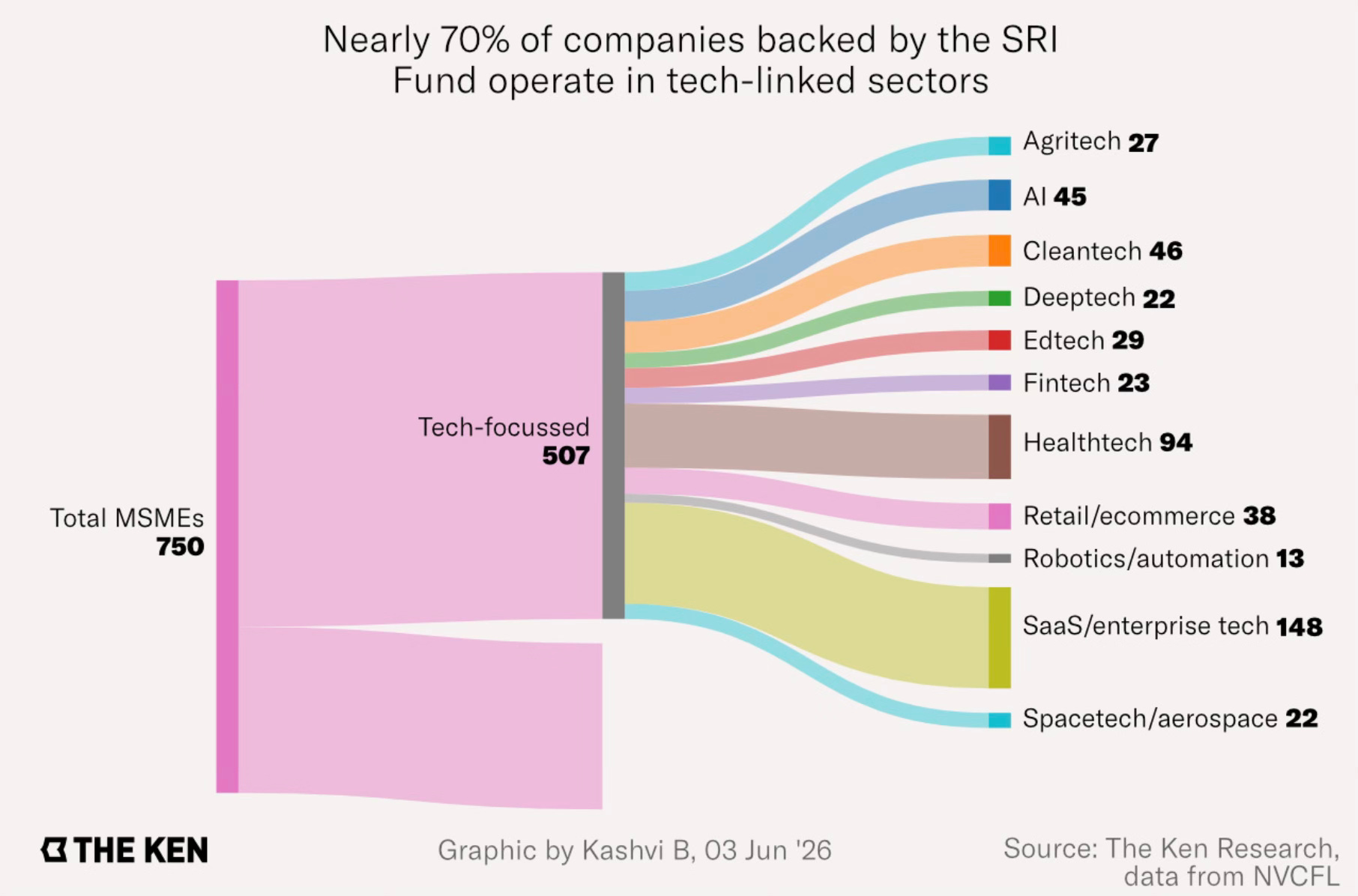
The Ken has analysed the performance of the Self-Reliant India (SRI) Fund, a Rs 50,000 Cr fund with 20% government contribution (the rest coming from VC and PE) to finance MSMEs, and found both concerns being validated. 

The SRI fund model is described here.

SRI Fund is being implemented by NSIC Venture Capital Fund Limited (NVCFL), which is an Alternative Investment Fund (AIF) of Category II registered with SEBI. SRI fund is oriented to provide the funding support through NVCFL to the Daughter Funds for onward provision to MSMEs as growth capital, in the form of equity or quasi- equity, for the following:

Since the start of the fund in 2020, it has backed around 750 companies and catalysed more than Rs 16,000 crore of investment. 

Nearly seven out of every 10 companies it has backed are tech-heavy businesses. Only three are in traditional manufacturing… In fact, several of these companies had already been backed by VC firms before the SRI Fund got anywhere near them. Truemeds, for instance, is backed by Accel, Peak XV, and Westbridge, while Chai Point is backed by Eight Roads Ventures and Saama Capital. Understandably, this dims, if not outright flouts, the proposition of the SRI Fund, which was supposed to scope out companies “ignored” by venture capitalists… 

“Fund managers get empanelled under SRI with the intention of backing underserved MSMEs,” said Ishaan Ajay, a development-and-sustainable-finance consultant. “But when faced with the choice between a profitable but slow-growing industrial supplier and a software platform capable of scaling rapidly, they tend to gravitate towards the latter. It’s what they understand the best.” Just consider the numbers. Suppose there’s a precision components manufacturer growing 15% annually with, say, 18% Ebitda margins. That may be a great business, but if you invest Rs 10 crore today, you’ll get only 2–3X your money over seven years. Contrast this with a spacetech company, which, if it succeeds, could be worth hundreds of crores.

“Venture funds are built around the second outcome,” said an analyst at a VC firm. This explains why SRI-funded companies tend to be tech-heavy. For every Bellatrix Aerospace in the portfolio, there’s an invisible machine-parts manufacturer outside it that was passed up… startups are generally more innovation- and tech-heavy, whereas MSMEs tend to be traditional, manufacturing-heavy businesses…

The government, for its part, tries its best to redirect funds towards their intended purpose. If it doesn’t agree with a fund’s investment choices, it expresses its objections, according to a VC with knowledge of the matter. But at the end of the day, it’s one LP among many. And when it can’t sway others, it ends up “recusing” itself from investing in that particular portfolio company, added the VC… “There is no prescription that a certain percentage of the fund must necessarily go towards traditional manufacturing or non-tech MSMEs,” a VC said. Which is the one thing that might have prevented all the confusion.

The point about returns amplification for private investors has also been highlighted in a study of IFC’s blended finance deals in the 2000-20 period, which found comparable financial returns to non-blended projects but “no statistically significant excess private mobilisation beyond what IFC’s standard lending would attract.” In other words, blending did not increase the quantum of private investment — it redistributed risk between IFC and private co-investors. 

This finding is echoed in a 2023 study of SIDBI’s Fund of Funds for Startups (FFS) 1.0 by the Impact and Policy Research Institute (IMPRI), India’s Startup Engine: A Policy Review of the Fund of Funds Initiative. It finds that most FFS 1.0 capital went to established VC funds that would have raised capital independently. It also found that “crowding-in effect was primarily reputation/signal, not financial additionality”; the government’s involvement functioned more as a validation of fund managers to private investors than as a necessary injection of capital. While FFS 1.0 delivered a 2x mobilisation ratio, it was mostly in already-functioning VC markets.

As I have blogged several times, the startup and innovation sector is going through the same journey that the infrastructure sector has undergone over the last three decades. Multiple policy experiments to catalyse DFIs - IDFC, IIFCL, NIIF, and now NaBFID - have struggled to crowd in private capital into the riskier infrastructure segments like water supply and sewerage, mass transit, solid waste management, street lighting, energy-saving companies, electricity distribution, etc. Instead, these institutions and instruments may have ended up competing and crowding out private capital in the entirely derisked segments of the infrastructure sector. 

In this context, it is also useful to ask the question whether the VC model is the right instrument for the funding of non-technology startups and innovations. 

Livemint has two long reads that describe the emergence of consumer food brands catering to the niche category of health-conscious people. Sample this

The past few years have seen a spurt in new food brands specializing in regional staples and cooking ingredients. From rural Bengal winter specialty date palm jaggery (nolen gur) to ancient emmer wheat flour (Khapli atta) from Maharashtra, regional staples are finding customers beyond their states of origin. Some brands like Gurugram-based Anveshan and Two Brothers Organic Farms from Pune have crossed a critical mass, with annual sales close to ₹200 crore in 2025-26… Anveshan sources ingredients from key growing regions—like Pollachi in Tamil Nadu known for its high-quality coconuts and aromatic varieties of groundnut from elsewhere in Tamil Nadu and Karnataka—suited to make cold-pressed oils. The ghee, made from the milk of native breeds like the Gir from Gujarat is made using the traditional bilona process where milk is first set to curd and later churned to separate the butter (this has resulted in a new category called ‘cultured ghee’)…

Venture capital funds are betting on these brands: in September last year, Two Brothers raised a $15 million round taking its total fundraise to $25 million (and its post-money valuation to $85 million or ₹781 crore as per data from market intelligence platform Tracxn)… In April this year, KisaanSay, which markets single-origin grocery items like cardamom from Idukki and black raisins from Nashik, raised ₹34 crore ($3.6 million), taking the total funding at the Gurugram-based startup to $5.6 million since it was set up in mid-2022.

In a way, these brands have also helped promote traditional farming practices with more farmers returning to heirloom grain varieties such as the fragrant, short-grain Kala Namak rice grown in eastern Uttar Pradesh and emmer wheat in Maharashtra and Karnataka. These grains have a low glycemic index (a measure of the spike in blood sugar levels from carbohydrate intake) making them suitable for diabetics and often have higher protein and fiber content compared to conventional hybrid varieties… Three distinct factors—growing consumer willingness to pay for clean food driven by a surge in lifestyle diseases, the rise of quick commerce (allowing brands to quickly test consumer response), and influence of social media platforms are reshaping the premium staples market.

All these businesses are distinct from the rapidly scalable technology startups. Take the story of the Two Brothers Organic Farms.

They use organic farming and traditional methods of primary processing to make ghee, jaggery, Khapli flour, and cold-pressed oils. The jaggery is made using native sugarcane with lady finger extract used as a coagulant. “In Khapli, we have created a revolution. We own a seed bank and pay farmers 2.5-times the price of regular wheat. More than 800 farmers grow this wheat for us in 3,000+ acres,” Satyajit said. “It took us ten years to build this brand. At the back-end, our farms are open to everyone (to visit). Consumers trust us and we have a 70% retention rate. But a proliferation of brands (offering traditional, hand-processed staples) also carries the risk of a dilution in quality standards,” he added with a note of caution.

Much the same can be said about most businesses outside of technology - food, textiles, footwear, manufacturing, recycling, etc. Building these businesses requires painstaking efforts for several years, and there are natural limits to their scalability. They are unsuitable for the VC model of funding, as the second Livemint story about the plant-based nutrition startup Oziva shows.

Venture funding, Aarti Gill (co-founder of Oziva) points out, comes with built-in expectations around exits within five to eight years. Unlike venture-backed software companies, consumer health brands compound slowly through trust, habit and repeat behaviour. “If you have investors willing to stay for 10 or 15 years, that changes the equation completely,” she adds. Gill broadly sees three paths for consumer brands: staying profitable and scaling independently over a long period, going public after reaching meaningful scale, or partnering strategically with a larger company. For Oziva, the third route eventually felt like the most practical one. And, that’s where HUL came in… For Oziva, the partnership offered distribution scale, capital and the ability to build beyond a digitally native audience.

Therefore, at a conceptual level and as a framework, it may be a prudent choice for public policy on the funding of startups to distinguish between technology and non-technology sectors. While VCs are appropriate for technology, with their smaller and rapid growth phase, the same may not be appropriate for non-technology startups, which require longer incubation and growth periods. However, in India, most public risk capital funding happens through the VC-driven FoF strategy, which raises concerns of returns amplification and a preference towards technology startups and innovations. 

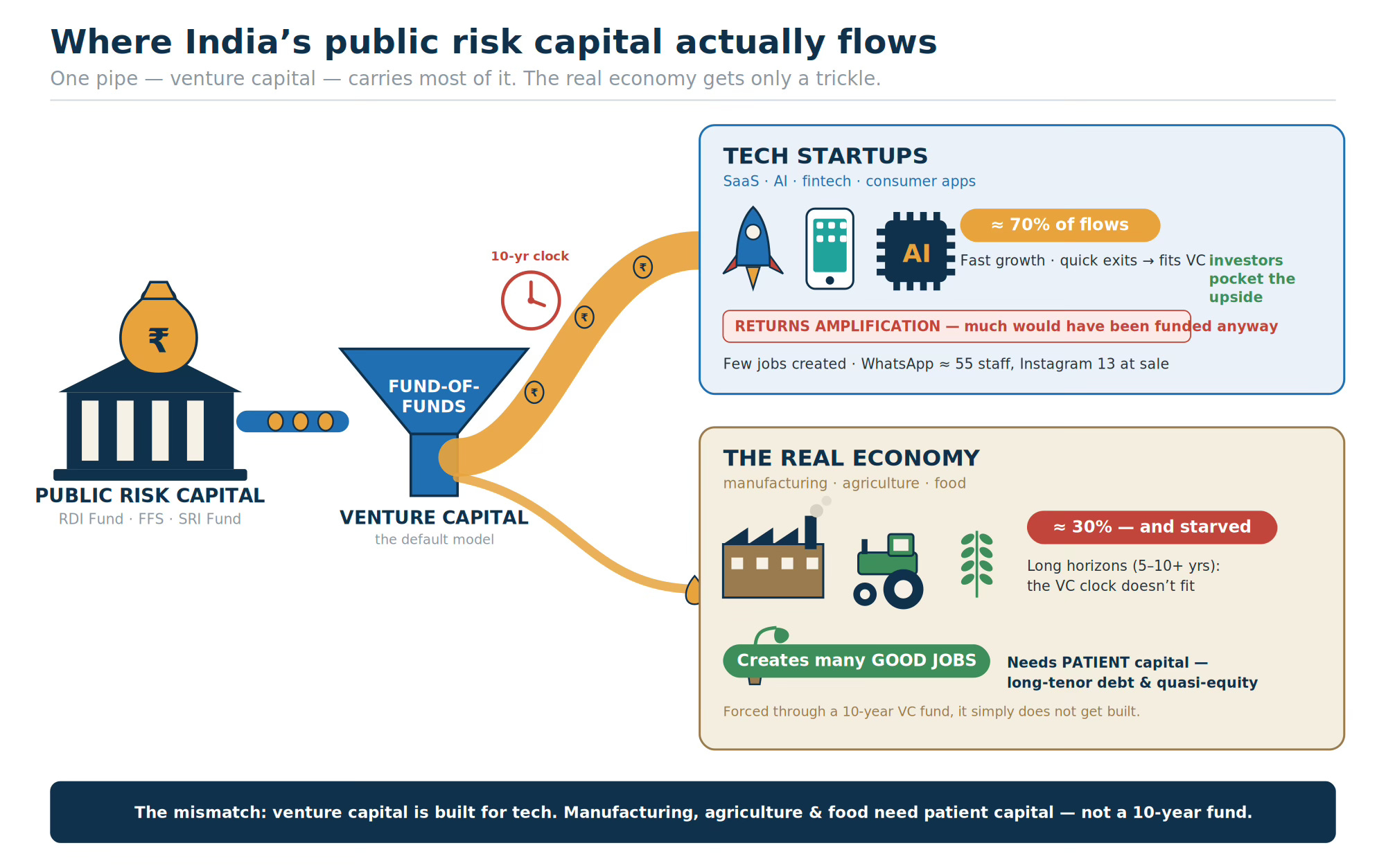
This is also a concern since technology innovations, far from creating jobs, often also tend to destroy jobs, whereas the non-technology innovations, especially in manufacturing, create good jobs. The graphic below captures the problem.

Note: The percentage breakup is probably even more skewed in favour of technology startups.

It also raises the question of effective strategies - instruments and institutions - for funding such non-technology innovations. How are such innovations funded globally? Are there institutional structures in India (state or central governments) that offer promise and can be adopted with tweaks? What are the lessons from the likes of the Maharashtra Aerospace and Defence Fund? What are actionable recommendations on funding of non-technology startups? If it also requires the government to directly fund them, what institutional structures are most practical and realistic? I’ll explore these in another post. 

Thursday, March 5, 2026

Some thoughts on startup innovation scaling - hospital solutions

The Ken has an article on how the health systems in India are adopting AI applications, specifically ambient AI transcription apps (always-on AI systems that use contextual interpretation to transcribe speech without explicit prompts). The article highlights several important insights about not only AI-adoption but also generally startups in India. 

The idea is simple: use AI transcription tools as scribes to document patient consultations and integrate them into the patient and hospital management workflows, thereby improving efficiencies and quality of care. Besides, “ambient AI could become the layer on which a full AI stack in diagnostics, predictive health, and ICU optimisation” can be built. 

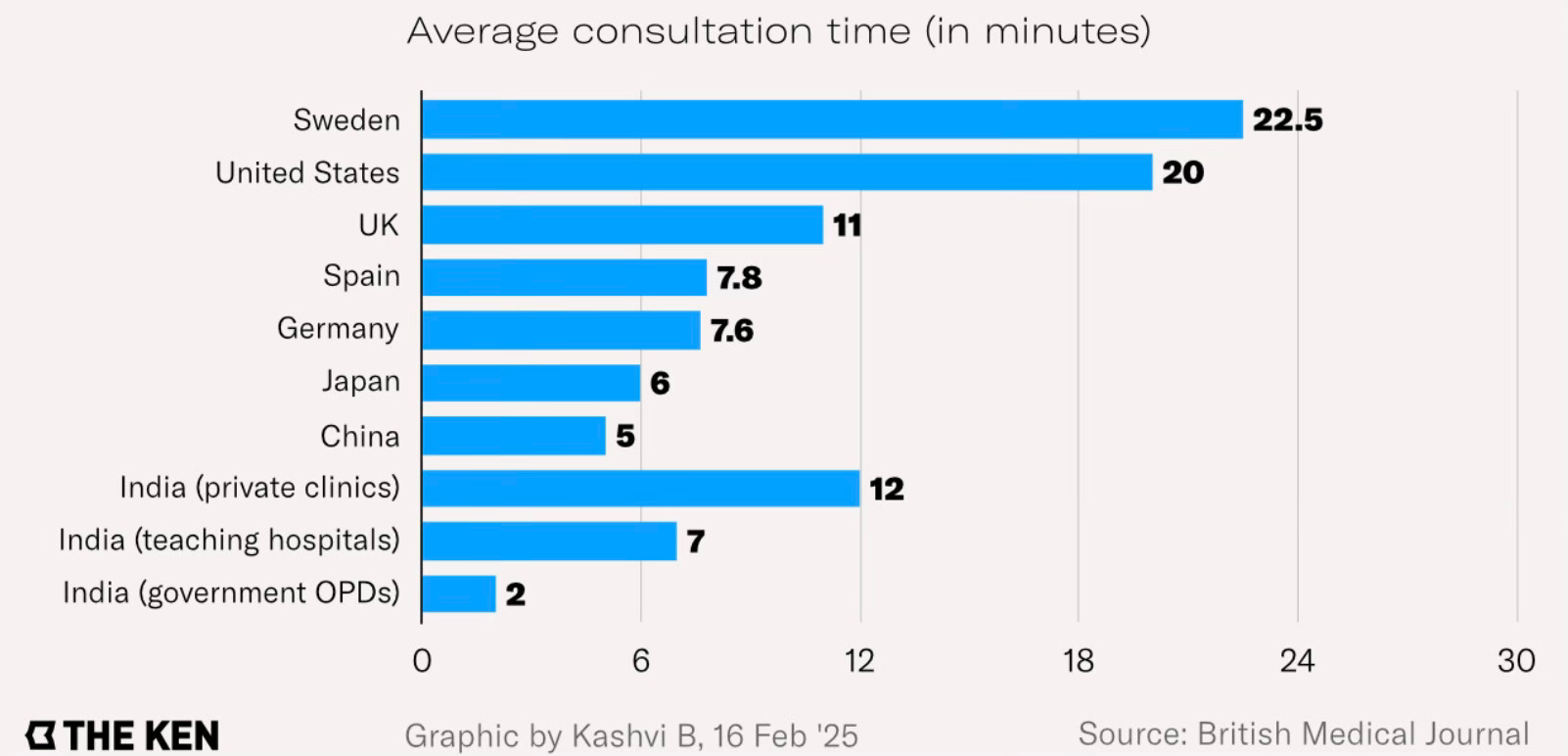
Apart from the inherent productivity-enhancing value of a digital scribe, the felt need in India is the sheer volume of patient load faced by doctors. An Indian doctor sees, on average, 30 patients compared to three for the US doctor.

This is also because India has a doctor for every 811 people, rising to nearly 11,000 in rural areas, compared to one for 300 people in the US. 

This patient load has naturally led to the search for methods to optimise consultations, especially by adopting ambient AI scribes. The well-heeled hospital chains have preferred to use the mature foreign solutions instead of relying on Indian startups. 

The article describes the challenges faced by ambient AI scribe startups in India.

Most hospitals in the country do not have electronic health records, known as EHR, that can integrate such tools… Where EHR systems do exist—mostly in private hospital chains—they aren’t standardised, making the integration of AI-scribe tools into easy-to-use digital infrastructure a custom engineering project for each hospital… An AI scribe can… allow a doctor to see two to three more patients an hour, a tangible capacity gain for high-burden Indian hospitals... After adopting Augnito, a voice-to-text tool from the British firm Scribetech, 35% of Apollo’s doctors saw more patients in 2024… Apollo has deployed Augnito across 37 of its facilities since 2022–23, giving nearly 4,000 doctors access to it… 

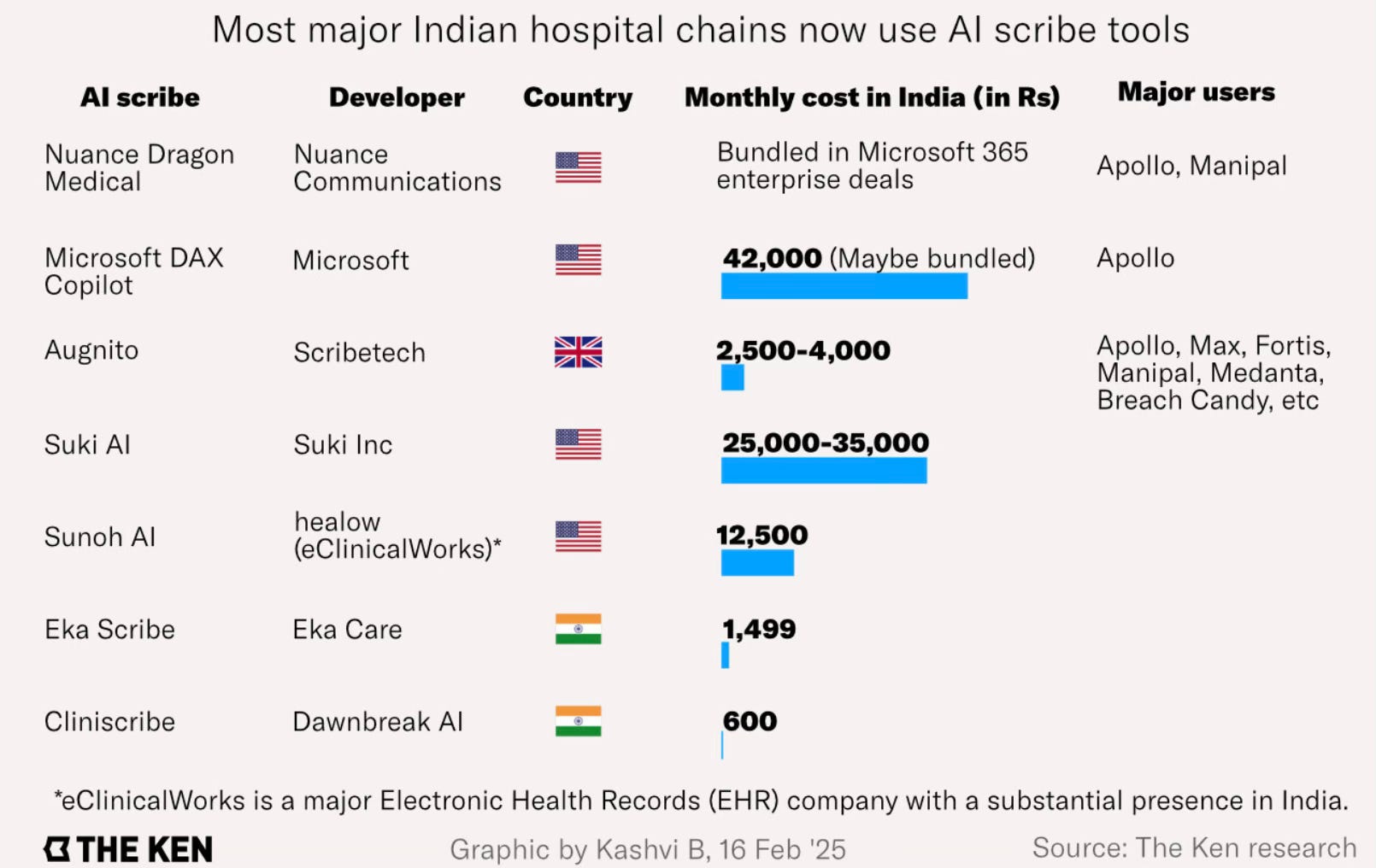
The tools would need to be highly precise, though, and customised for the Indian context. Transcription errors can impact drug dosage, change patient outcomes, affect insurance claims, and even invite malpractice lawsuits… A medical journal estimated in 2024 that there had been a 400% increase in medical-negligence cases in the previous few years… At a price point of Rs 600–1,500 per doctor per month, AI scribes need wide adoption to break even. Building AI tools is expensive, as model training and GPU costs are high…

Beyond the big players, however, it will take much more to convince doctors to adopt these tools than just a promise of less clerical work... such tools are hardly affordable for a non-chain clinic… Selling to big chains is hard for a new company, however. “Apollo’s actual deal at a corporate level is with Microsoft,” a hospital industry expert says, requesting not to be named. “They have also bundled in another voice solution, Nuance Dragon, to improve documentation.”… So startups like Dawnbreak and Eka Care started with selling their tools to hospitals that didn’t have any EHR at all… Instead of integrating their tools into existing systems, ambient AI firms are looking to provide lightweight tools that hospitals can use piecemeal…

India’s hospital-information-system landscape is fragmented… there are some 2,000 EHR systems compliant with the Ayushman Bharat Digital Mission… Unlike in the US, where Epic and competitor Cerner command 70% of the market, each EHR system in India is different. For makers of AI scribes like Dawnbreak and Eka Scribe, this means building custom-integration solutions for each client rather than a mass product. Dawnbreak, in one year of its existence, has managed to build compatibility with four EHRs out of nearly 2,000… Indian EHR companies like Healthplix and Docpulse safeguard their databases. If they open their APIs up, they lose their competitive edge. Their clients are locked in long-term contracts, leaving them unable to change their systems or integrate any AI tools. 

This is a good case study on the problems with scaling startup innovation in India. 

1. AI has undoubted potential for significant productivity improvements, including in public systems. Like scribing, triaging of outpatient (OP) cases coming to a primary health centre (PHC), community health centre (CHC), district hospitals, and medical colleges is an area where AI can play a significant productivity enhancing role. In all these places, OP cases come to doctors with limited or no triaging. Further, as we have seen, the daily OP load in these hospitals (at least the better ones among them) is multiples of what a doctor can manage, leaving them overburdened and stressed. The result is inefficient use of the doctor’s time, inadequate diagnosis time, incorrect diagnosis, wrong OP referrals, and so on. 

An AI-based triaging application where the symptoms are entered at the OP-registration, nurse and doctor-level, can dramatically improve work conditions, increase hospital productivity, and enhance the quality of treatment. Triaging is already one of the early emerging successes of AI, with examples like Bank of America’s digital assistant “Erica”, which handles billions of client interactions and has reduced call centre volumes by 40 per cent. 

2. However, the promise of AI is most likely to be constrained in sectors like healthcare and others where health and public safety are critical factors. In these regulated areas, vertical use cases of AI adoption (agentic solutions that can be outsourced specific tasks) is likely to be slower. The regulatory struggles of autonomous driving systems is an illustration. 

Even a clear and credible demonstration that AI is more accurate than the current human-intermediated approach will not be sufficient. Notwithstanding all its flaws, the human psychology and political economy is such that society will demand a very high, near 100%, accuracy from any electronic/digital system that seeks to replace a human-intermediated system. 

3. There are some important market insights here. Econ 101 would have it that since health care has inelastic demand, and also given the sustained high economic growth rates, one would have imagined a large supply side of hospitals in India who deploy such solutions. Similarly, one would have imagined that Indian startups would have grabbed the opportunity presented by developing AI solutions on patient triaging, consultation scribing, diagnostics, EHR, etc. 

I’m not sure about whether the Indian market can support the demand for such apps and services at the price points required to sustain domestic innovation. Sample this on the limited consumption potential of the Indian economy, and the challenge of making money in the country.

While India’s population of 1.4bn offers enviable scale, its market has proven difficult to monetise. According to Sensor Tower, Indian internet users downloaded 24.3bn apps in 2024 and spent 1.13tn hours on them, but total spending was just $1bn.

The advantage domestic startups have is their lower price point. But any scaling pathway for startup innovation that relies on price point may be no scaling pathway at all. A business model that relies on a low price point does not generate the cash surpluses required to finance the significant R&D investments required to refine such products. The net result is that genuinely innovative companies remain elusive. 

I blogged here about the demand-side constraint arising from the deeply price-sensitive nature of consumers and the small size of the consumption class with disposable incomes. It also does not help that Indian firms, including startups, do not have a culture of investing in R&D beyond that required to grow their ongoing businesses. 

4. The dominant narrative on startups, shaped by the Silicon Valley giants, is that of scaling by growing exponentially. But contrary to this, apart from killer apps and the few platforms, the main scaling pathway for ambient scribing startups like Eka Care or Dawnbreak may well be through large IT companies already serving the same or similar market segments. The vast majority of these solutions, and not just in health, are limited in their scope as stand alone applications. But this changes dramatically once they are integrated with a larger ecosystem platform to leverage network effects. 

These startups will struggle to get the big users, large hospital chains like Apollo and Max, to replace their bespoke legacy solutions or those supplied by established foreign vendors. This is a daunting market access challenge that even the startups with great solutions will face in markets like India. 

It raises the important point about a model of the digital economy where startups develop innovations which in turns scales through large firms. This not only makes the large firms even larger, but also maximises value capture by them.

It also raises the question of whether the startups should pursue getting the big hospital chains to become their investors. This will also align the incentives of the hospitals to integrate these solutions with their EHR and legacy systems. 

5. It is here that the failure of India’s software behemoths to build on their first-mover and other competitive advantages assumes significance. Both TCS and Infosys have long experience in global hospital systems management, including multi-year, multi-billion-dollar contracts. Hospital tasks management applications should have been a natural area of business development for these IT majors. But Indian software firms have struggled to break out from their services-led business model and embrace products and solutions which require high R&D investments. 

IT services still dominate with exports set to reach $210bn this financial year, India Ratings and Research forecasts. It has been a powerhouse industry for India but as IT services presented so much low lying fruit, the sector sucked up tech talent and capital from elsewhere. India’s SaaS sector in particular punched below its potential as a result. Software majors treated their services businesses as cash cows, deploying a small share to intellectual property assets. The 10 largest IT services companies had consolidated profits of $114bn in the past decade; 75 per cent of this was paid out via dividends and buybacks.

While the top five Indian IT firms had free cash flows of nearly $13bn in the 2023-24, their R&D investment was a pitiful 0.88 per cent of sales. 

6. Finally, what can public policy do to solve some of the scaling challenges? An India Stack for digital payments is unlikely to work for the far more complex area of EHR. Public policy cannot solve market coordination problems (like sharing APIs to allow integration and inter-operability), except in some contexts by defining standards. Public sector driven demand-side channels like Ayushman Bharat can gently force some standards. 

The approach of supporting scaling by procuring for use in public systems runs into the problems of punishing public systems with second quality or inferior products and creating perverse incentives among the startups. Providing a small sample of public hospitals does not address the market scaling challenge arising from network effects, besides also creating procurement problems even if the solution is found effective.

Saturday, January 17, 2026

Weekend reading links

1. Municipal bond issuance in India hit a record with nine issuances in FY26 till December, comapred with three and one in the previous two years.  
The total municipal bonds outstanding as on 31st December 2025 was Rs 3,783.9 Cr, with Rs 1000 Cr issued in 2025. 
First-time issuers in 2025 included Agra Nagar Nigam, Prayagraj Nagar Nigam, Varanasi Nagar Nigam and Bhavnagar Municipal Corporation, alongside repeat issuers such as Greater Chennai Corporation and Nashik Municipal Corporation. Market participants said the fiscal support under the Atal Mission for Rejuvenation and Urban Transformation 2.0 (Amrut 2.0) was a key factor behind the rise in municipal bond issuances. Unlike earlier reform phases, where incentives were indirect or uncertain, the current framework provides quantified incentives that lower the cost of borrowing. First-time issuers are eligible for incentives of ₹13 crore per ₹100 crore of bonds issued, subject to caps, which reduce interest costs over long tenors. For repeat issuers, incentives are linked to green bonds, providing predictability while aligning with environmental, social, and governance (ESG) objectives. This has made bond issuance a viable funding option for urban local bodies (ULBs).

2. Ruchir Sharma says that India must stop exporting human capital and increase its imports of financial capital.  

3. India's oil import sources.

“The good malls are doing better than ever. The bad malls are more challenged than ever,” says John O’Connor, head of acquisitions & development at O’Connor Capital Partners, a property owner. Annual sales per square foot at so-called class C malls are often below $400, while premier class A malls — the hosts of the Apple Store and Louis Vuitton — can bring in more than $1,000, according to Green Street, a real estate research group. The top 100 of America’s roughly 900 shopping malls represent about half of the sector’s asset value, according to Vince Tibone, Green Street’s mall research sector head. The bottom 350 account for just 10 per cent... Per person, mall square footage is more than 12 times higher in the US than in the UK, France or Germany, according to Moody’s Ratings.

5. India is at the lower-end of the ladder among developing countries in the adoption of electric vehicles.

6. China's rising trade surplus, amidst declining exports to the US points to diversion to other countries.

7. India's rice stocks stood at 58 mt in December 2025, and incurs an annual carrying cost of $2 billion.

China now controls more than 80 per cent of production for each key stage of solar panel manufacturing, from polysilicon ingots to wafers, cells and modules... research, technical knowhow and equipment spread from the west to China during the 1980s to 2000s. During this period US and European companies regularly sold production lines or other equipment to China and licensed or shared their technology in exchange for access to the Chinese market...

Germany was a prolific exporter of solar production equipment to China... Similarly Poly Engineering, an Italian maker of polysilicon — the key ingredient in solar panels — transferred key production knowhow to China’s Daqo New Energy in 2008, helping China break the grip on polysilicon supply held by the US, Europe and Japan. That same year, Goldwind, now the world’s largest turbine manufacturer, bought a 70 per cent stake in Vensys, a German pioneer of gearless wind turbines. Goldwind had licensed Vensys’s technology for manufacture in China five years earlier. In the early days of the solar industry in the 1980s, there was “very little caution . . . No one had the fantasy to believe China would compete on an equal footing in 15 years’ time,” says Rasmus Lema, an expert on the spread of green technology at the University of Johannesburg in South Africa...A turning point came towards the end of the 2000s, as China’s rapid development of factories, encouraged by the crucial development of its own polysilicon industry, helped push the industry into overcapacity. 
9. Semiconductor chip prices are being squeezed upwards.
At the centre of the squeeze is DRAM, the memory used in smartphones, laptops and servers. Advanced AI processors, such as those made by Nvidia, depend on a specialised variant known as high-bandwidth memory (HBM), which stacks chips vertically to increase speed while reducing power use. The rapid construction of data-centres has sent demand for HBM soaring. Producing it is resource-intensive: HBM requires three to four times as many silicon wafers as standard DRAM. Supply is highly concentrated. Just three firms—SK Hynix and Samsung Electronics of South Korea, and Micron of America—rake in more than 90% of global DRAM revenue. All three are switching capacity to HBM, which will account for half of global DRAM revenue by the end of the decade, up from 8% in 2023, reckons Bloomberg Intelligence, a research group. HBM typically yields operating margins of 50% or more, compared with 35% for standard memory. Investors have rewarded the strategy... But the flip side is that more basic memory chips, which account for 15-40% of the cost of smartphones and PCs, are becoming scarcer and costlier. The price for the DRAM found in most consumer electronics, known as DDR4, has risen by 1,360% since April 2025 (see chart 2).

10. India's affordable housing market facts.

The recent data from Knight Frank and the National Real Estate Development Council (Naredco) underline the severity of the problem. Across India’s top eight cities, the supply-to-demand ratio for homes priced below ₹50 lakh went down to 0.36 in the first half of 2025 from 1.05 in 2019. Meanwhile, the share of affordable housing in new supply has hit 17 per cent, plunging from over 50 per cent in 2018, signalling a structural retreat by real-estate developers from the segment. The shortage in urban affordable housing is estimated at 9.4 million units, with cumulative demand from economically weaker sections (EWS), lower-income groups (LIGs), and middle-income households projected to reach 30 million units by 2030.

11. Tracxn data on startup funding in India.

India’s top 20 startups by valuation accounted for over half of the combined valuation of $69.3 billion of the top 100 startups in calendar year 2025 (CY25), according to an analysis of Tracxn data. The valuation of the top 20 startups stood at $35.7 billion in CY25... Also, the average fundraise for the top 20 startups stood at $195 million in CY25. The top five — Zepto, GreenLine, Uniphore, Infra Market, and Access Healthcare — together raised $1.26 billion last year, accounting for over 11 per cent of the total startup funding in CY25. Other startups in the top 20 list included Meril ($200 million), Spinny ($129 million), Jumbotail, and Raise ($100 million), among others... Total startup funding declined 12.5 per cent to $11.2 billion in CY25, from $12.6 billion in CY24. In CY23, the total startup funding stood at $11.1 billion... 

The top five startups by valuation now account for more than a third (34 per cent) of the total valuation of the top 100 startups and as much as 66 per cent of the top 20’s valuation. These companies, including Zepto, CRED, and Zetwerk, together command a valuation of $23.6 billion. Other startups in the top 20 by valuation include Udaan ($1.8 billion), Uniphore ($2.5 billion), Spinny ($1.0 billion), Jumbotail ($1.0 billion), and Raise ($1.2 billion), among others.

12. Eswar Prasad argues, rightly, that the rising Chinese trade surpluses are a bigger problem than the Trump tariffs. While the latter will possibly end when Trump leaves, the former will continue until addressed systemically. 

13. Edward Luce writes that Ireland may be Ground Zero for MAGA to ignite right-wing populism in Europe, as Steve Bannon pursues an Irish Trump. 

Ireland is rare among European democracies in not having a significant hard right party. Perhaps some of that oxygen is sucked up by Sinn Féin, Ireland’s leftwing nationalist party... Trump’s national security strategy highlighted Britain and Ireland as countries to which America was “sentimentally attached”. The US now officially wants to help these two “restore their former greatness”. Given Britain and Ireland’s fraught bilateral history, this is an eccentric twin ambition to announce. Ireland lacks its own Nigel Farage to play that country’s part in fighting what the document calls the west’s “civilisational erasure”. As the Irish writer and essayist Fintan O’Toole observed, “the catastrophic decline of Irish Catholicism is Exhibit A in this apocalyptic narrative”. If you add that Ireland is increasingly depicted as an antisemitic country by pro-Israel lobby groups, and the Irish economy’s heavy dependence on US corporate tax revenue, particularly from Big Tech, the country could be in for a stormy passage. Ireland would be taking a risk bigger than any of its EU partners in championing the bloc’s digital privacy and service laws.

14. Thomas Edsall has a fascinating psychoanalytical explanation of Donald Trump's actions. 

It is possible to become addicted to power — particularly for certain character structures. Individuals with pronounced narcissistic, paranoid or psychopathic tendencies are especially vulnerable. For them, power does not merely enable action; it regulates inner states that would otherwise feel unmanageable.

Donald Trump is an extreme illustration of this dynamic. From a psychoanalytic perspective, his narcissism is malignant in the sense that it is organized around a profound inner emptiness.

Malignant narcissism is a combination of narcissism and psychopathology. Because there is little internal capacity for self-soothing or self-valuation, he requires continuous external affirmation to feel real and intact. Power supplies that affirmation. Visibility, dominance and constant stimulation temporarily fill the void.

Wednesday, December 24, 2025

More thoughts on innovation funding in India

As part of their innovation promotion mandates, some Ministries of the Government of India (GoI) provide grants to startups, and now state governments are considering doing the same. However, innovation grant-making to startups by the GoI could benefit from certain fundamental reforms. 

The story of the flagship Atal Innovation Centres (AICs), described here (even if parts of it are debatable), is an illustrative example of the challenges with government startup grant-making. The AICs, administered by the NITI Aayog, were launched in 2016 to support early-stage startups in health, mobility, manufacturing, and agritech sectors, with support of Rs 10 Cr over 5 years. Like any incubator that takes the startup to the prototype stage and connects with investors and markets, the startups would get mentoring, small grants, and common infrastructure. The 72 centres have so far incubated over 3500 startups. 

However, the report linked above claims that fewer than 5% of the startups have raised any external capital, no startup of note has emerged from them, and most centres are only notionally functional. Notwithstanding this balance sheet, the Government of India and state governments appear to be doubling down on grant-making to startups to promote innovation. An allocation of Rs 2,750 crore ($308 million) has been made to continue the Atal Innovation Mission. Not just the centre, states like Karnataka have announced Rs 1,000 crore in new deep-tech and AI funds and fresh incubators.

Arguably, the biggest problem with grant-making by government entities is the absence of any meaningful portfolio management (beyond tranche releases). Grant makers are supposed to prize their better-performing portfolio grants, support them with mentoring and business development, forge ecosystem connections, enable access to markets and platforms, promote them in public procurements, assist in business permissions and patents, facilitate follow-on funding, and generally showcase them positively everywhere. 

The incentives of grant-making are partly to blame. Everyone wants to take credit for making a grant, and very few want to do the painstaking work of supporting the grantee with the aforesaid measures. The latter is also discouraged by the nature of portfolio support activities, for at least some of the reasons below.

One, by their very nature, portfolio management activities are informal and not amenable to impersonal bureaucratic processes. They require deep personal relationships and engagements with not only the grantees but also the ecosystem stakeholders, and leveraging them to benefit the grantee. It requires an entrepreneurial mindset as opposed to a bureaucratic one. 

Two, they involve actively promoting private firms, a socially stigmatised activity in India’s public discourse, even more so in public bureaucracies. Bureaucrats cheerleading particular grantees from a portfolio, even with all the justification, generally tend to be viewed with suspicion. It can also attract post-facto audits and vigilance inquiries, especially if those grantees turn out to be unsuccessful, a strong likelihood in the startup world. It does not help that there will invariably be instances of such support being abused through corrupt practices. 

Three, they also require bespoke in-kind support, which, in turn, requires financing. While such financing can be small, accessing it through the regular bureaucratic processes can be daunting, if not impossible. The financial scrutiny associated with such approvals can be excruciating and long-drawn. 

Four, such activities involve painstaking and long-drawn engagement, with often limited immediate or salient benefits. This lengthy and personalised nature also means that the grant maker must remain in the same position for a long time. In systems where reassignments, transfers and promotions are the norm, such personal commitment and long-term perspectives are difficult. 

For all the aforementioned reasons and more, portfolio management activities will struggle to be conducted effectively within public systems, such as in India. Direct startup grant-making by governments should therefore be strictly avoided. Instead, it is preferable to do startup grants through arms-length institutional arrangements that are insulated from traditional oversight mechanisms and not constrained by the rigidities of public bureaucracies. This is easier said than done, though there are some examples of limited successes. It is also appropriate that these grants be restricted to design and proof of concept (TRL 1-3), and prototype development and pilot (TRL 4-6) stages. 

Instead of grants, startups at commercialisation pathways (TRL 7-9) should be supported with concessional, patient, and risk-tolerant debt and equity investments. Given the challenges of administering them through public entities, and also given the presence of a pool of public and private financial institutions and entities with relevant expertise, these funds are best channelled through the latter. Public funds could be channelled into these entities or to Funds of Funds (as Limited Partners). 

A substantially improved/reformed Fund of Funds for Startups (FFS) scheme, operated through the Small Industries Development Bank of India (SIDBI), can be a good example in this regard. I blogged here also about the Maharashtra Defence and Aviation Fund (MDAF), which has had some successes. 

I had blogged here with some suggestions on industrial policy to fund startup innovation.