Substack

Wednesday, September 13, 2023

Apple as a commoditised luxury brand?

The Times has an article on the enduring iPhone phenomenon, as its 17th iteration is released.

There’s a general rule about consumer electronics: The older a device becomes, the more competitors appear and prices fall. This was true for televisions, personal computers and portable music players. It was supposed to happen with smartphones. But the iPhone has defied gravity... Remarkably, at an age in which most consumer devices have lost some of their appeal to users, Apple has increased its share of smartphone sales over less expensive rivals... In the United States, the iPhone’s largest market, the device now accounts for more than 50 percent of smartphones sold, up from 41 percent in 2018, according to Counterpoint Research, a technology firm. The gains have helped it claim about a fifth of the world’s smartphone sales, up from a low of 13 percent in 2019... In the United States, the iPhone’s popularity is expected to widen in the years ahead. Nearly 90 percent of teenagers own an iPhone, according to Piper Sandler, an investment bank... Apple has expanded its smartphone empire as the broader industry has faltered. Over the past two years, sales of Android smartphones have plummeted, but the iPhone has suffered only modest declines because it’s been winning new customers. It has done so despite being the industry’s priciest device.
The recipe for its success 
Apple has overcome price sensitivity by creating a business that is reminiscent of U.S. car sales. Like a car, iPhones last for years and can be resold to offset the purchase of a new one. Wireless providers, much like auto dealers, offer discounts and monthly payment plans that make it more affordable to buy the latest model. And customers, like brand-loyal car buyers, are more likely to buy another iPhone than switch to Google’s Android operating system. Apple has also been lucky. Two of its biggest challengers, Samsung and Huawei, have stumbled in recent years. The iPhone has avoided wobbles with a reliable blueprint: Apple annually updates the iPhone’s spare but sleek design and reliable software, and brings it to the masses with an operations machine that assembles 200 million flawless iPhones a year with military precision... The migration from Android to Apple has accelerated as promotional discounts, financing plans and trade-in offers make higher iPhone prices less of a barrier. Wireless carriers sweetened their offers as they scrambled to gain or keep customers... It made switching priceless... Apple and wireless carriers began more aggressively promoting monthly payment plans. The plans have reduced the cost of a new iPhone to less than $40 a month from the $800 to $1,200 that customers had to pay upfront. The prices are lower for people who trade in used devices. The old iPhones, which could fetch up to $640, have been auctioned to buyers in Asia, who resell them at a markup. 

Apple has leveraged its aspirational market position to pursue a creeping market acquisition strategy,  

For young people, iPhones equal inclusion. Many choose it over Android because Apple’s messaging service, iMessage, will turn the color of messages from its default blue to green if a non-iPhone user is in a messaging group. The stigma associated with having green text messages is so pronounced that when it came time for Dave Storrs’s 14-year-old son to get his first smartphone, the teenager told his father that he wanted an iPhone or no phone at all. “It’s a status thing,” said Mr. Storrs, an Army retiree who lives in El Paso. “They don’t want to be treated differently.”

Mr. Storrs, who is 49, has been subjected to the same pressure. For more than a decade, he took pride in being what he called an “Android renegade.” He owned a series of LG and Motorola phones, even as his son and other family members pressed him to buy an iPhone. He gave in this year after his family gave him a $99 pair of Apple’s wireless AirPod earbuds. Each time he wanted to use the AirPods on his Android phone, he had to manually sync them. The laborious process inspired him to buy an iPhone 13, which connects the AirPods instantaneously. After years of using a free Android phone, he now pays $11 a month for the iPhone. But he says that he’ll never go back to Android because he likes that he can wear AirPods and take phone calls while walking his Catahoula leopard dog, Teddy.

“It’s just convenient,” he said.

New buyers like Mr. Storrs illustrate how Apple is gaining customers. The gap between the two major operating systems is tilted in Apple’s favor. About 94 percent of iPhone customers are likely to buy another iPhone, while 91 percent of Android customers are likely to buy another Android, according to Consumer Intelligence Research Partners, a technology research firm.

The Storrs family is illustrative of how a generation, especially but not only in the US, has been sucked into Apple's orbit. 

It's widely known that the secret to Apple's success is its ability to maintain massive margins on its hardware products, especially the iPhone. Its gross margins (% of gross revenue retained after deducting operating expenses) have remained stable in the 38-40% range since 2013. 
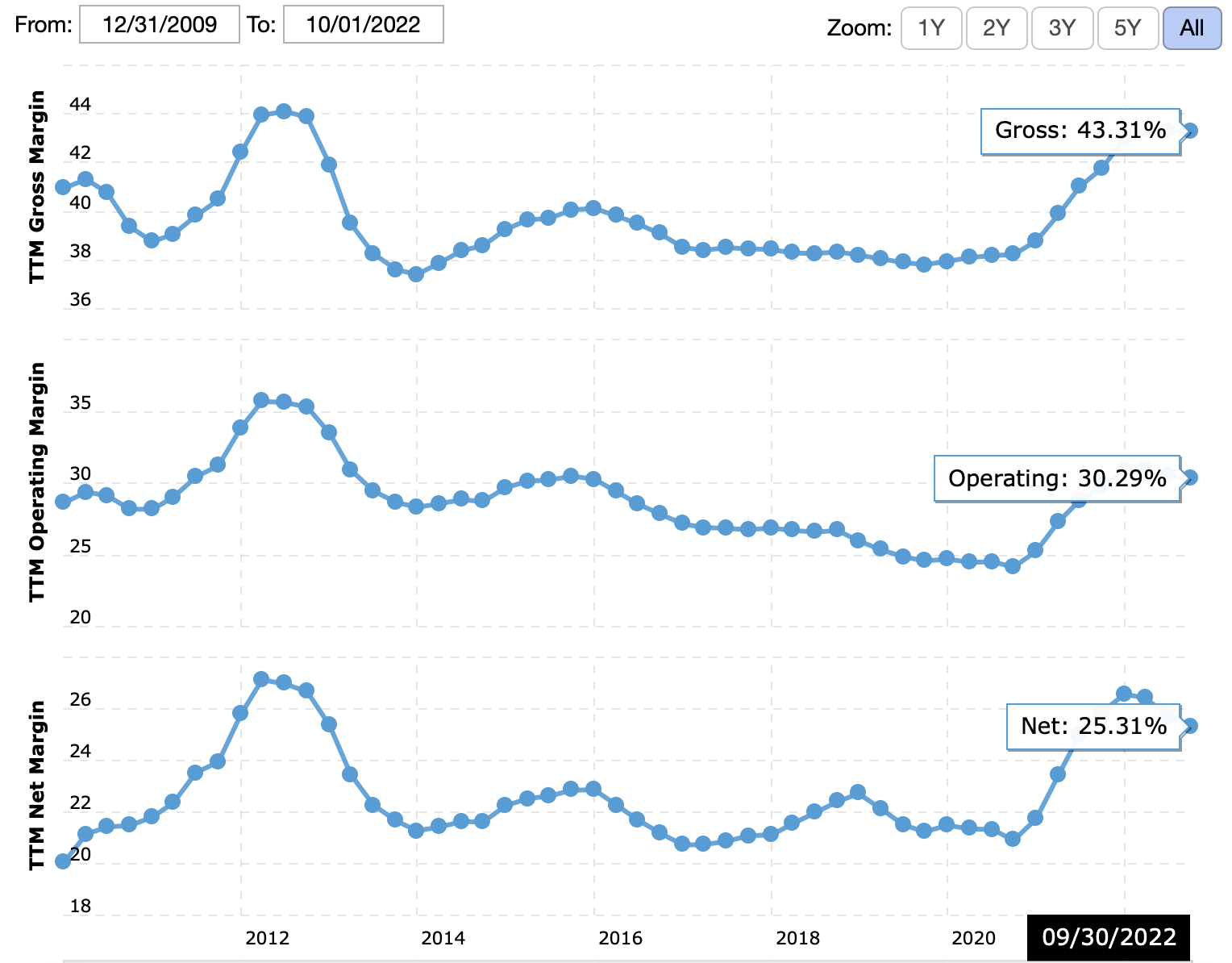
When applied to the nearly 250 million iPhone shipped in 2022, these margins result in an eye-popping profit of $100 bn on a net revenue of $394.33 bn for the year. One estimate puts iPhone's price markup at 119% for its latest iPhone 14 Pro Max. 
Then there is the staggering figure of nearly 1.3 billion iPhones active by the end of 2021. 

To all this, adding its dominant share of the global smartphone market, especially its dominance in the world's largest market (the US), means that Apple with a small share of the total shipments commands a disproportionately large share of the industry's profits
And the margins have risen since the pandemic.

Apple's ability to retain high margins despite its large scale is interesting. Apple likes to differentiate and present its products as belonging to the premium segment. Its business model and pricing have elements of luxury brands. 

Monday, September 11, 2023

The retreat of orthodoxy and return of prudence

Consider the following emerging trends. Manufacturing activities are critical for economic growth and should therefore be reshored. Industrial policy is important to support manufacturing. Strategic industries should be subsidised (and even winners there should be picked). Certain trade restrictions are necessary to level the playing field and protect domestic industry and jobs. Regulation of financial markets is essential. Financialisation should be controlled. Globalisation should be slowed and reversed. Capital controls are good and external borrowings should be constrained. The inflation target should be higher. Deficits and public debts are fine as long as their growth is slower than the economic growth rate. Rent controls may be required to make housing affordable. Government financing is critical for the green transition. Government intervention in general is important for economic growth. And so on.

In the coming months and years, more will certainly follow. I can think of a few more. Executive compensation should be curtailed. Private equity firms should be regulated more tightly. Capital gains should be taxed at higher rates. Marginal income and corporate tax rates should be increased. Windfall taxes should become the norm. Wealth tax should be reintroduced to maintain intergenerational equity. Minimum wages should rise. Large firms should be regulated, even broken down. In addition to consumer welfare, size, and anti-competitive practices should become the tests for anti-trust actions. 

These trends are contested as being anti-orthodoxy. Academic researchers, experts, and commentators scorn these emerging policies and rail against them as being against technical expertise and wisdom. Some say these policies run against evidence. 

There might be a simple explanation for this reversal.

For long these policies suited the domestic and international requirements of developed countries led by the United States. These policies were in their national interest. These countries were the main beneficiaries of these policies. They formed the core of the so-called Washington Consensus. 

The net losers on these were the developing countries. It was therefore natural that there was strong opposition among these countries to the Washington Consensus policies. These critics in the global South were then contemptuously dismissed by the commentators and scholars in the West as being left-wing ideologues and snake oil peddlers. Notwithstanding overwhelming empirical evidence, Western intelligentsia and media were unwilling to accept their arguments. 

Now that the shoe is on the other feet, the same countries are at the receiving end of the adverse consequences of these policies. When faced with this reversal of fortunes, academic elites are emerging from the woodwork to advocate the same policies they excoriated when implemented earlier by developing countries. The IMF, long used to forcing such orthodoxy down distressed economies, has now emerged as the champion of these reversals. They are all now using the same evidence, logic, and methodologies that the developing countries then used to make in defending their policies. 

The reversal has been necessitated by a few forces. One, the emergence of China as the factory of the world and a manufacturing superpower has upended the global economic order, leaving Western markets captive and their firms uncompetitive. Two, the dynamics of technology-biased changes and off-shoring of manufacturing activities have resulted in an acute scarcity of good jobs. Three, the financialisation of the economy has created several distortions that hurt the economy, society, and polity. Four, the capture of the rule-making process by Big Tech and Wall Street threatens to break down the social contract. Finally, the speed and extent of climate change have forced existential challenges for everyone. 

This is also a reminder that public policies are rarely ever about strict adherence to some theory or orthodoxy. All things we do in our daily lives are guided by some principles that are overlaid in the context of making judgments about what to do. On the same lines, public policies emerge from a combination of theory and precedent filtered by context and some salient evidence, all combined to exercise some judgment. This is prudence. 

Experts and academic researchers, skewed by their theoretical knowledge and logical frameworks but without the benefit of the contextual and implementation experience, are deeply constrained in their ability to exercise good judgment about what might be good policy responses to problems facing their countries. Prudence and wisdom cannot be substituted with technical expertise in addressing complex public policy challenges. 

In the next post, I'll provide another perspective on these shifts. These shifts should be seen as a recalibration and rebalancing of policies that had gone too far and created several distortions.

Saturday, September 9, 2023

Weekend reading links

1. Chris Giles has three important graphics about trends in the world economy. The first is the rising importance of India so much so that it now rivals China in the contribution to the world economic growth.

While we fret about the inflationary pressures in the world economy, the decline achieved on inflation in the developed countries is remarkable. 

The final trend is the continuously declining estimations by the IMF of the five year potential growth rates of the world economy since the GFC. It has been continuously scaled down from 4% to 3%.

2. The European Union has promulgated a landmark legislation, Digital Markets Act that imposes new responsibilities on tech companies, including sharing data, linking to competitors and making their services interoperable with rival Apps. Popular software products and services of technology companies are being designated as gatekeepers and subject to these additional responsibilities. These rules become fully applicable from next spring. 

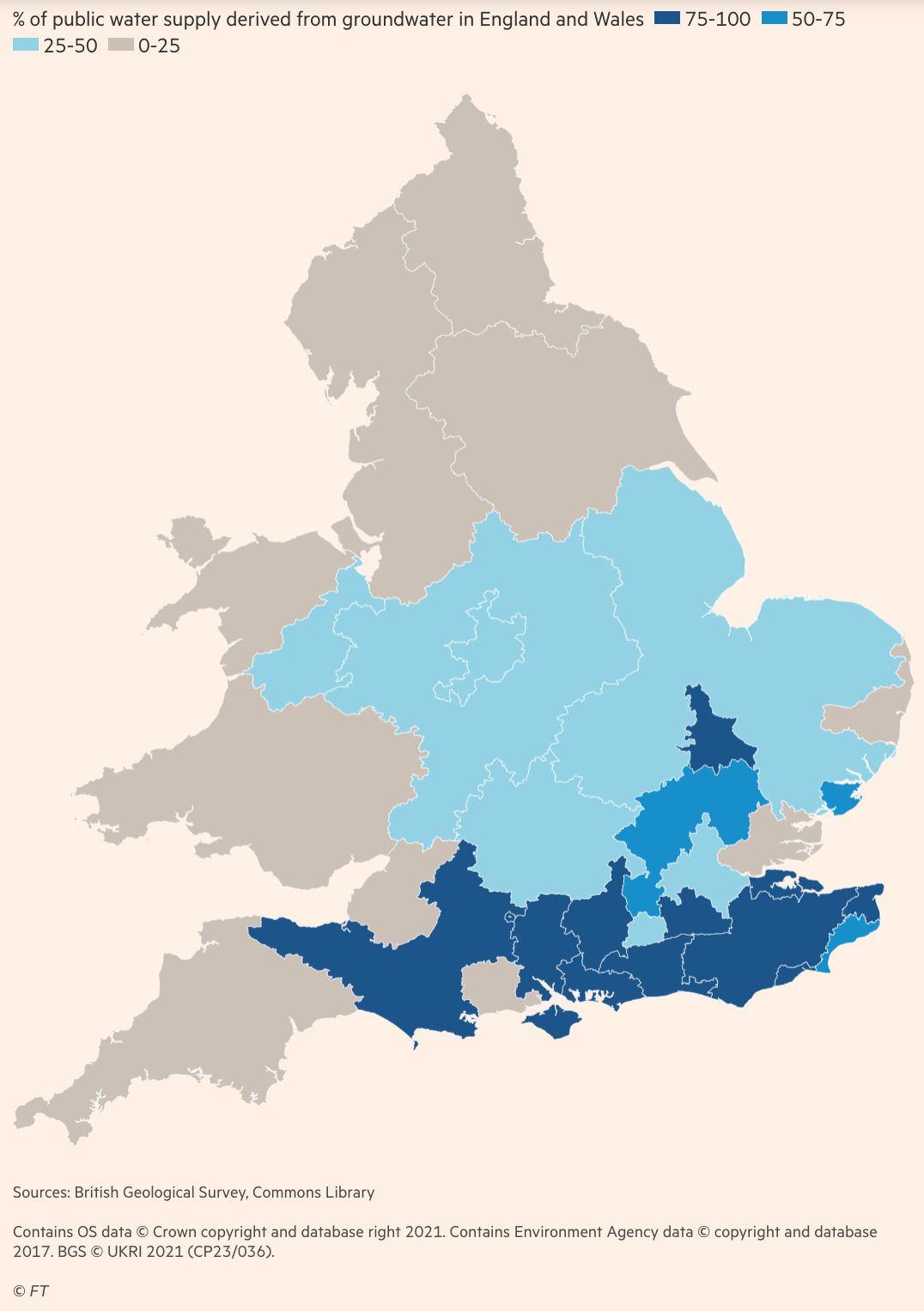
3. Groundwater exploitation is the major source of drinking water in many parts of England, with a third of all tap water coming from boreholes that tap into aquifers. Such water reduces the cost of supply for providers. 
The article points to some statistics about water supply privatisation in UK
Britain is... the only nation to have sold its water resources — including pipes, reservoirs, boreholes and treatment plants — in England and Wales to private sector owners, now mostly a clutch of sovereign wealth, infrastructure and pension funds. Those companies — which bought the monopolies with no debt and were handed £1.5bn to make improvements — have borrowed £60bn since 1989. Much of that has been used not for new investment but to pay more than £70bn in dividends to water company owners... The financial water regulator Ofwat noted that almost £200bn had been spent on system improvements since privatisation.
In simple terms, the UK companies that were handed over to private operators without any debt and £1.5 bn cash to make new investments in the late eighties and early nineties have paid out dividends and run up debts worth over £130 bn while investing just about £200 bn. In other words, excluding the debt, post-privatisation, for every two pounds invested in utility infrastructure, the UK water operators have paid out one pound in dividends!
This includes water distribution pipes that leak a fifth of the water they carry, a failure to build new storage capacity such as reservoirs, and the contamination of waterways with unknown quantities of raw sewage that depletes the stock of clean water.

A point of interest for policy makers in India is the licensing of drawl of water from rivers and aquifers. The UK's Environment Agency grants roughly 20,000 abstraction licenses across England and Wales. While there's over-exploitation and illegal usage, the licensing and oversight exercises some level of control over the use of an important public resource. 

4. Rents are rising across Europe creating a public policy problem for governments. This has been compounded by the rising interest rates that make mortgages more expensive. 
Home ownership levels are among the highest in Eastern Europe where the tenants ended up purchasing their rented government properties after the collapse of communism. It's interesting that outright ownership is the lowest in the Northern European countries. 
Germany has experimented with rent cap legislation in Berlin that was struck down by the Constitutional Court. But landlords in Berlin are still barred from increasing rents by more than 10% of a local benchmark rate in any fresh leases. Berlin has witnessed a sharp increase in population, thereby leaving supply struggling to keep pace with demand.  The result has been a steep increase in rents over recent years. Between 2018 and 2021, rents have doubled and even tripled in many localities across the city. 

5. On the government's efforts to expand India's tax base
In September 2019, the government announced a cut in the corporate tax rate for existing companies from 30 per cent to 22 per cent. Broadly speaking, that translates to a reduction of about 25 per cent (though in effective terms it differs). As per the government, the revenue loss on account of this was Rs 1.28 lakh crore in 2019-20 and Rs 1 lakh crore in 2020-21 (neglecting the impact of non-availability of exemptions under this regime). The corporate tax to GDP ratio stood at 3.5 per cent in 2018-19. By 2022-23, it had declined to around 3.1 per cent.

On the personal income tax front, in the interim budget of 2019, the government had announced that individual taxpayers with taxable income upto Rs 5 lakh would get a full tax rebate. While the personal income tax to GDP ratio rose from 2.5 per cent in 2018-19 to 3 per cent in 2022-23, the number of individuals with zero tax liability also increased from 2.9 crore in 2019-20 to 5.16 crore in 2022-23. Considering the most recent changes to the tax structure — the rebate limit has been raised to Rs 7 lakh under the new tax regime — individuals with zero tax liability may rise further, limiting the gains from an expansion in the tax base.

6. As Chinese aggregate exports decline, one area where their exports have boomed is cars

Chinese households’ appetite for spending — on new cars and almost everything else — has waned as real estate prices have fallen. Consumer confidence has shown few signs of recovering even after the lifting of nearly three years of stringent “zero Covid” policies.

When Chinese households buy cars, they increasingly choose electric vehicles from local manufacturers, which lead global production of EVs. The result is an immense supply of gasoline-powered models that Chinese consumers no longer want but that still sell abroad. Chinese carmakers are stuck with unused factory capacity to build about 15 million gasoline-powered cars a year. They have responded by sending more than four million cars this year to foreign markets, at bargain prices.

Interestingly most Chinese cars are going to Europe and nothing is going to the US.  

7. Varian Rule of Technology Diffusion,

A simple way to forecast the future, the economist Hal Varian wrote, is to look at what the rich have today and assume that middle-income people will have the same in 10 years and poor people will have it another decade later.

I don't think this applies to complex issues and contexts like Edtech or driverless vehicles.

8. Excellent NYT article on declining share of low income students at elite US colleges. It analysed enrolment data for more than a decade from almost 300 colleges that educate roughly 2.7 million undergraduates every year. 

We focused on Pell Grants, which college students in the bottom half of the income distribution generally receive... At most colleges in our analysis, the number of Pell recipients has fallen over the past decade. The decline in the share of students who are Pell Grant recipients has been especially notable at public universities. Many states deeply cut funding for higher education after the recession of 2007-9 and never fully restored it. Universities also spent heavily in recent years to construct new buildings and hire more administrators, a recent investigation by The Wall Street Journal documented. Together, these trends have led colleges to raise tuition and recruit higher-income students who can pay it. At the University of California, San Diego, the share of first-year students receiving Pell Grants plummeted from 47 percent in 2010-11 to 24 percent in 2020-21... Most private universities have likewise become less economically diverse during this period, also partly for financial reasons.

The declining economic diversity of the country’s top colleges has broad consequences. These are the schools that have the most resources and the highest graduation rates. Attending one of them is typically an excellent investment. College graduates fare far better in modern America than people without a bachelor’s degree. They earn more money and are less likely to lose their jobs. They are healthier and happier on average. The gap in life expectancy between the two groups has widened in recent years. Some of these differences are causal, social-science research has suggested: College teaches people both hard and soft skills that are useful in today’s complex economy. All of which means that the recent enrollment trends contribute to rising inequality and diminished social mobility.

This general decline contrasts with a surprising increase in diversity in the top colleges, which otherwise remain bastions of elite privilege as documented by this recent Opportunity Insights study

At most of the 50 or so richest colleges — those with the largest endowments per student — the number of undergraduates from lower-income families has risen, sometimes substantially. At Harvard, the share of first-year students receiving Pell Grants rose to 22 percent in 2020-21, from 18 percent in 2010-11. At Princeton, the share rose to 18 percent, from 11 percent. These differences amount to several hundred students at each college. There were also significant increases at Claremont McKenna, Middlebury, Northwestern, Pomona, Swarthmore, Vanderbilt and Yale. 

... elite campuses enroll hundreds of students from the top 1 percent of the income distribution (which starts at about $600,000 a year in income). Elite colleges remain far less economically diverse than many public colleges with fewer resources. Even so, most highly endowed colleges have increased their enrollment of lower- and middle-income students over the past decade. They have done so in response to criticism that they are bastions of privilege rather than engines of upward mobility. The colleges have hardly become pure meritocracies, but they do look more like America than they did a decade ago. And although they are small relative to the rest of higher education, they matter. They send a disproportionate share of their graduates into the nation’s leadership class, across government, business, science and media. One way to create a more diverse American elite is to diversify the training grounds of that elite.

Even with this increased diversity, several elite colleges enrolled more students from the top 1 per cent than from the entire bottom 60 per cent. The Times article chronicles how Duke University has become an extreme example of this rich privilege.

Wednesday, September 6, 2023

Elite capture and woke liberalism

Michael Anton has an essay in Compact magazine where he makes a pessimistic case for the future based on the trends prevailing in the present. Anton's angst is motivated by several disturbing features in American politics and society, many shaped by the woke liberalism that is the dominant ideology.

He describes the real power wielders in the US.

We still choose, sort of, but that hardly matters, because the people we nominally elect do not hold real power. And when they do, they often use it for unconstitutional ends. America’s real rulers are not the constitutional officers we nominally elect, and certainly not the American people, whom our understanding of political legitimacy asserts to be sovereign. They are, rather, a network of unelected bureaucrats, revolving-door Cabinet and subcabinet officials, corporate-tech-finance senior management, “experts” who set the boundaries of acceptable opinion, and media figures who police them. 

In this backdrop, David Brooks has an honest introspection from the side of the liberals. He writes about the liberal intelligentsia's economic incentives

Armed with all kinds of economic, cultural and political power, we support policies that help ourselves. Free trade makes the products we buy cheaper, and our jobs are unlikely to be moved to China. Open immigration makes our service staff cheaper, but new, less-educated immigrants aren’t likely to put downward pressure on our wages.

Like all elites, we use language and mores as tools to recognize one another and exclude others. Using words like “problematic,” “cisgender,” “Latinx” and “intersectional” is a sure sign that you’ve got cultural capital coming out of your ears. Meanwhile, members of the less-educated classes have to walk on eggshells because they never know when we’ve changed the usage rules so that something that was sayable five years ago now gets you fired.

We also change the moral norms in ways that suit ourselves, never mind the cost to others. For example, there used to be a norm that discouraged people from having children outside marriage, but that got washed away during our period of cultural dominance, as we eroded norms that seemed judgmental or that might inhibit individual freedom. After this social norm was eroded, a funny thing happened. Members of our class still overwhelmingly married and had children within wedlock. People without our resources, unsupported by social norms, were less able to do that. As Adrian Wooldridge points out in his magisterial 2021 book, “The Aristocracy of Talent,” “Sixty percent of births to women with only a high school certificate occur out of wedlock, compared with only 10 percent to women with a university degree.” That matters, he continues, because “the rate of single parenting is the most significant predictor of social immobility in the country.”
He describes the modern meritocracy and its exclusionary basis,
We built an entire social order that sorts and excludes people on the basis of the quality that we possess most: academic achievement. Highly educated parents go to elite schools, marry each other, work at high-paying professional jobs and pour enormous resources into our children, who get into the same elite schools, marry each other and pass their exclusive class privileges down from generation to generation. 

Michael Lind has an excellent article where he draws attention to a single national elite in the US who get selected in their late teens or early twenties by virtue of their college admissions. 

Societies in which members of a single, homogeneous national elite with similar backgrounds circulate easily among all of the various centers of power—government, business, academe, and the media—are familiar in the modern world. In Britain, graduates of Oxford and Cambridge and a few elite private schools who live in a few neighborhoods in London dominate powerful institutions. In France, the grandes écoles play the role of Oxbridge in Britain. The University of Tokyo functions similarly in Japan.

Increasingly, the pattern in the United States is similar. It resembles a candelabrum: Those who manage to squeeze through the stem of a few prestigious colleges and universities in their youth can then branch out to fill leadership positions in almost every vocation, including the arts, outside of the military and the clergy... The lateral circulation of members of the same elite through revolving doors in the public, private, and nonprofit realms is a formula for oligarchy.

In an interesting essay in Compact magazine, Benjamin Studebaker argues that economic incentives and the political economy corrupt our morals and values. 

As Aristotle—and following him, Aquinas, in the Treatise on Law—had argued, moral exhortations don’t work when the hearers lack the necessary material incentives. But words are always cheaper than action, and so there is always a tendency to rationalize, to pretend we can achieve through opprobrium what can only be achieved through the hard toil of politics.

Across the West today, the market relentlessly coerces citizens to contemplate and grasp for money, subordinating every other value. They are exhausted. In their misery, they seek out every kind of coping mechanism imaginable. Instead of learning temperance, they construct their identities around their desires, around the products they consume.

Progressives in the United States who advocate for cash-transfer programs, like the expansion of the earned-income tax credit or universal basic income, overestimate the capacity of market systems to develop citizens. It isn’t enough simply to create free time. The market forces that incentivize consumption and melancholic repose need to be curbed for the moral health of the people. Meanwhile, most cultural conservatives maintain a blissful ignorance of the nexus between the material order and the spiritual, gainsaying how the capitalization of health care, housing, and education have led to the capitalization of the family and of interior life; how citizens derive no meaningful social roles and are alienated from themselves, their kin, and their communities.

Michael Lind posits an alternative world of elite pluralism where multiple elites inhabit

... a system of plural elites, each with its own admissions standards and internal promotion mechanisms. Examples of vocations that are structured along these lines are the US military and the clergy of the more organized among the organized religions. In the case of the military, not only is working your way up through the ranks one way to become a general or an admiral, it is the only way. Likewise, the papacy isn’t an entry-level job open to people who spent most of their lives outside of the Catholic priesthood...

In 21st-century America, campaign donors can still buy prestigious ambassadorships. But in today’s United States you can’t graduate from Harvard or Yale or Princeton, do a stint at McKinsey, work for Goldman Sachs, dabble in making documentaries about climate change or global poverty, invest in a startup, donate heavily to one party or the other and be appointed Chairman of the Joint Chiefs, any more than you can become Archbishop of Boston with that résumé. Labor unions are another example. Leaders of traditional labor organizations work their way up through the hierarchy. They don’t parachute into the top in midlife after another career in finance, real estate, or political campaign management, brandishing their Ivy diplomas.

I can think of an entrenched confluence of three groups of people and interests who have had an important role to play in creating this equilibrium in which liberalism is entrapped. 

The first group consists of immensely wealthy donors (and also the individuals who own influential technology platforms) who have made huge money, especially in either Wall Street or Big Tech, and who now want to go beyond their professional realms and shape the world around their views on critical public and social issues. Their world views and ideologies are in turn shaped by their economic interests and they want to form the public narrative in a manner that promotes those interests. 

The second group consists of the late baby boomer and millennial cohort who have achieved personal economic comfort and social status by working in sectors like especially Finance and Consulting, and are now jostling to become thought leaders and opinion makers on these same issues. Its members are invariably well-credentialed, having graduated from elite colleges and worked in elite companies. They, supported by their latter generational cohorts, are the leaders in creating and perpetuating the economy, society, and polity that is shaped by these narratives. 

The final group consists of academic researchers in elite universities and think tanks who believe that the world should be run based on their narrow technical expertise. Their world views converge with those of the first group and they become active in shaping the narratives. In simple terms, they are the ideologues who provide the technical rigour and scholarly credibility to the ideas being bankrolled by wealthy donors. 

Many who research widening inequality and the problems of increasing automation are also direct or indirect beneficiaries of the same corporate interests whose actions create these problems. Many passionate advocates of the restoration of union activity are also power users of Amazon Prime and voracious Starbucks coffee drinkers. All of them are passionate believers in the superiority of technical expertise and experts in solving social problems and policy challenges and also scorn the application of political choices in such decisions.

Sympathy is cheap, and talk is cheaper. In contrast, actions are hard. Hypocrisy is the dissonance between words and actions. This is one of the biggest problems with today's liberals (or woke liberalism). Liberals have been dulled into being compradors for modern capitalism by their economic incentives. They are active participants and among the biggest beneficiaries of the prevailing exclusionary economic system. Anything beyond talk and bluster risks cutting off the branch they're comfortably ensconced. But that may well be the need of the hour. 

Monday, September 4, 2023

Weekend reading links

1. Times has a very good article that highlights the Faustian bargain Indonesia has struck with Chinese Nickel mining companies - invest, extract, and process nickel and create jobs and increase local incomes and tax revenues, but in return comes pollution and social strife. 

The scale of mining operations in Sulawesi is immense,

Much of the nickel was headed north to the Morowali Industrial Park, an empire of 50 factories sprawling across nearly 10,000 acres that operates like a gated city, complete with a private airport, a dedicated seaport and a central kitchen that churns out 70,000 meals a day. The park was officially created in 2013 through an agreement announced by Indonesia’s then-president, Susilo Bambang Yudhoyono, and President Xi Jinping of China. China Development Bank provided a loan of more than $1.2 billion. 

Roughly 6,000 workers from China live in dormitory blocks, their laundry drying from railings. Visiting Chinese executives sleep at a five-star hotel run by Tsingshan, a Chinese company invested in a smelter that makes elements for electric vehicle batteries. Its restaurant, which serves dim sum and rice porridge, looks out over trucks disgorging cargo on the pier. Five million metric tons of nickel ore is spread on a hillside above the port — a stockpile on a cosmic scale. A structure the size of several airplane hangars holds mountains of coal waiting to be fed into the park’s power plant to generate electricity.

Unsurprisingly the presence of the large contingent of Chinese workers in all these factories has sparked local discontent. All high paying jobs are with the Chinese, and the locals are confined to lower level jobs. 

2. From a new working paper by Ejaz Ghani and others, who use data from the RBI to study the impact of India's national highways, Golden Quadrilateral, on finance-dependent activities. 

Loan volumes increase by 20-30% in districts along GQ and are stronger in industries more dependent upon external finance. Loan growth begins with increases in average branch size and in places with more pre-GQ loan activity. New branch openings come later, consistent with short-run adjustment costs to expanding branch networks. These patterns are not evident in placebo tests using delayed investments in NS-EW highways. Results suggest the depth of initial financial infrastructure shapes how infrastructure investments impact localities...
Motivated by the promise of using infrastructure to reduce disparity across regions, many policy makers ask a question along the lines of "build it and they will come?" Our analysis of the GQ experience suggests a nuanced answer. To begin, the very rapid and substantial response in loans in precisely the industries and locations predicted suggests a strong elasticity in the supply of credit to meet demand enabled by the GQ. However, we also find descriptive evidence that initial credit supply growth is tightly linked to places where banking loans were already happening before GQ. This suggests that understanding how finance responds to infrastructure may be key to understanding the distributional effects of infrastructure investments. If adjustment costs are substantial, the complementarity between finance and infrastructure can exacerbate, rather than attenuate, pre-existing differences in economic activity prior to infrastructure investment, at least in the short run.

3. On the magnificent seven

So far this year, the combined group — Apple, Microsoft, Google parent Alphabet, Amazon, Tesla, Nvidia and Facebook parent Meta — are responsible for three-quarters of the S&P 500’s gains.

4. Devangshu Datta writes about the collateral benefits of space exploration programs

We bounce radio, television and telecom signals off satellites as a matter of course. Global communications and entertainment depends totally on satellites... Weather prediction and hurricane warnings are also a direct payoff from the space presence. Solar power systems were also first developed for space. Telemedicine and its tools were built to enable doctors sitting on the ground to track the health of astronauts in space. The equipment in a modern gym was initially designed for use in space. Urban water supply and sewage systems use recycling methods developed for human waste recycling in space. The same applies to plumbing in airliners and trains. Ditto for air filtration systems to capture and clean up carbon dioxide. The geolocational technologies we use in our cars, and the mapping tools that help line up power lines, align road designs, and track the number of buildings in a city, were also developed for space and rely on satellites. Other cutting-edge technologies like robotics, autonomous vehicles, laser power, computing hardware and software, exotic alloys, and ceramics that provide heat and radiation shielding, were all developed to enable space exploration. Space has contributed hundreds of other off-the-shelf technologies, which we use on a daily basis.

5.  Important snippet from the recently concluded BRICS summit in South Africa,

Indonesia, a natural Brics candidate in economic terms as the world’s fourth most populous country and South-east Asia’s largest economy, also appears cautious about adhering to an increasingly China-dominated club. Jakarta was set to be among this week’s invitees, but declined to submit its interest as President Joko Widodo’s government debates whether to join, despite fast-growing economic ties to other members.
All the six additions - Argentina, Egypt, Ethiopia, Iran, Saudi Arabia and the United Arab Emirates - are very close to China.

6. Consumption of textiles, and especially fast fashion, has the fourth highest adverse impact on the environment. It's estimated that the average European throws away 12 kg of clothes every year. From an FT long read
But it is the rise of ultrafast online retailers that has led to an unprecedented volume of cheap, poor-quality clothes made from virgin polyester and other synthetic fabrics derived from fossil fuels. These items have little to no resale value and end up being incinerated or languishing for hundreds of years in landfills, usually in developing countries. Global textile production, of which 81 per cent is used by the clothing industry, nearly doubled between 2000 and 2015. Consumption of apparel and footwear is expected to grow another 63 per cent between 2022 and 2030 to 102mn tonnes, predicts the European Environment Agency. The glut of low-priced clothes has contributed to a culture in which consumers increasingly think of them as disposable. More than half of all fast fashion is discarded in less than a year, according to the Ellen MacArthur Foundation, a non-profit that campaigns against waste and pollution. If the average price on an item sold by Shein is about $7.60, for example, it becomes more convenient for consumers to buy new than to repair existing clothing or buy second-hand.
But there are changes afoot in the fast fashion industry. In order to meet its climate target of net zero emissions by 2050, the EU has announced an Extended Producer Responsibility (EPR) scheme that mandates all imported textile products by 2030 should be "long-lived and recyclable, to a great extent made of recycled fibres, free of hazardous substances and produced in respect of social rights and the environment". 

6. Diabetes drug maker Novo Nordisk has hit gold with two weight loss drugs Ozempic and Wegovy, that have been proclaimed revolutionary in the field of obesity. And the company's revenues are reshaping the Danish economy.
The company’s booming success now explains almost all of Denmark’s recent economic growth, and the surge in overseas sales in the drugs is prompting the Danish central bank to keep interest rates lower than it otherwise would, economists say. In the past few weeks, Novo Nordisk’s market value has exceeded the size of the Danish economy. Its soaring share price has made it the second most valuable public company in Europe, after the luxury goods group LVMH. The company’s shadow is so expansive that Danish economists are now debating whether the country needs to publish another set of economic statistics that strips out Novo Nordisk. In other words, there’s Novo Nordisk, and there’s the rest of the economy...

Last year, two-thirds of Denmark’s economic growth could be attributed to the pharmaceutical industry... The Danish economy grew 1.9 percent over that period, with 1.7 percentage points of that contributed by pharma... Denmark is the home of other pharmaceutical companies, but Novo Nordisk has far outpaced them. The company’s revenue last year was about 10 times that of the next largest Danish pharmaceutical company, Lundbeck... its new weight-loss drugs are now heavily prescribed, particularly in the United States. The U.S. Food and Drug Administration approved Ozempic as a diabetes medication in 2017; the agency approved Wegovy in 2021. Novo Nordisk’s profit surged 45 percent to 39 billion Danish kroner, about $5.7 billion, in the first half of the year... Even though Denmark’s pharmaceutical industry has had a substantial impact on economic growth data, there hasn’t been a corresponding increase in employment. Over the past five years, the industry has added 3.4 percentage points to Denmark’s growth but just 0.1 points to employment.
This has naturally posed concerns of Dutch Disease and comparisons with Nokia and the Finnish economy
With all this money being made, and expected to be made, in the United States, economists say there is an influence on Denmark’s currency. “You have companies, such as Novo Nordisk, that have a greater need for exchanging foreign currency into Danish kroner, then you start to see an upward pressure emerge on the Danish krone,” Mr. Pedersen of Danske Bank said. But Denmark keeps the krone pegged to the euro, so when the krone rises in value, “the central bank has to respond,” he added. The central bank has been spending kroner to buy foreign exchange and building up reserves. Because of these purchases, the central bank has also increased the gap between Denmark’s interest rates and the ones set by the European Central Bank. By keeping the Danish interest rate slightly lower than the one in the eurozone — currently 0.4 percentage points lower than the E.C.B.’s rate — it should discourage foreign investors from holding the krone...
Some economists in Denmark worry that the country could become too dependent on Novo Nordisk, with fretful comparisons to the fate of the Finnish economy when Nokia lost its dominancein the cellphone industry. There are also concerns that so-called Dutch disease could come to Denmark, said Helge J. Pedersen, the chief economist at Nordea, referring to the economic phenomenon when a country suddenly experiences a large increase in income, which is seemingly good economic news, but it actually has a negative effect on the rest of the economy.

This is a good long read on the popularity of Ozempic and Wegovy.  

In the meantime, Novo Nordisk eclipsed LVMH as Europe's most valuable company. 

Novo’s success with Wegovy has increased the value of its shares more than fourfold since 2018. The company’s market capitalisation hit an even higher peak — of $423bn — in August after the company published trial data showing that Wegovy reduced the risk of serious cardiac events like heart attacks by 20 per cent.

7. Who's displacing the Chinese imports into the US?

Another study by Caroline Freund et al found the following trends for strategic goods and all goods over the 2017-22 period. 
But there may be a sub-plot to the apparent decline in Chinese exports to the US

Both Mexico and Vietnam have themselves been importing more products from China, and Chinese direct investment into those countries has surged, indicating that Chinese firms are setting up more factories there. The trends suggest that firms may simply be moving the last steps in their lengthy supply chains out of China, and that some companies are using countries like Vietnam or Mexico as staging areas to send goods that are still partly or largely made in China into the United States... 

The countries that were able to capture the market share lost by China were those that already specialized in making the products that were subject to tariffs, like electronics or chemicals, as well as countries that were deeply integrated into China’s supply chains and had a lot of trade back and forth with China, Ms. Caroline Freund said. They included Vietnam, Mexico and Taiwan. “They’re also increasing imports from China, precisely in those products that they’re exporting to the U.S.,” she said.

8. Fascinating read in FT on the expanding size of wind turbines.

The 169 wind turbines spinning off the Yorkshire coast are an engineering feat: each eight-megawatt model erected by Danish developer Ørsted can power a home for 24 hours with a single rotation of its 81-metre turbine blades. Dozens of miles north, rival wind farm developer SSE is already upping the ante with its newest turbines, where a single rotation of the 107-metre blade can power a home for two days. The jump in turbine size in the offshore wind industry, where blades can reach higher than New York’s Rockefeller Center and provide electricity for millions of homes, reflects the fierce race for scale over the past decade or more...

From the early models in the 1990s of less than one megawatt, turbines are now being developed with a capacity of 18MW or more, with blades longer than football pitches supported by towers rising more than 100 metres above the water’s surface. Getting more electricity from each turbine has helped push down the costs of energy from wind by 60 per cent during the decade to 2021, according to the International Renewable Energy Agency.
This however has now started to create diminishing returns on all sides as technical risks, logistics problems, and commercial viability concerns surface, 
The rapid pace of development brings its challenges, however, for example for makers of the vessels installing the turbines as well as other parts of the supply chain that need to adapt to the huge increases in size and weight. “You are [now] talking about nacelles [part of the turbine] weighing 800 to 1,000 tonnes,” said Anders Nielsen, chief technology officer at leading turbine manufacturer Vestas. “You need to reinforce the quayside [to cope].” A report from consultants Wood Mackenzie this month said that about half of the world’s installation vessels are set to retire because they are not designed to cope with the newer turbine models, with about $13bn of investment needed for replacements.

In any case, this expansion in size has had the effect of pushing down wind power prices, like with all other renewable sources.

9. After 54 years in power, the Bongo family loses power in Gabon following a military coup that ousted President Ali Bongo. This is the latest in a string of recent coups concentrated mainly in the Francophone Africa.

Thursday, August 31, 2023

Some thoughts on how transformations happen

I have blogged here and here about pathways to system transformation in development to address what Horst Rittel and Melvin Webber described as wicked problems

In another post, I summarised some of the requirements for genuine system transformation

It involves some or all of these - cultivate champions at all levels; empower extensively, even at the risk of short-term failures; nurture positive deviances and encourage their diffusion; trigger conversations at all levels about the need for change; create the conditions for internal ruptures etc. This is very difficult to sustain. The toolkits are very different from what modern management teaches.

The most difficult (to comprehend) part of this approach is that it cannot be planned in any detail. You have to initiate the process with a few carefully thought out interventions or reforms which resonate with the felt-needs of all stakeholders, is important enough in the system's overall perspective, and which the system has the capacity to engage with meaningfully. Once initiated, the challenge is to watch and engage opportunistically based on emergent dynamics of the system and steer the course without letting things get off control. It is a long-drawn effort with uncertain pathway of change. This needs patience, tact, and an ability to continuously step back and in as required.

Tim Harford writes about how the German town of Freiburg underwent a long-drawn transformation and became a pleasant and walkable city,

In the 1960s, Freiburg’s beautiful Münsterplatz was a car park. When I visited this summer, the square was lined with pavement cafés and hosting a well-attended open-air concert. But this transformation did not happen overnight. It required the sustained accumulation, over decades, of one cycle lane or tramway at a time... Two academics, Rachel Aldred and Anna Goodman, recently examined the consequences of outer London’s low-traffic-neighbourhood investments. They found that car ownership took several years to fall steadily by 20 per cent. It takes time to change our habits and time to see the benefits...  
The Netherlands, meanwhile, was not always a utopia for cyclists: 50 years ago, pro- and anti-car factions literally fought in the streets... Its transformation began in the early 1970s, the seeds sown by a seemingly unrelated argument: when the federal government proposed a nearby nuclear power station, an unlikely coalition of church leaders, students and conservative farmers decided that they were all environmentalists.
Freiburg’s historic city centre, the Altstadt, was pedestrianised in 1973, a radical idea at the time. Local businesses were initially against the idea, but were appeased by the construction of car parks just outside the Altstadt. (They needn’t have worried; shops and cafés are buzzing.) The city expanded the tram lines, introduced an affordable season ticket branded “the environmental card” and arranged buses to feed the tram network rather than compete with it. An extensive network of cycle lanes and bridges were constructed. Freiburg’s traffic was also restrained: most streets have a speed limit of 30kph (18mph), and parking is controlled by residential permits and meters. The result of all this has been a walkable city centre that fizzes with commerce, surrounded by residential areas where children safely play in the streets. Both cycling and public transport increased by about 50 per cent between the early 1980s and the late 1990s, yet driving is perfectly possible and remains a popular way to get around.

This is a very good example of a system change driven transformation in the public realm. The same applies to several changes that we aspire for in our areas - cleaning up a river, making the city clean, integrating a mass transit system, lowering traffic congestion, making housing affordable, embracing energy or water conservation, transit-oriented-development, energy transition and so on. It applies just as much to the success of landmark regulations like the Insolvency and Bankruptcy Code (IBC), Real Estate Regulation Authority (RERA), Tradeables and Receivables Exchange of India (TREDS) (all from the Indian context). 

Such transformation endeavours have the following features

1. Such systemic transformations generally take a long time, even a generation or more. So patience with such transformations is essential. Shortening the cycle is both nearly impossible and counter-productive in so far as forced and rapid changes create its set of distortions.

2. In general, such transformations involve a combination of physical investments (infrastructure, equipment etc), institutional changes (enabling urban planning and other policies), co-ordination (bringing together different stakeholders), market response (businesses adapting and new business models emerging), and citizen/customer behaviour changes. 

3. This diversity of requirements demands bringing together several stakeholders. This poses a significant co-ordination challenge, one which can generally be solved only through active government engagement. Market dynamics can rarely achieve such co-ordination, even in the long-run. But government engagement also brings with it the risks of top-down diktats, resource misallocation, skew in priorities, and other distortions. This is where such transformations generally struggle to succeed. 

4. Such transformations also require long-drawn painstaking accumulation. This requires a long term perspective. But politicians and bureaucrats, with their short time horizons, have limited incentive to stay the course for the long term. Therefore the critical need to have a broad-based consensus on the objectives and the final destination. This is essential to ensure that such projects do not get junked with changes in governments. 

Once a consensus is forged, a practical approach would be to make a perspective plan and have it formally and authoritatively adopted. But even such consensus and planning is no insurance for success. Once the plan is in place, its components can be implemented in a phased manner based on the priorities of governments and market dynamics. 

5. With all such projects, change (in terms of the destination sought) is diffuse and imperceptible in the short-run. However, some components of the plan may generate perceptible changes. Further, certain components meet the priorities of the government of the time. This means that the course of such changes is mostly dictated by opportunism. 

Monday, August 28, 2023

The debate on driverless cars

I have blogged earlier here and here about the role of agenda-setting in shaping the trajectory of ideas and technologies. A disturbing trend has been the capture of this agenda-setting process by corporate and elite interests. The example of driverless cars is yet another illustration. 

The widespread adoption of driverless cars throws up several public problems. Foremost, automating driving squeezes out the very large low-income occupational category of vehicle drivers. The technology creates taxis and vehicles without drivers. There is nothing on the horizon to accommodate the tens of millions so displaced. 

Second, in a world of driverless cars, making taxis cheaper and allowing more vehicles on the roads, will worsen the current preferential treatment that cars have over public transit. More people will exit public transit systems and the voices supporting public transport will be even more silenced. The public funding for mass transit will decline further and its neglect will worsen. 

Third, at a time when we are trying to limit transportation-related carbon emissions, this trend would work in exactly the opposite direction. 

These public costs will have to be weighed against the private benefits by way of greater profits to a few large corporations and greater convenience to taxi users and those who can afford driverless vehicles. 

The trickle-down positive externalities that supporters of such technologies claim are generally too slow to realise, too little to be of significance, and too concentrated among a few as to be of no relevance to the vast majority. In any case, these collateral benefits have to be weighed against the negative externalities arising from the elimination of an entire economic segment.

Surprisingly none of these high-level issues are considerations when decisions on the adoption of driverless vehicles get taken by governments. The San Francisco example is illustrative. 

FT has a long read on the debate surrounding a vote in San Francisco on whether to allow robotaxis on its roads. The support for robotaxis is overwhelmingly from corporate interests, many based in the city (GM-owned Cruise, Amazon-owned Zoox, and Alphabet-owned Waymo). They tout several benefits

Driverless car executives have touted the potential to bring dramatic safety improvements. Robots do not get sleepy, distracted or enraged. Nor will they drive drunk, talk on the phone or rush to get to work. For passengers who feel vulnerable hailing a ride with a stranger, especially late at night, a driverless car can be a sort of refuge.

Note the framing of the benefits of robotaxis - all centred around safety, convenience, and efficiency. No mention of any of the important aforementioned public issues. Once the debate gets anchored around the likes of safety and convenience, it's only a matter of time before the narrative overwhelms any opposition. 

The California State Public Utilities Commission, which regulates self-driving cars in the state, voted 3-1 to permit Cruise and Waymo to offer paid rides anytime during the day throughout the city. The seven hour hearing on the issue by the Commission was almost entirely on concerns of road safety. Even the dissenting Commissioner's vote was on concerns of safety. This narrow technical framing of the hearing, overlooking the important public issues mentioned above, is a teachable example of what's wrong with the decision making progress on technology adoption. 

The Commission's vote came overruling strong opposition from local officials, including the San Francisco Departments of Public Works and Fire Services, Municipal Transportation Agency, and Planning Commission. The local government has had no role in the decision, that was appropriated by technocrats in the State Government. 

Even the media debates fall unwittingly into this framing. Consider this from an article in NYT on the San Francisco debate,

Are the driverless cars an interesting and safe transportation alternative? Or are they a nuisance and a traffic-blocking disaster waiting to happen?

The article makes only passing mention of the serious social and public policy problems caused by the introduction of robotaxis.

We cannot also overlook the non-trivial technical problems - see thisthis, this, and this - that driverless vehicles are unable to surmount even today. 

There was the recent incident when a fleet of driverless vehicles froze and blocked traffic during a Friday night concert at North Beach. Days later, an autonomous car got stuck in wet cement at a construction site, and then a robotaxi crashed into a firetruck responding to an emergency call. Weeks earlier, pet lovers were mortified when a vehicle struck and killed a small dog.

Corporate interests frame their endeavour as part of the widely accepted narrative of technological progress and have lobbied hard to capture regulatory and standards-setting institutions and important decision makers. They are right to believe that once robotaxis are introduced and are able to demonstrate successful adoption, the prevailing hostility and apprehensions among some groups will dissolve over time. 

It's not surprising given the financial stakes involved. To put that in perspective, it's estimated that investors have poured more than $50 billion into the idea of driverless cars even before one robotaxi service has been introduced.  

However, the marginalisation of public debates on the adoption of robotaxis to narrow technical issues, overlooking the critical public problems unleashed is a testament to the elite capture of the political institutions and the broken nature of the political process.