This post provides more examples of China’s remarkable scale and scope of industrial policy at work and how it is impacting the world. It also discusses how it is restricting access to technologies to prevent others from competing.
The FT has a big read which describes how government support has propped up the Chinese chemicals industry and how it is destroying Europe’s traditionally strong chemical industry. It uses the illustrative example of Belgian citric acid manufacturer Citribel, which was established in 1929 and is now facing an existential crisis with three consecutive years of rising losses.
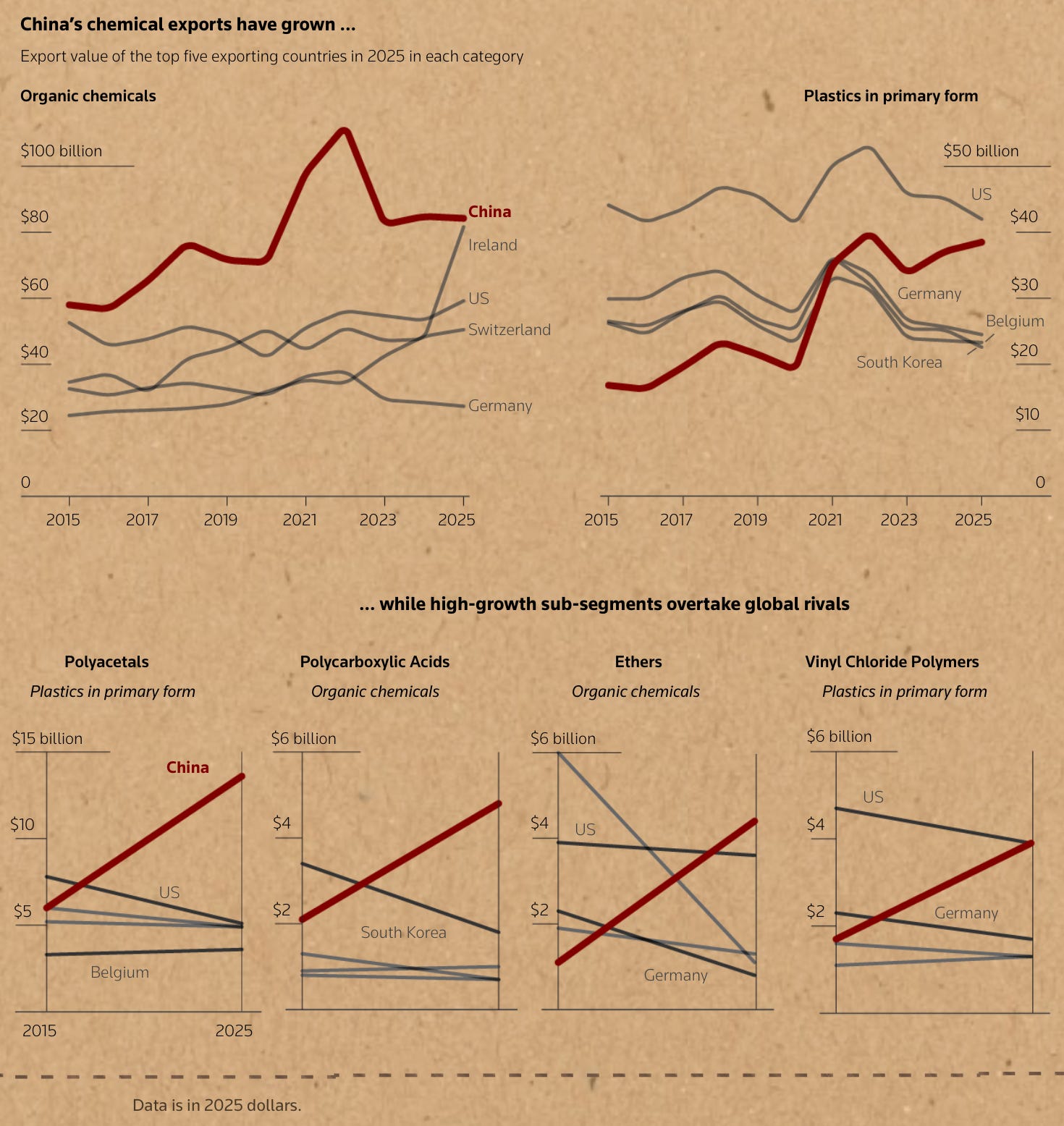
A combination of industrial policy and generous subsidies from central and local governments, coupled with fierce competition for market share, has sharply increased the competitiveness of Chinese firms and boosted exports. As can be seen from the graphics, the surge in exports has been ongoing since around 2020.
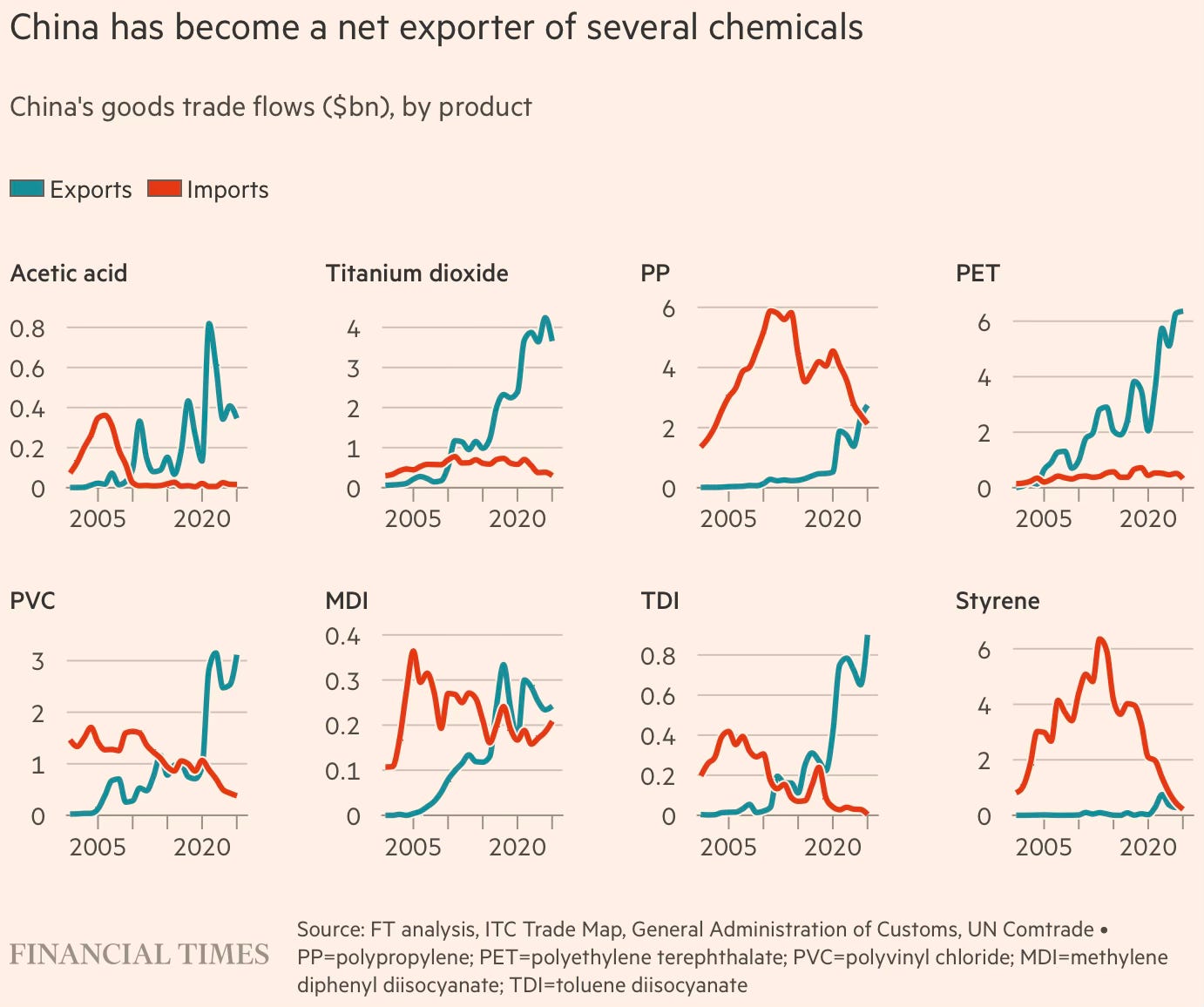
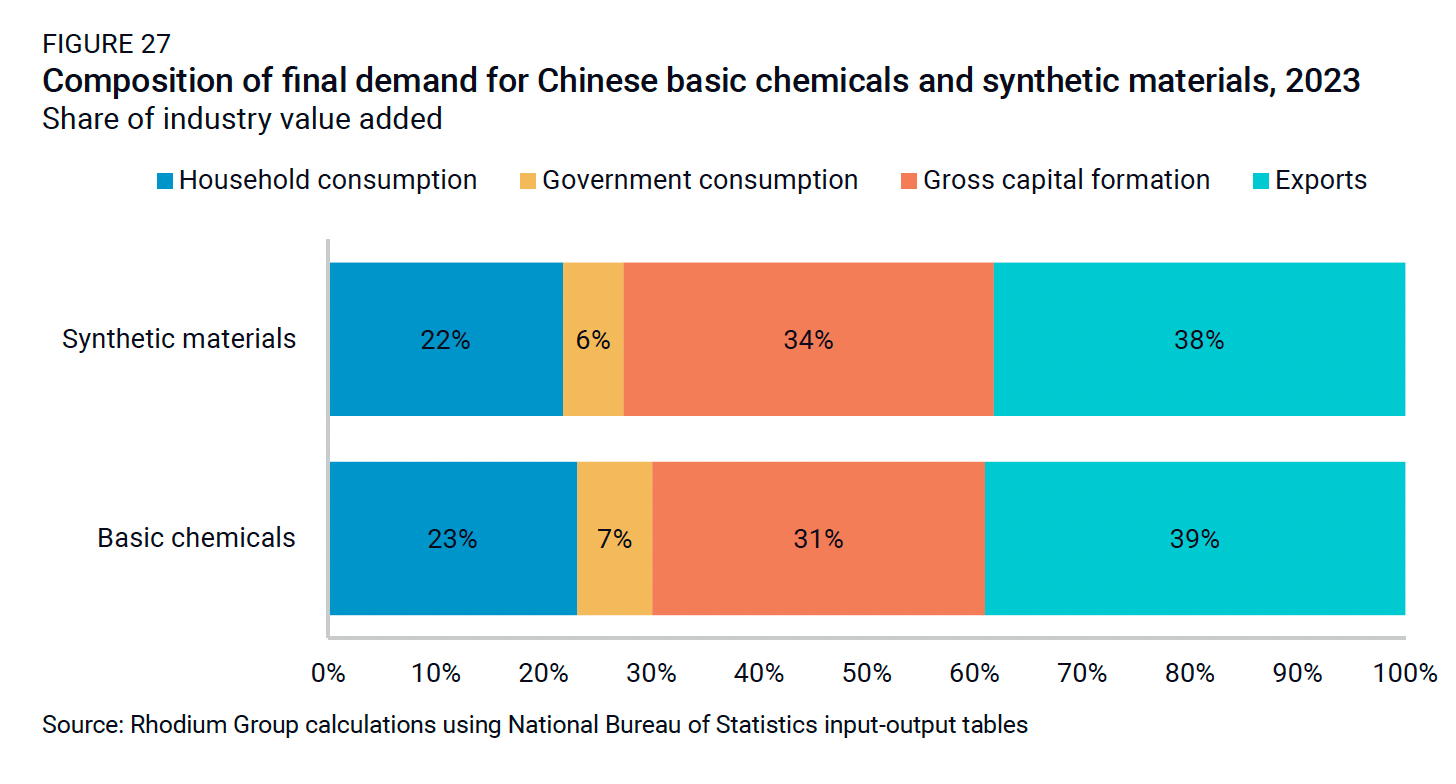
A new Rhodium report shows that China’s chemicals output has grown 18-fold over the past 25 years and now represents over 45% of global capacity for basic chemicals and plastic resins. Exports now form nearly two-fifths of the chemicals production in China
Chinese firms have moved up the value chain in the chemicals industry, like the stretchy plastics used in your car bumper, the solar panels on your roof, and the carbon fibre your road bike is made from. These chemical firms received about $75 billion in subsidies over the past decade, peaking at roughly $15 billion in 2023, according to OECD data.
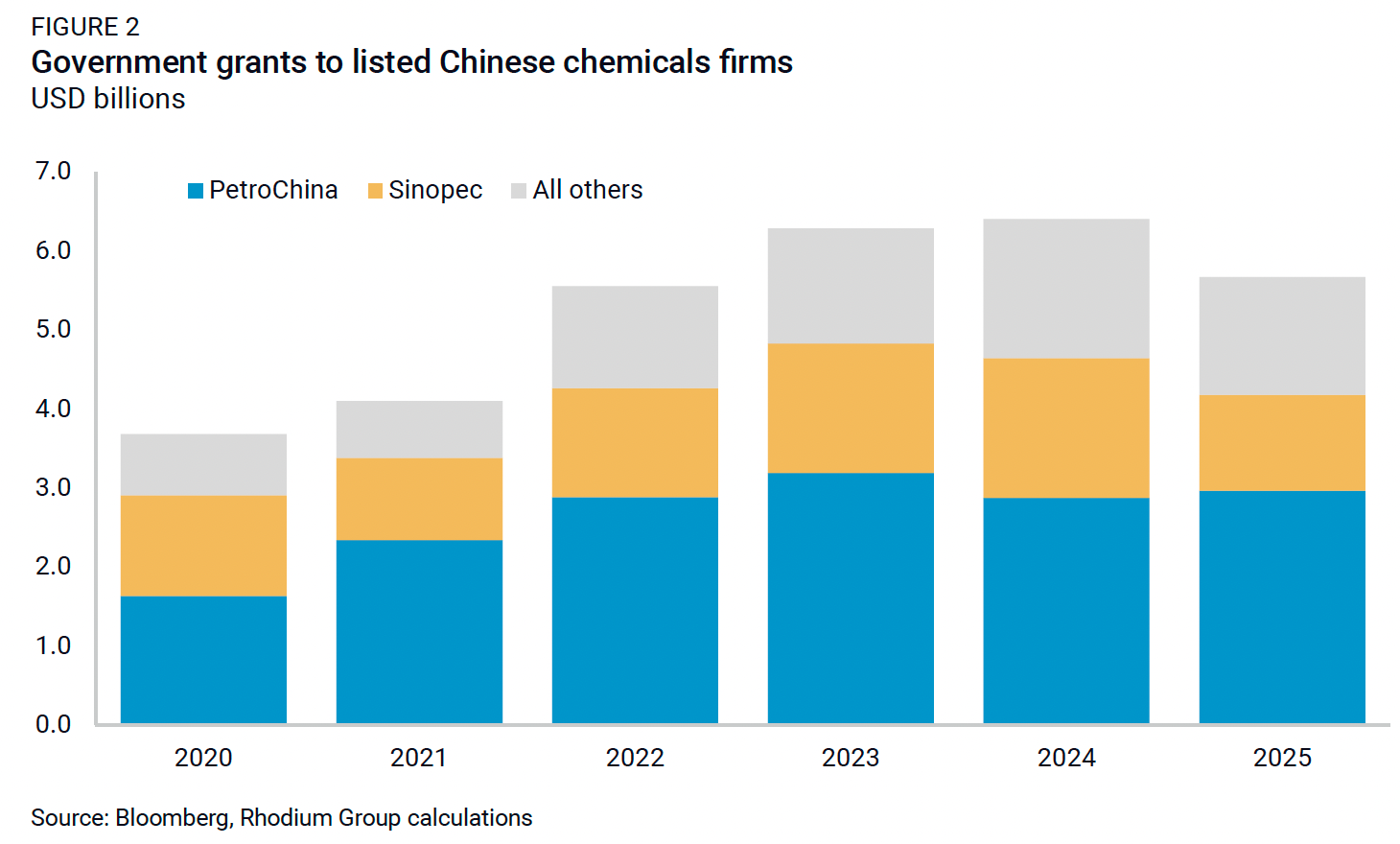
Just government grants to the listed firms itself is a significant amount. The central bank re-lends to commercial and policy banks at 1.25% upto 60% of banks’ loans for equipment renewal and technology upgradation. It is reported that as of November 2025, the participating banks had contracted loans worth a combined RMB 330 billion with 700 chemical producers under this re-lending facility.
The chemicals sector resembles several others insofar as generous subsidies encourage the entry of large numbers of firms clustered in an area, who then compete intensely to drive down costs and prices even more, eroding margins and even accumulating losses. An estimated 5,000 new chemical companies were established between 2018 and 2023, resulting in a glut of the commodity chemicals used to make things like footwear and adhesives, forcing factories to idle and producers to push inventories onto overseas markets.
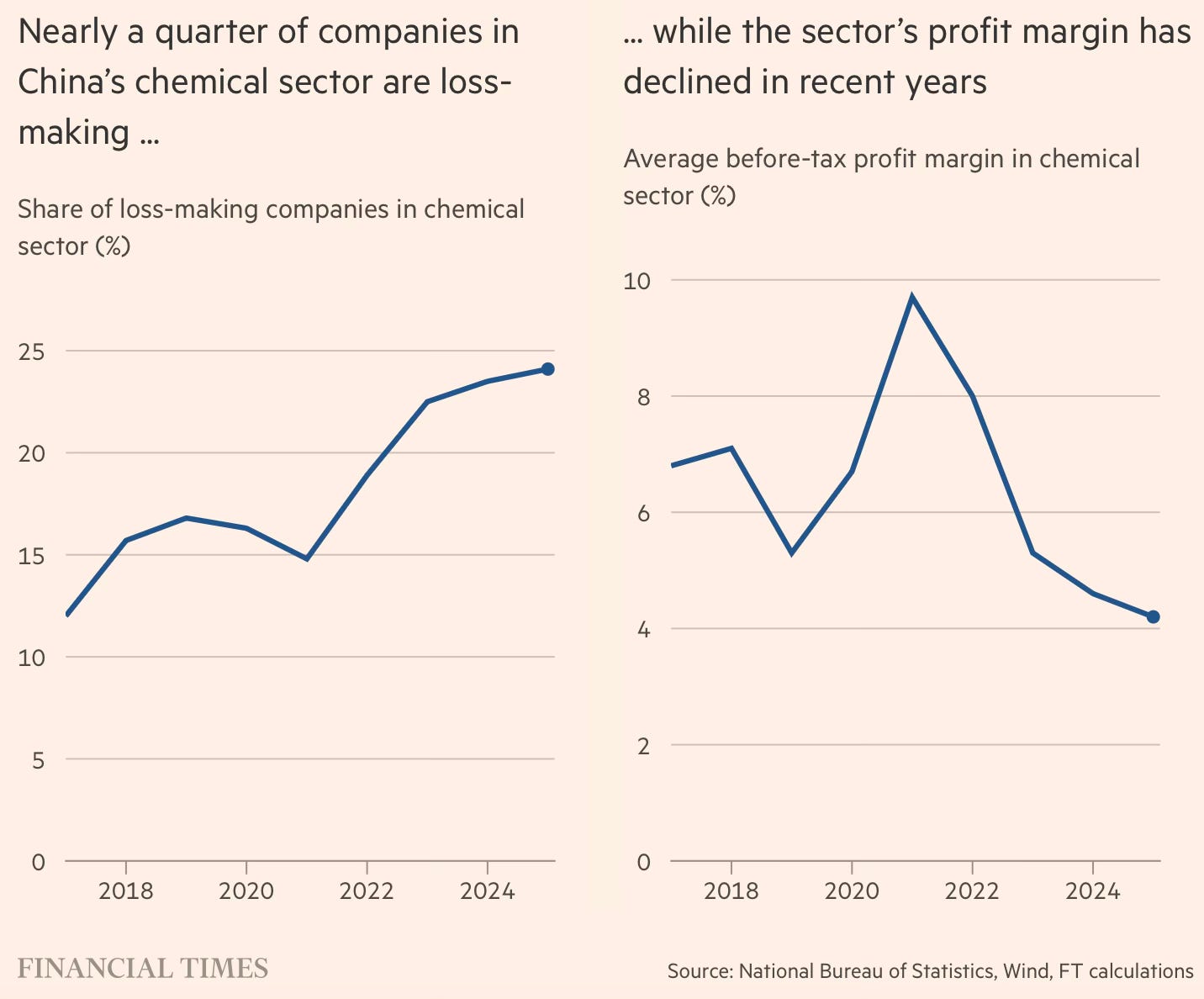
The hope among the firms is that if they can raise their market share, they can boost profits in due course. The expectation of the government is that competition will favour market consolidation and the dominant firms will then be able to control global markets, thereby further entrenching China’s manufacturing dominance (which can be weaponised at any time). All this, therefore, is serving a strategic policy direction of the Chinese government. So, if China says, as it did with rare earths, that citric acid exports are now restricted, European food, pharmaceutical, and cleaning industries will be choked, perhaps even paralysed.
The FT big read also has this description of how industrial policy has influenced the citric acid industry clustered in the city of Weifang in Shandong province.
The growth of the cluster of producers around the city illustrates how the country’s industrial policy can lead to overcapacity and domination of global industries. China’s output of citric acid rose from just over 1mn tonnes in 2012 to nearly 2.2mn tonnes in 2025, according to industrial database Zhiyan Consulting with almost 90 per cent of this produced by six companies, four of them from Shandong, including industry leader, Weifang Ensign Industry. The accounts of Weifang Ensign reveal how important government subsidies are to its profits in an industry that has continued to add capacity despite years of falling margins. The company reported a 77 per cent plunge in net profit in 2025 when several one-off subsidies given the previous year were not repeated. These had included an “enterprise development” subsidy, a “high-quality development fund” and a “corporate contribution award”… Although Beijing announced it was removing export tax breaks from 249 industrial products in April, Citric acid continues to benefit from a 13 per cent export tax rebate, incentivising producers to ship more to foreign markets, thereby propping up the domestic sector.
This is a good description of the impact of industrial policy-powered Chinese competitors on European manufacturers like Citribel.
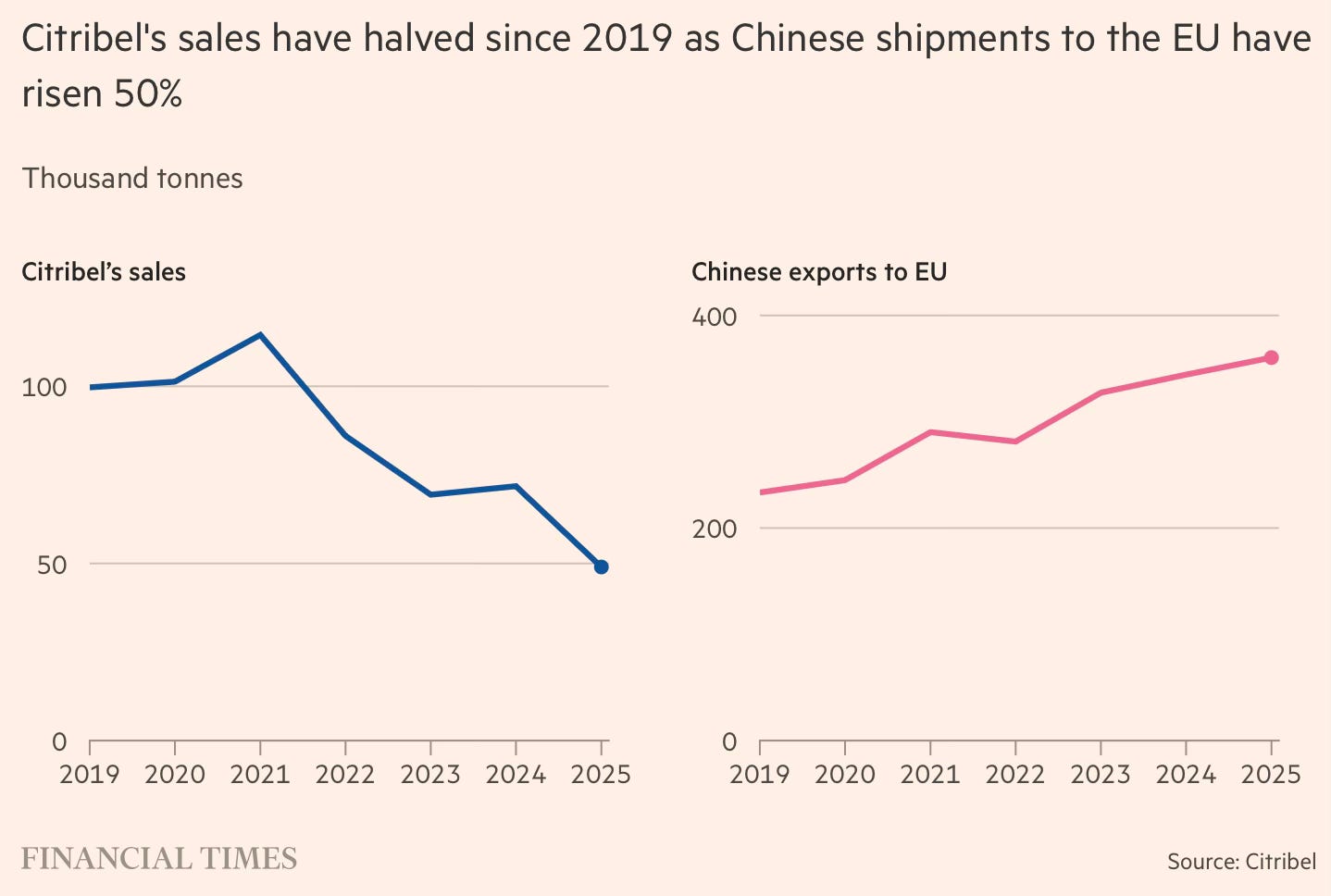
Citribel plant, one of only two remaining citric acid factories in Europe, has been running at 60 per cent capacity, stockpiling products in the hope that prices will pick up. Chinese citric exports to the EU increased 50 per cent between 2019 and 2025. Over that period Citribel had to raise prices 50 per cent as its own costs soared, while China’s export price decreased 6 per cent, according to market data cited by Citribel. “The Chinese are selling their final product in Europe at around €1,000 per tonne, which is 40 to 50 per cent below my cost price. On average we have 37 per cent anti-dumping duties, which is just not high enough,” Chief executive Joris Merckx added… A report by Cefic found that investment in the European chemicals sector fell 80 per cent in 2025, with factory closures running at six times the rate of three years ago.
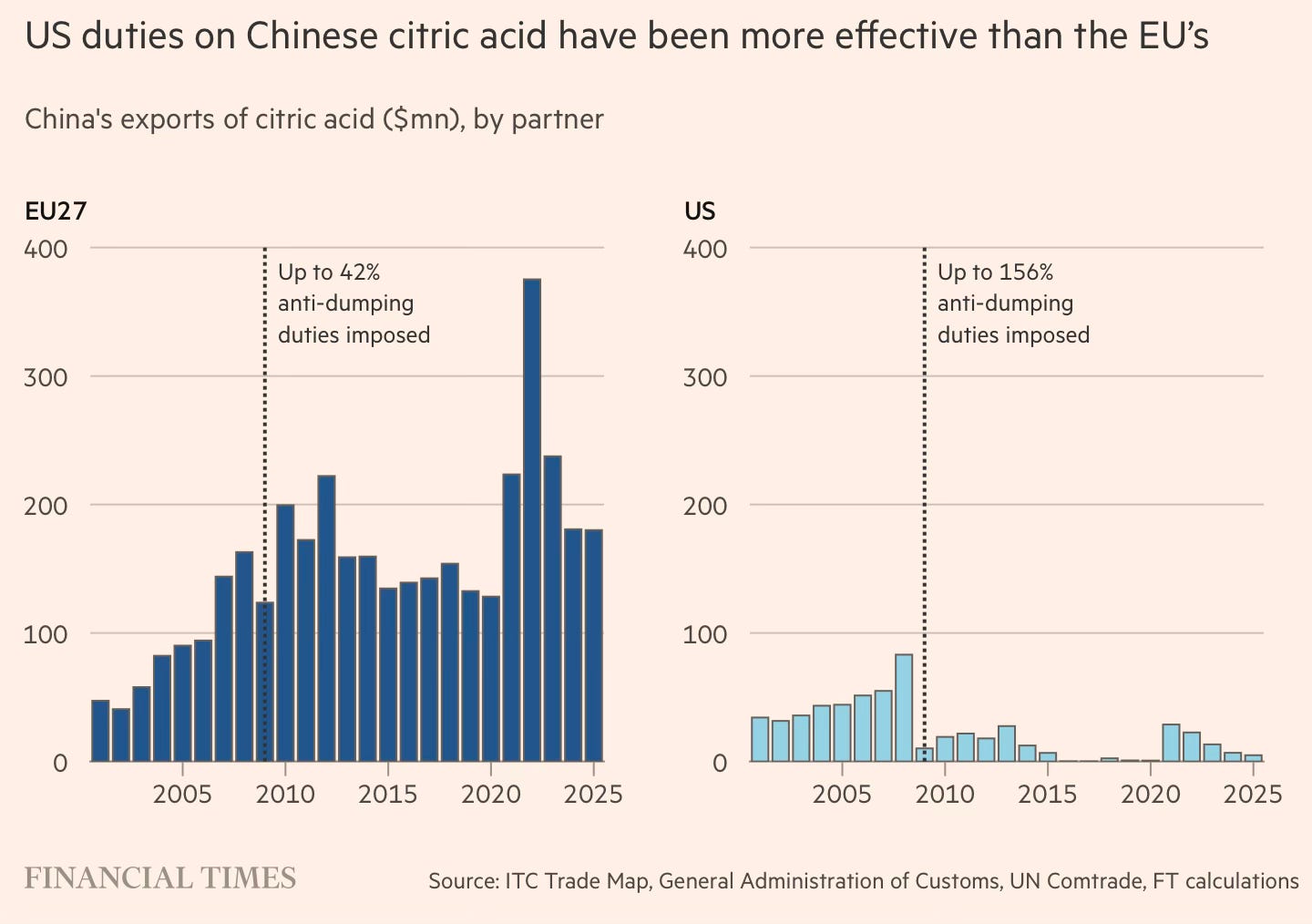
It also highlights that what can be considered high tariffs in most contexts, like the EU’s 42% anti-dumping duty on citric acid imposed in 2009, can be blunt, and it may require steep tariffs of the kind imposed by the US (156%) to contain the cheap Chinese imports.
Arguably, the worst impacted by China is the automobile industry. The European automotive industry, especially in Germany, has been a source of pride for the region’s manufacturing prowess. It has now become the biggest casualty of cheap Chinese exports, which has already triggered factory closures and massive job losses. Sample this about the fortunes of German automakers.
When German companies expand or build factories, it is often in places like Hungary, China or Mexico. The number of cars produced in Germany has fallen 28 percent since 2016, according to the VDA, the German automakers’ association, putting the country well behind China, the United States, Japan and India. Germany could soon also be overtaken by South Korea and Mexico... The German carmakers face an assault on two fronts. In China — the world’s largest car market — sales of foreign car brands are plummeting. And Chinese automakers are making big strides in Europe. In June, Chinese carmakers outsold Japanese carmakers in Western Europe for the first time, according to figures compiled by Schmidt Automotive Research.China was once a lucrative market for the Germans, accounting for 37 percent of Volkswagen sales in 2019. But after Chinese automakers learned how to manufacture cars through joint ventures with foreign carmakers, the tables turned. BAIC Group, an automaker owned by the Chinese government, has become Mercedes’s largest shareholder, with a stake of almost 10 percent. Chinese companies like BYD and Geely Auto were quicker to develop electric vehicles that were heavily promoted by the Chinese government and are selling briskly in Europe. The Germans took too long to offer appealing electric vehicles. Volkswagen sold 26 percent fewer cars in China in the first six months of the year compared with a year earlier, while Mercedes reported a 28 percent decline and BMW a 20 percent slump.
Another article shows how Chinese car parts makers have come to control the continent’s automobile supply chainsthrough acquisitions, investing in more than 130 European car parts makers since the mid-2000s. These acquisitions were part of the government’s “go global” strategy, encouraging Chinese firms to globalise and acquire foreign technology through investments. Geely’s $1.8 bn acquisition of Volvo in the mid-2010s is the totemic example.
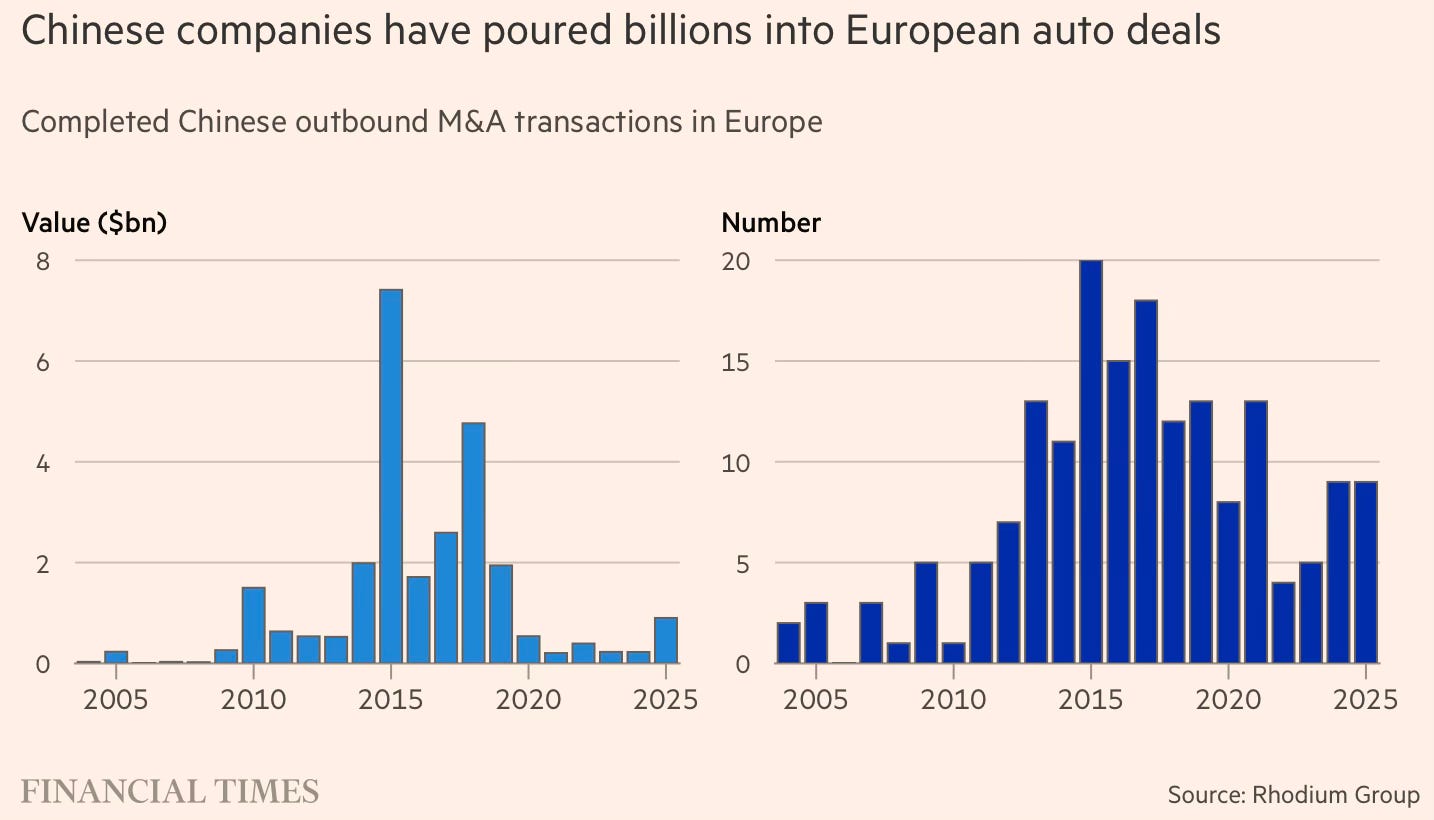
Chinese companies had taken a four-pronged approach to expanding in Europe, the official noted. They boosted exports, took stakes in local companies, entered joint ventures and built factories themselves — both in the EU and nearby countries such as Serbia, Turkey and Morocco… But Beijing’s outbound investment restrictions and rise in trade barriers meant many of the deals over the past decade have been below €100mn — too small to trigger intervention from Europe’s regulators… The latest plans by Brussels to impose stringent local-content rules that require the use of Europe-made car parts and labour have also given the Chinese an added impetus for investing in the bloc. “For Chinese suppliers, acquiring [European] companies is a highly effective way to rapidly obtain production bases” and gain “made in EU” status without building it all from scratch.
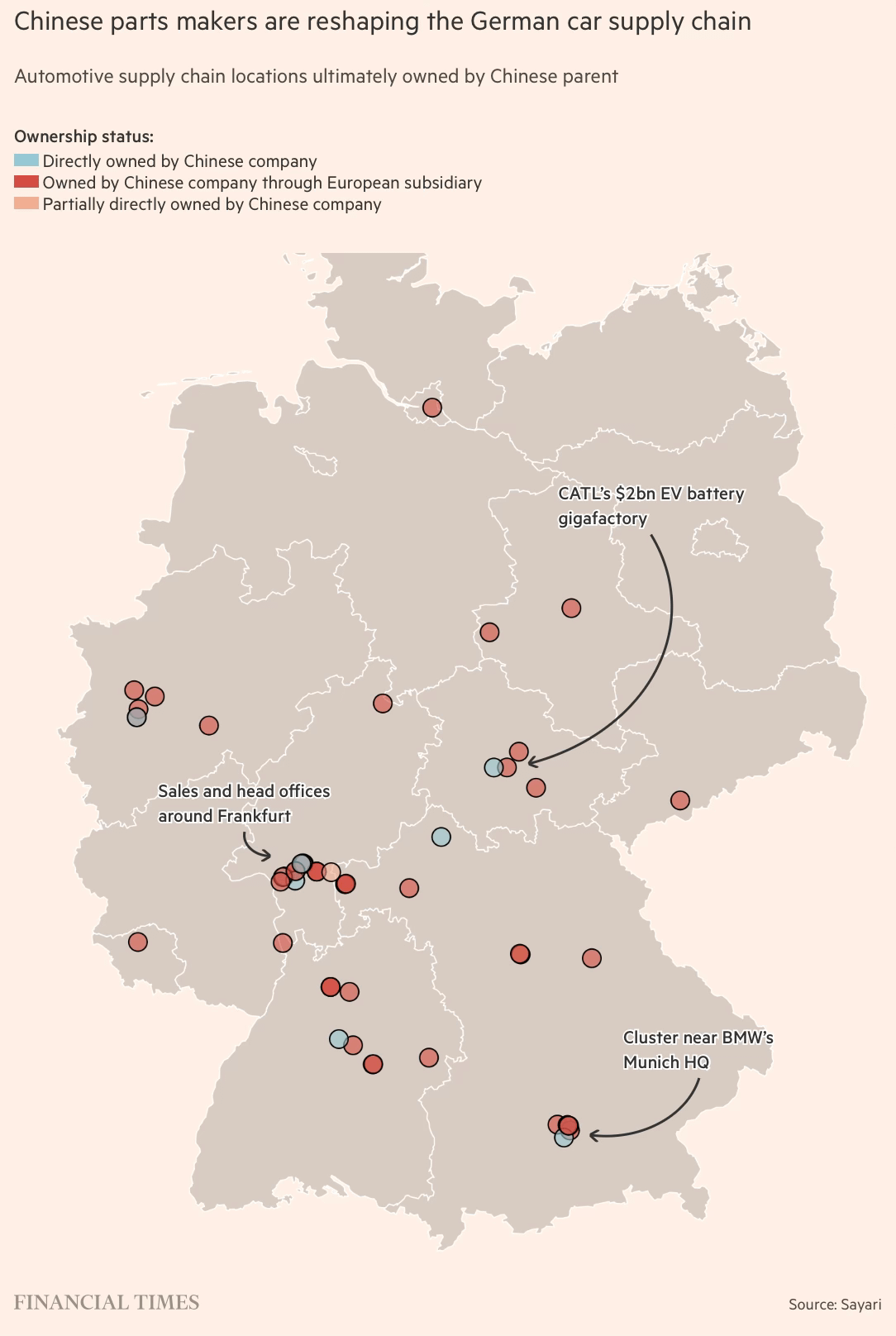
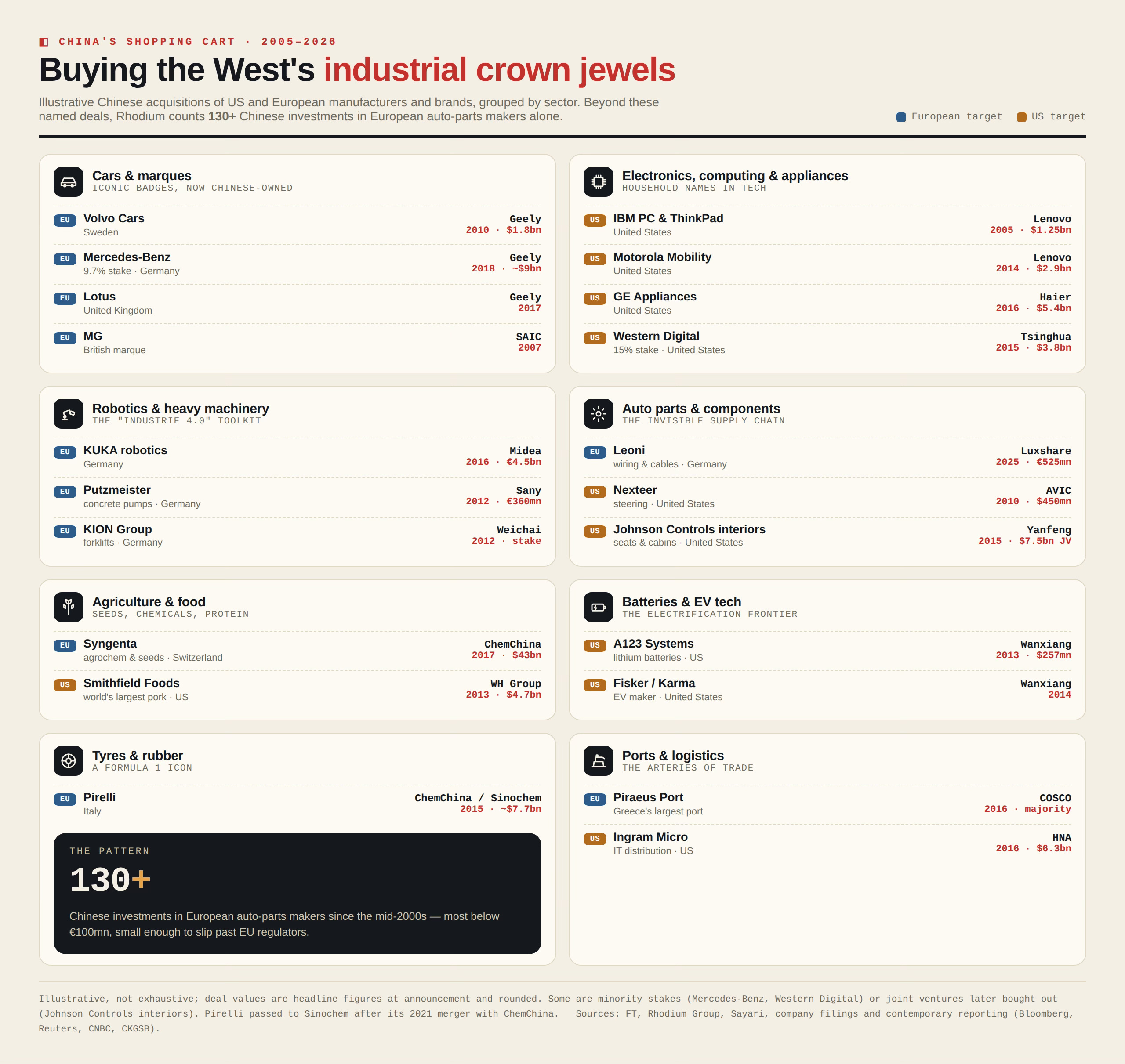
The acquisitions in the European automobile industry are only the latest instance of how China has single-mindedly and doggedly pursued various strategies to gain control over many of the West’s crown jewels across sectors.
The graphic below groups illustrative Chinese purchases of Western industry by sector, tagged US or European - from the marquee names (Volvo, Mercedes-Benz stake, Syngenta, Kuka, Pirelli, GE Appliances, Smithfield, IBM’s PC business, Motorola) down to the invisible supply-chain layer the FT piece flags (Leoni wiring, Nexteer steering, Johnson Controls interiors). Most deals are small enough to slip under the EU’s regulatory radar, which is precisely why the footprint is larger than the headlines suggest.
In yet another article, Ara Darzi of Imperial College describes the disturbing level of dependence on China for antibiotic drugs.
A 2026 Council on Foreign Relations report found that China supplies roughly 94 per cent of the key raw materials for amoxicillin, the world’s most common antibiotic, and nearly half of global antibiotic ingredient exports. Almost 700 medicines approved in the US rely on at least one chemical made only in China. The report called this dependency a threat “equal to the rare earths challenge” with the potential for “peacetime weaponisation”. It is right. This is not a hypothetical. In the winter of 2022-23, a shortage of amoxicillin, a drug so cheap there is little incentive to make it, swept the US and Europe. A supply chain optimised for the lowest price turned out to be as fragile as strategists warned.
He points to an important market failure that has led to this state of affairs.
An antibiotic is a rare product whose value rises the less it is used. The best new drugs must be held in reserve to preserve their potency, which means minimal sales and no way to earn back substantial research costs. So the market did what markets do: it left. Novartis, AstraZeneca and Sanofi exited antibiotic research. Achaogen brought a new antibiotic to market in 2018 and was bankrupt within a year. Capital went to oncology and obesity drugs, where higher sales mean stronger returns. The World Health Organization now counts fewer than a dozen truly innovative antibiotics in the global pipeline against bacteria that never stop evolving.
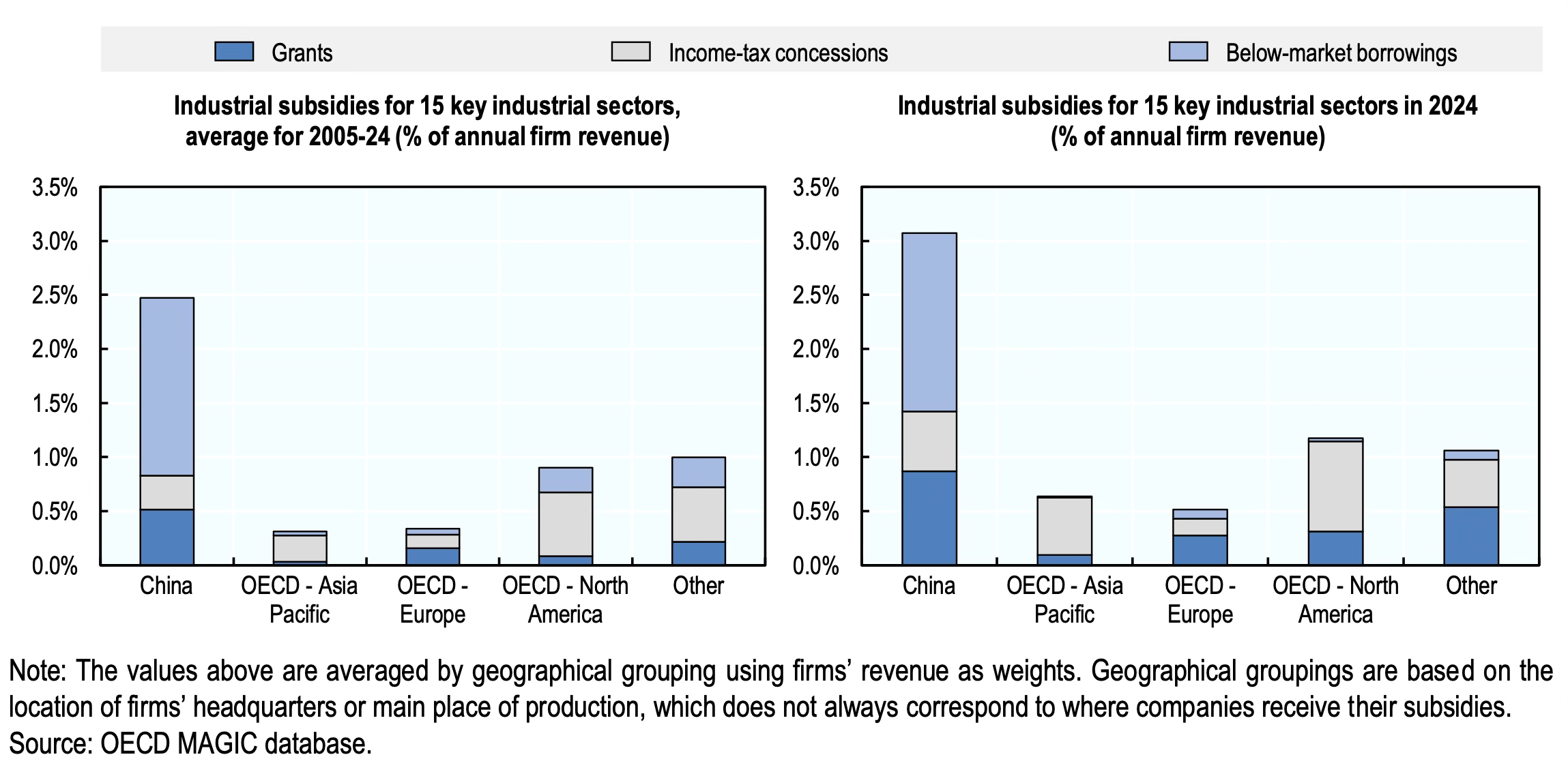
As mentioned earlier, the large competitiveness gap that Chinese firms enjoy owes significantly to the generous subsidies and industrial policy support from central and provincial/local governments. A new OECD report that did company-level analysis of subsidies across 15 key industrial sectors found that nearly 60% of the Chinese firms’ global market share gains since 2005 could be traced to subsidies.
A OECD company-level analysis of government subsidies across 15 key industrial sectors found that nearly 60 per cent of Chinese firms’ global market share gains since 2005 could be attributed to subsidies. The research suggeststhat Chinese firms received three to eight times more government support on average in 2024 than companies in the 38 OECD countries. Overall, global subsidies hit $108bn in 2024, of which 52 per cent were in China…
According to the OECD analysis, Chinese aerospace companies benefited from subsidies two to five times bigger than those received by OECD-based rivals in 2024 when calculated as a share of revenue. In the car industry, subsidies were four times larger on that basis, according to the analysis. In semiconductors, the average global subsidy was calculated at just over 2 per cent of company revenue, while for firms based in China, subsidies reached nearly 10 per cent of their revenue in 2021 and 2022.
They also found that the subsidies did not result in productivity increases.
The OECD researchers said that while subsidies led to increased market share, they did not contribute to a firm’s productivity or profitability. “Just like doping in sports, there is therefore a risk that subsidies result in less productive players winning unfairly at the expense of more innovative and efficient ones,” they wrote.
Unlike the Western industrial policy strategy of grants and tax breaks, the biggest source of subsidies for Chinese firms is “below market borrowings” or concessional loans.
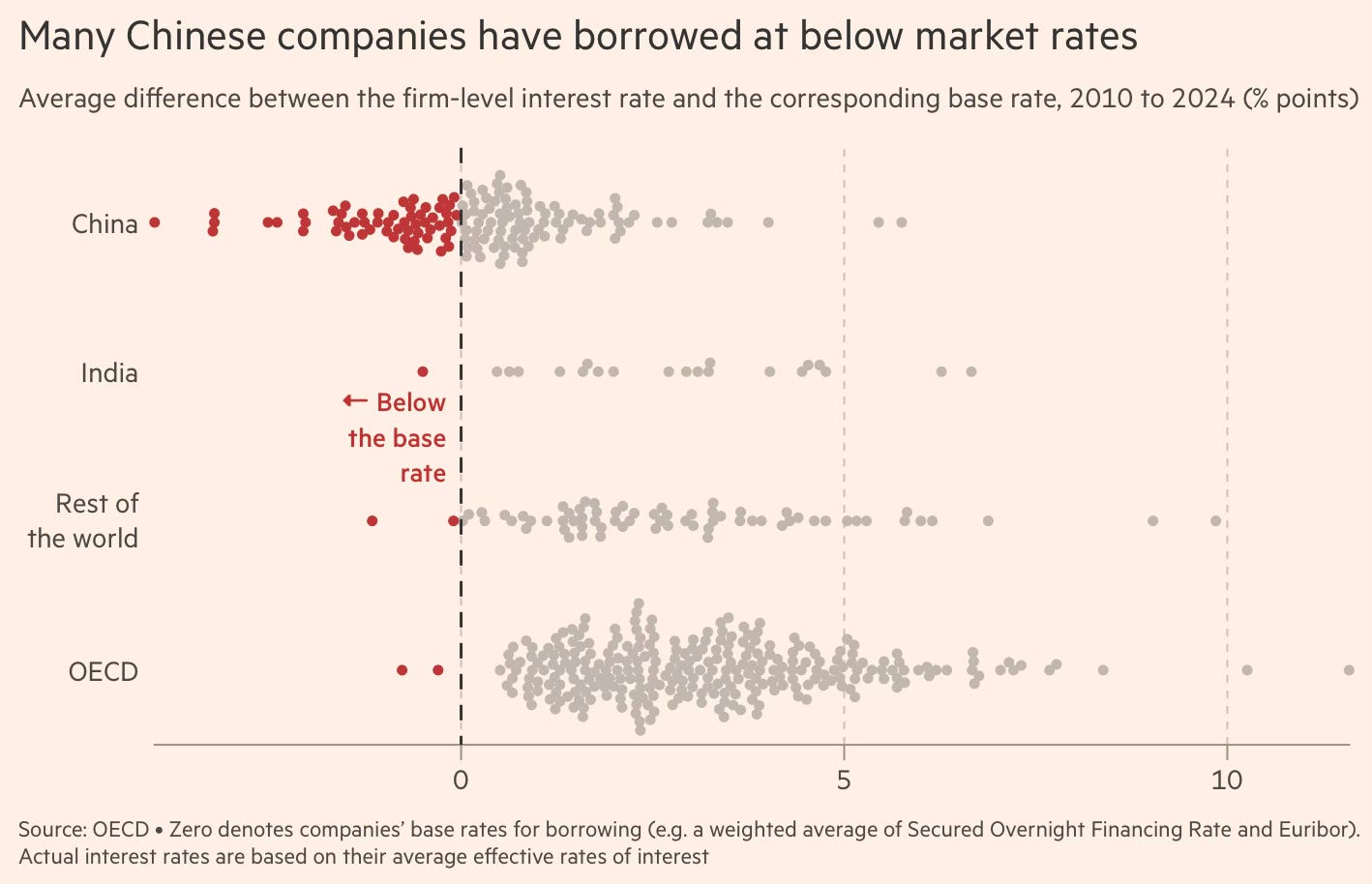
The subsidies dwarf those given by other governments, and especially over a two-decade-long period.
Solar panels, heavy industries, and semiconductors received relatively more subsidies.
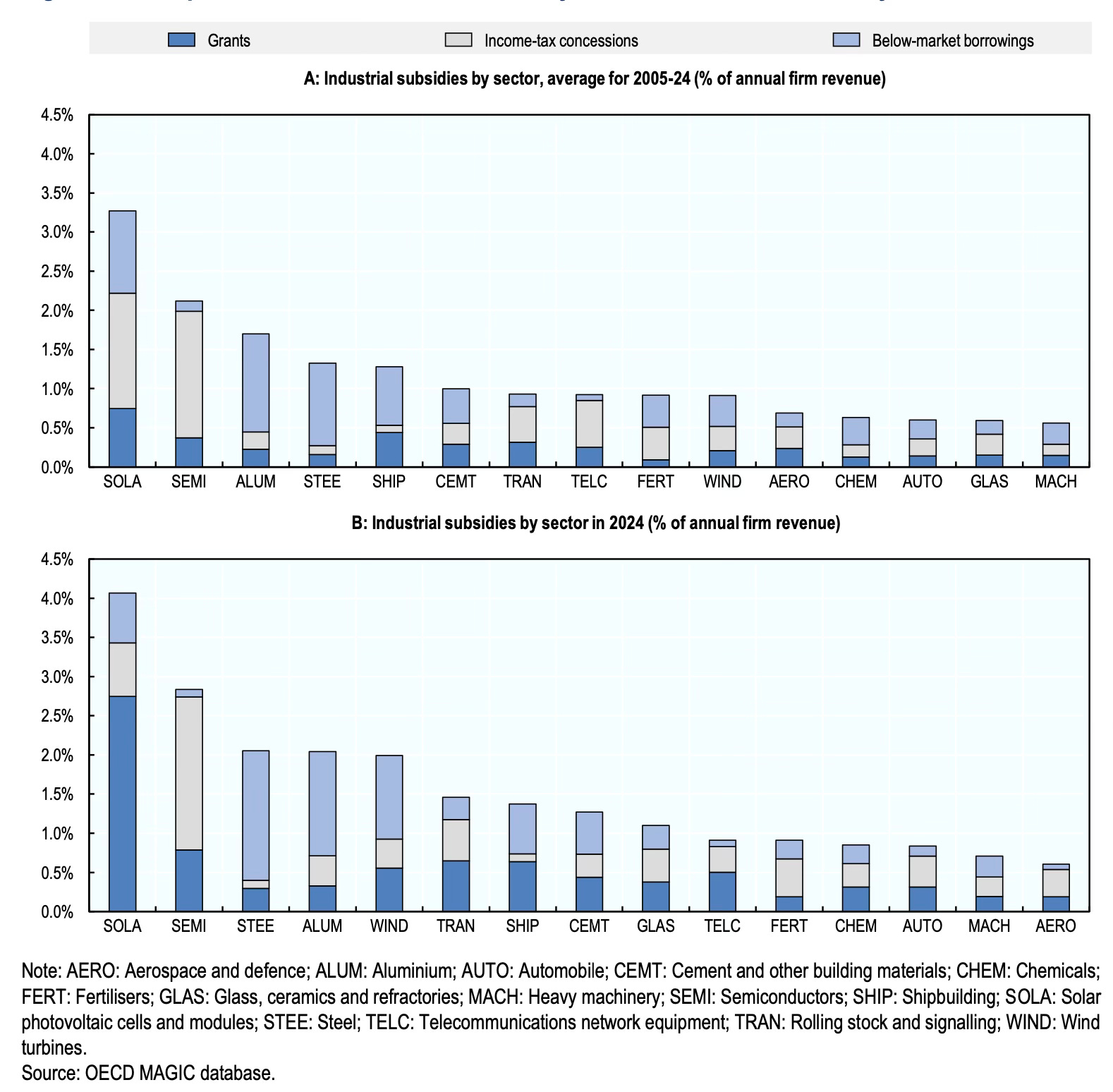
Its results have been dramatic in terms of establishing a manufacturing sector dominance without any historical comparison.
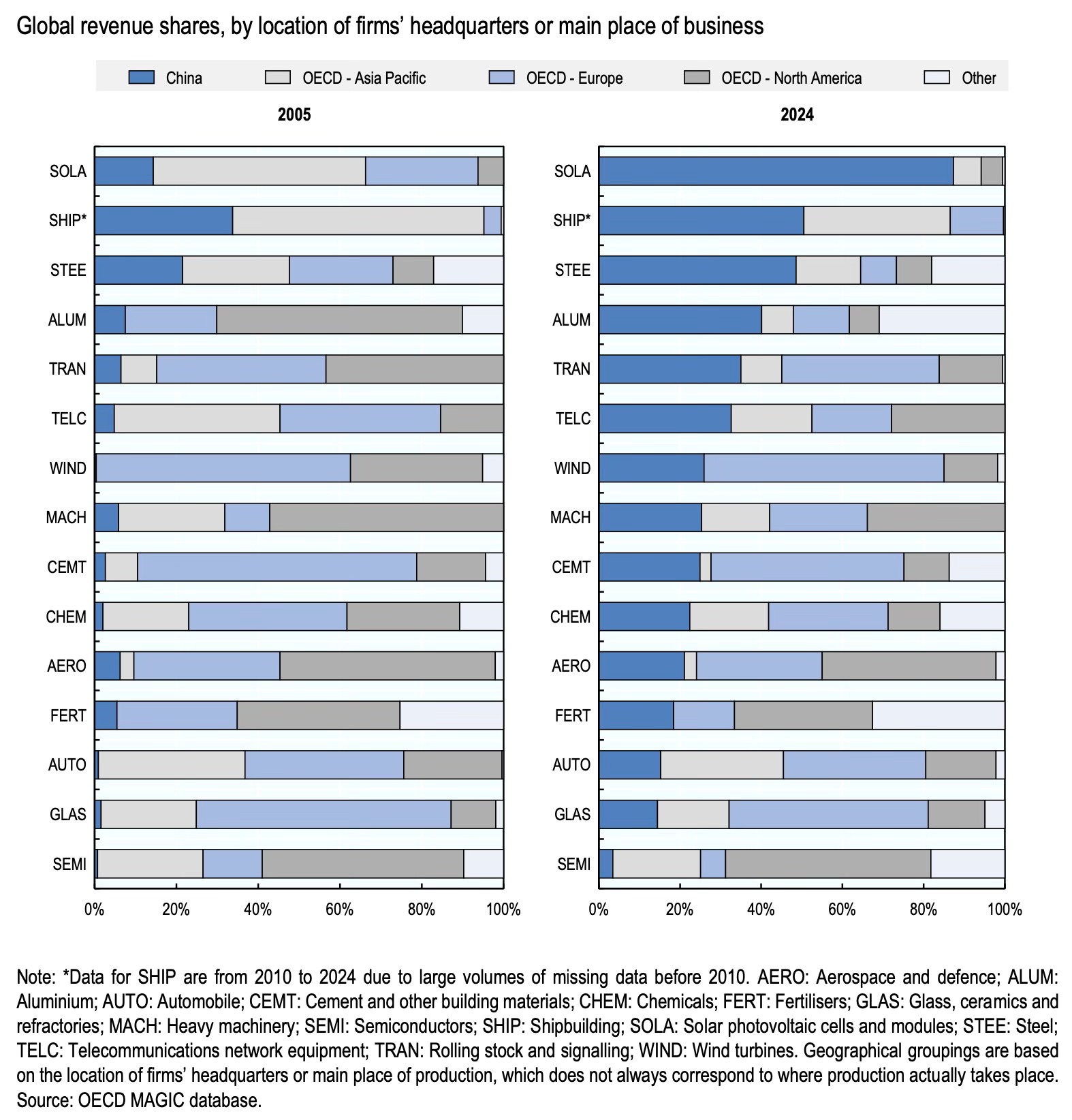
And it shows no signs of abating, with the country’s 15th Five-Year Plan emphasising developing self-resilience in the most advanced “future” technologies like AI and robotics.
Take the example of robotics, where the US Federal Communications Commission announced restrictions on imports of humanoid and animal-like robots on national security grounds, provoking a strong reaction from China.
Chinese start-ups are producing thousands of humanoid robots priced below $5,000, far cheaper and at a greater scale than competitors elsewhere. While Chinese manufacturers once depended on Japanese and other foreign suppliers for critical components such as sensors and joints, those parts are now overwhelmingly produced in China.
As a result, it has become nearly impossible to build a competitive humanoid robot without Chinese-made components. China has also established a significant lead in industrial robotics. It manufactures and installs factory robots at a pace unmatched by any other country. More than two million robots were operating in Chinese factories in 2024, with another 300,000 installed during the year — more than the rest of the world combined.
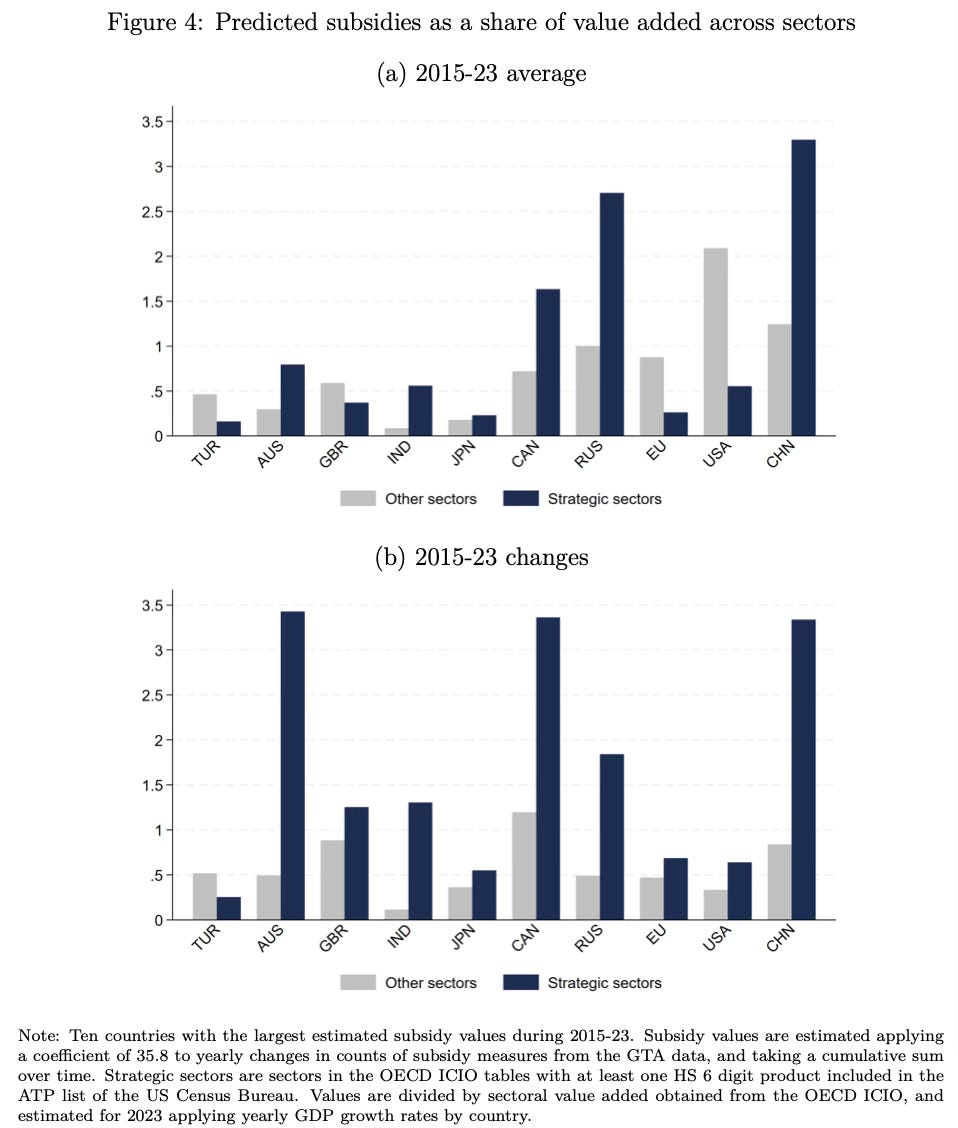
Complementing the OECD study, Gillian Tett points to a new IMF study that focuses only on direct grants and aid (and excludes cheap loans).
The paper makes three crucial points. First, even on a narrow definition, Chinese subsidies accounted for more than 2.5 per cent of value added in 2023, up from 1 per cent in 2015, or an average of around 1.8 per cent in this period. (This small number matters enormously when set against slim business margins.) Second, China is not alone in such government meddling. Far from it. In the US, government subsidies were 1.3 per cent of value added in this period, and 1 and 0.6 per cent respectively in Canada and the EU… Third, not all subsidies are the same. Chinese subsidies were 3 per cent of value added in strategic industries such as semiconductors and tech hardware, helping that export boom, the IMF says. However, they were just 1 per cent of value added in non-strategic sectors like agriculture. But in the US, subsidies were 2 per cent of value added in non-strategic sectors, and just 0.5 per cent in strategic ones. In the EU the ratio was 1 and 0.2 per cent. So China is backing strategic businesses, like green tech, while the west props up old sectors with political clout, like agriculture.
Even traditionally strong economic segments like the German Mittelstand, the group of small and mid-sized largely family-owned enterprises that lead in niche industries, are struggling against the cheap Chinese imports.
The competitive threat from China is growing daily. The VDMA, the association representing Germany’s machinery industry, said its own machinery exports to China fell 8 per cent last year and by the same amount so far this year, while Chinese equipment imports to Germany rose by 14 per cent in the same period. The gloom was underlined by a recent survey by DZ Bank and industry bodies for co-operative banks. The investment appetite among German SMEs has fallen to its lowest level since the survey began in 1995 — lower than during the financial crisis, the Covid-19 pandemic or the energy crisis following the start of the war in Ukraine. Only 52 per cent of companies polled still plan to invest in their operations over the next six months and only 26 per cent anticipate an improved business situation in that time… Bertram Kawlath, President of VDMA, says corporate taxes are about 5 percentage points higher than the average of rich countries in the OECD. Other problems in Germany include a high total cost of labour as well as “gold-plated” regulation, where EU rules are added to with further standards.
It is also supplementing its industrial policy by placing restrictions on the export of technologies to prevent others from catching up.
Known as tunnel boring machines, they are made by only a handful of companies, mostly in factories in China. India uses them to dig tunnels, including in the Himalayas, to improve its ability to send troops to defend its contested border with China. But starting next month, Beijing is likely to be able to control whether India gets to buy them. The machines are part of a broader effort by China to control what leaves Chinese factories and laboratories for foreign lands. In the past month, Beijing has moved to control the exports of dozens of technologies, including drones, artificial intelligence models and agents, and certain processes used to develop advanced medicines and to make solar panels.
The overall push could make it much harder for companies in the United States and elsewhere to set up solar energy equipment factories that would compete against Chinese manufacturers. And it could soon make it more difficult for anyone outside China to gain access to the latest and most powerful Chinese A.I. models… Beijing is doubling down on its strategy of making Chinese factories indispensable to the world, even as many governments are alarmed by their countries’ dependence on China and are pushing to be less reliant…
In a recent front-page editorial commemorating the 90th anniversary of the Long March, People’s Daily, the party’s mouthpiece, called for the country to “focus on the ‘chokehold’ key core technologies” and “stiffen the Chinese backbone” of self-reliance… The call to secure technological choke points was also likened to the way the Red Army took the “strategic initiative” on the battlefield to ultimately defeat the Nationalists. China has said that the recent flurry of export controls and proposed rules are needed to protect Chinese business interests… it argues that it must restrict the export of core equipment to prevent competitors from trying to replicate China’s supply chain domestically. China has also said that more controls are needed to guard against threats to national security. “China is beginning to more systematically consider which technologies and equipment can be exported, to whom they should be sold and what their ultimate applications will be,” said Sun Chenghao, a foreign relations expert at Tsinghua University in Beijing.
The growing basket of restrictions, combined with the generous industrial policy support and a remorseless export market acquisition strategy, is a potent combination for weaponised global manufacturing dominance. I have blogged here on how to counter this weaponisation.
No comments:
Post a Comment