I have blogged here about the global debt pile that is threatening fiscal stability and economic growth across developed economies.
A political economy that limits the room for both tax increases and expenditure rationalisation is forcing a reckoning. Further, governments are also faced with large investment requirements like those on infrastructure replenishment and climate mitigation and adaptation, and industrial policy resources to combat China’s manufacturing dominance. Also, there is the rising share of debt service costs from the revenue receipts.
On the market side, households and businesses had become used to a long period, a generation, of very low interest rates. The rising rates are now threatening entrenched consumption patterns and business models. The corporate zombies who have survived this low-rate generation now are at risk of being shown up and going bankrupt. And all this comes at a time when the massive AI infrastructure rollout is sucking vast volumes of capital and raising its cost, especially pronounced in the US.
Further, as rates have risen, many countries have shifted towards short-term debt (maturing in one year or less) to finance surging deficits without flooding the market with long-term bonds and driving up long-term interest rates.
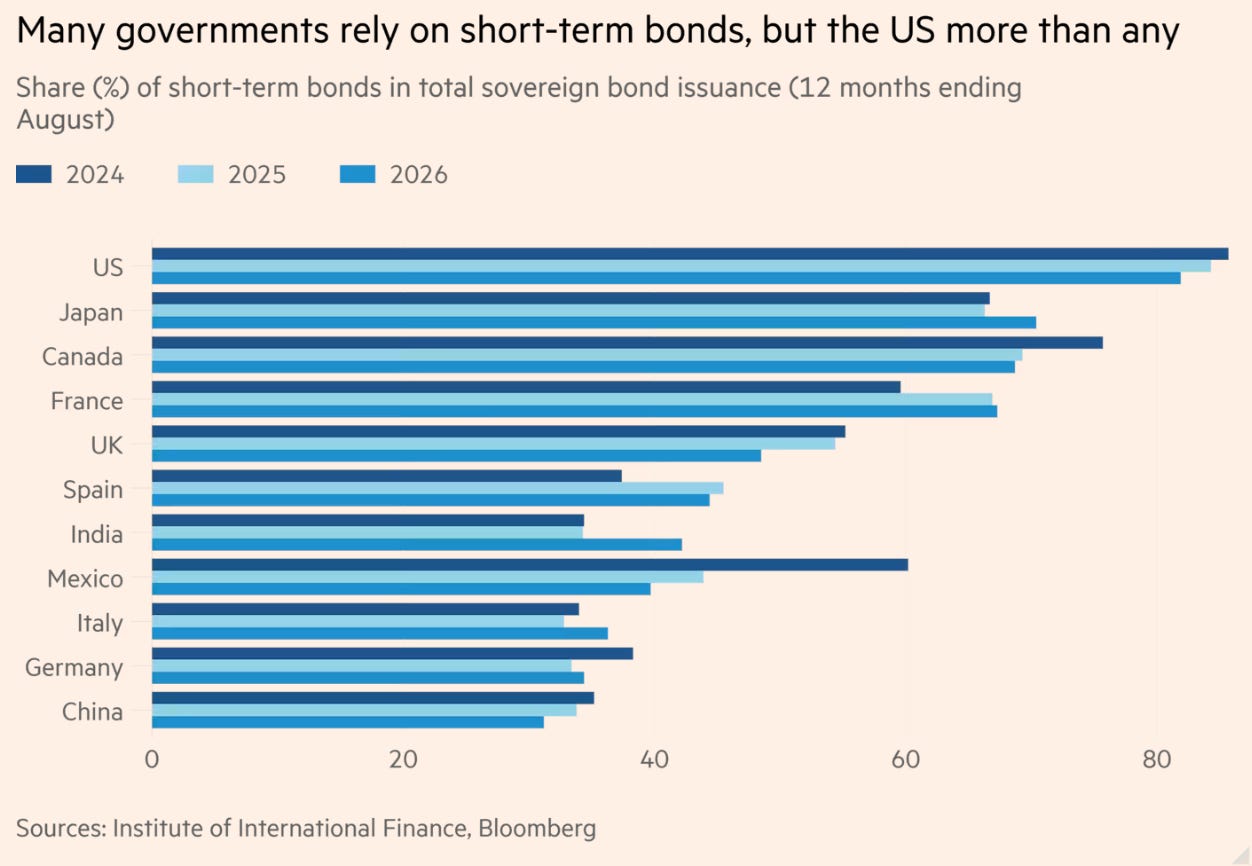
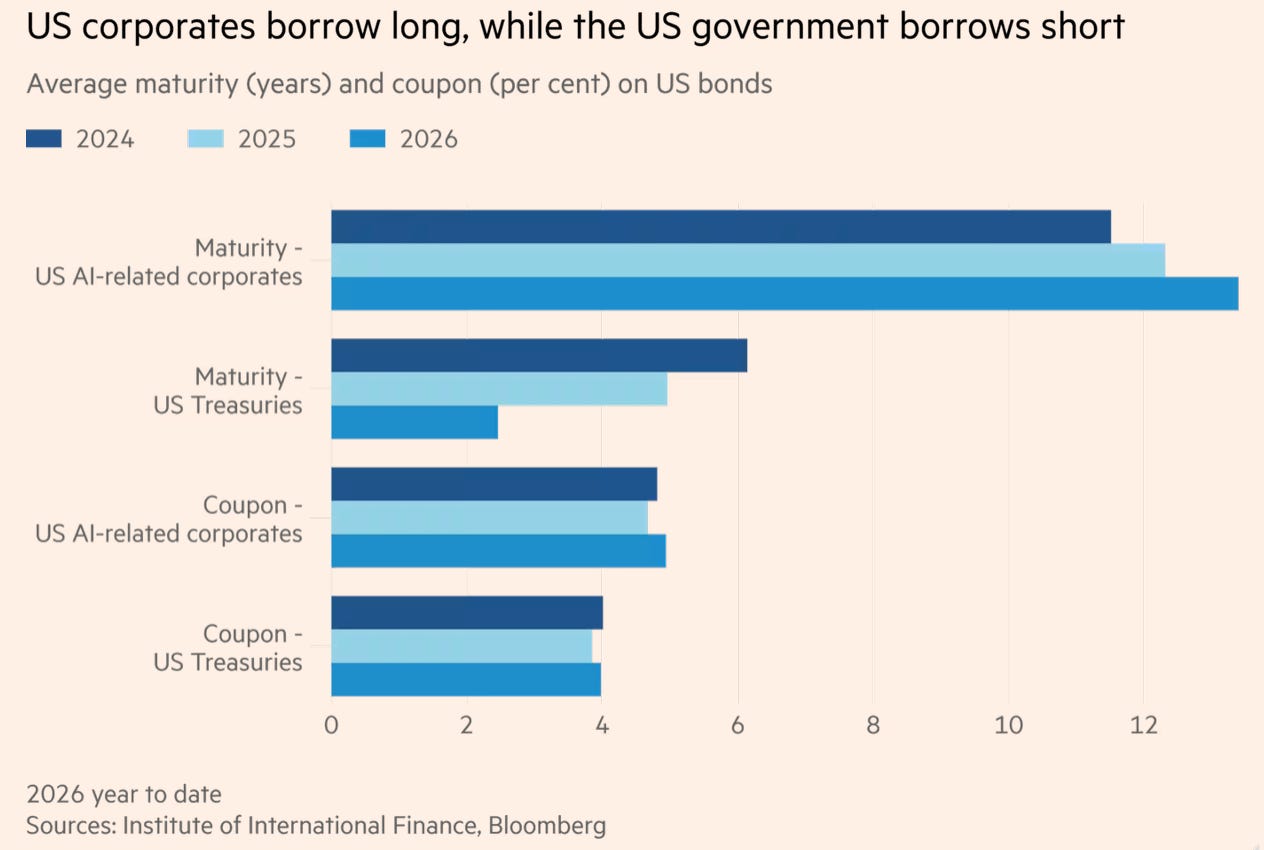
Reflecting this trend, especially in the US, the average maturity of US government debt has been declining.
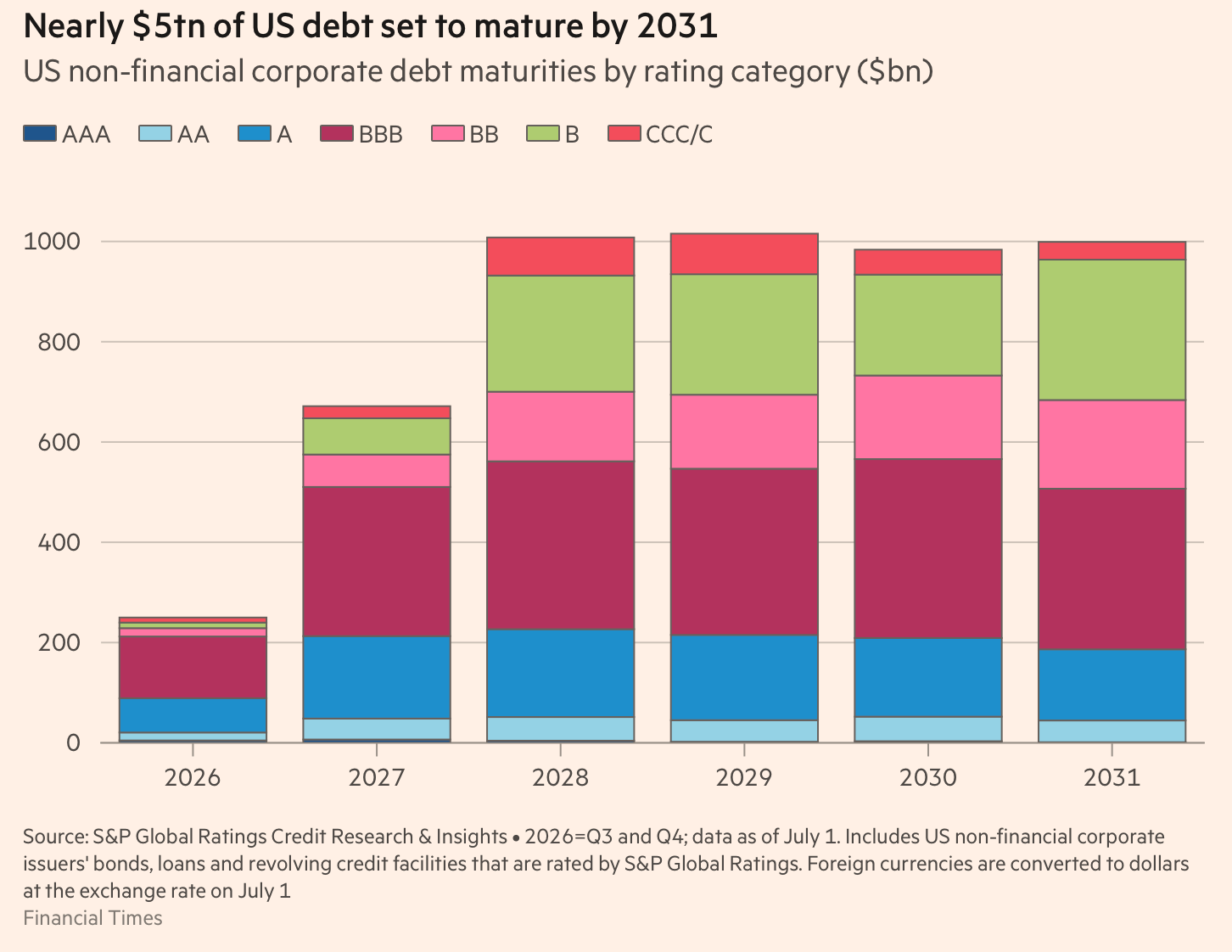
On the corporate side, too, debt repayments are expected to rise sharply, reaching a trillion annually for the four years from 2028. More worryingly, nearly four-fifths of them are borrowers with lower credit ratings. And they will have to repay or refinance at a time when rates will be much higher.
As an illustration, while the AAA-rated firms with an average coupon of about 3.6% are now raising debt at an average of 5.6%, the riskier CCC-rated bonds must offer almost 18%, more than double the rates they pay on the existing debt.
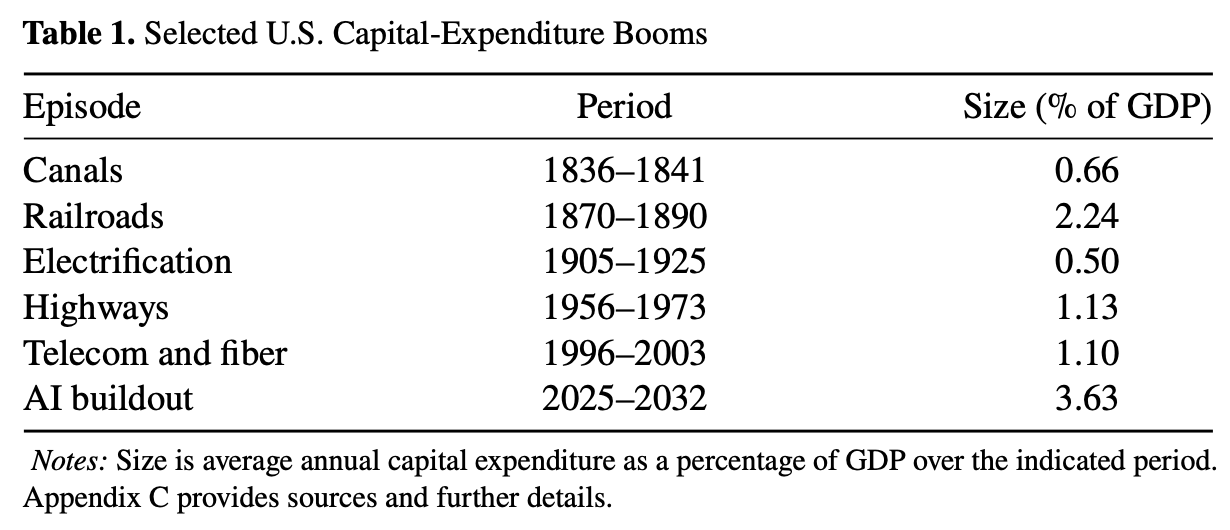
Then there is the AI investment binge. The AI rollout in the US is estimated to average an investment rate of 3.6% of GDP from 2025 to 2032, the biggest sector-specific investment boom ever.
Also, while the vast majority of AI rollout till recently was being financed from the cashflows of the hyperscalers, now all of them are in cashflow negative territory, and debt has become the main source of AI infrastructure financing.
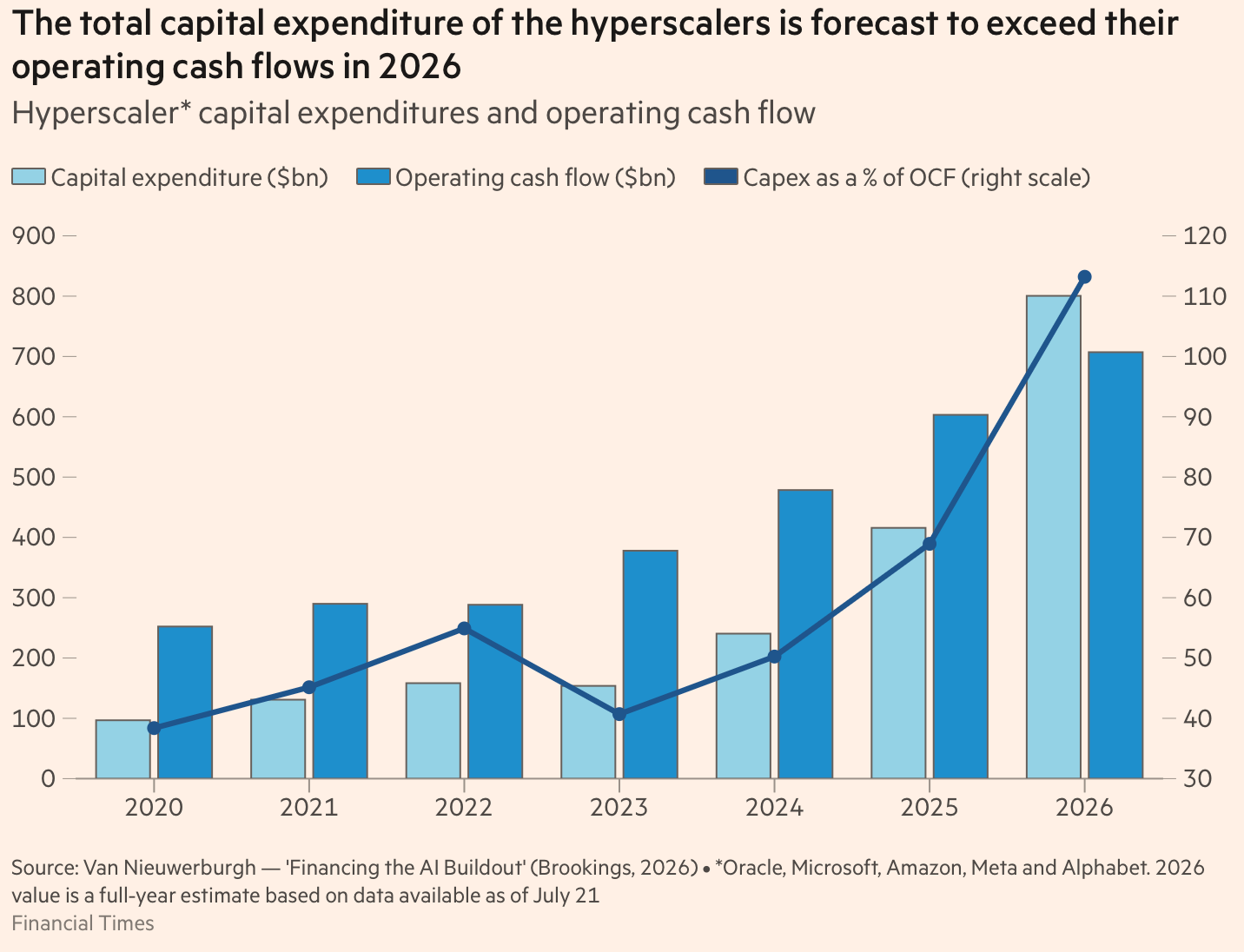
Across all types of US corporate debt markets, AI-linked issuance is estimated to touch $1 trillion each of the next two years, up from $394 bn in 2025. And this is cascading across the AI borrowers with the rising cost of capital and spreads.
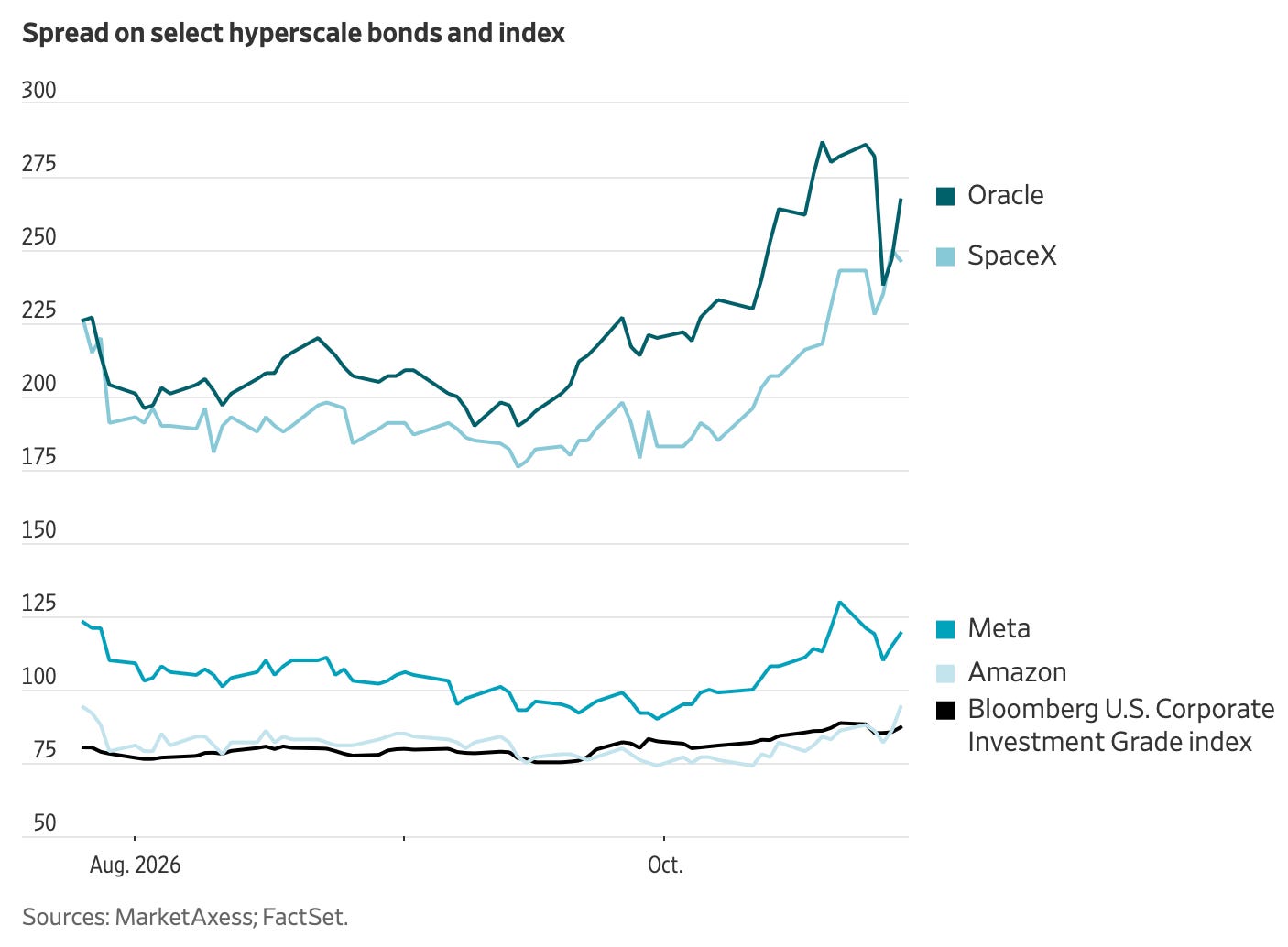
In fact, Anthropic recently struck a $60 bn debt package at a yield of more than 10% from Blackstone to fund its procurement of about 1.5GW of custom semiconductors developed by Google.
Then there are a host of other factors arising from the ongoing events. One important one is the changes in the composition of the buyers of US Treasury Bonds, which in turn have impacted the sensitivity of Treasury bond yields.
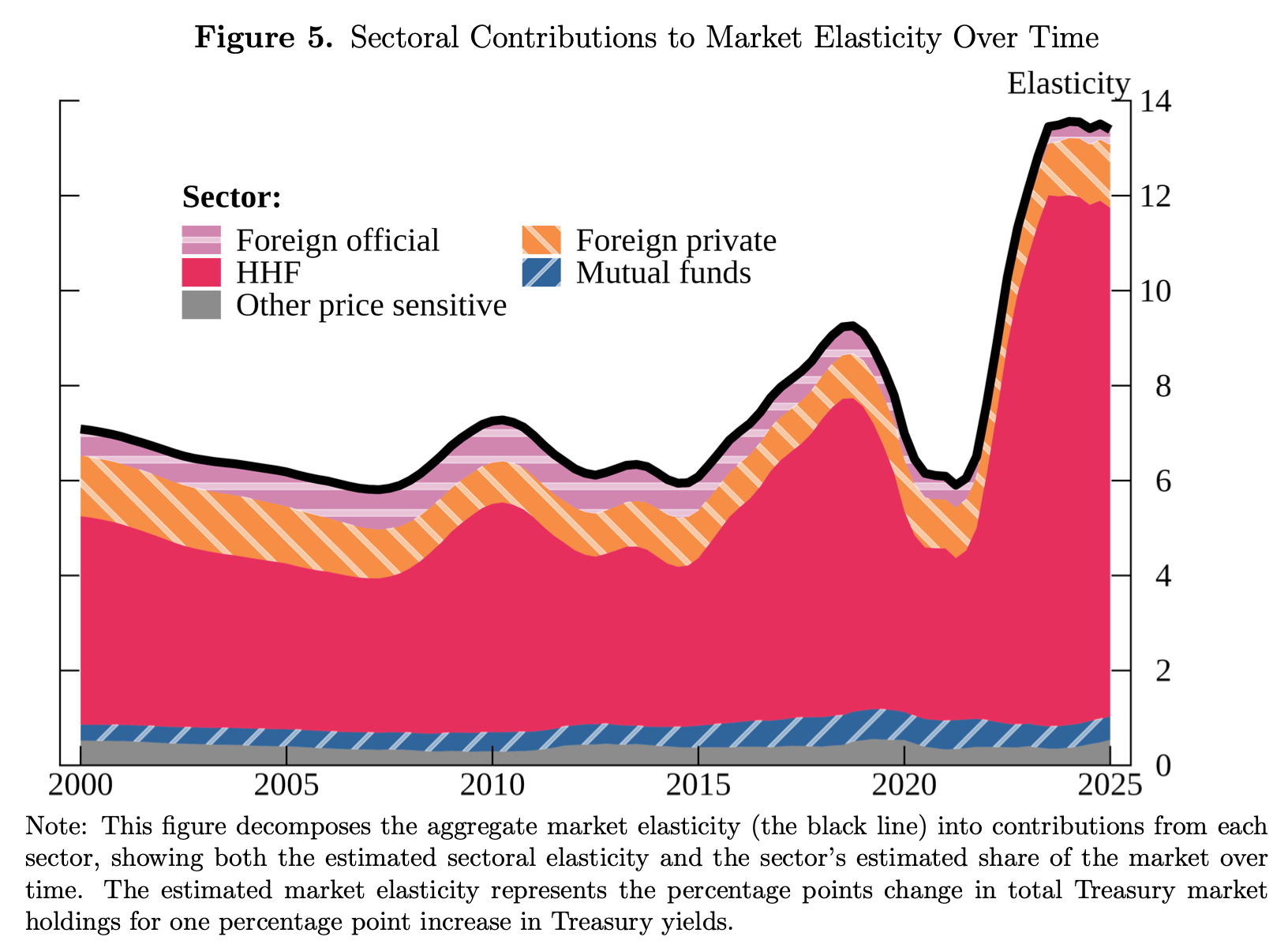
We find that the Treasury market has become increasingly price-sensitive over time, driven by the declining participation of less price-sensitive foreign official investors and the rising role of more price-sensitive hedge funds and other private investors. A $100 billion increase in Treasury supply currently raises five-year yields by approximately 3 basis points. We validate the model by showing that the shifts in investor base explain a significant portion of historical yield changes.
Since about 2020, the declining share of foreign official investors, driven by geopolitical trends and diversification efforts of national governments, has mirrored the rise in that of hedge funds and mutual funds. While hedge funds are stepping into the void left by the traditional buyers and are chasing leverage arbitrage opportunities, mutual funds and households are driven by retail demand for higher yields and portfolio safety.
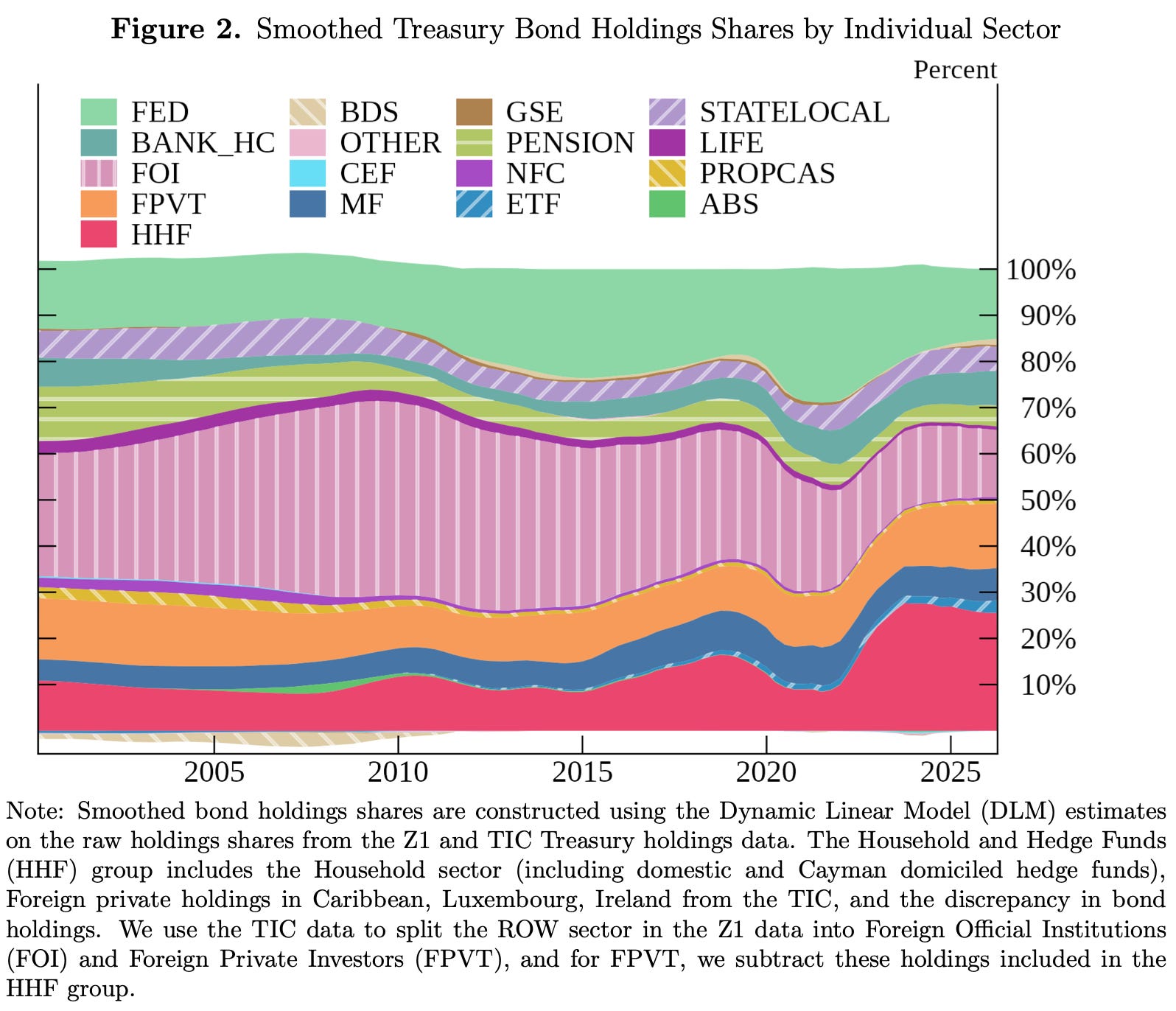
Since the hedge funds and mutual funds demand higher yields to take on the duration risk, any increase in Treasury supply has a larger upward impact on yields than earlier. In fact, the latter have the highest demand yield elasticities and the former the lowest, and this is reflected in their contributions to the changes in market elasticity over time.
This period has also coincided with an increased supply of Treasury Bonds to finance the high deficits arising from the pandemic stimuluses, Trump tax cuts, and now the Iran war. All this has been impacting the US long-term bonds, which have risen by about 100 basis points over the last year.
And in addition to all this, we must factor in the uncertainties from the rising tide of capital wars.
The average US Fed fund rates over the past 72 years was 4.6%, and the rates are now returning to that norm after an extended period of decline, and are likely to remain so for the foreseeable future.
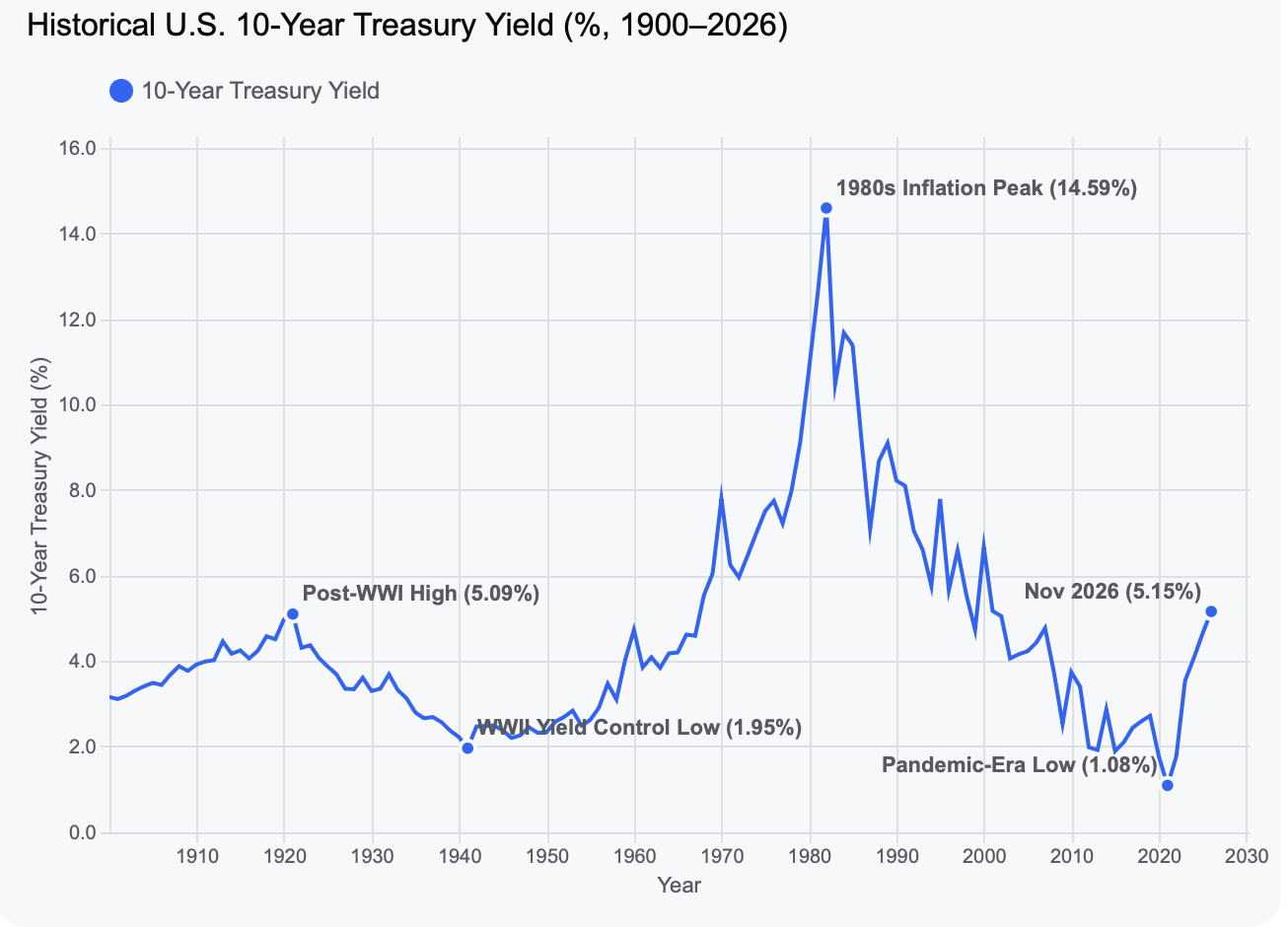
There is a rich body of literature on the sudden stops and reversals in capital flows from a US monetary policy tightening. A 100-basis-point tightening leads to a 50-basis-point decrease in interest-rate differentials for advanced economies, but a 230-basis-point increase in interest-rate differentials for emerging markets. Similarly, on the output side, while a 100 basis point tightening lowers the US GDP by a little over 0.3% after a year, it cuts output by around 1% for EMs after the same period. However, the primary channel through which rising US debt levels are likely to affect EM sovereigns is not through yield spillovers, but rather through a shrinking pool of international capital available to them, compounded by long-standing structural factors.
Further, rising US bond yields are associated with a rise in the US term premium and a dollar depreciation. A 100 basis points increase in the US term premium correlates with a 10 percent EM currency depreciation, and a 10 percent appreciation of the US dollar index is associated with a 4% depreciation in EM currencies and a similarly sized fall in equity prices.
So, what to expect for India from the rising US bond yields?
Given a prolonged two-year period of low returns, the impact on India’s equity markets is of the greatest interest. At the prevailing Nifty forward PE of 18.6, its forward earnings yield is 5.38%, compared to the US 10-year yield of 5.12%. In other words, an unhedged dollar investor is being offered just 26 basis points more for taking Indian equity risk plus rupee risk. This gets problematic if the Nifty rises and re-rates to its five-year median PE multiple of 20.8, dragging down the earnings yield to 4.81%, below the US risk-free rate. The forward PE for Nifty Midcap 150 and Nifty Smallcap 250 is 29, translating into earnings yields of 4% and 3.4%, respectively. This means that at current US yields and domestic corporate profitability, the Indian market cannot return to its own historical multiple without the equity risk premium against Treasuries turning negative!
In the context of over-5% US yields, the only option available for Indian equities is to generate returns from earnings growth (and not just multiple expansion). The 2021-24 equity market boom in India came largely from the re-rating of the P/E multiple in a period of low US interest rates.
An encouraging sign in this regard is the corporate results for the September quarter. The Nifty 50 median PAT growth of 22.3% is the highest in 12 quarters, with revenue growth of 17.4%. The markets have been quick to respond, with $5.68 bn net FPI inflows in November. The moot point is whether this trend constitutes a break from the past and will sustain.
I have already blogged here on the FPI debt inflows. While India’s 10-year G-sec is at a three-year high of 7.47-7.48%, the 235 basis points spread is much lower than the historical average of 300-400 basis points. A PNB study has estimated that a 100 basis points rise in the 10-year US Treasury yield pushes India’s 10-year G-Sec up by 40-50 bps, and thereby mechanically compresses the spread by 50–60 bps. This is important since rising US yields don’t just raise India’s cost of debt, but simultaneously destroy its attractiveness for foreign investors.
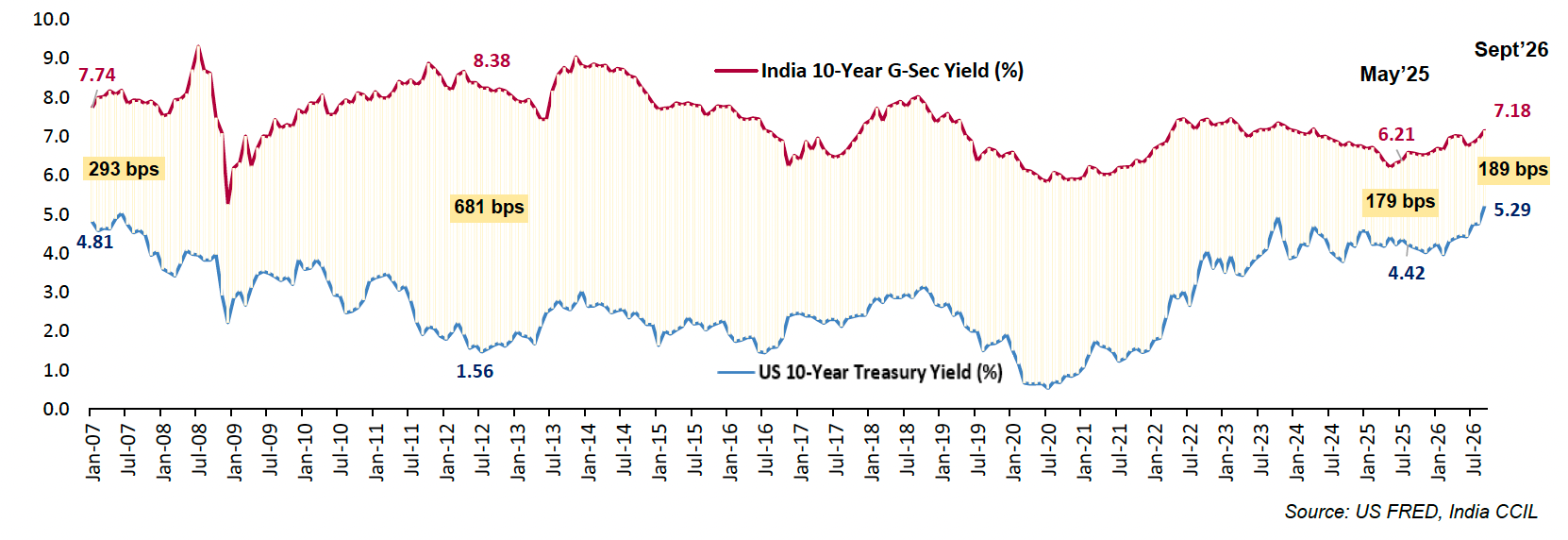
For foreign investors, the exchange rate is the most important channel of impact. To put this in perspective, the rupee depreciated roughly 7.6% when it rose from around ₹90 per dollar at the start of 2026 to an all-time low of ₹96.84 on May 20, more than three times the 235 basis points current spread. The result was foreign debt outflows of $12.6 billion in Q4 FY26 alone. The debt FPI competes on spread and currency alone. As I blogged here, every 1% of depreciation eats roughly 1% of the foreign investor's return, forcing upwards the returns required on an Indian asset to attract them.
The impact on FDI, especially the net FDI, too, is not likely to be benign. While net FDI inflows have risen to $6.2 bn for the first seven months of FY27, compared to less than a billion dollars in FY25, it is far below the $27.99 bn in FY23. There are at least two channels connecting net FDI and US yields. One, on the inflow side, the hurdle rate channel means that a rise in the risk-free rate raises the required IRR for any Indian investment. This is also important since a lot of the institutional capital - pension funds, asset managers, PE, and VC - have their hurdle rates directly indexed to global rates.
Second, on the outflow/repatriation side, a higher risk-free rate imposes a greater opportunity cost of leaving retained earnings inside an Indian subsidiary, especially when it is also exposed to a currency depreciation risk. Repatriation, therefore, is yield sensitive at the margin.
In conclusion, with US yields above 5%, India must offer meaningful real returns to be able to attract foreign capital of any kind. In the 2015–2021 regime, with US 10-year yields at 1.5–2.5%, India could attract capital on the strength of a growth narrative. In a 5% regime, the narrative premium is gone, and India must deliver above 20% earnings growth annually simply to hold its existing multiple, and also must keep the rupee stable enough that debt carry survives.
The brief November reversal (till date) validates this argument as it comes on the back of the 22.3% earnings growth, softer crude, and a strengthening rupee. However, all three stand on not-so-strong foundations, and more importantly, are at the mercy of the US Fed’s rate decisions (and President Trump’s policies).
No comments:
Post a Comment