As AI threatens to hollow out commoditised IT jobs that have created a generation of Indian middle class, manufacturing appears even more important for good job creation.
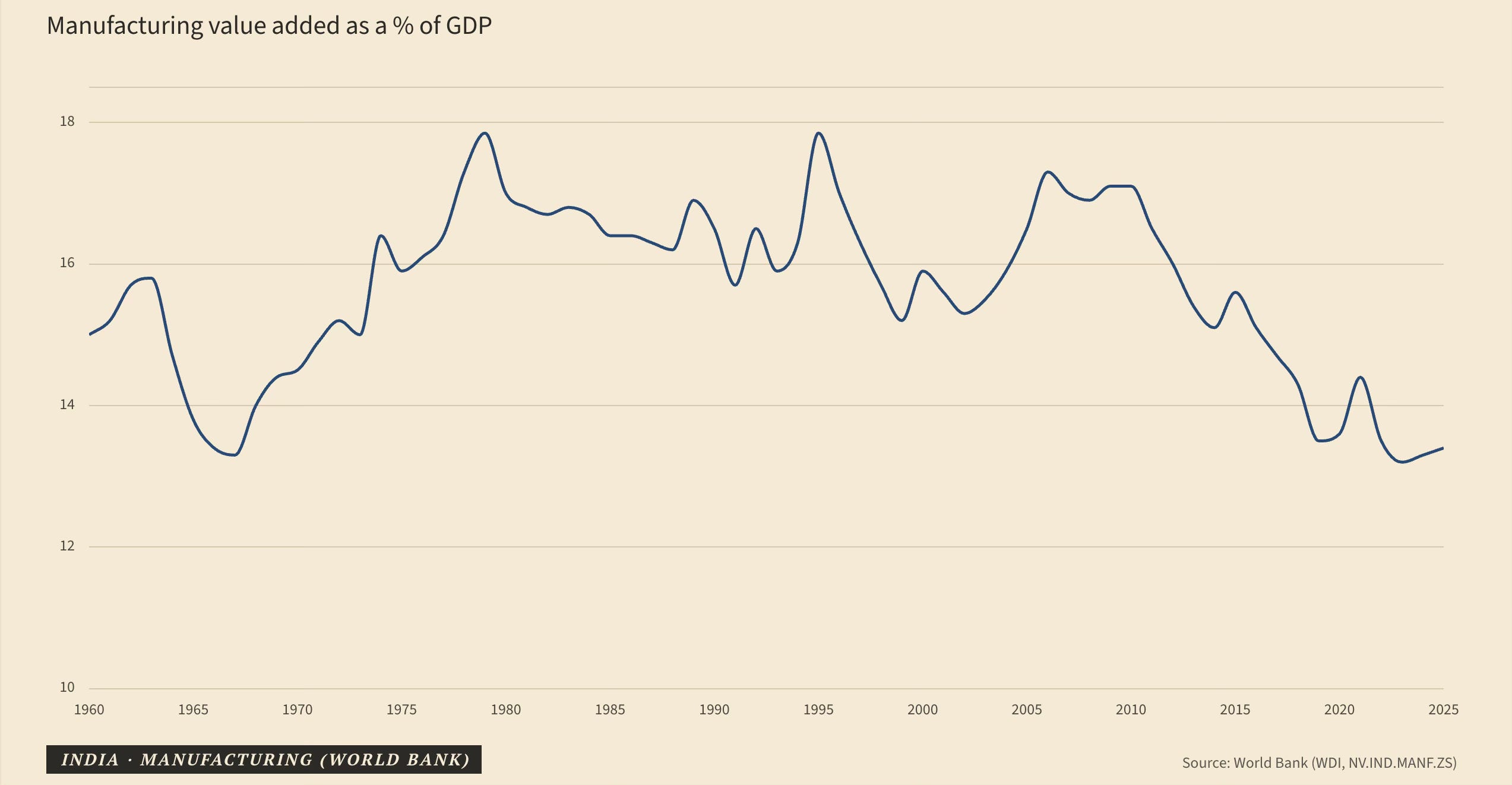
However, manufacturing’s share of GDP has been declining, falling from 17.1% in 2010 to 13.4% in 2025.
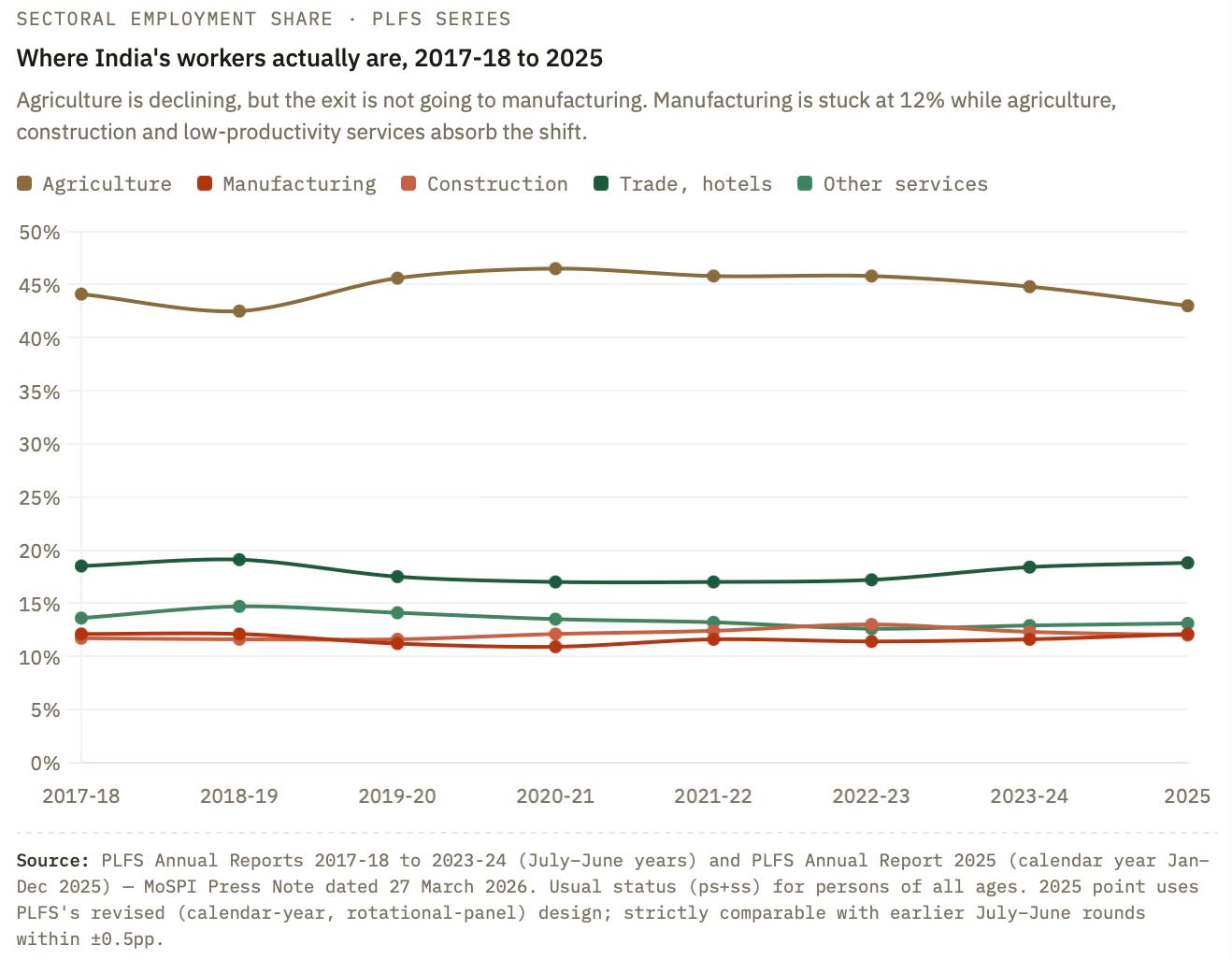
Between 2017-25, manufacturing's employment share has remained unchanged at 12.1%!
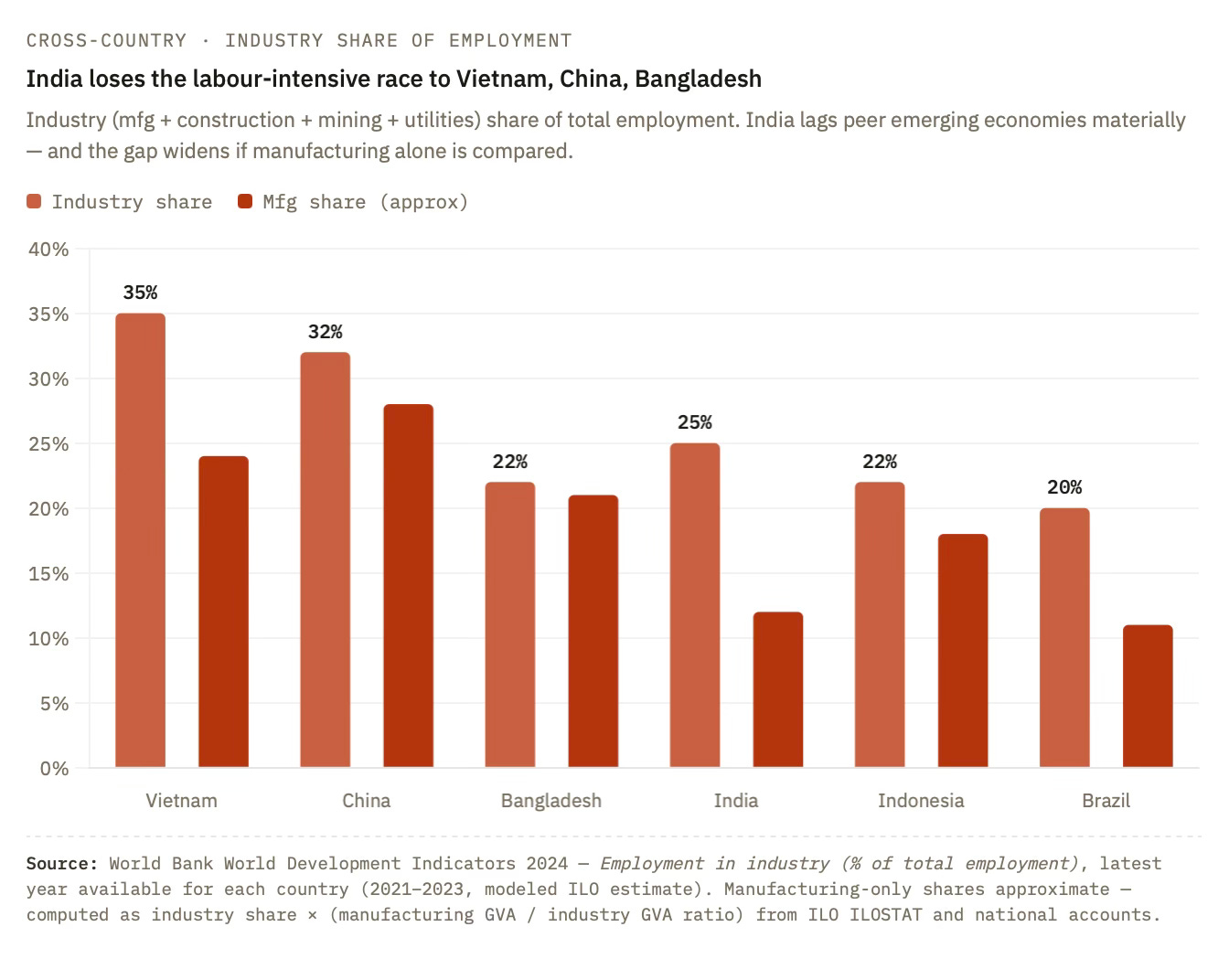
India could not leverage the opportunity presented by the global value chain diversification away from China. Countries such as Vietnam and Bangladesh have capitalised on labour-intensive manufacturing.
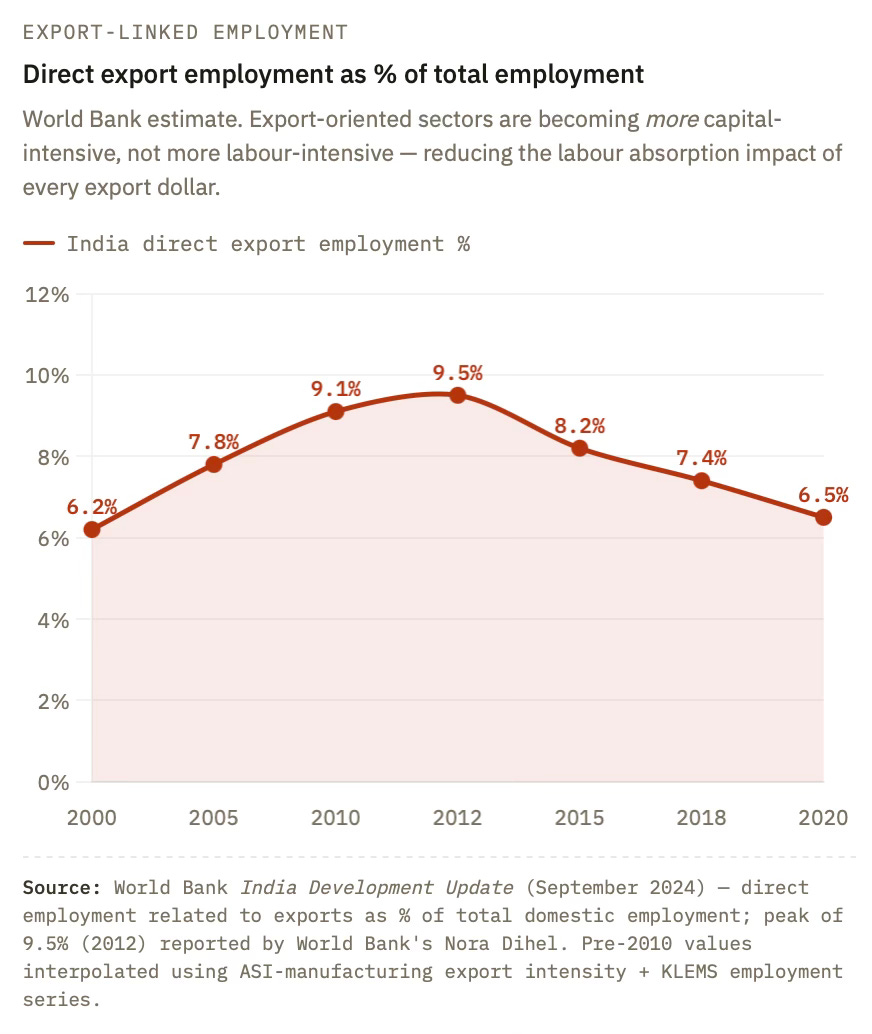
As a result, direct export-related employment fell from 9.5% to 6.5% of total employment (2012–2020, World Bank).
It does not help that India's manufacturing labour productivity is abysmally low.
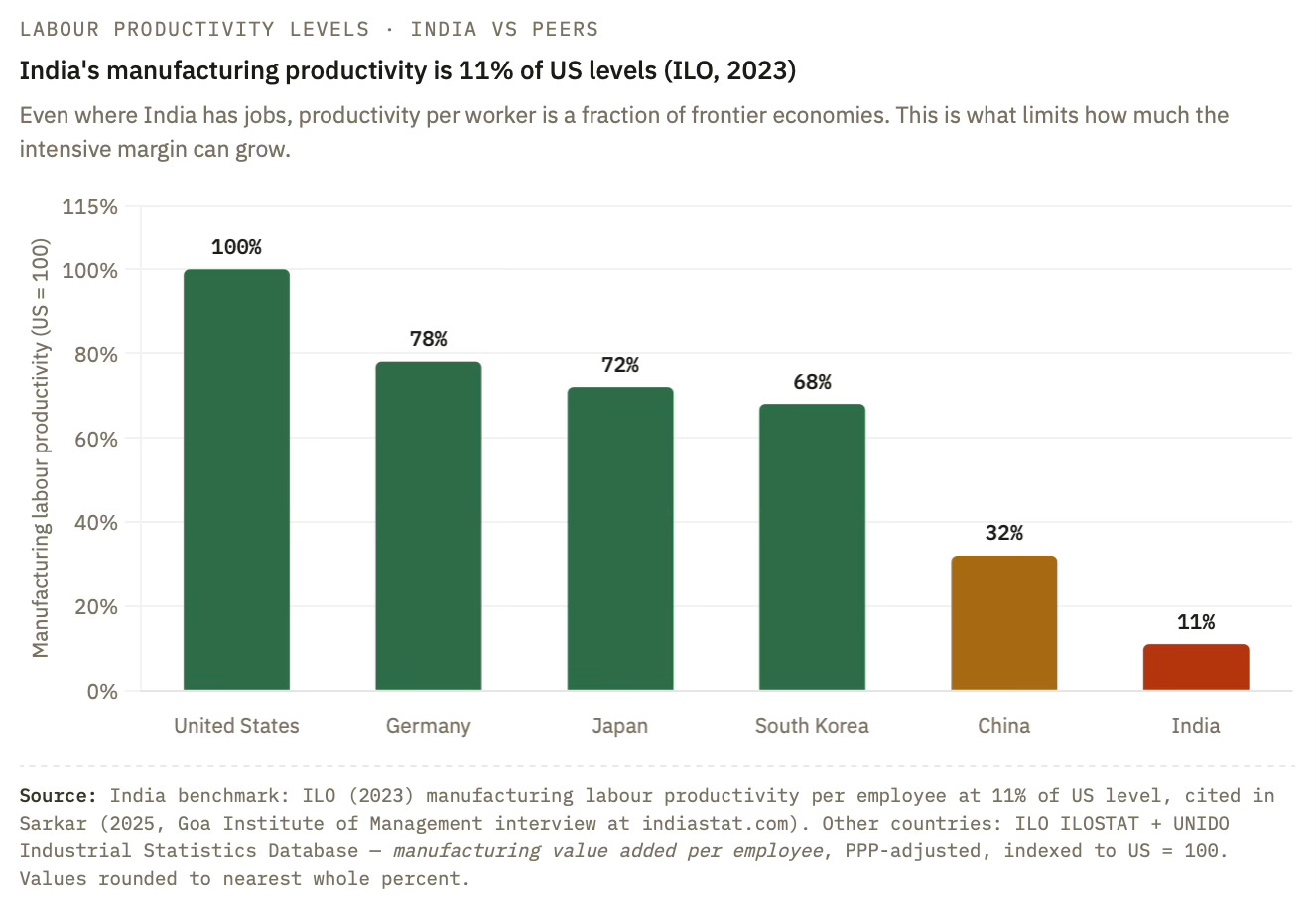
India’s labour market challenge is two-fold. At the extensive margin, it must produce more good-quality jobs, ones that are productive and also pay reasonably well. The subsistence gig-economy jobs cannot create the middle class required to sustain broad-based high economic growth rates. Manufacturing is critical to this good job creation agenda. At the intensive margin, the existing jobs must become more productive and labour wages must increase proportionately. Export competition is central to increasing productivity.
I’ll blog separately on the labour market challenge.
No comments:
Post a Comment